Restraining Order With Kids
Description

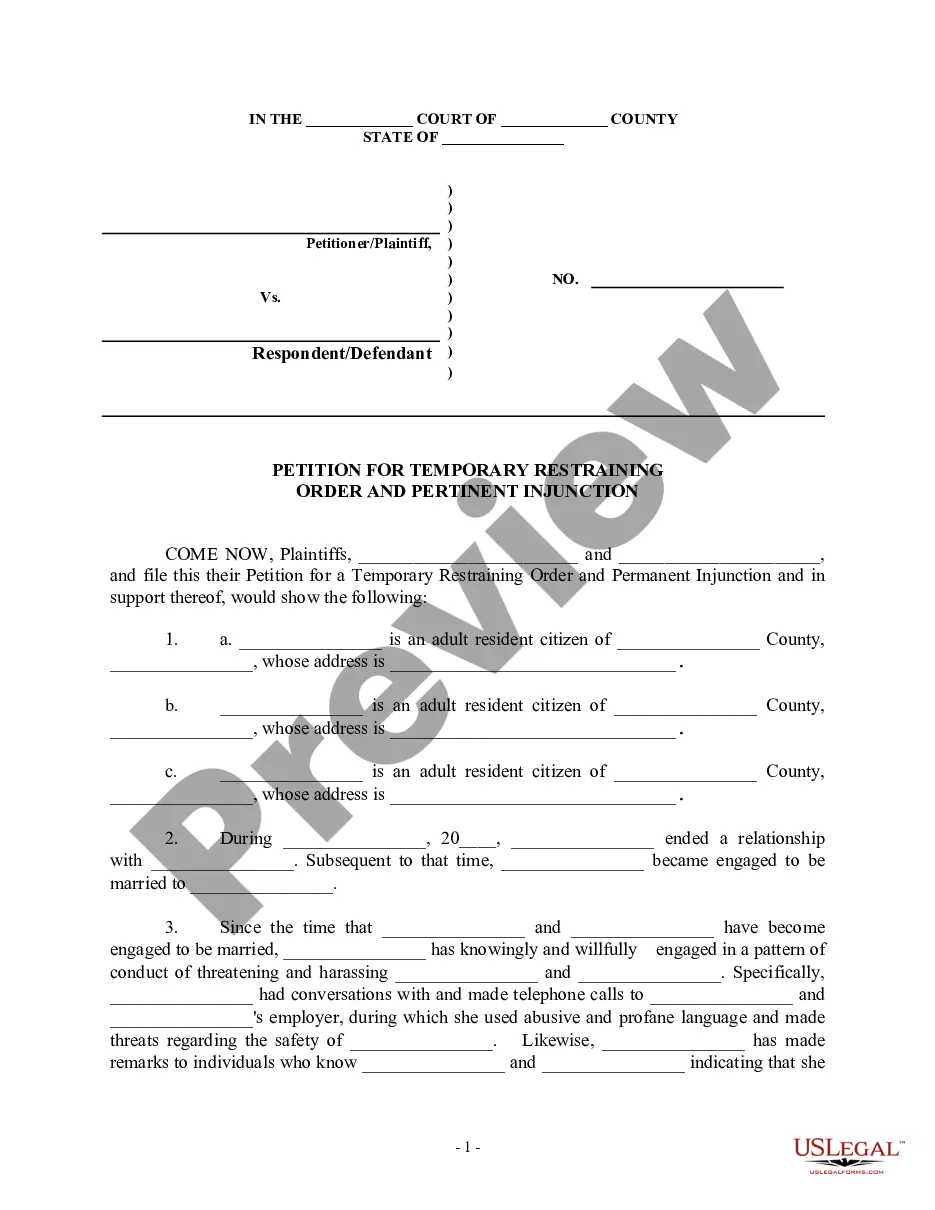
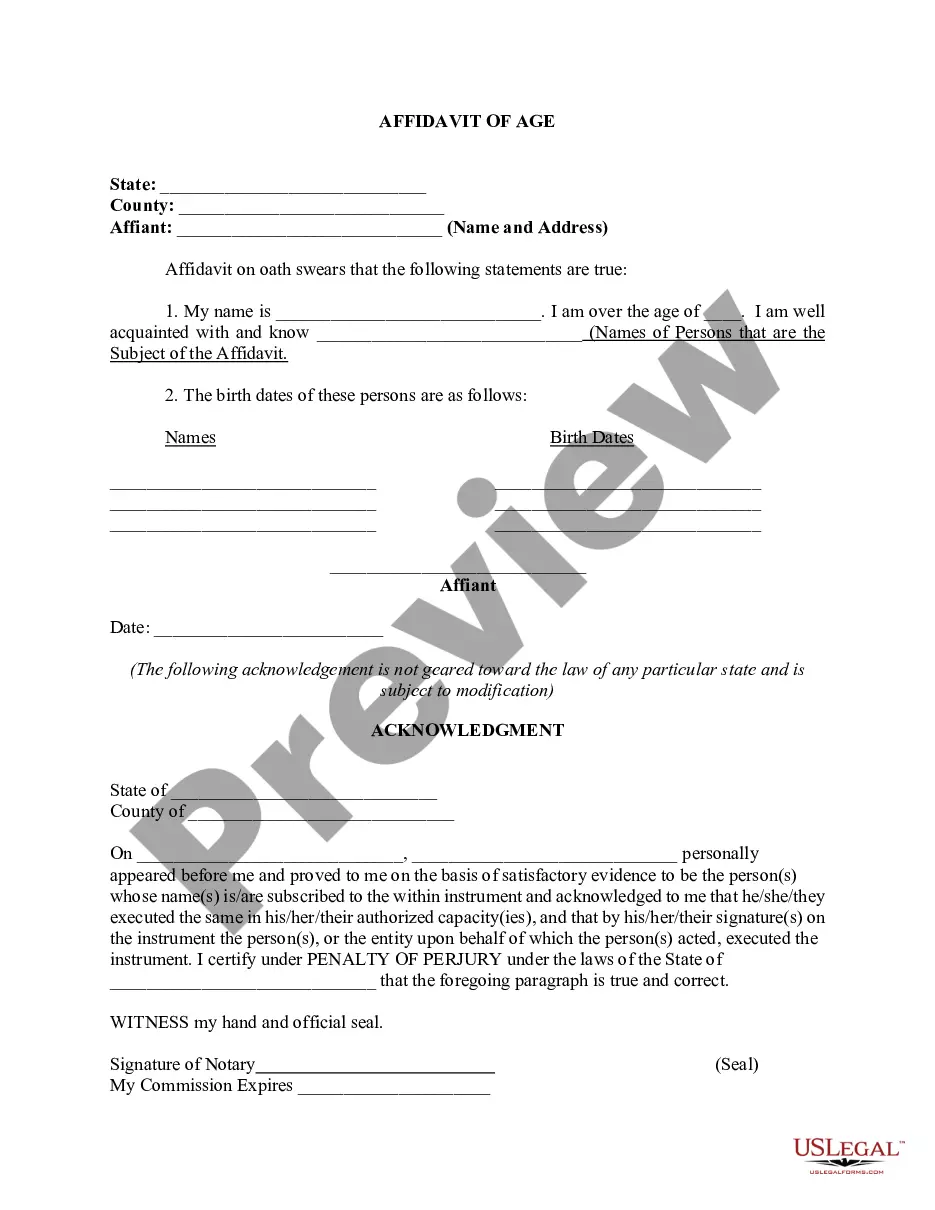
Get your form ready online
Our built-in tools help you complete, sign, share, and store your documents in one place.
Make edits, fill in missing information, and update formatting in US Legal Forms—just like you would in MS Word.
Download a copy, print it, send it by email, or mail it via USPS—whatever works best for your next step.
Sign and collect signatures with our SignNow integration. Send to multiple recipients, set reminders, and more. Go Premium to unlock E-Sign.
If this form requires notarization, complete it online through a secure video call—no need to meet a notary in person or wait for an appointment.
We protect your documents and personal data by following strict security and privacy standards.

Make edits, fill in missing information, and update formatting in US Legal Forms—just like you would in MS Word.

Download a copy, print it, send it by email, or mail it via USPS—whatever works best for your next step.

Sign and collect signatures with our SignNow integration. Send to multiple recipients, set reminders, and more. Go Premium to unlock E-Sign.

If this form requires notarization, complete it online through a secure video call—no need to meet a notary in person or wait for an appointment.

We protect your documents and personal data by following strict security and privacy standards.
Looking for another form?
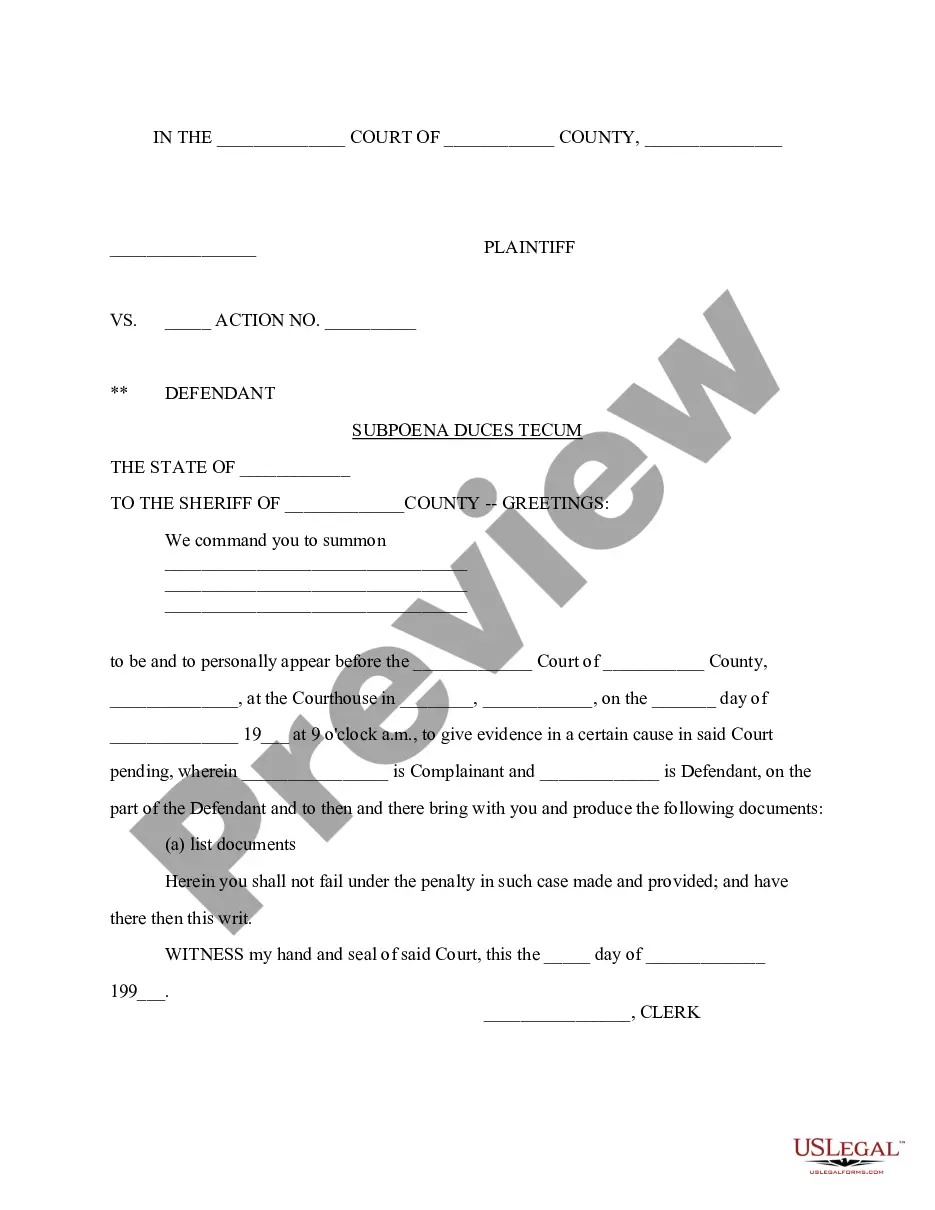




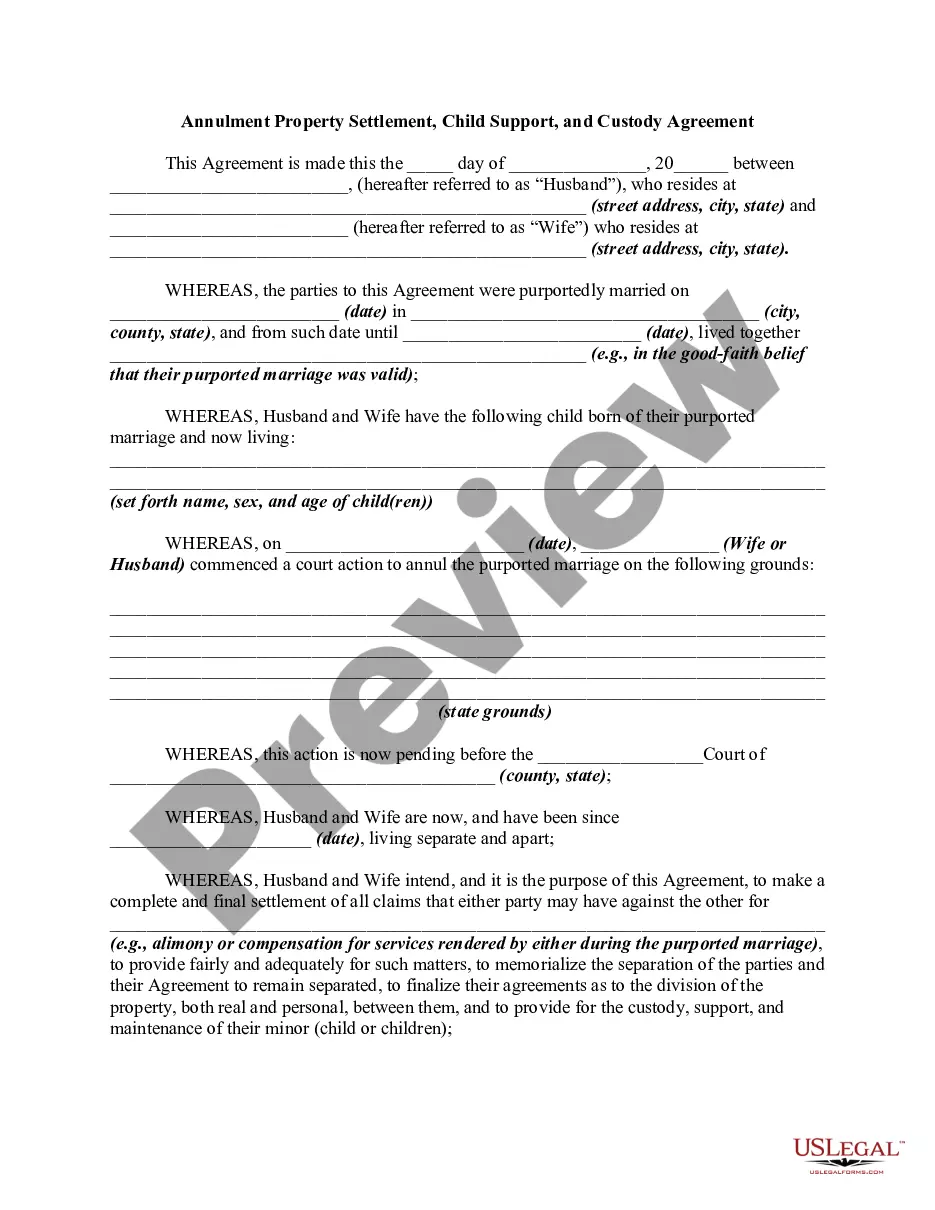

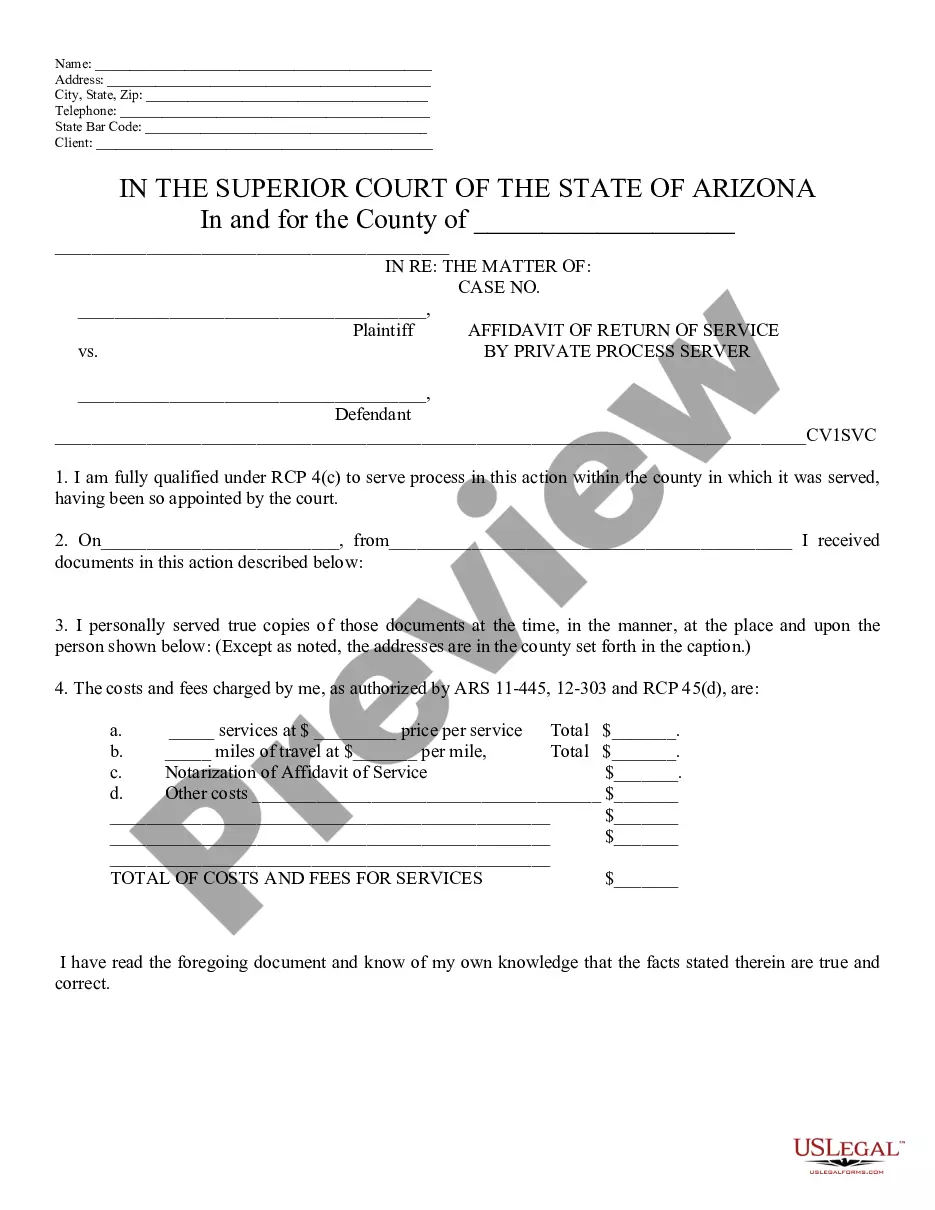


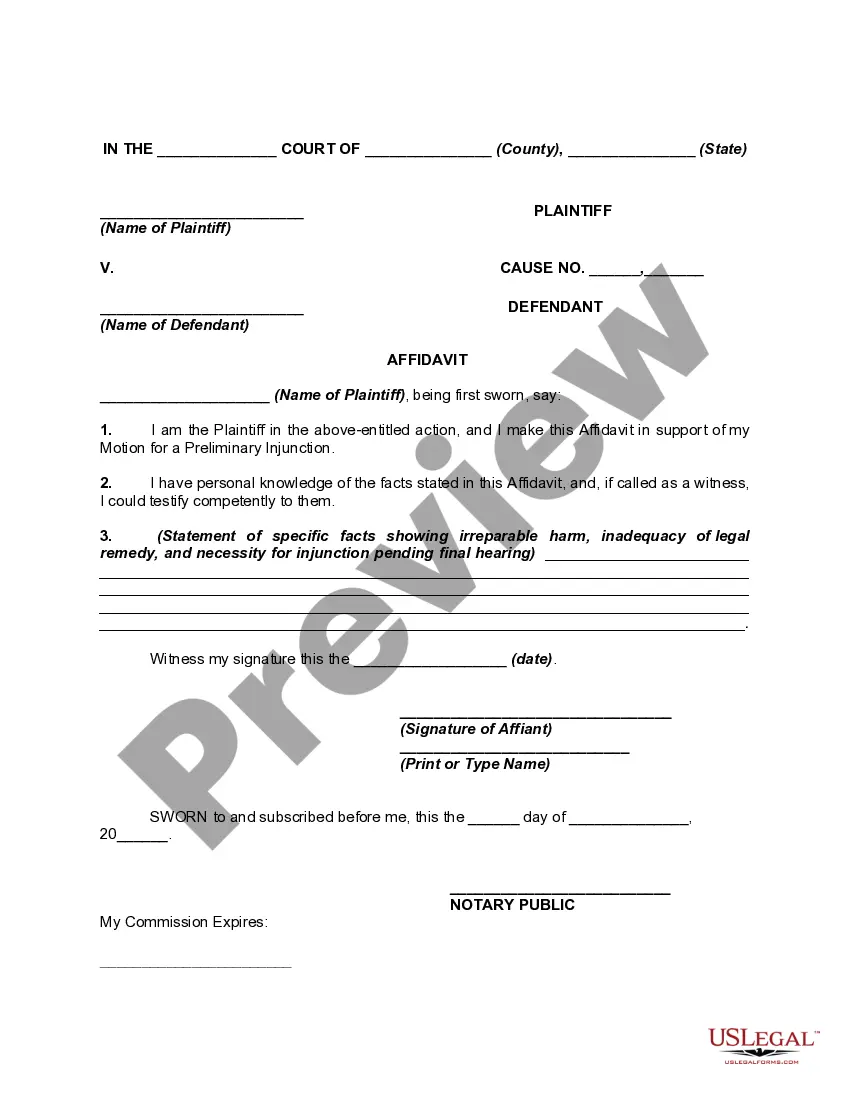
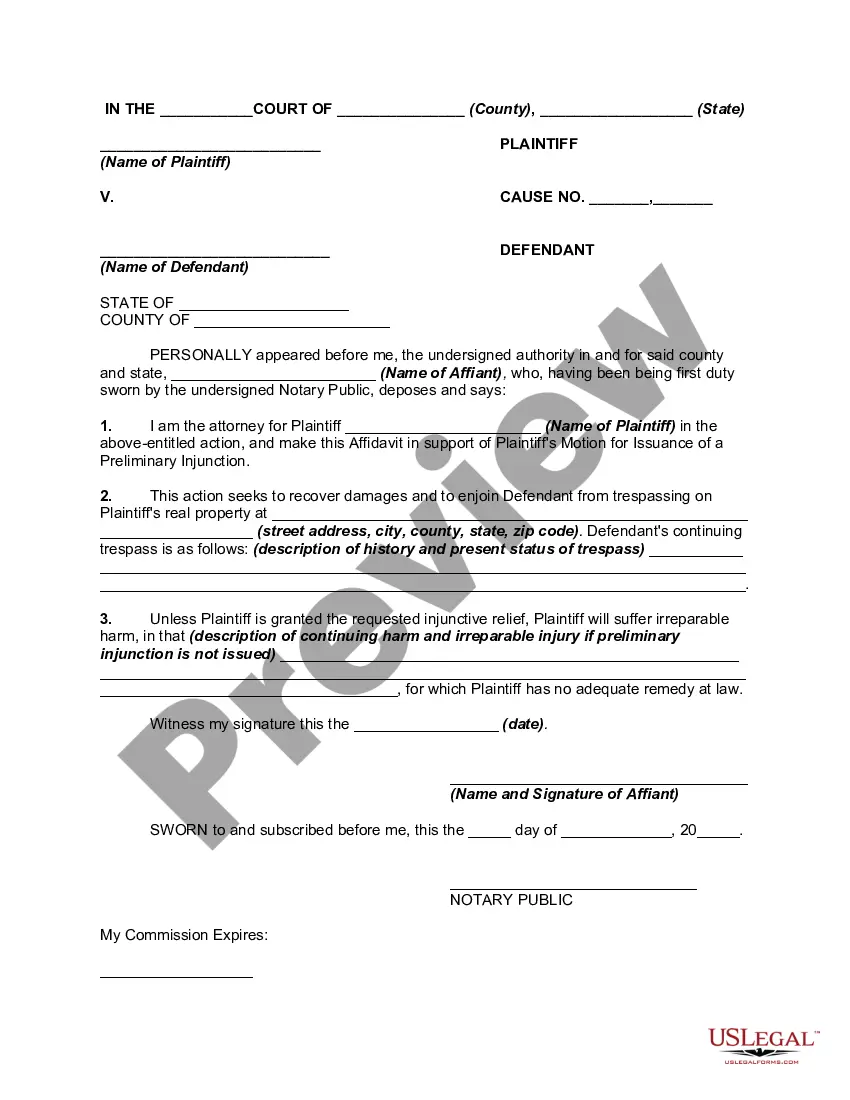
How to fill out Affidavit In Support Of Motion For Preliminary Injunction?
- Log in to your US Legal Forms account if you’re a returning user, ensuring your subscription is active.
- If it's your first visit, browse the extensive form library to find the restraining order template suited for your circumstances.
- Review the form details in Preview mode to confirm it matches your local jurisdiction requirements.
- Select the appropriate template; if something doesn’t align, utilize the Search tab to find the correct form.
- Click the Buy Now button to select your preferred subscription plan, then create an account for access.
- Complete your purchase using a credit card or PayPal, securing your subscription.
- Download the selected form to your device for completion, and access it anytime through My Forms in your profile.
Following these straightforward steps will ensure that you efficiently acquire the necessary legal documentation for a restraining order involving your children.
US Legal Forms is dedicated to empowering individuals and attorneys by providing an extensive collection of over 85,000 editable legal forms. Start your seamless legal journey today!
Form popularity
FAQ
To get an order of protection for a child, start by gathering all relevant information about the situation that threatens safety. File the necessary paperwork with your local court, ensuring you explain why a restraining order with kids is important. Attend the hearing and present your case before a judge. Using platforms such as US Legal Forms can simplify this process by providing necessary forms and guidance.
Restraining orders can be challenging to obtain due to strict legal criteria. Courts require substantial evidence to prove the necessity of a restraining order with kids, as they prioritize both safety and due process. Additionally, the involved parties have the right to contest the application, which can complicate matters further. Understanding these legal requirements is vital, and resources like US Legal Forms can help you prepare.
To file an order of protection for a child, start by visiting your local courthouse or searching online for the specific forms required. You need to provide details about your situation and why a restraining order with kids is necessary. After submitting the paperwork, a judge will schedule a hearing where you can present your case. Having a legal expert may greatly assist you in navigating this process.
Seeing your kids under a restraining order can be challenging, but it is possible with the right legal guidance. First, review the terms of the restraining order to understand your visitation rights. You may need to arrange supervised visits to adhere to the order's stipulations. Consulting USLegalForms can provide you with the necessary resources to navigate this process and create a visitation plan that prioritizes safety.
A protective order is designed to shield children from any potential harm, ensuring they live in a safe environment. It may limit interactions with a threatening individual or require supervised visitation. This order empowers parents to take proactive steps to secure their children's well-being. With USLegalForms, you can find tools to draft or understand protective orders effectively.
When discussing a restraining order with your children, it's crucial to use age-appropriate language and reassure them about their safety. Explain that the order is in place to protect everyone involved and that it's okay for them to have feelings about it. Encourage open dialogue, allowing them to ask questions and express their emotions. Take advantage of resources offered by USLegalForms to help guide you through this delicate conversation.
An order of protection serves to safeguard children from a potentially harmful situation, prioritizing their safety above all. This legal document may restrict access to children or determine supervised visitation, depending on circumstances. Courts often consider the child's best interests when establishing the frameworks of these orders. When navigating these complexities, USLegalForms provides essential resources to help you understand your rights and responsibilities.
Co-parenting with a restraining order requires clear communication and adherence to the terms outlined in the order. Each parent should respect the boundaries set to ensure the safety and well-being of the children involved. It's essential to create a structured plan for visits and exchanges, minimizing contact where possible. Utilizing a platform like USLegalForms can help facilitate this process, providing templates that clarify co-parenting arrangements.
When you have a restraining order, avoid contacting the other party, sharing your feelings online, or disregarding the court's rules. Engaging in these actions can complicate your situation, especially when children are involved. Protecting your family is the priority, so always respect the restraining order with kids. Legal advice from professionals can help you navigate these tricky waters.
In Rhode Island, a restraining order typically lasts for three years, though it can be modified or extended based on the situation. When dealing with a restraining order with kids, the custody and safety of the children are major concerns for the court. Always keep an eye on the terms outlined in the order. Reach out to legal experts who can guide you through the process.