Notary Public Format
Description

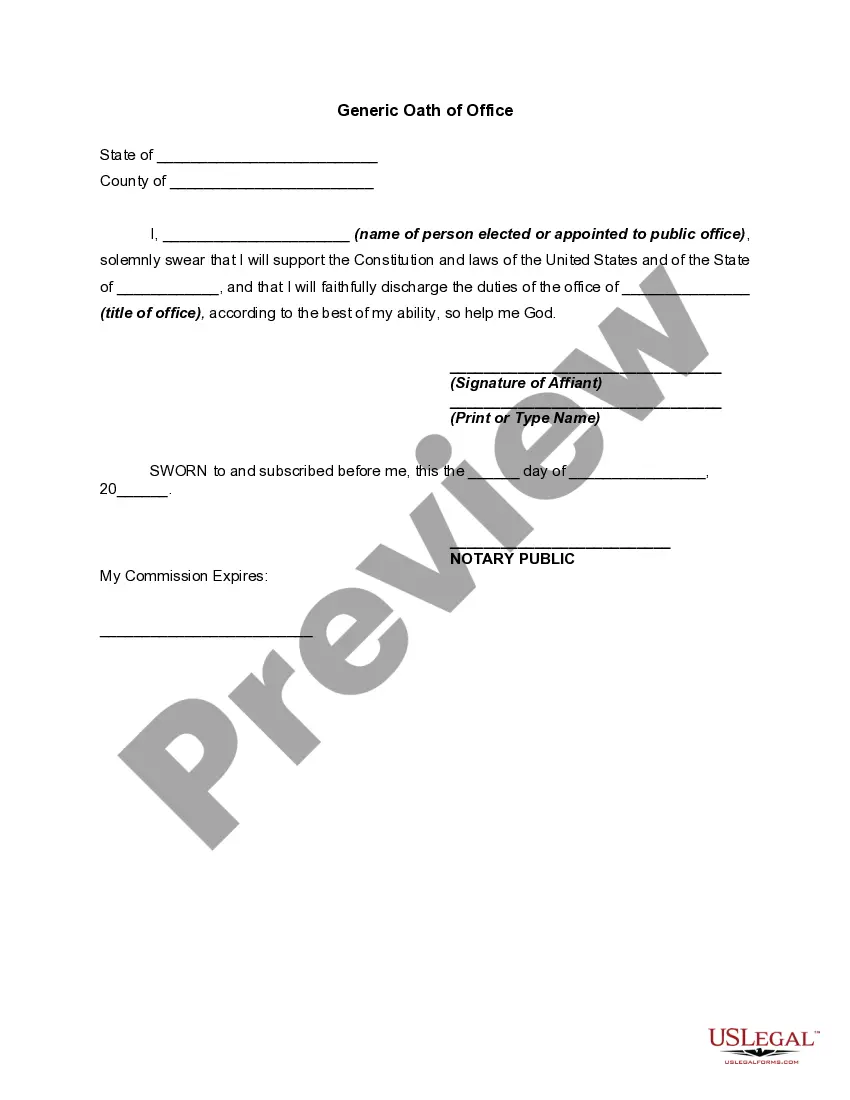
Get your form ready online
Our built-in tools help you complete, sign, share, and store your documents in one place.
Make edits, fill in missing information, and update formatting in US Legal Forms—just like you would in MS Word.
Download a copy, print it, send it by email, or mail it via USPS—whatever works best for your next step.
Sign and collect signatures with our SignNow integration. Send to multiple recipients, set reminders, and more. Go Premium to unlock E-Sign.
If this form requires notarization, complete it online through a secure video call—no need to meet a notary in person or wait for an appointment.
We protect your documents and personal data by following strict security and privacy standards.

Make edits, fill in missing information, and update formatting in US Legal Forms—just like you would in MS Word.

Download a copy, print it, send it by email, or mail it via USPS—whatever works best for your next step.

Sign and collect signatures with our SignNow integration. Send to multiple recipients, set reminders, and more. Go Premium to unlock E-Sign.

If this form requires notarization, complete it online through a secure video call—no need to meet a notary in person or wait for an appointment.

We protect your documents and personal data by following strict security and privacy standards.
Looking for another form?
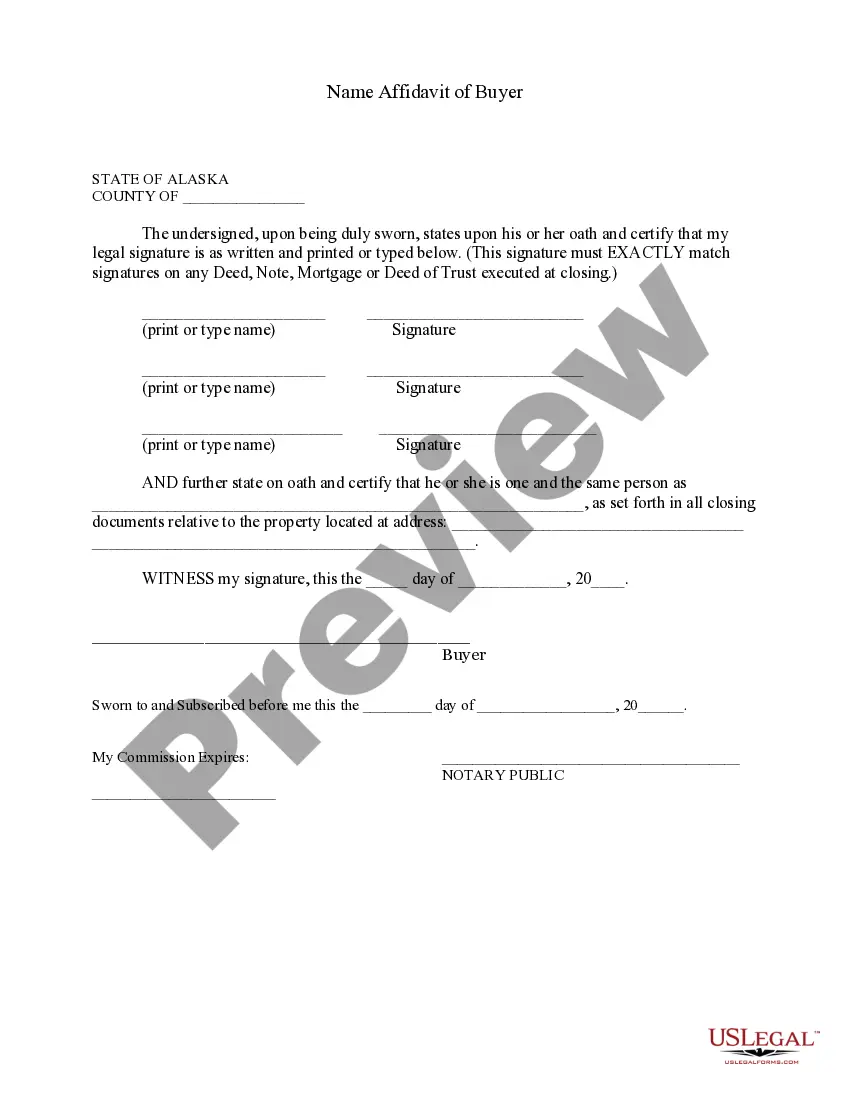




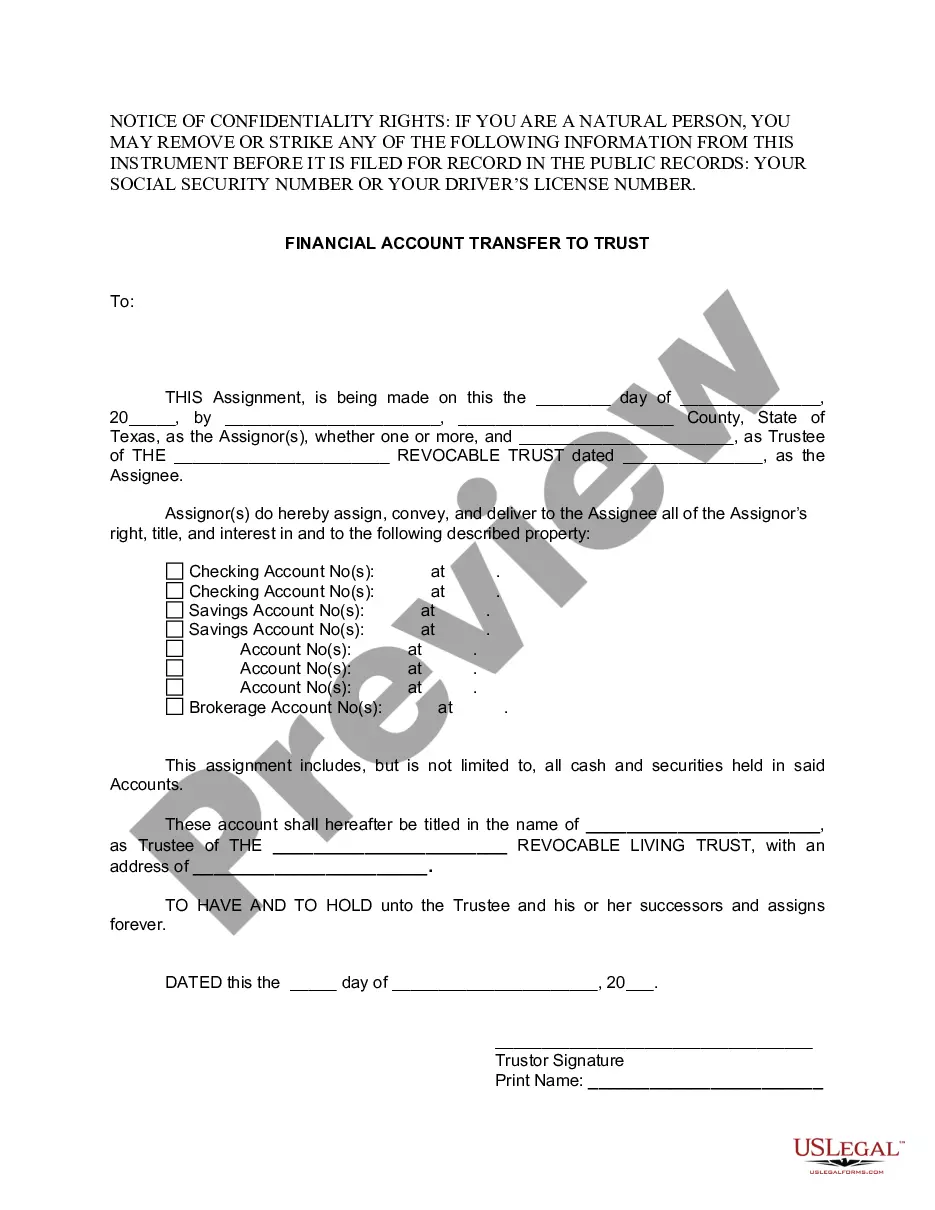




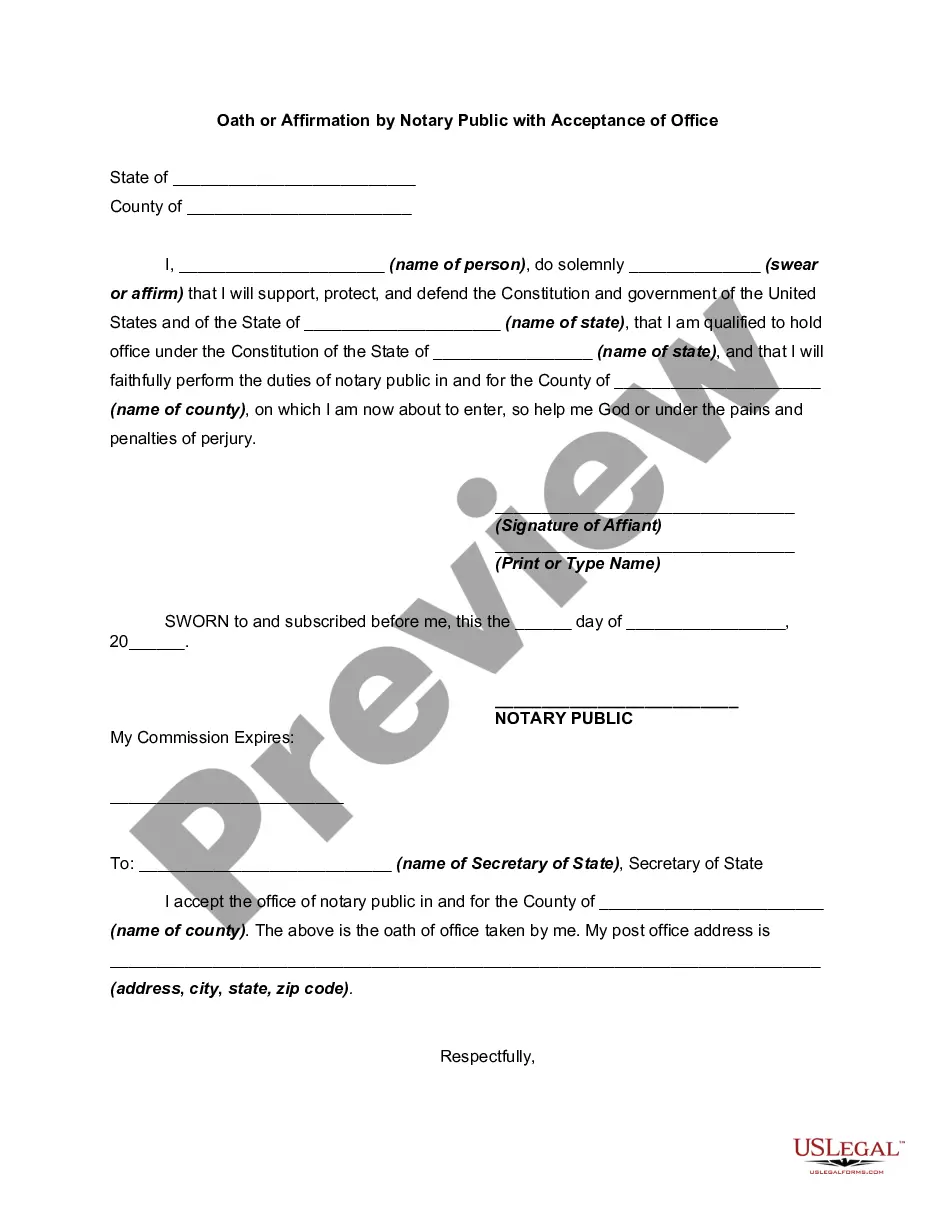
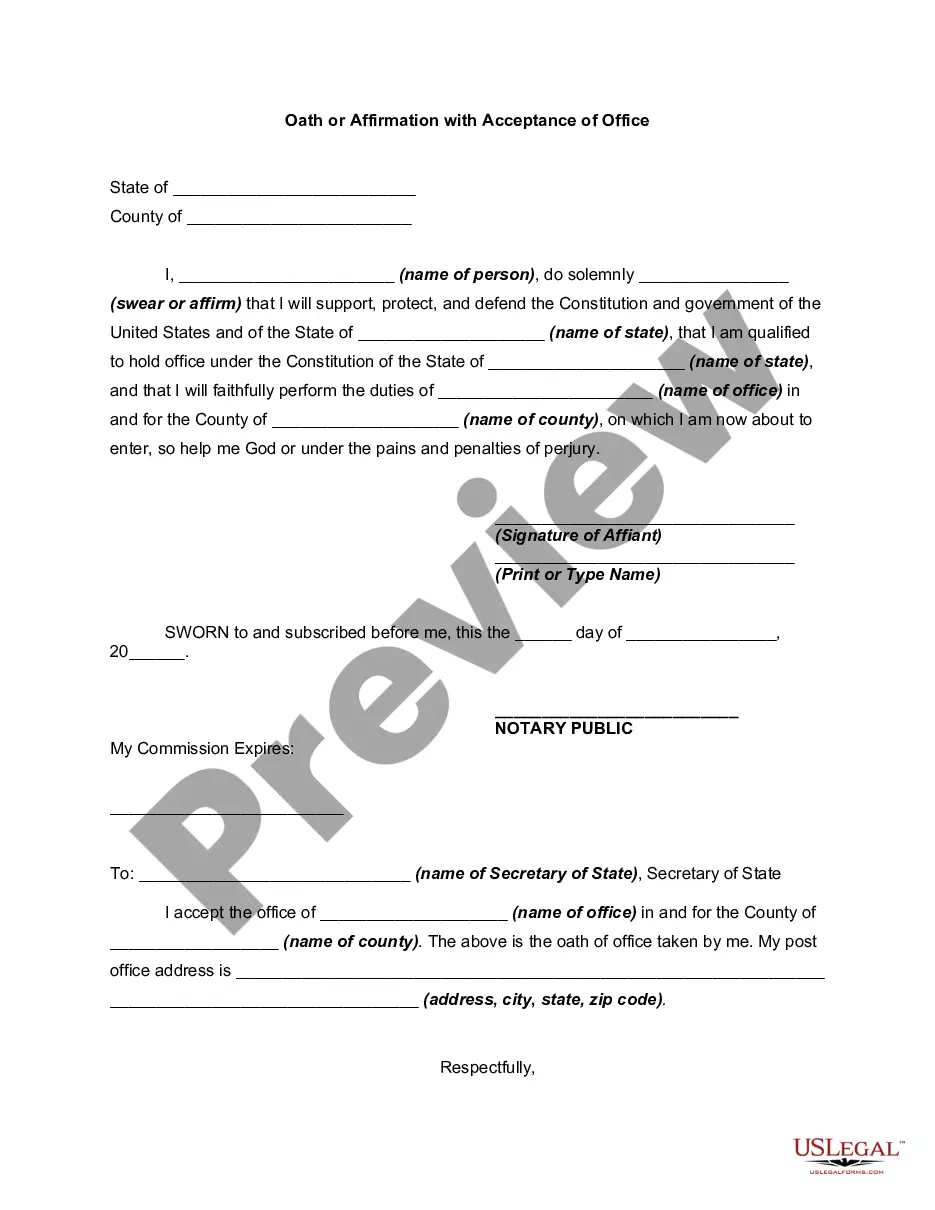
How to fill out Oath Or Affirmation By Notary Public With Acceptance Of Office?
Whether for commercial objectives or personal matters, everyone eventually encounters legal issues in their lives.
Finalizing legal documents necessitates meticulous attention, starting with selecting the appropriate form template.
With a vast US Legal Forms repository available, you needn’t waste time hunting for the correct sample online. Utilize the library’s straightforward navigation to find the suitable template for any circumstance.
- Locate the sample you require using the search field or catalog browsing.
- Review the form’s details to confirm it aligns with your circumstances, state, and county.
- Click on the form’s preview to examine it.
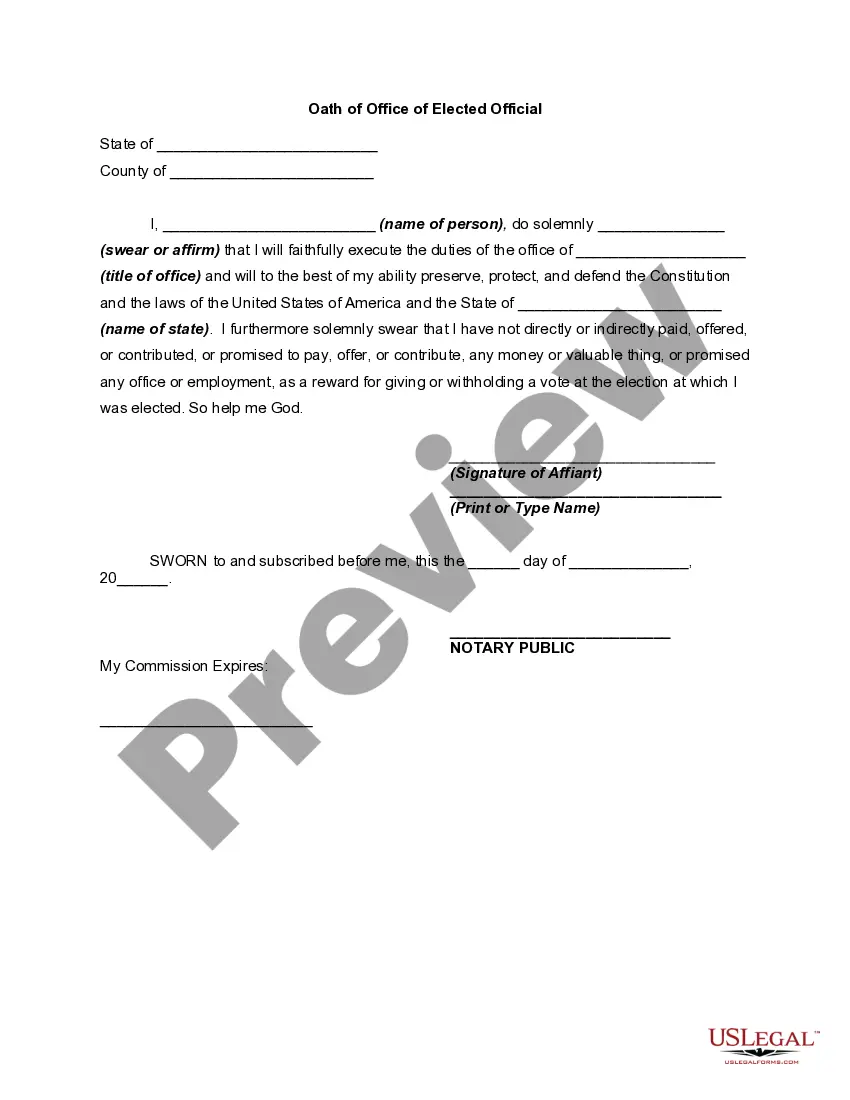
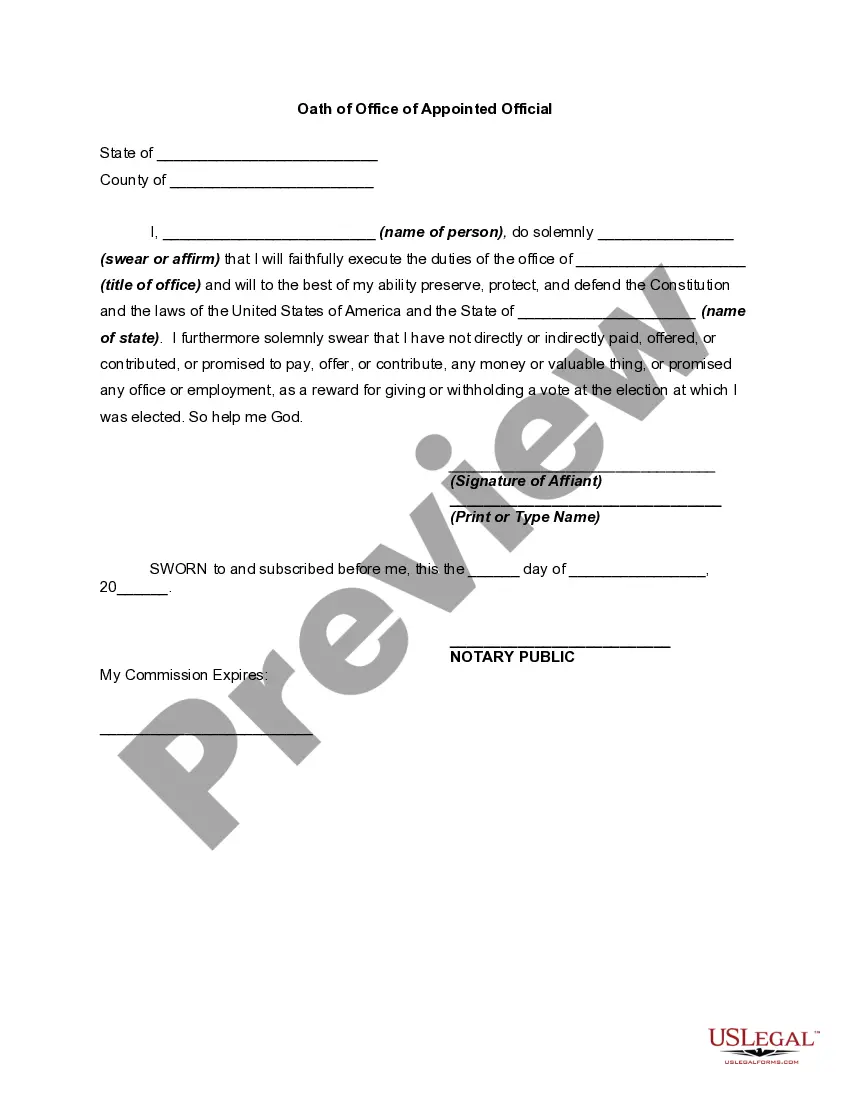
- If it is the incorrect form, return to the search feature to find the Notary Public Format sample you need.
- Acquire the template if it suits your needs.
- If you possess a US Legal Forms account, click Log in to retrieve previously saved documents in My documents.
- If you haven’t established an account yet, you can obtain the form by clicking Buy now.
- Select the appropriate pricing option.
- Fill out the profile registration form.
- Choose your payment method: either a credit card or PayPal account.
- Select the document format you want and download the Notary Public Format.
- After it is saved, you can either edit the form using applications or print it out and complete it by hand.
Form popularity
FAQ
If you believe your case should not go to arbitration and the other party does not agree, you can file a motion with the clerk of court asking the court to remove the case from arbitration. You must show either that the case is not eligible for arbitration or that there is a compelling reason to exempt your case.
Arbitration Award The panel will issue an award within 30 business days from the date the record is closed. All awards rendered under the Codes are final and are not subject to review or appeal, except under limited circumstances. For exceptions to this rule, view "Challenges to an Arbitration Award."
While courts generally favor arbitration agreements, they will allow you to file a lawsuit if either you didn't understand your rights or your claims fall outside the arbitration provision's scope. Establishing this, however, can be a challenge.
Arbitration claimants have access to the same collection tools as in a court judgment: if a respondent fails to pay an arbitration award, the claimant may take the award to court and have it converted to a judgment.
What is Voluntary Arbitration? Voluntary arbitration, as the name indicates, means that the parties voluntarily agree to submit a dispute (or any dispute) to arbitration. This is also known as arbitration at common law. This is normally done through a formal, written agreement entered into between the parties.
If you lose the case, it's very hard to challenge a decision the arbitrator has made. You can't appeal if you simply disagree with the decision. If you think the case wasn't handled properly, you should get advice about what to do next. You may be able to make an appeal to court on a point of law.