Real Estate For Sale
Description
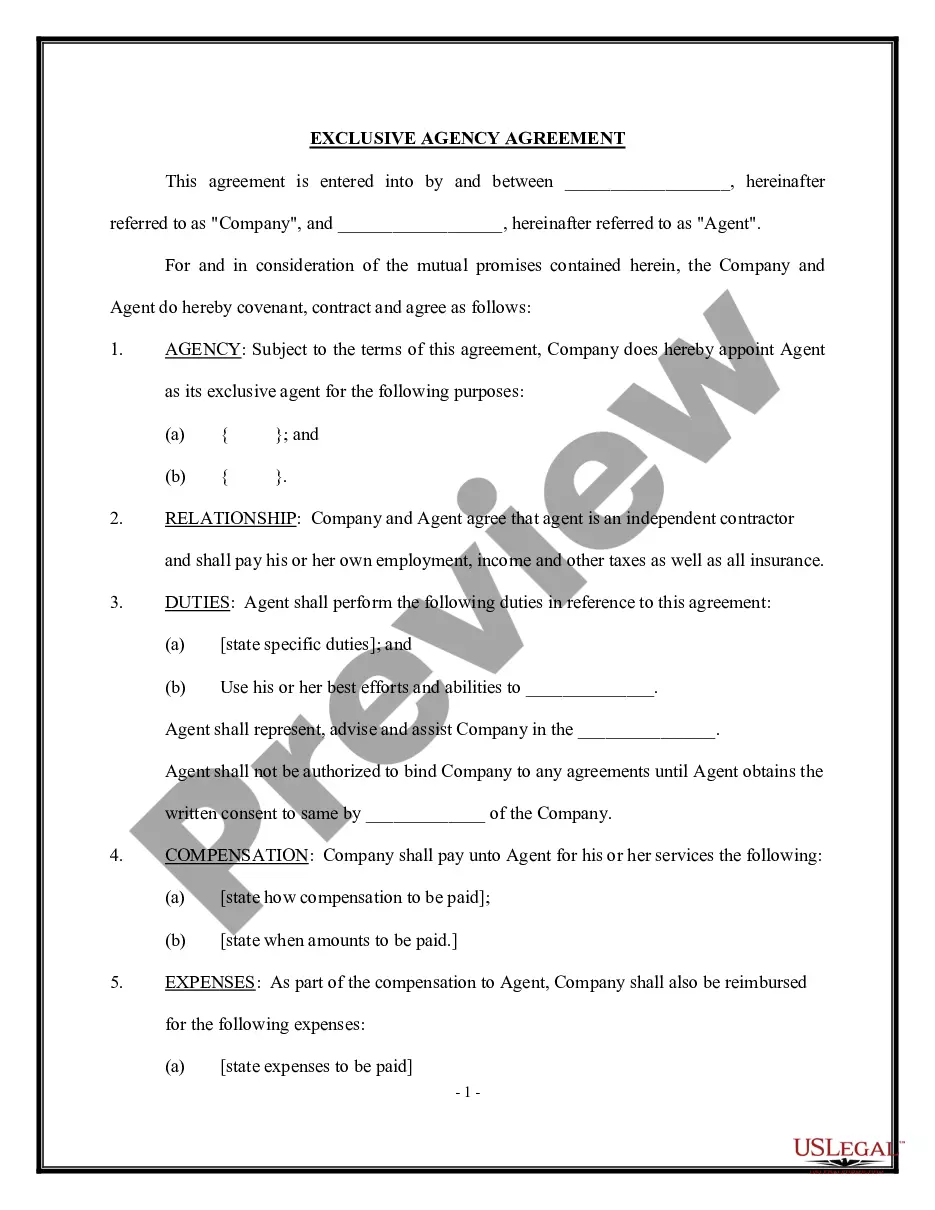
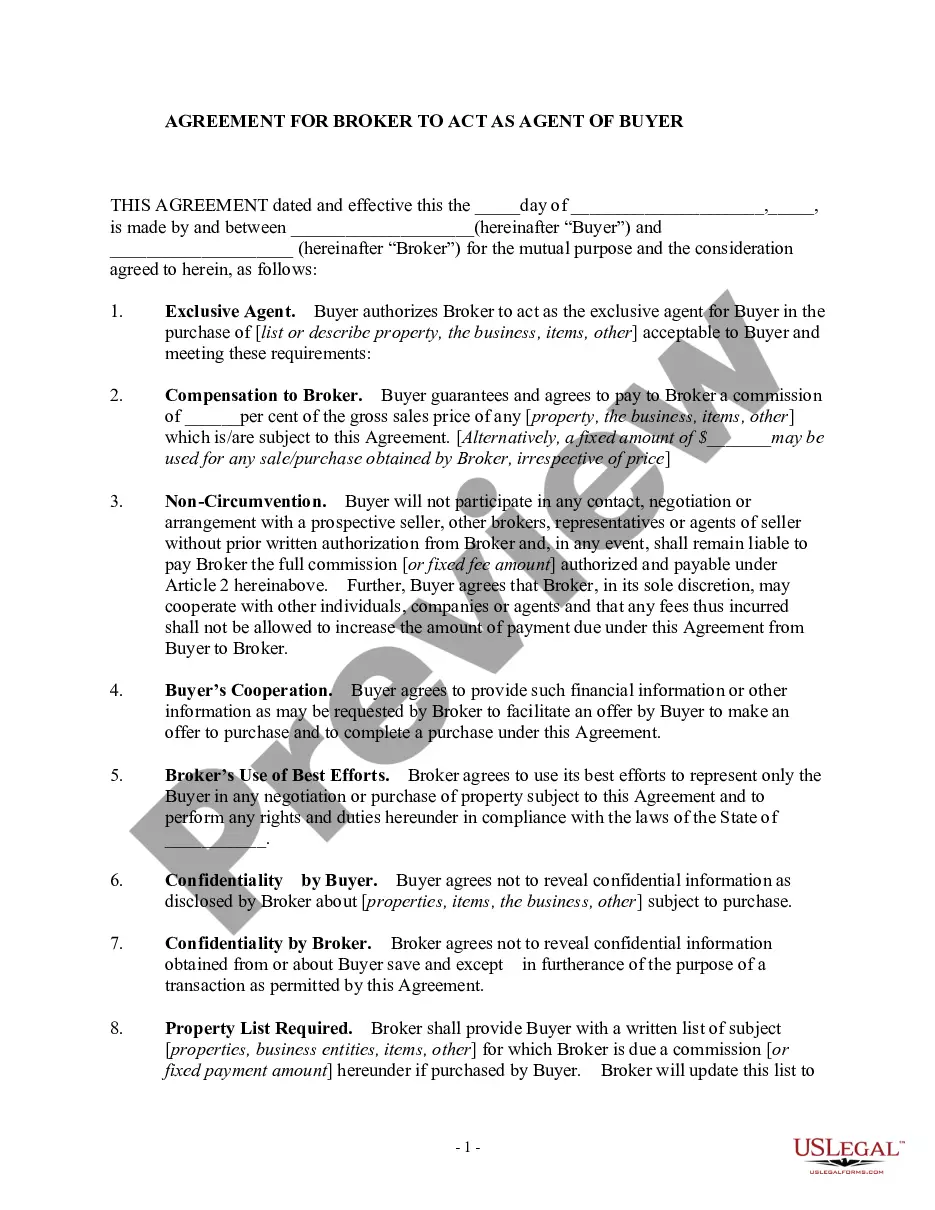
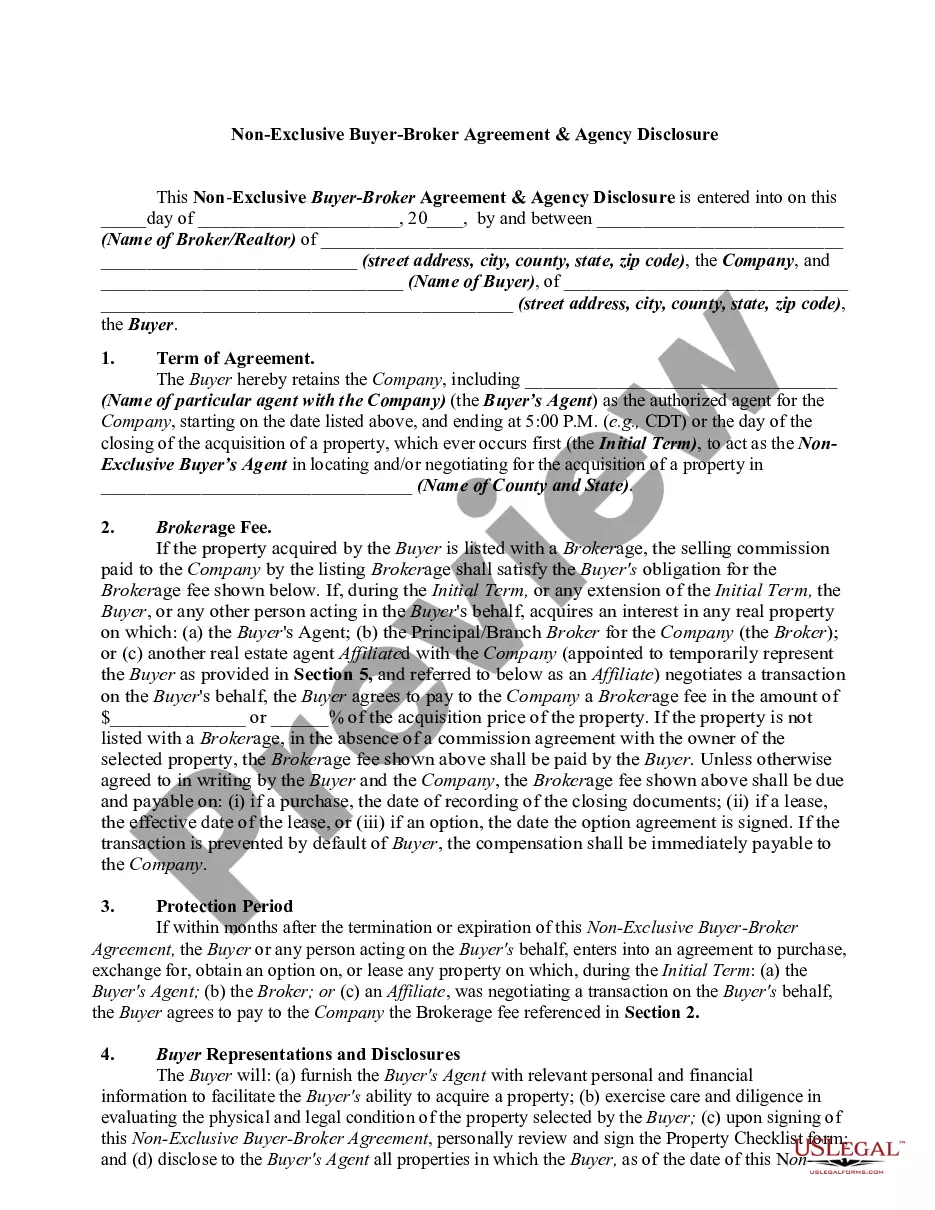
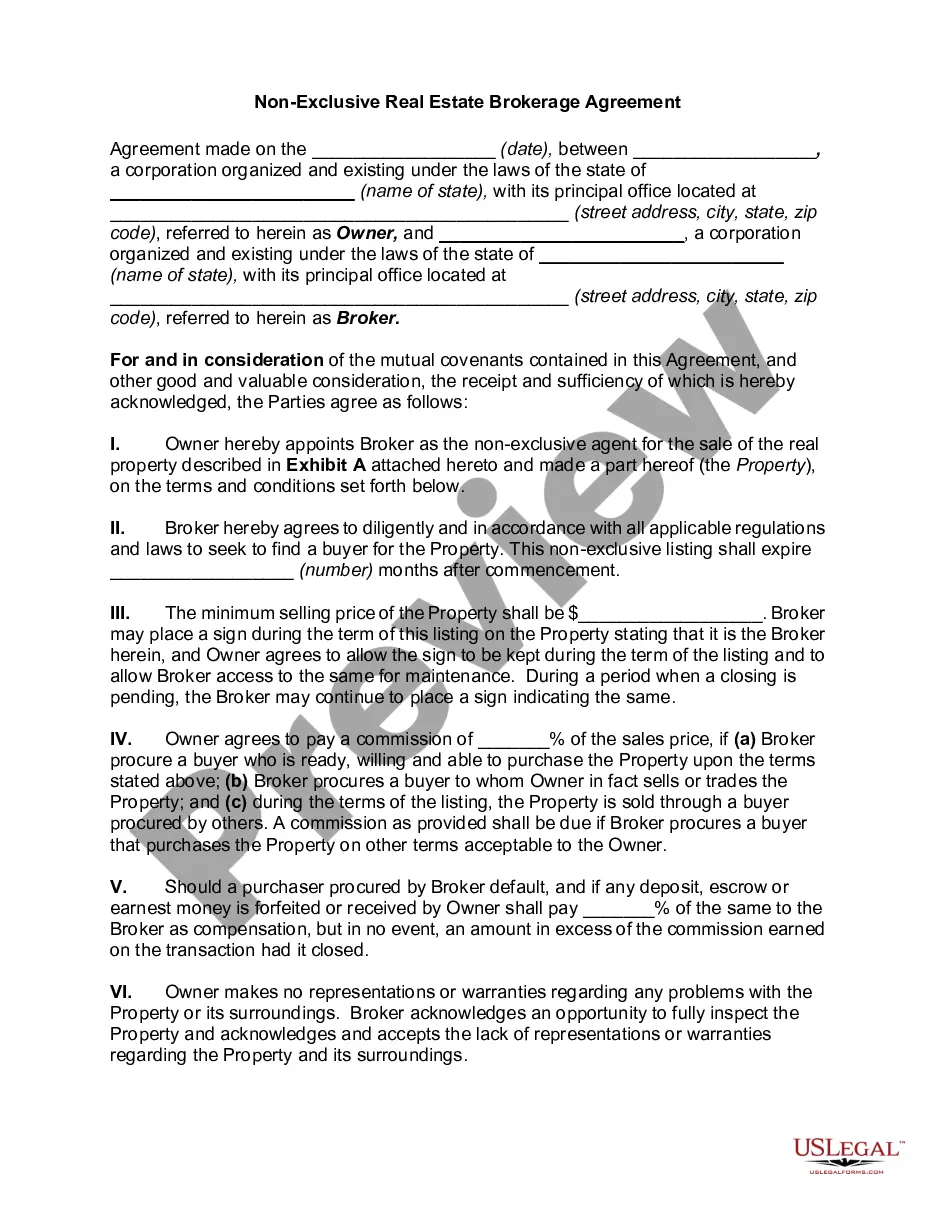
Get your form ready online
Our built-in tools help you complete, sign, share, and store your documents in one place.
Make edits, fill in missing information, and update formatting in US Legal Forms—just like you would in MS Word.
Download a copy, print it, send it by email, or mail it via USPS—whatever works best for your next step.
Sign and collect signatures with our SignNow integration. Send to multiple recipients, set reminders, and more. Go Premium to unlock E-Sign.
If this form requires notarization, complete it online through a secure video call—no need to meet a notary in person or wait for an appointment.
We protect your documents and personal data by following strict security and privacy standards.

Make edits, fill in missing information, and update formatting in US Legal Forms—just like you would in MS Word.

Download a copy, print it, send it by email, or mail it via USPS—whatever works best for your next step.

Sign and collect signatures with our SignNow integration. Send to multiple recipients, set reminders, and more. Go Premium to unlock E-Sign.

If this form requires notarization, complete it online through a secure video call—no need to meet a notary in person or wait for an appointment.

We protect your documents and personal data by following strict security and privacy standards.
Looking for another form?
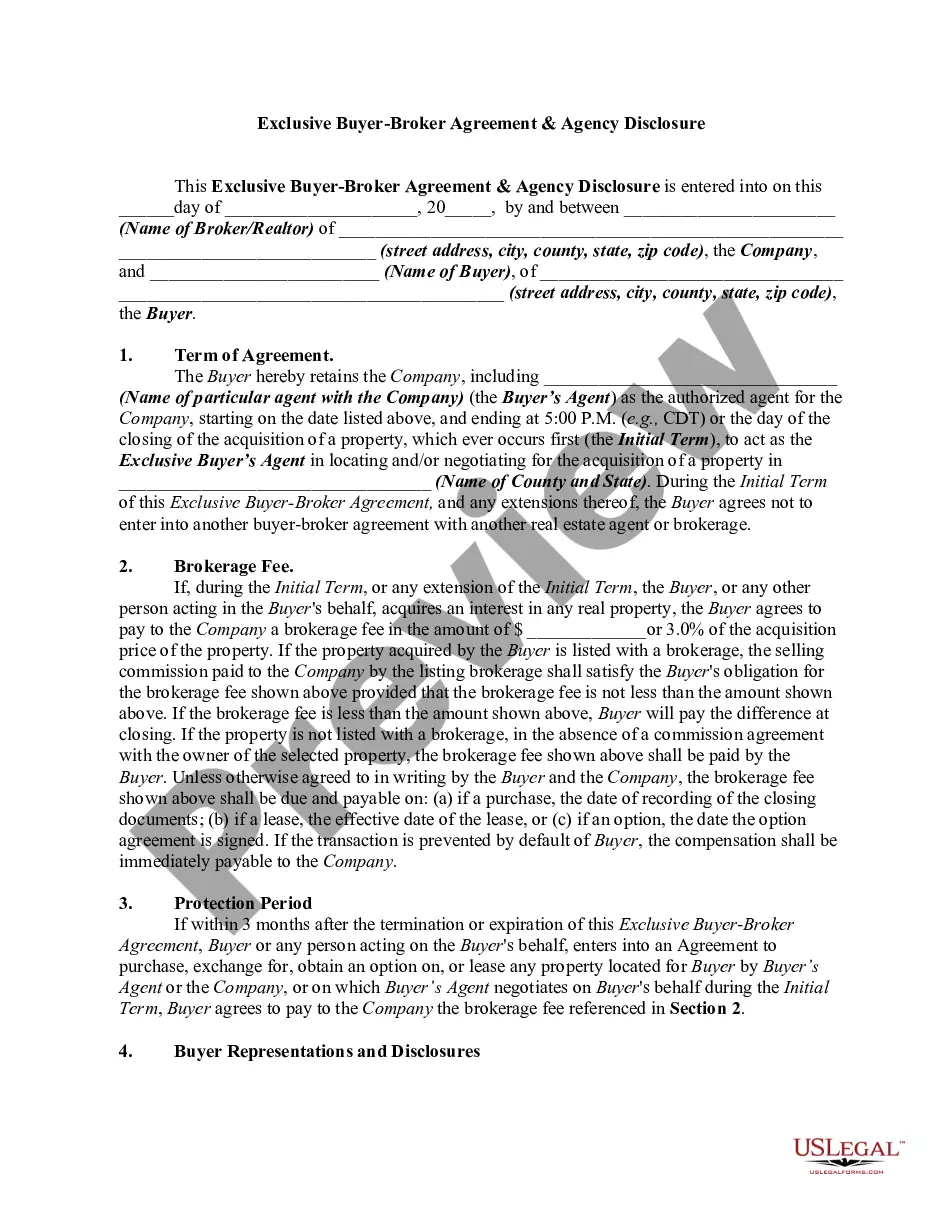
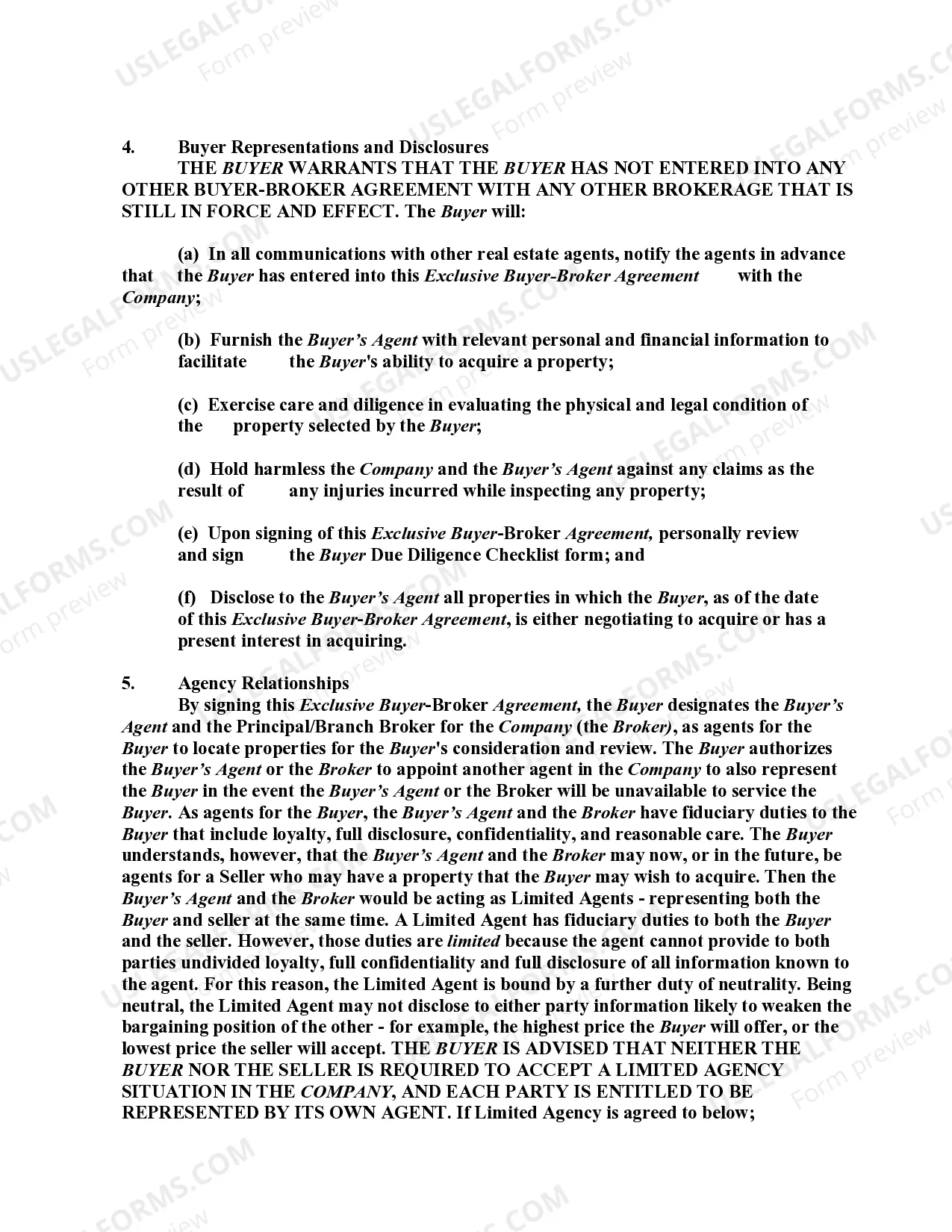
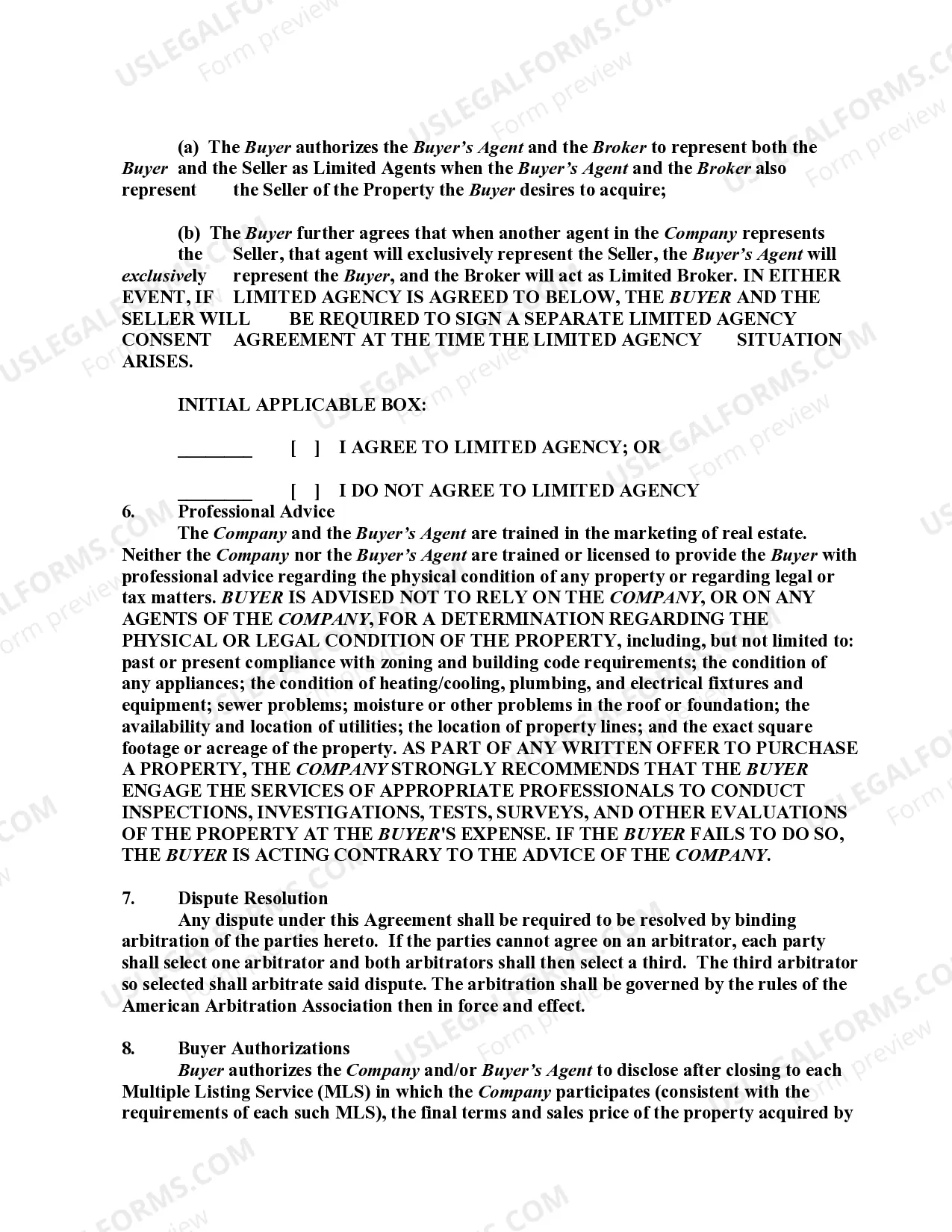
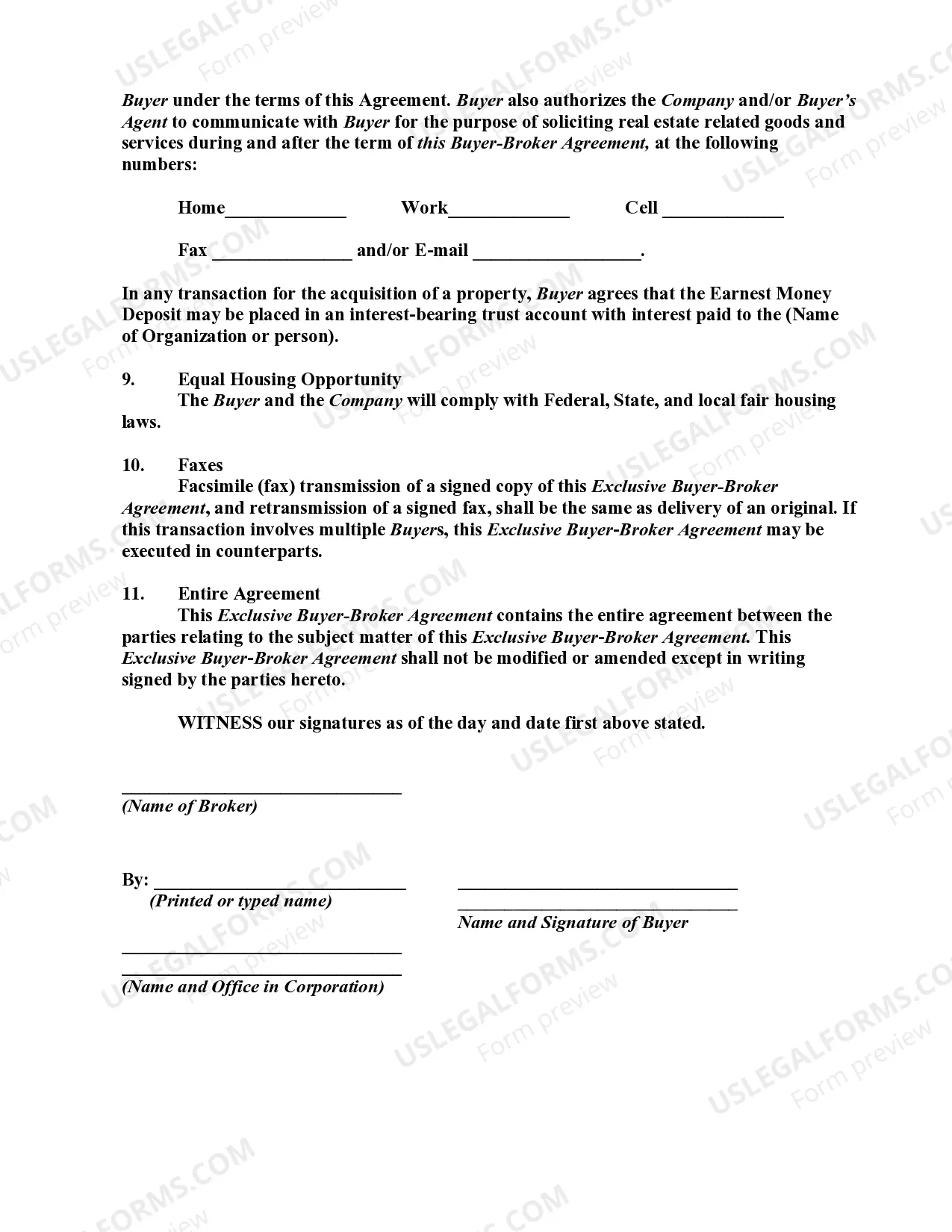
How to fill out Exclusive Buyer-Broker Agreement And Agency Disclosure?
- Log into your account at US Legal Forms. Ensure your subscription is active; if it's expired, renew it promptly.
- If you are new to the service, start by checking the Preview mode and descriptions of potential forms. Verify that the chosen form meets your specific needs and adheres to your local jurisdiction's regulations.
- Search for additional templates if required. If inconsistencies appear, utilize the Search feature to locate the appropriate documents.
- Purchase the selected form by clicking the 'Buy Now' button, making sure you select the subscription plan that suits your needs. You'll need to register for an account to access the available resources.
- Complete your transaction by entering your payment information via credit card or PayPal.
- Download your chosen form directly to your device, and you can access it anytime through the 'My Forms' section of your account.
By following these straightforward steps, you can efficiently gather the legal documents necessary for handling real estate transactions. US Legal Forms stands out with its extensive library of over 85,000 customizable forms and packages, ensuring you select precisely what you need.
Start today and simplify your real estate dealings with US Legal Forms—your trustworthy partner in securing legal documents!
Form popularity
FAQ
Generally, you receive a 1099-S form when selling real estate for sale, but it may not occur in every situation, especially if the transaction doesn't meet certain criteria. This form is important for reporting to the IRS and documents the sale's gross proceeds. Confirm with your real estate agent or title company to ensure proper reporting.
You are required to inform the IRS when you sell real estate for sale, particularly if there is a profit. This is done through the relevant tax forms such as Schedule D and Form 8949. Transparency in reporting ensures compliance and helps avoid any future tax issues.
Yes, reporting the sale of a home to the IRS is necessary unless you meet certain exclusions. If you profit from the sale of your home, especially if it exceeds the exclusion limits, you need to report this on your tax return. Ensure you have the right forms, such as Form 8949, to make this process easier.
When you sell real estate for sale, you generally use Form 8949 to report the sale, along with Schedule D. These forms detail your capital gains and losses from the sale. It's crucial to keep accurate records of the sale, so you can complete these forms accurately.
Filing for real estate involves several steps, starting with gathering your financial documents and any forms related to the sale. If you're selling real estate for sale, you need to complete the appropriate IRS forms for reporting your gains. You may also benefit from using services like USLegalForms to help streamline the process.
Yes, selling real estate for sale can be considered taxable income if you make a profit from the sale. The IRS treats the profit as a capital gain. However, if you qualify for the home sale exclusion, you may not owe taxes on a portion of the profit.
When you sell real estate for sale, you typically receive a 1099-S form from the title company involved in the transaction. This form reports the gross proceeds from the sale to the IRS. However, if you sell your home for a profit, this form helps document your earnings for tax purposes.
To make $100,000 your first year in real estate, focus on building a strong network and understanding the market. Invest time in marketing properties effectively and mastering negotiation skills. Utilizing resources, including training programs and professional forms, can provide foundational knowledge and tools to succeed. Stay dedicated, adapt quickly, and prioritize the right properties to achieve your financial goals.
To write an effective real estate listing, start with an eye-catching headline that includes 'real estate for sale'. Provide a concise yet informative description highlighting the property's features, location, and potential appeal. Include high-quality photos to attract potential buyers, and ensure all information is accurate and up-to-date. A well-crafted listing can significantly enhance interest and inquiries.
When filling out a real estate sales contract, begin by entering the buyer and seller's names and contact details. Next, provide specific property information, including legal description and address. Outline the terms of the sale, payment details, and any contingencies or deadlines. To ensure accuracy and compliance, consider using US Legal Forms to access templates tailored for real estate sales.