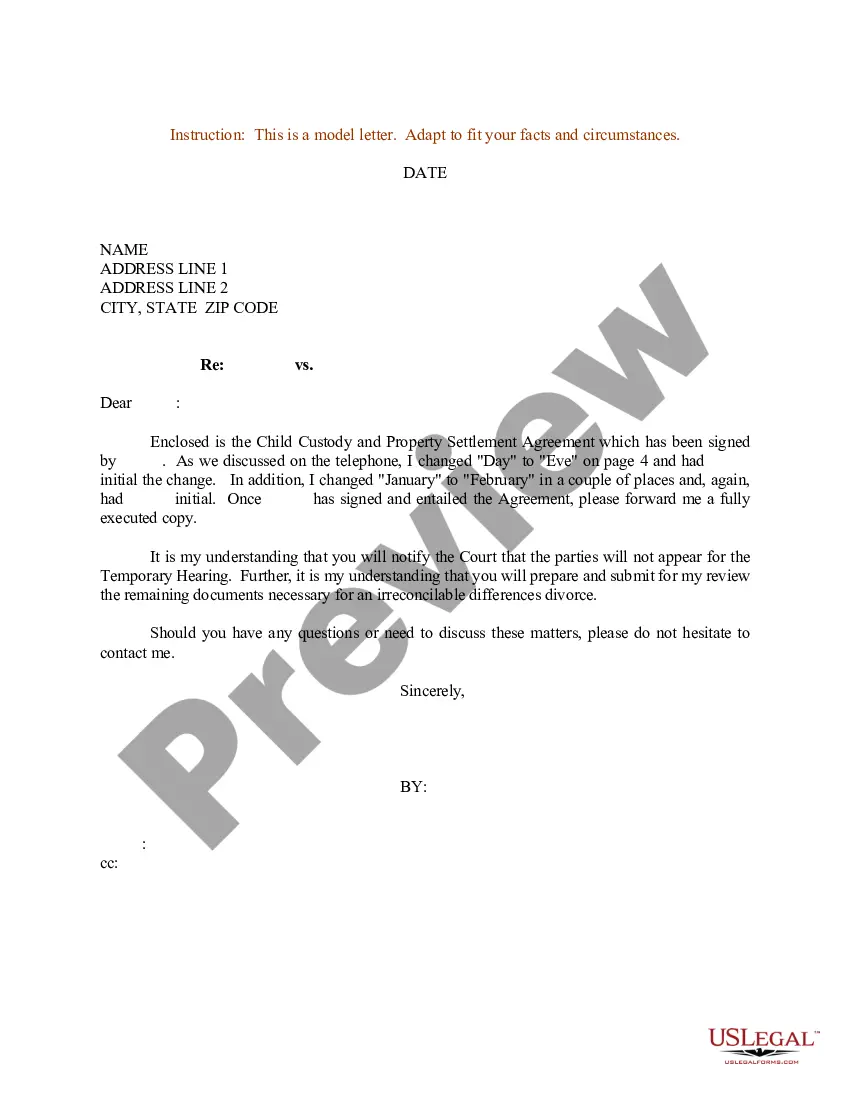
Letter For Custody Battle
Description
Get your form ready online
Our built-in tools help you complete, sign, share, and store your documents in one place.
Make edits, fill in missing information, and update formatting in US Legal Forms—just like you would in MS Word.
Download a copy, print it, send it by email, or mail it via USPS—whatever works best for your next step.
Sign and collect signatures with our SignNow integration. Send to multiple recipients, set reminders, and more. Go Premium to unlock E-Sign.
If this form requires notarization, complete it online through a secure video call—no need to meet a notary in person or wait for an appointment.
We protect your documents and personal data by following strict security and privacy standards.

Make edits, fill in missing information, and update formatting in US Legal Forms—just like you would in MS Word.

Download a copy, print it, send it by email, or mail it via USPS—whatever works best for your next step.

Sign and collect signatures with our SignNow integration. Send to multiple recipients, set reminders, and more. Go Premium to unlock E-Sign.

If this form requires notarization, complete it online through a secure video call—no need to meet a notary in person or wait for an appointment.

We protect your documents and personal data by following strict security and privacy standards.
Looking for another form?
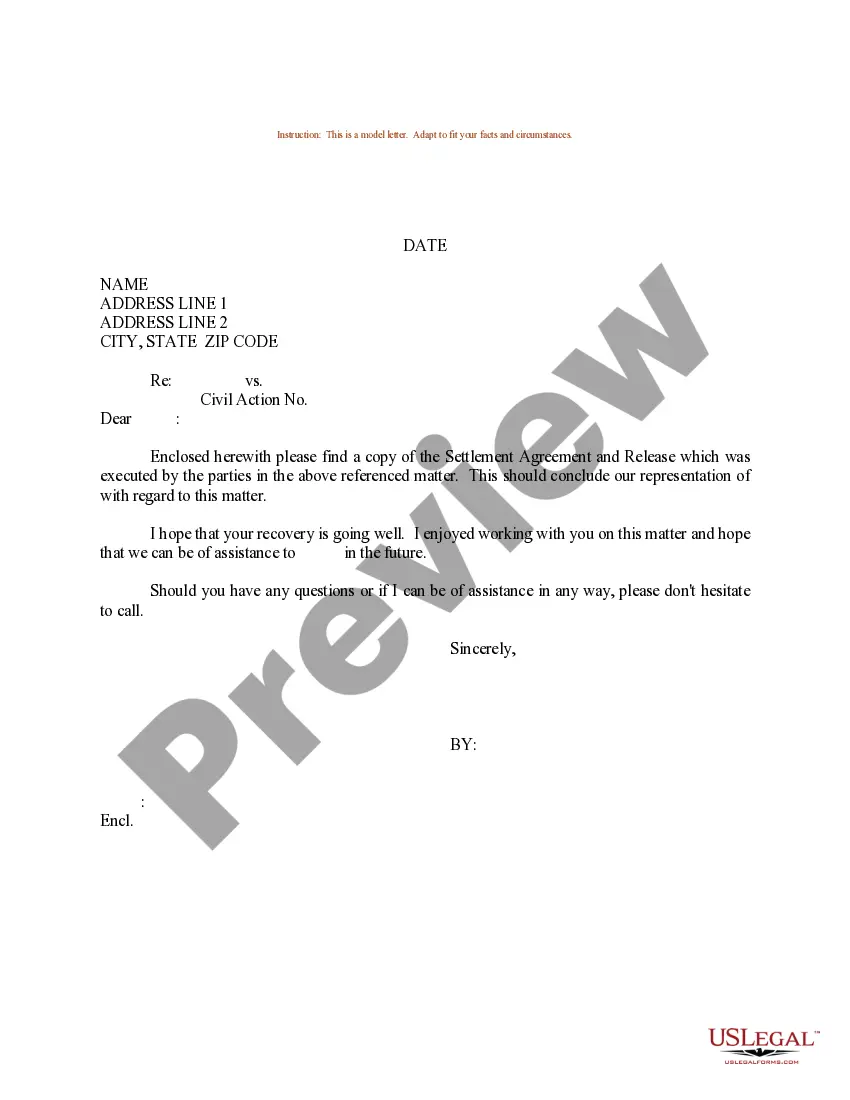
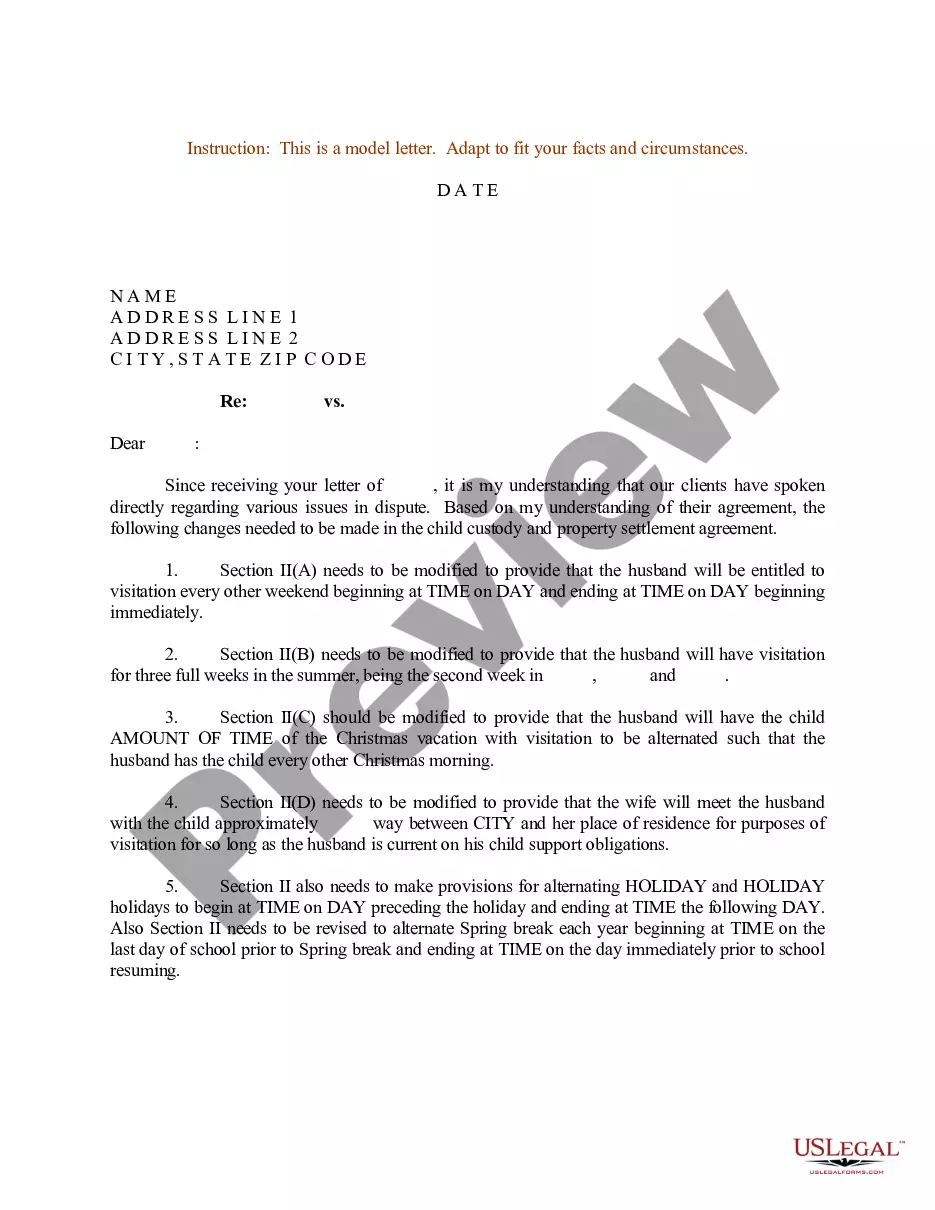
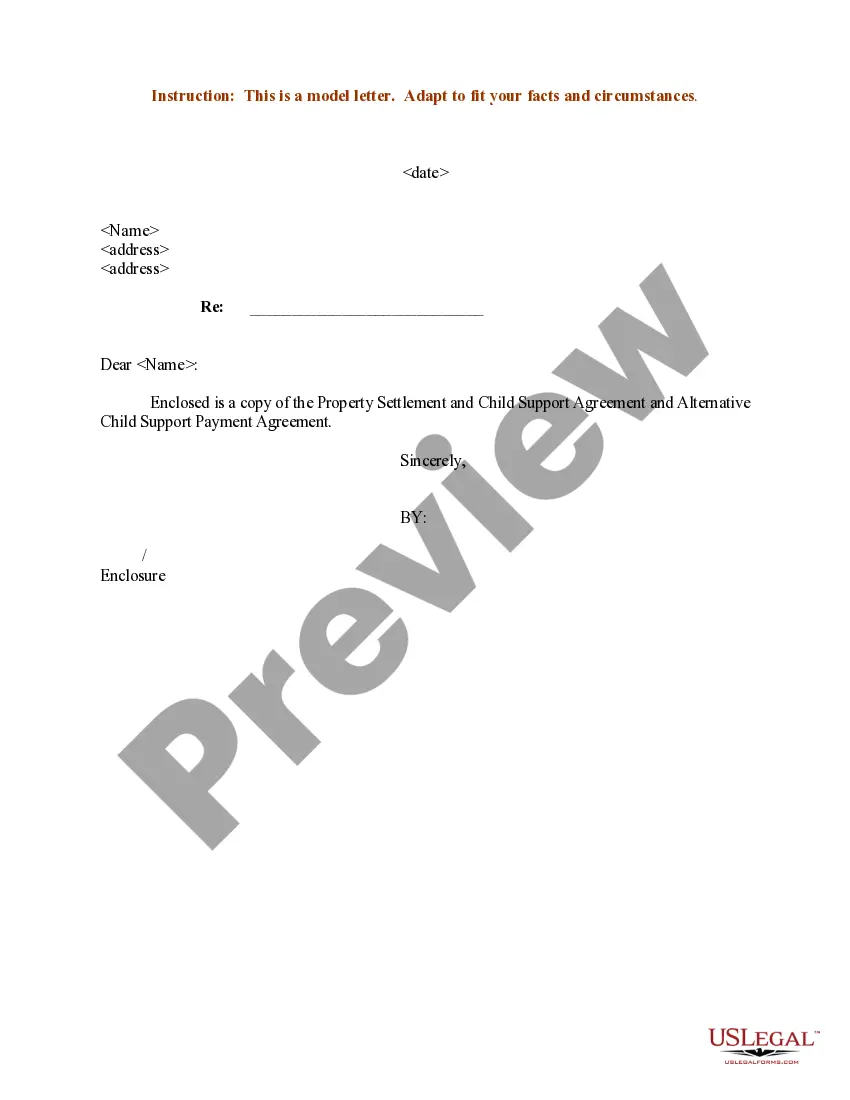
How to fill out Sample Letter Regarding Child Custody And Property Settlement Agreement?
Locating a reliable source for the latest and suitable legal templates is a significant part of handling administrative procedures.
Identifying the correct legal documents demands precision and meticulousness, which is why it is essential to obtain samples of the Letter For Custody Battle exclusively from trusted providers, such as US Legal Forms. An incorrect template could squander your time and delay your current situation.
Once you have the form saved on your device, you can modify it with an editor or print it out and complete it by hand. Remove the hassles associated with your legal documents. Discover the vast US Legal Forms collection where you can locate legal templates, assess their relevance to your circumstances, and download them instantly.
- Utilize the catalog browsing option or search tool to locate your sample.
- Review the form's details to confirm it meets your state and county's specifications.
- Preview the form, if available, to verify it is the exact document you need.
- Continue your search to find the appropriate template if the Letter For Custody Battle does not suit your requirements.
- Once you are confident about the document's applicability, download it.
- If you are a registered user, click Log in to verify your identity and access your chosen forms in My documents.
- If you haven't registered yet, click Buy now to acquire the template.
- Select the pricing option that meets your needs.
- Proceed to the registration to complete your order.
- Finalise your purchase by selecting a method of payment (credit card or PayPal).
- Select the file format for downloading the Letter For Custody Battle.
Form popularity
FAQ
The amended FDCPA allows debt collectors to use newer technologies, such as email and text messages, to communicate with consumers regarding their debts, subject to certain limitations, which protect consumers against harassment or abuse.
Don't provide personal or sensitive financial information Never give out or confirm personal or sensitive financial information ? such as your bank account, credit card, or full Social Security number ? unless you know the company or person you are talking with is a real debt collector.
The Fair Debt Collection Practices Act was signed into law by President Jimmy Carter on September 20, 1977. The act prohibits certain debt collection practices, and requires debt collectors to identify themselves when communicating with a consumer and to validate the debt at the consumer's request.
This is where we get our "7-in-7" concept. You can attempt to contact a consumer about 1 debt 7 times in 7 days. And it's the "1 debt" that's key here. Phone numbers do not matter; how many debts your agency has for the consumer does.
The 7-in-7 rule explained Collectors are permitted to place a call to the consumer about a particular debt seven (7) times within a period of seven (7) consecutive days, so long as no contact is made with the consumer in any of the attempts.
If you are struggling with debt and debt collectors, Farmer & Morris Law, PLLC can help. As soon as you use the 11-word phrase ?please cease and desist all calls and contact with me immediately? to stop the harassment, call us for a free consultation about what you can do to resolve your debt problems for good.
In the new changes to Regulation F, the frequency at which a collections agency can contact a consumer has changed. This change, presented in Section 1006.14B21A, addresses telephone call frequency and restricts agencies to contacting a consumer seven times within seven consecutive days.
Debt collectors cannot harass or abuse you. They cannot swear, threaten to illegally harm you or your property, threaten you with illegal actions, or falsely threaten you with actions they do not intend to take. They also cannot make repeated calls over a short period to annoy or harass you.