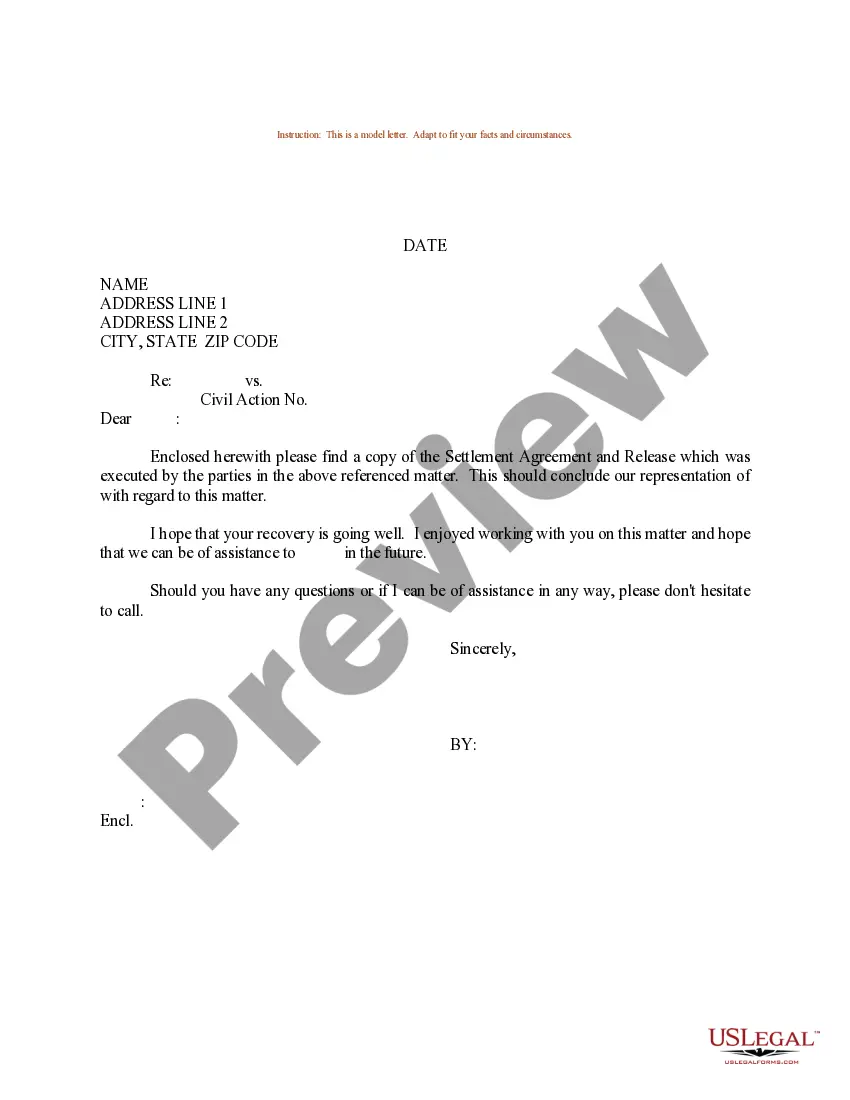
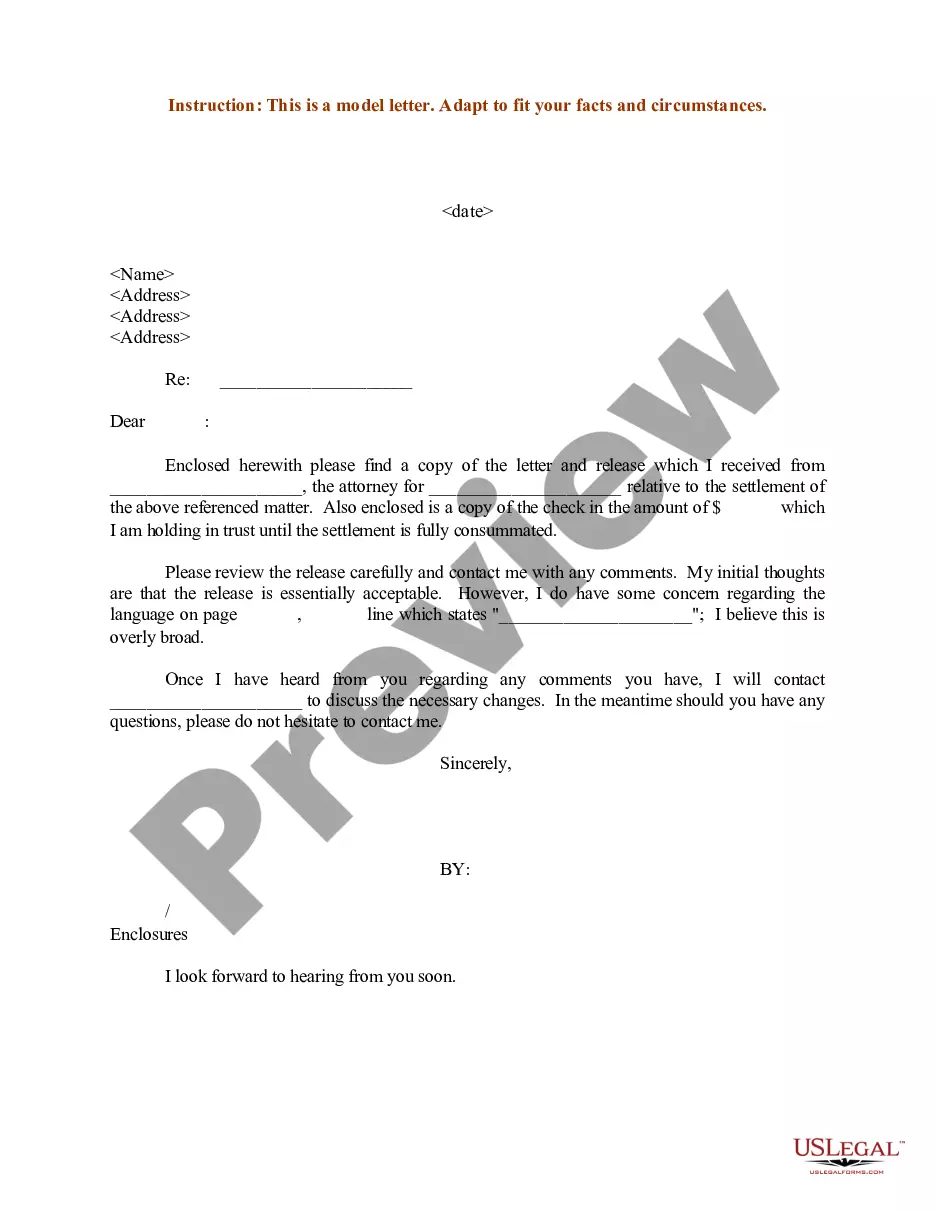
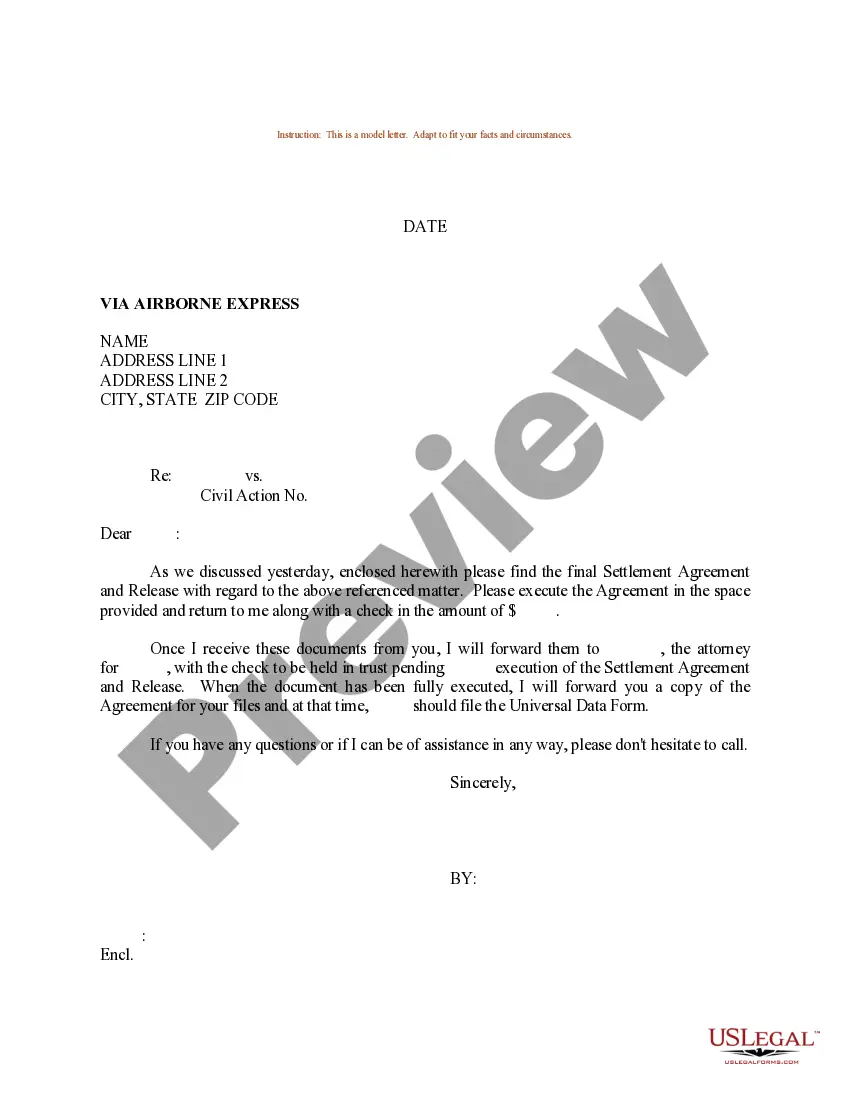
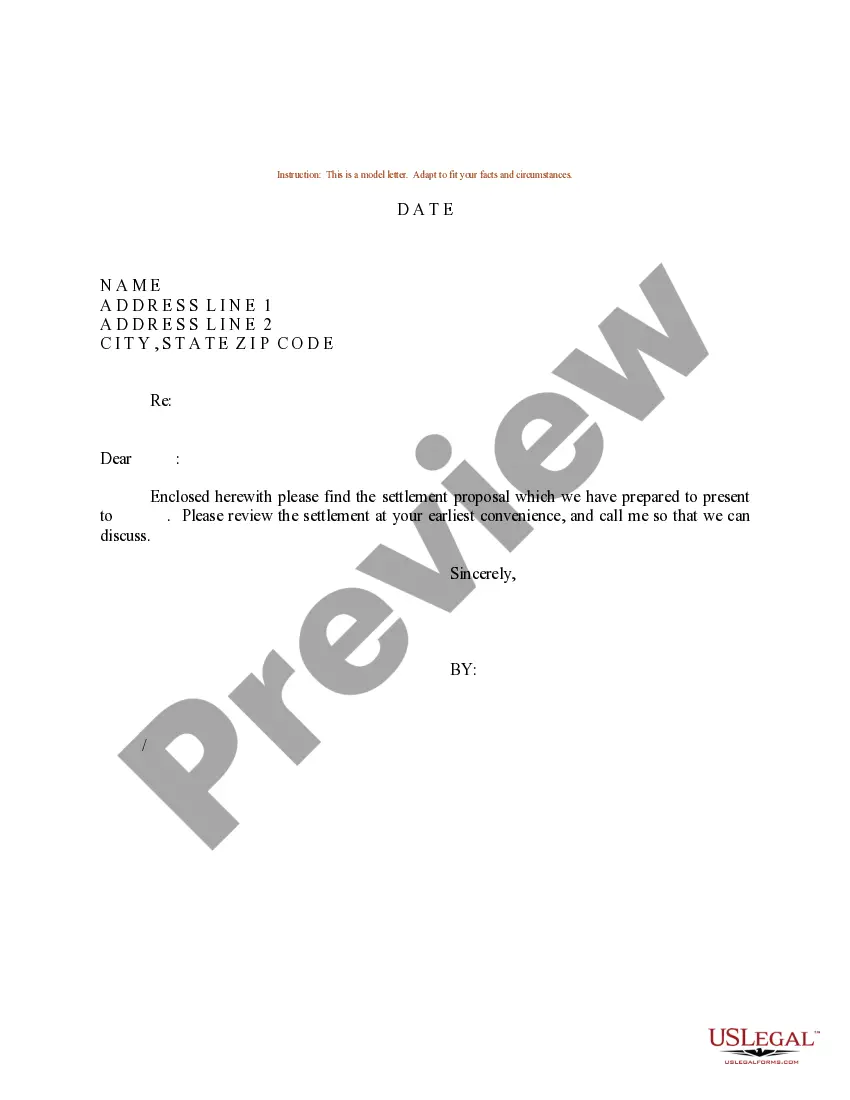
Sample Settlement Agreement Form With Signature
Description
Get your form ready online
Our built-in tools help you complete, sign, share, and store your documents in one place.
Make edits, fill in missing information, and update formatting in US Legal Forms—just like you would in MS Word.
Download a copy, print it, send it by email, or mail it via USPS—whatever works best for your next step.
Sign and collect signatures with our SignNow integration. Send to multiple recipients, set reminders, and more. Go Premium to unlock E-Sign.
If this form requires notarization, complete it online through a secure video call—no need to meet a notary in person or wait for an appointment.
We protect your documents and personal data by following strict security and privacy standards.

Make edits, fill in missing information, and update formatting in US Legal Forms—just like you would in MS Word.

Download a copy, print it, send it by email, or mail it via USPS—whatever works best for your next step.

Sign and collect signatures with our SignNow integration. Send to multiple recipients, set reminders, and more. Go Premium to unlock E-Sign.

If this form requires notarization, complete it online through a secure video call—no need to meet a notary in person or wait for an appointment.

We protect your documents and personal data by following strict security and privacy standards.
Looking for another form?

How to fill out Sample Letter For Settlement Agreement And Release?
The Example Settlement Agreement Template With Signature displayed on this page is a reusable official outline created by skilled attorneys in accordance with federal and state statutes and guidelines.
For over 25 years, US Legal Forms has supplied individuals, enterprises, and lawyers with more than 85,000 authenticated, state-specific documents for any commercial and personal situation. It’s the fastest, easiest, and most trustworthy method to acquire the papers you require, as the service ensures the utmost level of data protection and anti-malware safeguards.
Register for US Legal Forms to have authenticated legal templates for all of life's situations readily available.
- Search for the document you require and examine it.
- Choose the pricing plan that fits you and set up an account.
- Pick the format you want for your Example Settlement Agreement Template With Signature (PDF, DOCX, RTF) and store the template on your device.
- Print the template to fill it out manually or utilize an online multi-functional PDF editor to swiftly and accurately complete and sign your document with a valid signature.
- Access the same document again whenever necessary. Open the My documents tab in your profile to redownload any previously acquired forms.
Form popularity
FAQ
What Should Be Included in a Settlement Agreement? Identifying information for all involved parties. A description of the issue you're seeking to settle. An offer of resolutions that both parties agree to. Proof of valid consideration from both parties without coercion or duress. Legal purpose.
Note: In a default case, the signature of the respondent on the settlement agreement must be notarized. Attach the completed and signed Settlement Agreement and applicable attachments to the Judgment (FL-180).
The settlement agreement is a written document, and both parties must sign it and agree to its terms. A settlement agreement resolves the case, and the parties execute the judgment by following the terms of the settlement. This execution often includes the payment of money from one party to the other.
So all settlement documents must be interpreted in the same manner as any other contract would be interpreted. And a settlement agreement does not need to be in writing to be enforceable. An oral settlement agreement entered into by the parties can be enforceable so long as it does not violate the statute of frauds.
The laws apply to both parties. It is generally recommended that the agreement be made in writing and satisfy all claims. In addition, if the settlement agreement will regard a specific claim, then the party should put the case number in writing and specify the liability with which the plaintiff is waiving.