Summons Law
Description
Get your form ready online
Our built-in tools help you complete, sign, share, and store your documents in one place.
Make edits, fill in missing information, and update formatting in US Legal Forms—just like you would in MS Word.
Download a copy, print it, send it by email, or mail it via USPS—whatever works best for your next step.
Sign and collect signatures with our SignNow integration. Send to multiple recipients, set reminders, and more. Go Premium to unlock E-Sign.
If this form requires notarization, complete it online through a secure video call—no need to meet a notary in person or wait for an appointment.
We protect your documents and personal data by following strict security and privacy standards.

Make edits, fill in missing information, and update formatting in US Legal Forms—just like you would in MS Word.

Download a copy, print it, send it by email, or mail it via USPS—whatever works best for your next step.

Sign and collect signatures with our SignNow integration. Send to multiple recipients, set reminders, and more. Go Premium to unlock E-Sign.

If this form requires notarization, complete it online through a secure video call—no need to meet a notary in person or wait for an appointment.

We protect your documents and personal data by following strict security and privacy standards.
Looking for another form?

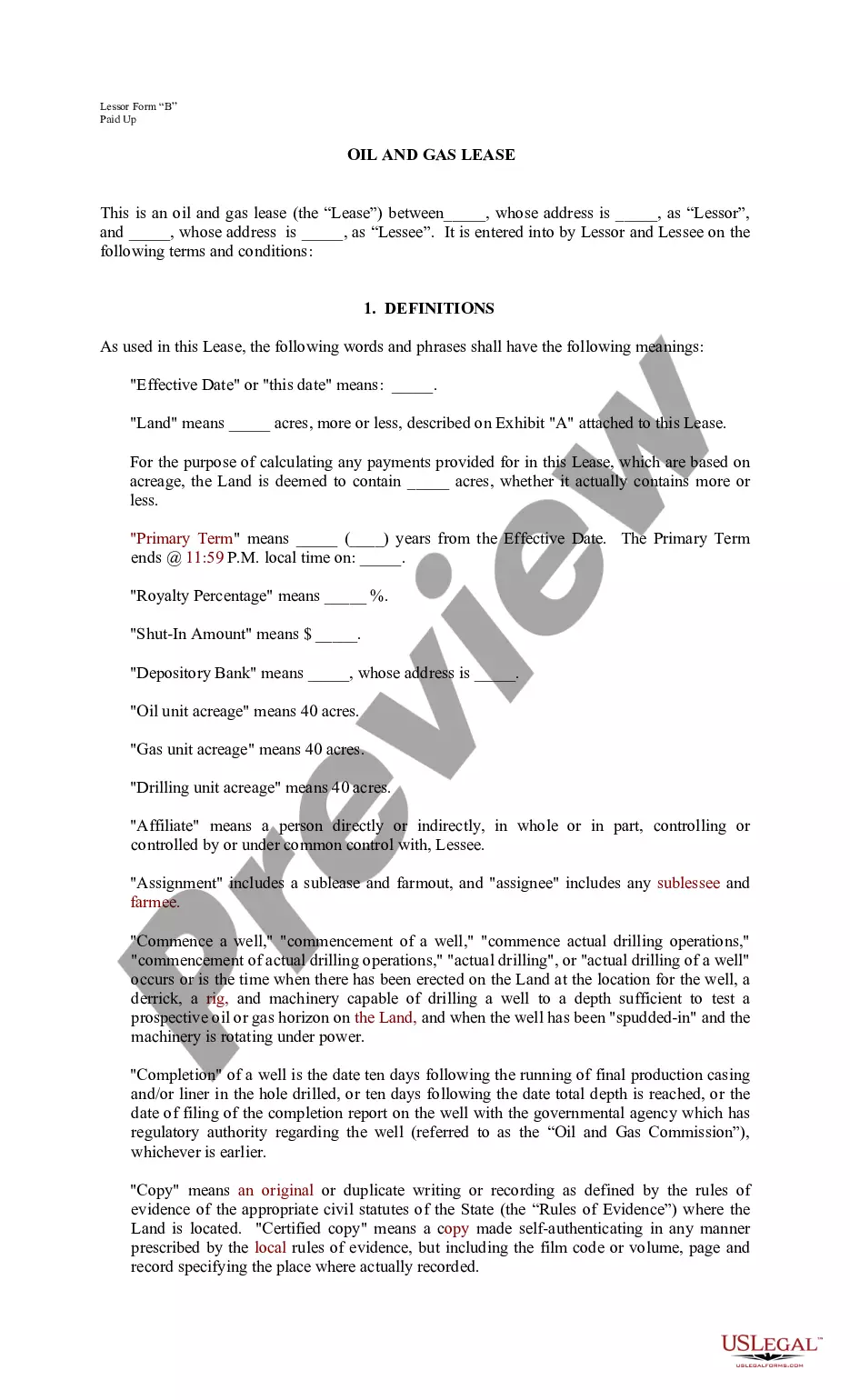


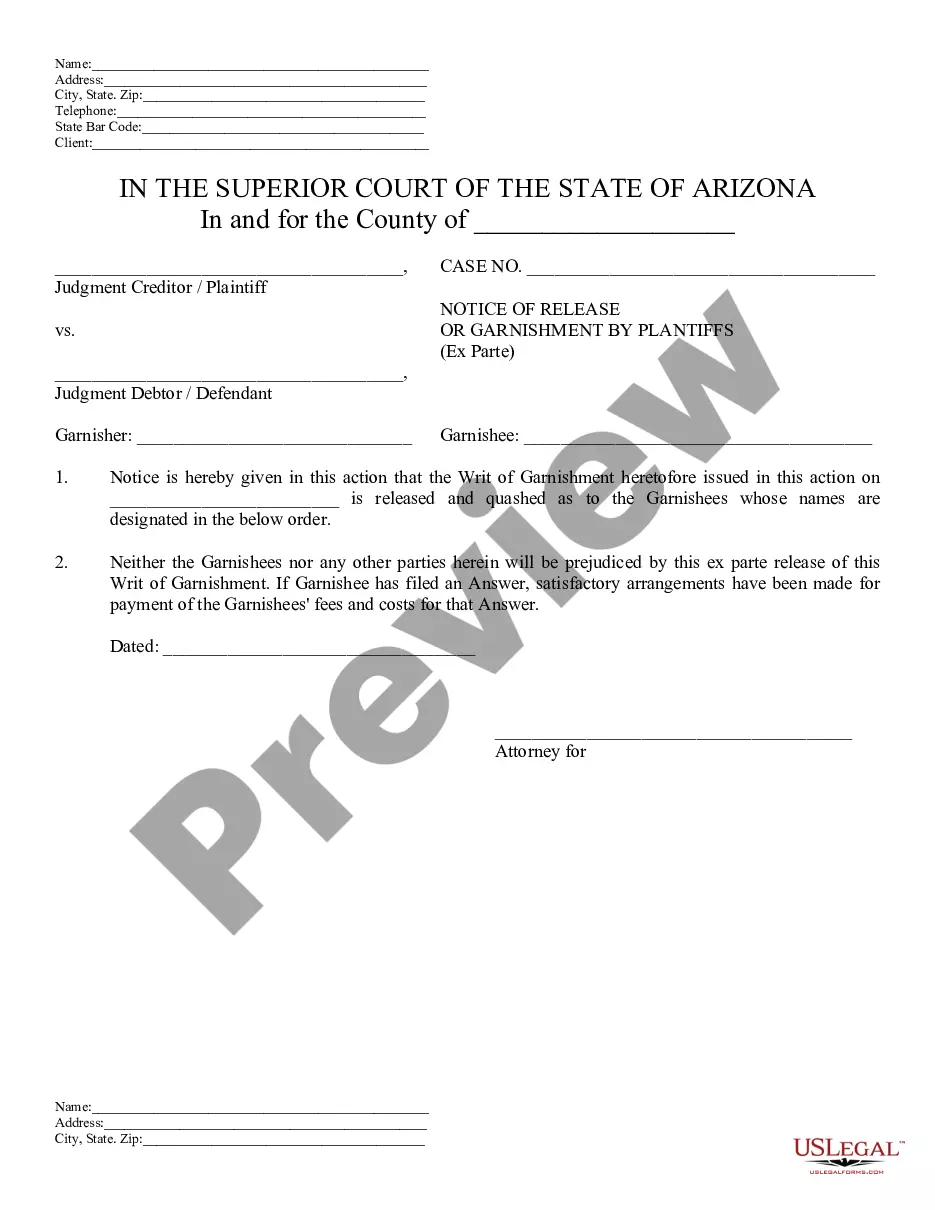
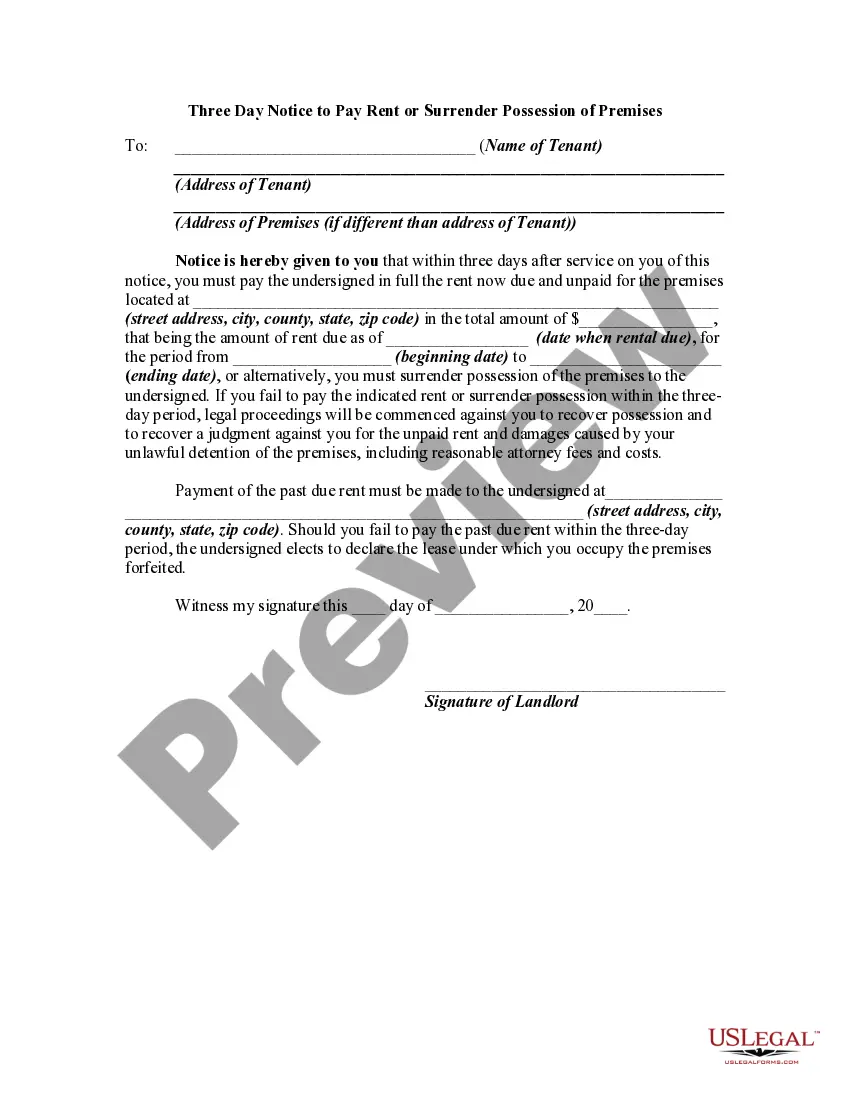
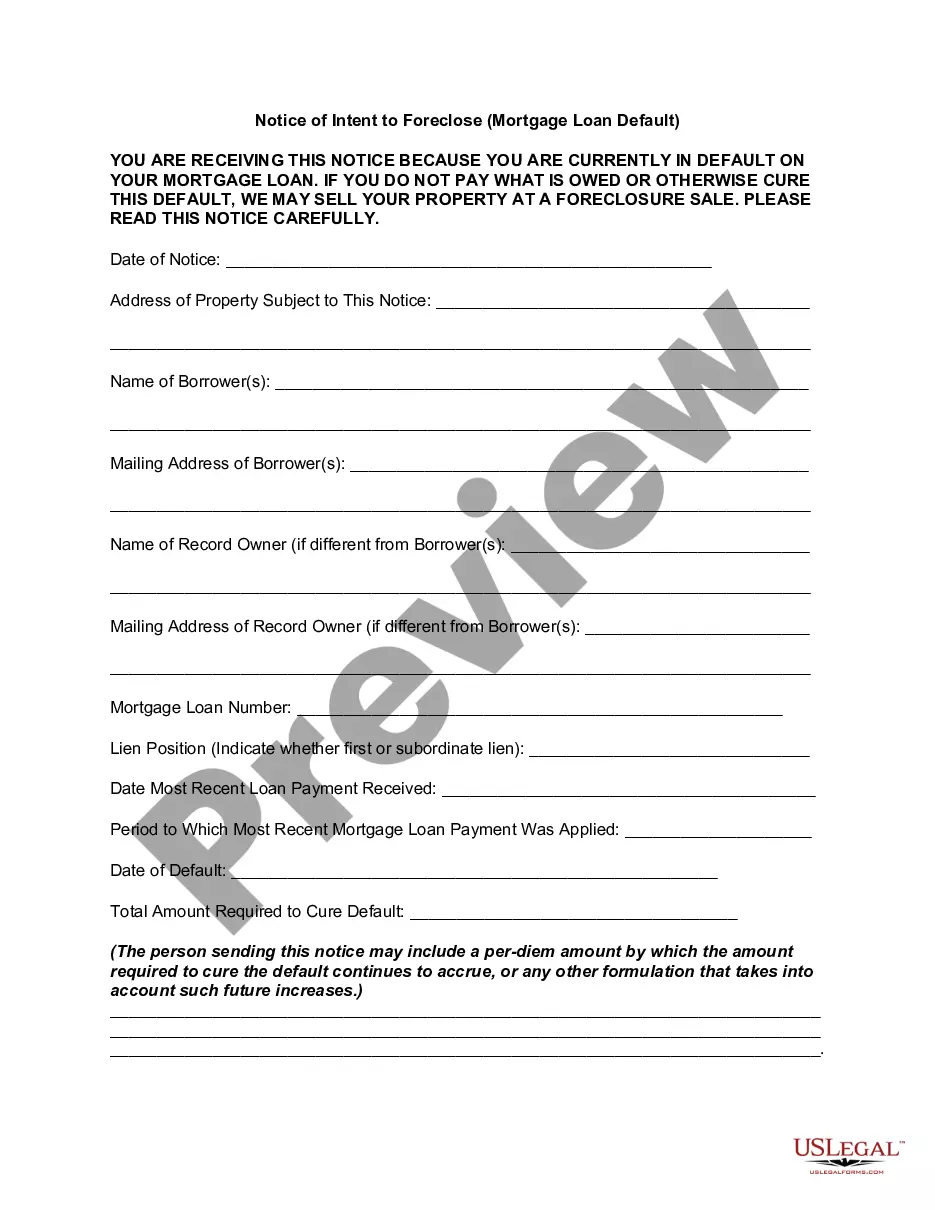



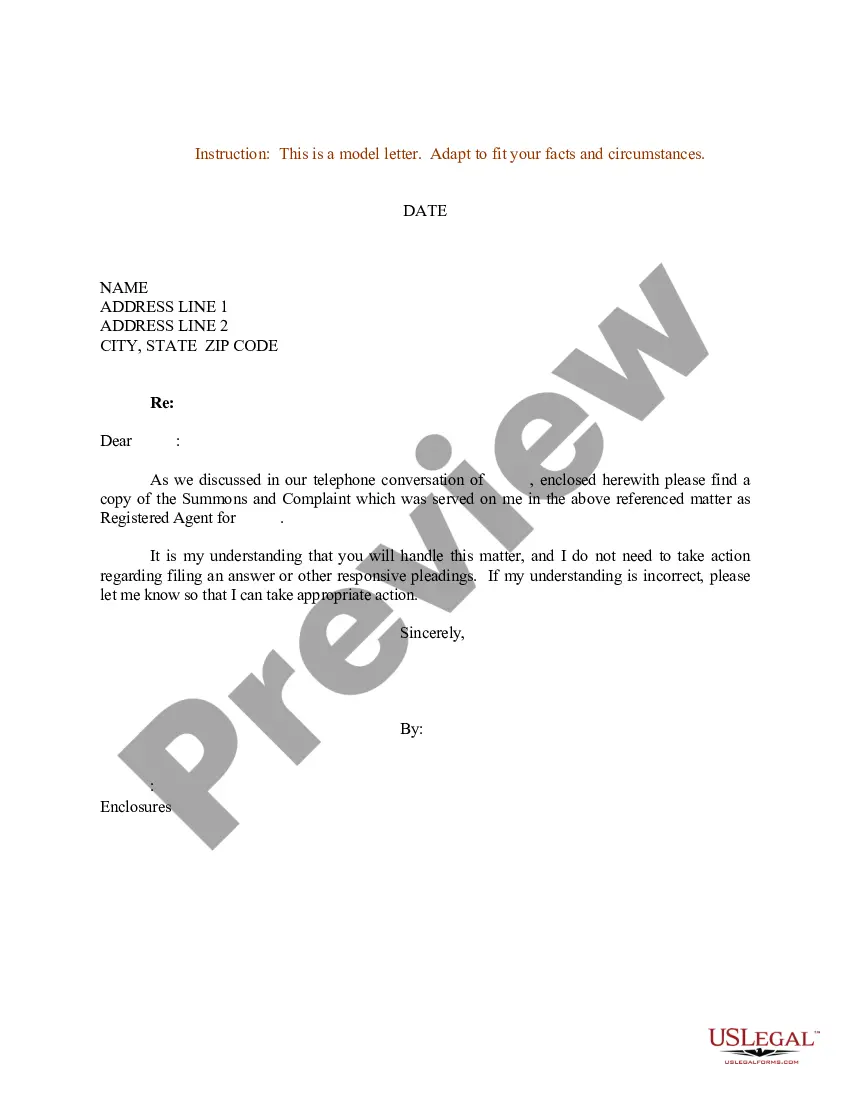
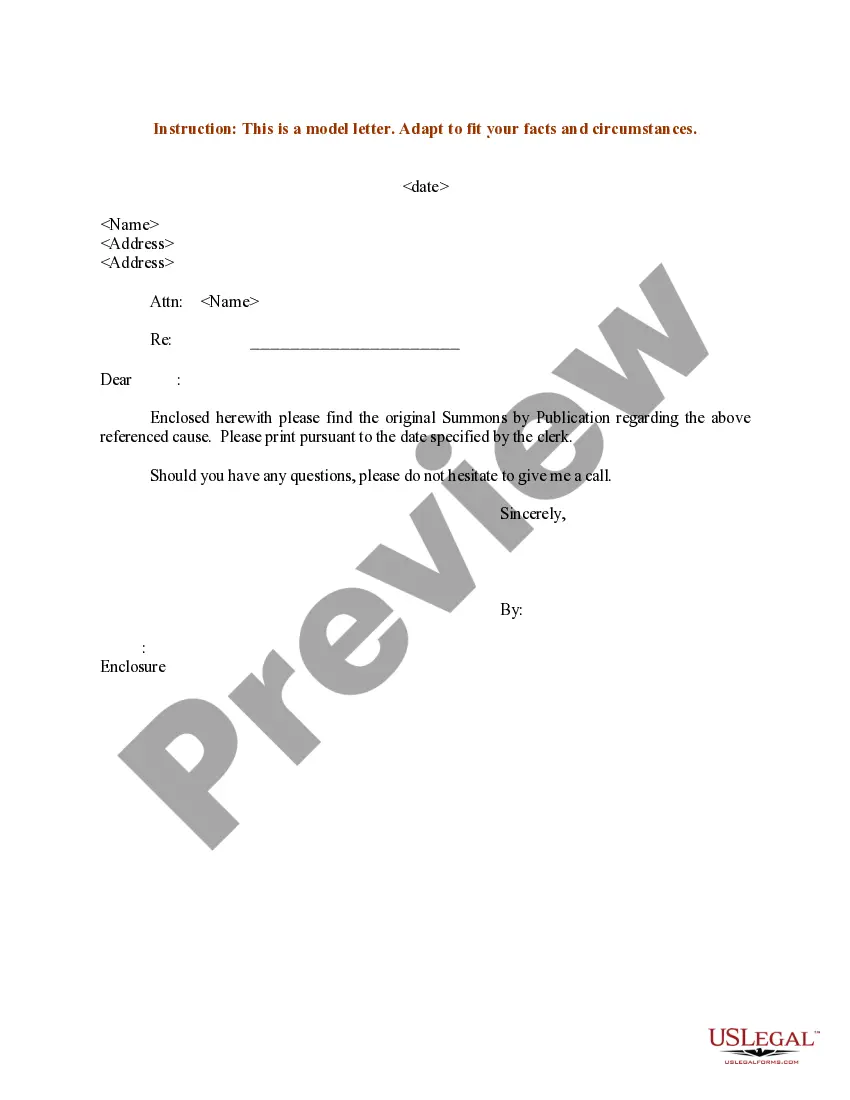
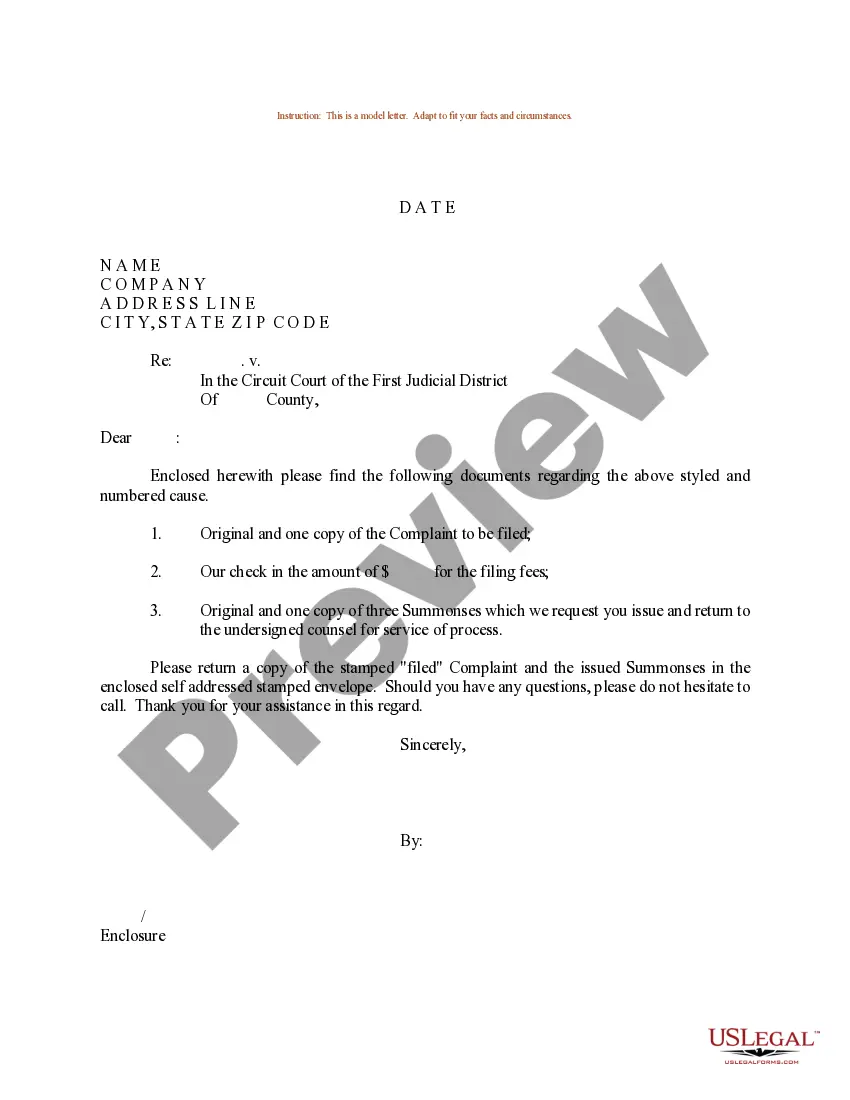
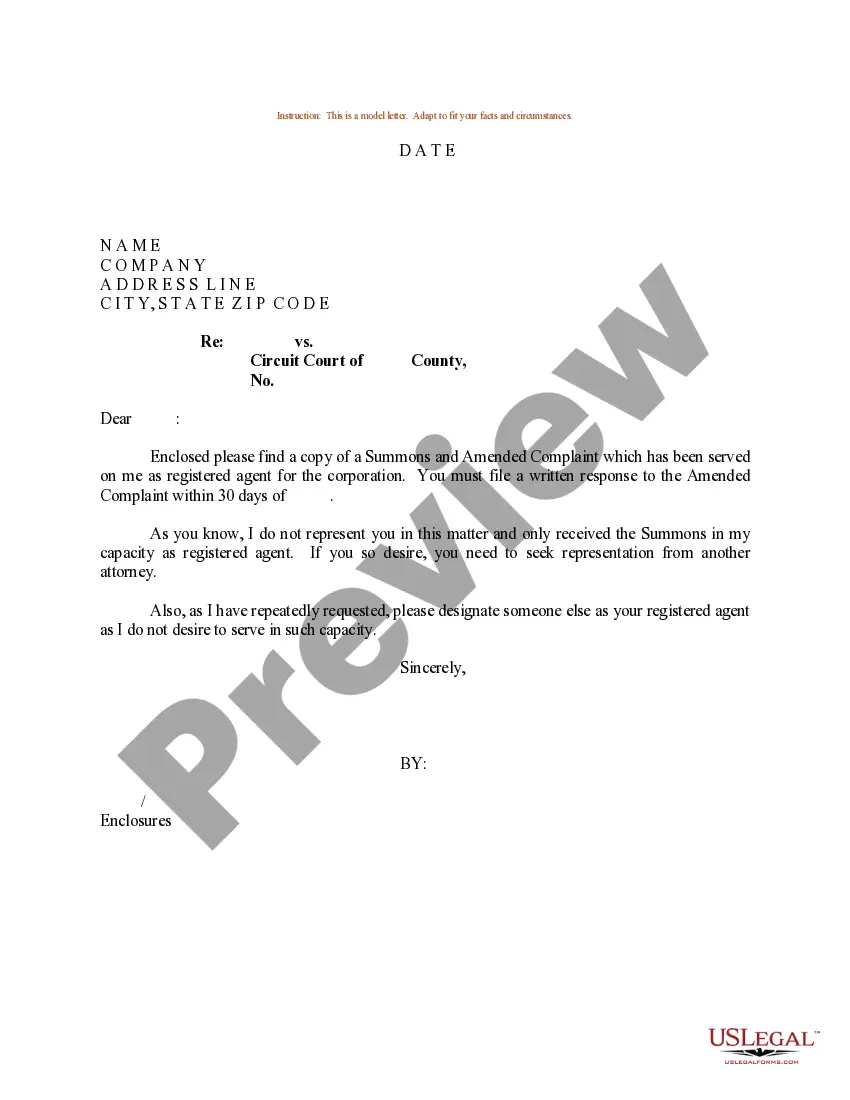
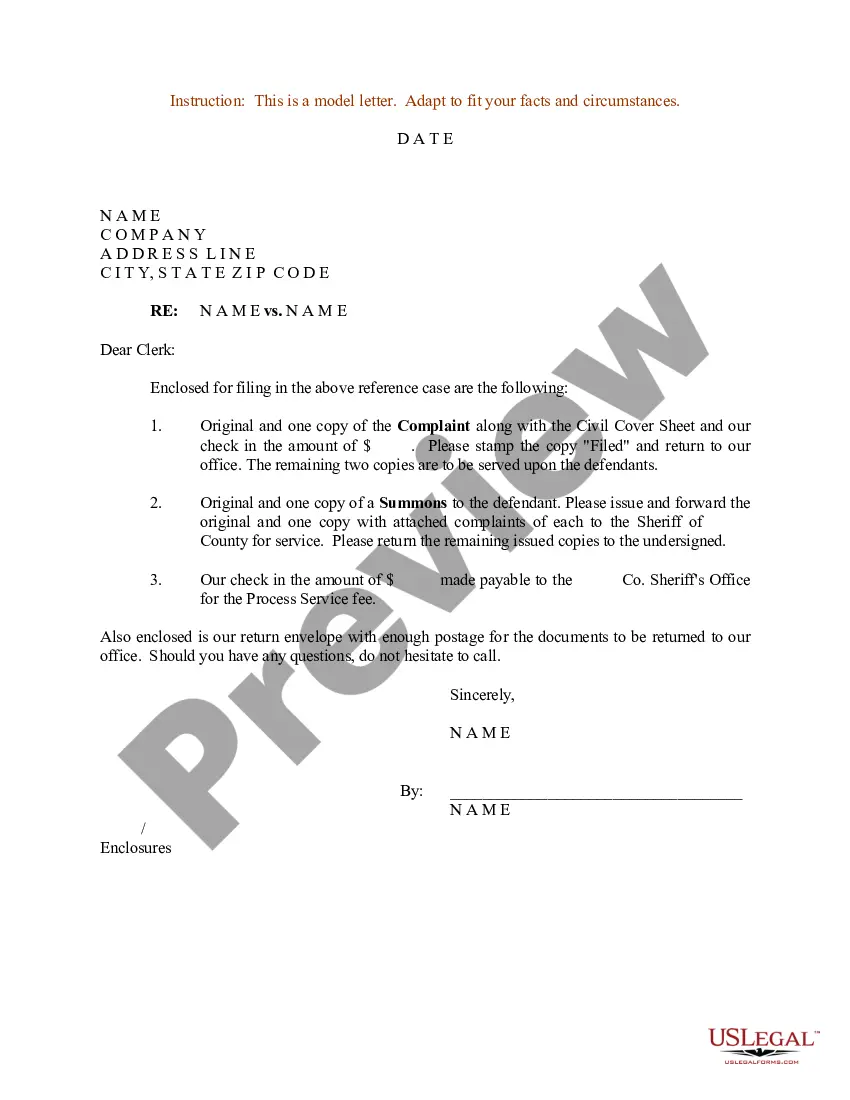
How to fill out Sample Letter For Summons And Complaint?
- If you're a returning user, log in to access your account and download the required template by clicking the Download button. Verify that your subscription is active; if not, renew it as per your plan.
- For first-time users, begin by browsing the Preview mode and form description. Confirm you've selected a document that meets your needs and complies with local jurisdiction specifications.
- If necessary, use the Search option to find another template that fits your requirements. Once you identify the right form, proceed to the next step.
- Purchase the chosen document by clicking on the Buy Now button, then select a preferred subscription plan. Registration is required to tap into the full resources available.
- Complete your payment by entering your credit card information or using your PayPal account to finalize the subscription.
- Once your payment is processed, download the form to your device, allowing for easy completion and future access through the My Forms section of your profile.
By following these straightforward steps, you'll unlock access to US Legal Forms' extensive library, vastly exceeding competitors in form collection.
Utilize the premium support available to ensure your documents are completed accurately. Don't hesitate to take the first step towards legal readiness today!
Form popularity
FAQ
For a summons to be issued, a valid complaint or petition must be filed with the court. The court reviews the filing to ensure it meets legal standards before issuing a summons. Additionally, specific information must be included, such as the names of the parties and the relief sought. Using a platform like US Legal Forms can simplify this process by providing templates and insights into the required details.
Typically, you cannot receive a legal summons over the phone; it must be served personally or through official channels. This ensures the recipient is adequately notified and provides them an opportunity to respond as mandated by summons law. If you have concerns about the summons process, platforms like US Legal Forms can offer clarity and guidance.
To summons someone, you must prepare the summons document and file it with the court, following local rules. After that, the summons needs to be officially served on the individual, ensuring they receive notice of the legal action. Various services can assist you in serving the summons, and US Legal Forms provides templates and resources to create the necessary documentation efficiently.
The two primary types of summons are civil summons and criminal summons. A civil summons is issued in civil cases, requiring a defendant to respond to a lawsuit, while a criminal summons is used in criminal cases, asking the accused to appear in court. Knowing the difference helps you understand various legal proceedings and their implications under summons law.
To write a summons answer, start by addressing the court, then clearly state your name and the case number. Follow this by admitting or denying each allegation, and provide your defenses or counterclaims if applicable. A well-drafted answer is essential in response to a summons, and resources like US Legal Forms can guide you through the required format.
Writing a summons requires specific legal knowledge and careful attention to detail. You need to include key elements like the title of the court, parties involved, case number, and a clear directive about what action is required. It's crucial to adhere to your state's summons law regulations to ensure validity. For assistance, platforms like US Legal Forms offer templates to streamline the process.
A summons serves as a formal invitation for you to participate in a legal proceeding, often initiating a civil case. It provides essential details about the case, including the parties involved and the nature of the complaint. Familiarizing yourself with summons law helps you to understand the implications and the importance of responding promptly. If you are unsure about how to proceed, US Legal Forms offers valuable resources to assist you in complying with a summons.
When you receive a summons, it indicates that you are required to appear in court or respond to a legal matter. This document officially notifies you of the pending issues and gives you instructions on what to do next. Understanding summons law is crucial, as it outlines your rights and responsibilities. For personalized guidance, consider exploring the US Legal Forms platform to navigate your specific situation.
While it's not mandatory to have a lawyer when dealing with a summons, having legal representation can greatly benefit you. A lawyer familiar with summons law can help ensure compliance with all procedures and deadlines. They can also guide you in crafting a proper response to the summons. Utilizing platforms like US Legal Forms can provide valuable resources and templates to assist in this process.
The process of summoning involves several key steps under the summons law. Initially, a plaintiff files a complaint, followed by the issuance of a summons by the court. The defendant then receives this summons, which outlines the details of the case and the required response timeframe. Successfully completing this process is essential for moving forward with any legal proceedings.