Summons Definition Law
Description
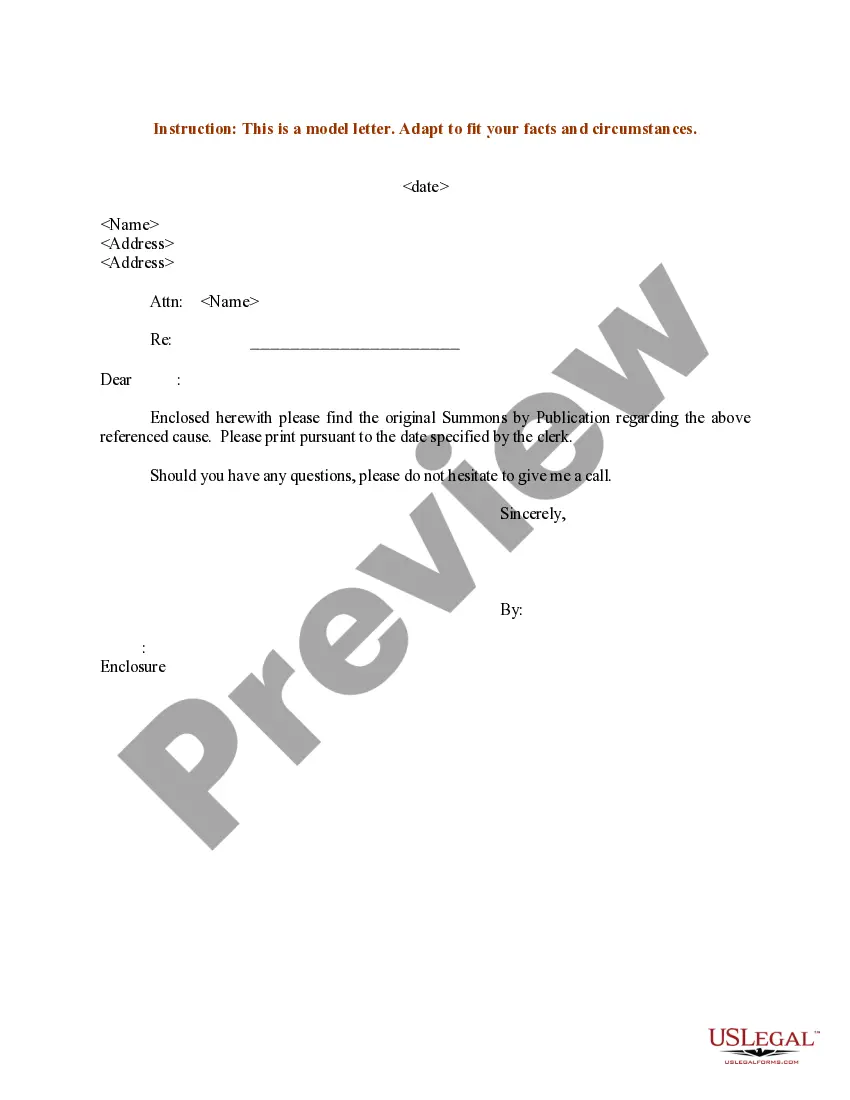
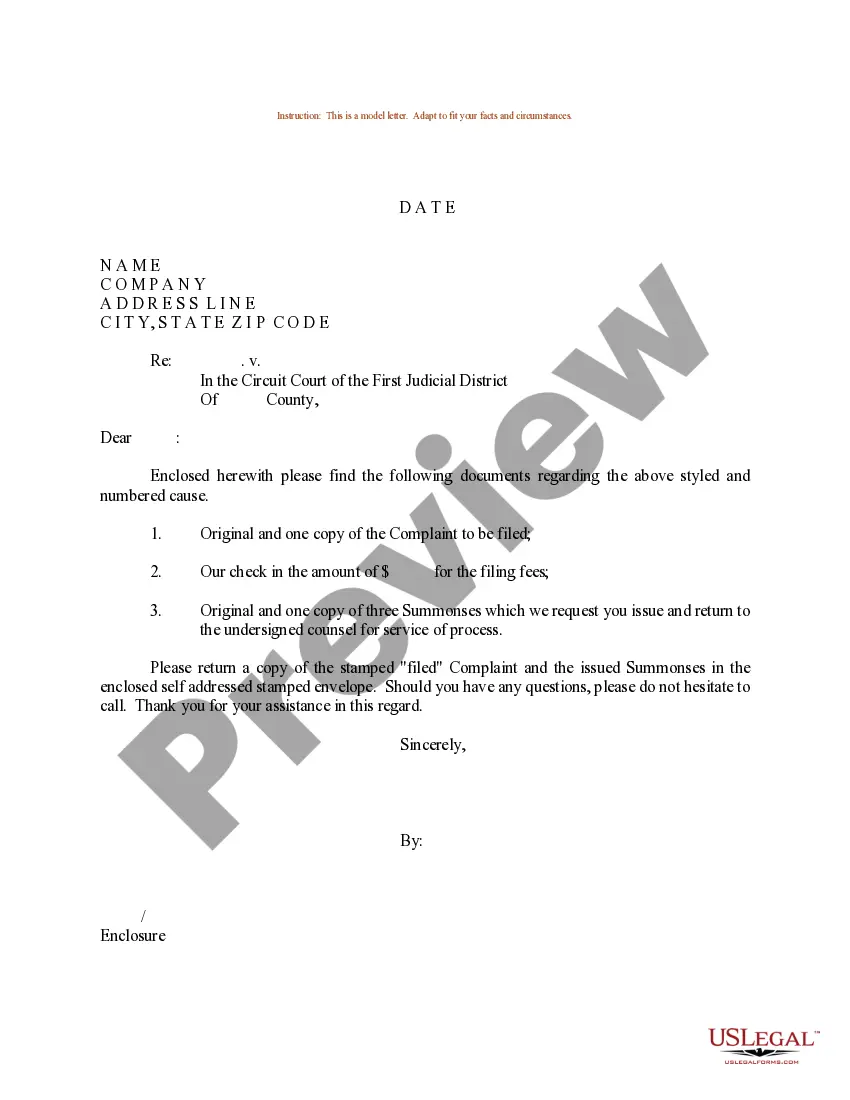
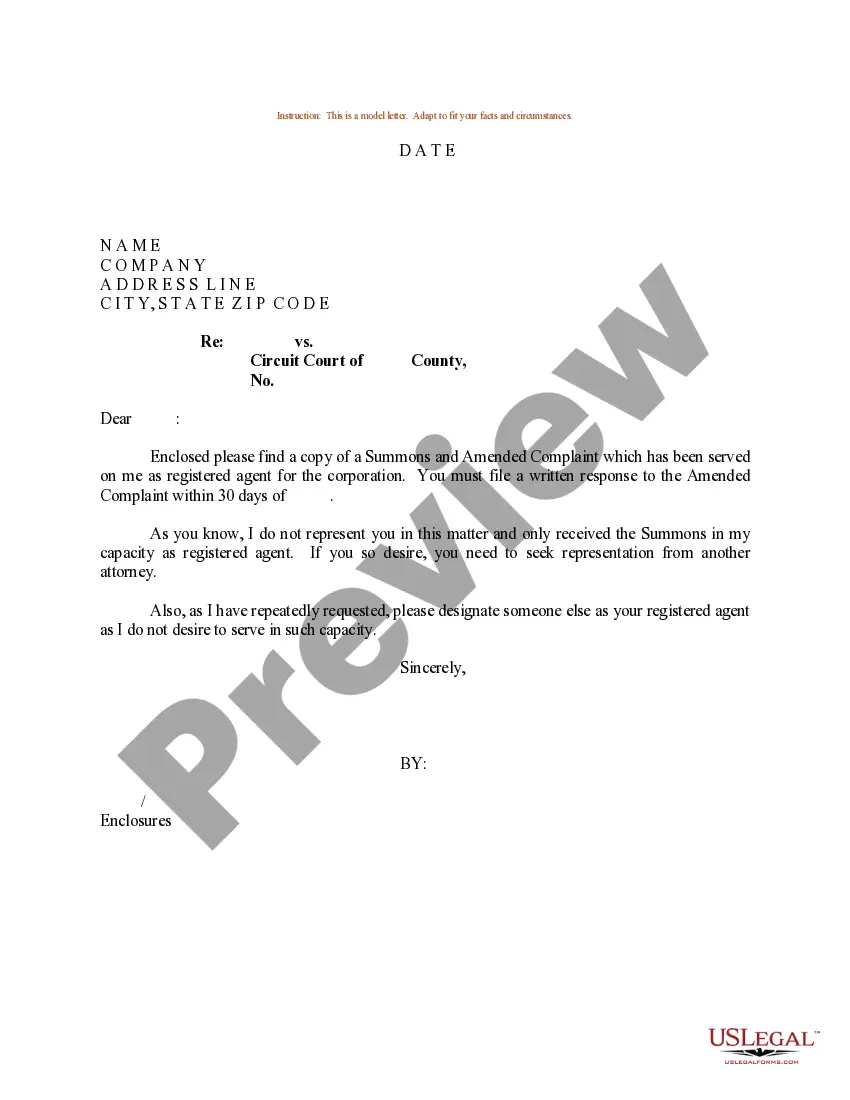



How to fill out Sample Letter For Summons And Complaint?
Managing legal documents can be overwhelming, even for seasoned professionals.
If you are seeking a Summons Definition Law and don't have the time to search for the correct and current version, the process can be stressful.
US Legal Forms caters to all your needs, whether for personal or business paperwork, all in one place.
Make use of sophisticated tools to complete and manage your Summons Definition Law.
Here are the steps to follow after accessing the form you need: Verify it is the correct form by previewing it and reviewing its description.
- Tap into a valuable resource collection of articles, guides, and materials related to your situation and needs.
- Save time and energy searching for the documents you need, and leverage US Legal Forms’ advanced search and Preview feature to find Summons Definition Law and obtain it.
- If you have a subscription, Log In to your US Legal Forms account, search for the form, and obtain it.
- Check your My documents section to review the documents you have previously saved and to organize your folders as necessary.
- If this is your first experience with US Legal Forms, create an account and gain unlimited access to all platform features.
- A comprehensive online form library can be a game changer for anyone looking to handle these matters effectively.
- US Legal Forms is a leading provider of online legal documents, with more than 85,000 state-specific legal forms available at any time.
- With US Legal Forms, you can access forms tailored to your state or county.
Form popularity
FAQ
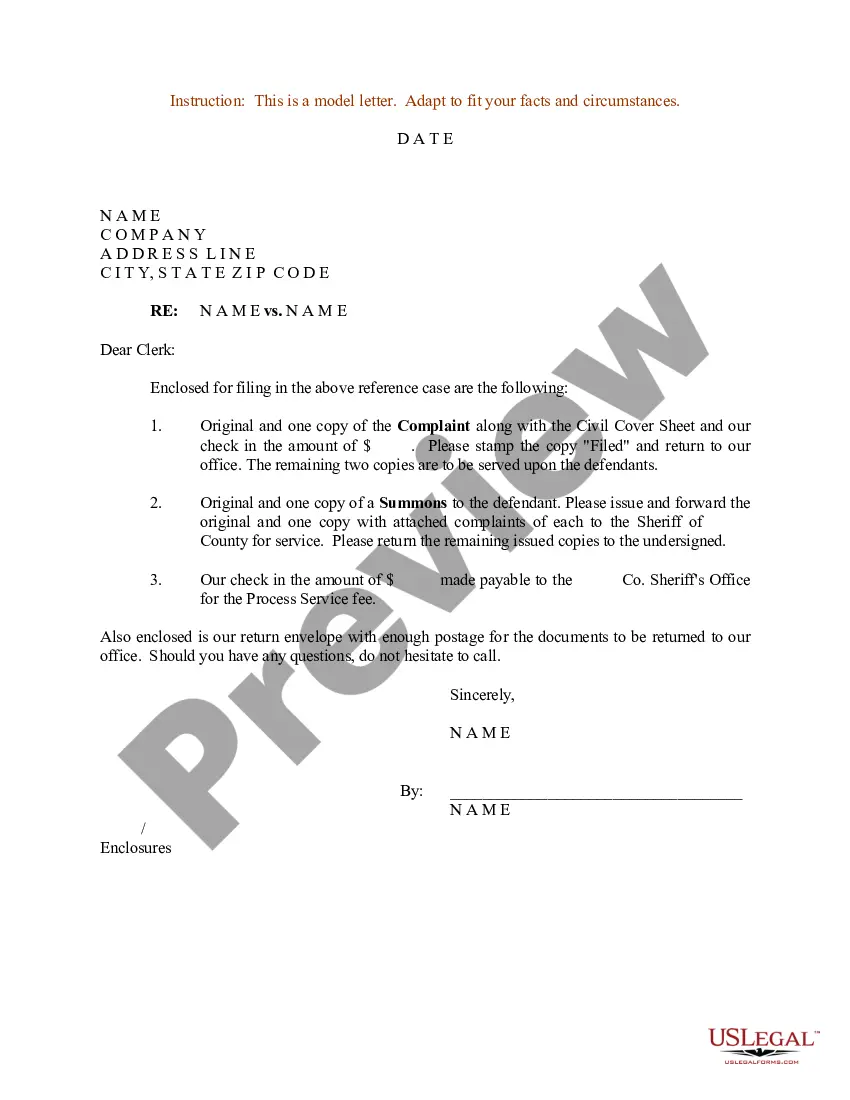
The procedure for a summon typically begins with the filing of a complaint in court, followed by the issuance of a summons to the relevant party. The recipient must be officially served, which may include mail or in-person delivery. Understanding the summons definition law provides clarity on the legal process and what is expected from you. For additional guidance, legal platforms like US Legal Forms can offer useful templates and information.
The provision related to summons are given in Section 27-32 and Order V of CPC. Summons is an authoritative call from the court to attend the court at a specified place and at a specified time. The summons as contemplated in Rule 1 is for the attendance of the defendant.
Understanding a Summons A summons is a an order given by the court requiring a person to appear at a hearing on a scheduled date. In civil cases, a summons may be issued to a party involved in the lawsuit. Usually the person who the complaint has been filed against will receive the court order.
Summons, also called Citation, in law, document issued by a court ordering a specific person to appear at a specific time for some specific purpose. It is issued either directly to the person or to a law officer who must carry out the instructions.
If you have been summoned, you may need to verify that you've received the court order. Often a summons is delivered by an officer of the court, who can confirm that you were summoned in person. The most common reasons to be summoned is because of a legal claim or a debt.
A summon must be attested with the seal of the court or concerned office. It should have an official name and address of the person summoned. There should be specified date, time and place mentioned in the summon asking the presence of the person in the court. It must contain the nature of the offence committed.