Tax Letter Sample With Thru And Attention
Description

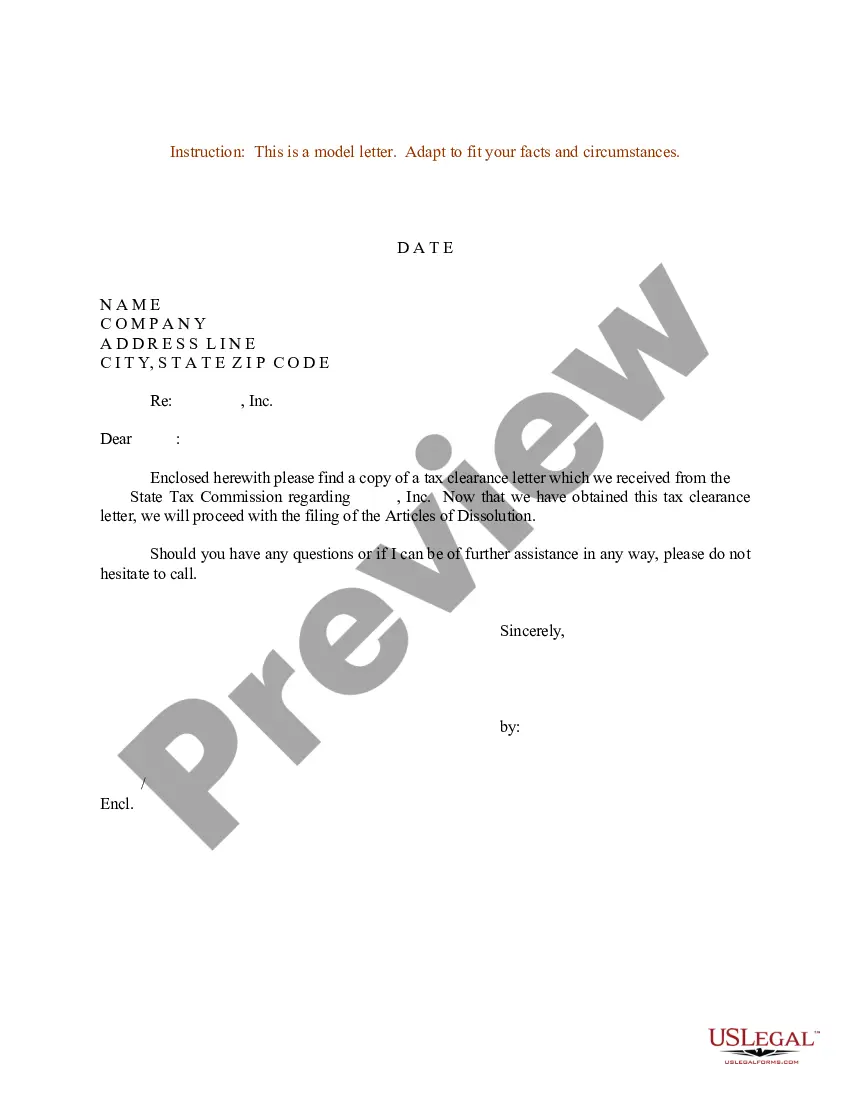





How to fill out Sample Letter For Judgment Confirming Tax Title?
Finding a go-to place to access the most current and relevant legal templates is half the struggle of handling bureaucracy. Discovering the right legal files needs accuracy and attention to detail, which is the reason it is vital to take samples of Tax Letter Sample With Thru And Attention only from reliable sources, like US Legal Forms. A wrong template will waste your time and hold off the situation you are in. With US Legal Forms, you have very little to be concerned about. You may access and view all the details concerning the document’s use and relevance for your circumstances and in your state or county.
Consider the listed steps to finish your Tax Letter Sample With Thru And Attention:
- Make use of the catalog navigation or search field to locate your template.
- Open the form’s description to ascertain if it matches the requirements of your state and county.
- Open the form preview, if there is one, to ensure the template is definitely the one you are searching for.
- Go back to the search and locate the correct document if the Tax Letter Sample With Thru And Attention does not suit your requirements.
- When you are positive regarding the form’s relevance, download it.
- When you are an authorized user, click Log in to authenticate and access your picked forms in My Forms.
- If you do not have an account yet, click Buy now to obtain the form.
- Select the pricing plan that fits your requirements.
- Proceed to the registration to complete your purchase.
- Finalize your purchase by choosing a payment method (bank card or PayPal).
- Select the file format for downloading Tax Letter Sample With Thru And Attention.
- When you have the form on your device, you can modify it with the editor or print it and complete it manually.
Get rid of the inconvenience that comes with your legal paperwork. Discover the extensive US Legal Forms collection to find legal templates, check their relevance to your circumstances, and download them on the spot.
Form popularity
FAQ
Through and thru are often used interchangeably. They both mean the same thing; however, thru is more suitable for informal use, while through is the go-to for formal writing. If you're sending a text to your friend or making a post on Facebook, then you can use thru.
Here's a list of steps to help you write a letter with an attention line: Research the company. ... Use proper formatting. ... Include contact information. ... Address the attention line. ... Write the body of the letter. ... Proofread the letter.
SALUTATION or attention line: Address the reader by name punctuated with a colon. When writing to a manager you do not know by name or to a department, use an attention line. (Example: "Attention Claims Manager.") Avoid stuffy "Dear Sir" or "Dear Madam" salutations.
Through should be used in formal writing, while thru is more appropriate in informal writing and when referring to ?drive-thru? windows at restaurants or businesses.
The "Attn" line should always appear at the very top of your delivery address, just before the name of the person you're sending it to. Use a colon after "Attn" to make it clearly readable. This line signifies to the mail carrier exactly for whom the letter is intended.