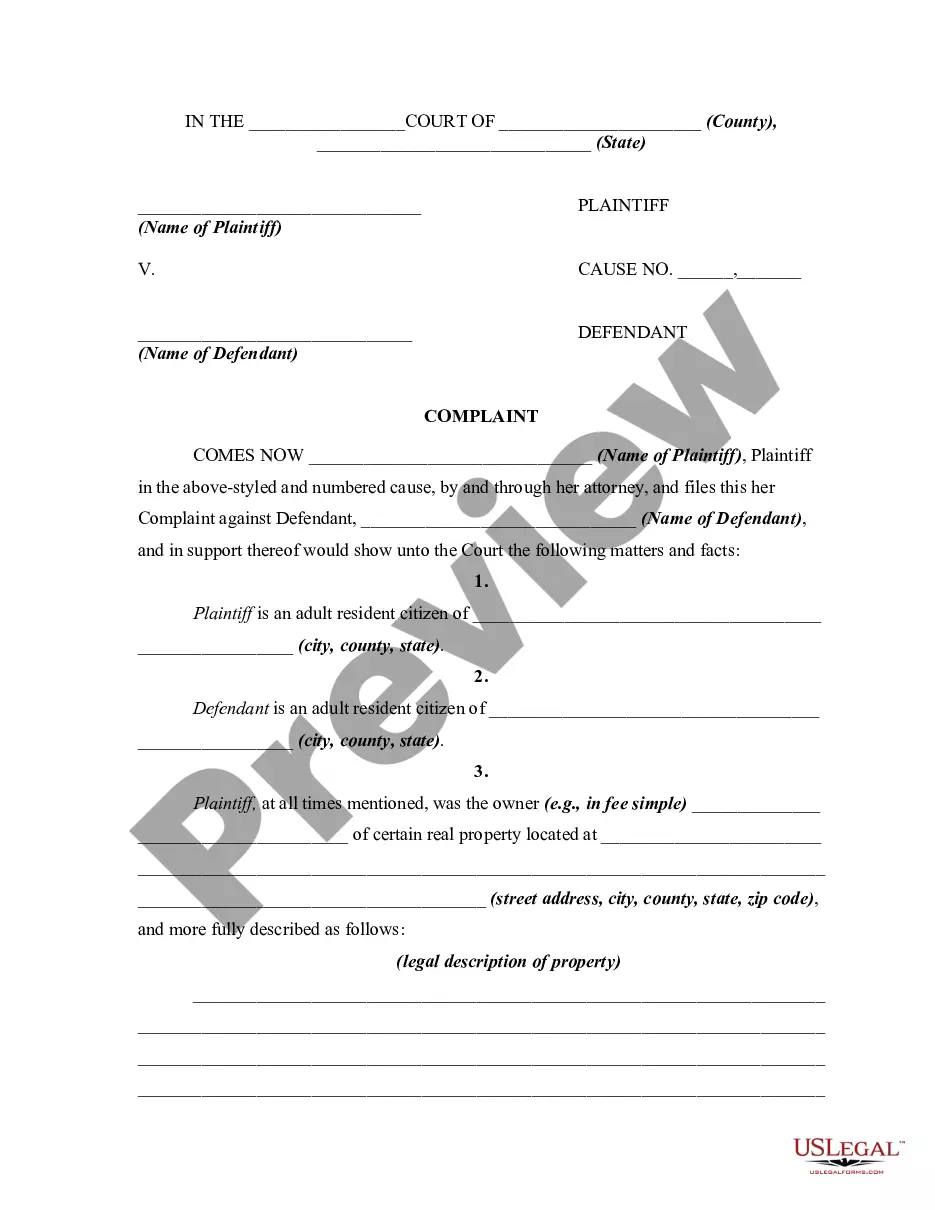
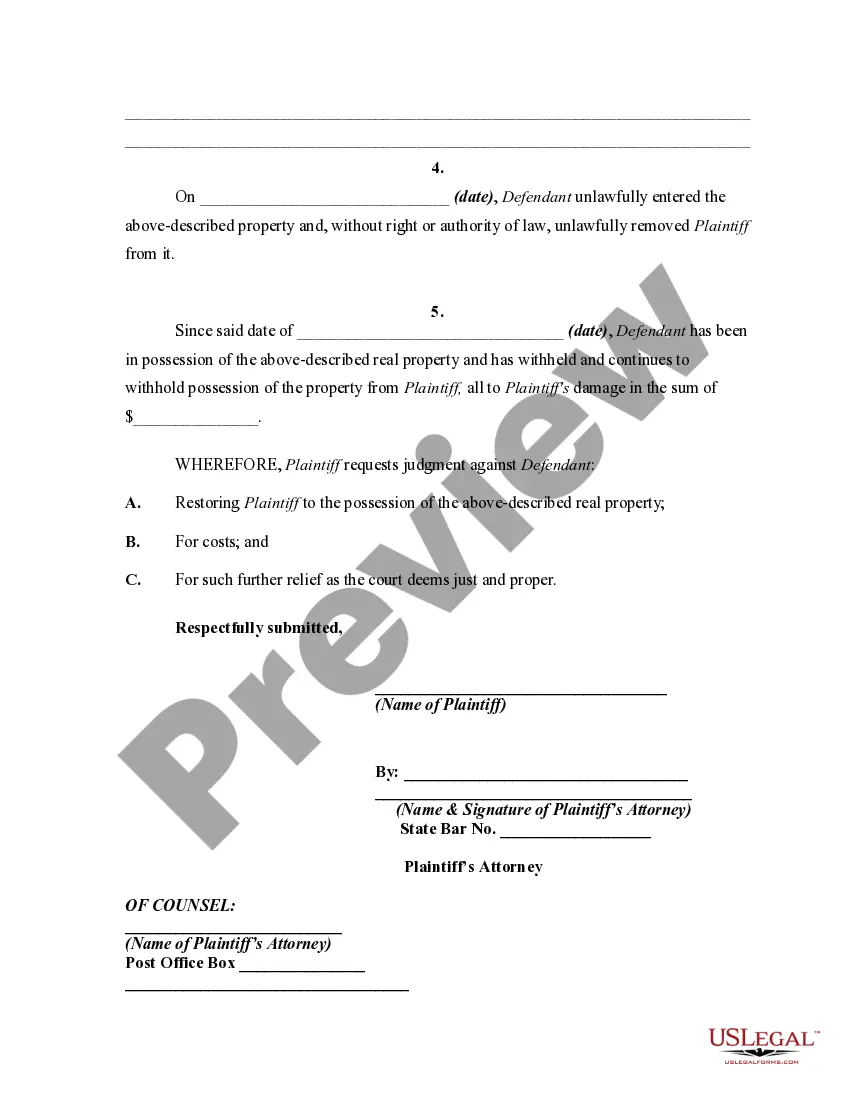
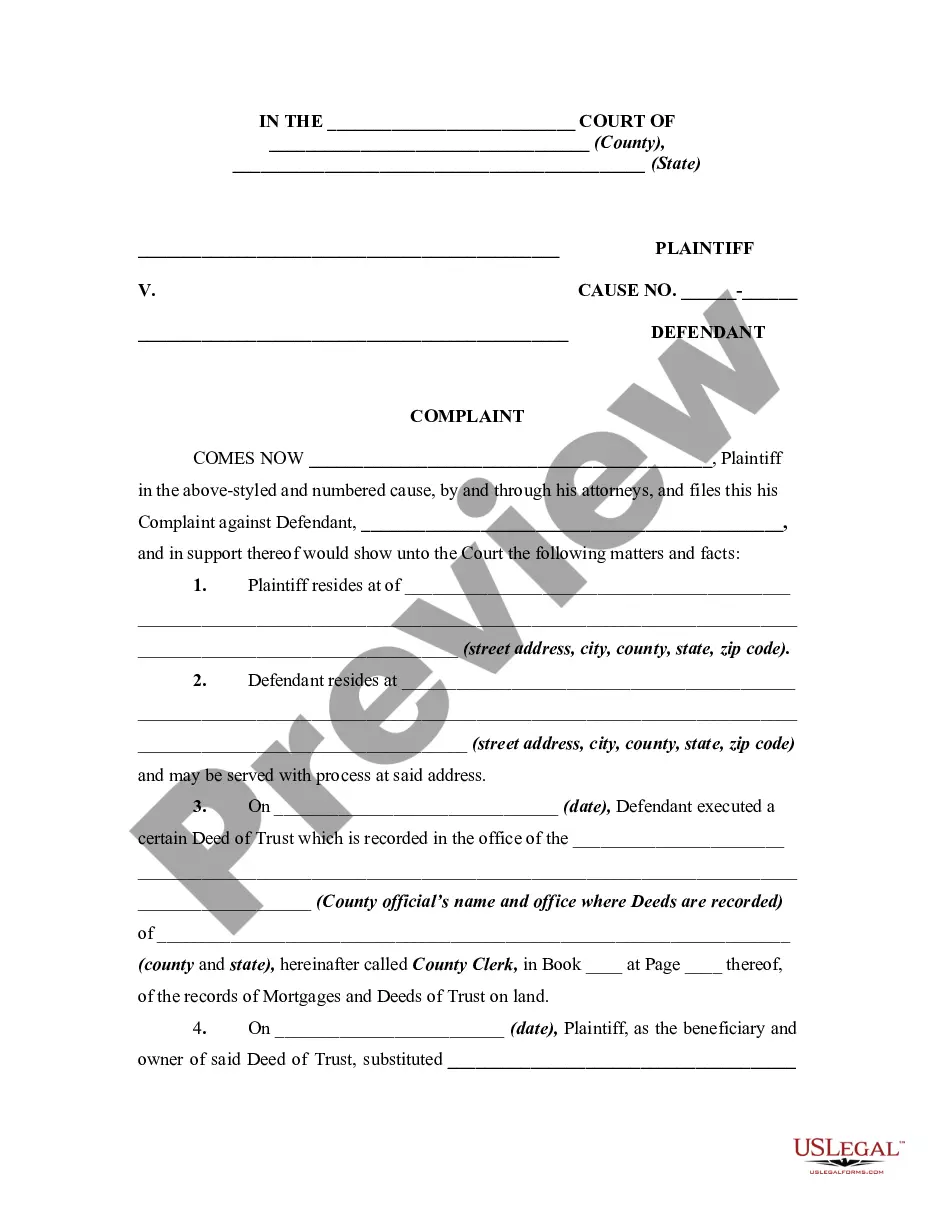
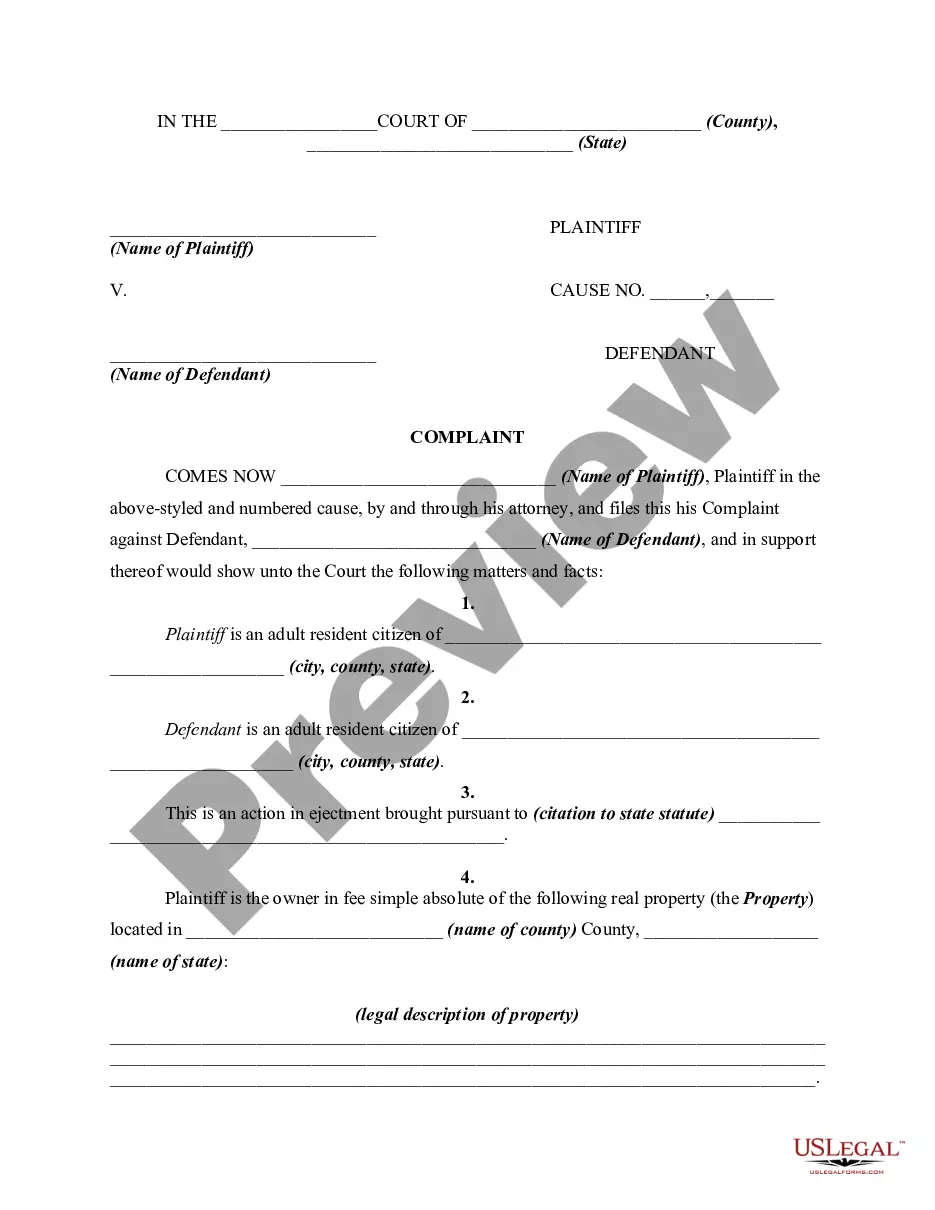
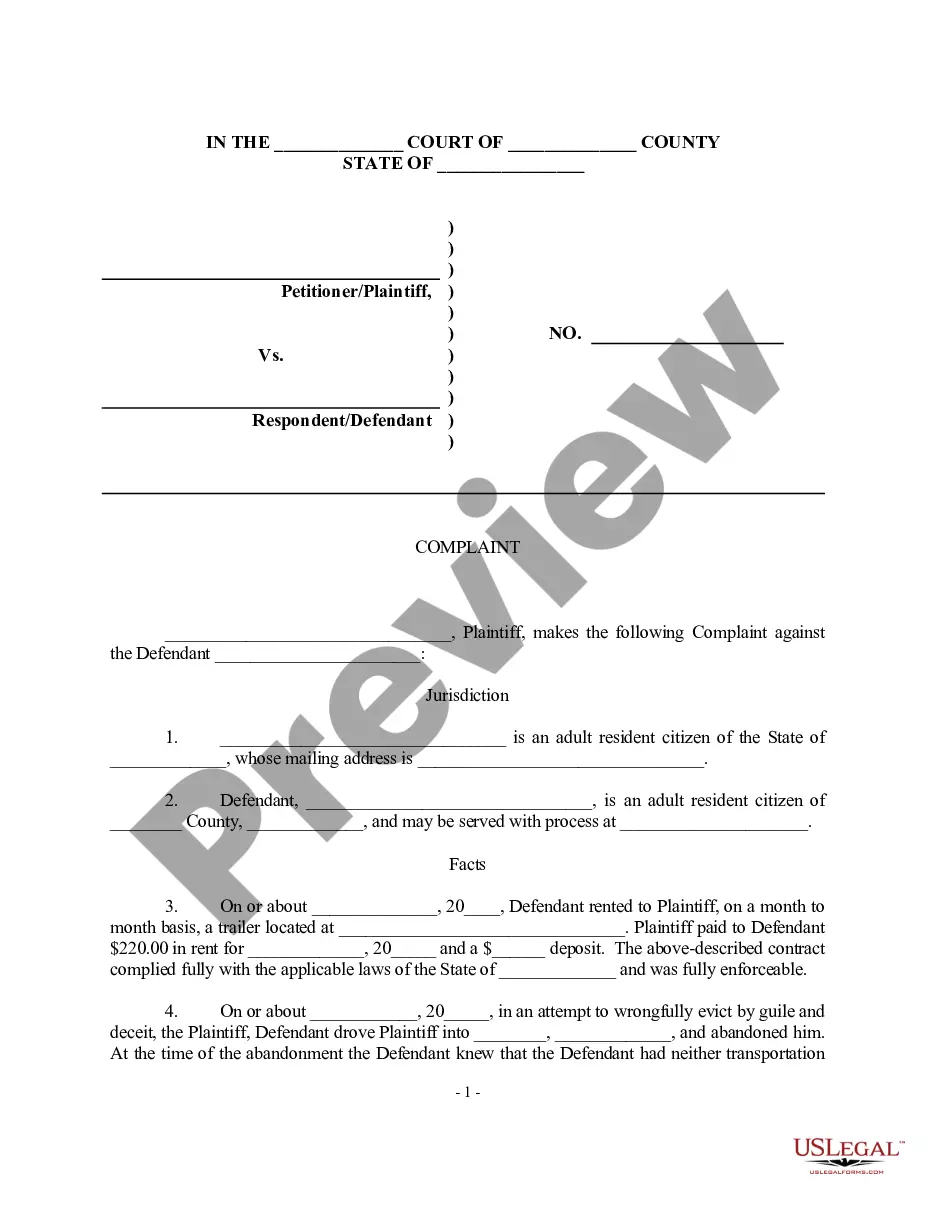
Complaint Ejectment Form With 2 Points
Description
Get your form ready online
Our built-in tools help you complete, sign, share, and store your documents in one place.
Make edits, fill in missing information, and update formatting in US Legal Forms—just like you would in MS Word.
Download a copy, print it, send it by email, or mail it via USPS—whatever works best for your next step.
Sign and collect signatures with our SignNow integration. Send to multiple recipients, set reminders, and more. Go Premium to unlock E-Sign.
If this form requires notarization, complete it online through a secure video call—no need to meet a notary in person or wait for an appointment.
We protect your documents and personal data by following strict security and privacy standards.

Make edits, fill in missing information, and update formatting in US Legal Forms—just like you would in MS Word.

Download a copy, print it, send it by email, or mail it via USPS—whatever works best for your next step.

Sign and collect signatures with our SignNow integration. Send to multiple recipients, set reminders, and more. Go Premium to unlock E-Sign.

If this form requires notarization, complete it online through a secure video call—no need to meet a notary in person or wait for an appointment.

We protect your documents and personal data by following strict security and privacy standards.
Looking for another form?

How to fill out General Form Of Complaint, Petition, Or Declaration For Ejectment?
Whether for commercial purposes or for personal matters, everyone must manage legal circumstances at some stage in their life.
Completing legal documents requires meticulous attention, starting with choosing the appropriate form template.
With a vast US Legal Forms catalog available, you don't need to waste time searching for the right template online. Use the library's simple navigation to find the suitable template for any occasion.
- For instance, if you select an incorrect version of a Complaint Ejectment Form With 2 Points, it will be rejected upon submission.
- Thus, it is crucial to find a trustworthy source of legal documents like US Legal Forms.
- To acquire a Complaint Ejectment Form With 2 Points template, follow these straightforward steps.
- Obtain the template you need by utilizing the search bar or catalog navigation.
- Review the form's description to confirm it aligns with your scenario, state, and area.
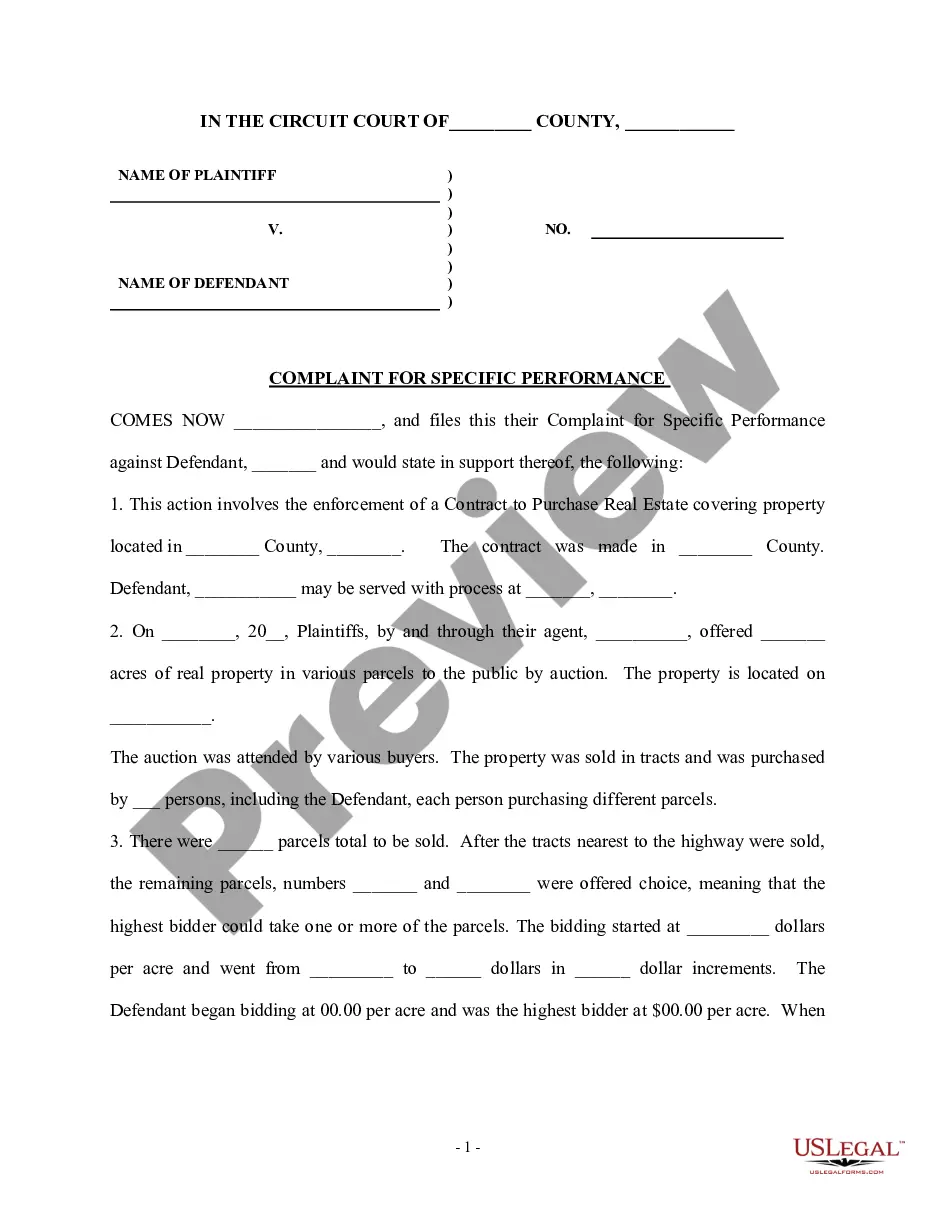
- Click on the form's preview to examine it.
- If it is the incorrect form, return to the search function to locate the Complaint Ejectment Form With 2 Points sample you need.
- Download the file if it meets your requirements.
- If you already possess a US Legal Forms account, click Log in to access previously saved documents in My documents.
- If you do not have an account yet, you can download the form by clicking Buy now.
- Select the appropriate pricing option.
- Fill out the profile registration form.
- Choose your payment method: use a credit card or PayPal account.
- Select the document format you prefer and download the Complaint Ejectment Form With 2 Points.
- Once saved, you can complete the form using editing software or print it and finish it manually.
Form popularity
FAQ
An Answer is the most common way to respond to a lawsuit. The Answer is the defendant's opportunity to admit or deny the specific allegations brought against them in the complaint. Any statements in the complaint that are not denied will be taken as true for the purposes of this case.
The eviction complaint In North Carolina, the legal term for eviction is ?summary ejectment.? The case starts when the landlord files a document that is called a Complaint in Summary Ejectment, which is also called an ?eviction complaint.? In an eviction case, the landlord is the plaintiff. The tenant is the defendant.
In order for a plaintiff to prevail on a cause of action for ejectment, the plaintiff must show two things: (1) that the plaintiff holds legal title to the subject property, and (2) the defendant's possession of the subject property is wrongful. (28 Cal. Jur. 3d Ejectment and Related Remedies § 40.)
The completed complaint in ejectment can be filed in City Hall room 296 over-the-counter or electronically through the Civil Electronic Filing System at . The contact number for room 296 is 215-686-4251. action.
Alternative dispute resolution (ADR): Methods of resolving disputes out of court, including mediation and arbitration. answer: a defendant's response to a plaintiff's initial court filing (called a complaint or petition).