Complaint Ejectment Form Format
Description

Get your form ready online
Our built-in tools help you complete, sign, share, and store your documents in one place.
Make edits, fill in missing information, and update formatting in US Legal Forms—just like you would in MS Word.
Download a copy, print it, send it by email, or mail it via USPS—whatever works best for your next step.
Sign and collect signatures with our SignNow integration. Send to multiple recipients, set reminders, and more. Go Premium to unlock E-Sign.
If this form requires notarization, complete it online through a secure video call—no need to meet a notary in person or wait for an appointment.
We protect your documents and personal data by following strict security and privacy standards.

Make edits, fill in missing information, and update formatting in US Legal Forms—just like you would in MS Word.

Download a copy, print it, send it by email, or mail it via USPS—whatever works best for your next step.

Sign and collect signatures with our SignNow integration. Send to multiple recipients, set reminders, and more. Go Premium to unlock E-Sign.

If this form requires notarization, complete it online through a secure video call—no need to meet a notary in person or wait for an appointment.

We protect your documents and personal data by following strict security and privacy standards.
Looking for another form?
How to fill out General Form Of Complaint, Petition, Or Declaration For Ejectment?
It’s well-known that you cannot transform into a legal authority instantly, nor can you quickly comprehend how to efficiently create a Complaint Ejectment Form Format without possessing a specialized foundation.
Drafting legal documents is a lengthy process that demands particular training and abilities. So why not entrust the creation of the Complaint Ejectment Form Format to the experts.
With US Legal Forms, one of the most comprehensive legal document repositories, you can access everything from court filings to templates for internal communication.
You can revisit your documents from the My documents tab at any time. If you’re an existing customer, you can simply Log In, and find and download the template from the same tab.
Regardless of the reason for your documentation—whether it’s financial and legal, or personal—our platform has you covered. Try US Legal Forms now!
- Locate the form you need by utilizing the search bar at the top of the page.
- Preview it (if this option is available) and review the accompanying description to ascertain whether the Complaint Ejectment Form Format is what you’re looking for.
- Start your search again if you require a different form.
- Create a free account and choose a subscription plan to purchase the template.
- Select Buy now. Once the transaction is completed, you can obtain the Complaint Ejectment Form Format, complete it, print it, and send or mail it to the relevant individuals or organizations.
Form popularity
FAQ
The completed complaint in ejectment can be filed in City Hall room 296 over-the-counter or electronically through the Civil Electronic Filing System at . The contact number for room 296 is 215-686-4251. action.
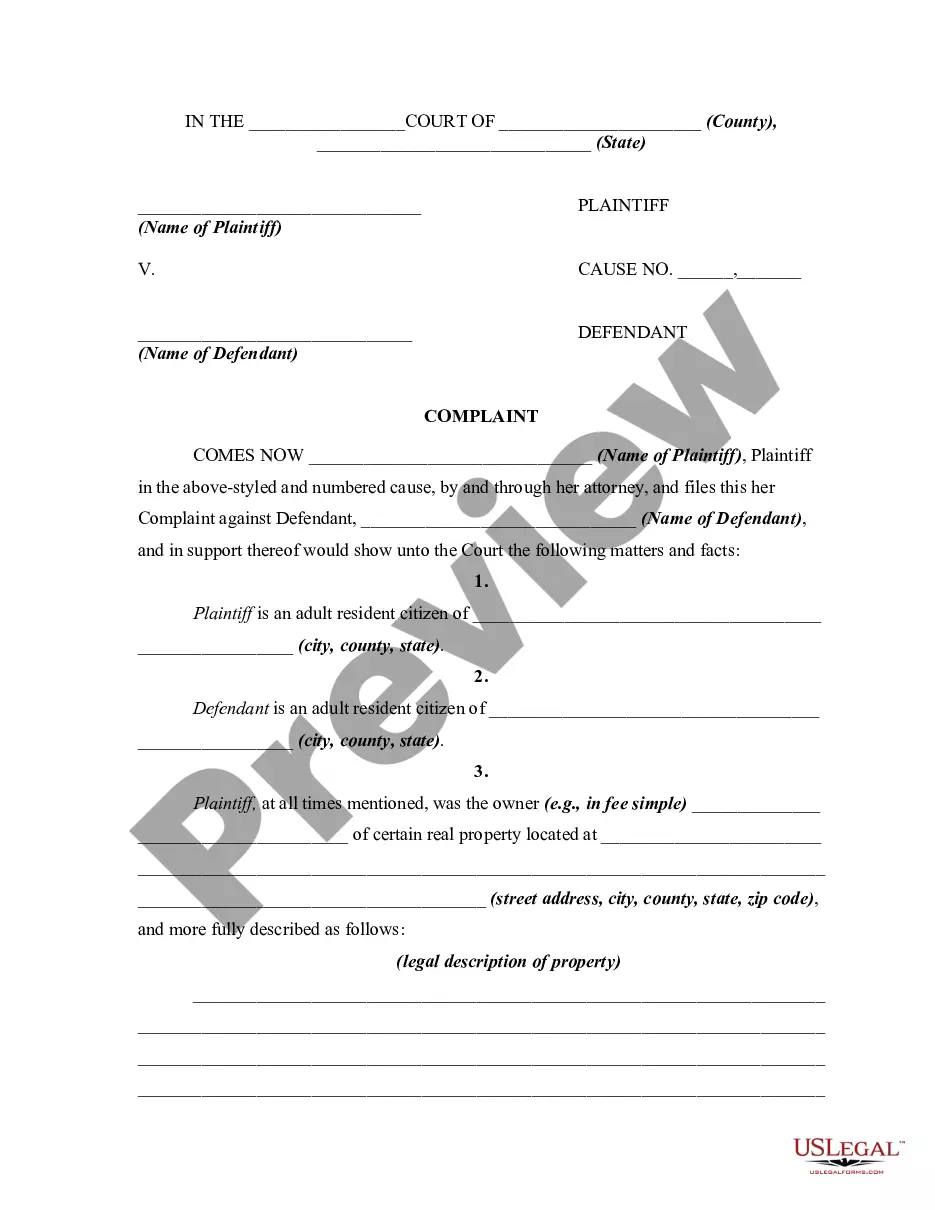
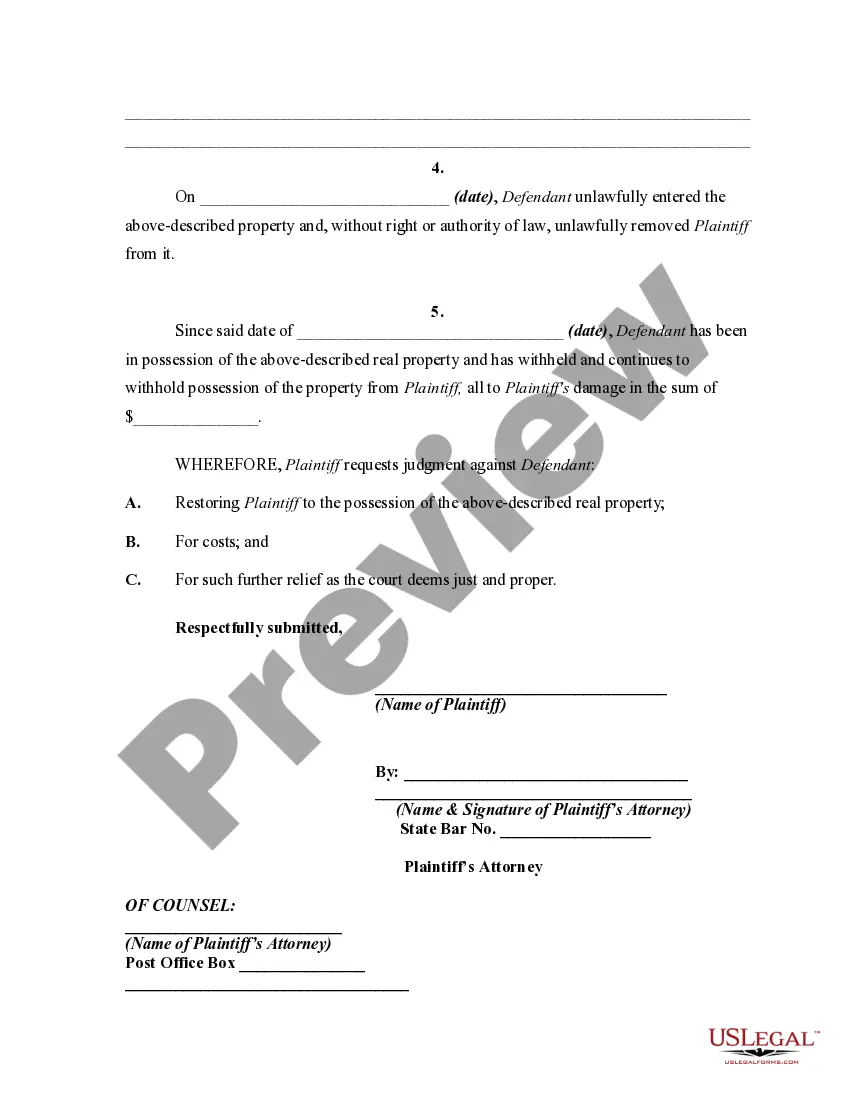
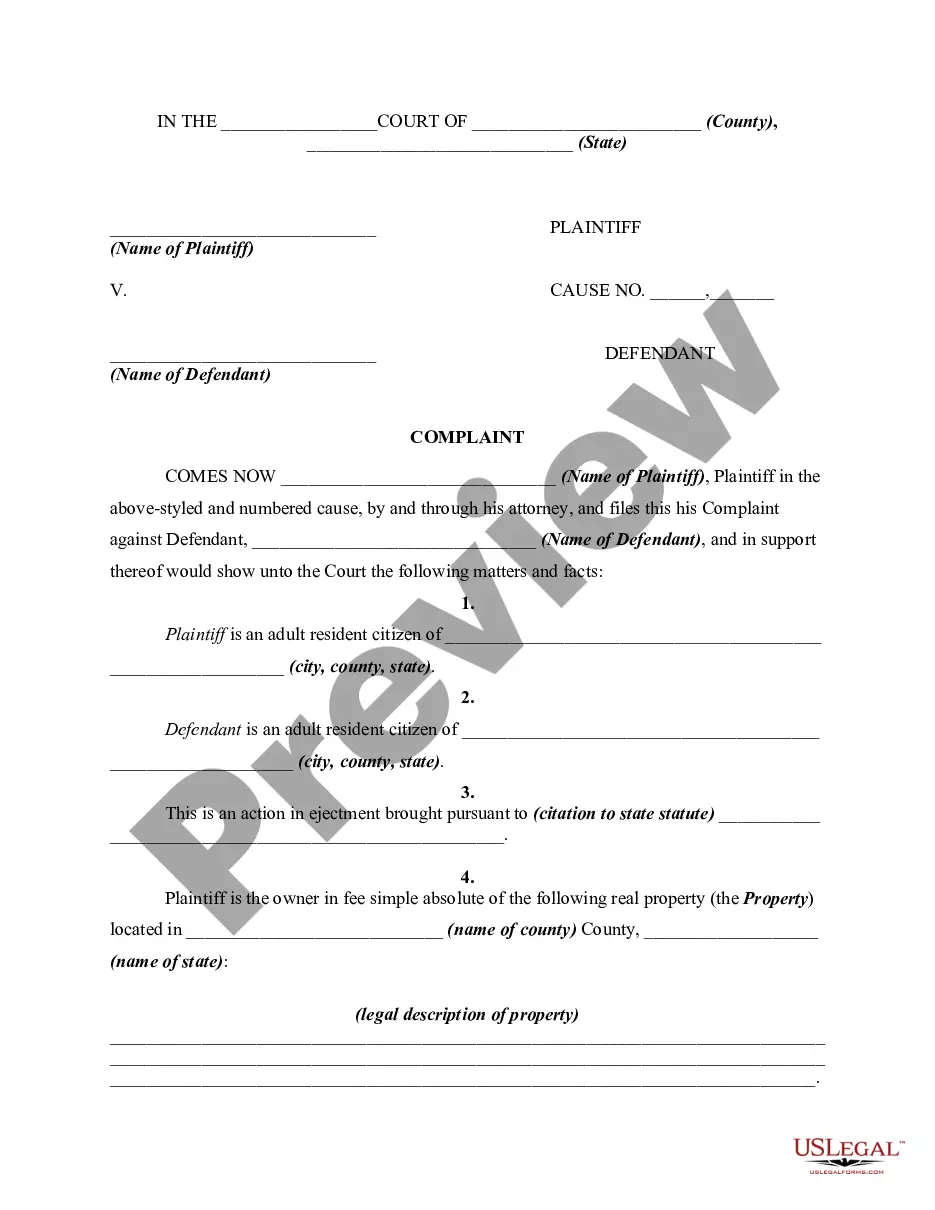
The Pennsylvania Rules of Civil Procedure requires that the Plaintiff in an ejectment action specifically describe the land and describe an abstract of title upon which the Plaintiff relies. The Plaintiff must also plead that they have a right to immediate possession of the land.
The most common way to prove superior right to possession is to present the court with a certified and recorded deed. The defendant may assert various defenses to the ejectment action such as the deed is fraudulent, existence of a landlord-tenant relationship, and/or adverse possession.
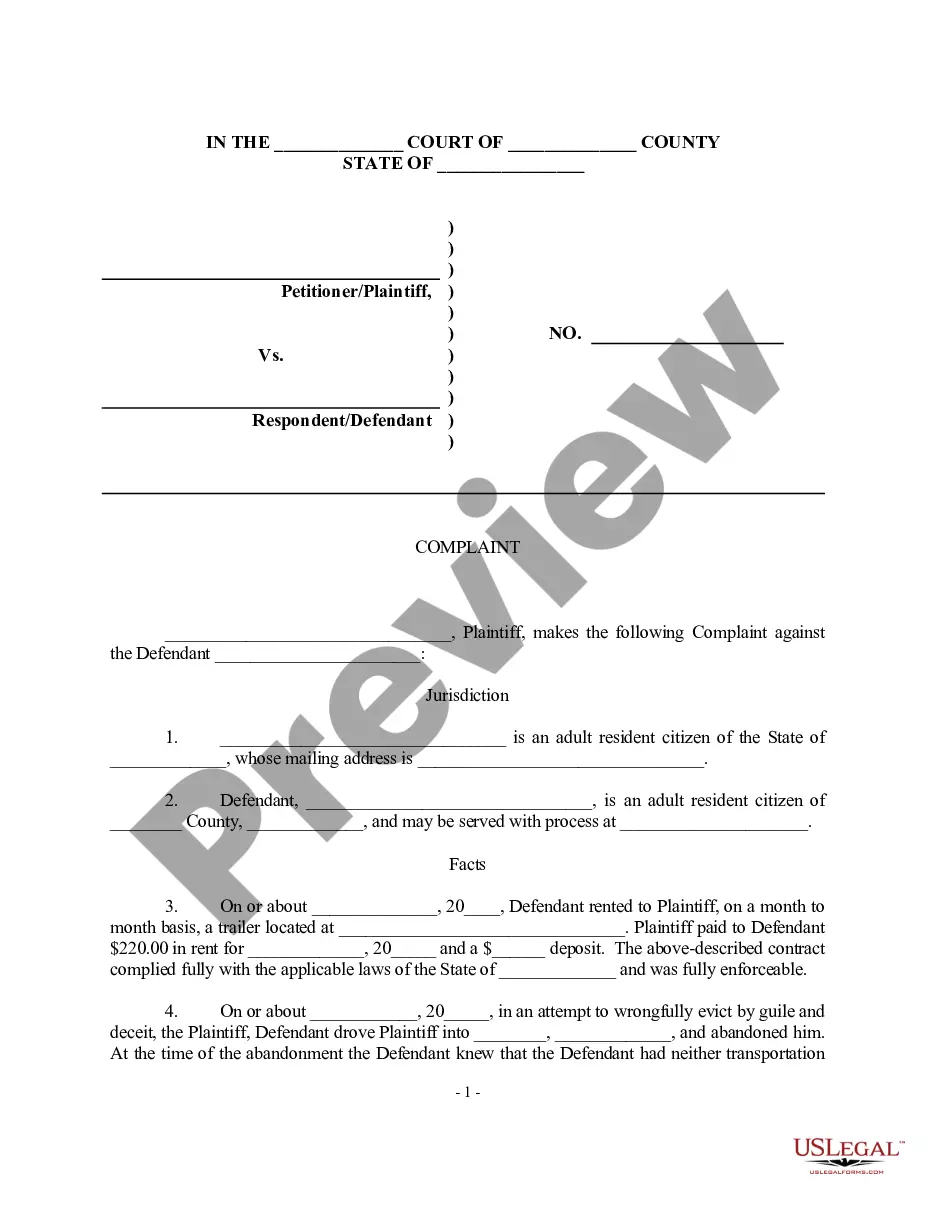
The eviction complaint In North Carolina, the legal term for eviction is ?summary ejectment.? The case starts when the landlord files a document that is called a Complaint in Summary Ejectment, which is also called an ?eviction complaint.? In an eviction case, the landlord is the plaintiff. The tenant is the defendant.
In order for a plaintiff to prevail on a cause of action for ejectment, the plaintiff must show two things: (1) that the plaintiff holds legal title to the subject property, and (2) the defendant's possession of the subject property is wrongful. (28 Cal. Jur. 3d Ejectment and Related Remedies § 40.)