Homeowner Responsibility For Trees
Description
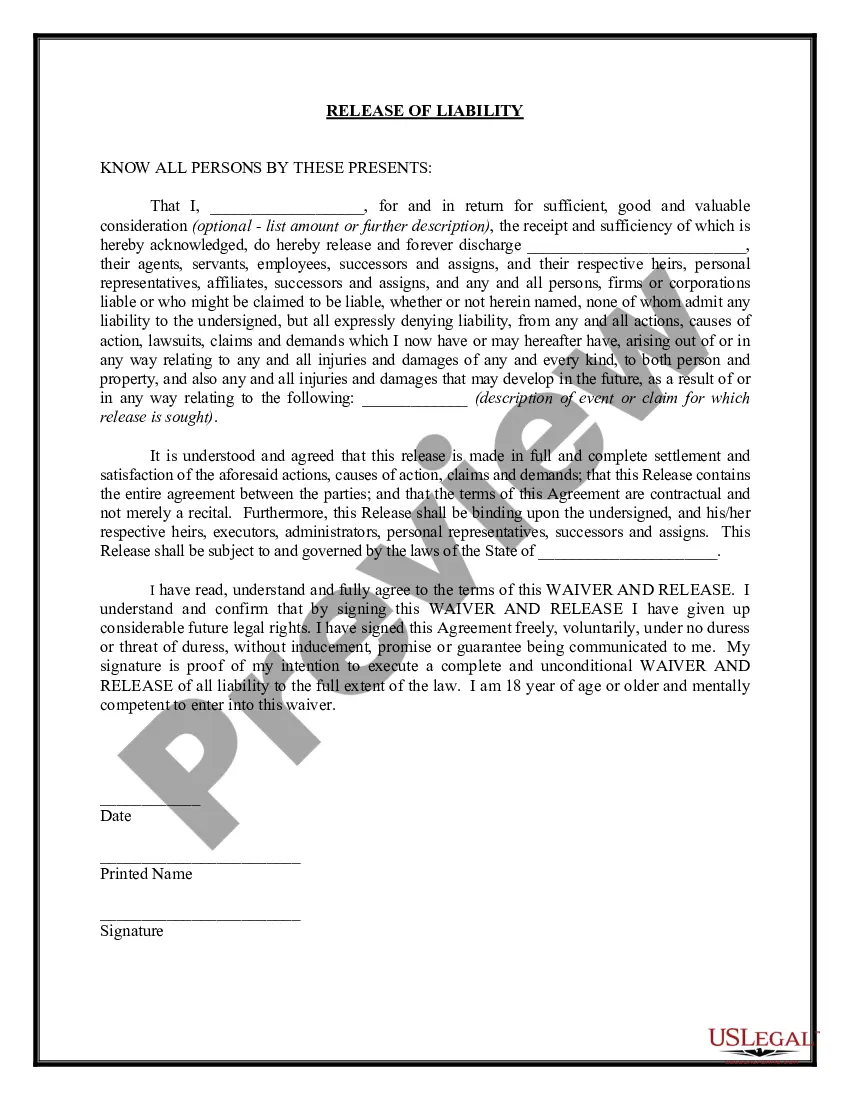

How to fill out Release And Waiver Of Liability Given In Favor Of Homeowner Allowing Tenant To Stay At Residence Without Paying Rent Including Assumption Of All Risks Of Personal Bodily Injury?
Dealing with legal documents and processes can be a lengthy addition to your entire day.
Homeowner Accountability For Trees and similar forms generally necessitate that you locate them and find the most effective way to complete them correctly.
As a result, if you are managing financial, legal, or personal matters, having an extensive and user-friendly online library of documents when you need it will significantly help.
US Legal Forms is the leading online platform for legal templates, featuring over 85,000 state-specific documents and various tools to aid you in completing your paperwork effortlessly.
Is this your first time using US Legal Forms? Register and create an account in a few minutes to gain access to the form library and Homeowner Accountability For Trees. Then, follow the steps below to complete your document: Ensure you have located the correct form using the Preview feature and reviewing the form details. Select Buy Now when ready, and choose the subscription plan that meets your requirements. Click Download then complete, eSign, and print the document. US Legal Forms has twenty-five years of experience helping users manage their legal documents. Obtain the form you need today and streamline any process effortlessly.
- Explore the library of relevant documents available to you with just one click.
- US Legal Forms provides state- and county-specific forms available for download at any time.
- Protect your document management processes by using a high-quality service that allows you to create any form in minutes without any additional or hidden fees.
- Simply Log In to your account, search for Homeowner Accountability For Trees, and download it instantly from the My documents section.
- You can also access previously downloaded documents.
Form popularity
FAQ
If a neighbor's tree falls on your house, typically, your homeowner's insurance will cover the damages. However, if negligence can be proven, you may pursue a claim against your neighbor's insurance. It's essential to document the situation thoroughly. Knowing the homeowner responsibility for trees can help you navigate the insurance claims process.
When a tree falls on a neighbor's house, the responsibility often depends on the circumstances surrounding the tree. If the tree was healthy and fell due to natural causes, the homeowner may not be liable. However, if the tree was identified as hazardous prior to falling, the owner could be held responsible. Understanding homeowner responsibility for trees can guide you through potential claims.
If your neighbor's tree falls in your yard, the responsibility may depend on whether the tree was healthy or had issues prior to falling. If the tree was healthy, the neighbor may not be liable. However, if it was known to be damaged, the neighbor could be responsible for any damages. Familiarizing yourself with homeowner responsibility for trees can clarify these situations.
Homeowners are generally responsible for maintaining trees that overhang their property. If branches extend into a neighbor's yard, the affected neighbor can request trimming. However, homeowners should take care not to damage their neighbor’s property while doing so. Understanding homeowner responsibility for trees can help maintain good relations with neighbors.
Typically, the landlord holds the responsibility for maintaining trees on rental properties. However, the lease agreement may outline specific duties for tenants regarding yard maintenance. Both parties should be clear about their responsibilities. Knowing the homeowner responsibility for trees can prevent misunderstandings.
In Washington, the law states that homeowners are responsible for the maintenance of their trees, including those that may affect neighbors. If a neighbor's tree poses a danger or causes damage, the homeowner should address it. Homeowners should communicate with their neighbor to find a resolution. Understanding homeowner responsibility for trees can help prevent disputes.
Liability for damage caused by falling trees often rests with the homeowner. If a tree falls due to neglect or poor maintenance, the homeowner responsibility for trees comes into play, making you liable for damages. However, if a tree falls during a storm or due to natural causes, liability might shift, depending on the circumstances. To clarify these complex situations, US Legal Forms can provide valuable insights and legal documents to help you understand your responsibilities.
The responsibility for cutting trees typically lies with the homeowner, especially for trees located on private property. This homeowner responsibility for trees includes maintaining the health and safety of the trees, as well as addressing any safety hazards they may pose. If a tree needs removal or significant pruning, you may want to consult a professional. US Legal Forms offers resources to help homeowners navigate tree maintenance responsibilities and legal implications.
In California, homeowners are generally responsible for cutting overhanging tree branches that extend into their property. This falls under the homeowner responsibility for trees, meaning you must maintain the trees on your land and address any branches that intrude on your neighbor's space. If the branches are causing a problem, it’s wise to take action promptly to avoid potential disputes. Using a service like US Legal Forms can help you understand your rights and obligations regarding tree maintenance.