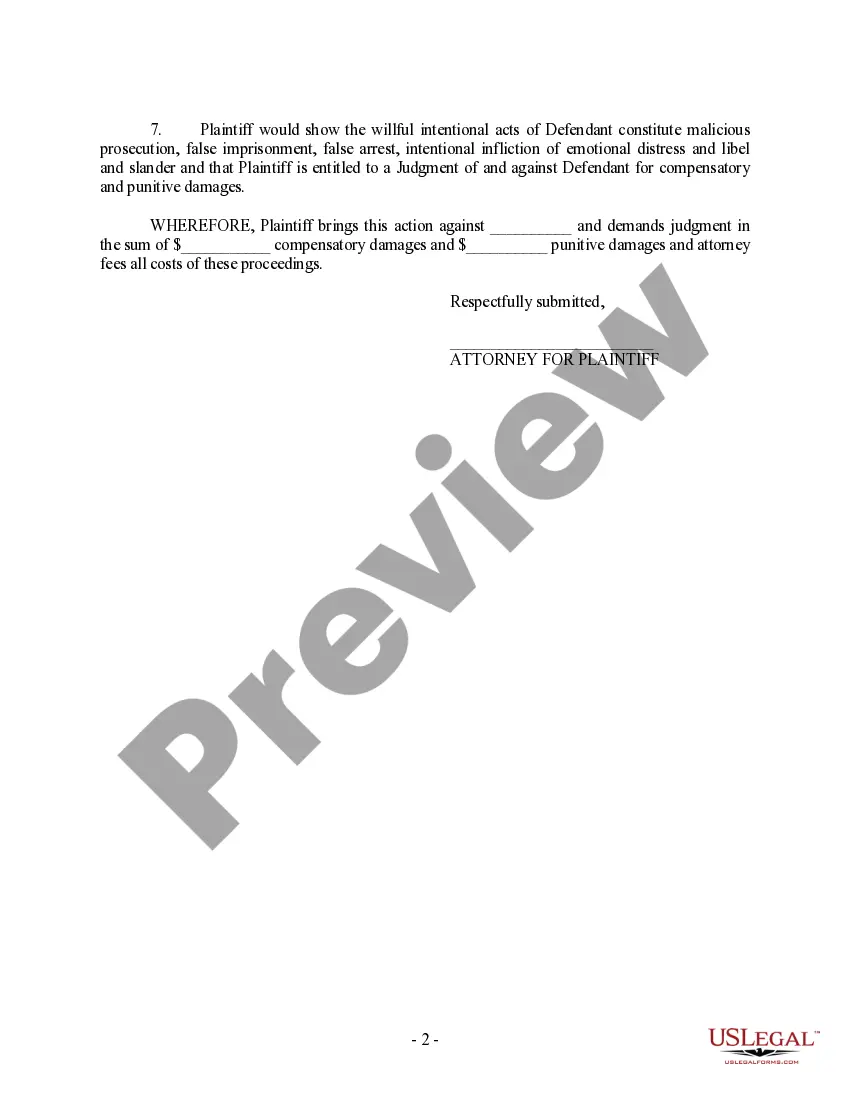
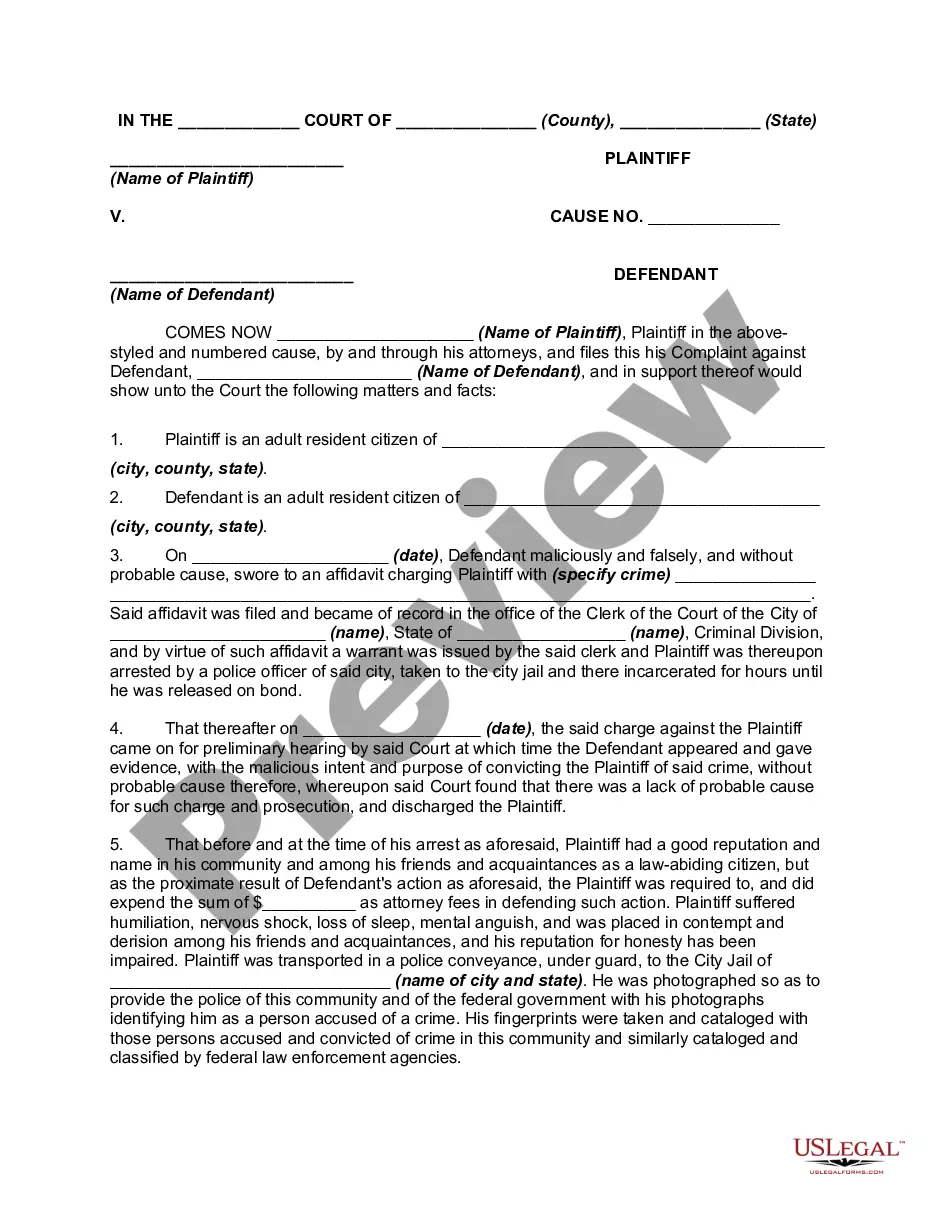
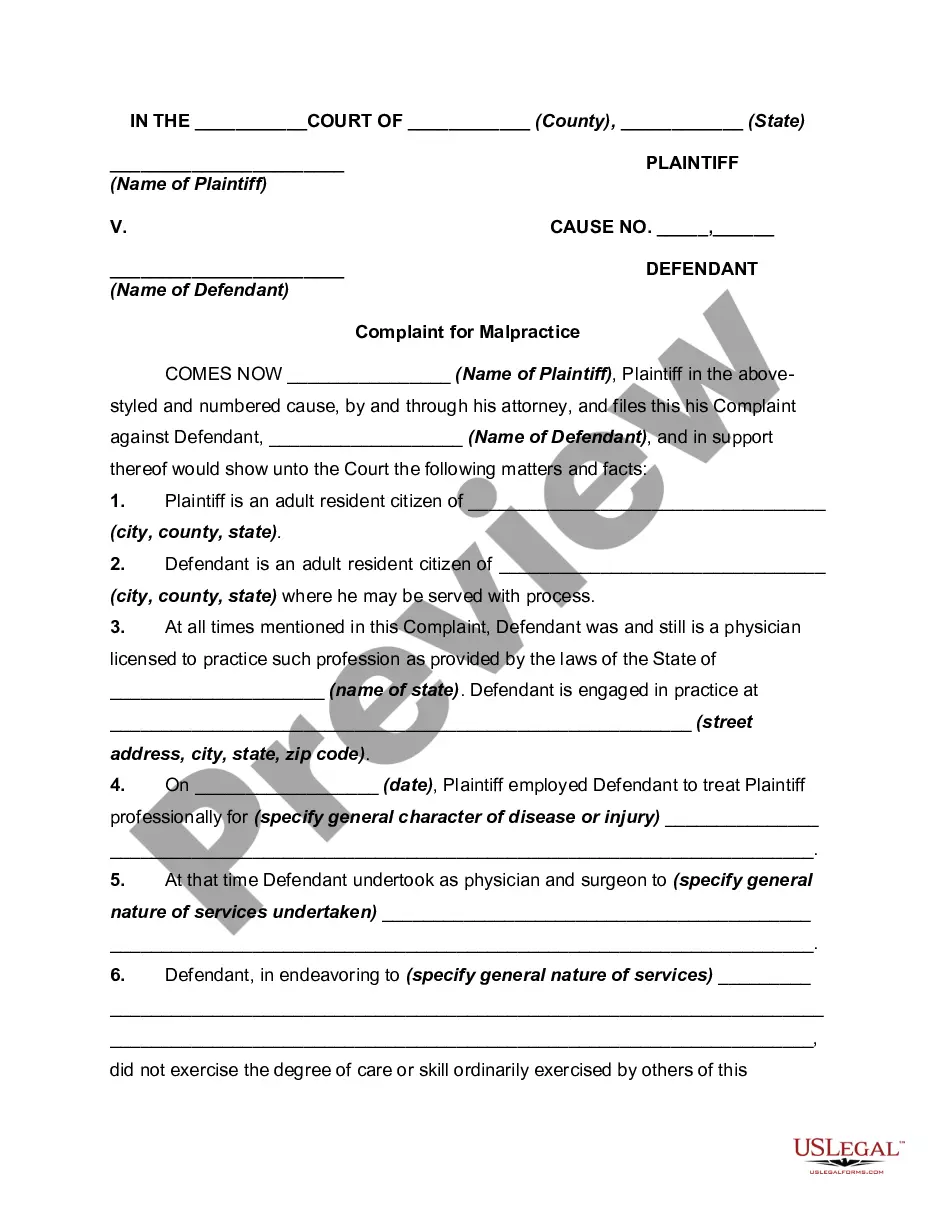
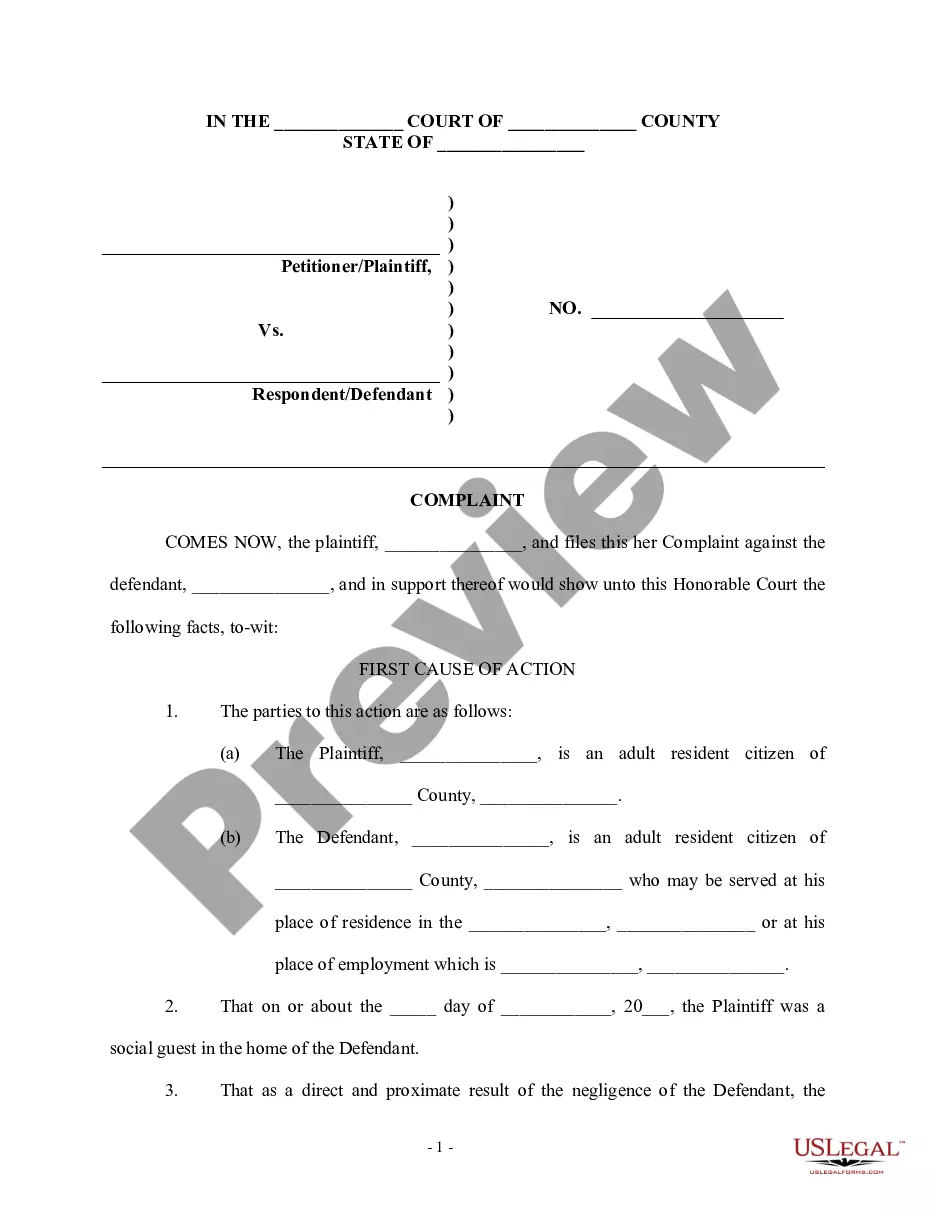
Texas Malicious Prosecution Format
Description



Get your form ready online
Our built-in tools help you complete, sign, share, and store your documents in one place.
Make edits, fill in missing information, and update formatting in US Legal Forms—just like you would in MS Word.
Download a copy, print it, send it by email, or mail it via USPS—whatever works best for your next step.
Sign and collect signatures with our SignNow integration. Send to multiple recipients, set reminders, and more. Go Premium to unlock E-Sign.
If this form requires notarization, complete it online through a secure video call—no need to meet a notary in person or wait for an appointment.
We protect your documents and personal data by following strict security and privacy standards.

Make edits, fill in missing information, and update formatting in US Legal Forms—just like you would in MS Word.

Download a copy, print it, send it by email, or mail it via USPS—whatever works best for your next step.

Sign and collect signatures with our SignNow integration. Send to multiple recipients, set reminders, and more. Go Premium to unlock E-Sign.

If this form requires notarization, complete it online through a secure video call—no need to meet a notary in person or wait for an appointment.

We protect your documents and personal data by following strict security and privacy standards.
Looking for another form?
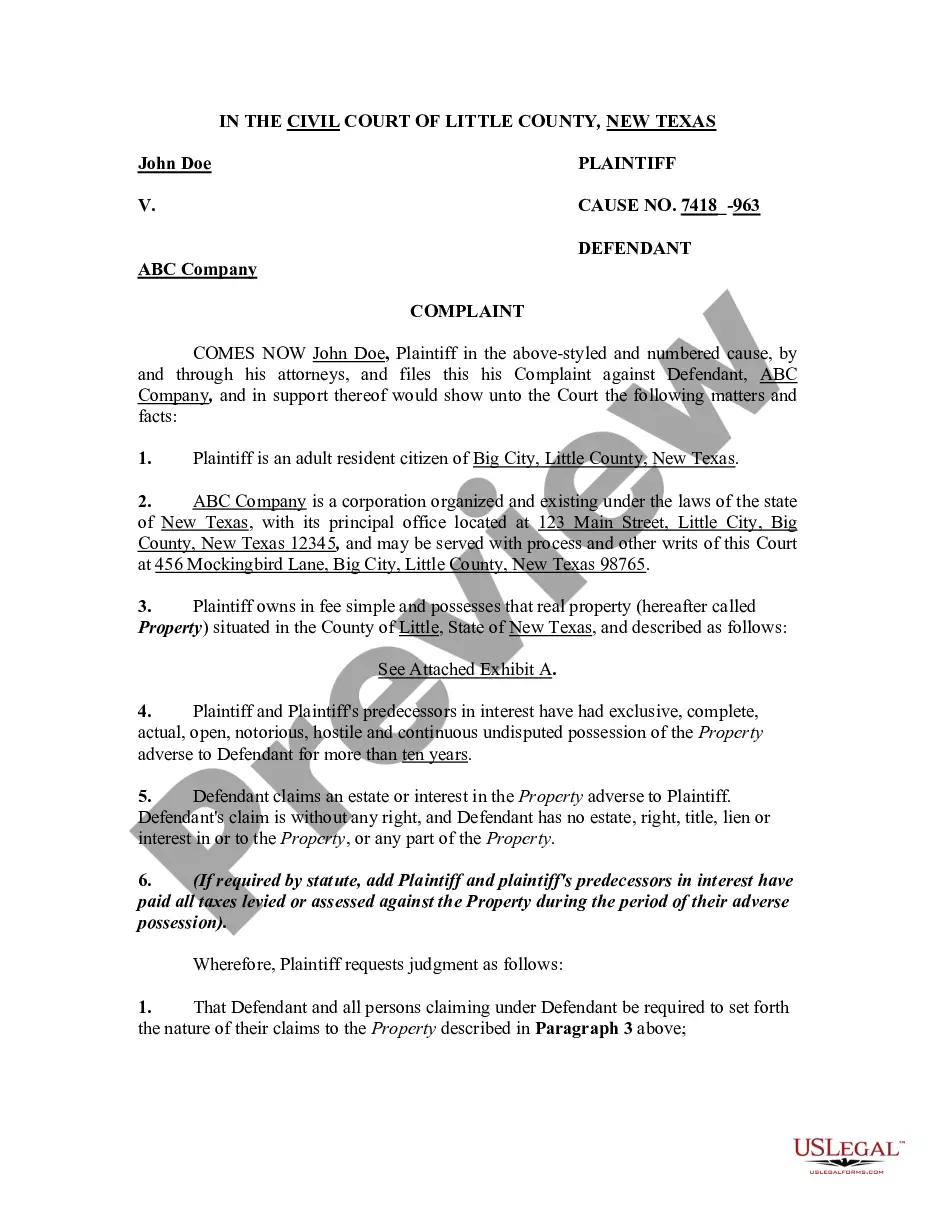


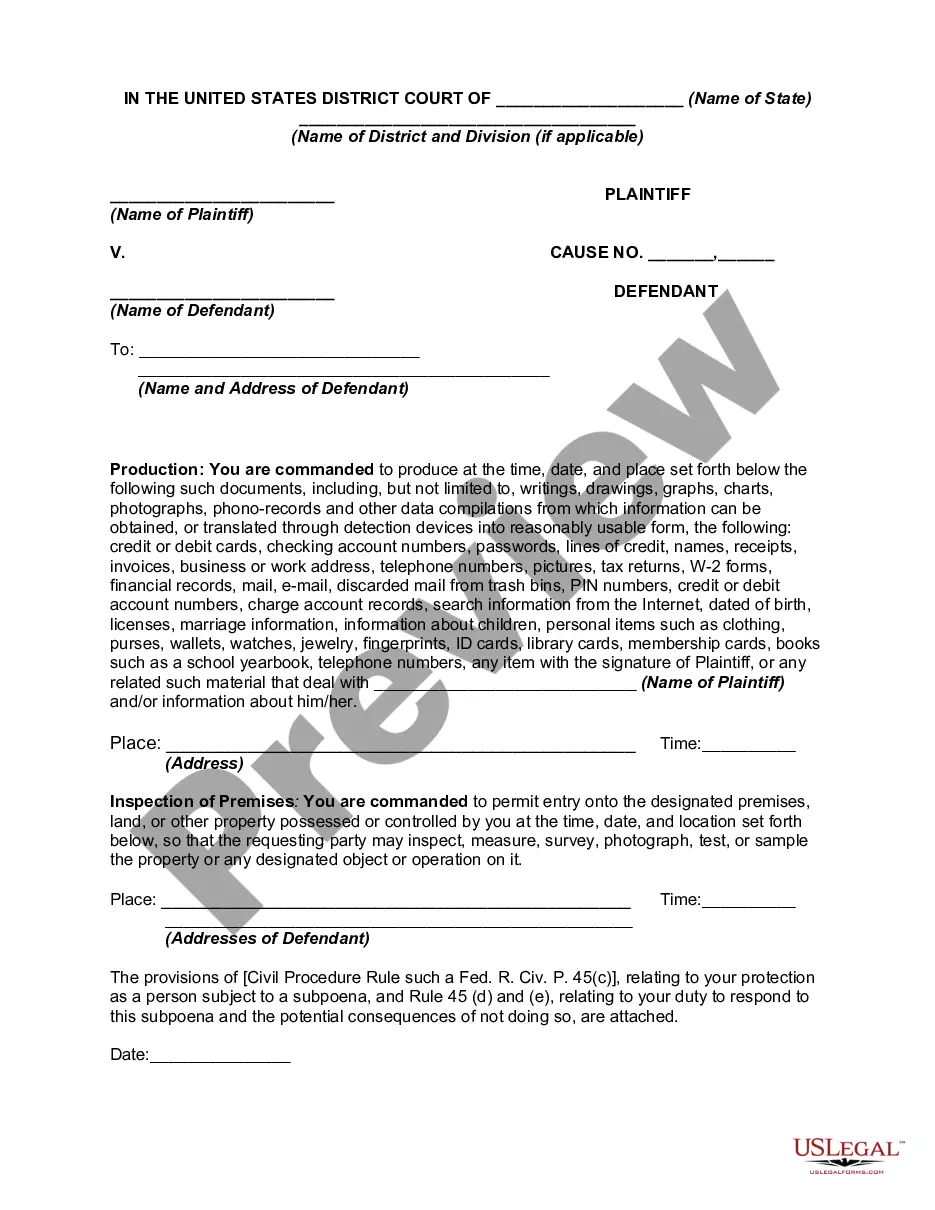
How to fill out Complaint For Malicious Prosecution?
Whether for business purposes or for individual matters, everybody has to manage legal situations sooner or later in their life. Completing legal papers requires careful attention, starting with picking the appropriate form template. For example, when you choose a wrong version of the Texas Malicious Prosecution Format, it will be rejected once you send it. It is therefore important to get a reliable source of legal papers like US Legal Forms.
If you have to obtain a Texas Malicious Prosecution Format template, follow these simple steps:
- Get the template you need using the search field or catalog navigation.
- Examine the form’s information to make sure it fits your situation, state, and county.
- Click on the form’s preview to view it.
- If it is the wrong document, get back to the search function to locate the Texas Malicious Prosecution Format sample you require.
- Download the file if it matches your requirements.
- If you have a US Legal Forms profile, simply click Log in to access previously saved documents in My Forms.
- In the event you do not have an account yet, you can obtain the form by clicking Buy now.
- Choose the proper pricing option.
- Complete the profile registration form.
- Choose your transaction method: you can use a bank card or PayPal account.
- Choose the document format you want and download the Texas Malicious Prosecution Format.
- Once it is downloaded, you are able to complete the form with the help of editing software or print it and finish it manually.
With a vast US Legal Forms catalog at hand, you don’t need to spend time looking for the appropriate template across the web. Make use of the library’s straightforward navigation to get the appropriate template for any occasion.
Form popularity
FAQ
This requires proof of four main elements. The original plaintiff (now the defendant) had no probable cause or justification to bring the claim. The defendant had malicious intent in bringing the original lawsuit. The defendant lost his or her lawsuit against you when you were the defendant.
Malicious prosecution occurs when someone sues you or brings criminal charges against you without probable cause and with harmful intent. Examples could include someone providing false evidence to the police that you committed a crime or someone suing you for hurting them even if you never caused them harm.
The Elements of a Malicious Prosecution Claim A legal action commenced or prosecuted without probable cause. ... The legal action was brought or initiated with malice or malicious intent. Final, favorable termination or resolution of the action (or relevant claims) in the defendant's favor. ... Legally recognizable damages.
To sustain a malicious prosecution claim, Texas law requires that a plaintiff show ?(1) a criminal action was commenced against him; (2) the prosecution was caused by the defendant or with his aid; (3) the action terminated in the plaintiff's favor; (4) the plaintiff was innocent; (5) the defendant acted without ...
?An action for malicious prosecution has three required elements: '(1) the defendant brought (or continued to pursue) a claim in the underlying action without objective probable cause, (2) the claim was pursued by the defendant with subjective malice, and (3) the underlying action was ultimately resolved in the ...