Client Attorneys Former Employees
Description


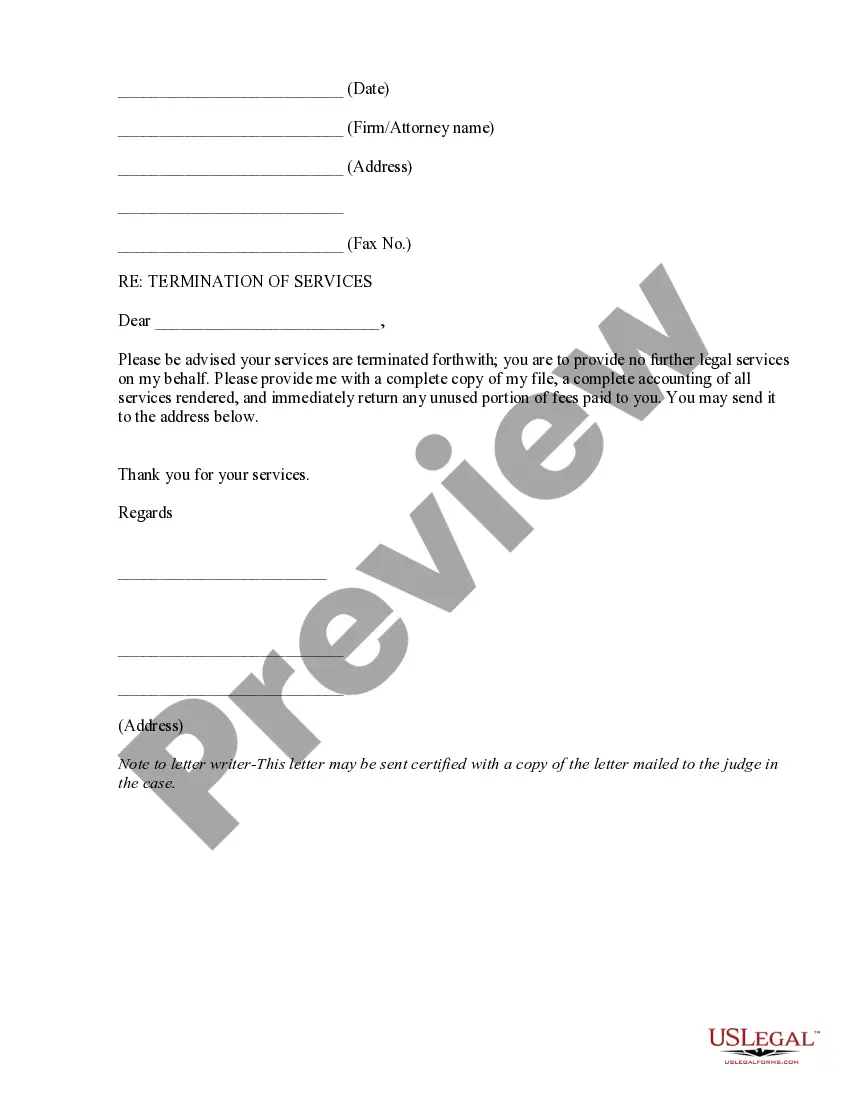
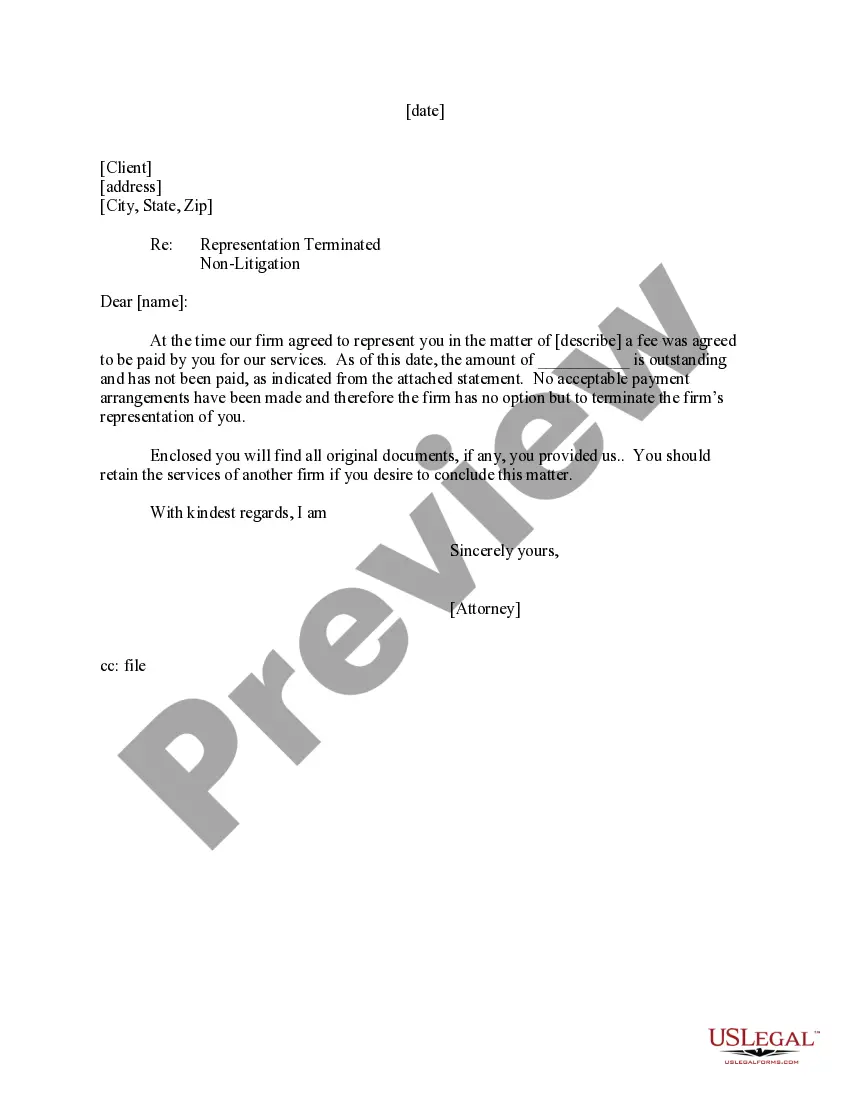
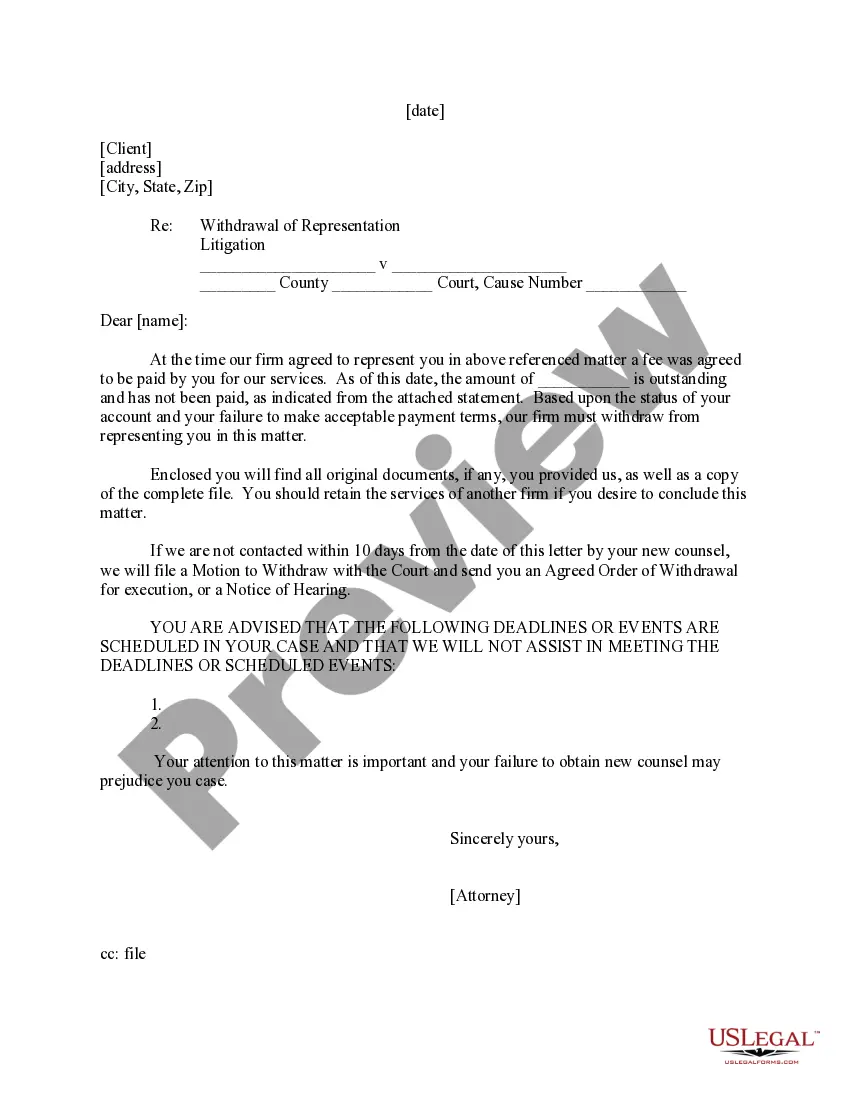
Get your form ready online
Our built-in tools help you complete, sign, share, and store your documents in one place.
Make edits, fill in missing information, and update formatting in US Legal Forms—just like you would in MS Word.
Download a copy, print it, send it by email, or mail it via USPS—whatever works best for your next step.
Sign and collect signatures with our SignNow integration. Send to multiple recipients, set reminders, and more. Go Premium to unlock E-Sign.
If this form requires notarization, complete it online through a secure video call—no need to meet a notary in person or wait for an appointment.
We protect your documents and personal data by following strict security and privacy standards.

Make edits, fill in missing information, and update formatting in US Legal Forms—just like you would in MS Word.

Download a copy, print it, send it by email, or mail it via USPS—whatever works best for your next step.

Sign and collect signatures with our SignNow integration. Send to multiple recipients, set reminders, and more. Go Premium to unlock E-Sign.

If this form requires notarization, complete it online through a secure video call—no need to meet a notary in person or wait for an appointment.

We protect your documents and personal data by following strict security and privacy standards.
Looking for another form?





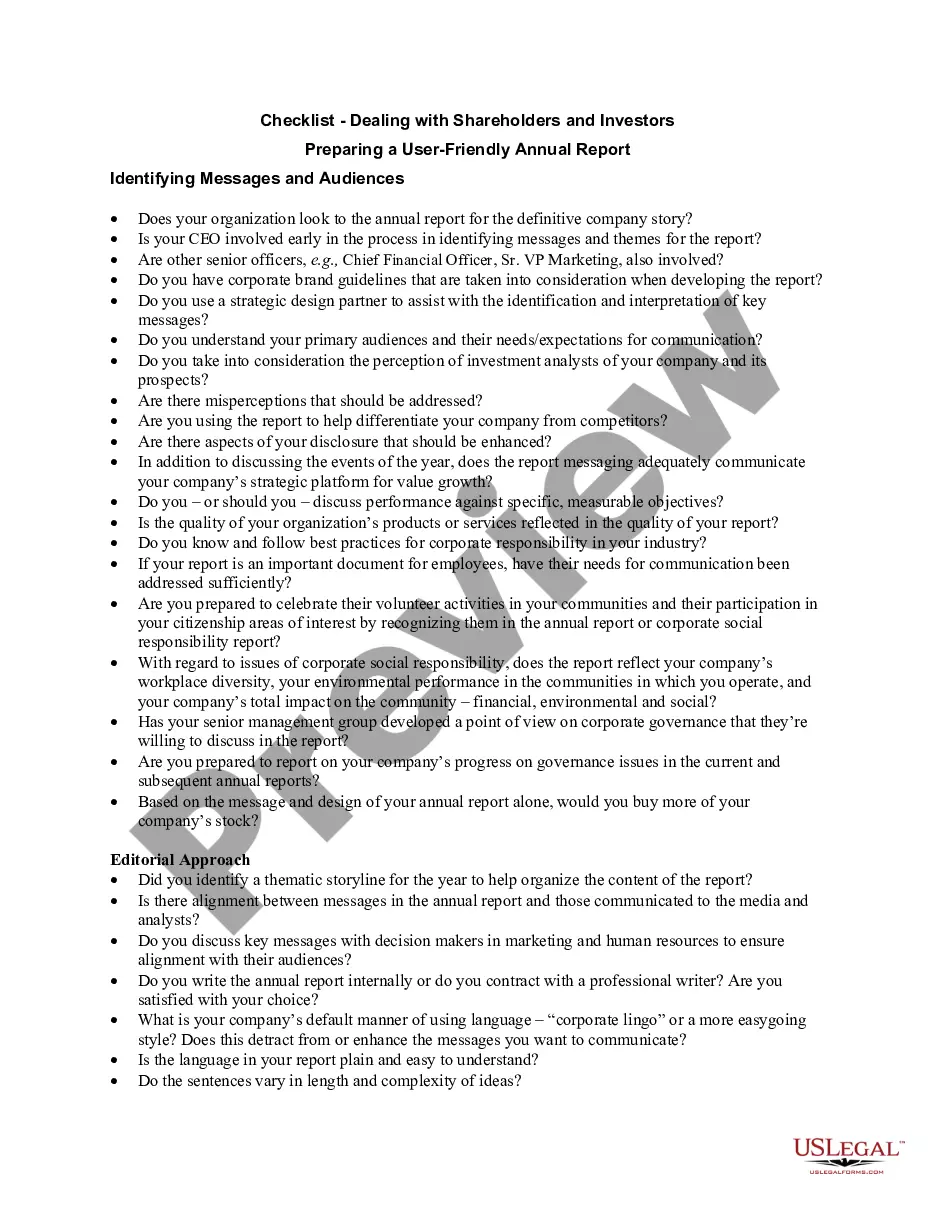
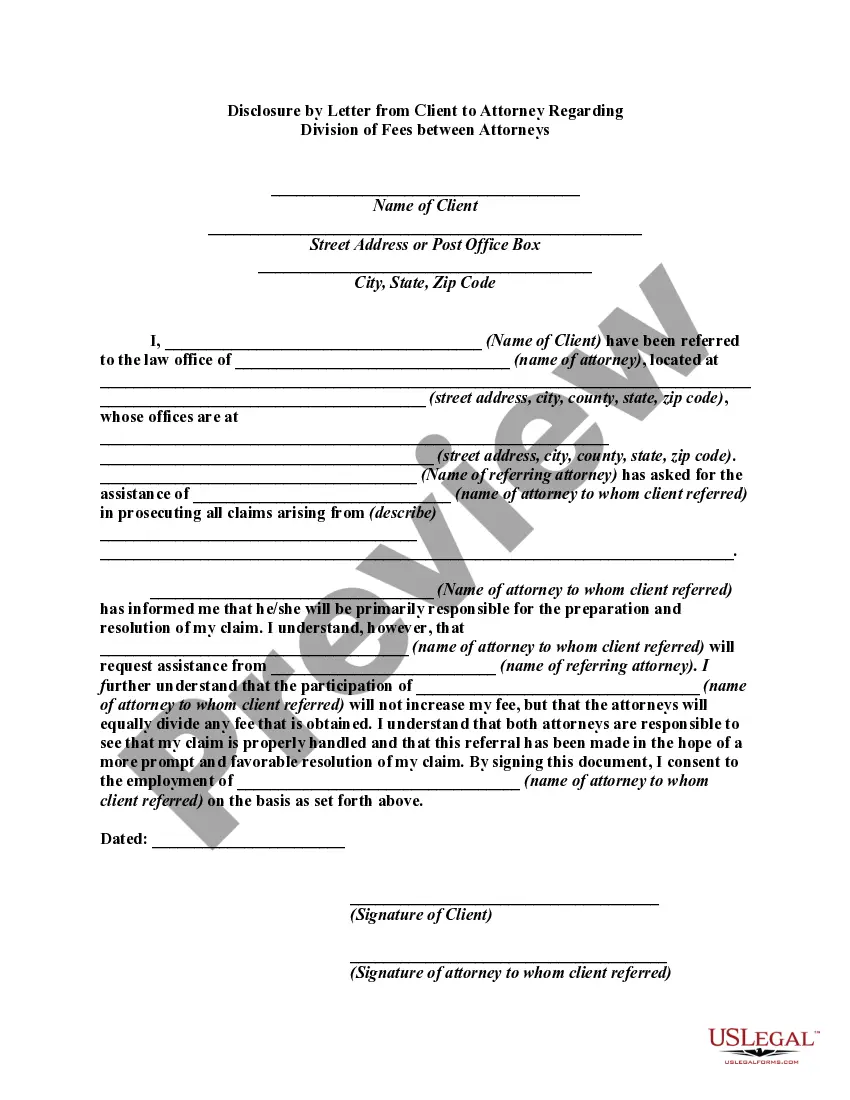
How to fill out Disclosure By Letter From Client To Attorney Regarding Division Of Fees Between Attorneys?
The Client Attorneys Former Employees displayed on this page is a versatile legal template created by experienced attorneys in compliance with federal and local statutes and regulations.
For over 25 years, US Legal Forms has supplied individuals, enterprises, and legal practitioners with over 85,000 authenticated, state-specific documents for various business and personal situations. It is the quickest, easiest, and most dependable method to acquire the necessary paperwork, as the service ensures the utmost level of data protection and anti-virus security.
Register for US Legal Forms to have authenticated legal templates for all of life's situations readily available.
- Search for the document you require and examine it.
- Browse through the example you searched and preview it or read the form description to confirm it meets your requirements. If it doesn't, use the search feature to locate the correct one. Click Buy Now once you have found the template you need.
- Register and Log In.
- Choose the pricing option that fits you and create an account. Use PayPal or a credit card for a swift payment. If you already possess an account, Log In and check your subscription to continue.
- Obtain the editable template.
- Select the file format you desire for your Client Attorneys Former Employees (PDF, DOCX, RTF) and download the document onto your device.
- Complete and sign the document.
- Print the template to finish it manually. Alternatively, utilize an online multifunctional PDF editor to quickly and accurately fill out and sign your form with a legally-binding electronic signature.
- Re-download your documents.
- Use the same document again whenever required. Access the My documents tab in your profile to redownload any previously saved forms.
Form popularity
FAQ
This privilege is codified in California law via Evidence Code 954, which gives your attorney the right to refuse to divulge the contents of your conversation, gives you the right to require confidentiality from your attorney, and with few exceptions, makes any breach of that confidence inadmissible in court.
Exceptions to Attorney-Client Privilege Some of the most common exceptions include: Crime or Fraud Exception: If the patron seeks legal advice for the purpose of committing a crime or fraud, the attorney-patron privilege may not apply, and the attorney may be required to disclose the information to law enforcement.
The privilege covers written and oral communications and protects both individual and institutional clients. The privilege extends from the attorney to include legal office staff that facilitates communications to and from the attorney.
Paragraph (b) carries forward the language of current rule 3-100 and provides that a lawyer may reveal confidential information to the extent necessary to prevent a criminal act resulting in serious bodily injury or death.
How Long Does Attorney-Client Privilege Last in California? In California, privileged information between attorneys and their clients remains confidential after the case ends. An attorney may never share protected information without a client's consent. Even if a client dies, this information may not be disclosed.