Client Attorneys For Attorney-client Privilege
Description


Get your form ready online
Our built-in tools help you complete, sign, share, and store your documents in one place.
Make edits, fill in missing information, and update formatting in US Legal Forms—just like you would in MS Word.
Download a copy, print it, send it by email, or mail it via USPS—whatever works best for your next step.
Sign and collect signatures with our SignNow integration. Send to multiple recipients, set reminders, and more. Go Premium to unlock E-Sign.
If this form requires notarization, complete it online through a secure video call—no need to meet a notary in person or wait for an appointment.
We protect your documents and personal data by following strict security and privacy standards.

Make edits, fill in missing information, and update formatting in US Legal Forms—just like you would in MS Word.

Download a copy, print it, send it by email, or mail it via USPS—whatever works best for your next step.

Sign and collect signatures with our SignNow integration. Send to multiple recipients, set reminders, and more. Go Premium to unlock E-Sign.

If this form requires notarization, complete it online through a secure video call—no need to meet a notary in person or wait for an appointment.

We protect your documents and personal data by following strict security and privacy standards.
Looking for another form?


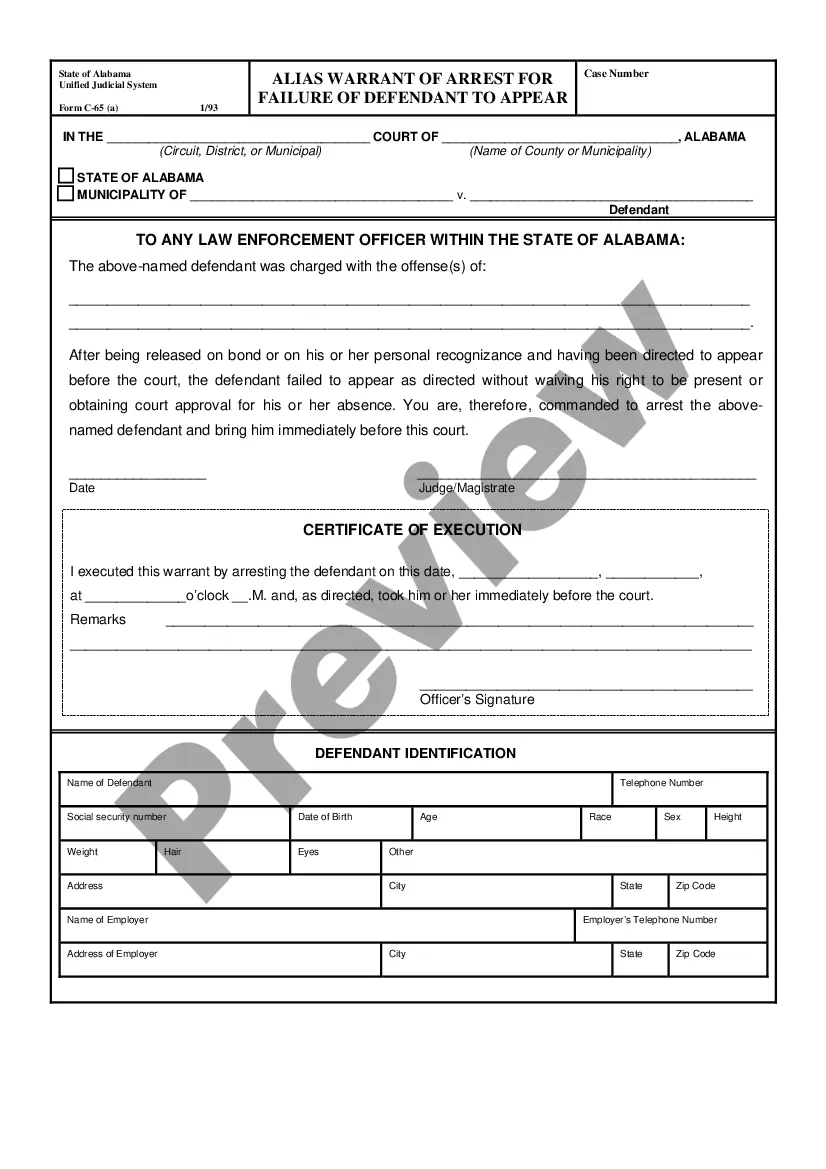
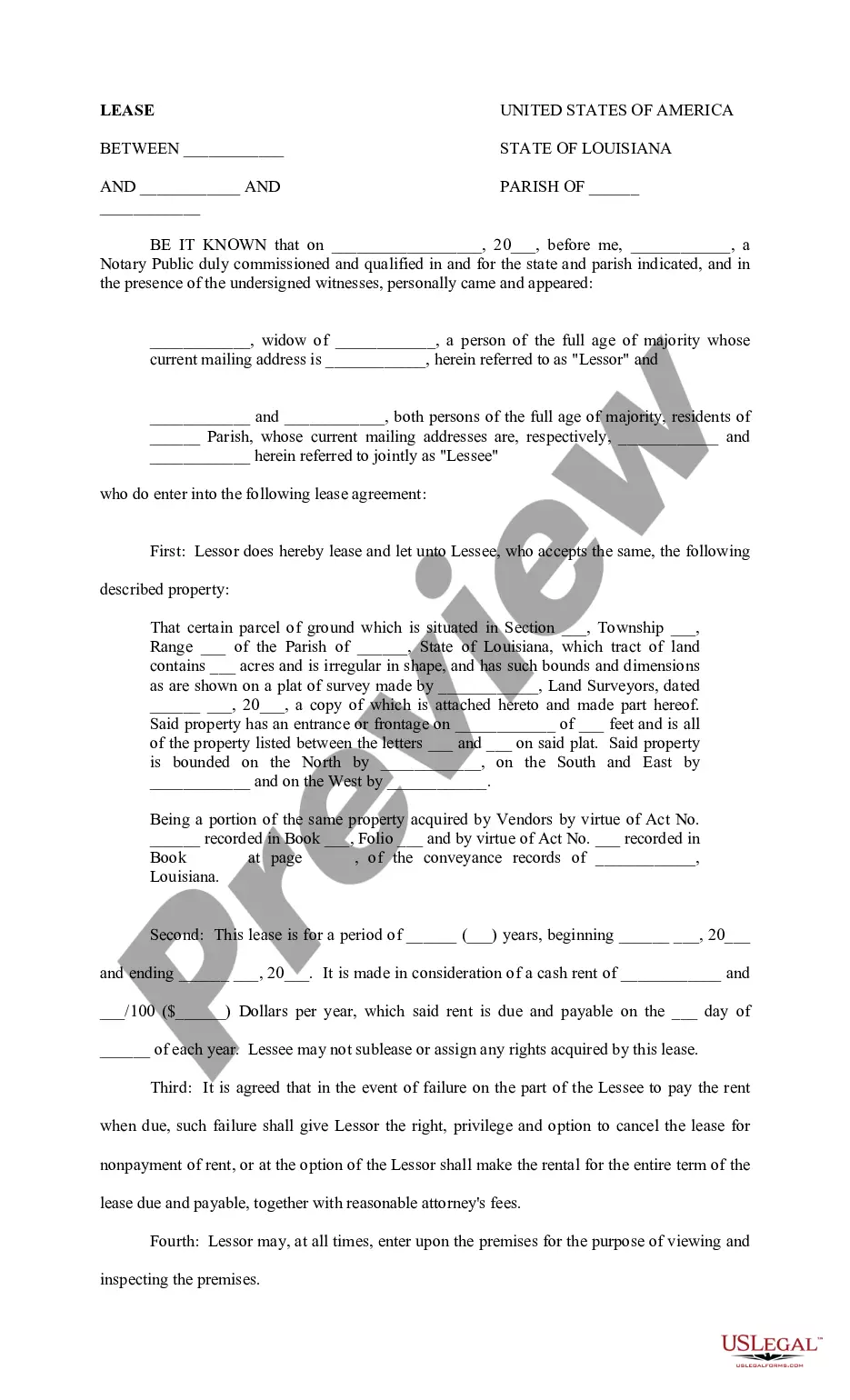






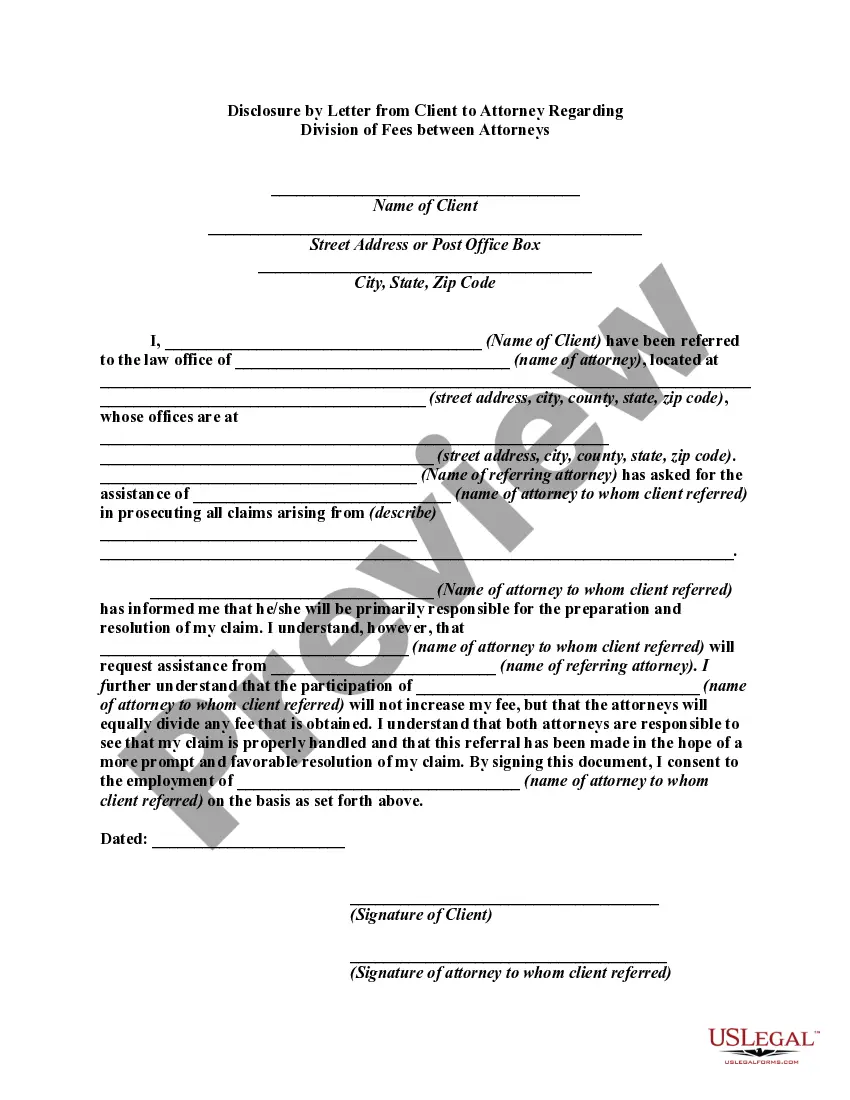
How to fill out Disclosure By Letter From Client To Attorney Regarding Division Of Fees Between Attorneys?
Legal administration can be daunting, even for the most skilled professionals.
When you are looking for Client Attorneys For Attorney-client Privilege and cannot dedicate the time to find the correct and current version, the process may be stressful.
US Legal Forms accommodates any requirements you may have, from personal to corporate documentation, all within a single platform.
Utilize advanced tools to complete and manage your Client Attorneys For Attorney-client Privilege.
Here are the steps to follow after obtaining the document you desire: Confirm this is the correct form by previewing it and reviewing its details. Ensure that the template is accepted in your state or county. Click Buy Now when you are ready. Choose a monthly subscription plan. Locate the format you prefer, and Download, fill out, sign, print and send your documents. Benefit from the US Legal Forms online library, supported by 25 years of experience and reliability. Streamline your everyday document management into a simple and user-friendly process today.
- Access a valuable resource library of articles, guides, and manuals pertinent to your situation and needs.
- Conserve time and effort searching for the documents you require, and leverage US Legal Forms’ sophisticated search and Review tool to find Client Attorneys For Attorney-client Privilege and obtain it.
- If you hold a monthly subscription, Log In to the US Legal Forms account, search for the document, and acquire it.
- Check the My documents tab to see the documents you have previously saved and to organize your folders as needed.
- If it’s your first time with US Legal Forms, create a free account and gain unlimited access to all features of the platform.
- An extensive online form library could be a transformative solution for anyone aiming to navigate these situations effectively.
- US Legal Forms is a leader in online legal documents, offering over 85,000 state-specific legal forms accessible to you at any time.
- With US Legal Forms, you can access state- or county-specific legal and business forms.
Form popularity
FAQ
At its most basic, the privilege ensures ?that one who seeks advice or aid from a lawyer should be completely free of any fear that his secrets will be uncovered.? 2 Thus, the underlying principle of the privilege is to provide for ?sound legal advice [and] advocacy.? 3 With the security of the privilege, the client ...
Discussions of previous acts are generally covered by the attorney-client privilege. If, for example, a client tells his lawyer that he robbed a bank or lied about assets during a divorce, the lawyer probably can't disclose the information.
A classic example involves someone being arrested and charged with Penal Code 503 embezzlement from their employer. They retain a defense lawyer and admit they did indeed take the money. Their lawyer can't disclose their conservation to anyone during the court process.
Three examples where advice would be covered by the attorney-client privilege are initial consultations, identity information, and whereabouts. On the other hand, three examples that attorney-client privilege doesn't cover are the client's fee arrangement, physical evidence, and preexsisting documents.
The attorney-client privilege does not apply to every communication with an attorney. For the privilege to exist, the communication must be to, from, or with an attorney, and intended to be confidential. In addition, the communication must be for the purpose of requesting or receiving legal advice.