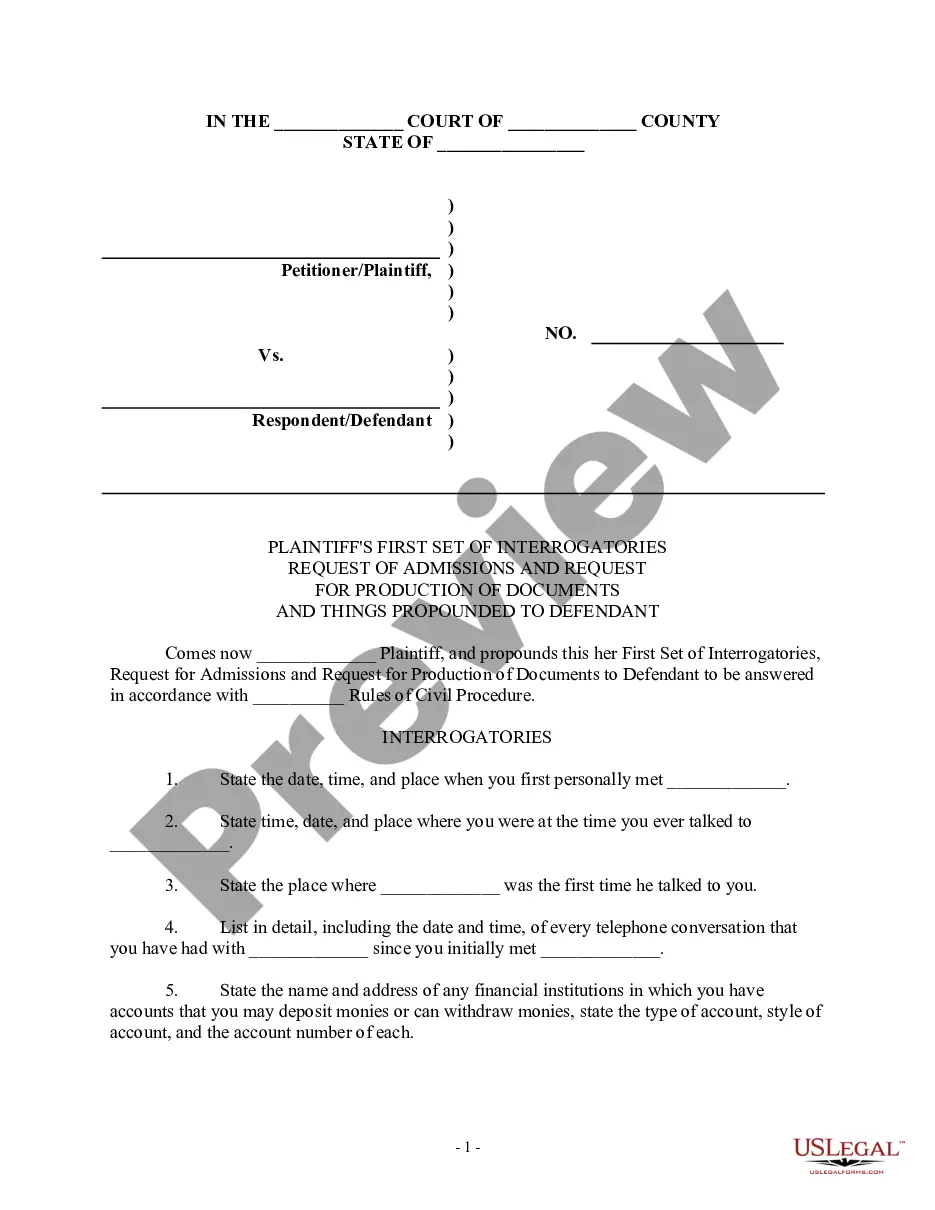
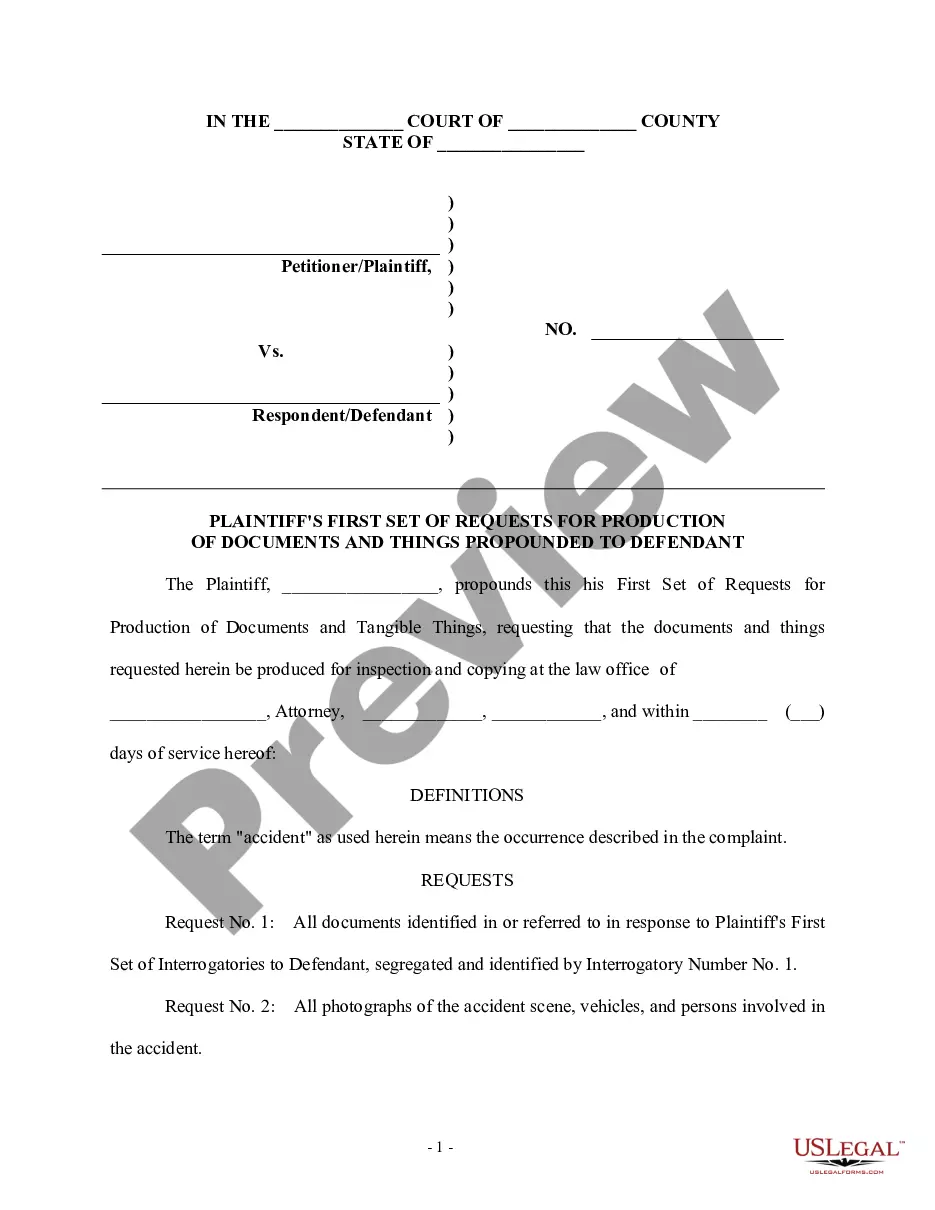
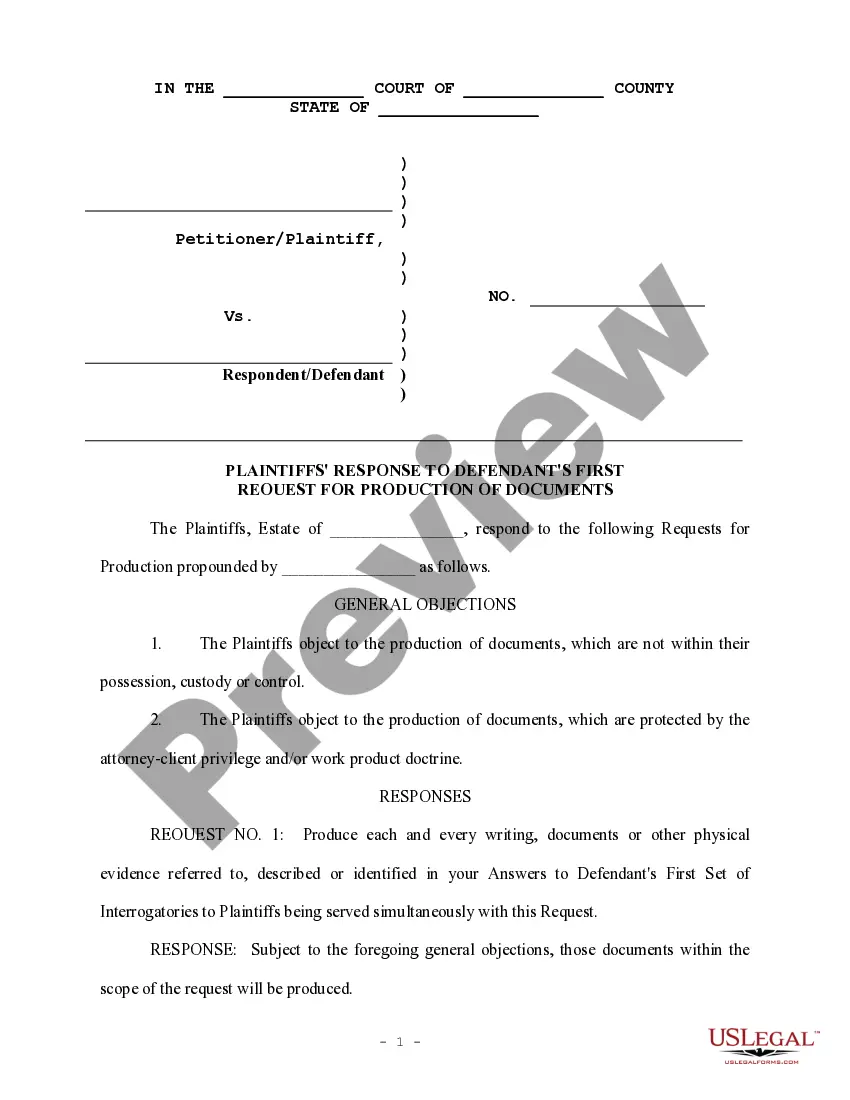
Response To Request For Admissions
Description
Get your form ready online
Our built-in tools help you complete, sign, share, and store your documents in one place.
Make edits, fill in missing information, and update formatting in US Legal Forms—just like you would in MS Word.
Download a copy, print it, send it by email, or mail it via USPS—whatever works best for your next step.
Sign and collect signatures with our SignNow integration. Send to multiple recipients, set reminders, and more. Go Premium to unlock E-Sign.
If this form requires notarization, complete it online through a secure video call—no need to meet a notary in person or wait for an appointment.
We protect your documents and personal data by following strict security and privacy standards.

Make edits, fill in missing information, and update formatting in US Legal Forms—just like you would in MS Word.

Download a copy, print it, send it by email, or mail it via USPS—whatever works best for your next step.

Sign and collect signatures with our SignNow integration. Send to multiple recipients, set reminders, and more. Go Premium to unlock E-Sign.

If this form requires notarization, complete it online through a secure video call—no need to meet a notary in person or wait for an appointment.

We protect your documents and personal data by following strict security and privacy standards.
Looking for another form?
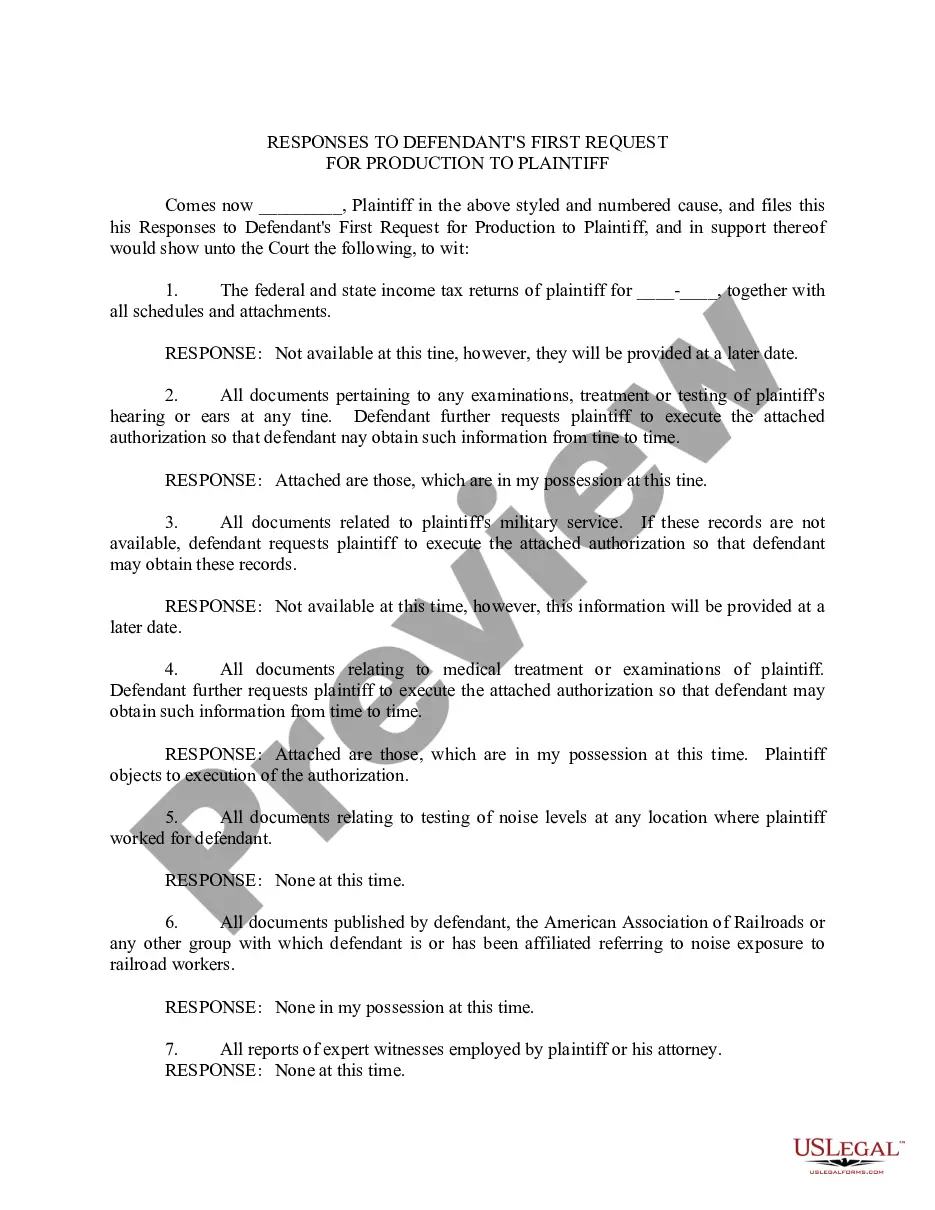
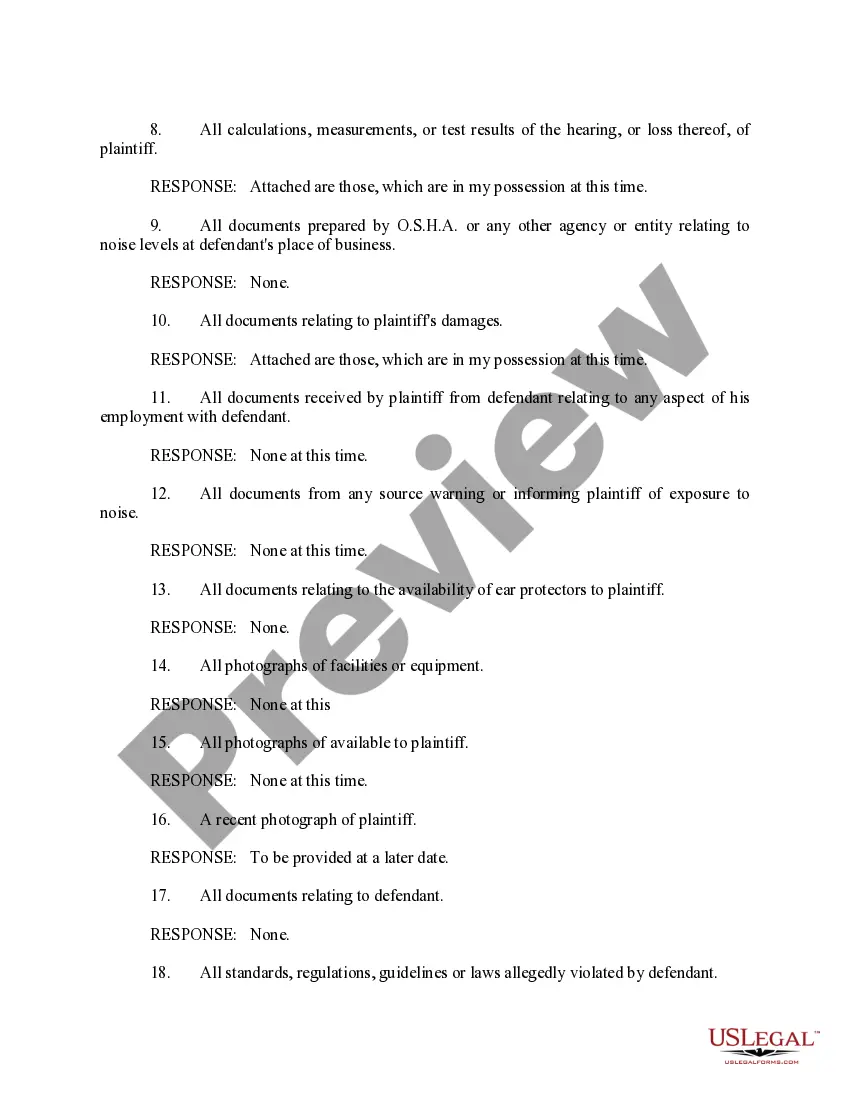
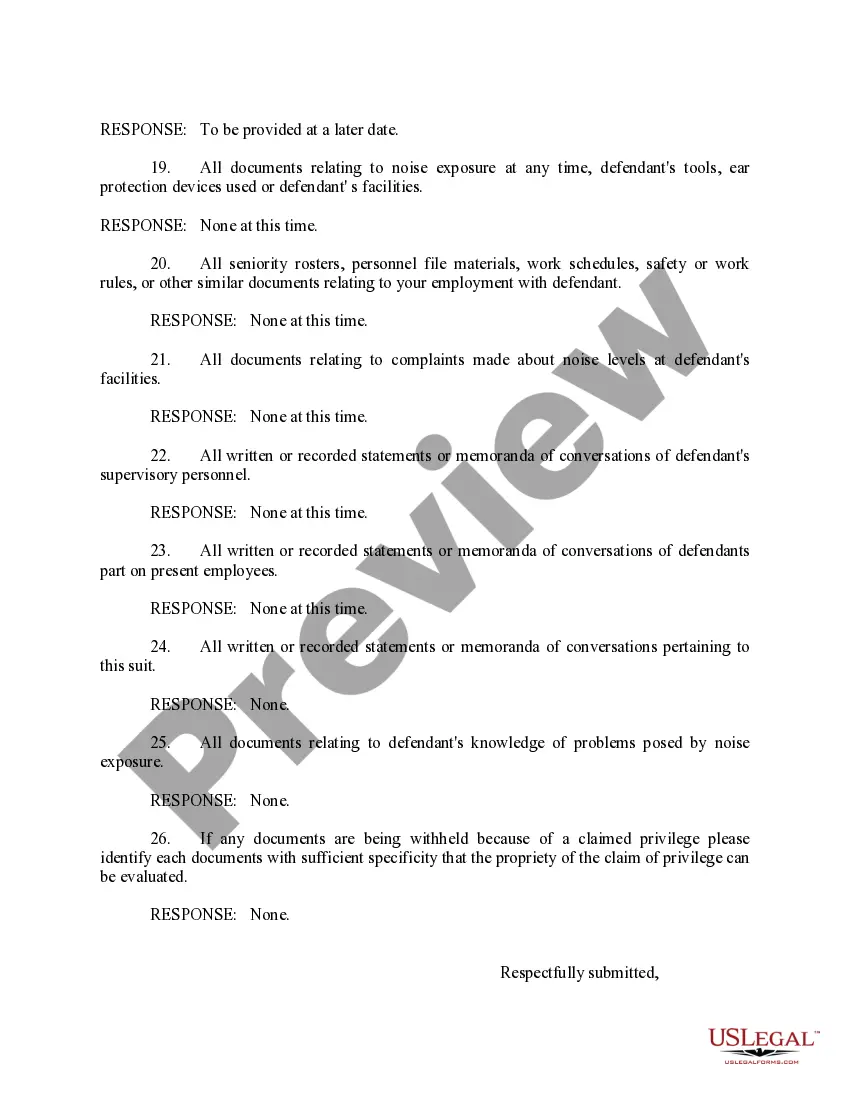
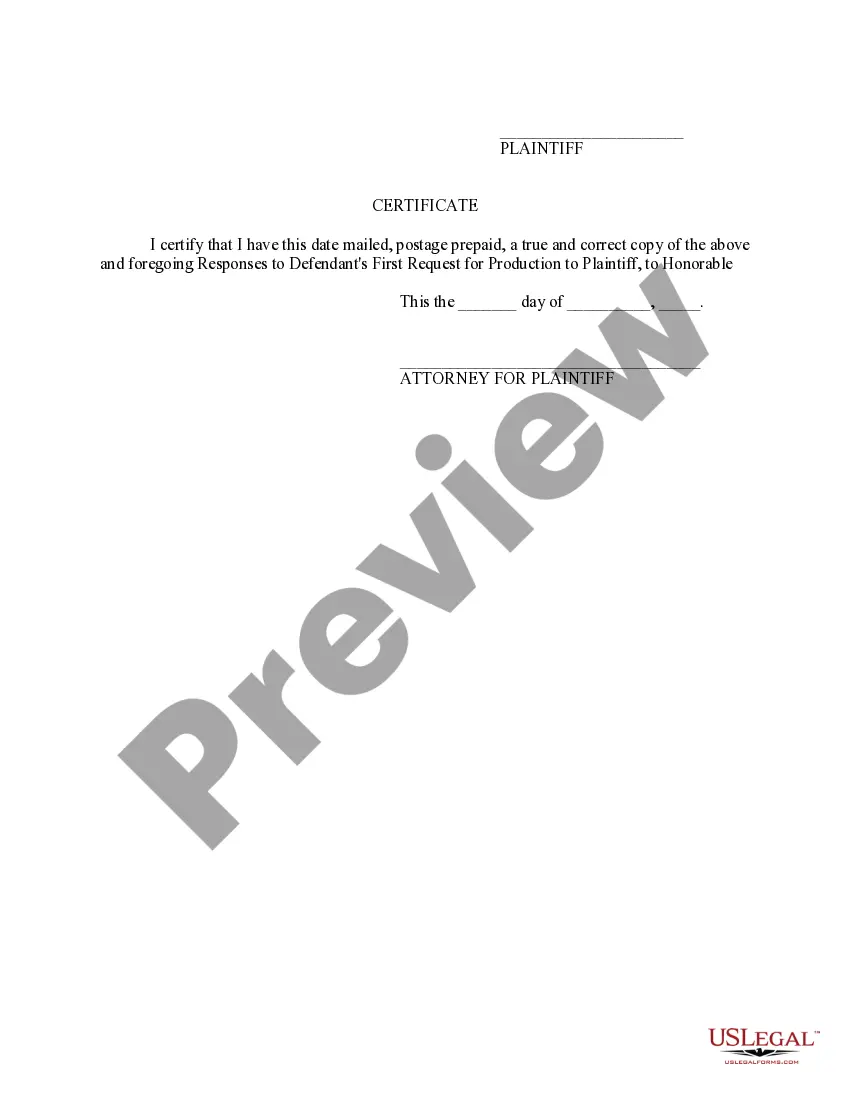
How to fill out Responses To Defendant's First Request For Production To Plaintiff?
It’s widely known that you cannot transform into a legal authority in a short span, nor can you swiftly learn how to draft a Response To Request For Admissions without possessing a unique set of expertise.
Formulating legal documents is an extended endeavor necessitating specific education and proficiency. So why not entrust the crafting of the Response To Request For Admissions to professionals.
With US Legal Forms, one of the most extensive legal document repositories, you can find anything from court filings to templates for internal communication.
Begin your search again if you require any other document.
Create a free account and choose a subscription plan to buy the template. Click Buy now. Once your payment is processed, you can download the Response To Request For Admissions, fill it out, print it, and send or mail it to the appropriate individuals or organizations.
- We recognize how vital compliance and adherence to federal and local regulations are.
- That’s why, on our platform, all documents are location-specific and current.
- Here’s how you can initiate your experience with our platform and acquire the form you need in just minutes.
- Identify the document you require using the search bar at the top of the page.
- Preview it (if this option is available) and read the supporting description to ascertain whether Response To Request For Admissions is what you seek.
Form popularity
FAQ
To respond to an admission letter, first review the contents carefully to understand what is being requested. You should formulate your response based on whether you agree or disagree with the admissions. Be sure to clearly state your position on each point, and if needed, provide a rationale for your decisions. Using US Legal Forms can streamline this process with helpful templates and legal insights.
Yes, responses to requests for admissions in federal court generally need to be verified. This means that you must sign your responses under penalty of perjury, affirming their truthfulness. Verification adds credibility to your responses and helps maintain the integrity of the legal process. Utilizing resources from US Legal Forms can assist you in understanding the verification requirements.
In Florida, you typically have 30 days to respond to a request for admissions. This time frame starts from the date you receive the request. If you need additional time, you may file a motion with the court requesting an extension. Ensuring timely responses is essential, as it affects your legal standing and the overall progress of your case.
To respond to requests for admissions, first carefully read each admission request you receive. You can either admit the statement, deny it, or state that you lack sufficient information to admit or deny. It is crucial to provide clear and concise responses, as your response to request for admissions can impact the outcome of your case. Consider using a legal service like US Legal Forms for templates and guidance in crafting your responses.
The time frame to respond to requests for admissions generally depends on your jurisdiction and the specifics of your case. Typically, you have 30 days to respond after receiving the request. It is crucial to prioritize this task because failing to respond timely can result in automatic admissions of the facts presented. Utilizing a platform like US Legal Forms can streamline this process by providing templates and guidance, ensuring that you meet all deadlines effectively.
If a party fails to timely respond to a Request for Admission, the court may consider the statements admitted, which can significantly affect the outcome of the case. This failure can lead to disadvantages, including the inability to contest the admitted facts later. Therefore, it is essential to prioritize your response and utilize tools like US Legal Forms to ensure you meet deadlines and properly address the requests.
Responding to a Request for Admission involves creating a written response that addresses each statement individually. You can either admit or deny the statements, or indicate that you do not have enough information to respond. Timely and accurate responses are crucial, as they can impact your case. US Legal Forms provides helpful resources and formats to facilitate your response to requests for admissions.
To answer a request for admission, first carefully read each statement in the request. You must admit, deny, or state that you lack sufficient information to respond. Be sure to provide clear, concise answers that directly address the statements. Using a platform like US Legal Forms can simplify this process by offering templates and guidance for crafting your response to requests for admissions.
To write a written response to a request for admissions, start by carefully reviewing each admission. Clearly state whether you admit, deny, or lack sufficient information to respond to each request. It is important to maintain clarity and precision in your language. Utilizing a platform like US Legal Forms can provide templates and guidance to streamline this process and ensure compliance with court requirements.