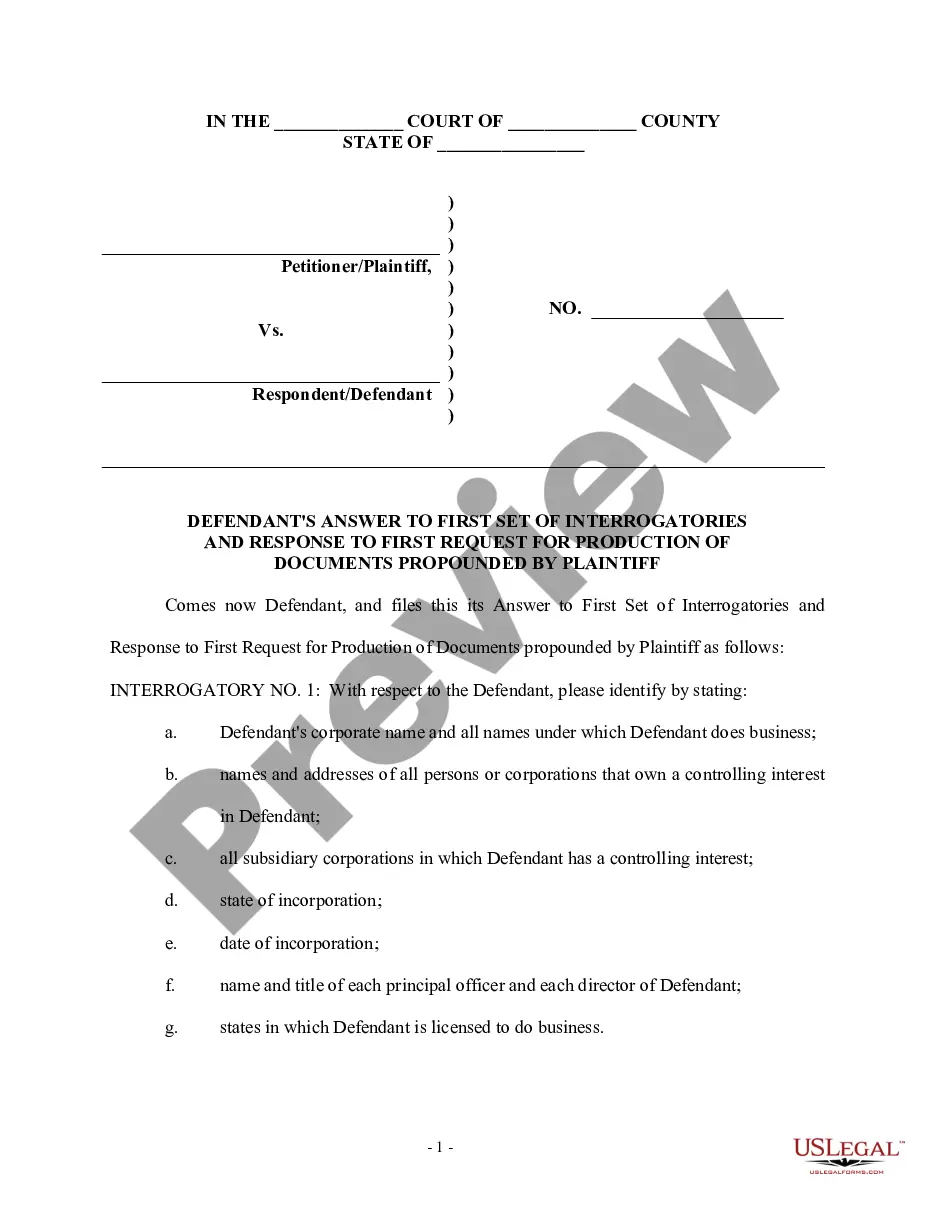
Response For Interrogatories
Description

Get your form ready online
Our built-in tools help you complete, sign, share, and store your documents in one place.
Make edits, fill in missing information, and update formatting in US Legal Forms—just like you would in MS Word.
Download a copy, print it, send it by email, or mail it via USPS—whatever works best for your next step.
Sign and collect signatures with our SignNow integration. Send to multiple recipients, set reminders, and more. Go Premium to unlock E-Sign.
If this form requires notarization, complete it online through a secure video call—no need to meet a notary in person or wait for an appointment.
We protect your documents and personal data by following strict security and privacy standards.

Make edits, fill in missing information, and update formatting in US Legal Forms—just like you would in MS Word.

Download a copy, print it, send it by email, or mail it via USPS—whatever works best for your next step.

Sign and collect signatures with our SignNow integration. Send to multiple recipients, set reminders, and more. Go Premium to unlock E-Sign.

If this form requires notarization, complete it online through a secure video call—no need to meet a notary in person or wait for an appointment.

We protect your documents and personal data by following strict security and privacy standards.
Looking for another form?
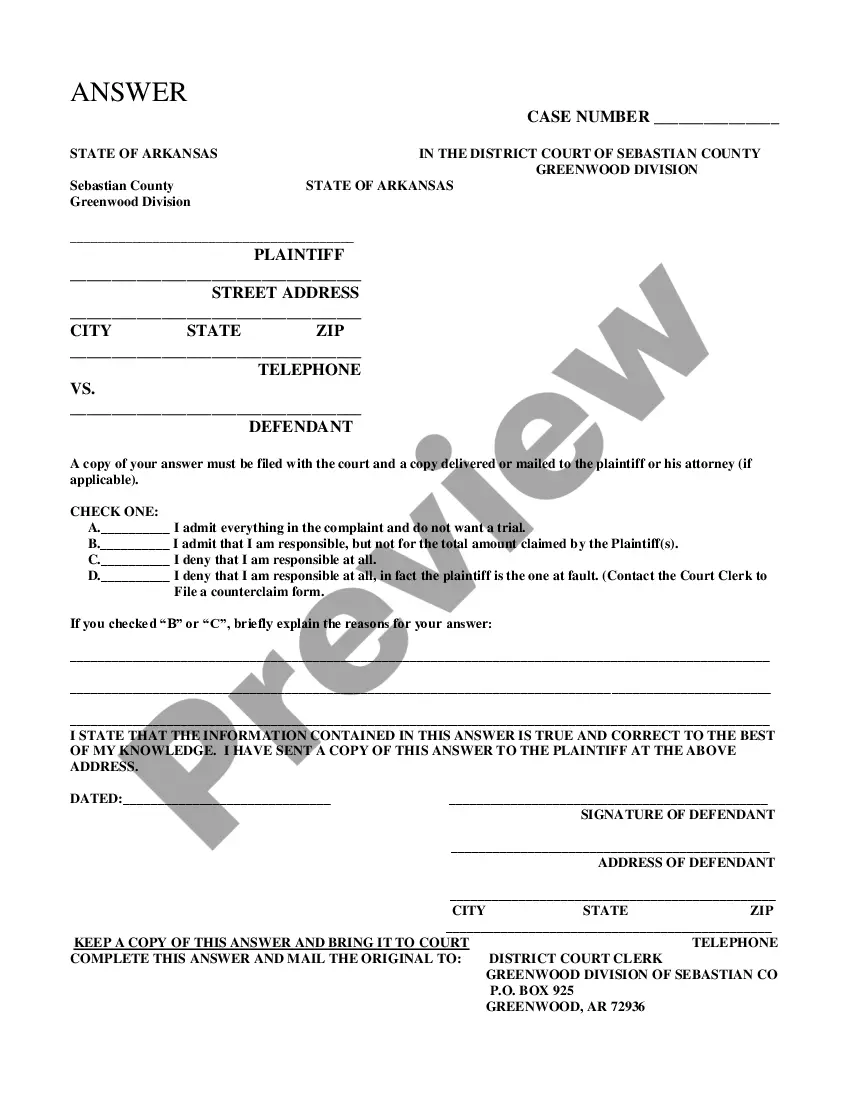


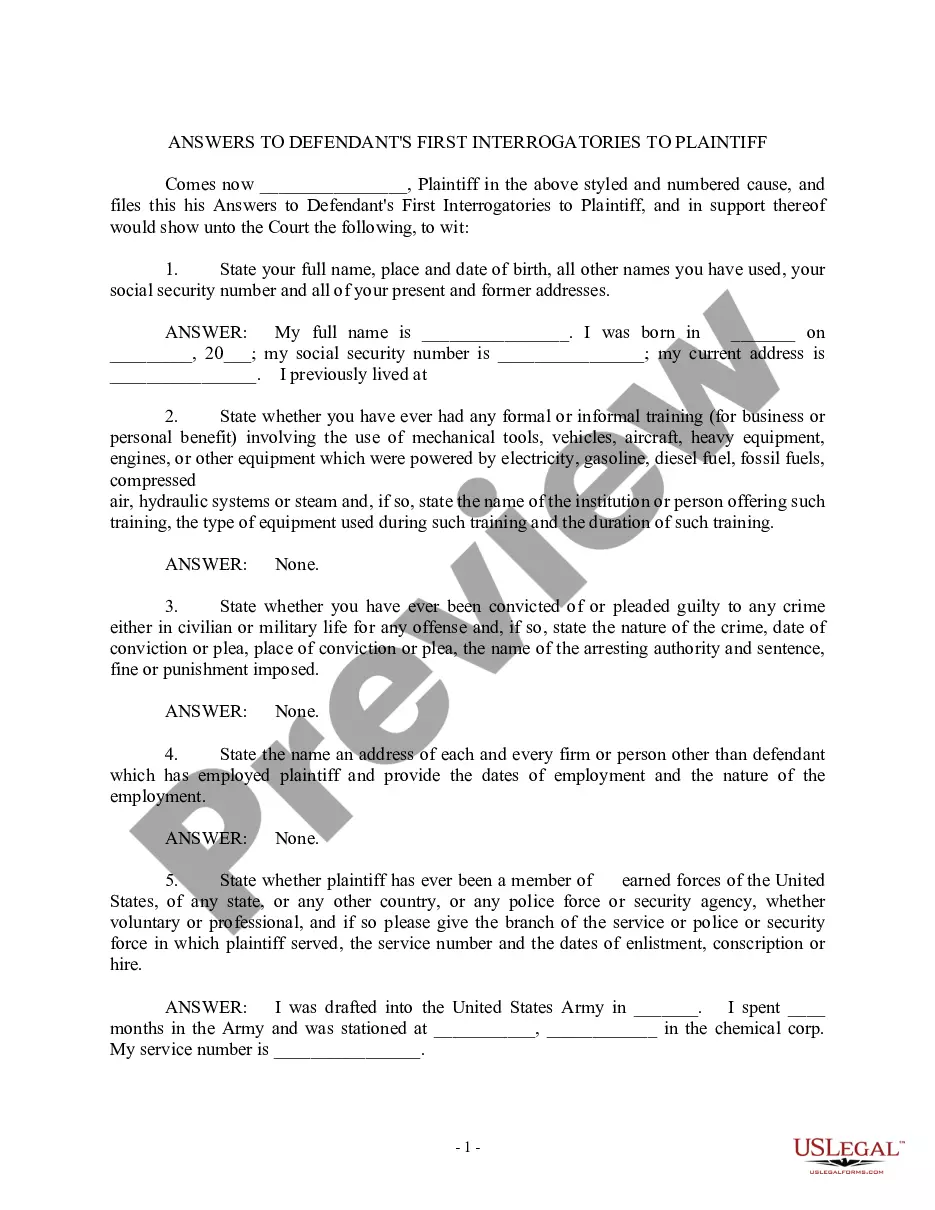
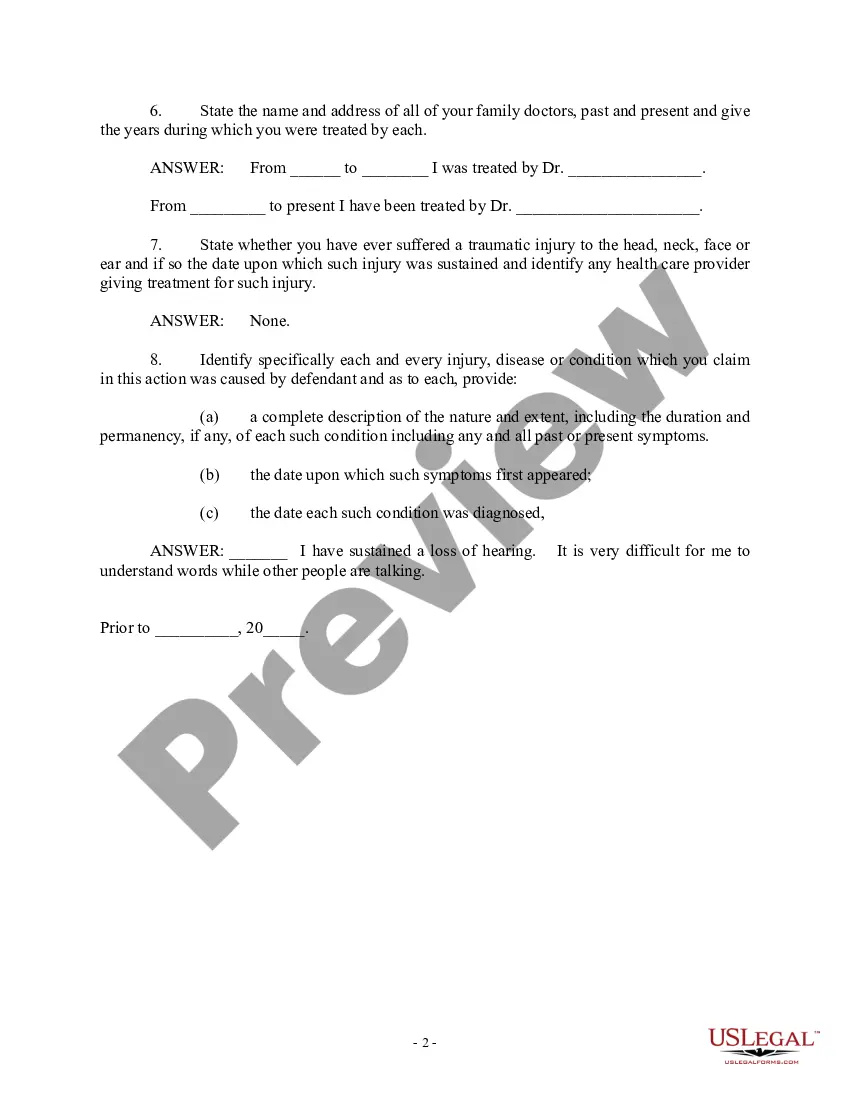
How to fill out Answers To Defendant's First Interrogatories To Plaintiff?
The Reply For Inquiries you observe on this page is a reusable legal framework crafted by competent attorneys in accordance with federal and state regulations.
For over 25 years, US Legal Forms has supplied individuals, entities, and lawyers with more than 85,000 authenticated, state-specific templates for any business and personal situation. It’s the fastest, easiest, and most reliable method to acquire the documents you require, as the service guarantees bank-grade data protection and anti-malware safety.
Subscribe to US Legal Forms to have validated legal templates for all of life’s circumstances at your fingertips.
- Browse for the document you need and verify it.
- Look through the sample you searched and preview it or review the form description to ensure it fulfills your requirements. If it does not, utilize the search option to find the right one. Click Buy Now when you have located the template you require.
- Subscribe and Log In.
- Choose the payment plan that fits you and create an account. Use PayPal or a credit card to make a swift payment. If you already possess an account, Log In and check your subscription to continue.
- Acquire the editable template.
- Select the format you want for your Reply For Inquiries (PDF, Word, RTF) and save the sample on your device.
- Complete and sign the document.
- Print the template to fill it out by hand. Alternatively, use an online multi-purpose PDF editor to swiftly and accurately complete and sign your form with an electronic signature.
- Download your documents again.
- Use the same document again whenever needed. Open the My documents tab in your profile to redownload any previously purchased templates.
Form popularity
FAQ
If you are unable to answer a specific question because you don't know or don't have access to the appropriate information, you must indicate the reasons. You may refer to a previous response when responding to an interrogatory providing the previous response sufficiently answers the later interrogatory.
Your answers to the interrogatories should usually be short, clear, and direct and should answer only the question that is being asked. This is not the time to set out your entire case or defense to the other side. Take the time to make sure your answers are correct and truthful.
Answer only the question that is asked, and avoid the temptation to over-explain your answer. If the question contains several parts, you may break your answer into parts as well. It is also possible that you might object to the question.
You have to respond to interrogatories in writing to the best of your ability. If you do not answer an interrogatory question, and then the other side learns that you did in fact know the answer, it could have a negative impact on your case at trial.
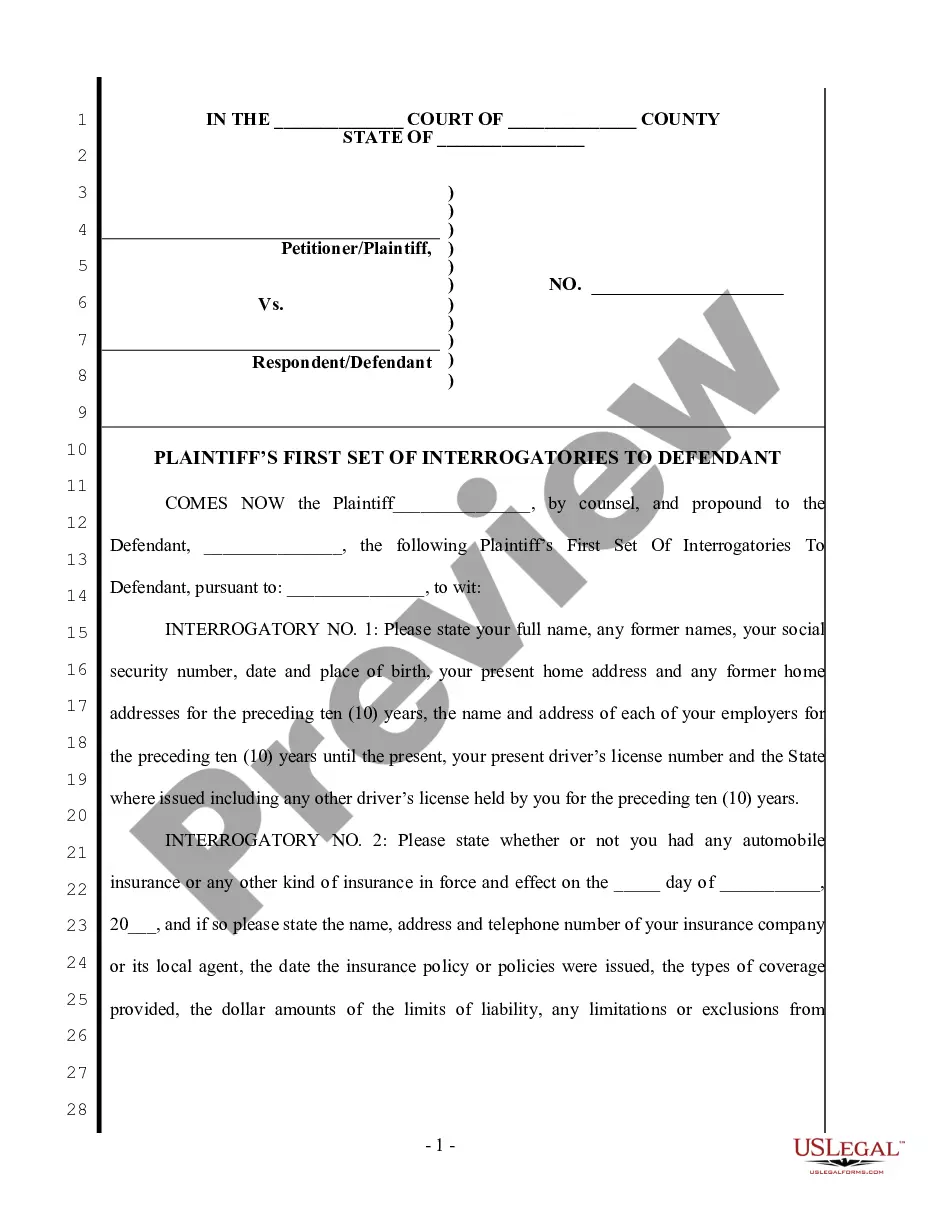
You can use interrogatories to find out facts about a case but they cannot be used for questions that draw a legal conclusion.