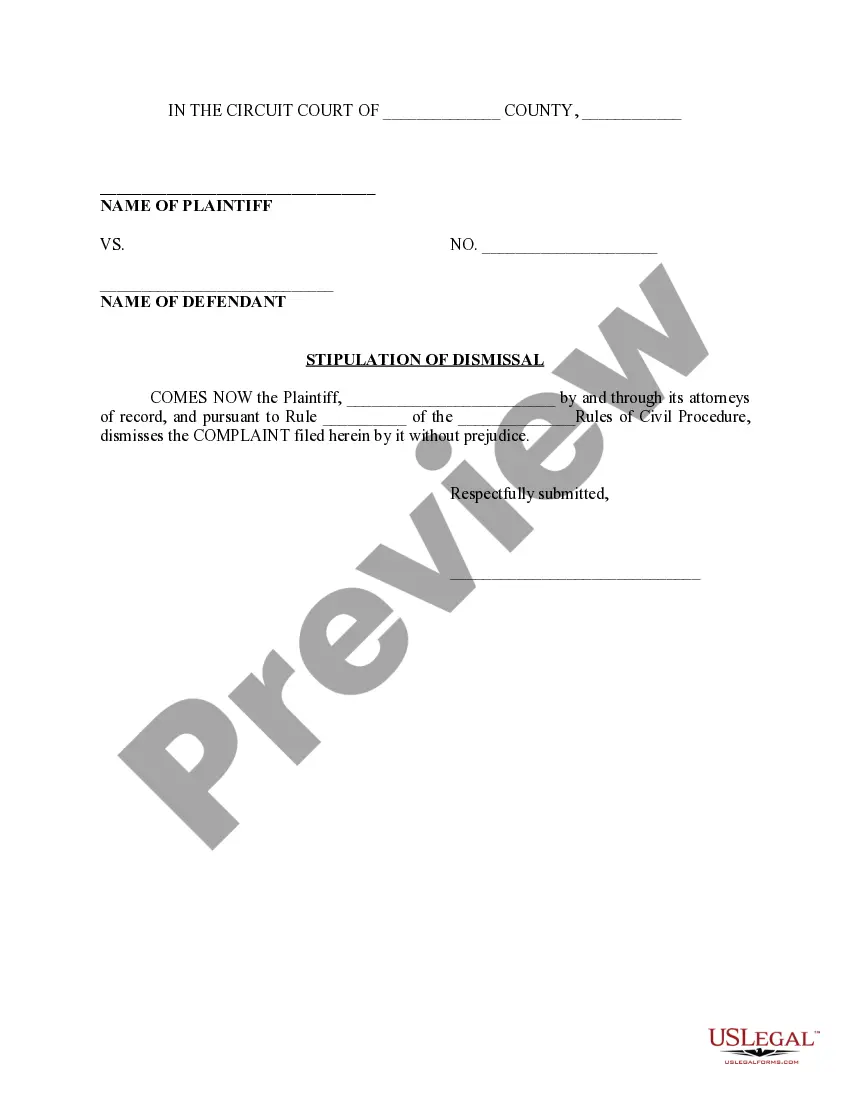
Stipulation Of Dismissal With Prejudice Example
Description
Get your form ready online
Our built-in tools help you complete, sign, share, and store your documents in one place.
Make edits, fill in missing information, and update formatting in US Legal Forms—just like you would in MS Word.
Download a copy, print it, send it by email, or mail it via USPS—whatever works best for your next step.
Sign and collect signatures with our SignNow integration. Send to multiple recipients, set reminders, and more. Go Premium to unlock E-Sign.
If this form requires notarization, complete it online through a secure video call—no need to meet a notary in person or wait for an appointment.
We protect your documents and personal data by following strict security and privacy standards.

Make edits, fill in missing information, and update formatting in US Legal Forms—just like you would in MS Word.

Download a copy, print it, send it by email, or mail it via USPS—whatever works best for your next step.

Sign and collect signatures with our SignNow integration. Send to multiple recipients, set reminders, and more. Go Premium to unlock E-Sign.

If this form requires notarization, complete it online through a secure video call—no need to meet a notary in person or wait for an appointment.

We protect your documents and personal data by following strict security and privacy standards.
Looking for another form?





How to fill out Stipulation For Dismissal?
Securing a reliable source for obtaining the most up-to-date and pertinent legal templates is part of the challenge when dealing with bureaucratic processes. Identifying the correct legal forms necessitates precision and carefulness, which is why procuring samples of Stipulation Of Dismissal With Prejudice Example solely from trustworthy providers, like US Legal Forms, is crucial. An incorrect template can squander your time and hinder the situation at hand. With US Legal Forms, you can be assured of minimal concerns. You have the ability to access and verify all the details regarding the document’s applicability and significance to your circumstance, as well as within your jurisdiction.
Follow the outlined procedures to finalize your Stipulation Of Dismissal With Prejudice Example.
Eliminate the hassle associated with your legal paperwork. Discover the extensive US Legal Forms archive to locate legal samples, verify their relevance to your needs, and download them immediately.
- Use the catalog navigation or search bar to find your template.
- Examine the form’s details to confirm it meets the specifications of your jurisdiction.
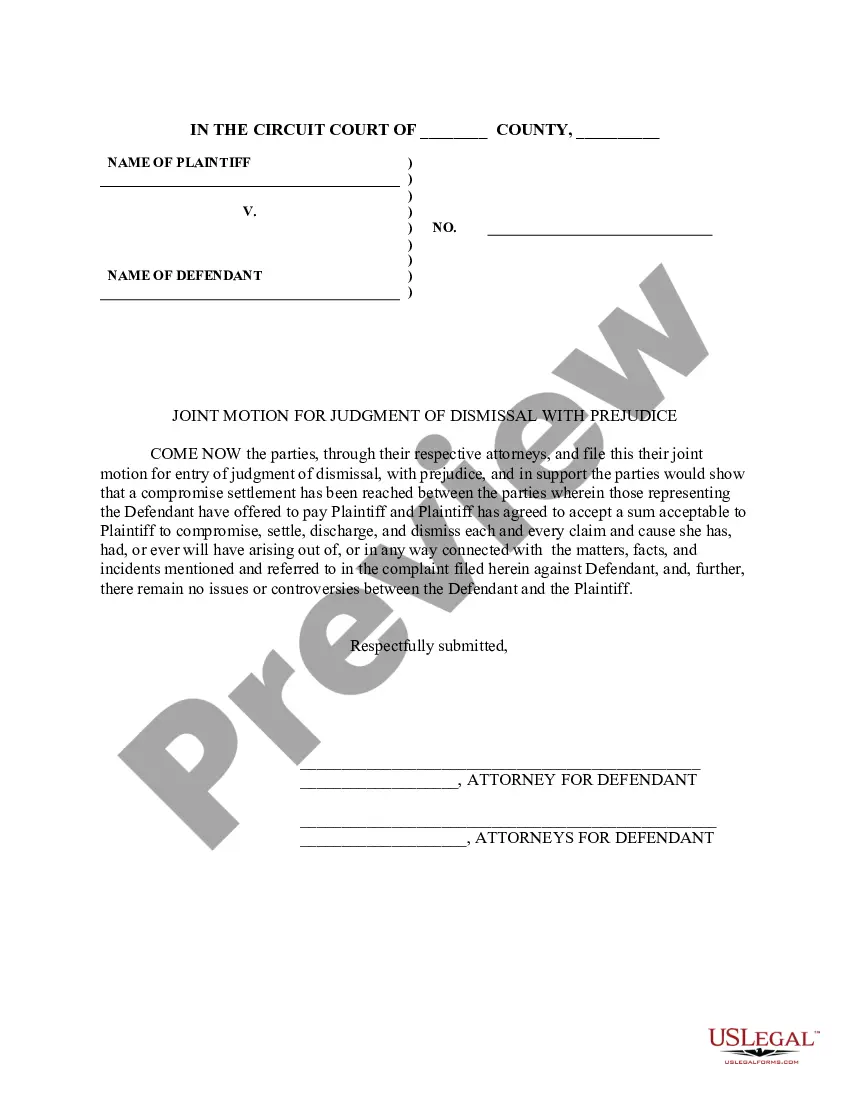
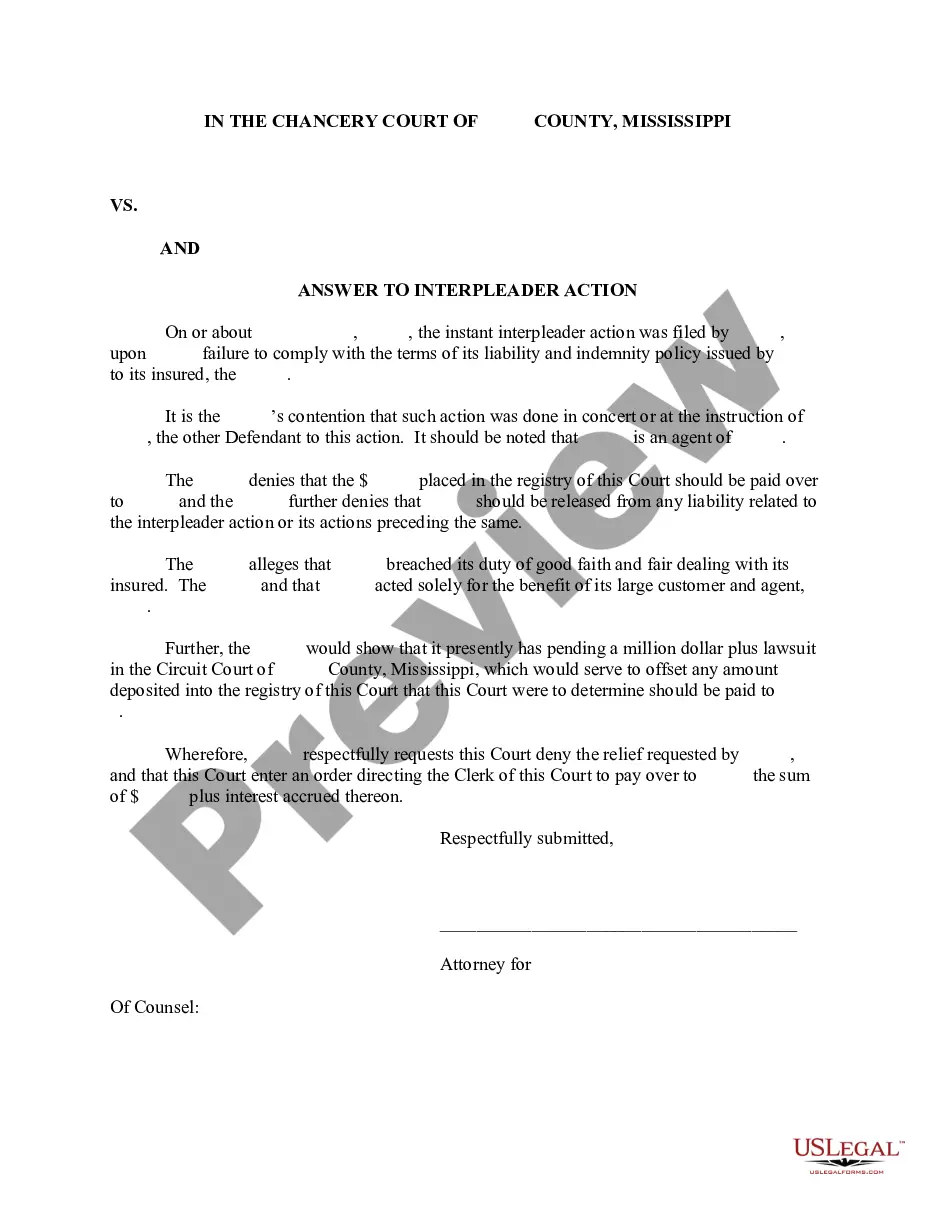
- Inspect the form preview, if it exists, to verify that the template is indeed what you are looking for.
- If the Stipulation Of Dismissal With Prejudice Example does not suit your requirements, continue your search for the suitable document.
- Once you are confident about the form’s applicability, download it.
- If you are a registered member, click Log in to verify and access your chosen templates in My documents.
- If you do not have an account yet, click Buy now to purchase the template.
- Select the pricing option that aligns with your needs.
- Proceed to the registration to finalize your purchase.
- Conclude your purchase by choosing a payment method (credit card or PayPal).
- Select the file format for downloading the Stipulation Of Dismissal With Prejudice Example.
- Once you have the form on your device, you can either edit it using the editor or print it to complete it manually.
Form popularity
FAQ
Grounds for dismissal with prejudice typically include a settlement agreement between parties, failure to prosecute the case, or a determination by the court that the claims are frivolous. When a court dismisses a case with prejudice, it signals that the matter is resolved and cannot be reopened. This kind of dismissal protects defendants from facing the same lawsuit multiple times. For a deeper understanding, exploring a stipulation of dismissal with prejudice example through US Legal Forms can be beneficial.
A case may get dismissed with prejudice for several reasons, including the plaintiff's failure to comply with court orders or lack of evidence to support their claims. When the court determines that the case lacks merit or that the parties have reached a settlement, it may issue this type of dismissal. This finality is crucial as it prevents endless litigation on the same matter. If you're unsure about the implications of a stipulation of dismissal with prejudice, consulting resources from US Legal Forms can provide valuable insights.
An example of a dismissed case with prejudice might involve a plaintiff who sues for breach of contract but then decides to settle the matter with the defendant. If both parties agree to a stipulation of dismissal with prejudice, the case is closed, and the plaintiff cannot refile the same claim in the future. This provides certainty and closure for both parties. Reviewing various stipulation of dismissal with prejudice examples can further clarify how such dismissals work in practice.
A stipulation of dismissal with prejudice means that a case is permanently closed and cannot be brought back to court. This type of dismissal indicates that the parties involved have agreed to end the case, and the decision is final. Understanding a stipulation of dismissal with prejudice example can help you grasp its implications in legal proceedings. It's essential to know that once a case is dismissed with prejudice, it leaves no room for further litigation on the same issue.
An example of a stipulation of dismissal with prejudice might occur when two parties agree to resolve a dispute over a contract. For instance, if the plaintiff and defendant agree on a settlement amount, they can file a stipulation that dismisses the case with prejudice. Such examples illustrate the finality of this legal option, ensuring both parties move forward without further claims.
Yes, dismissal with prejudice can have implications for your legal record. Since it prevents the re-filing of the same claim, it effectively concludes the matter permanently. This outcome may also influence future legal actions or claims you wish to pursue, so it's wise to consider the long-term effects.
Whether it's better to be dismissed with or without prejudice depends on your situation. Dismissal with prejudice prevents any future claims, while dismissal without prejudice allows the plaintiff to refile the case later. Understanding these differences is essential for making informed legal decisions.
The stipulation of dismissal with prejudice means that the case is dismissed permanently, and the plaintiff cannot file another lawsuit on the same grounds. This resolution indicates that the court has accepted the terms agreed upon by the parties. It's important to be aware of the implications of this stipulation, as it closes the door on future claims.
A stipulation for dismissal with prejudice is a legal resolution that permanently ends a lawsuit, preventing the plaintiff from bringing the same claim again. This type of stipulation signifies that the case has been fully resolved and cannot be reopened in the future. Understanding this concept is crucial for anyone involved in legal proceedings.
The value of a stipulation can vary based on the circumstances of the case. Generally, a stipulation can be beneficial since it allows parties to resolve disputes without going through a lengthy trial. However, if the terms are not favorable, the stipulation could lead to unfavorable outcomes, so it's important to consider the specific context.