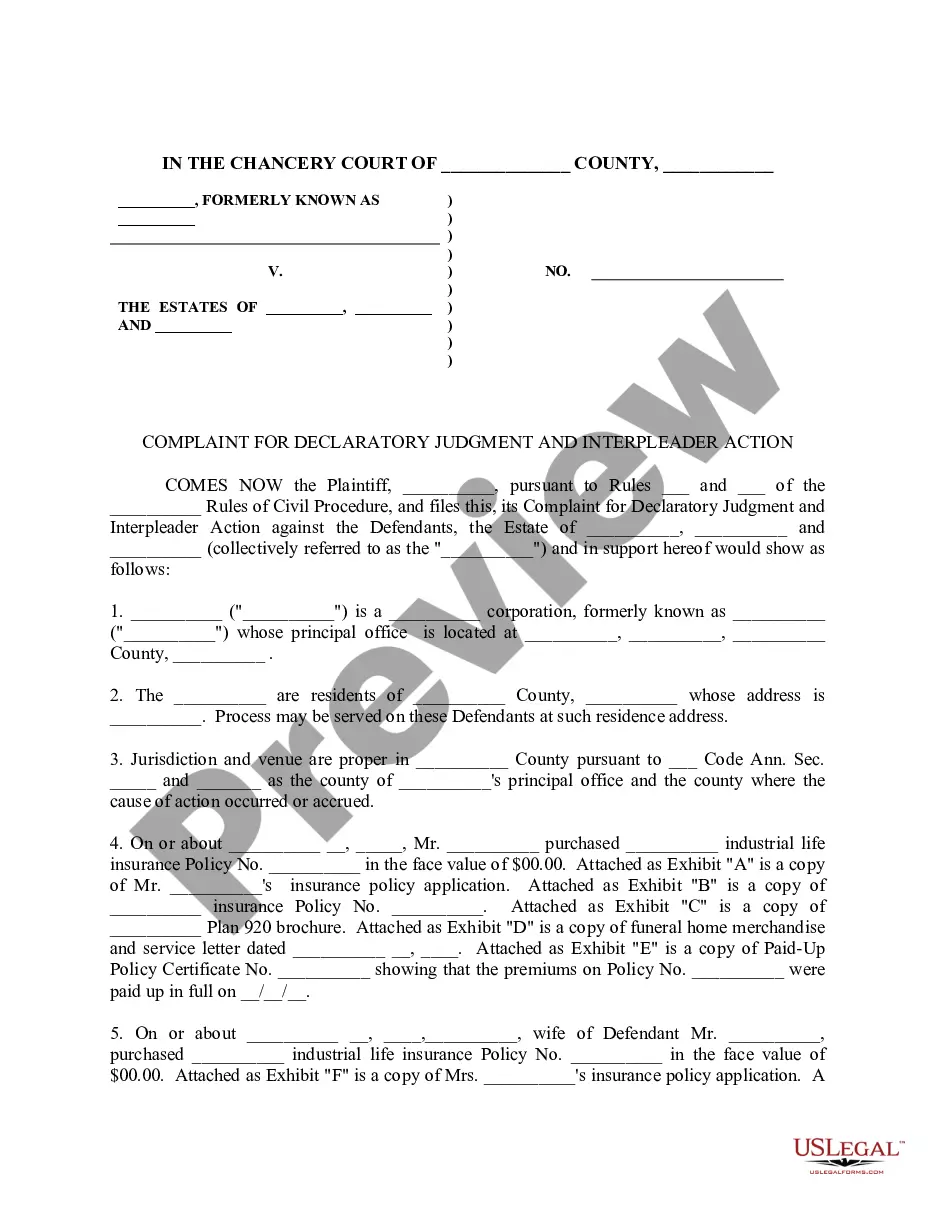
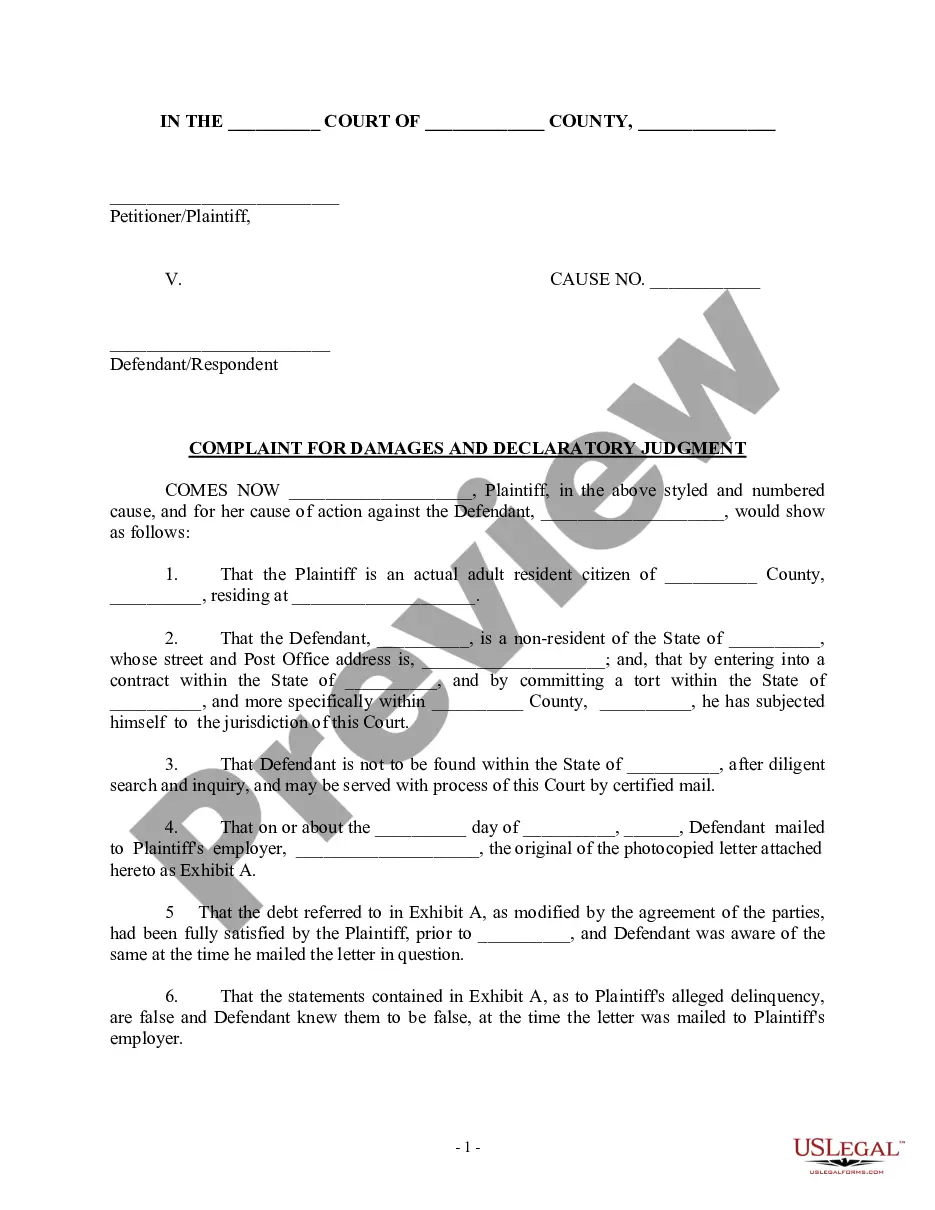
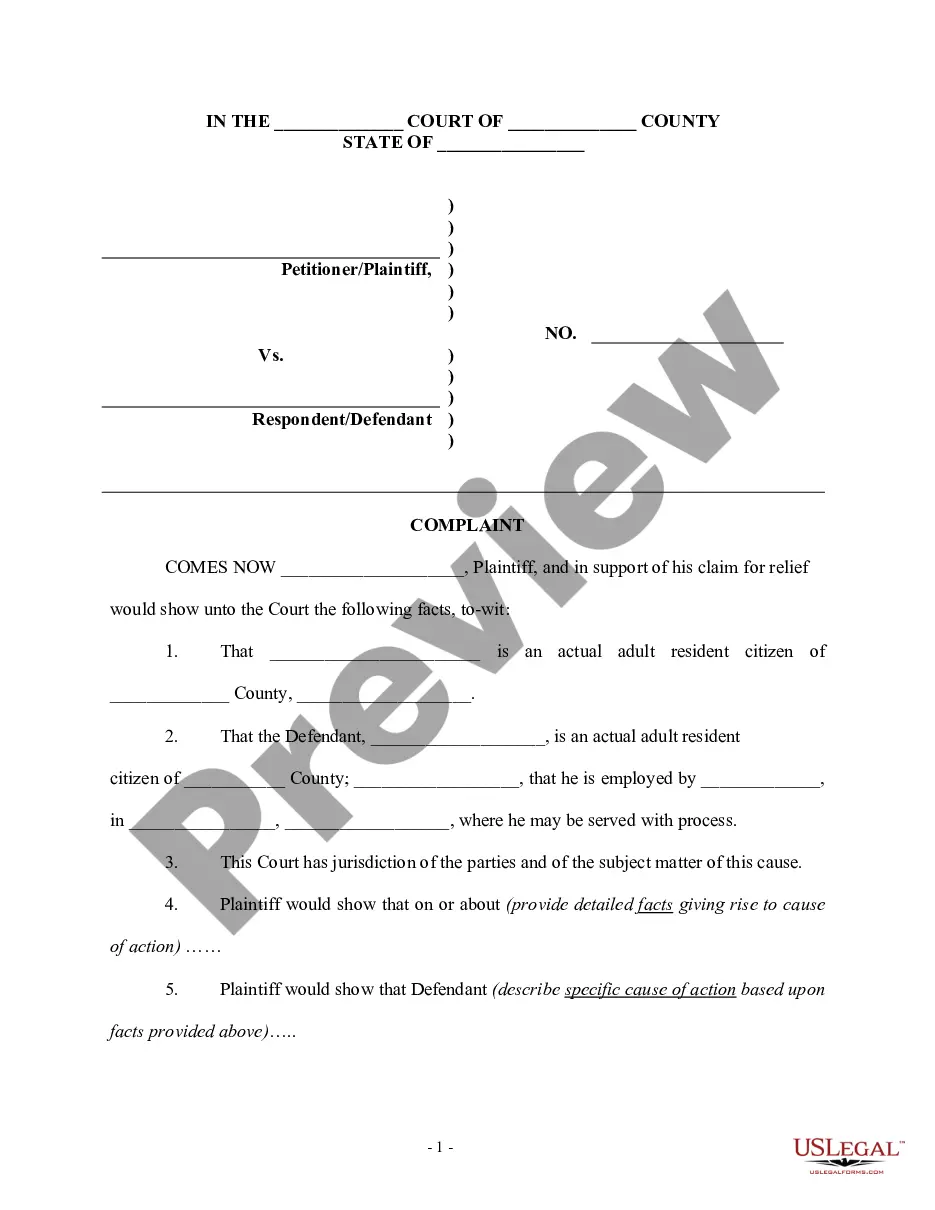
Declaratory Judgment Template With Lines
Description

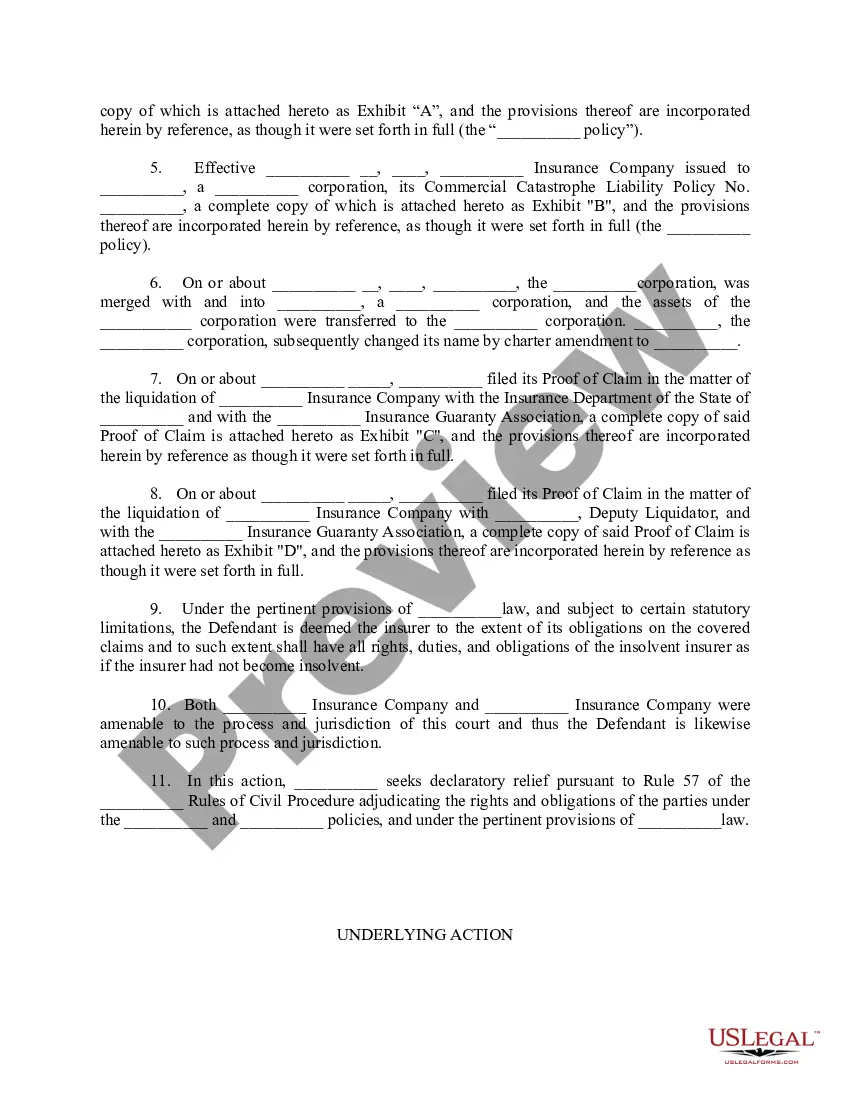
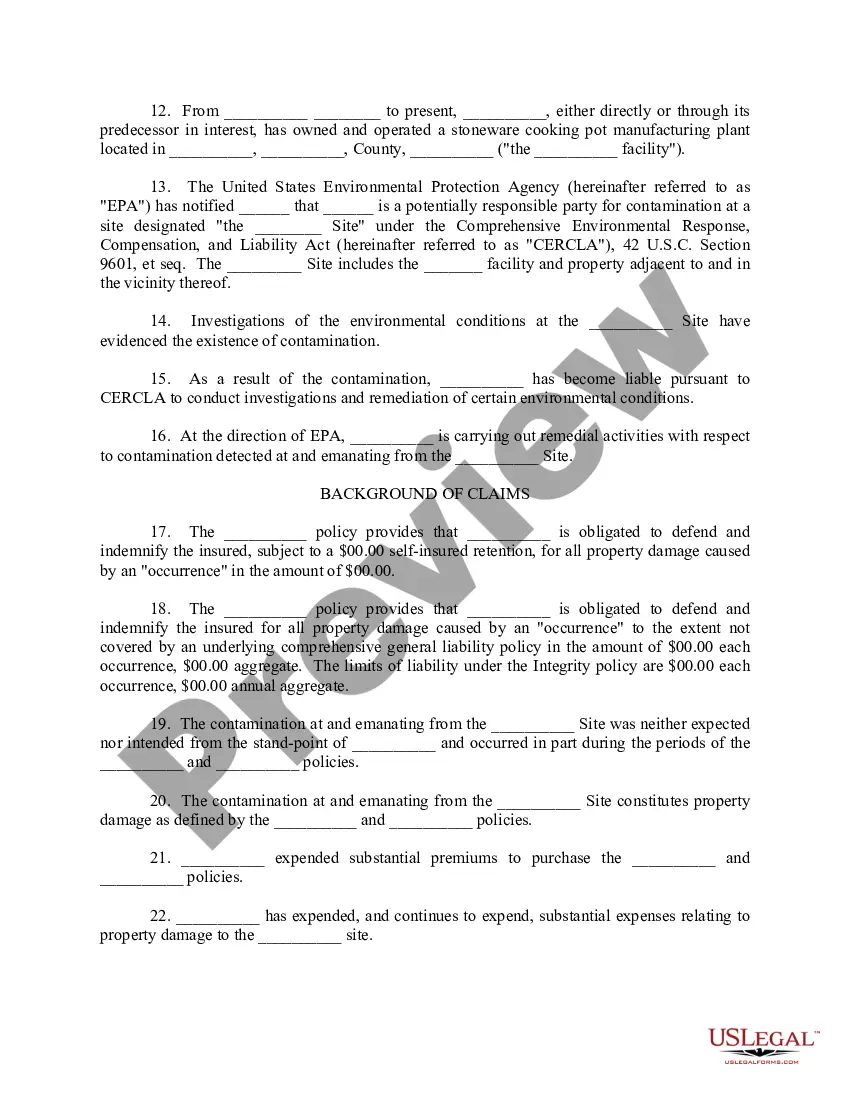
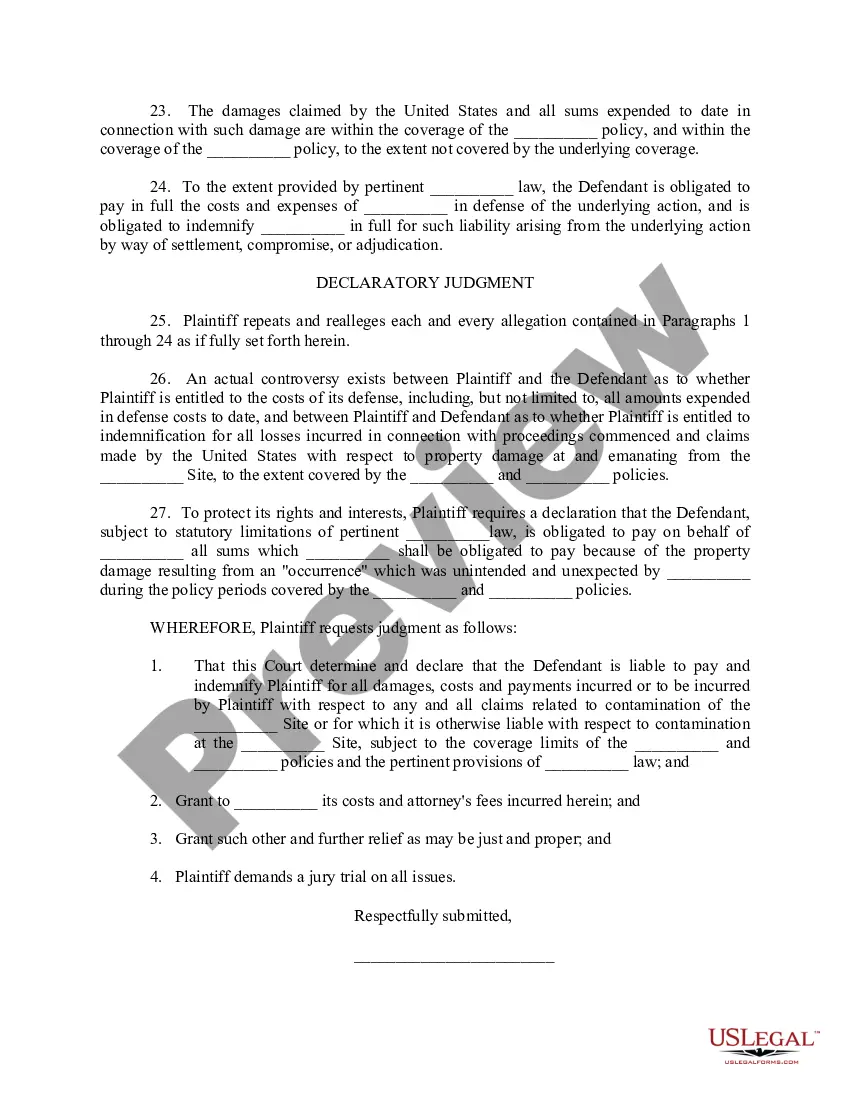


Get your form ready online
Our built-in tools help you complete, sign, share, and store your documents in one place.
Make edits, fill in missing information, and update formatting in US Legal Forms—just like you would in MS Word.
Download a copy, print it, send it by email, or mail it via USPS—whatever works best for your next step.
Sign and collect signatures with our SignNow integration. Send to multiple recipients, set reminders, and more. Go Premium to unlock E-Sign.
If this form requires notarization, complete it online through a secure video call—no need to meet a notary in person or wait for an appointment.
We protect your documents and personal data by following strict security and privacy standards.

Make edits, fill in missing information, and update formatting in US Legal Forms—just like you would in MS Word.

Download a copy, print it, send it by email, or mail it via USPS—whatever works best for your next step.

Sign and collect signatures with our SignNow integration. Send to multiple recipients, set reminders, and more. Go Premium to unlock E-Sign.

If this form requires notarization, complete it online through a secure video call—no need to meet a notary in person or wait for an appointment.

We protect your documents and personal data by following strict security and privacy standards.
Looking for another form?
How to fill out Complaint For Declaratory Judgment?
Handling legal documents and operations might be a time-consuming addition to your entire day. Declaratory Judgment Template With Lines and forms like it typically require that you look for them and navigate the way to complete them appropriately. As a result, whether you are taking care of financial, legal, or individual matters, having a comprehensive and convenient web catalogue of forms close at hand will help a lot.
US Legal Forms is the top web platform of legal templates, offering more than 85,000 state-specific forms and numerous resources that will help you complete your documents easily. Check out the catalogue of appropriate papers open to you with just a single click.
US Legal Forms gives you state- and county-specific forms offered at any time for downloading. Safeguard your papers management processes with a high quality service that allows you to put together any form within minutes with no extra or hidden charges. Simply log in in your account, identify Declaratory Judgment Template With Lines and acquire it right away from the My Forms tab. You may also access formerly saved forms.
Could it be the first time using US Legal Forms? Register and set up up an account in a few minutes and you’ll get access to the form catalogue and Declaratory Judgment Template With Lines. Then, follow the steps listed below to complete your form:
- Make sure you have the proper form using the Review feature and reading the form description.
- Select Buy Now once ready, and choose the subscription plan that suits you.
- Choose Download then complete, eSign, and print out the form.
US Legal Forms has twenty five years of experience helping consumers handle their legal documents. Get the form you require today and streamline any operation without breaking a sweat.
Form popularity
FAQ
The Burden of Proof Remains on the Patentee Taken together these three legal propositions indicate that, in a licensee's declaratory judgment action, the burden of proving infringement should remain with the patentee.?
To establish federal jurisdiction in a declaratory judgment action, two conditions must be satisfied. First, is the constitutional inquiry - the case must be a 'case or controversy' pursuant to Article III of the US Constitution. Second is the prudential inquiry ? declaratory relief must be appropriate.
For an actual controversy to be found, the plaintiff cannot be merely seeking advice from the court, but instead must show that the controversy between parties is substantial, immediate, and real and that the parties have adverse legal interests.
An example of this in a case involving contracts would be a party seeking an interpretation of the contract to determine their rights. Another example would be an insured individual seeking a specific determination of their rights and surrounding circumstances regarding insurance coverage under a specific policy.
For example, a policyholder believes that their denied claim is unjust. As a result, they inform the insurer that they are considering a lawsuit to recover losses. The insurer seeks a declaratory judgment to clarify its rights and obligations with hopes of preventing the lawsuit.