Declaratory Judgment Foreclosure
Description



Get your form ready online
Our built-in tools help you complete, sign, share, and store your documents in one place.
Make edits, fill in missing information, and update formatting in US Legal Forms—just like you would in MS Word.
Download a copy, print it, send it by email, or mail it via USPS—whatever works best for your next step.
Sign and collect signatures with our SignNow integration. Send to multiple recipients, set reminders, and more. Go Premium to unlock E-Sign.
If this form requires notarization, complete it online through a secure video call—no need to meet a notary in person or wait for an appointment.
We protect your documents and personal data by following strict security and privacy standards.

Make edits, fill in missing information, and update formatting in US Legal Forms—just like you would in MS Word.

Download a copy, print it, send it by email, or mail it via USPS—whatever works best for your next step.

Sign and collect signatures with our SignNow integration. Send to multiple recipients, set reminders, and more. Go Premium to unlock E-Sign.

If this form requires notarization, complete it online through a secure video call—no need to meet a notary in person or wait for an appointment.

We protect your documents and personal data by following strict security and privacy standards.
Looking for another form?
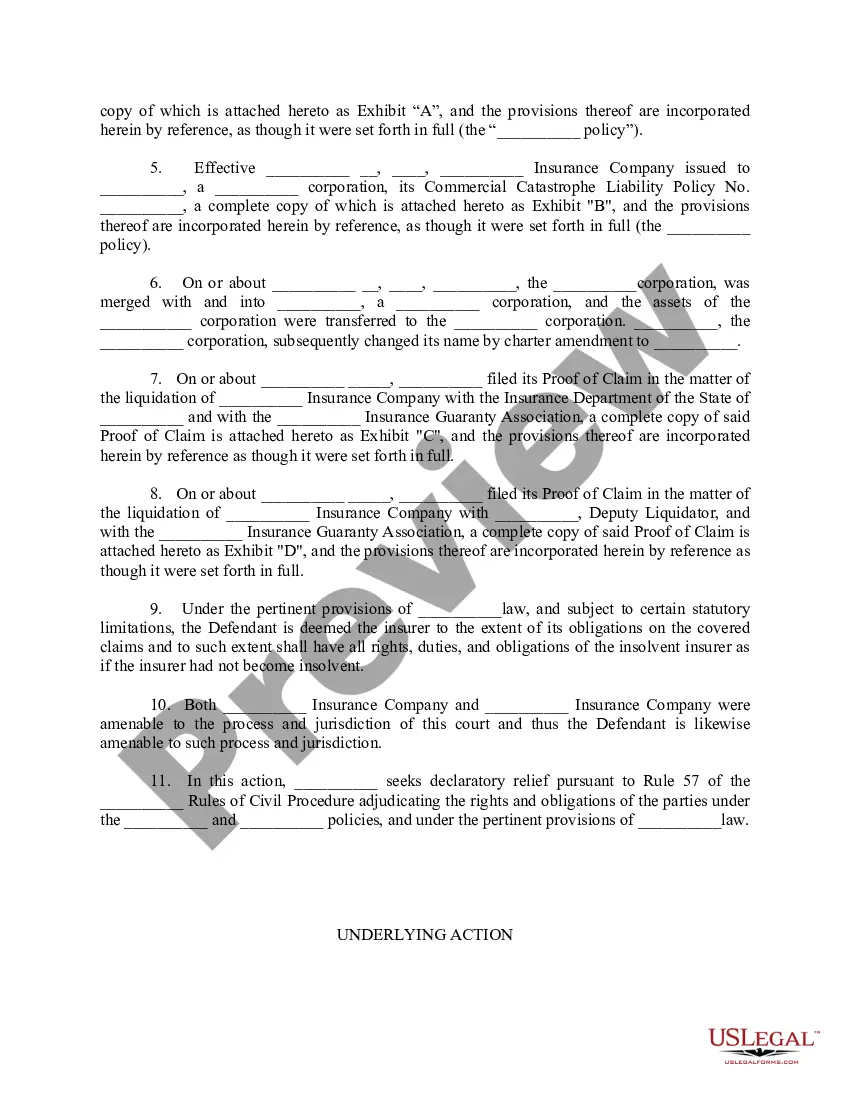
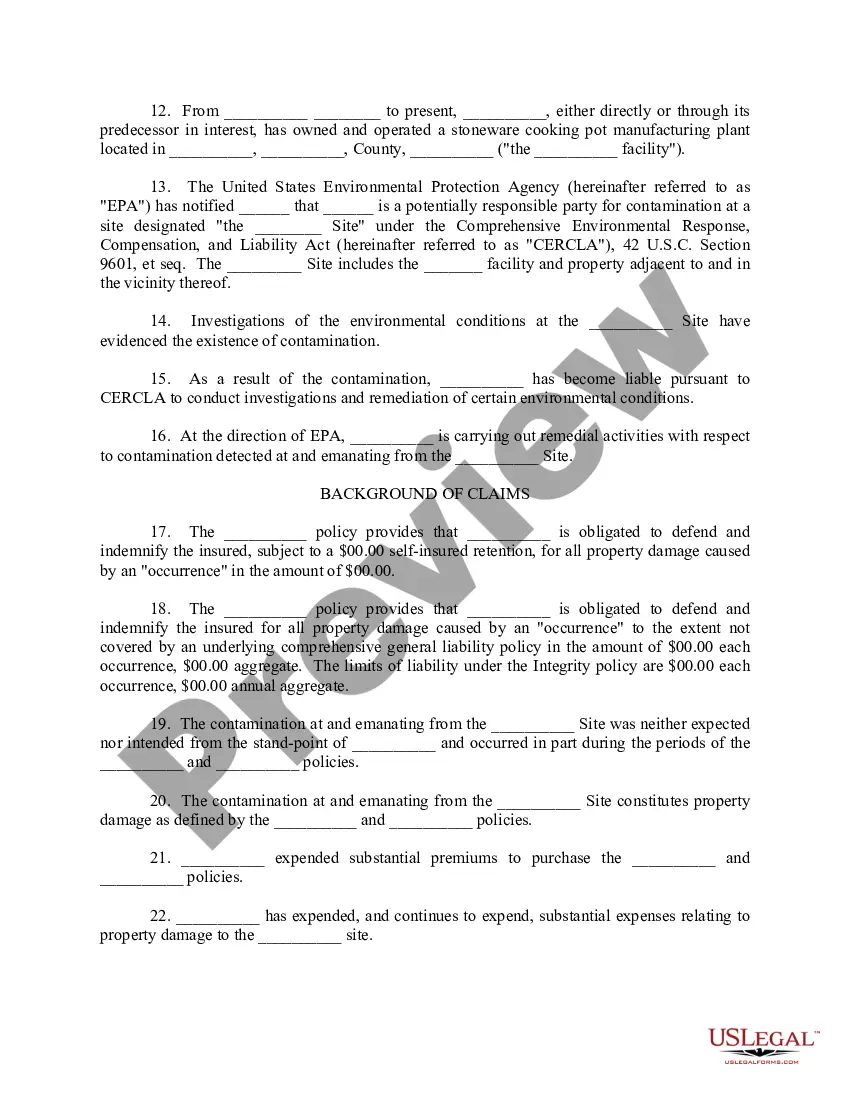
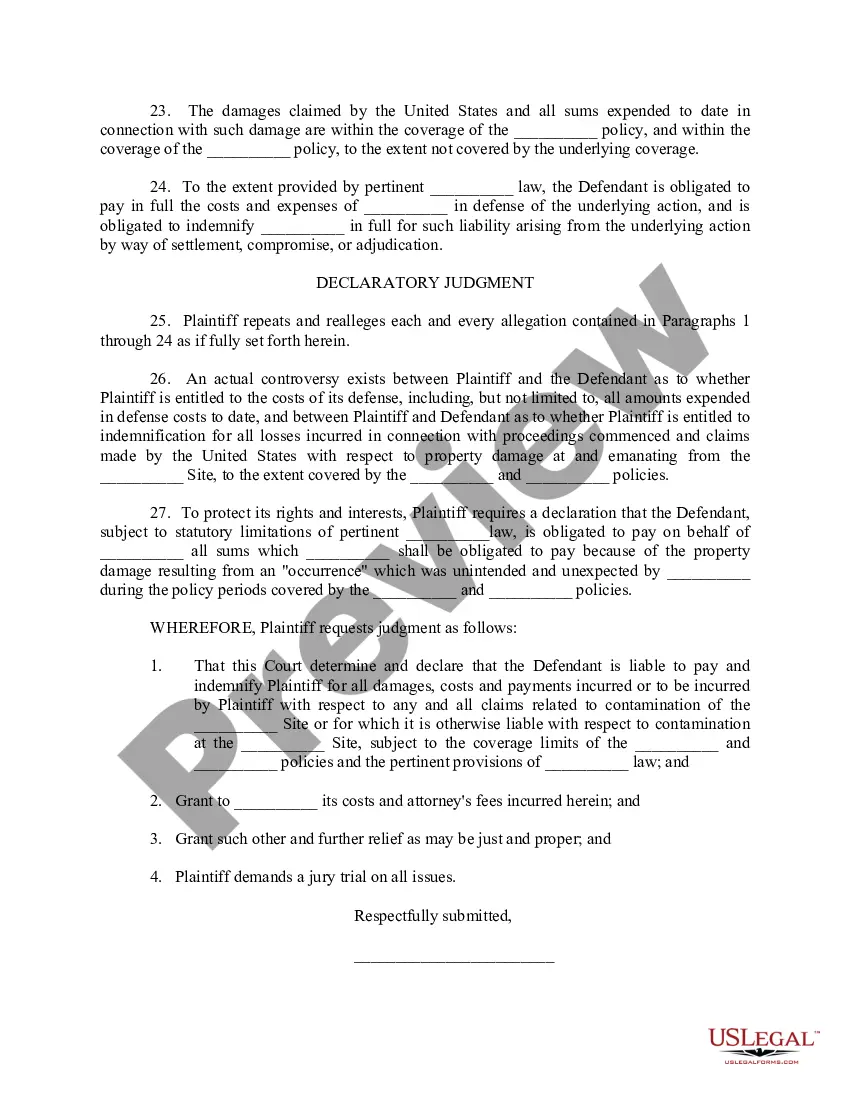
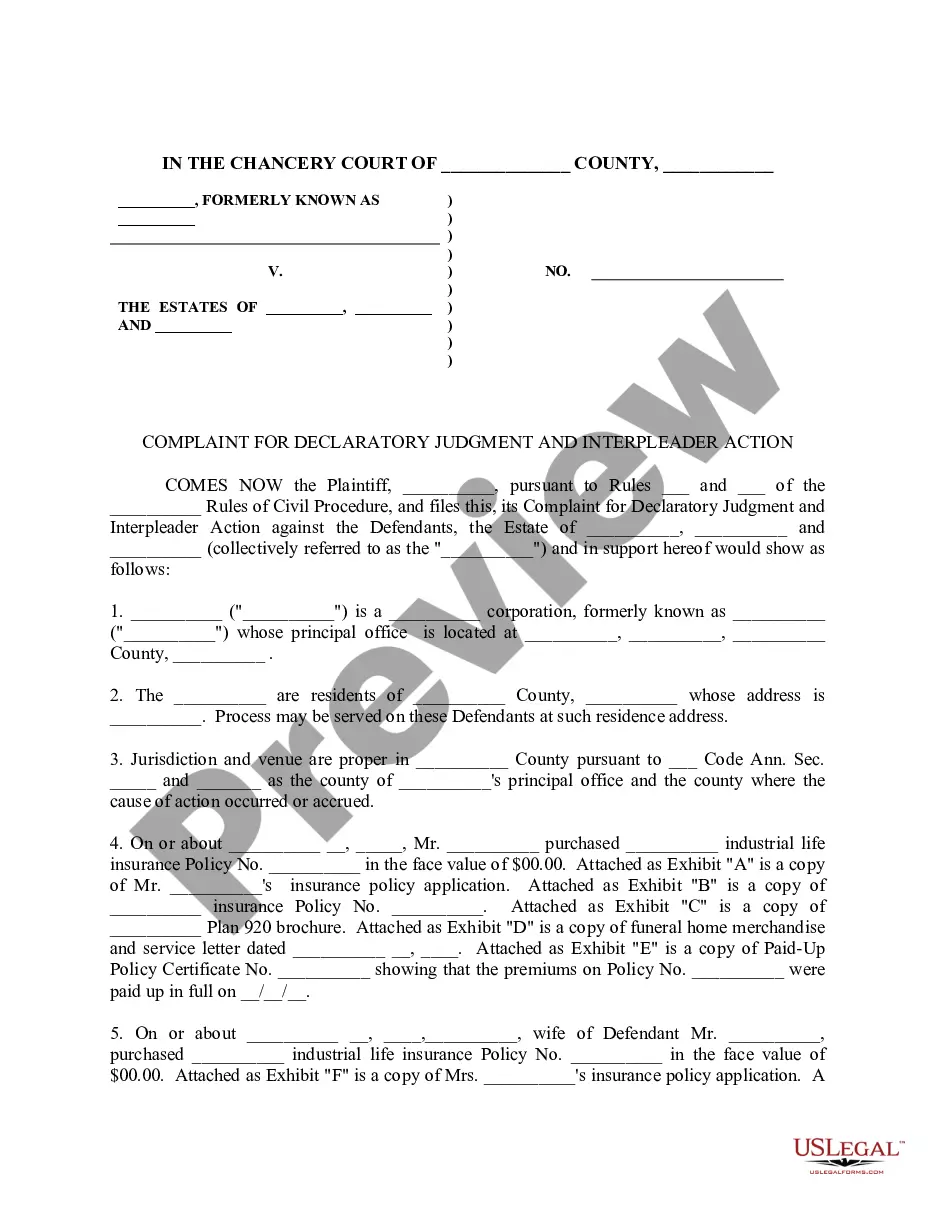
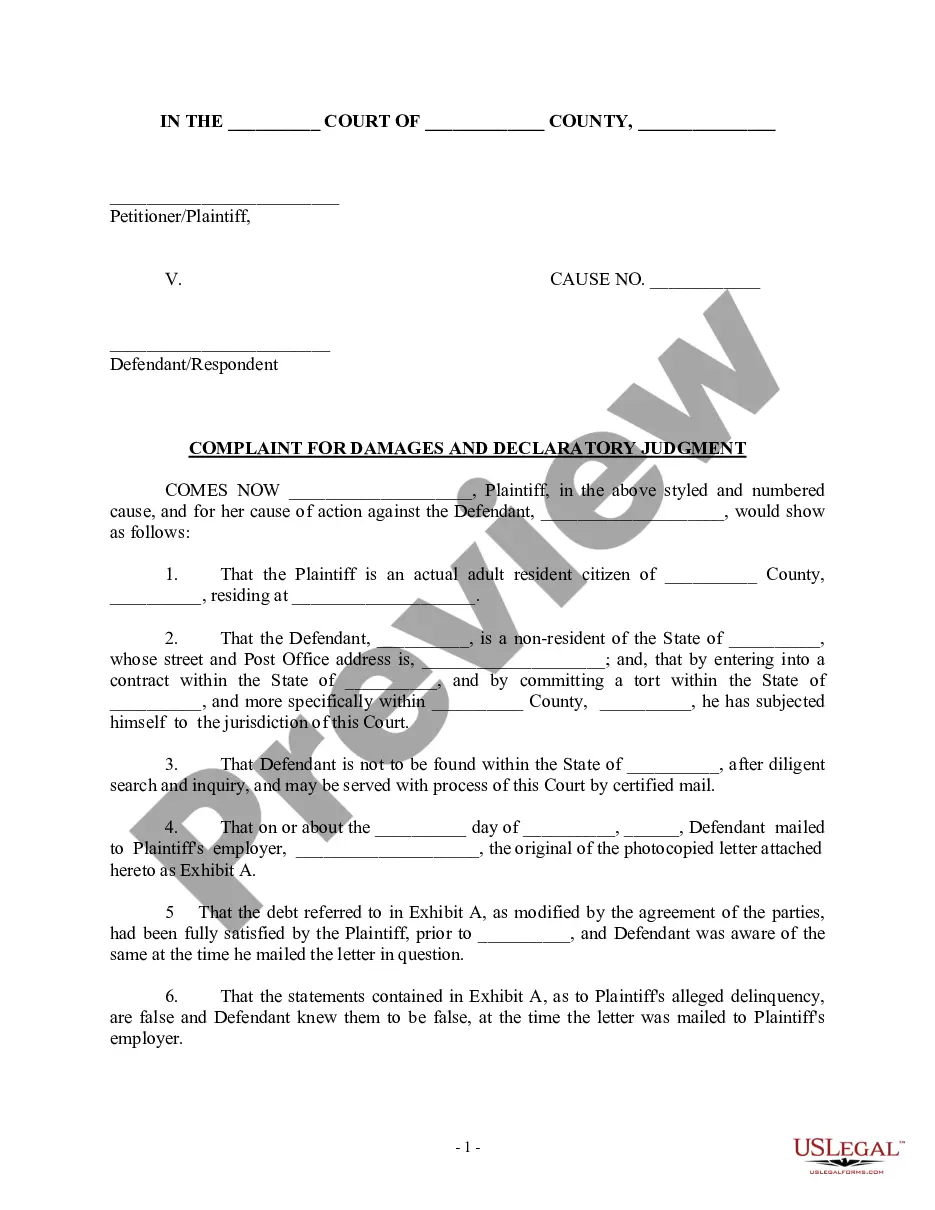
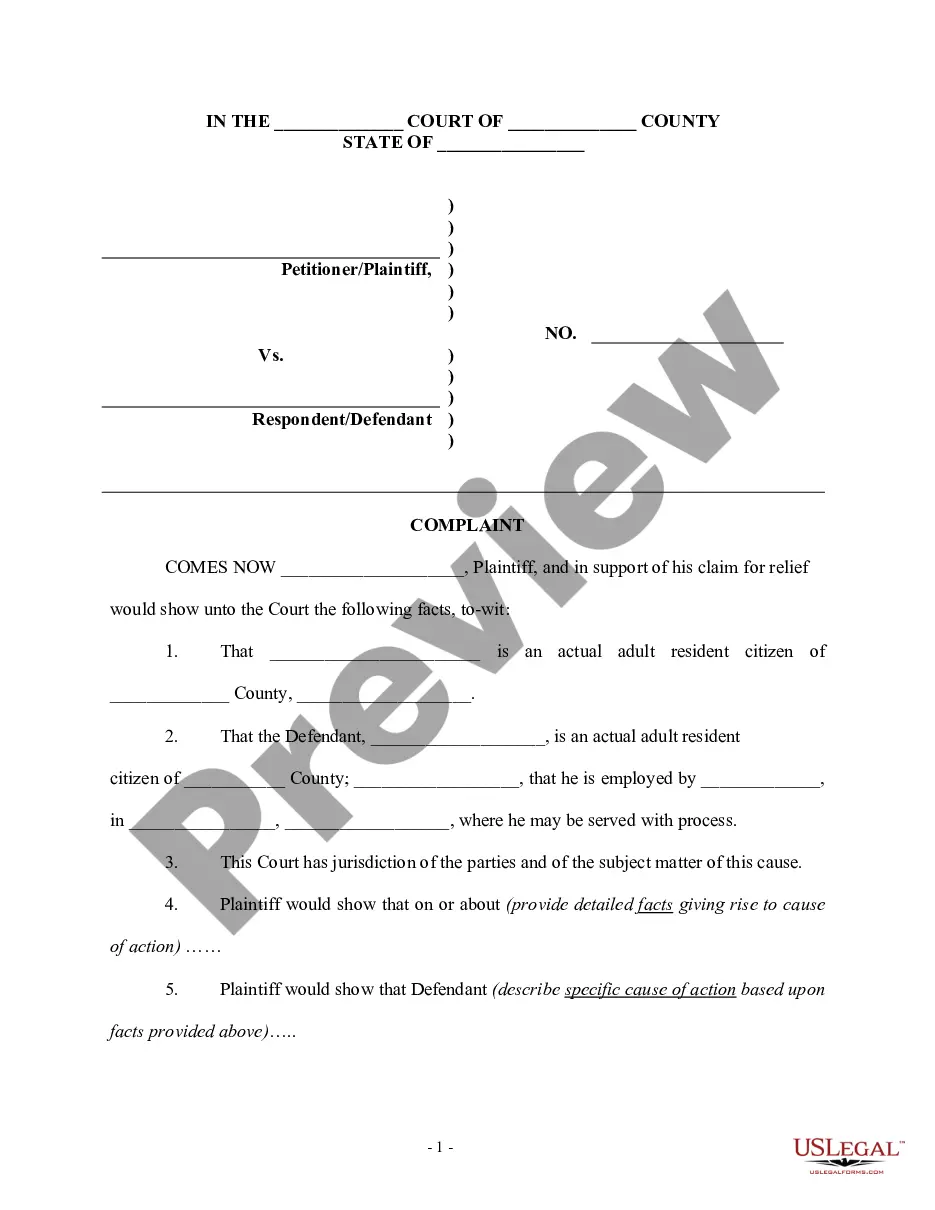
How to fill out Complaint For Declaratory Judgment?
Locating a dependable source to obtain the latest and applicable legal documents is a significant part of managing red tape.
Selecting the appropriate legal documents demands precision and meticulousness, which clarifies why it's crucial to source samples of Declaratory Judgment Foreclosure exclusively from trustworthy providers, such as US Legal Forms. An incorrect template can squander your time and delay your current situation. With US Legal Forms, you have minimal concerns. You can access and review all the specifics regarding the document’s application and relevance for your scenario and in your locality.
Eliminate the complications associated with your legal paperwork. Explore the vast US Legal Forms collection where you can obtain legal samples, assess their applicability to your situation, and download them instantly.
- Utilize the catalog navigation or search bar to find your template.
- Access the form’s details to verify if it aligns with the standards of your state and county.
- View the form preview, if available, to confirm that the template meets your needs.
- Return to the search to find the correct template if the Declaratory Judgment Foreclosure does not suit your criteria.
- If you are confident about the form’s significance, download it.
- When you are a registered user, click Log in to verify and access your selected templates in My documents.
- If you do not have an account yet, click Buy now to acquire the form.
- Choose the pricing option that suits your needs.
- Proceed to register to complete your purchase.
- Finalize your purchase by selecting a payment method (credit card or PayPal).
- Choose the file type for downloading Declaratory Judgment Foreclosure.
- Once you have the document on your device, you can modify it using the editor or print it and complete it manually.
Form popularity
FAQ
The purpose of a summary judgment is to resolve a legal dispute before it goes to trial, based on the absence of material facts in dispute. In foreclosure cases, this can quicken the process, allowing lenders to reclaim properties faster when there is clear evidence of default. Summary judgment can simplify complex issues, revealing whether a declaratory judgment foreclosure is warranted. This legal tool can ultimately save both parties time and resources.
A declaratory judgment addresses legal rights or status without requiring a final decision on the entire case, while a summary judgment resolves a case based on undisputed facts. Both are legal tools, but they serve different purposes in litigation. In situations involving foreclosure, a declaratory judgment can clarify rights, and a summary judgment can expedite the process by eliminating need for a trial. Understanding these distinctions is essential when navigating a declaratory judgment foreclosure.
An example of a motion for declaratory judgment could involve a homeowner disputing a lender's right to foreclose on their property. The homeowner might file this motion to clarify their rights concerning the mortgage agreement. By doing so, they seek a court's interpretation of the terms and the legality of the lender’s actions. This situation often arises in cases involving declaratory judgment foreclosure, where rights need clarification.
The purpose of a declaratory judgment is to provide clarity and resolve uncertainties between parties. This legal ruling helps define rights, duties, and obligations without necessarily ordering any specific action. In the context of foreclosure, a declaratory judgment can establish whether a lender's claims are valid, thereby guiding decisions related to the property. This can be a vital step in the declaratory judgment foreclosure process.
A motion for judgment of foreclosure is a request made to the court to approve the foreclosure of a property. This type of motion typically arises when a borrower has defaulted on their mortgage. In such cases, the lender seeks a legal remedy to reclaim ownership of the property through the court system. Understanding how this process works can be crucial, especially when examining options like a declaratory judgment foreclosure.
Declaratory judgments serve several key purposes, especially in foreclosure cases. They clarify an individual's rights and obligations, preventing future disputes by providing legal certainty. Utilizing this tool can help you avoid lengthy litigation, enabling you to move forward with confidence regarding your property and financial situation.
A summary judgment resolves issues in a case without a trial, determining if there are facts in dispute that warrant a hearing, often used to expedite proceedings. In contrast, a declaratory judgment provides clarity on legal rights, particularly in disputes like foreclosure, without necessarily adjudicating on a specific outcome. Each serves its purpose in the legal process, depending on the nature of the case.
To secure a declaratory judgment, you should prepare and file the necessary legal documents with the appropriate court. This includes drafting a complaint that details your concerns about foreclosure and the specific declarations you seek. Engaging with a knowledgeable attorney can guide you through this process, helping you navigate the legal requirements effectively.
Bringing a declaratory judgment action may be suitable when you face ambiguity in your rights concerning a foreclosure. For example, if there is a dispute about the validity of a mortgage or a potential wrongful foreclosure, initiating this action can provide clarity. This proactive approach can help you address legal uncertainties before they escalate into more complex litigation.
A motion for declaratory judgment is a request made to the court to clarify legal rights or obligations surrounding a specific situation, such as foreclosure. This motion is typically filed when there is uncertainty or dispute about legal issues, and it seeks a binding resolution. Utilizing this motion can provide clarity and certainty before proceeding with further legal actions.