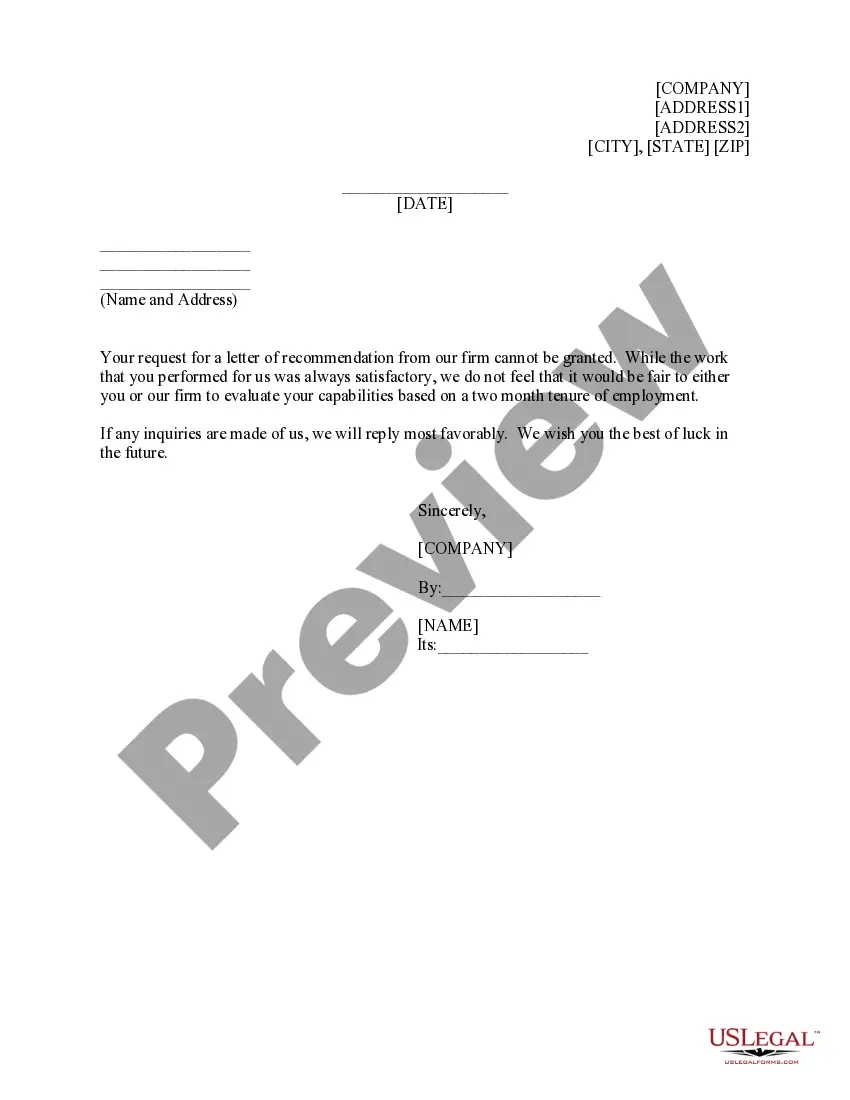
Letter Of Recommendation Draft For Professor
Description
Get your form ready online
Our built-in tools help you complete, sign, share, and store your documents in one place.
Make edits, fill in missing information, and update formatting in US Legal Forms—just like you would in MS Word.
Download a copy, print it, send it by email, or mail it via USPS—whatever works best for your next step.
Sign and collect signatures with our SignNow integration. Send to multiple recipients, set reminders, and more. Go Premium to unlock E-Sign.
If this form requires notarization, complete it online through a secure video call—no need to meet a notary in person or wait for an appointment.
We protect your documents and personal data by following strict security and privacy standards.

Make edits, fill in missing information, and update formatting in US Legal Forms—just like you would in MS Word.

Download a copy, print it, send it by email, or mail it via USPS—whatever works best for your next step.

Sign and collect signatures with our SignNow integration. Send to multiple recipients, set reminders, and more. Go Premium to unlock E-Sign.

If this form requires notarization, complete it online through a secure video call—no need to meet a notary in person or wait for an appointment.

We protect your documents and personal data by following strict security and privacy standards.
Looking for another form?



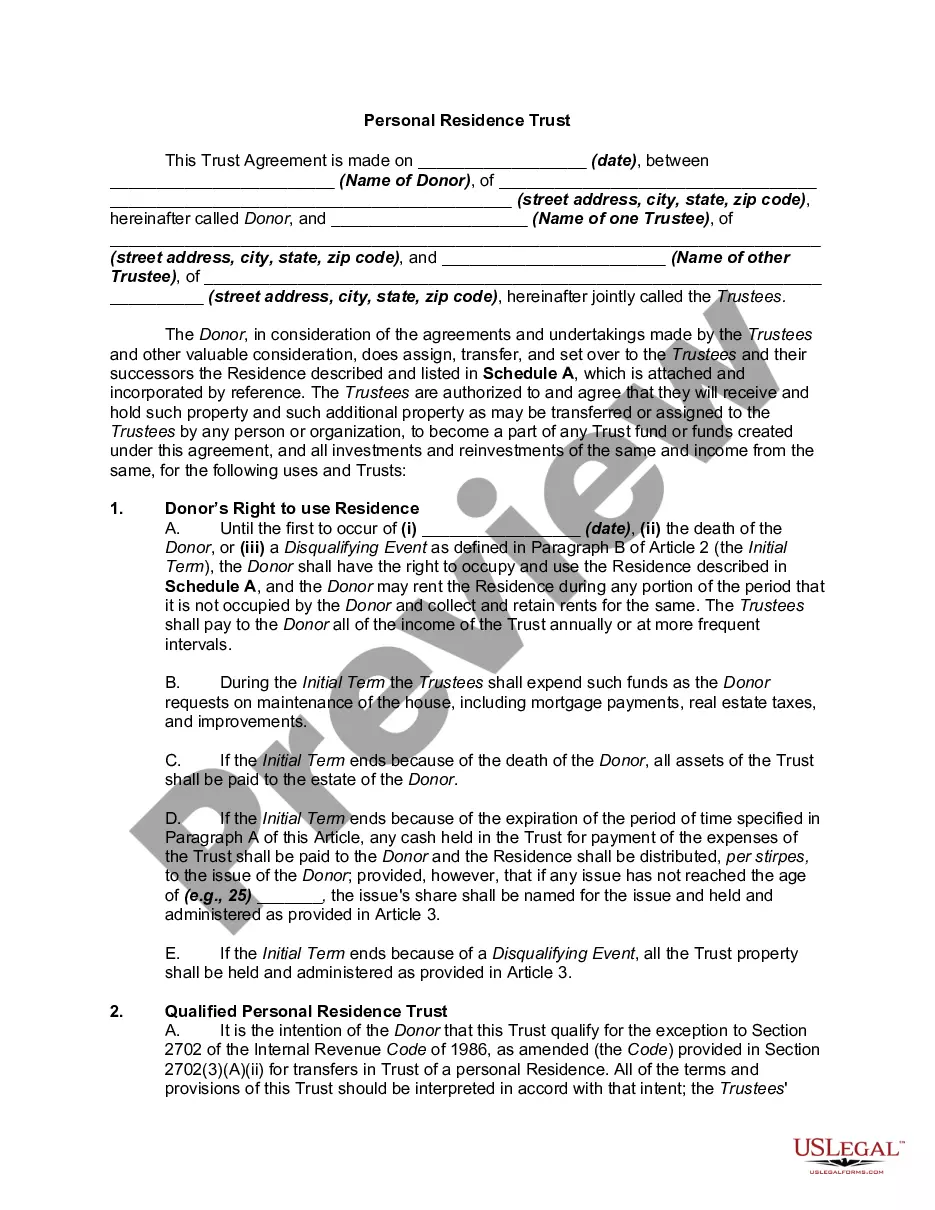



How to fill out Refusal For Letter Of Recommendation?
It’s clear that you cannot become a legal specialist overnight, nor can you swiftly learn how to compose a Letter Of Recommendation Draft For Professor without having a particular expertise. Drafting legal documents is a lengthy endeavor that necessitates specific education and competencies. So why not entrust the creation of the Letter Of Recommendation Draft For Professor to the experts.
With US Legal Forms, one of the most extensive legal document collections, you can find everything from court documents to templates for in-office correspondence. We recognize how important compliance and adherence to federal and state laws and regulations are. That’s why, on our website, all documents are location-specific and current.
Here’s how to begin with our platform and obtain the form you need in just minutes.
- Find the document you seek by utilizing the search bar at the top of the website.
- Preview it (if this option is available) and review the accompanying description to determine if the Letter Of Recommendation Draft For Professor is what you require.
- Start your search again if you need any additional forms.
- Create a free account and select a subscription plan to purchase the template.
- Click Buy now. Once the purchase is complete, you can receive the Letter Of Recommendation Draft For Professor, fill it out, print it, and send or mail it to the selected individuals or organizations.
Form popularity
FAQ
Your letter should state explicitly whether you support the candidate for tenure and provide a concise rationale justifying that decision. As universities differ in their stringency for tenure, your recommendation should be based on the criteria used by the candidate's university.
Start with a brief statement of who you are and how you know Professor (e.g., how long have you known them and in what capacity?), and a clear statement of support (or not) for Professor (e.g., ?I am pleased to strongly recommend Professor for promotion to the position of [position title]? or ?I ...
Writing Tenure-Review Letters Say Yes if Asked to Write a Letter (Unless ?) ... Answer the Questions Asked. ... Apply the Requesting Institution's Tenure Standards. ... Be Succinct. ... Remember When You Were Young. ... Assess the Candidate's Oeuvre. ... Don't View Publication Placement as a Proxy for Quality. ... Offer Constructive Feedback.
Offer specific examples of skills or qualifications that match the role. Anecdote or example: Include a personal anecdote about what it's like to work with the candidate. Include any workplace or people skills you've observed them to possess. Closing: Give an overview of why you'd recommend this person.
The format typically consists of 1) the letterhead and full contact information, 2) a salutation, 3) an introduction, 4) an overview, 5) a personal story, 6) a closing sentence and 7) your signature. The three types of recommendation letters are employment, academic, and character recommendation letters.