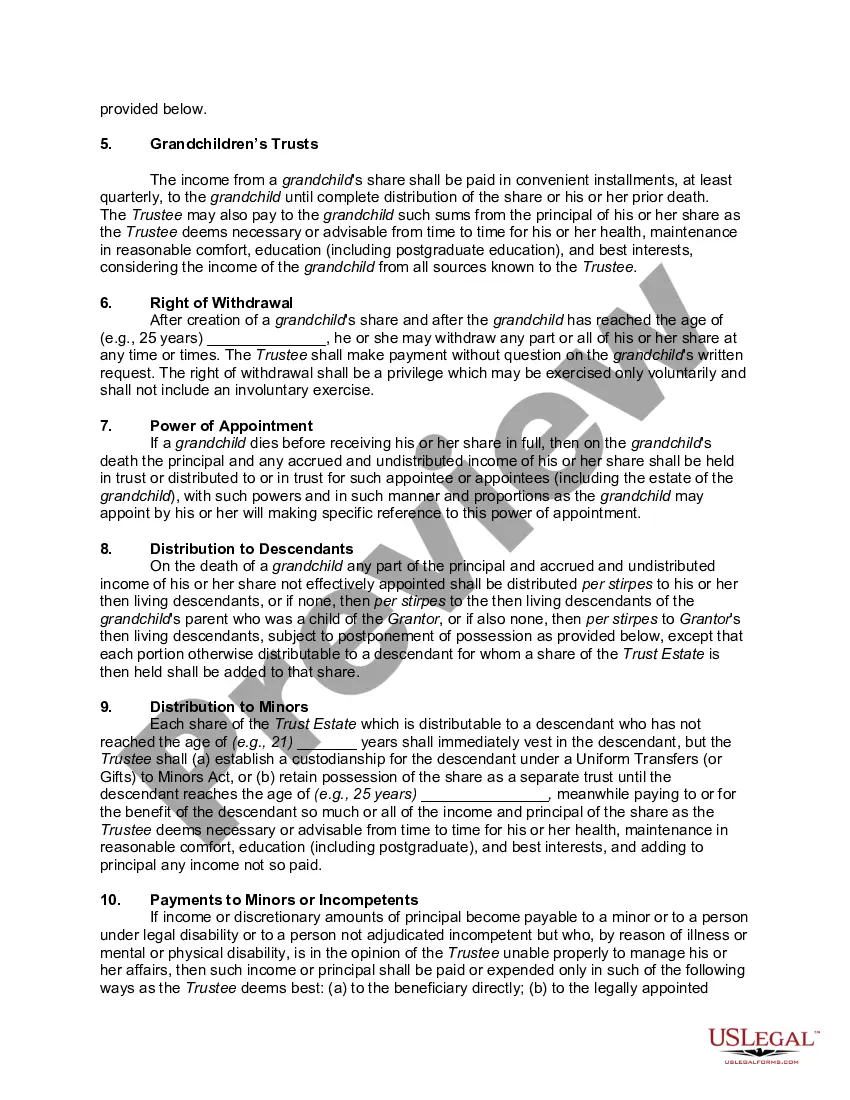
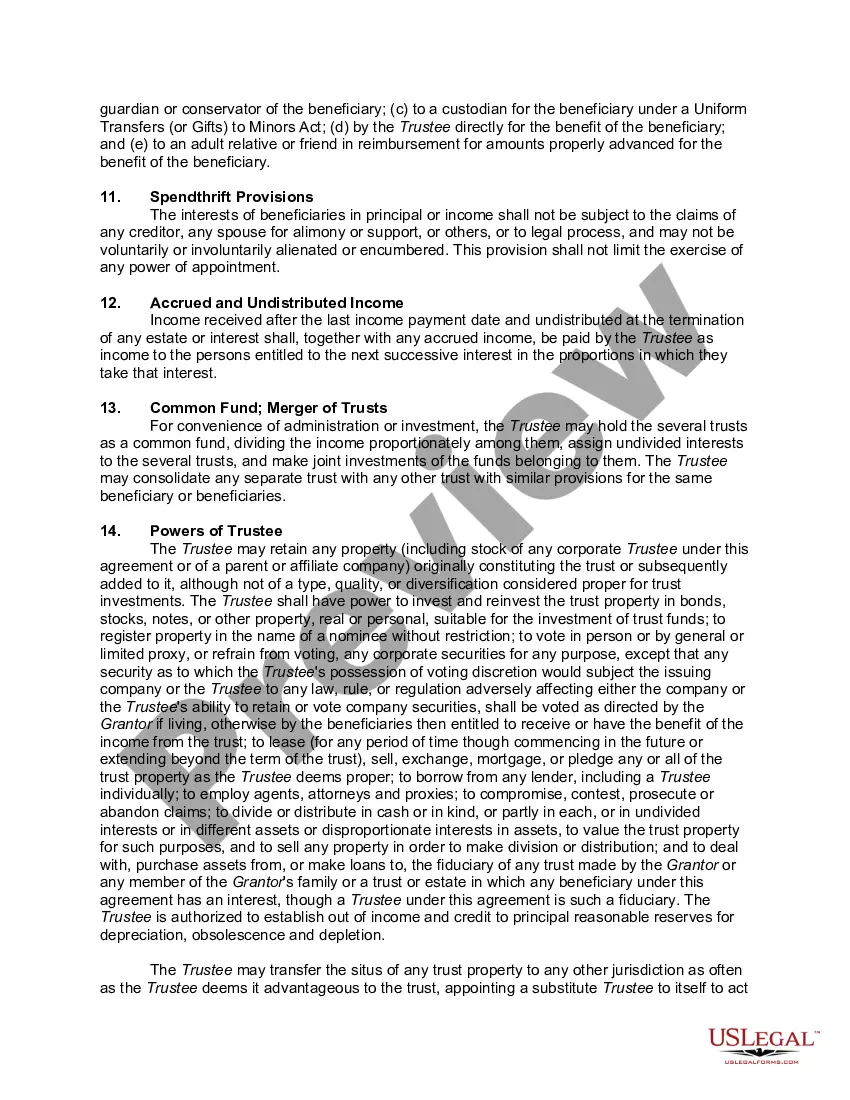
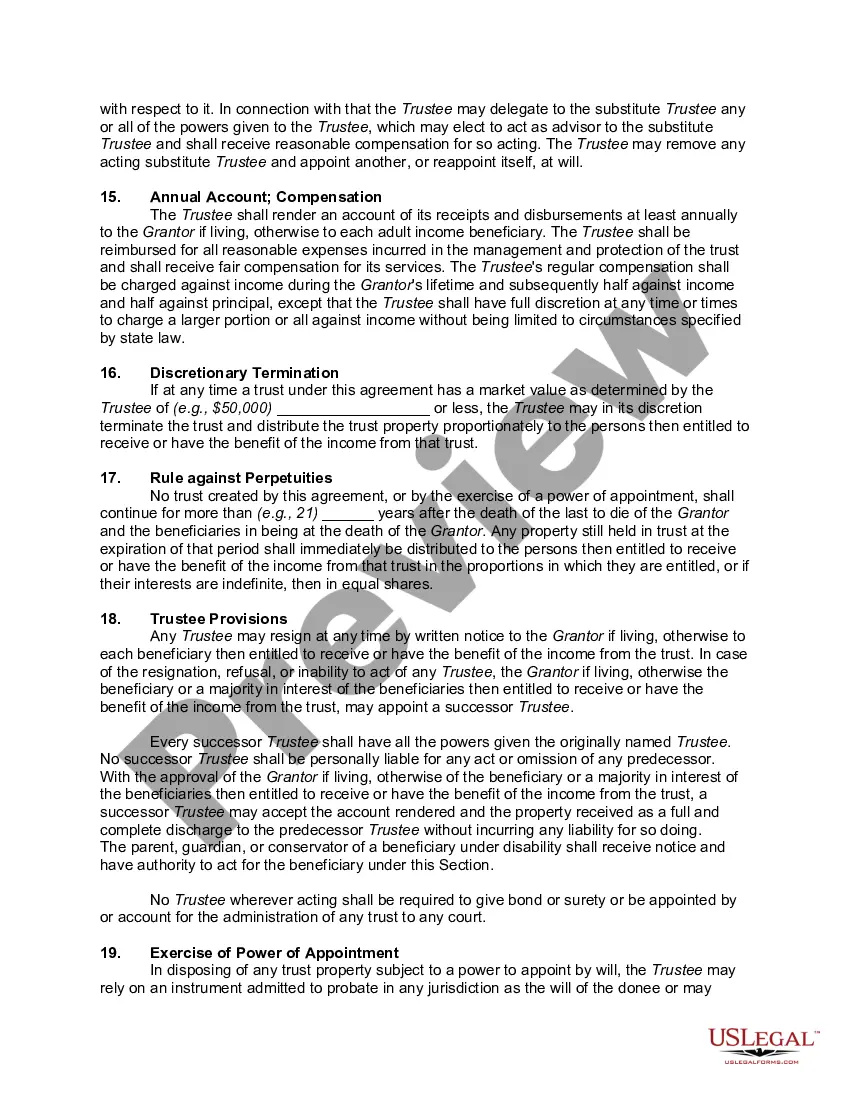
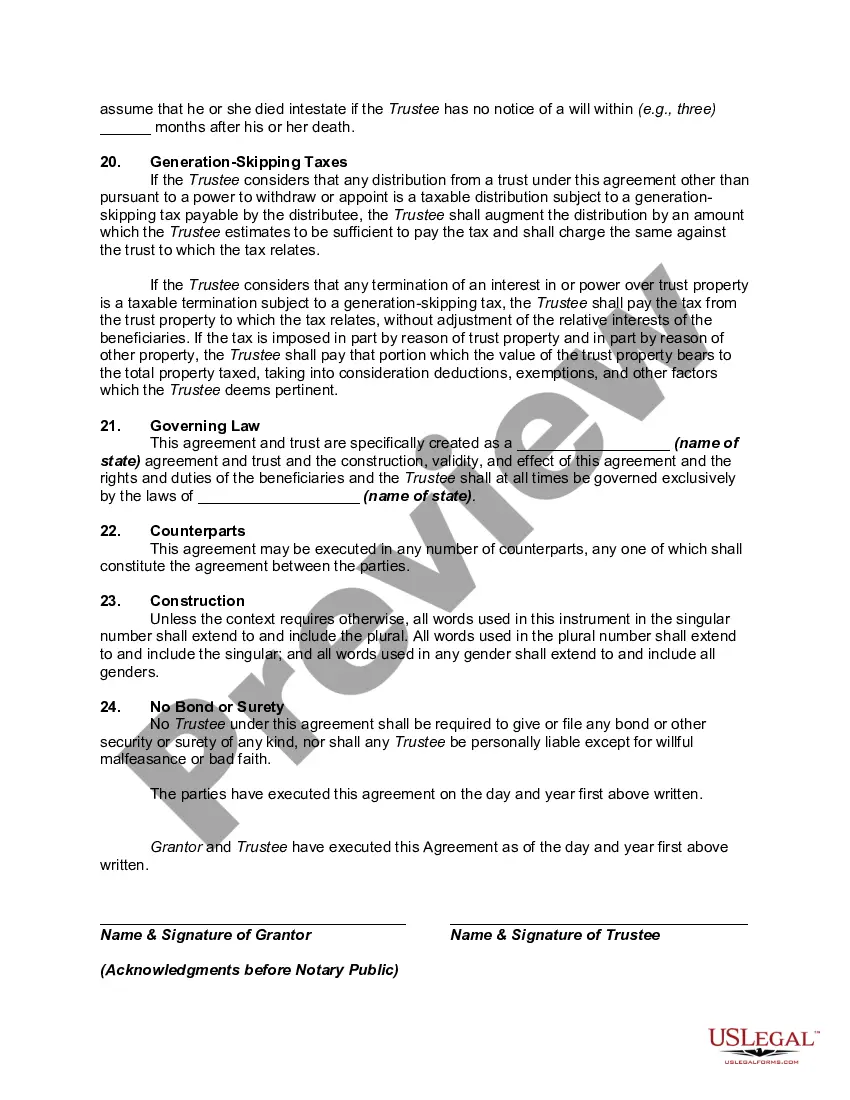
Trust Survives Grantor For Granted
Description


Get your form ready online
Our built-in tools help you complete, sign, share, and store your documents in one place.
Make edits, fill in missing information, and update formatting in US Legal Forms—just like you would in MS Word.
Download a copy, print it, send it by email, or mail it via USPS—whatever works best for your next step.
Sign and collect signatures with our SignNow integration. Send to multiple recipients, set reminders, and more. Go Premium to unlock E-Sign.
If this form requires notarization, complete it online through a secure video call—no need to meet a notary in person or wait for an appointment.
We protect your documents and personal data by following strict security and privacy standards.

Make edits, fill in missing information, and update formatting in US Legal Forms—just like you would in MS Word.

Download a copy, print it, send it by email, or mail it via USPS—whatever works best for your next step.

Sign and collect signatures with our SignNow integration. Send to multiple recipients, set reminders, and more. Go Premium to unlock E-Sign.

If this form requires notarization, complete it online through a secure video call—no need to meet a notary in person or wait for an appointment.

We protect your documents and personal data by following strict security and privacy standards.
Looking for another form?







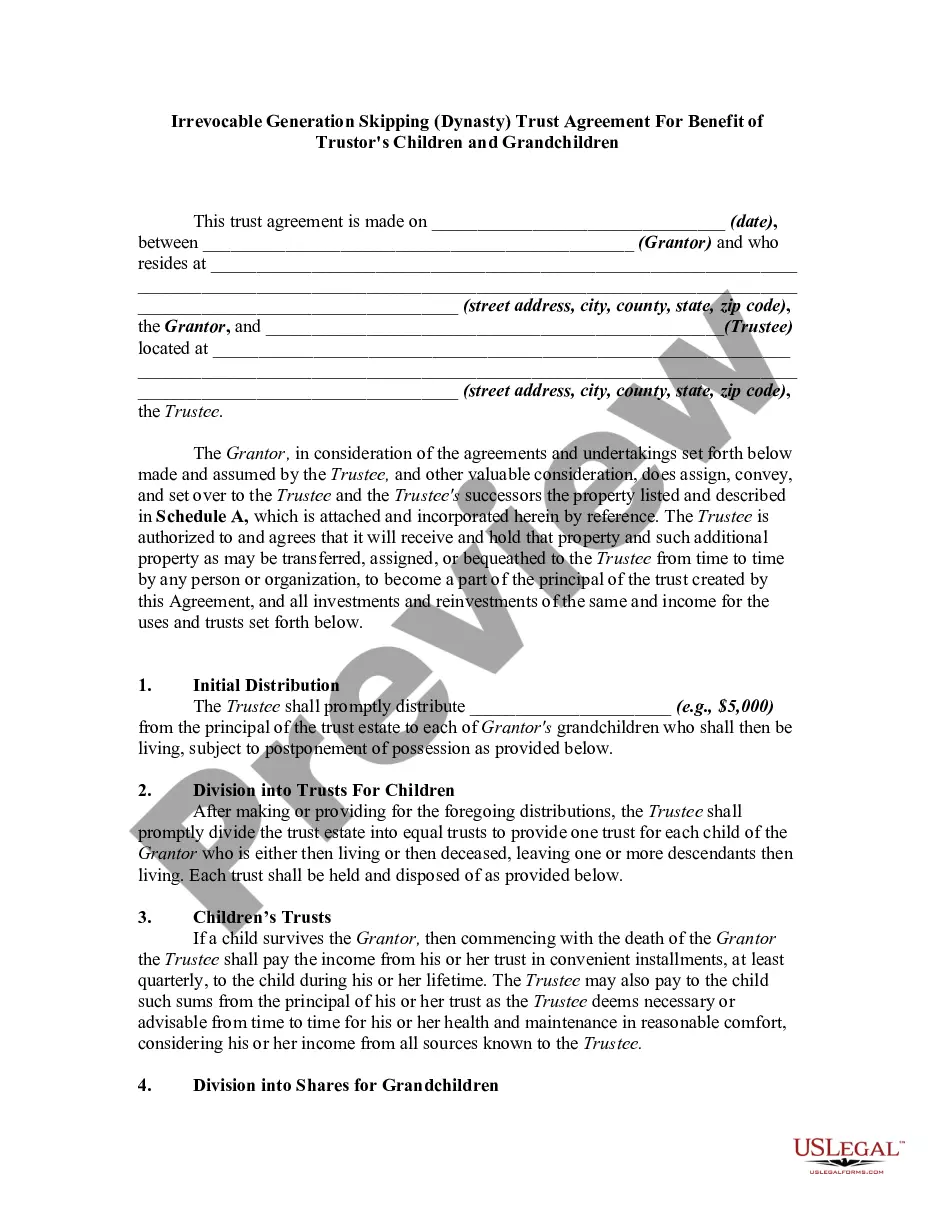
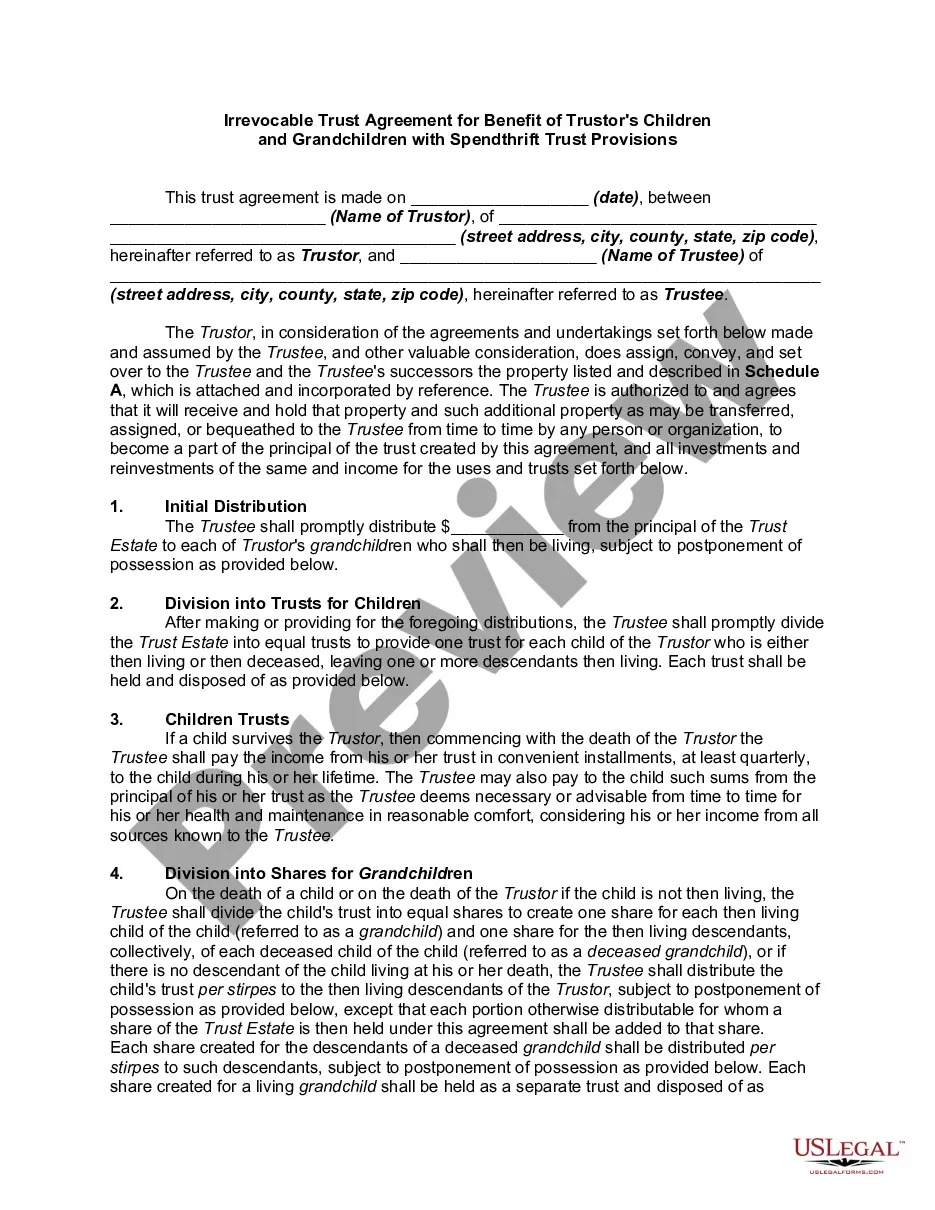
How to fill out Irrevocable Trust Agreement For Benefit Of Trustor's Children And Grandchildren?
- Log in to your account on US Legal Forms if you're a returning user. Verify that your subscription is active, and click the Download button for the required form template.
- First-time users should check the Preview mode and form description to ensure the document fits their specific needs and complies with local laws.
- If you encounter any discrepancies or need a different form, utilize the Search tab to find the exact document that matches your requirements.
- Purchase your selected form by clicking the Buy Now button. Choose from available subscription plans, and create an account to access the robust library.
- Complete your purchase by entering your payment information, either through credit card or PayPal.
- Finally, download your form directly to your device for easy access. You can also find it later in the My Forms section of your profile.
By following these straightforward steps, you can easily obtain the necessary legal documents tailored to your needs. With US Legal Forms, you're not just getting forms; you're accessing a wealth of resources and support.
Don't hesitate—visit US Legal Forms today and experience the convenience of effortless legal document management!
Form popularity
FAQ
If there is no income generated by the trust, you typically do not need to file a final Form 1041. However, it's important to verify this status according to IRS guidelines. Understanding that trust survives grantor for granted is crucial; even if the trust has no income, you must ensure you are adhering to the rules. US Legal Forms can provide the resources you need to confirm the filing requirements specific to your situation.
To file a tax return for a grantor trust, you report the trust's income directly on your individual tax return, typically using Form 1040. As the grantor, you remain responsible for any taxes owed on the income generated during the year. Trust survives grantor for granted, so it is essential to follow these guidelines correctly. For tailored assistance with this process, consider using the services of US Legal Forms.
Yes, final distributions from a trust are generally taxable to the beneficiaries, depending on the type of income distributed. Beneficiaries should report this income on their tax returns as per IRS guidelines. Trust survives grantor for granted, meaning the responsibility for tax obligations transfers accordingly. Understanding your tax obligations regarding trust distributions is vital to avoid surprises at tax time.
Yes, filing a final trust return is necessary to report any income generated by the trust up until its closure. This return not only settles any tax obligations but also formally ends the trust's operation. Since trust survives grantor for granted, taking this step is essential for keeping everything orderly and compliant with tax rules. Using US Legal Forms can simplify this process, making your final return easier to manage.
Yes, a revocable trust typically becomes irrevocable upon the grantor's death. This change means that the terms of the trust can no longer be modified. It's crucial to understand that trust survives grantor for granted; therefore, the trust will carry on according to its established terms after the grantor is no longer alive. This ensures that your assets are managed and distributed as you intended.
To close a trust with the IRS, you need to file a final Form 1041, also known as the U.S. Income Tax Return for Estates and Trusts. Make sure to report any income earned during the trust's final year accurately. Remember, trust survives grantor for granted, so you should address all financial details thoroughly to ensure proper closure. US Legal Forms can assist you in navigating this process effortlessly.
Yes, a trust must file a final tax return when it is terminated. This is essential to ensure that all financial matters are settled correctly. Trust survives grantor for granted, meaning the trust's obligations continue even after the grantor's passing. Completing this step will help you avoid potential penalties and complications with the IRS.
To trigger grantor trust status, you must retain some control over the trust, such as the ability to modify its terms or reclaim the assets. This active involvement keeps the trust under your tax jurisdiction. A well-structured trust that survives grantor for granted can provide both benefits for you during your lifetime and protection for your beneficiaries after you pass away.
The 5-year rule refers specifically to Medicaid planning, where it addresses asset transfers into irrevocable trusts. If assets are transferred into a trust for less than fair market value, the period for which those assets are considered available for Medicaid purposes extends back five years. Knowing how a trust survives grantor for granted helps to navigate these regulations effectively.
Yes, irrevocable trusts can be subject to the 5-year rule, especially in the context of Medicaid eligibility. This rule requires any transfers of assets to be made at least five years prior to applying for Medicaid benefits to avoid penalties. Understanding how a trust survives grantor for granted ensures the intended protections against asset loss during this period.