Trust Survives Grantor For Grant
Description

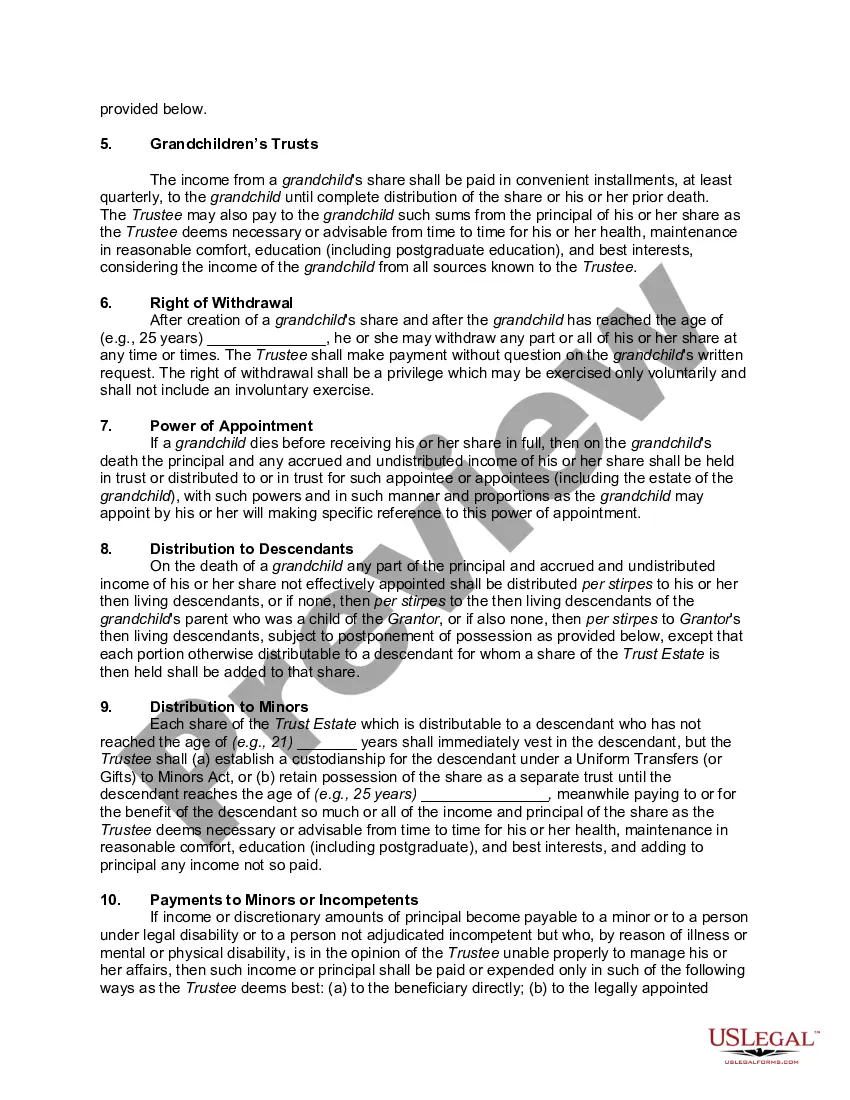
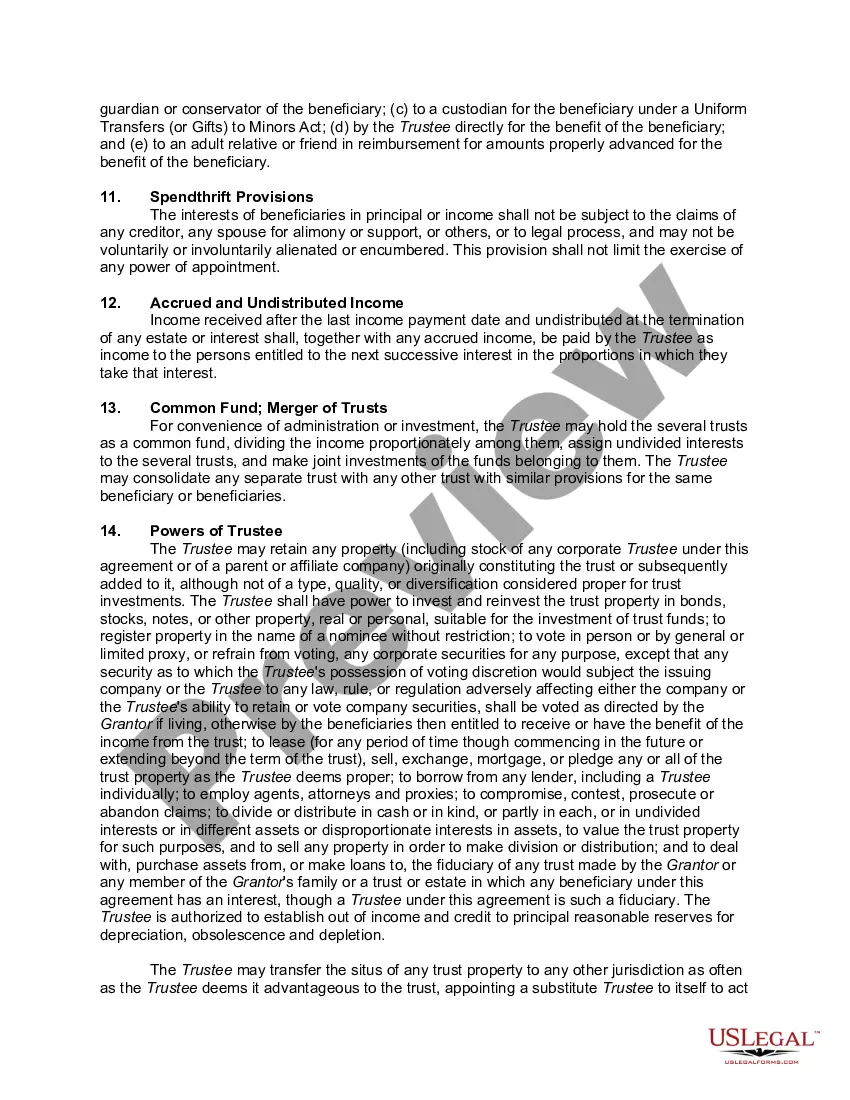
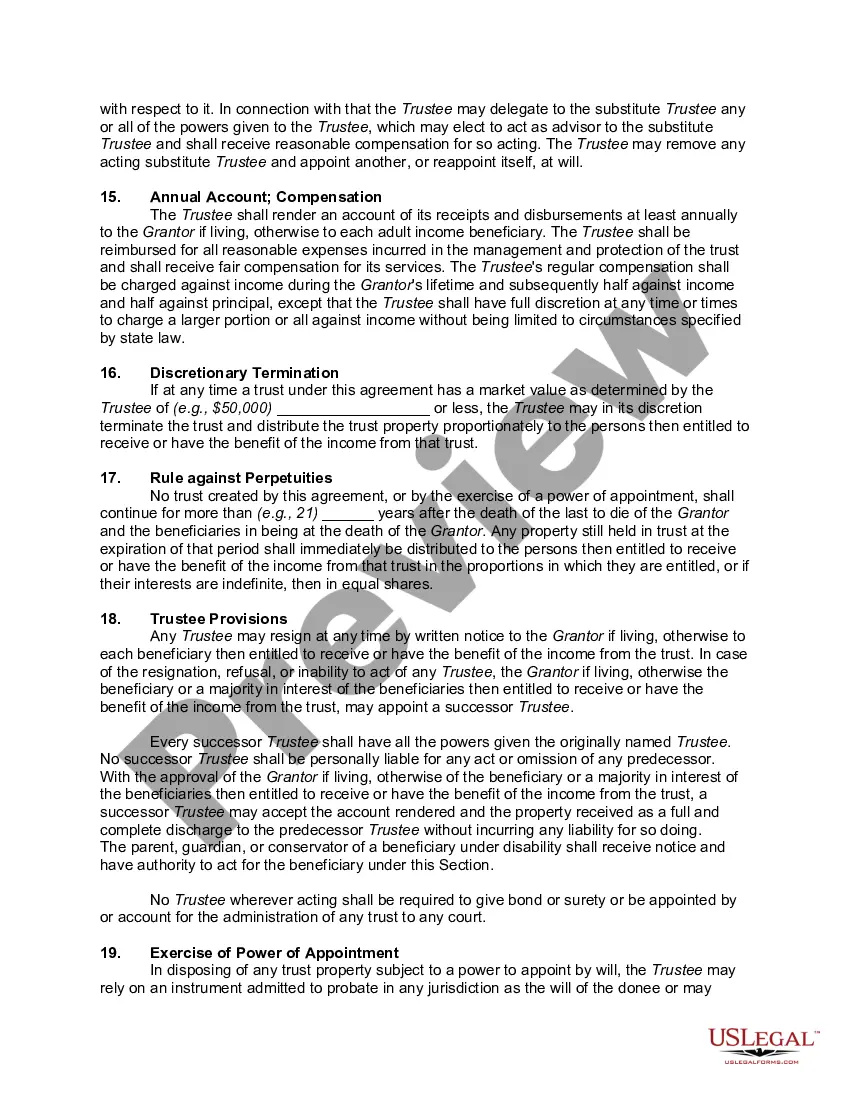
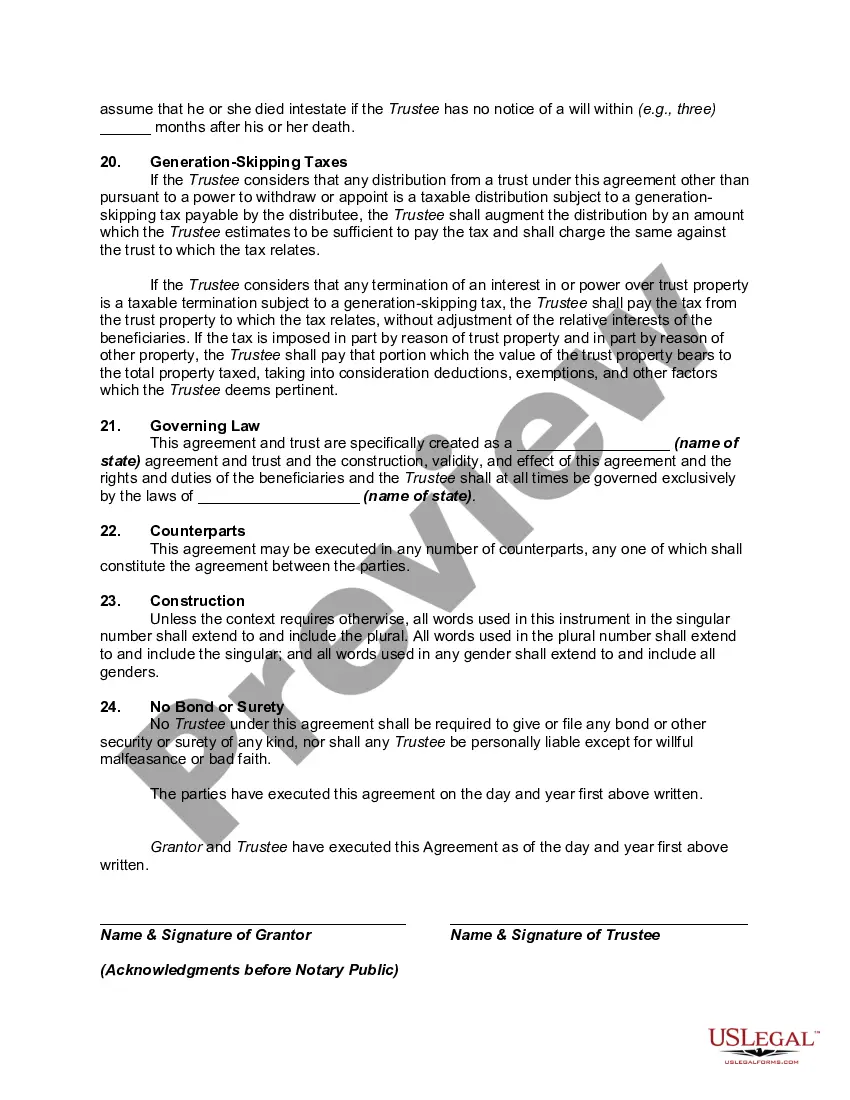

Get your form ready online
Our built-in tools help you complete, sign, share, and store your documents in one place.
Make edits, fill in missing information, and update formatting in US Legal Forms—just like you would in MS Word.
Download a copy, print it, send it by email, or mail it via USPS—whatever works best for your next step.
Sign and collect signatures with our SignNow integration. Send to multiple recipients, set reminders, and more. Go Premium to unlock E-Sign.
If this form requires notarization, complete it online through a secure video call—no need to meet a notary in person or wait for an appointment.
We protect your documents and personal data by following strict security and privacy standards.

Make edits, fill in missing information, and update formatting in US Legal Forms—just like you would in MS Word.

Download a copy, print it, send it by email, or mail it via USPS—whatever works best for your next step.

Sign and collect signatures with our SignNow integration. Send to multiple recipients, set reminders, and more. Go Premium to unlock E-Sign.

If this form requires notarization, complete it online through a secure video call—no need to meet a notary in person or wait for an appointment.

We protect your documents and personal data by following strict security and privacy standards.
Looking for another form?









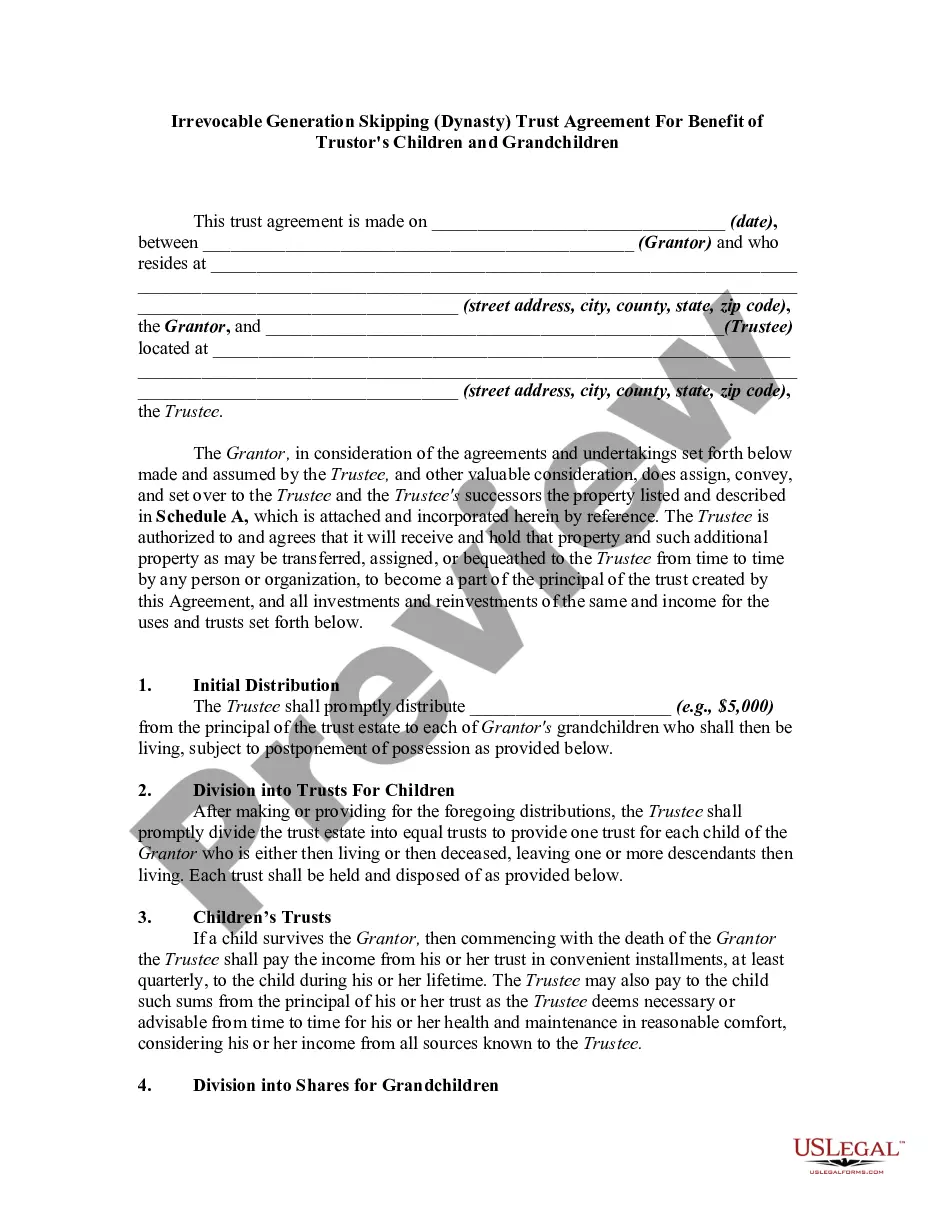
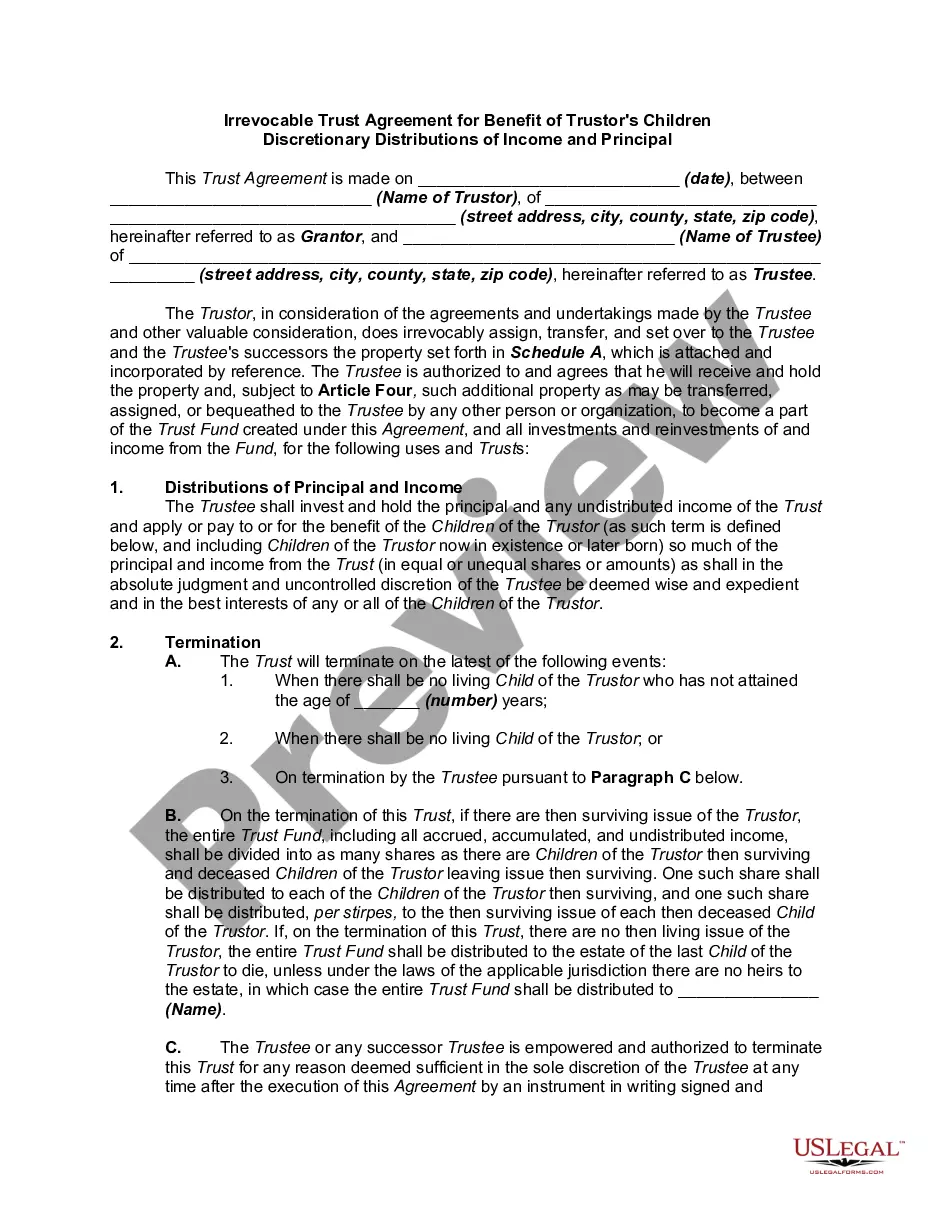
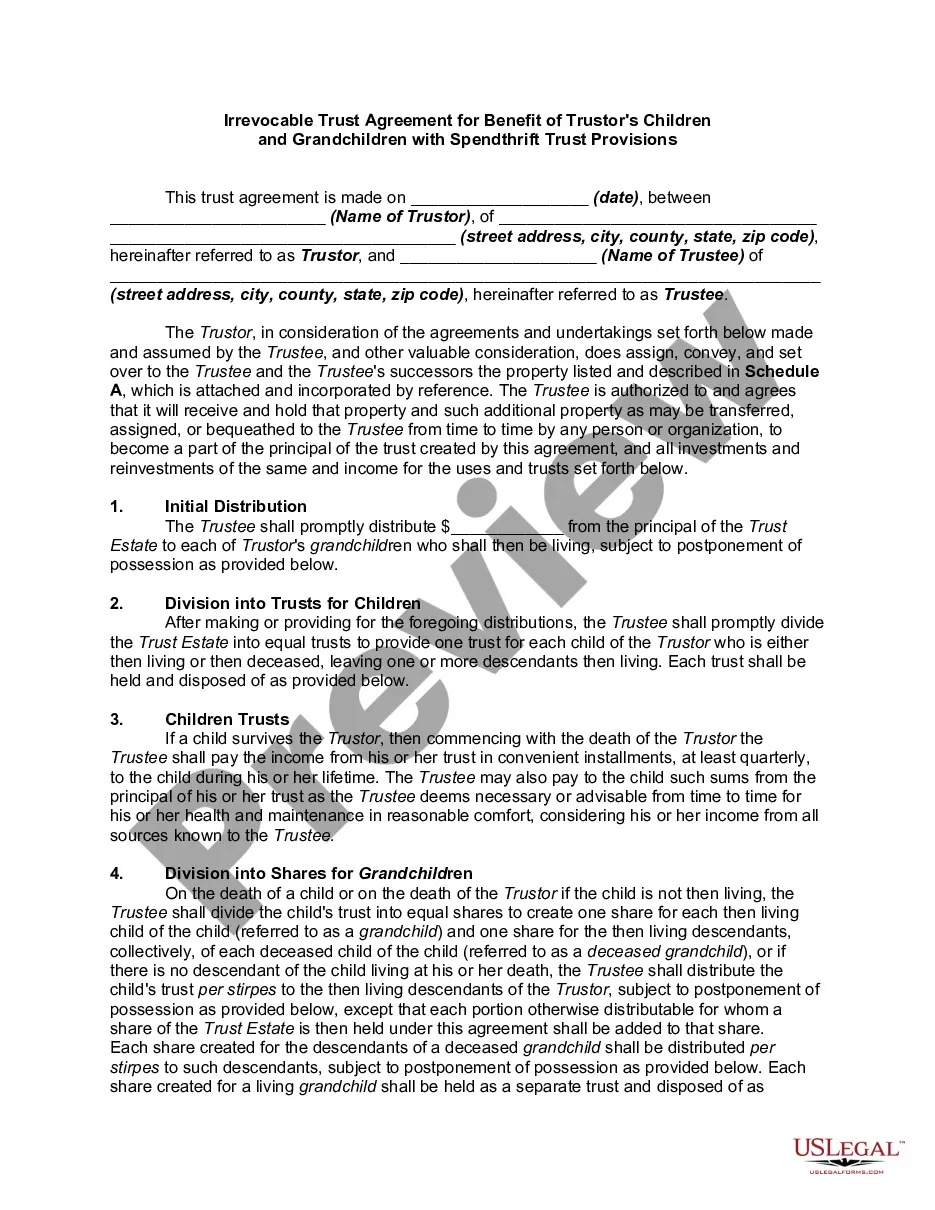
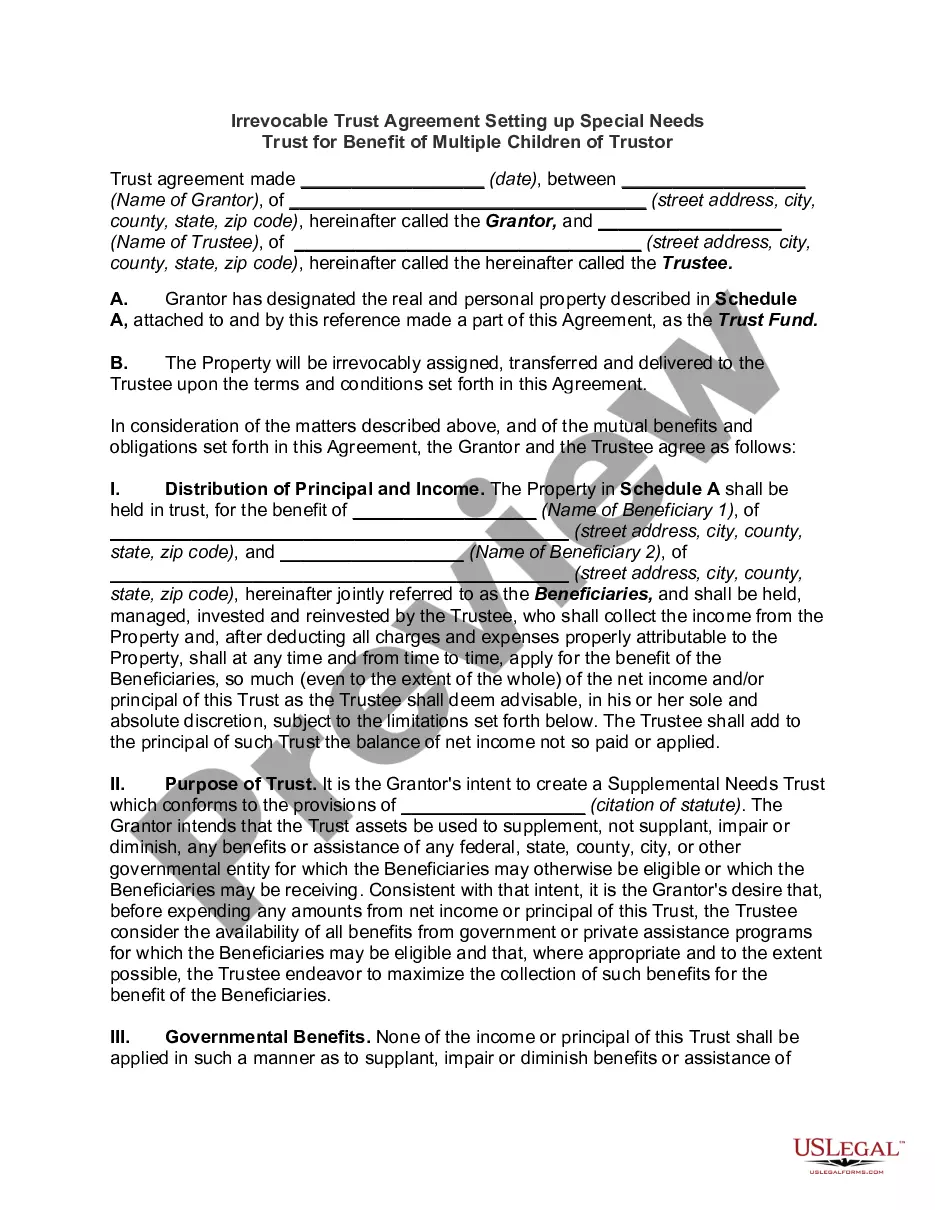
How to fill out Irrevocable Trust Agreement For Benefit Of Trustor's Children And Grandchildren?
- If you already have an account with US Legal Forms, log in and download the required trust form by clicking the Download button. Ensure your subscription is active; renew it if necessary.
- For first-time users, begin by browsing the Preview mode and reviewing the form description. Confirm that the selected trust form aligns with your requirements and complies with local jurisdiction.
- If you need a different form, utilize the Search tab to find more options. Verify the form's appropriateness before proceeding.
- Click the Buy Now button to purchase the document. Choose from the available subscription plans and create an account to gain access to a wide range of legal resources.
- Complete your purchase by entering your payment information, either through credit card or PayPal.
- Once your payment is processed, download the trust form directly to your device, accessible anytime in the My Forms section of your profile.
US Legal Forms boasts a vast collection of legal documents, empowering individuals and attorneys to execute forms quickly and effectively.
Don't wait any longer to secure your estate planning. Start your journey with US Legal Forms today and gain peace of mind about your legal documents.
Form popularity
FAQ
When a grantor of a trust dies, the first step is to review the trust document to understand its terms and any specific instructions left by the grantor. Then, the successor trustee should be notified to start managing the trust as outlined. Utilizing platforms like US Legal Forms can help streamline this process, ensuring compliance with legal requirements and understanding that a trust survives grantor for grant, preserving the grantor's intentions.
When the owner of a trust dies, the trust typically becomes irrevocable, meaning its terms can no longer be changed. The management of the trust then passes to the successor trustee, who will oversee the distribution of assets according to the trust's provisions. It is vital to understand how this process works because a trust survives grantor for grant, ensuring assets are managed appropriately even after the owner's passing.
Yes, the grantor of a trust can also be the beneficiary. This arrangement allows the grantor to enjoy the benefits of the trust while still maintaining control over it. Keep in mind, however, that in this scenario, a trust survives grantor for grant, so the specific terms you set can impact your assets and the overall management of the trust.
To trigger a grantor trust status, you must ensure that you retain certain powers over the trust. This can include the ability to revoke the trust, direct the investments, or receive trust income. By holding these powers, the trust maintains its classification, and importantly, remember that a trust survives grantor for grant, meaning it has unique implications on taxation and asset control.
The 5-year rule for trusts primarily pertains to how certain distributions might be taxed. Generally, this rule affects any tax implications related to asset transfers and required minimum distributions. If assets are transferred out of a trust, they may be subject to taxes if done within five years of the transfer. Understanding these details ensures that you benefit from the way a trust survives grantor for grant, optimizing your estate strategy.
If the grantor of a trust dies, the trust remains in effect and is administered by a successor trustee. This ensures that the trust assets are managed and distributed according to the grantor's wishes without the delays of probate. Beneficiaries can receive their inheritance more quickly, as long as they follow the guidelines set forth in the trust. Knowing how a trust survives grantor for grant helps in making informed decisions about your estate.
One significant mistake parents make is failing to clearly communicate their intentions to their heirs. If beneficiaries do not understand the purpose of the trust, they may misuse the assets or misunderstand their responsibilities. It is vital to establish clear guidelines and expectations. This clarity ensures that the trust survives grantor for grant, fulfilling its purpose and creating a lasting legacy.
To determine if a trust is a grantor or non-grantor trust, examine the level of control the grantor has over the trust assets. If the grantor can revoke, amend, or control distributions, it is likely a grantor trust. Conversely, if the grantor has relinquished these powers, it is a non-grantor trust. This distinction is crucial, as it affects how the trust survives grantor for grant and tax implications.
A survivors trust can be a grantor trust if the original grantor retains rights over the trust's management and distributions. Generally established during estate planning, this type of trust helps protect assets for surviving beneficiaries. By retaining certain powers, the trust clearly illustrates how it survives grantor for grant, ensuring a smooth transition for heirs.
A descendants trust often qualifies as a grantor trust, primarily if the grantor maintains specific controls over the trust assets. If the grantor has the right to direct the distributions or change the terms, it typically meets the criteria. These structures are designed to benefit future generations effectively. They also illustrate how the trust survives grantor for grant, providing assurance for the grantor.