Trust Grandchildren Sample For Unborn
Description



Get your form ready online
Our built-in tools help you complete, sign, share, and store your documents in one place.
Make edits, fill in missing information, and update formatting in US Legal Forms—just like you would in MS Word.
Download a copy, print it, send it by email, or mail it via USPS—whatever works best for your next step.
Sign and collect signatures with our SignNow integration. Send to multiple recipients, set reminders, and more. Go Premium to unlock E-Sign.
If this form requires notarization, complete it online through a secure video call—no need to meet a notary in person or wait for an appointment.
We protect your documents and personal data by following strict security and privacy standards.

Make edits, fill in missing information, and update formatting in US Legal Forms—just like you would in MS Word.

Download a copy, print it, send it by email, or mail it via USPS—whatever works best for your next step.

Sign and collect signatures with our SignNow integration. Send to multiple recipients, set reminders, and more. Go Premium to unlock E-Sign.

If this form requires notarization, complete it online through a secure video call—no need to meet a notary in person or wait for an appointment.

We protect your documents and personal data by following strict security and privacy standards.
Looking for another form?










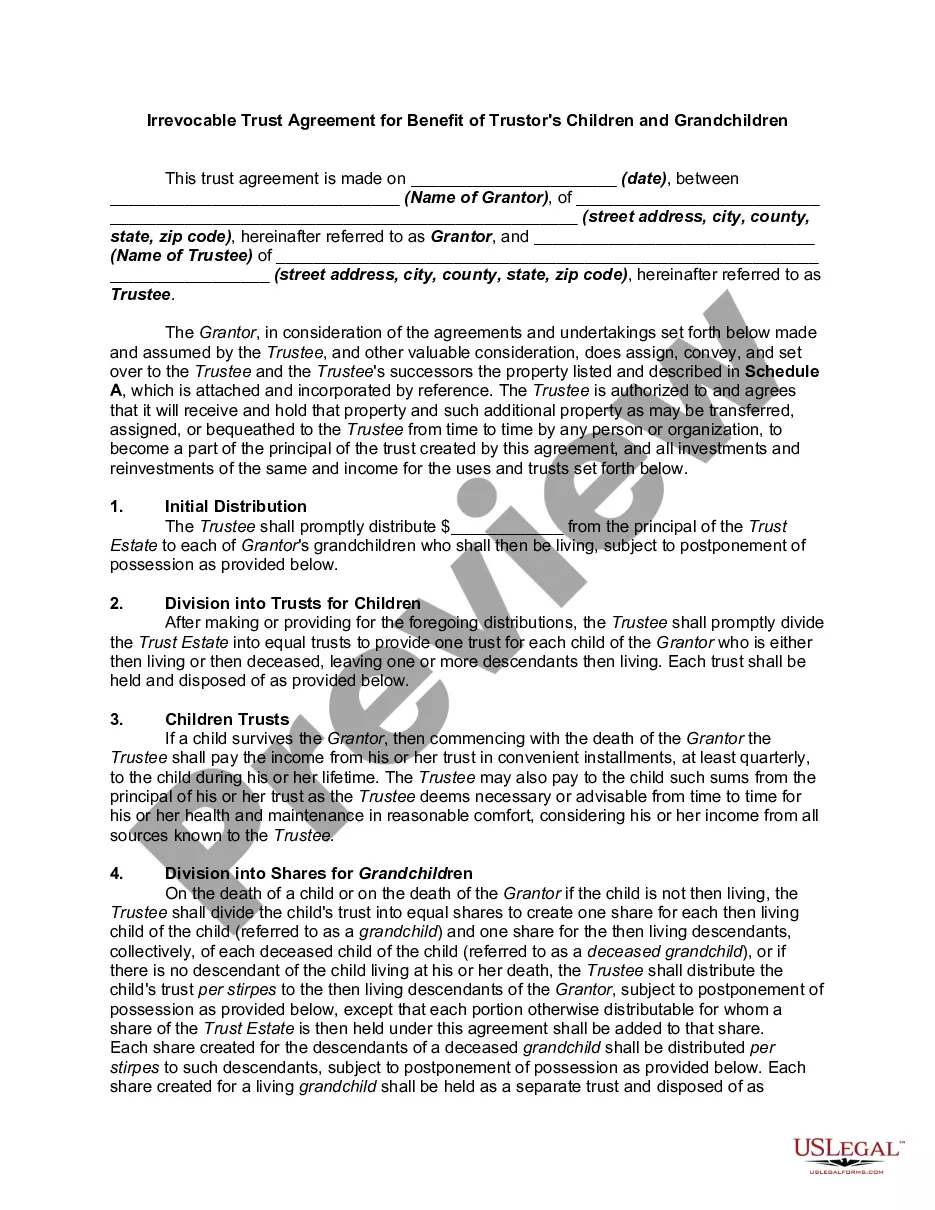
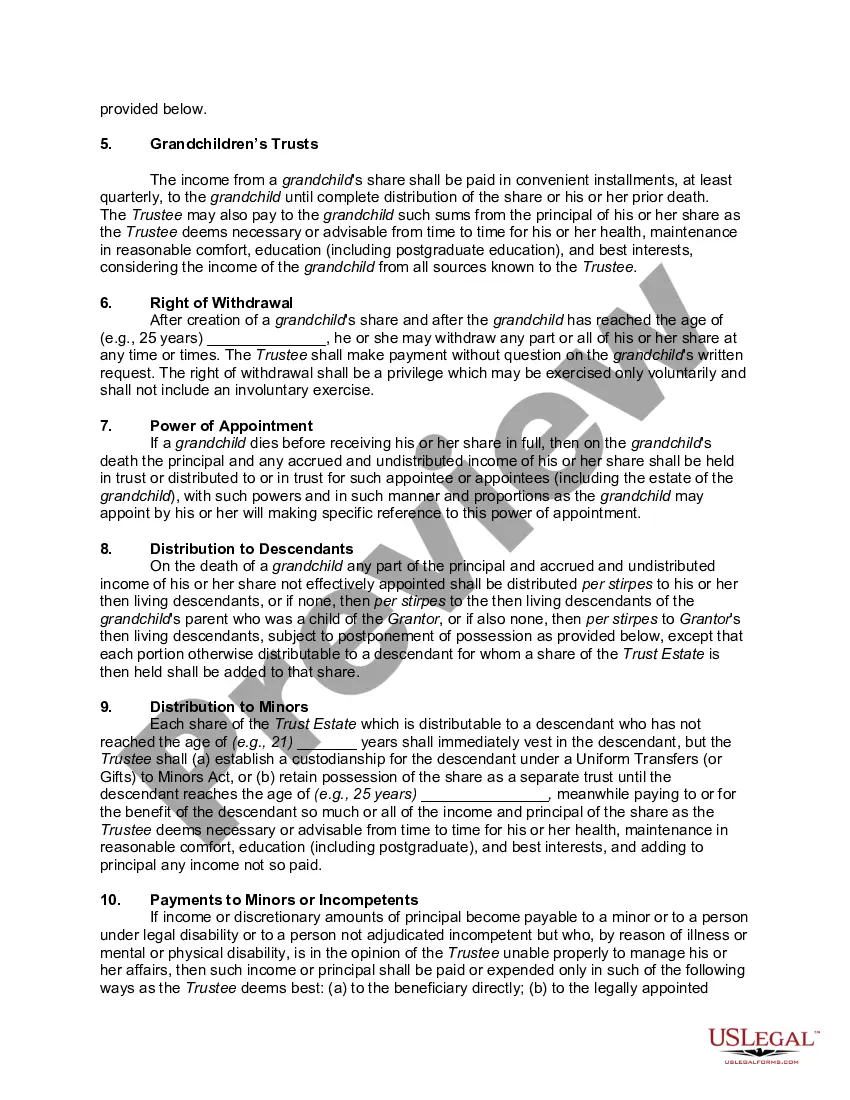
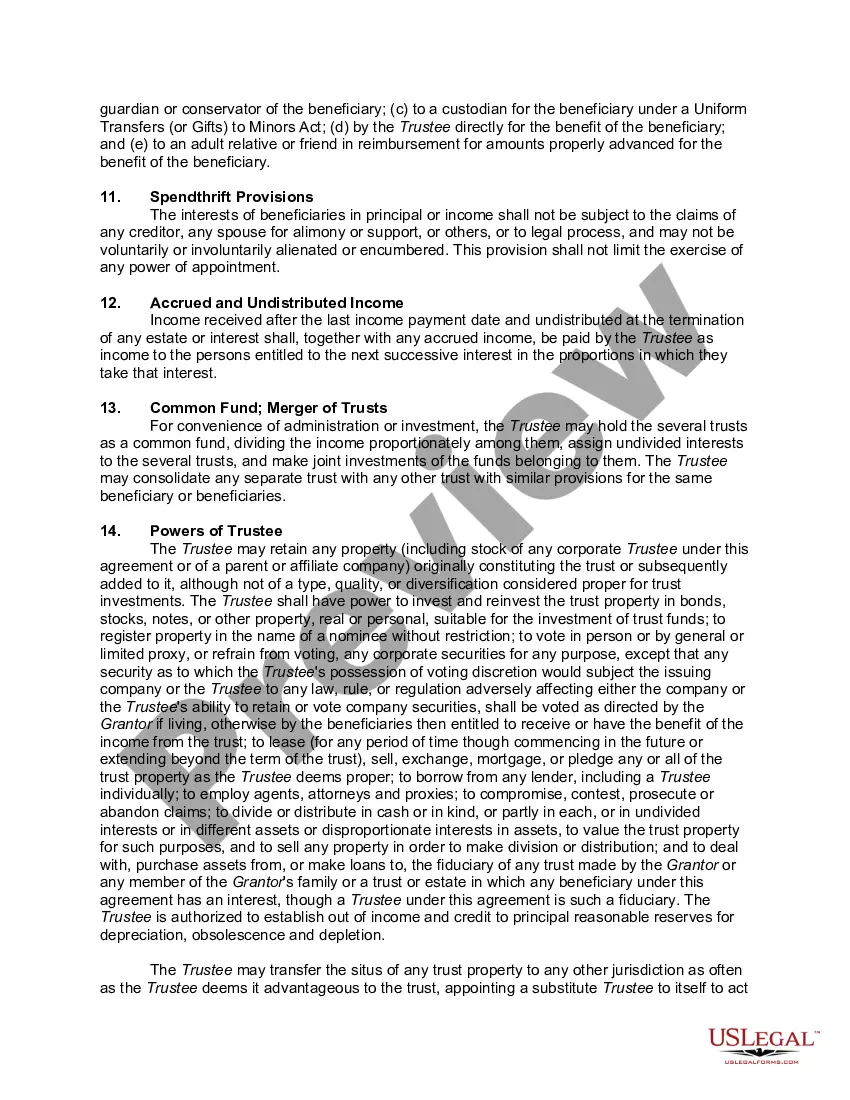
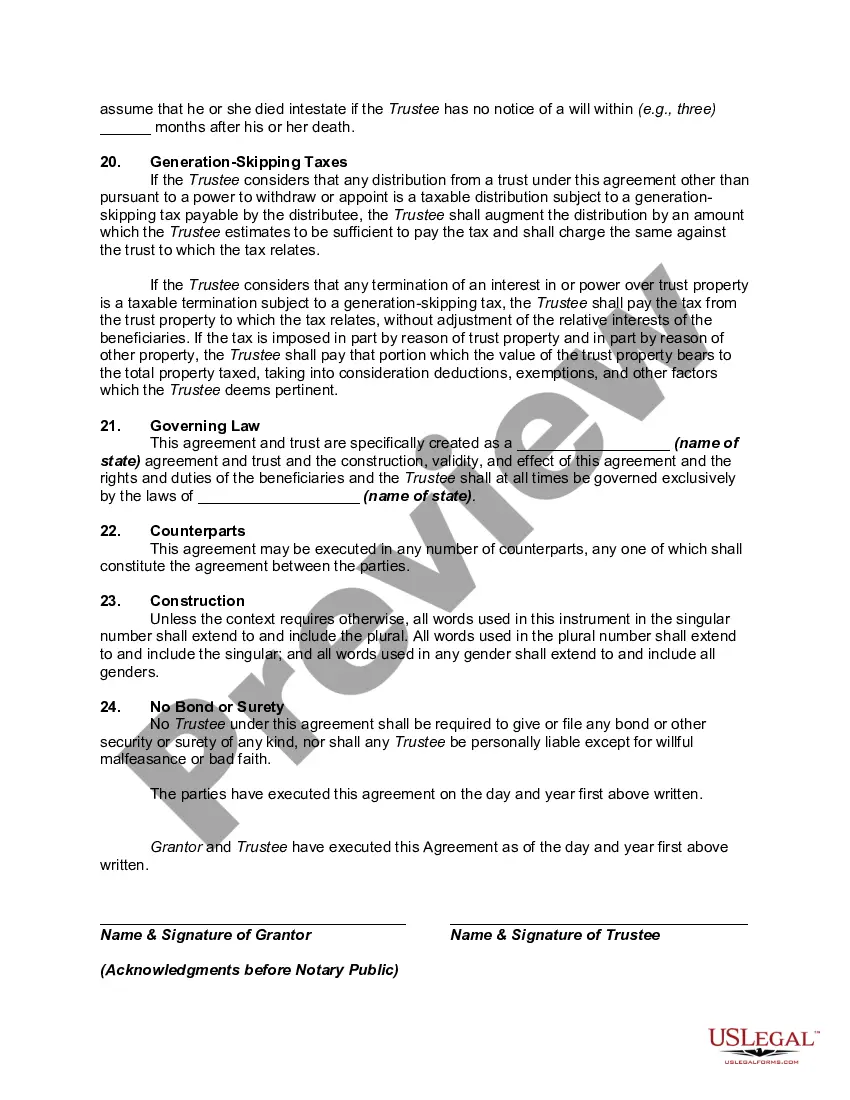
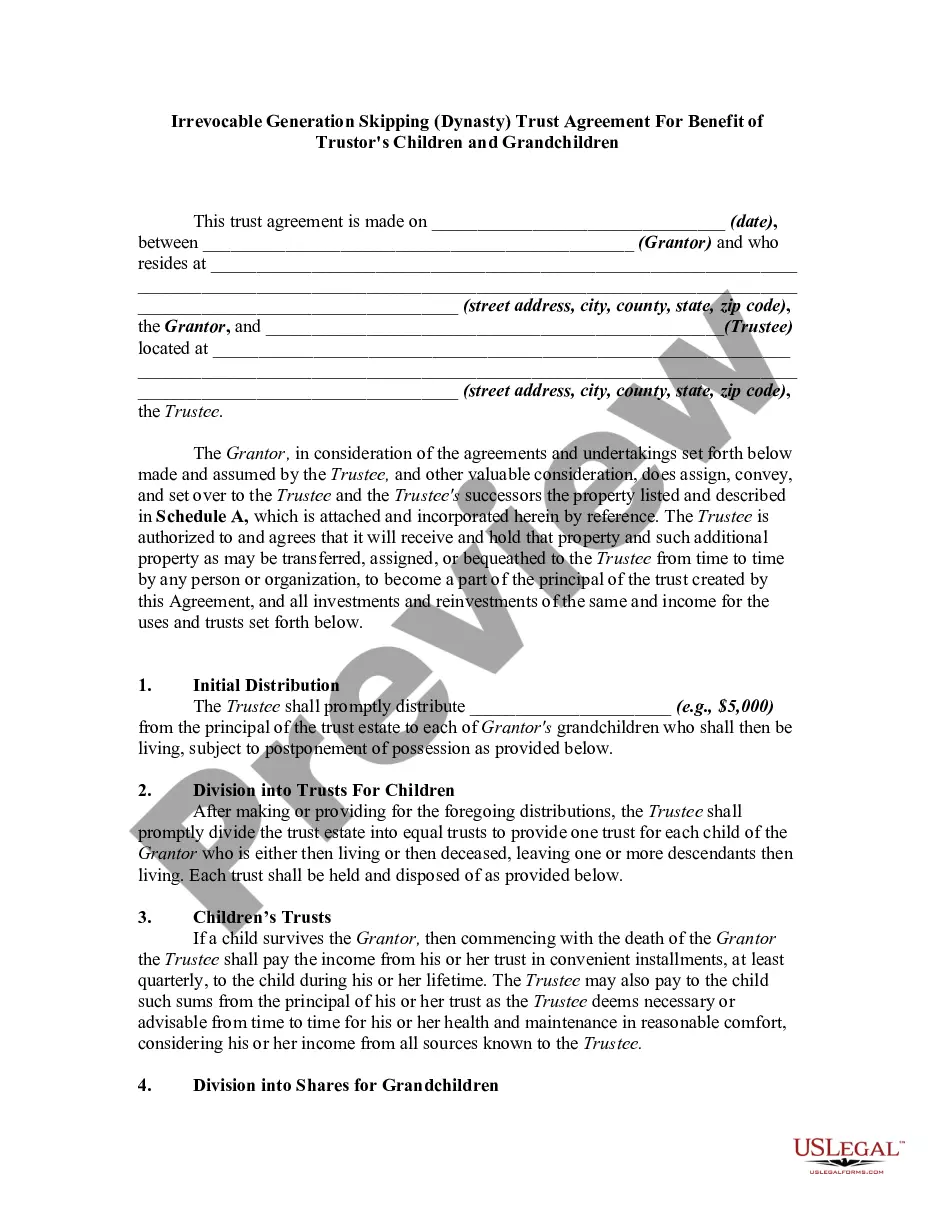
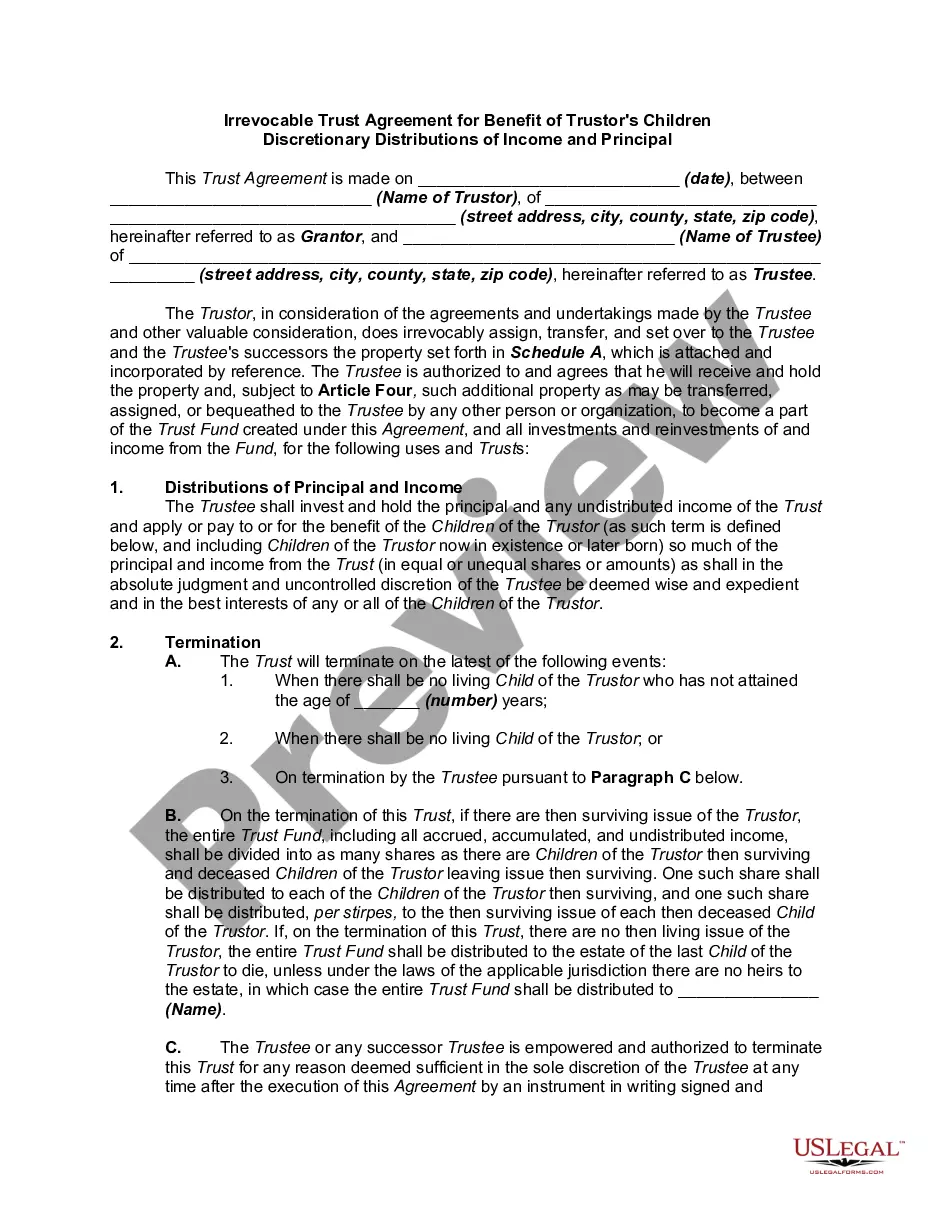
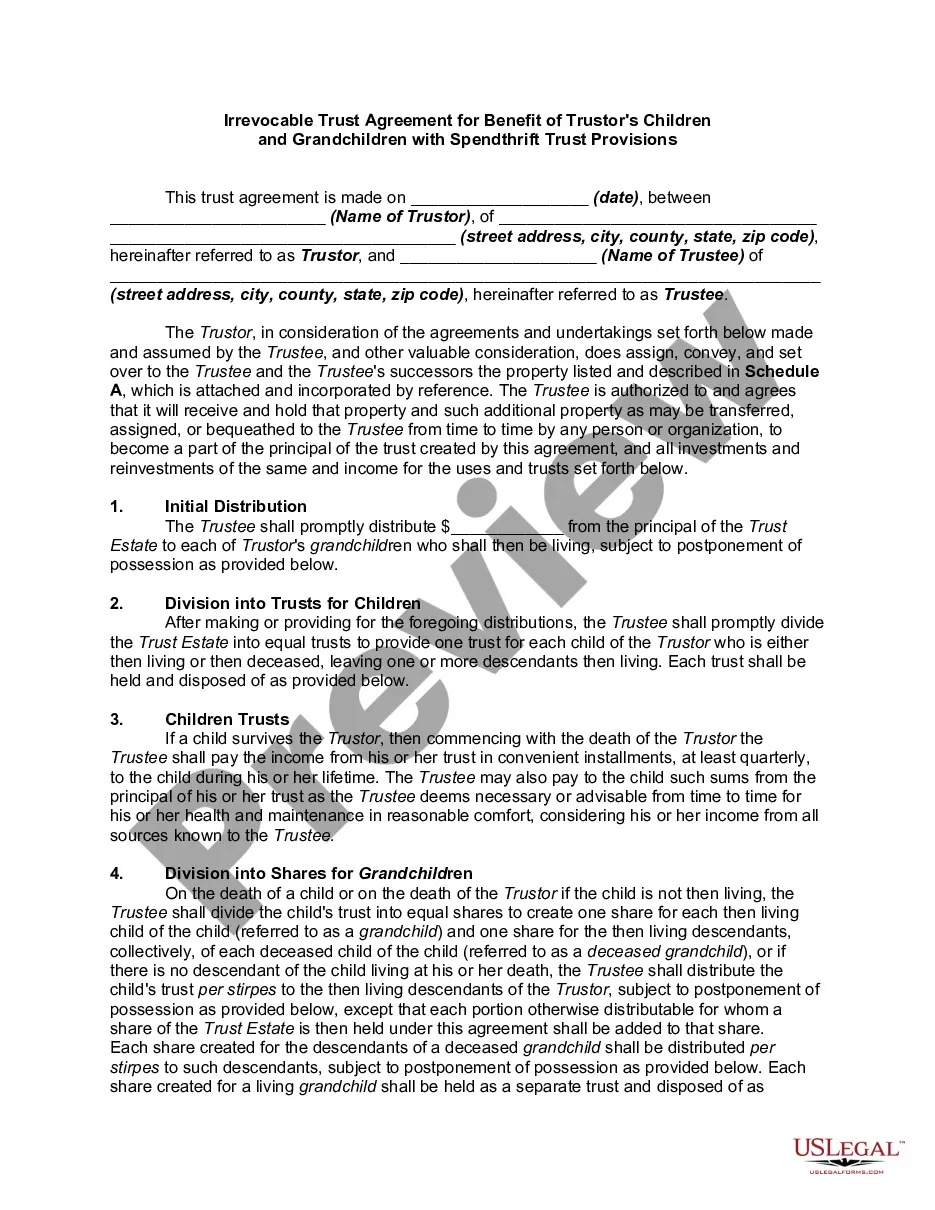
How to fill out Irrevocable Trust Agreement For Benefit Of Trustor's Children And Grandchildren?
Utilizing legal document models that adhere to national and local statutes is essential, with a plethora of choices available on the internet.
However, why squander time searching for the appropriate Trust Grandchildren Sample for Unborn template online when the US Legal Forms digital library has already curated such resources in one location.
US Legal Forms stands as the largest online legal repository featuring over 85,000 fillable templates created by attorneys for every professional and personal circumstance. These documents are easy to navigate, with all materials categorized by state and intended use. Our specialists keep pace with legal changes, ensuring your paperwork remains current and compliant when acquiring a Trust Grandchildren Sample for Unborn from our site.
Once you’ve found the correct form, click Buy Now and choose a subscription package. Create an account or Log In and complete payment via PayPal or credit card. Choose the preferred format for your Trust Grandchildren Sample For Unborn and proceed to download it. All documents accessed through US Legal Forms are reusable. To redownload and fill out previously saved forms, navigate to the My documents section in your profile. Enjoy the most comprehensive and user-friendly legal document service!
- Acquiring a Trust Grandchildren Sample For Unborn is swift and straightforward for both existing and new members.
- If you already possess a valid subscription account, Log In and save the document sample you need in the appropriate format.
- For newcomers to our site, follow these steps.
- Review the template using the Preview function or through the text outline to confirm it satisfies your needs.
- If necessary, find another sample using the search tool at the top of the page.
Form popularity
FAQ
A Trust can offer several advantages over leaving money directly to your child. For example: A trust can protect your assets from creditors, lawsuits, and bankruptcy claims against your child or their spouse. A trust can provide income for your child while preserving the principal for future generations.
In this case, a trust is the best way to leave the money to a child. One popular way to structure the inheritance is to direct the trustee to give the money in three chunks: one when the kid graduates from college (or turns 22), one a few years later, and the last at around age 30.
The unborn child is not considered to be a person, so no laws apply to it under after birth. Unborn children are not included in the line of succession until after they have been born.
Your will can account for unborn children, so if it does. then you may not need to update your beneficiaries (but you will likely still need to appoint a guardian).
Naming an unborn child as the beneficiary may be possible, but there are reasons to consider other options, such as appointing a financial guardian. Speaking with a financial professional can help determine the best approach to meet your financial needs during pregnancy.