Trust For Benefit Of
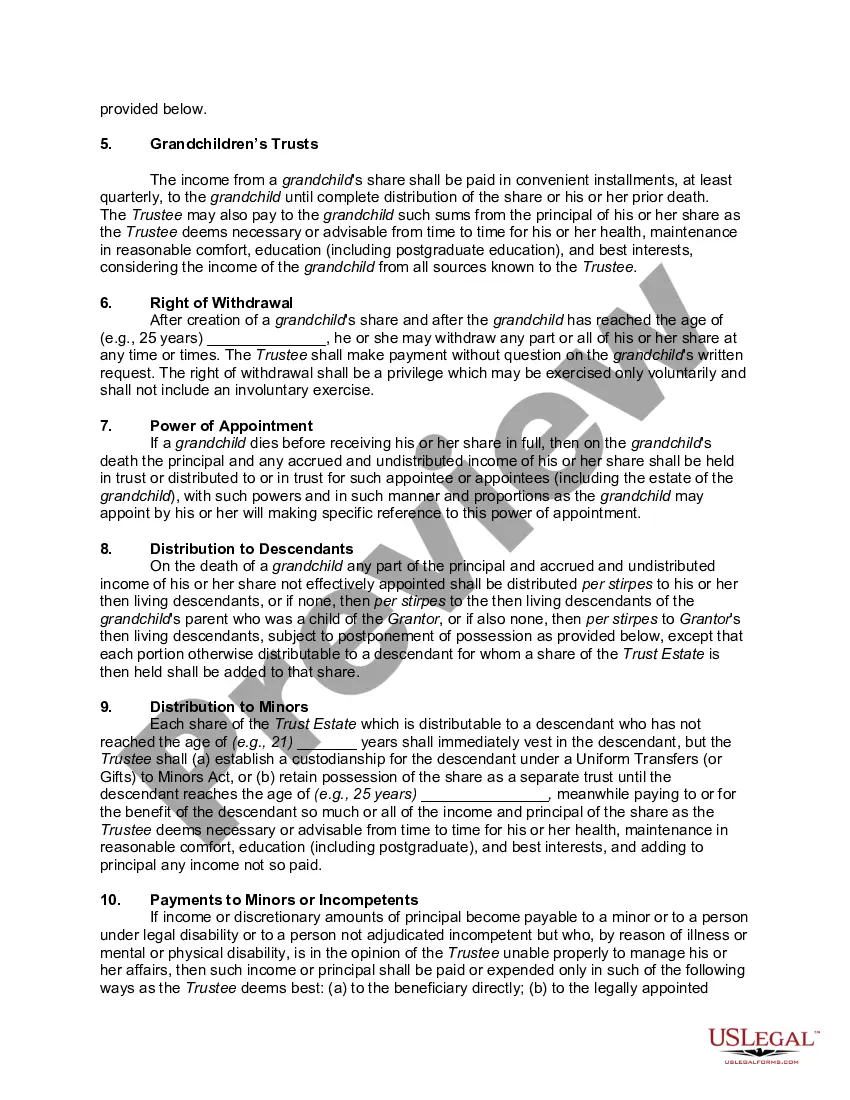
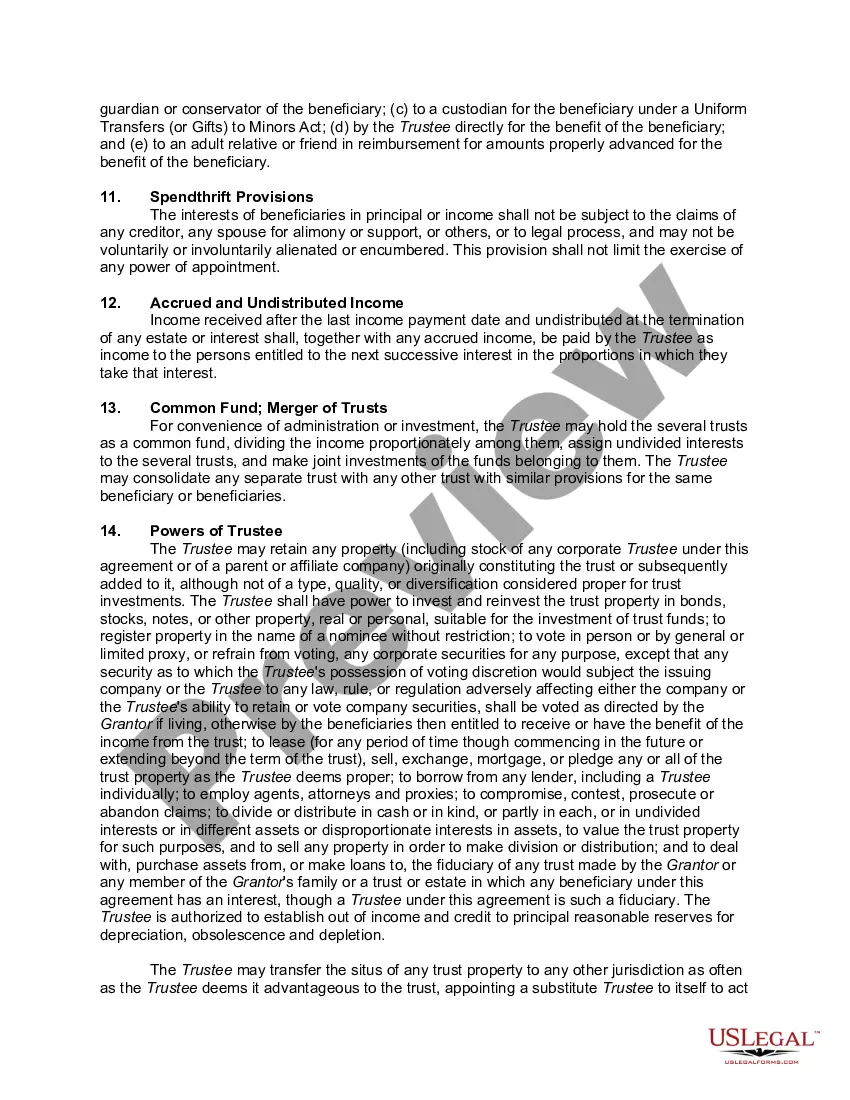
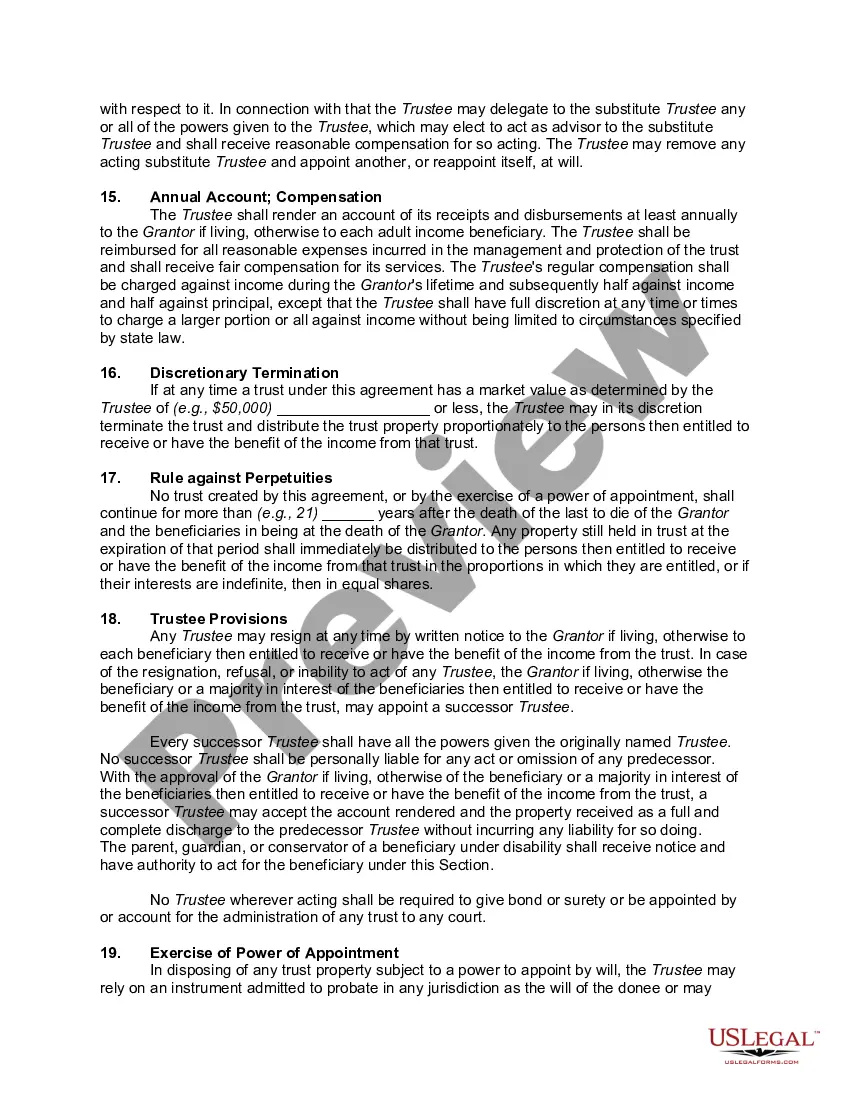
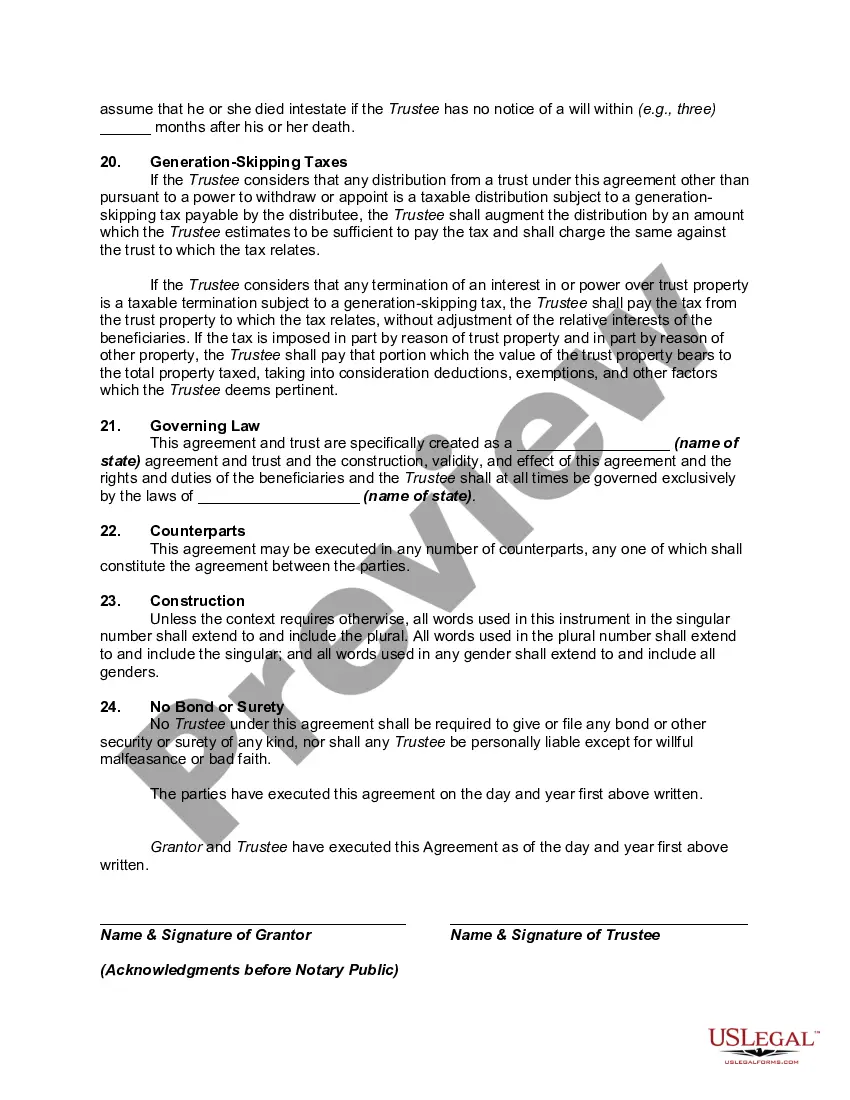
Description


Get your form ready online
Our built-in tools help you complete, sign, share, and store your documents in one place.
Make edits, fill in missing information, and update formatting in US Legal Forms—just like you would in MS Word.
Download a copy, print it, send it by email, or mail it via USPS—whatever works best for your next step.
Sign and collect signatures with our SignNow integration. Send to multiple recipients, set reminders, and more. Go Premium to unlock E-Sign.
If this form requires notarization, complete it online through a secure video call—no need to meet a notary in person or wait for an appointment.
We protect your documents and personal data by following strict security and privacy standards.

Make edits, fill in missing information, and update formatting in US Legal Forms—just like you would in MS Word.

Download a copy, print it, send it by email, or mail it via USPS—whatever works best for your next step.

Sign and collect signatures with our SignNow integration. Send to multiple recipients, set reminders, and more. Go Premium to unlock E-Sign.

If this form requires notarization, complete it online through a secure video call—no need to meet a notary in person or wait for an appointment.

We protect your documents and personal data by following strict security and privacy standards.
Looking for another form?








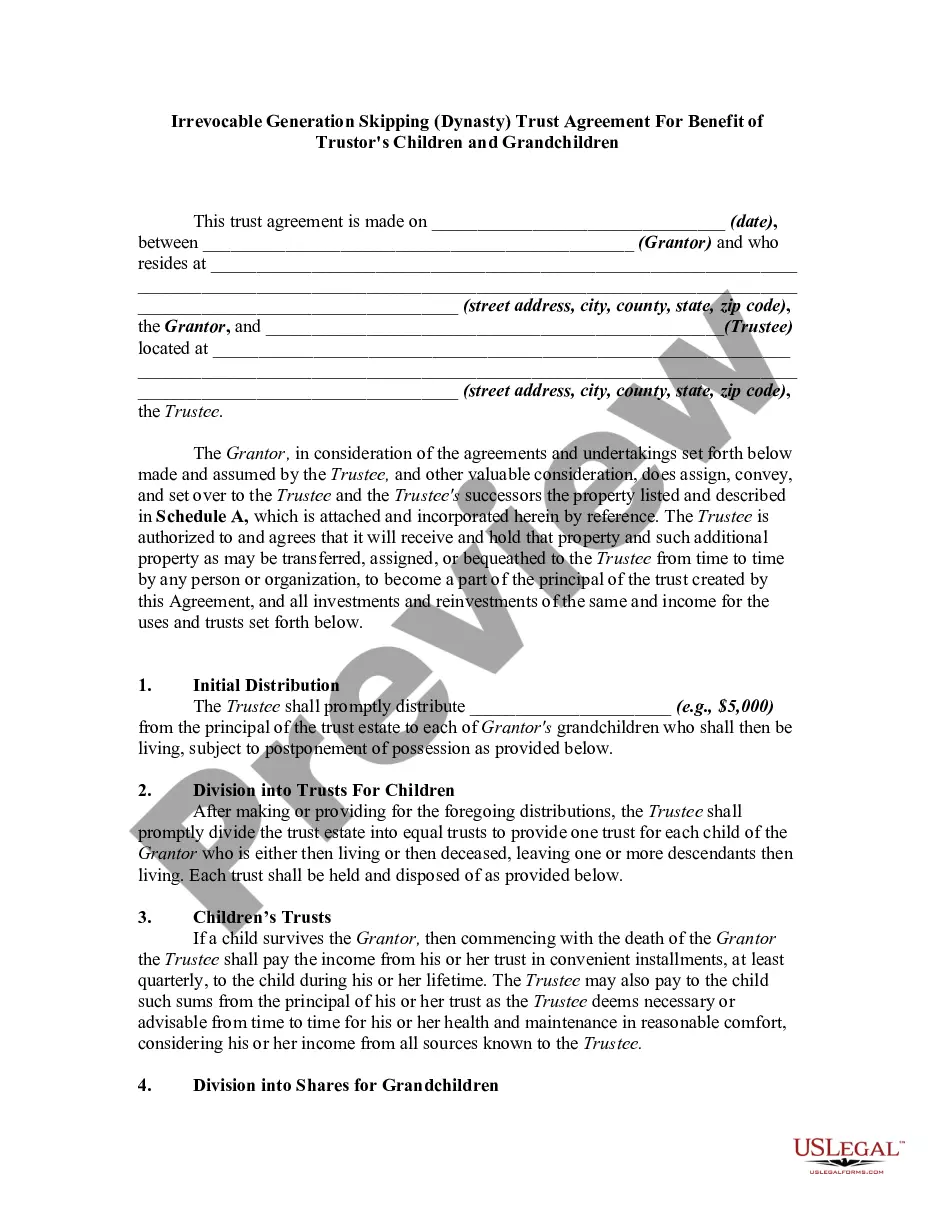
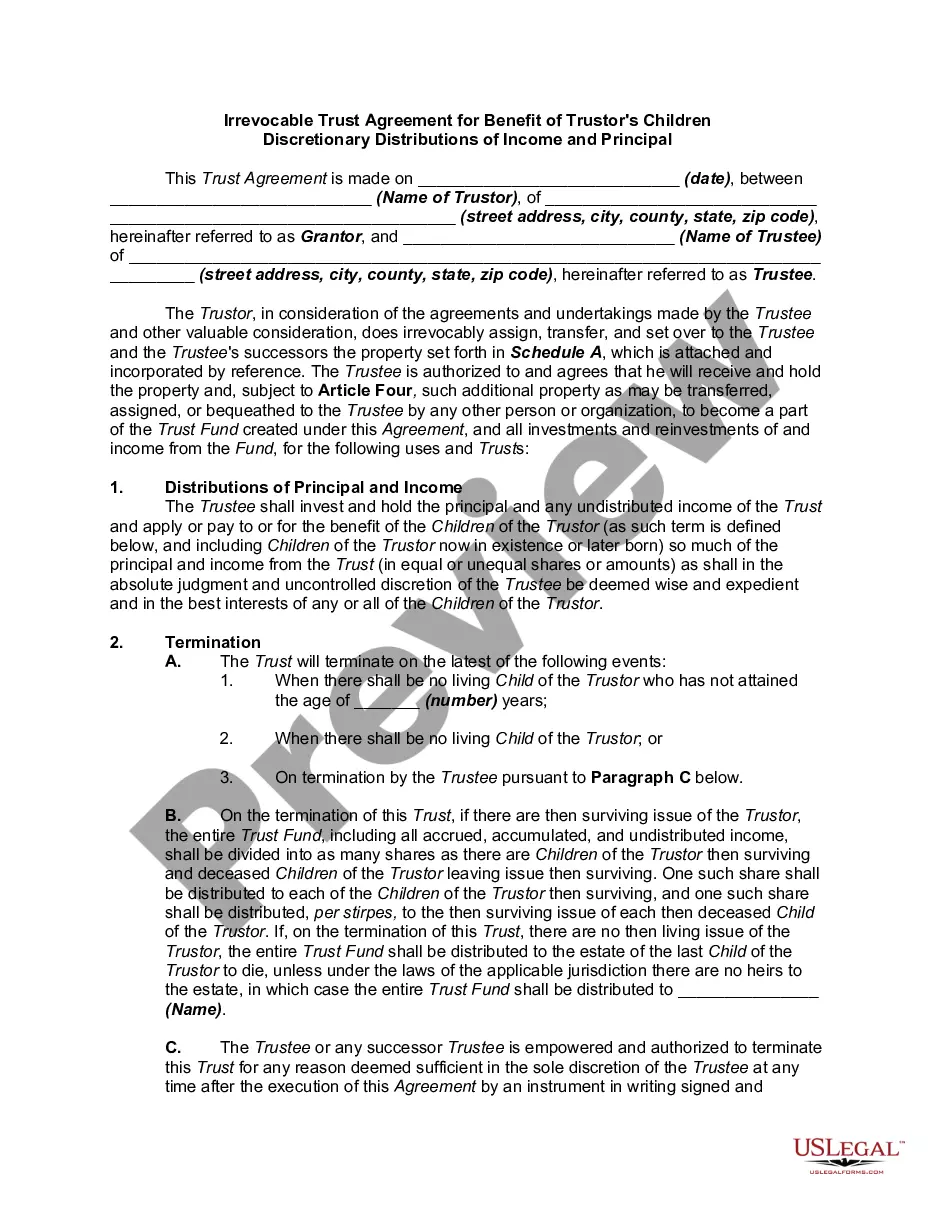
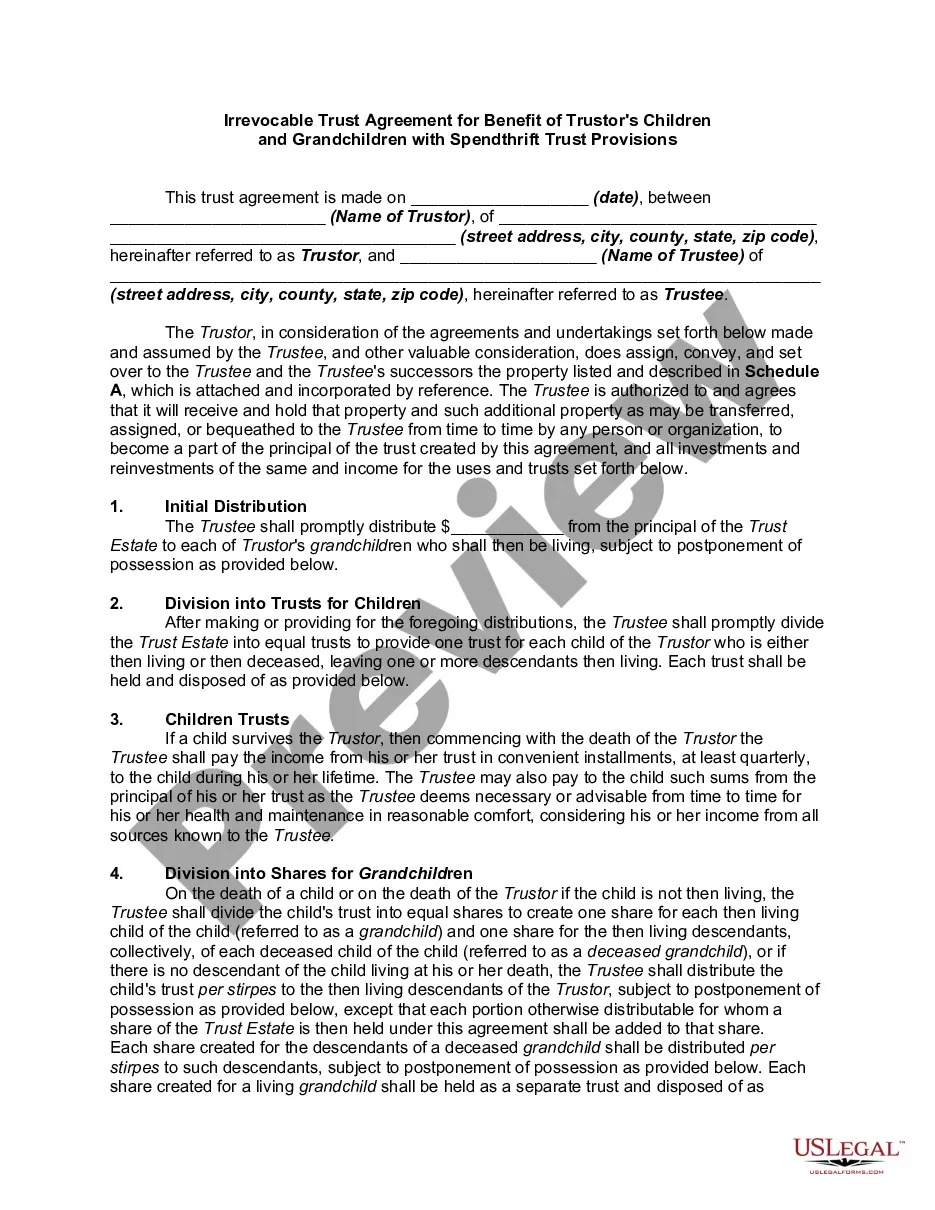
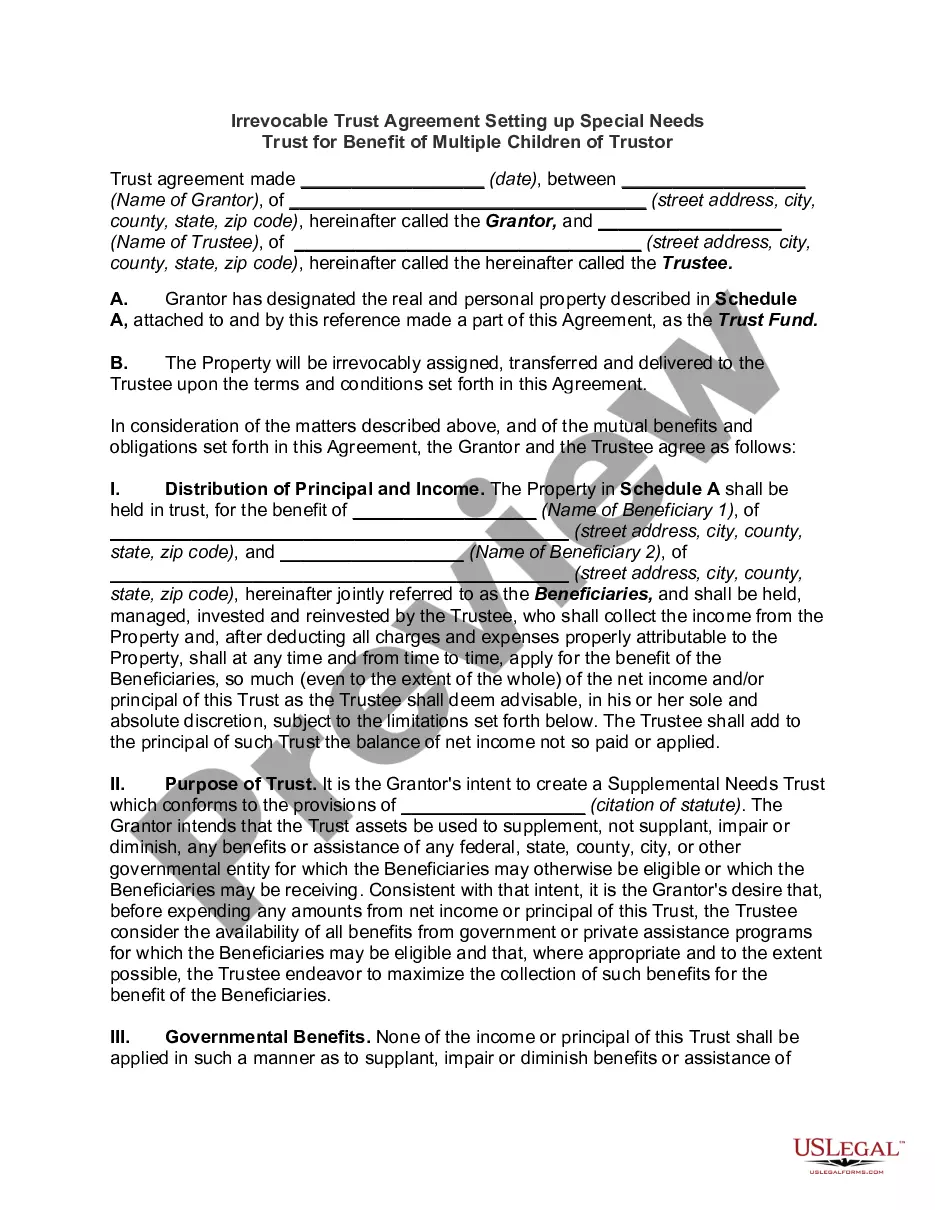
How to fill out Irrevocable Trust Agreement For Benefit Of Trustor's Children And Grandchildren?
- If you already have an account, log in to access your previous documents and download the required form template by clicking on the Download button, ensuring your subscription is active. Renew it if necessary.
- For first-time users: Start by exploring the Preview mode and form descriptions to confirm you've selected the correct template that aligns with your local jurisdiction's requirements.
- Use the Search tab if you need to find another template that fits your needs more accurately. Proceed only when you've identified the right form.
- Purchase the document by selecting the Buy Now button and choosing your desired subscription plan. You'll need to create an account for full access to the library.
- Complete your purchase by entering your credit card information or using your PayPal account to finalize the subscription.
- Download your form and save it to your device. You can access it anytime from the My Forms section of your profile.
With a library boasting over 85,000 fillable and editable legal forms, US Legal Forms stands out by offering the most robust selection at competitive prices. Plus, users can consult premium experts for assistance, ensuring that every document is completed accurately and legally sound.
Start your legal journey with confidence today! Discover the vast resources of US Legal Forms and streamline your document acquisition process.
Form popularity
FAQ
The trust for the benefit of is an estate planning tool that aims to protect and manage assets for designated beneficiaries. It allows the trustmaker to define the terms under which the assets are used and distributed. By utilizing a trust for benefit of the chosen beneficiaries, the granter can maintain control over the management of assets and offer support for future generations. The uslegalforms platform can assist you in establishing a trust that meets your needs.
A trust for the benefit of refers to a legal arrangement where assets are held for the advantage of a specific individual or group. This type of trust allows the granter to designate how and when assets are distributed. Such an arrangement can cater to various needs, such as providing for minors, individuals with disabilities, or even charitable organizations. Setting up a trust for benefit of an intended recipient is also a way to ensure their financial security.
Wealthy individuals often place their homes in a trust for several reasons, including asset protection and privacy. A trust for benefit of a homeowner can shield the property from creditors and reduce estate taxes. Additionally, this structure allows for direct transfer to heirs without the need for probate, streamlining the process. Ultimately, it provides peace of mind knowing that their loved ones will receive the property easily.
The primary purpose of a trust is to manage and protect assets for the benefit of designated beneficiaries. By setting up a trust for benefit of your loved ones, you ensure the assets are distributed according to your wishes. Trusts also provide a way to avoid probate, which can simplify the transfer of wealth. Furthermore, a trust can help minimize estate taxes, creating a lasting legacy.
Trust for the benefit of refers to an arrangement where a trustee manages assets with the express purpose of benefiting a designated individual or group. This legal structure allows for protective measures and tax advantages, ensuring that the beneficiary receives support or resources as intended. By establishing such a trust, you can control how and when the benefits are distributed. Utilizing trusted platforms like uslegalforms can simplify the process of creating a trust tailored to your needs.
On a 529 account, FBO means that the account is set up to benefit a specific child or student. This designation allows for tax-advantaged savings for educational expenses directly linked to the intended beneficiary. When you establish a trust for benefit of a child, using FBO on your 529 account can aid in clear financial planning for their future. Understanding these nuances can help maximize the benefits of your investment.
While FBO means 'for the benefit of', it is not interchangeable with the term beneficiary. The beneficiary is the individual or entity that receives the benefits of the trust, whereas FBO describes the relationship between the trust and the beneficiary. In legal and financial documents, this terminology ensures clarity regarding who will benefit from the trust. When setting up a trust for benefit of, accuracy in these definitions matters significantly.
Yes, the term FBO stands for 'for the benefit of', and in this context, it indicates that the trust is set up specifically for the beneficiary. However, it's important to clarify that FBO is not the name of the beneficiary; rather, it signals that the trust assets should benefit that individual or entity. This distinction is key in various trust setups, including educational accounts and estate plans. Utilizing the right legal documents can help define these relationships clearly.
The phrase 'for the benefit of' means that the trust is established to benefit a specific person or group. In the context of a trust for benefit of, the assets within the trust are managed by a trustee who ensures that the beneficiary receives the intended benefits. This setup creates a clear intention for sharing resources, which can be crucial for estate planning. Understanding this concept can help you create or manage your trust more effectively.
Trust beneficiaries are generally taxed on distributions they receive from a trust for benefit of. The income received may be subject to ordinary income tax rates at the beneficiary's tax bracket. It is essential that beneficiaries understand their tax responsibilities, as they can incur tax liabilities depending on the trust's income distribution. Engaging a tax advisor can help beneficiaries navigate these complexities effectively.