Irrevocable Trust Withdrawals For Non Residents
Description


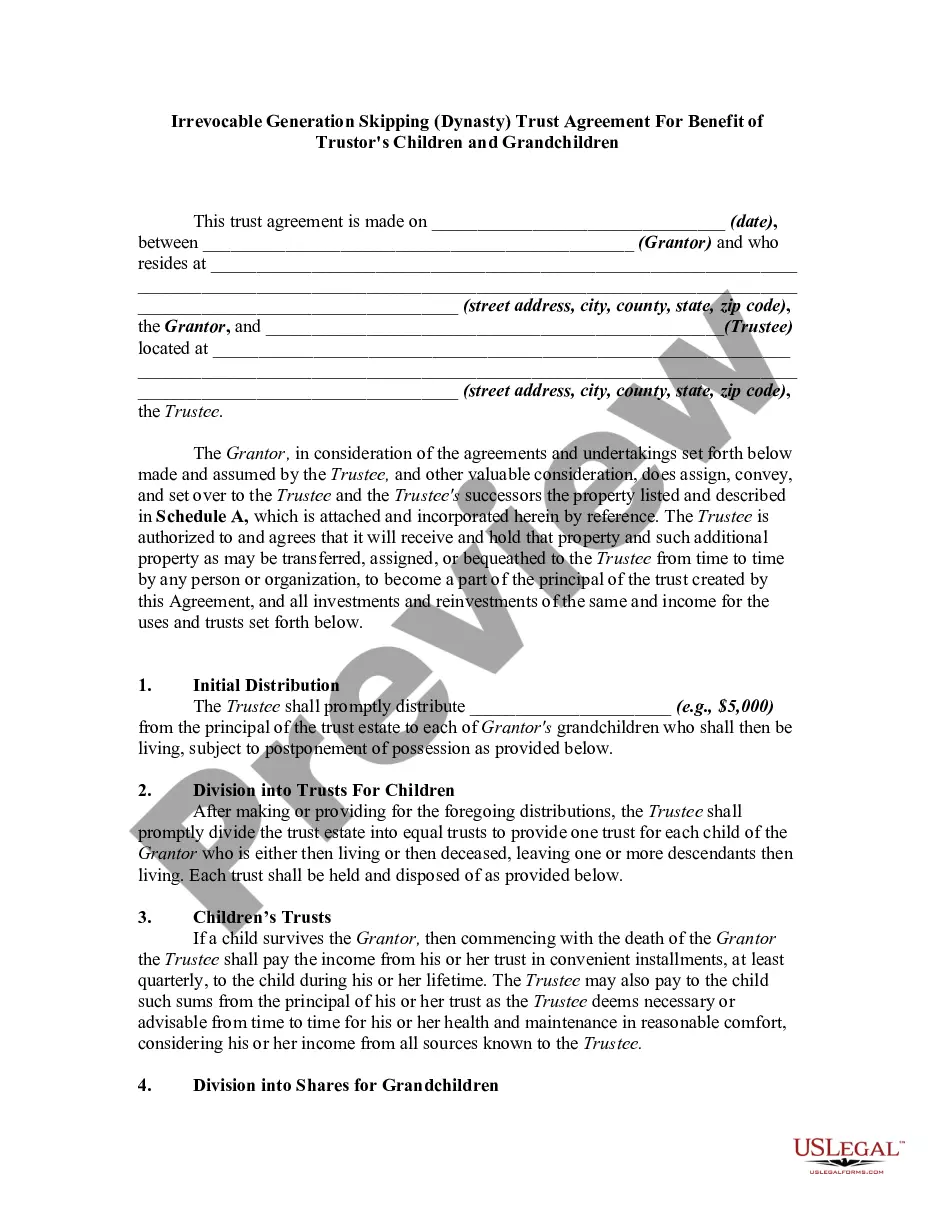
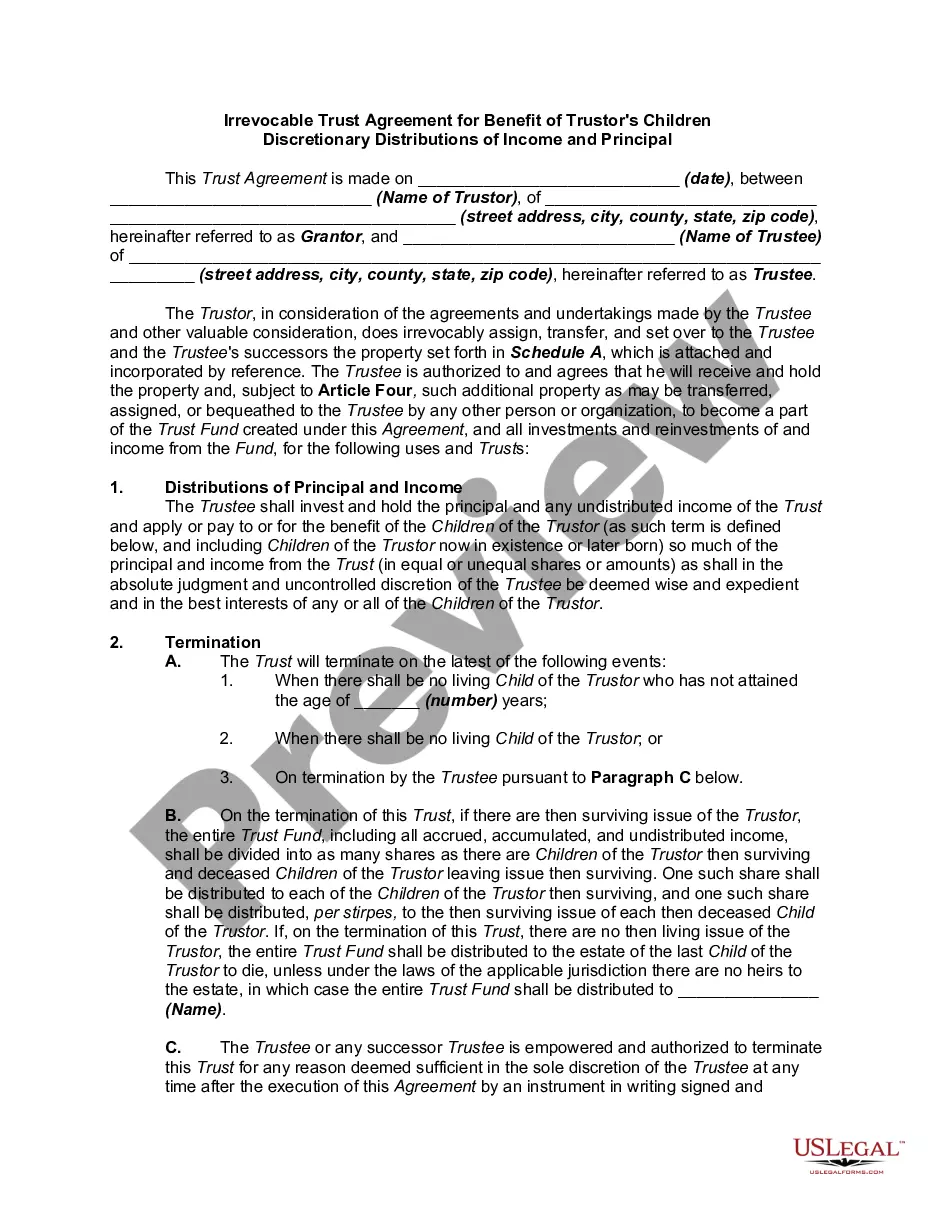


Get your form ready online
Our built-in tools help you complete, sign, share, and store your documents in one place.
Make edits, fill in missing information, and update formatting in US Legal Forms—just like you would in MS Word.
Download a copy, print it, send it by email, or mail it via USPS—whatever works best for your next step.
Sign and collect signatures with our SignNow integration. Send to multiple recipients, set reminders, and more. Go Premium to unlock E-Sign.
If this form requires notarization, complete it online through a secure video call—no need to meet a notary in person or wait for an appointment.
We protect your documents and personal data by following strict security and privacy standards.

Make edits, fill in missing information, and update formatting in US Legal Forms—just like you would in MS Word.

Download a copy, print it, send it by email, or mail it via USPS—whatever works best for your next step.

Sign and collect signatures with our SignNow integration. Send to multiple recipients, set reminders, and more. Go Premium to unlock E-Sign.

If this form requires notarization, complete it online through a secure video call—no need to meet a notary in person or wait for an appointment.

We protect your documents and personal data by following strict security and privacy standards.
Looking for another form?

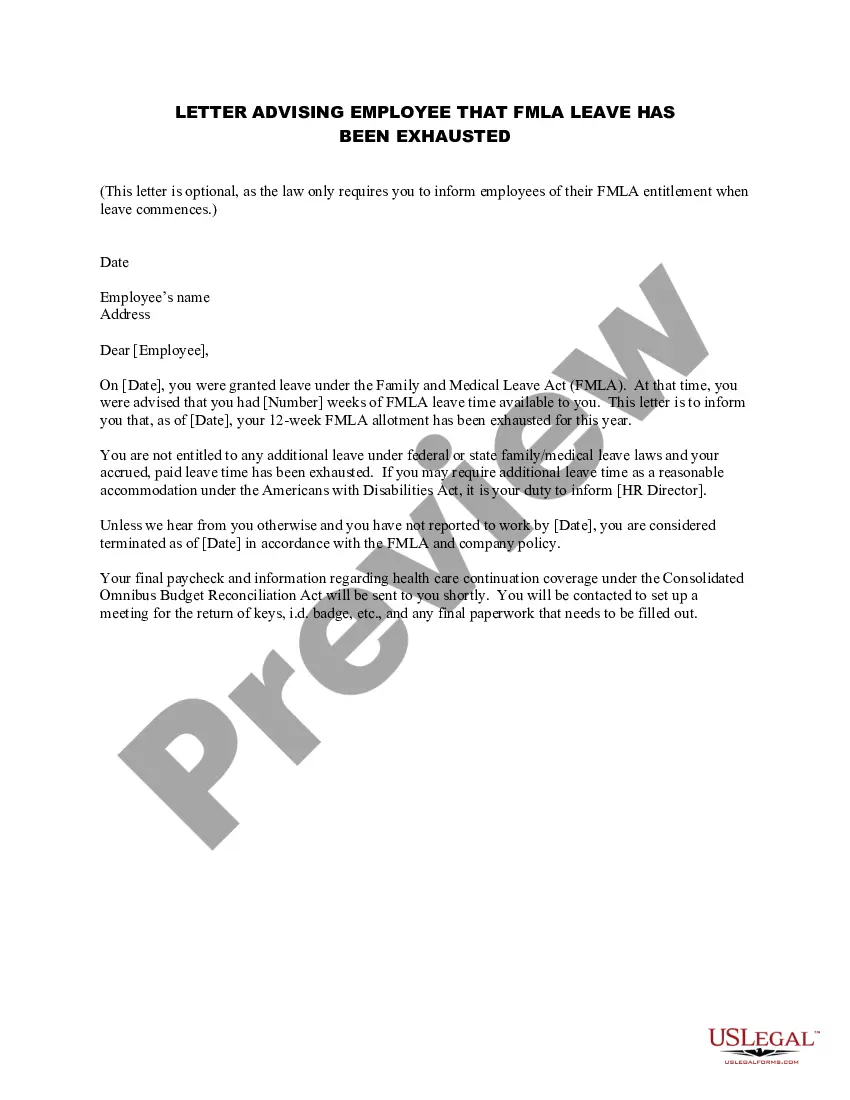


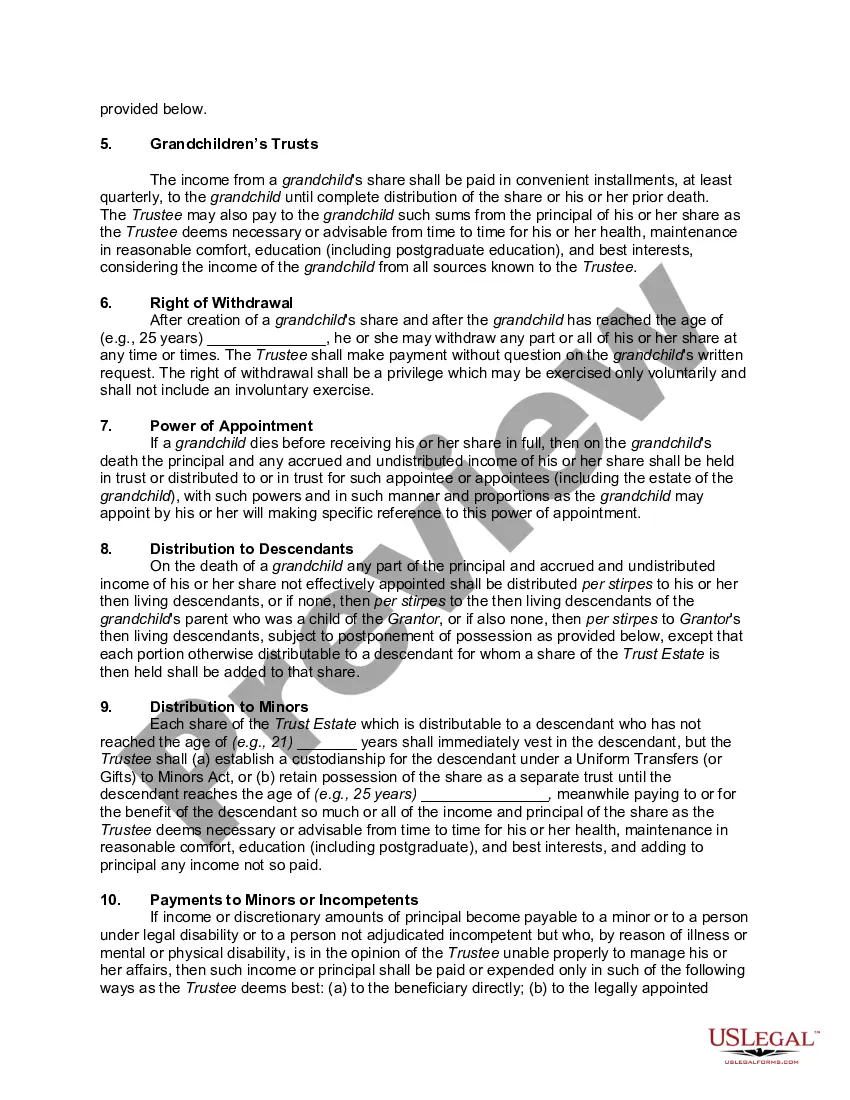
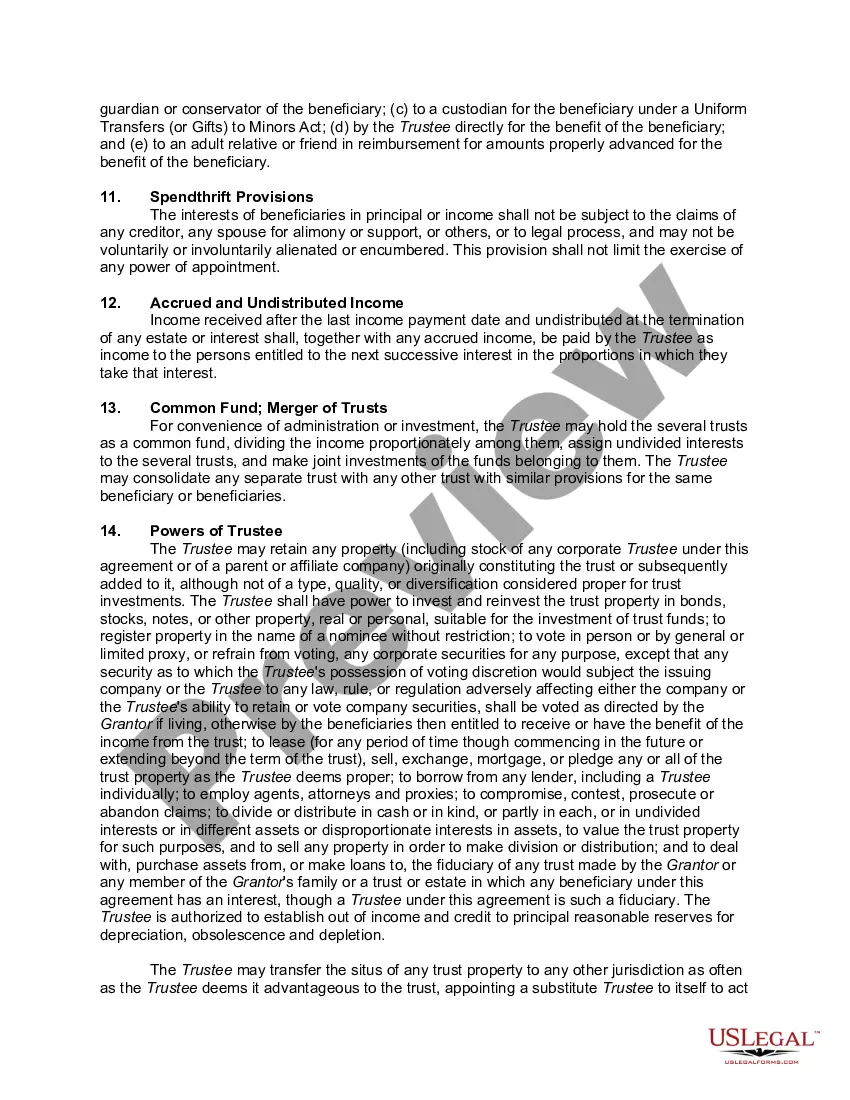
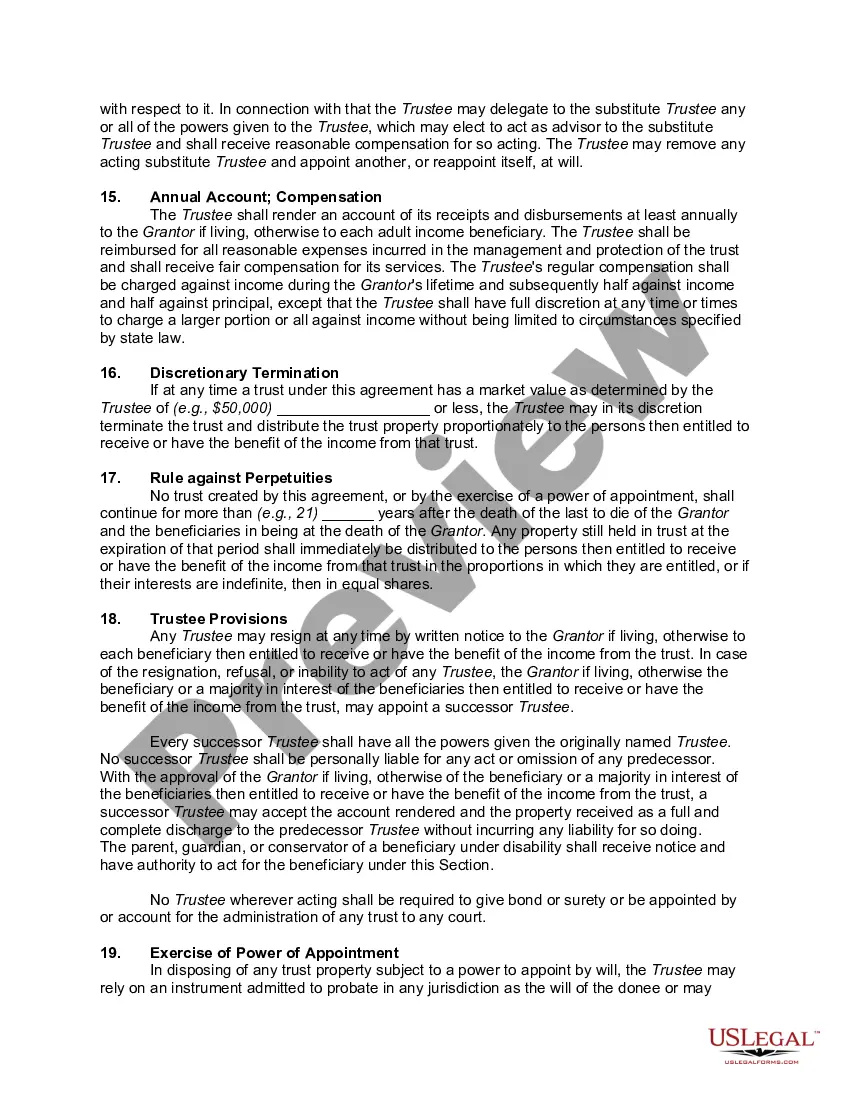
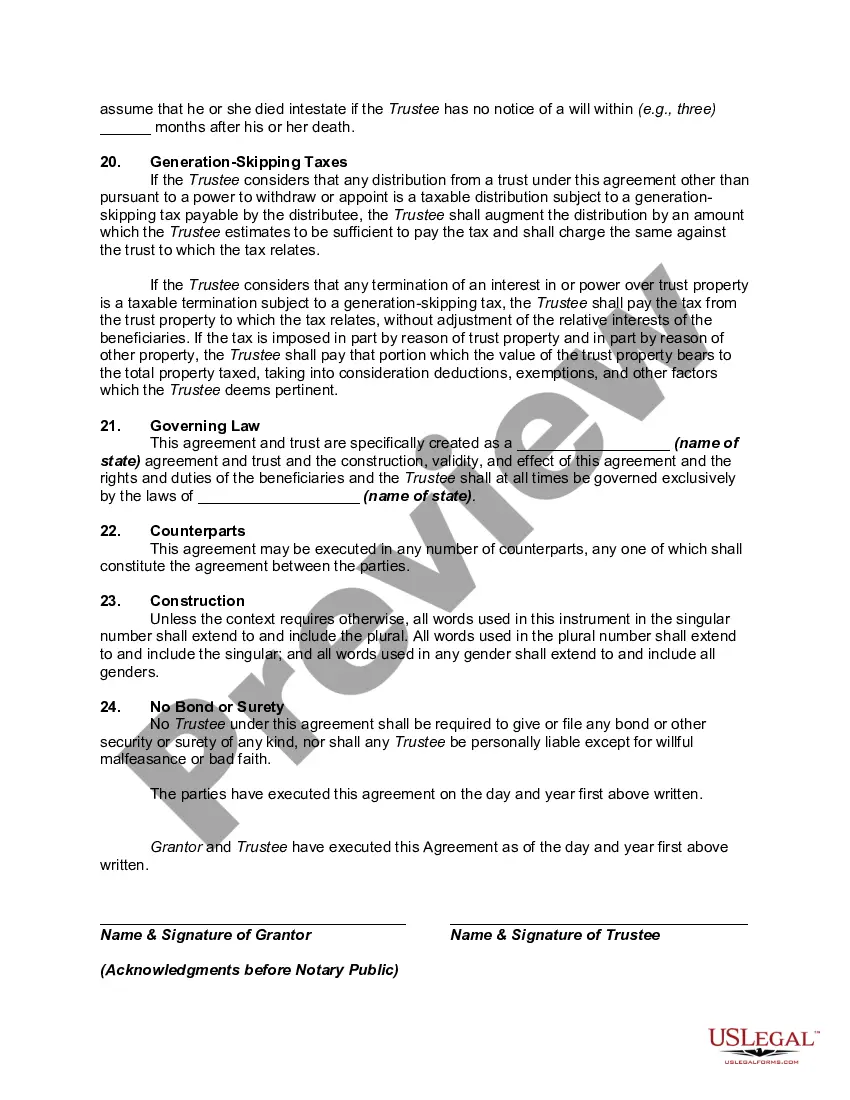
How to fill out Irrevocable Trust Agreement For Benefit Of Trustor's Children And Grandchildren?
- If you're an existing user, log in to your account and download the required form template directly to your device by clicking the Download button. Ensure your subscription is active; if not, renew it promptly.
- For first-time users, start by reviewing the Preview mode and form description to verify that you selected the right document that fulfills your legal needs and adheres to your local jurisdiction.
- If adjustments are needed, utilize the Search tab to find the appropriate form. Once you locate the correct document, you can proceed.
- To purchase the document, click on the Buy Now button and select your desired subscription plan. You'll need to register for an account to access the full range of legal resources.
- Complete your purchase by entering your credit card details or selecting PayPal for a secure transaction.
- Finally, download your form to your device for completion, ensuring you also access it later in the My Forms section of your profile.
US Legal Forms makes the legal document process efficient and reliable, with a collection larger than other providers at a similar price point. With over 85,000 fillable and editable forms, users can easily find what they need.
Incorporating premium expert assistance ensures your forms are completed accurately and are legally sound. Start your journey today by exploring US Legal Forms for all your trust-related document needs!
Form popularity
FAQ
The biggest mistake parents often make when setting up a trust fund is failing to communicate their intentions clearly. Parents may assume their children understand how the trust works and what it aims to achieve. This lack of communication can lead to misunderstandings and mismanagement. By engaging with a qualified professional, families can navigate the complexities of irrevocable trust withdrawals for non residents and establish a framework that serve their purposes effectively.
Generally, you cannot pull assets out of an irrevocable trust once it has been established. This is because the trust is designed to protect assets for beneficiaries and provide specific purposes. However, certain conditions may allow for limited withdrawals under specific circumstances. Consulting with a legal expert familiar with irrevocable trust withdrawals for non residents can provide clarity regarding your options.
To report distributions from an irrevocable trust, you need to file Form 1041 with the IRS. This form allows you to detail the income generated by the trust and any distributions made to beneficiaries. If you are a non-resident, you must also consider how this impacts your tax obligations. It is advisable to consult with a tax professional familiar with irrevocable trust withdrawals for non residents to ensure compliance.
Exiting an irrevocable trust requires navigating legal channels. One potential method is to seek modifications if all beneficiaries agree. Another option may involve a court petition to dissolve the trust under special circumstances. To explore effective strategies regarding irrevocable trust withdrawals for non residents, consider consulting a professional who specializes in trust management.
The 5 year rule refers to the time frame during which any transfers to an irrevocable trust could be subject to Medicaid penalties. If you apply for Medicaid within five years of transferring assets into the trust, those assets may be counted as part of your financial resources. Being aware of this rule can impact your estate planning significantly. It is crucial to understand the implications of irrevocable trust withdrawals for non residents, especially when considering long-term care.
A nursing home cannot directly take assets from an irrevocable trust, but they may have a claim on trust distributions under certain state regulations. If you anticipate needing long-term care, it’s essential to structure your trust wisely. This helps protect your assets from potential claims. Understanding irrevocable trust withdrawals for non residents can guide you in safeguarding your legacy.
Getting out of an irrevocable trust can be challenging. Typically, the terms of the trust are set and cannot be altered without the consent of all beneficiaries. However, under certain circumstances, you may be able to modify the trust or reclaim assets through legal means. Consulting with experts in irrevocable trust withdrawals for non residents can provide clarity on your options.