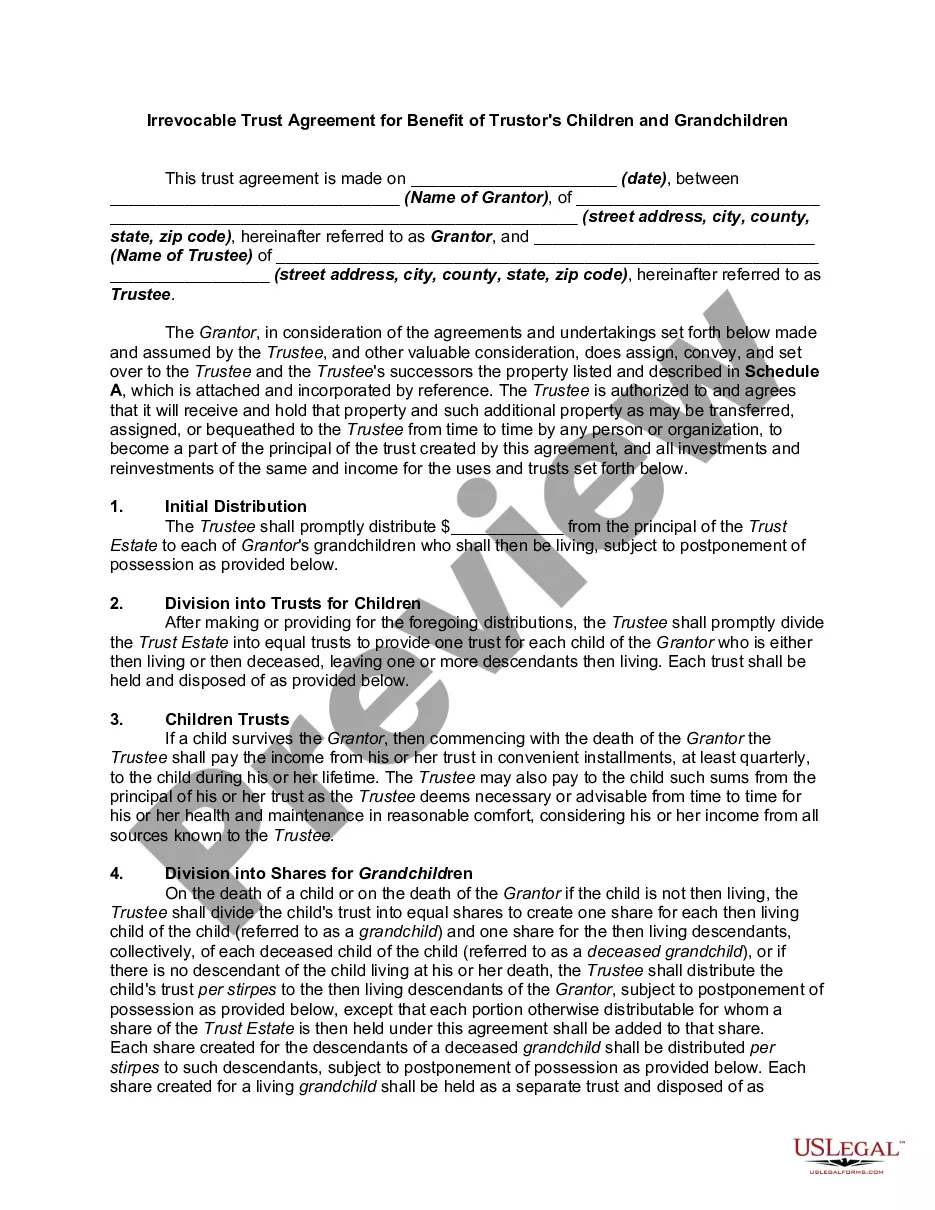
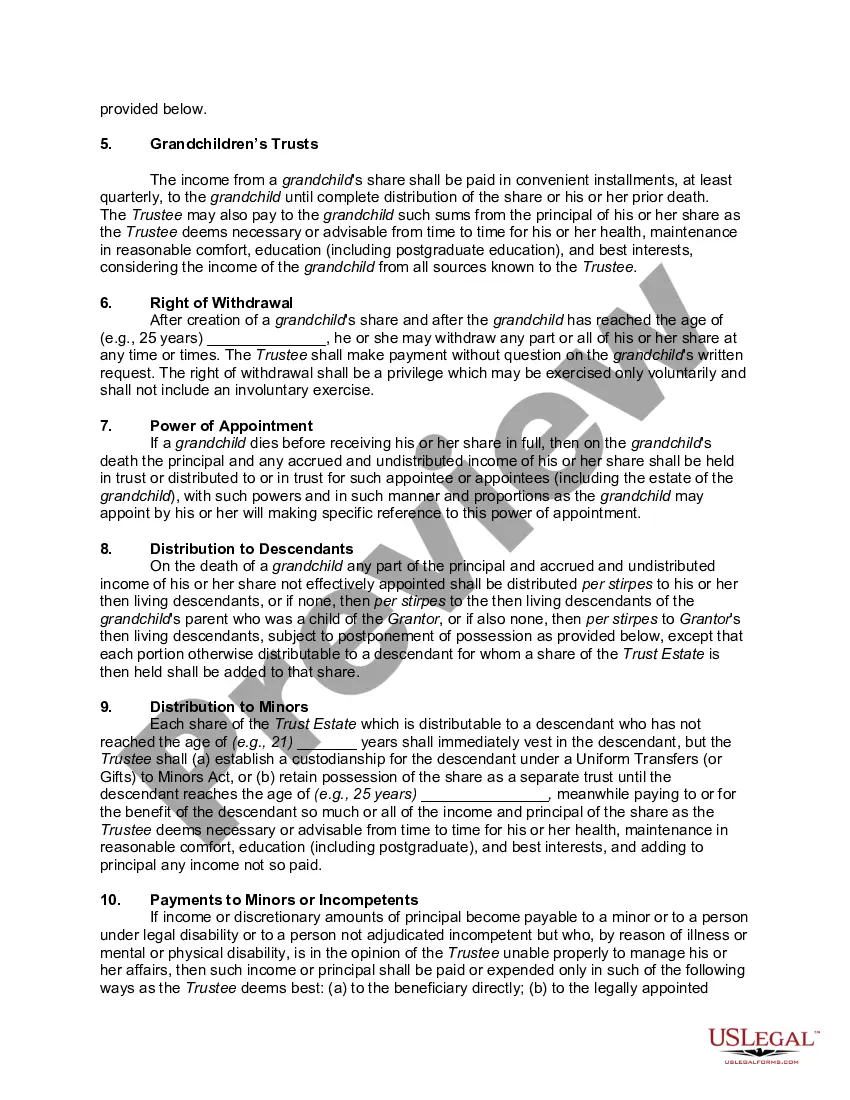
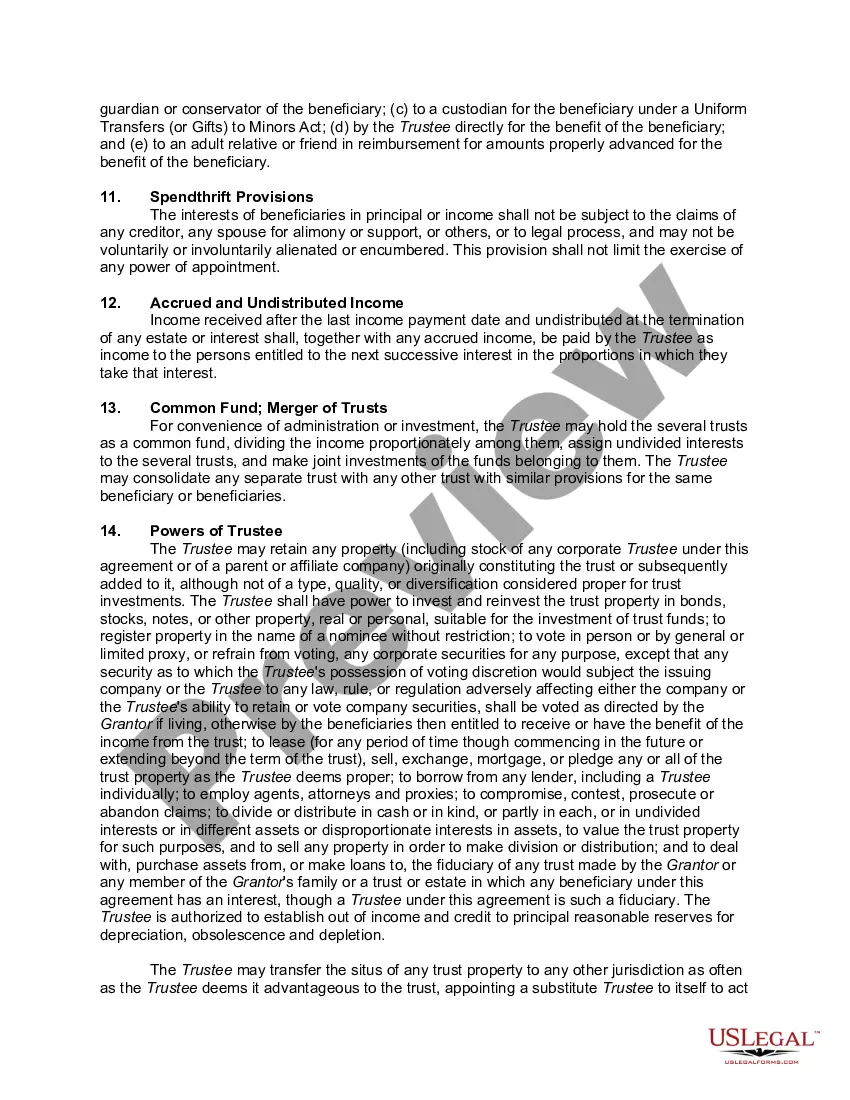
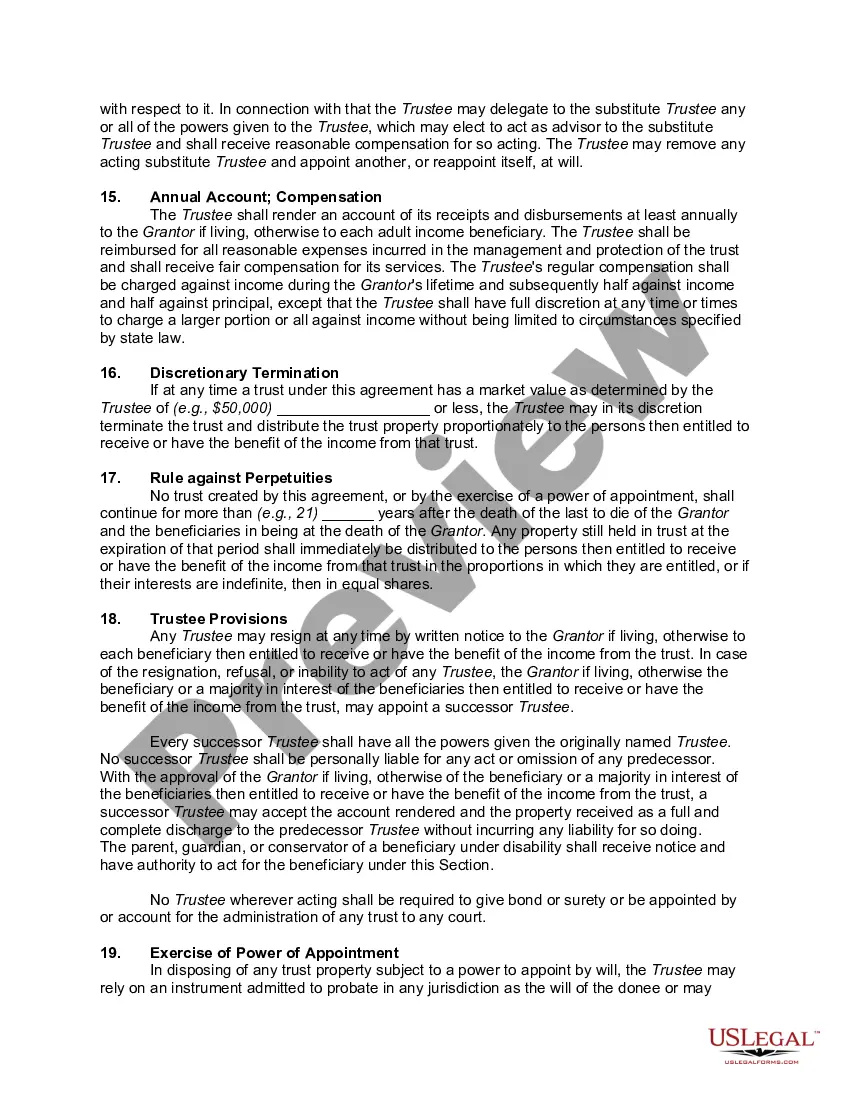
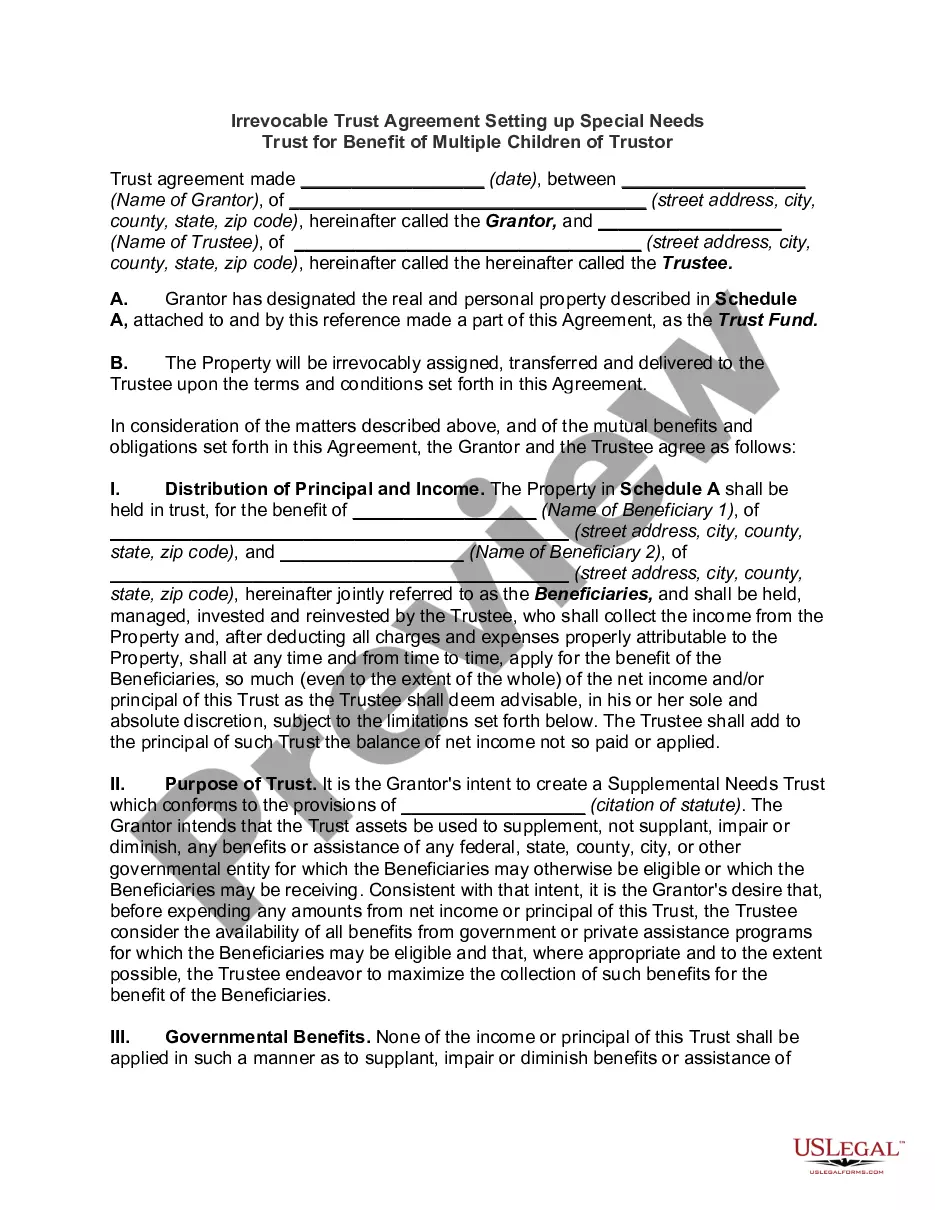
Irrevocable Form Trust Formation
Description

Get your form ready online
Our built-in tools help you complete, sign, share, and store your documents in one place.
Make edits, fill in missing information, and update formatting in US Legal Forms—just like you would in MS Word.
Download a copy, print it, send it by email, or mail it via USPS—whatever works best for your next step.
Sign and collect signatures with our SignNow integration. Send to multiple recipients, set reminders, and more. Go Premium to unlock E-Sign.
If this form requires notarization, complete it online through a secure video call—no need to meet a notary in person or wait for an appointment.
We protect your documents and personal data by following strict security and privacy standards.

Make edits, fill in missing information, and update formatting in US Legal Forms—just like you would in MS Word.

Download a copy, print it, send it by email, or mail it via USPS—whatever works best for your next step.

Sign and collect signatures with our SignNow integration. Send to multiple recipients, set reminders, and more. Go Premium to unlock E-Sign.

If this form requires notarization, complete it online through a secure video call—no need to meet a notary in person or wait for an appointment.

We protect your documents and personal data by following strict security and privacy standards.
Looking for another form?







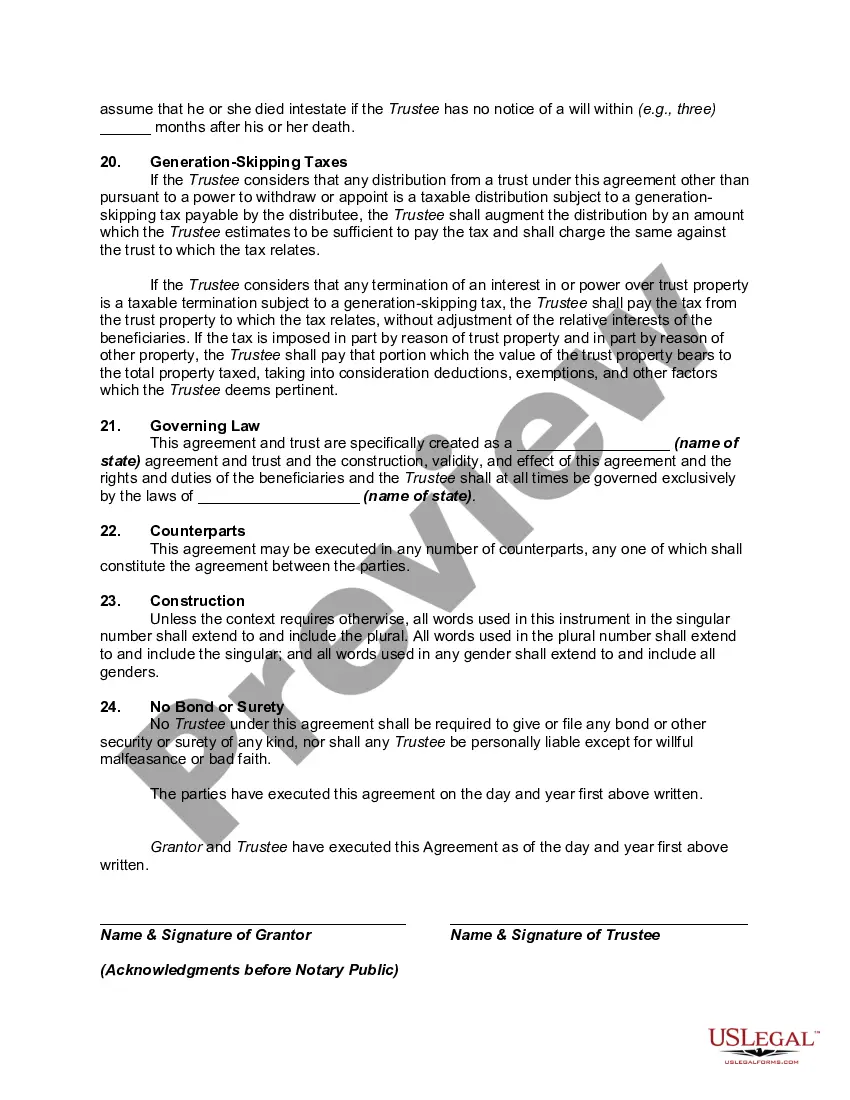
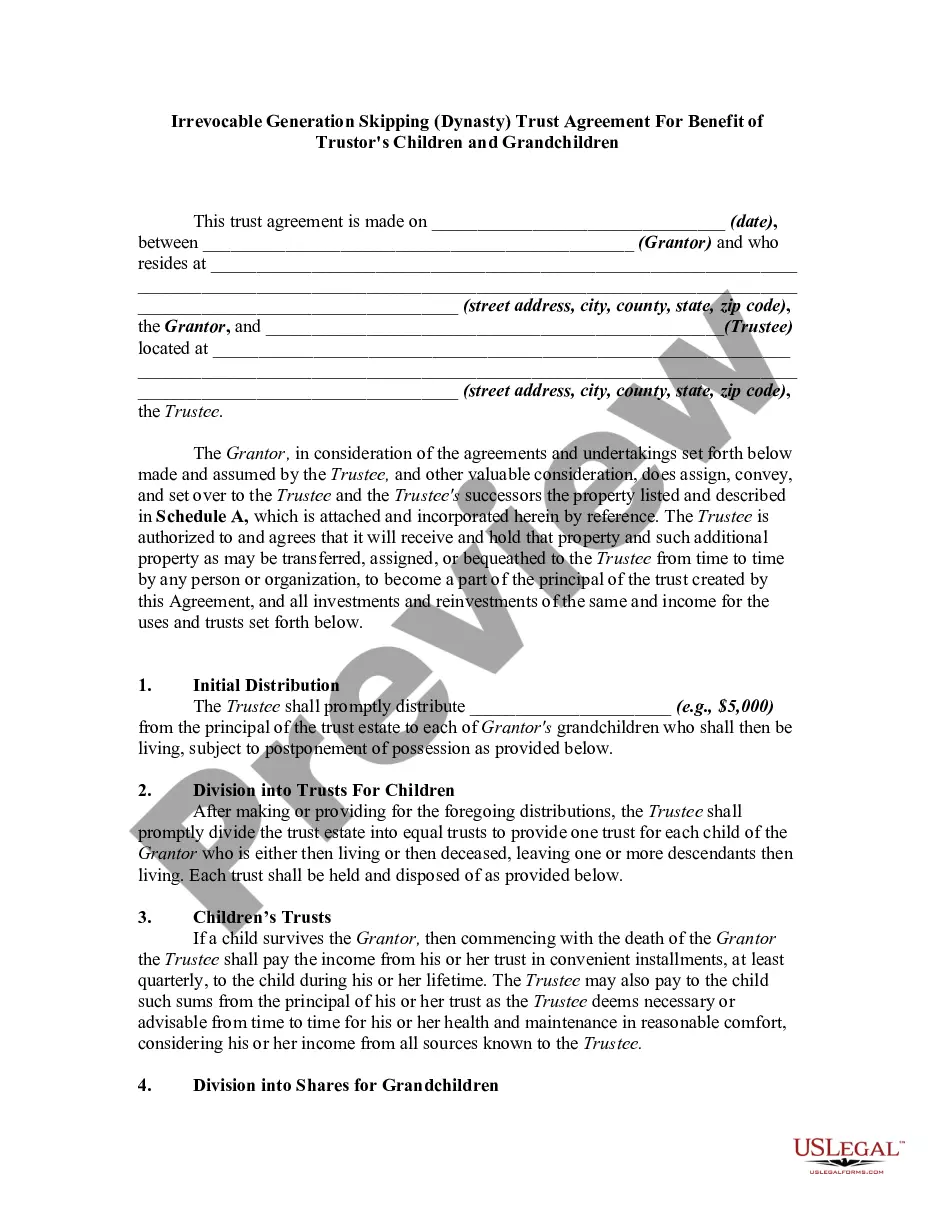
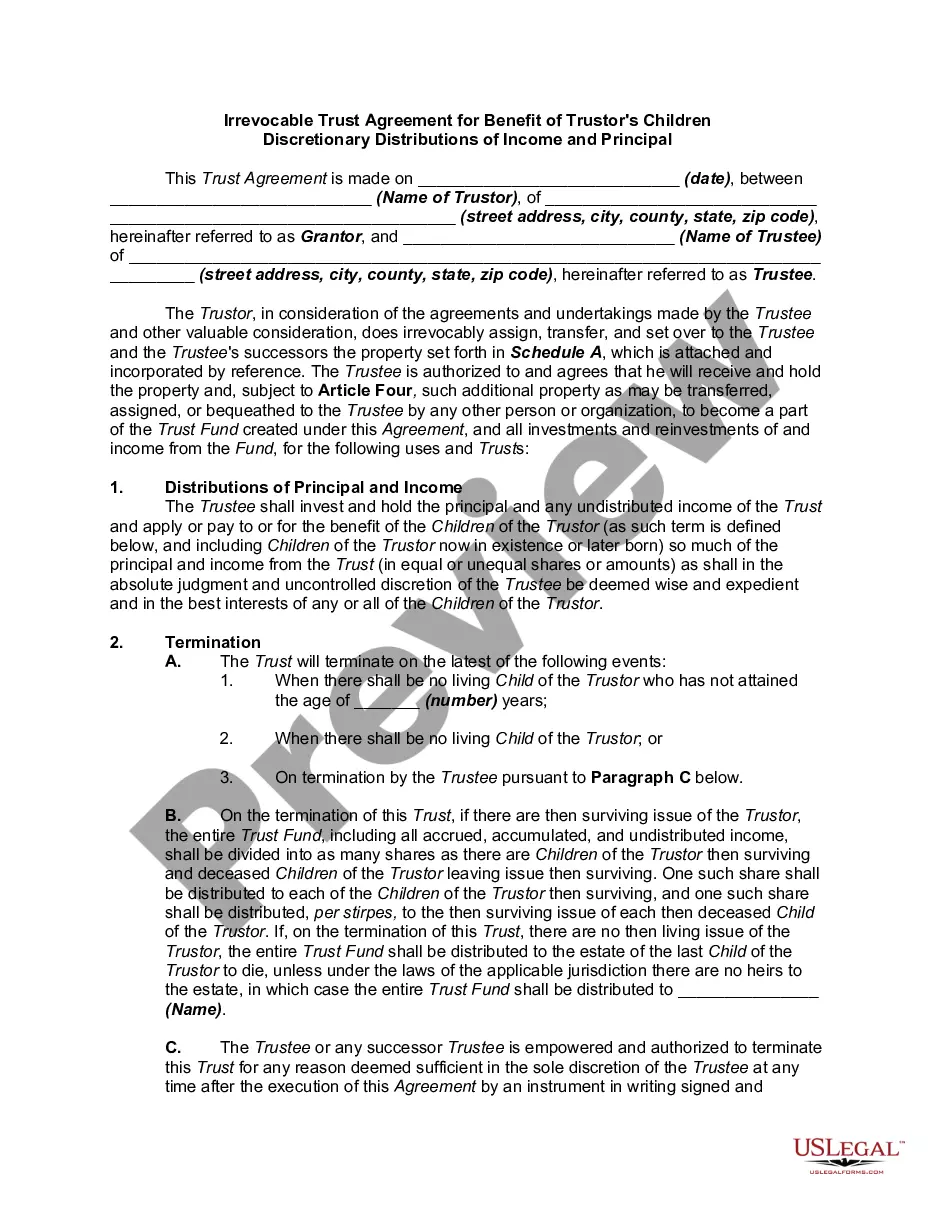
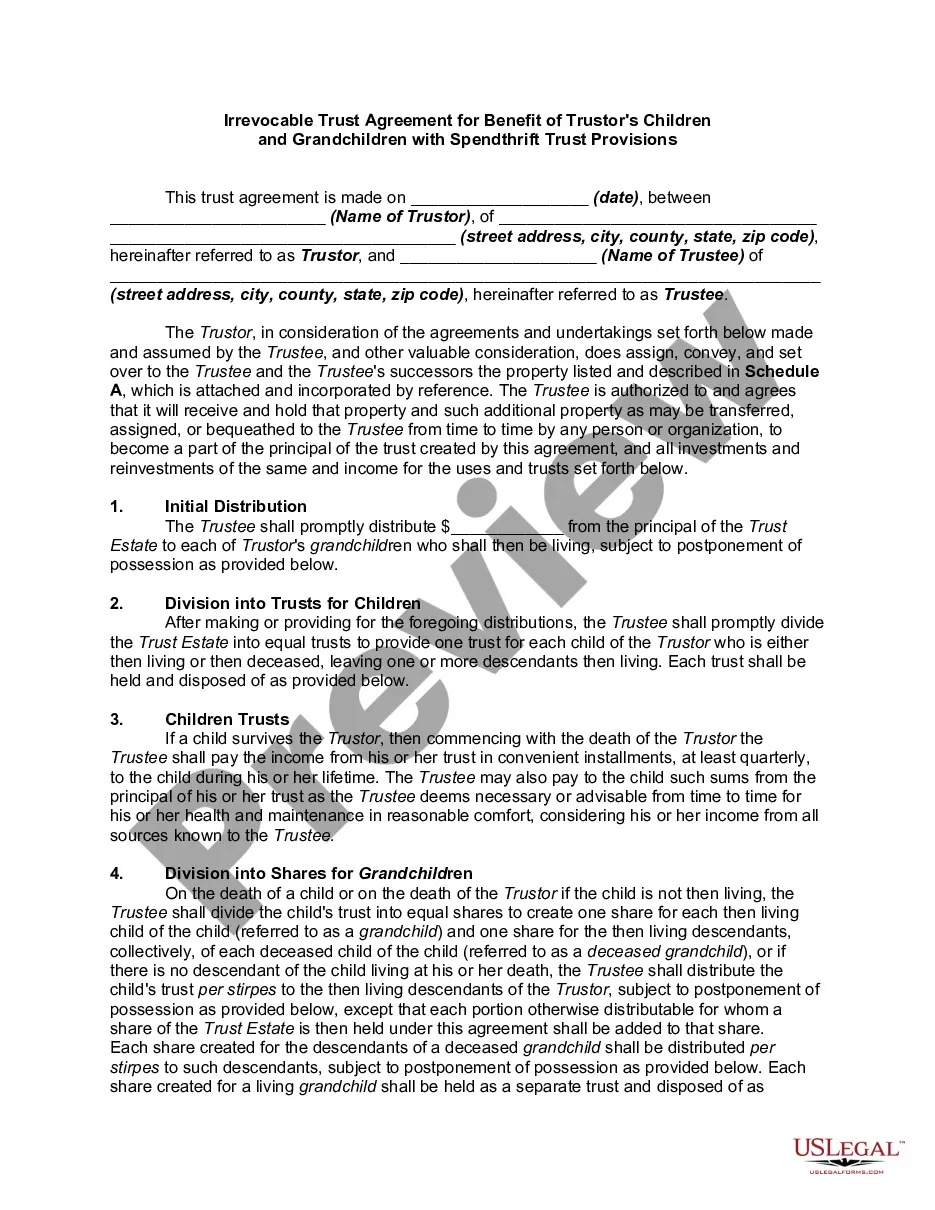
How to fill out Irrevocable Trust Agreement For Benefit Of Trustor's Children And Grandchildren?
It’s clear that you cannot instantly become a legal authority, nor can you swiftly learn how to draft Irrevocable Form Trust Formation without possessing specialized knowledge.
Drafting legal documents is a lengthy process that necessitates specific training and expertise. Therefore, why not let the professionals handle the creation of the Irrevocable Form Trust Formation.
With US Legal Forms, one of the most extensive collections of legal documents, you can discover anything from court filings to templates for internal corporate communication. We recognize how vital compliance and adherence to federal and local statutes and regulations are.
Click Buy now. Once the payment is processed, you can access the Irrevocable Form Trust Formation, complete it, print it out, and send or mail it to the necessary parties or entities.
You can revisit your documents from the My documents tab at any time. If you’re an existing customer, you can simply Log In, and find and download the template from the same tab.
- Begin with our platform and obtain the document you need in just a few minutes.
- Utilize the search bar at the top of the page to find the form you require.
- Preview if available and read the accompanying description to determine if Irrevocable Form Trust Formation is what you’re looking for.
- If you need a different form, initiate your search again.
- Create a free account and select a subscription plan to purchase the template.
Form popularity
FAQ
One example of an irrevocable trust is a special needs trust. This type of trust is designed to provide for an individual with disabilities while allowing them to remain eligible for government benefits. Once the special needs trust is set up, the assets cannot be removed or altered, ensuring long-term financial support. Exploring options for irrevocable form trust formation can provide you with various examples tailored to your specific situation.
What is the 21-year rule? Family trusts created during someone's lifetime are deemed to dispose of their property every 21 years. Although the trust is deemed to have disposed of property for tax purposes, an actual disposition typically does not occur.
To transfer cash or securities, the trustee will open an account in the trust's name, and the grantor will instruct his or her bank or broker to move the funds from his or her account to the trust's account. For real estate, a deed is used to transfer legal title of the property from the grantor to the trust.
Disadvantages of Irrevocable Trusts Fairly Rigid terms: They are not very flexible. Once the terms are established, they can be difficult to change. The Three-Year Rule: If you include life insurance in an irrevocable trust and pass away within three years, the proceeds return to your estate and become taxable.
Irrevocable trusts are generally set up to minimize estate taxes, access government benefits, and protect assets. This is in contrast to a revocable trust, which allows the grantor to modify the trust, but loses certain benefits such as creditor protection.
Yes, once the trust grantor becomes incapacitated or dies, his revocable trust is now irrevocable, meaning that generally the terms of the trust cannot be changed or revoked going forward. This is also true of trusts established by the grantor with the intention that they be irrevocable from the start.