Form Trust Irrevocable With Life Estate
Description
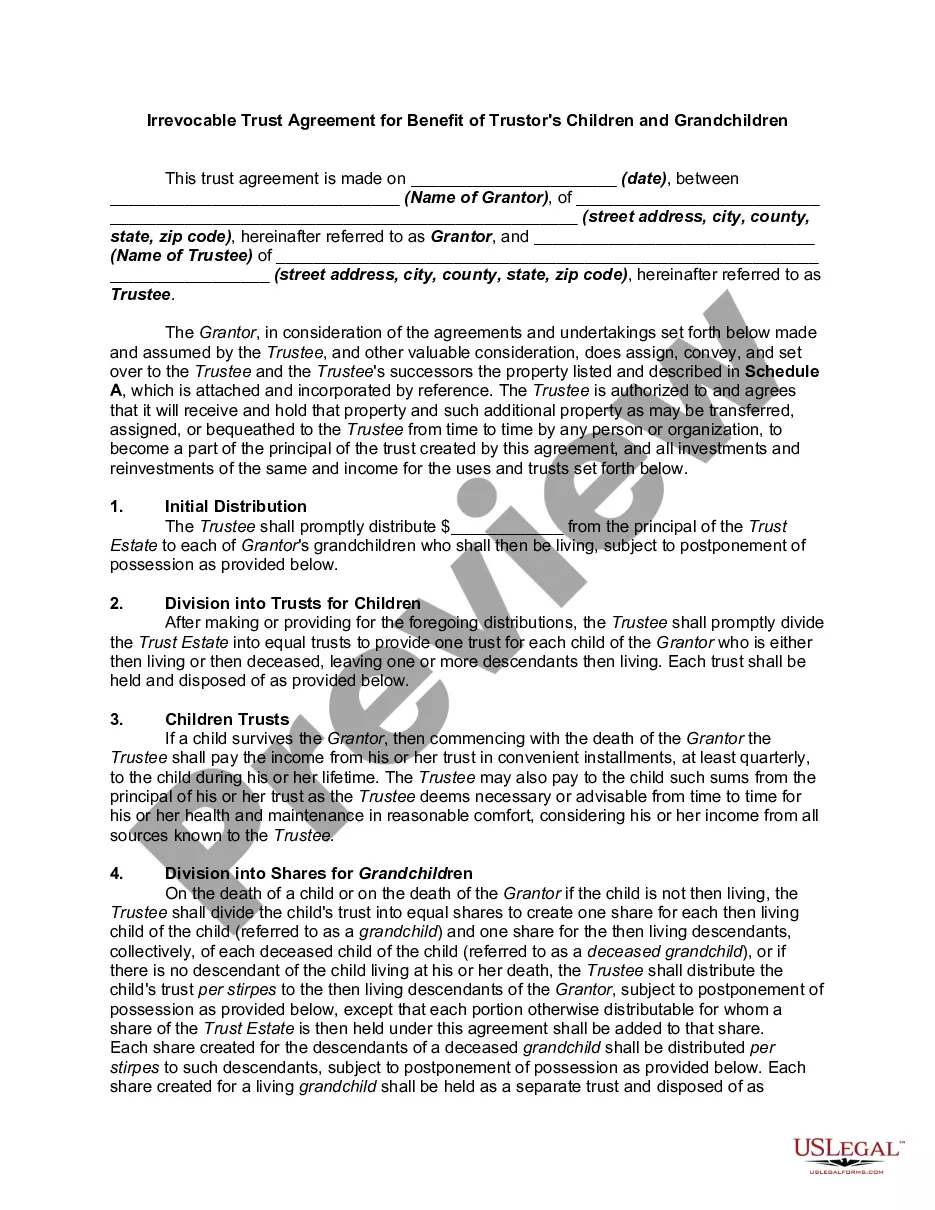
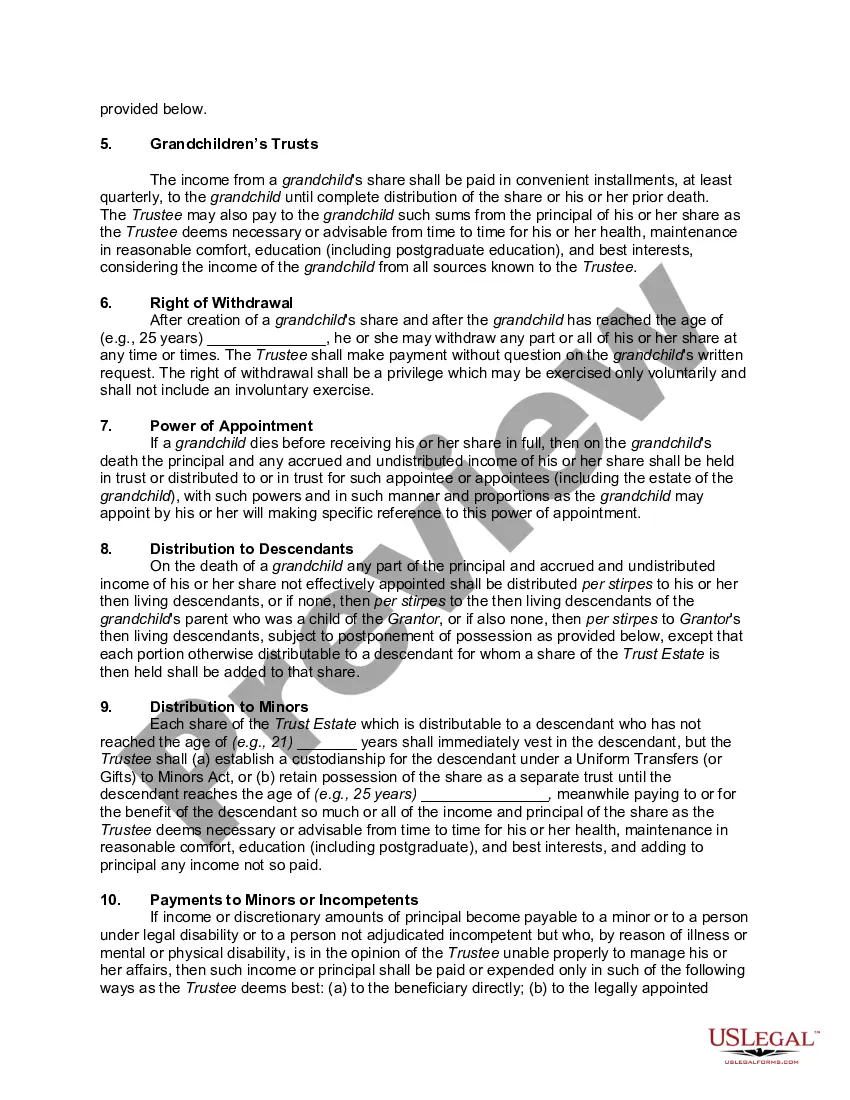
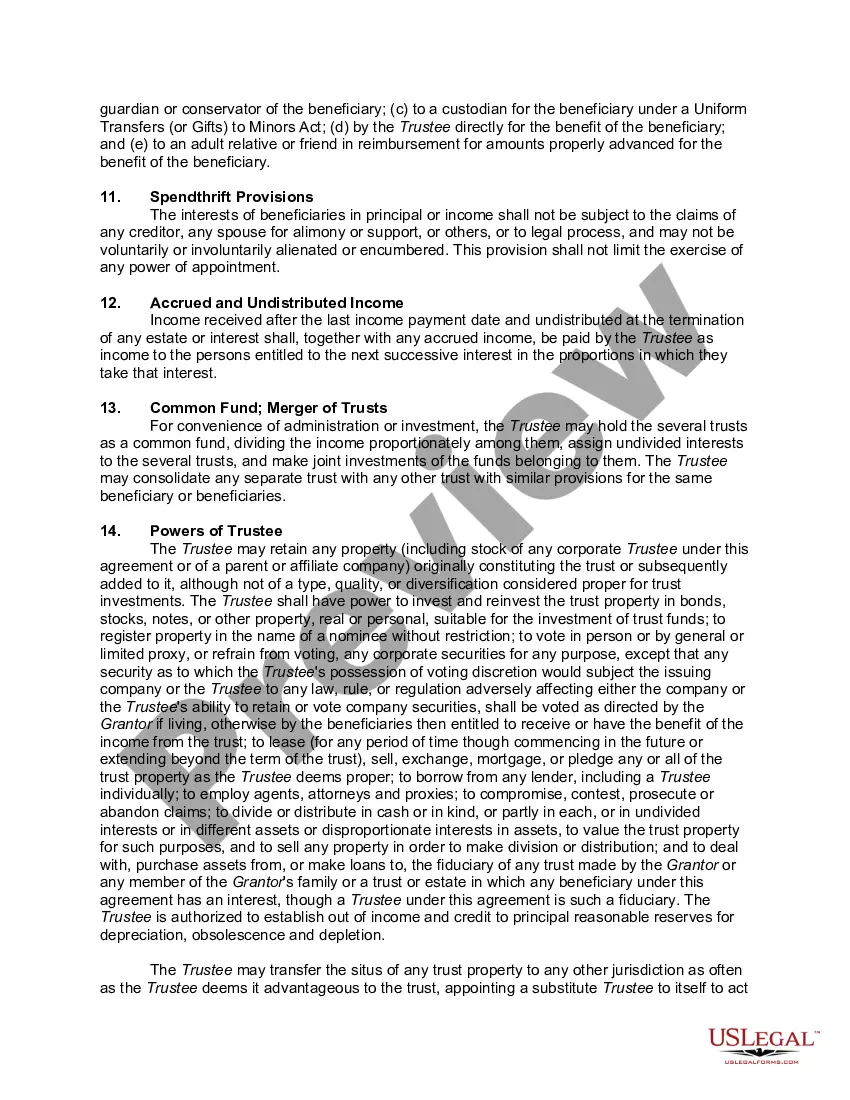
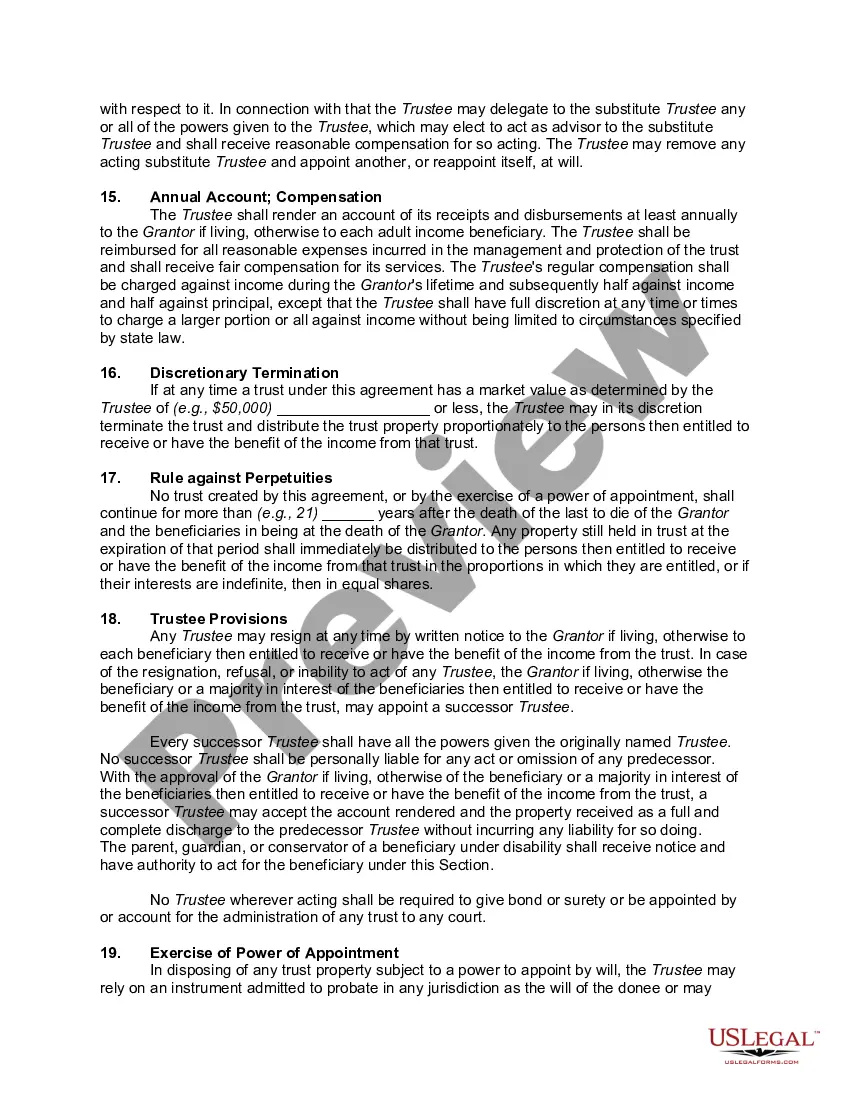

Get your form ready online
Our built-in tools help you complete, sign, share, and store your documents in one place.
Make edits, fill in missing information, and update formatting in US Legal Forms—just like you would in MS Word.
Download a copy, print it, send it by email, or mail it via USPS—whatever works best for your next step.
Sign and collect signatures with our SignNow integration. Send to multiple recipients, set reminders, and more. Go Premium to unlock E-Sign.
If this form requires notarization, complete it online through a secure video call—no need to meet a notary in person or wait for an appointment.
We protect your documents and personal data by following strict security and privacy standards.

Make edits, fill in missing information, and update formatting in US Legal Forms—just like you would in MS Word.

Download a copy, print it, send it by email, or mail it via USPS—whatever works best for your next step.

Sign and collect signatures with our SignNow integration. Send to multiple recipients, set reminders, and more. Go Premium to unlock E-Sign.

If this form requires notarization, complete it online through a secure video call—no need to meet a notary in person or wait for an appointment.

We protect your documents and personal data by following strict security and privacy standards.
Looking for another form?
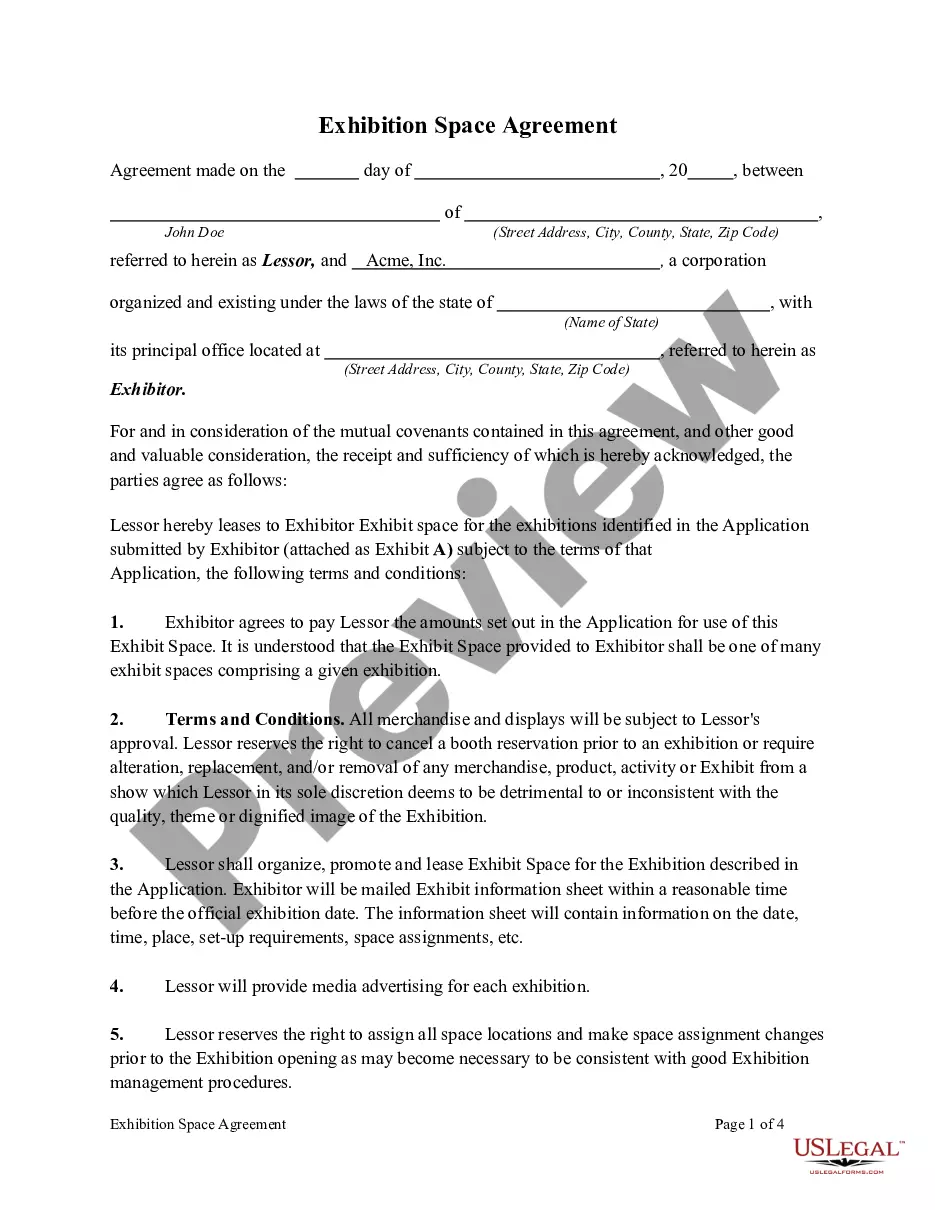



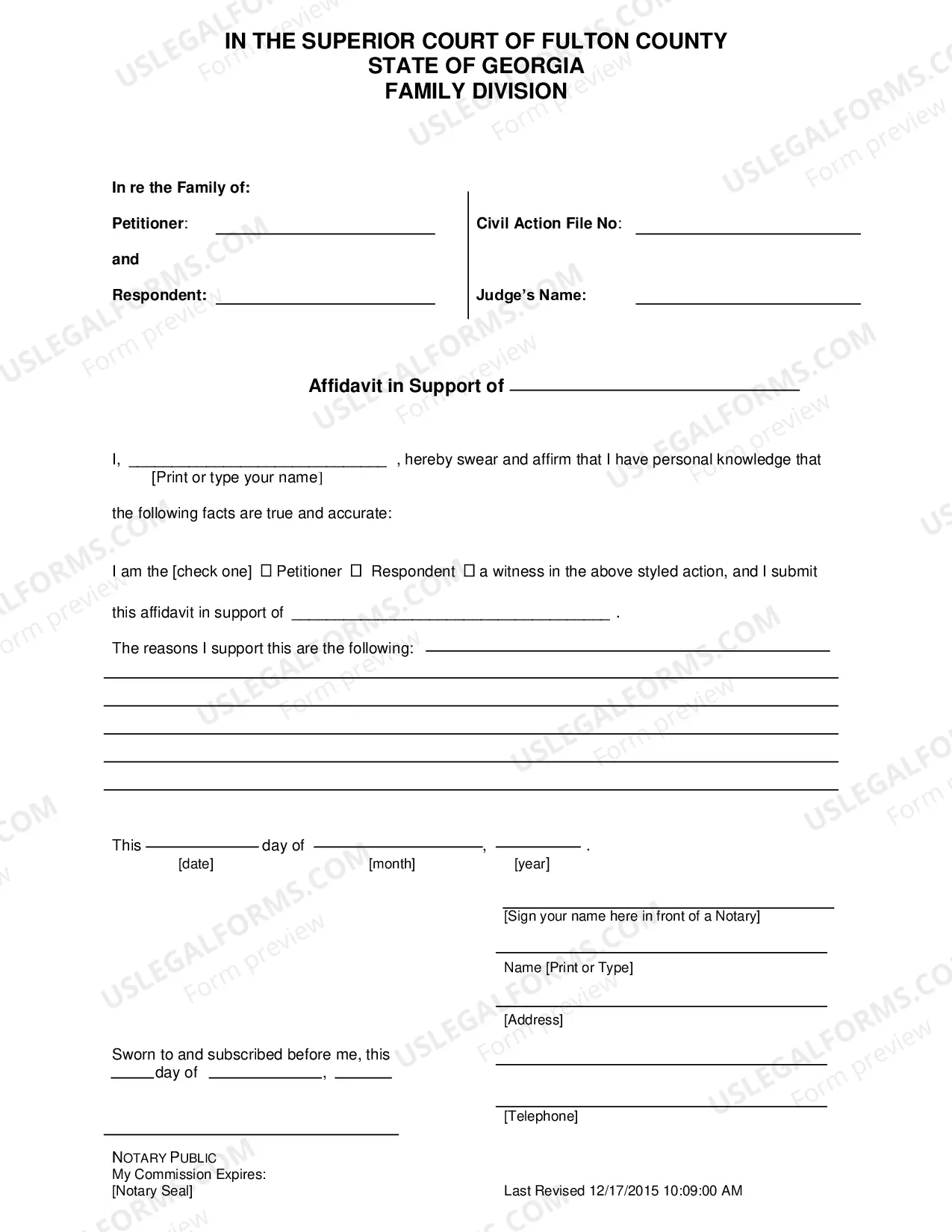



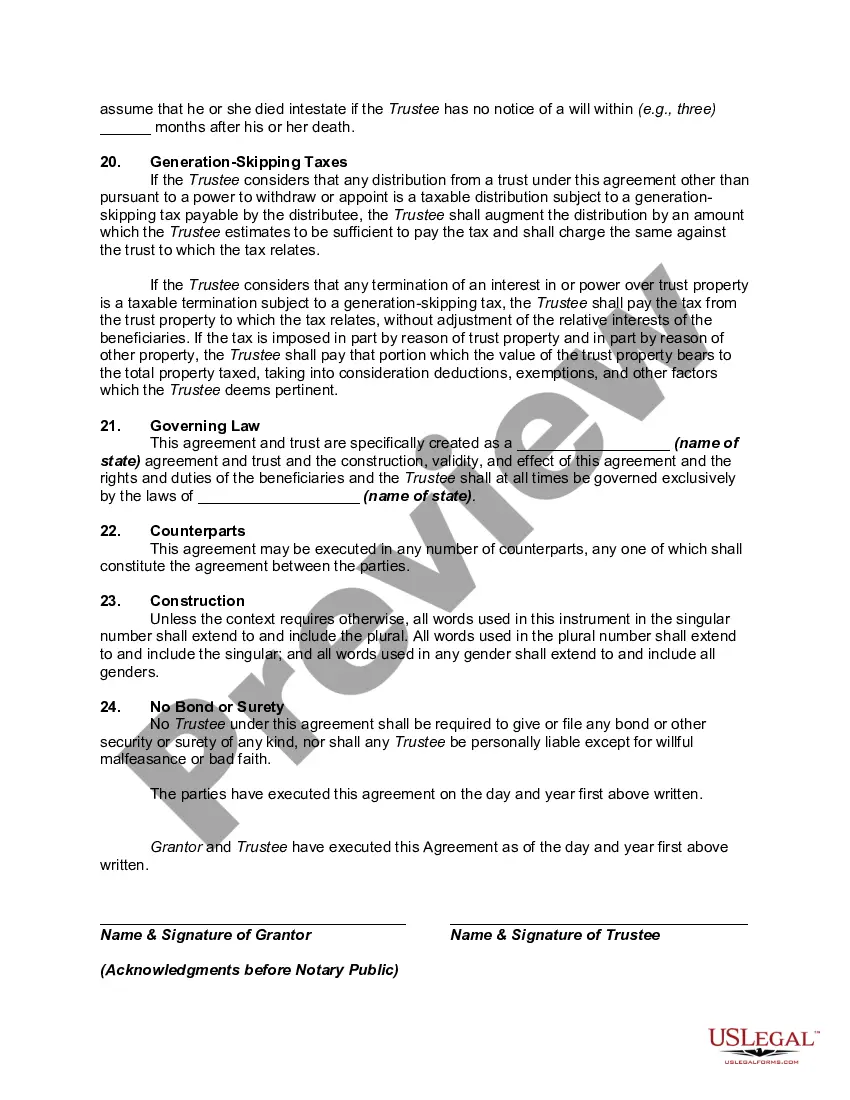
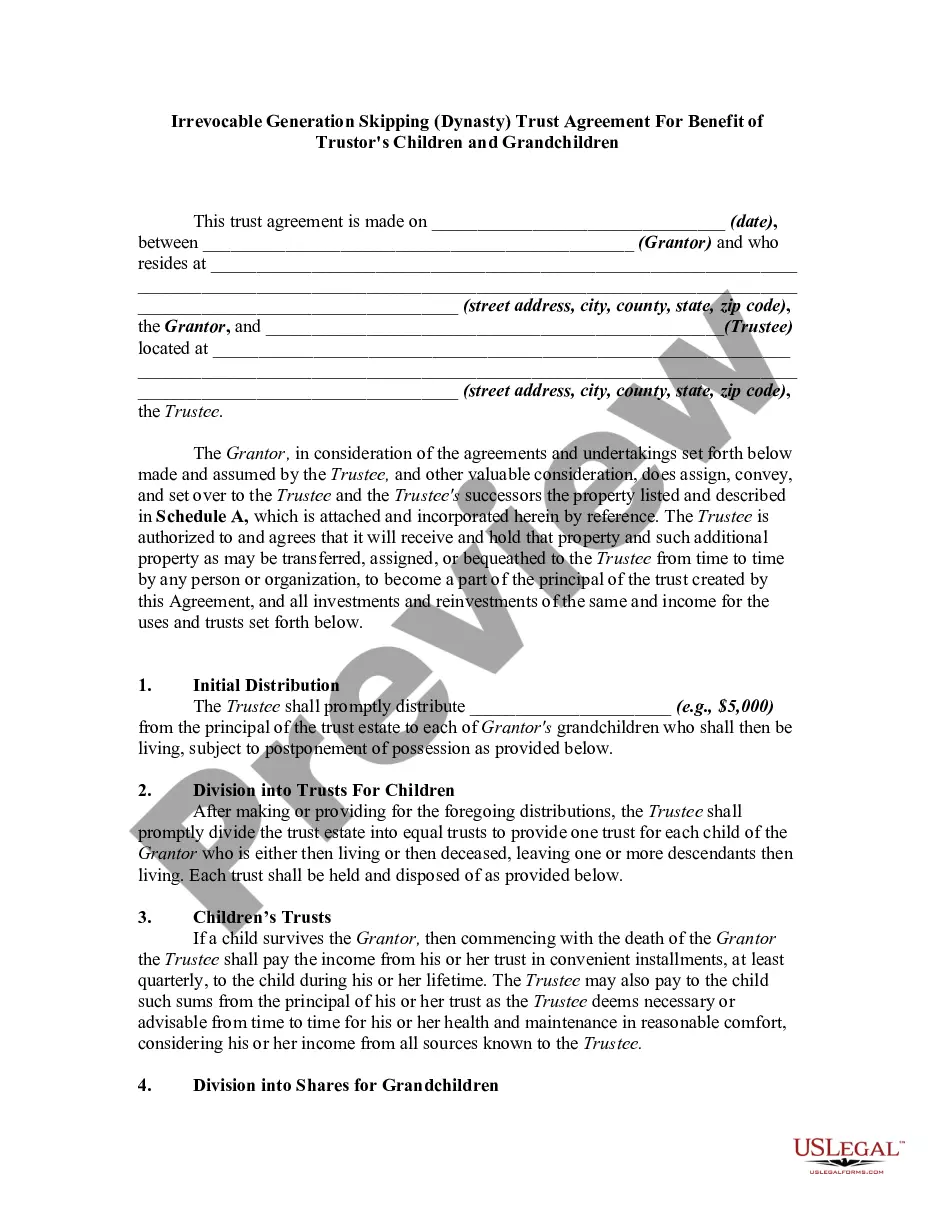
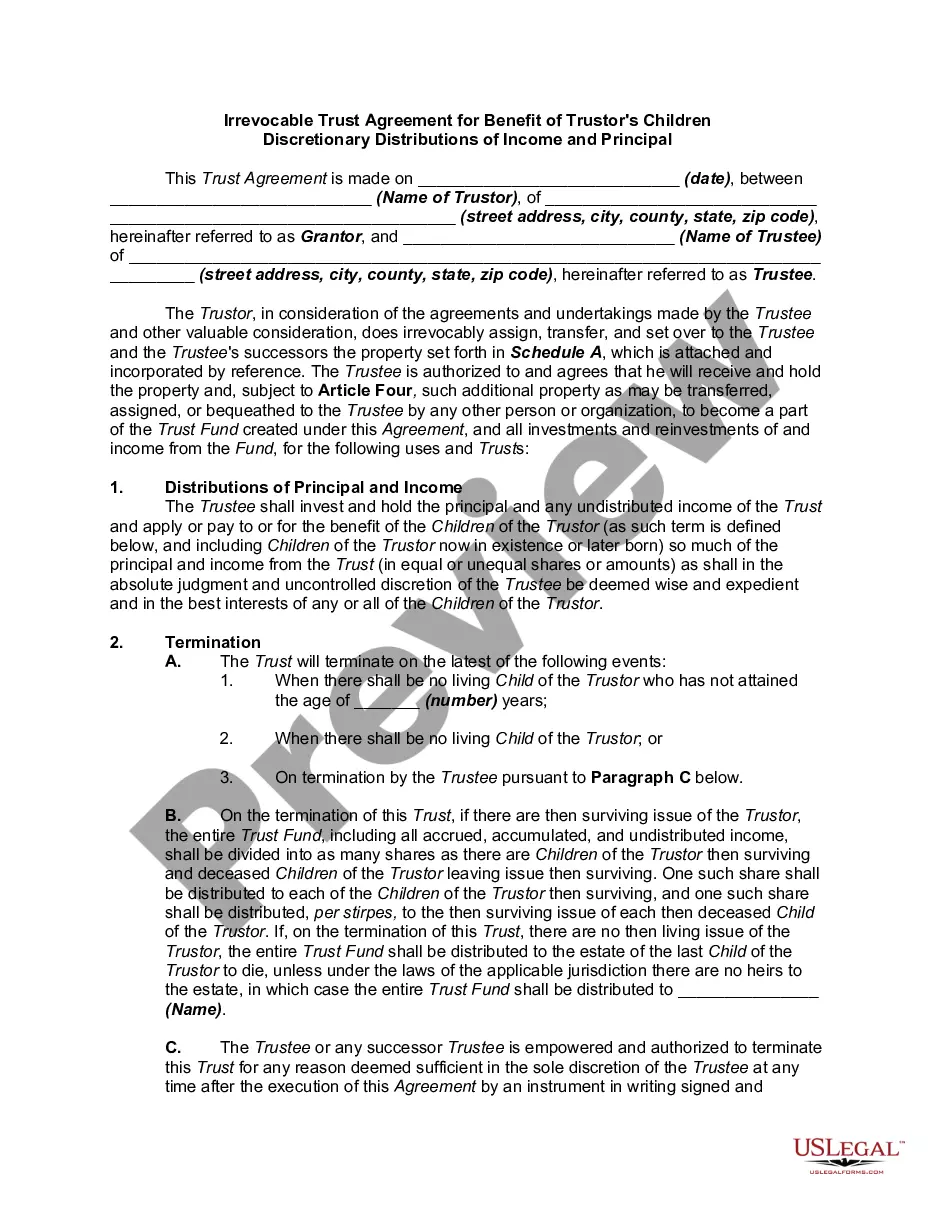
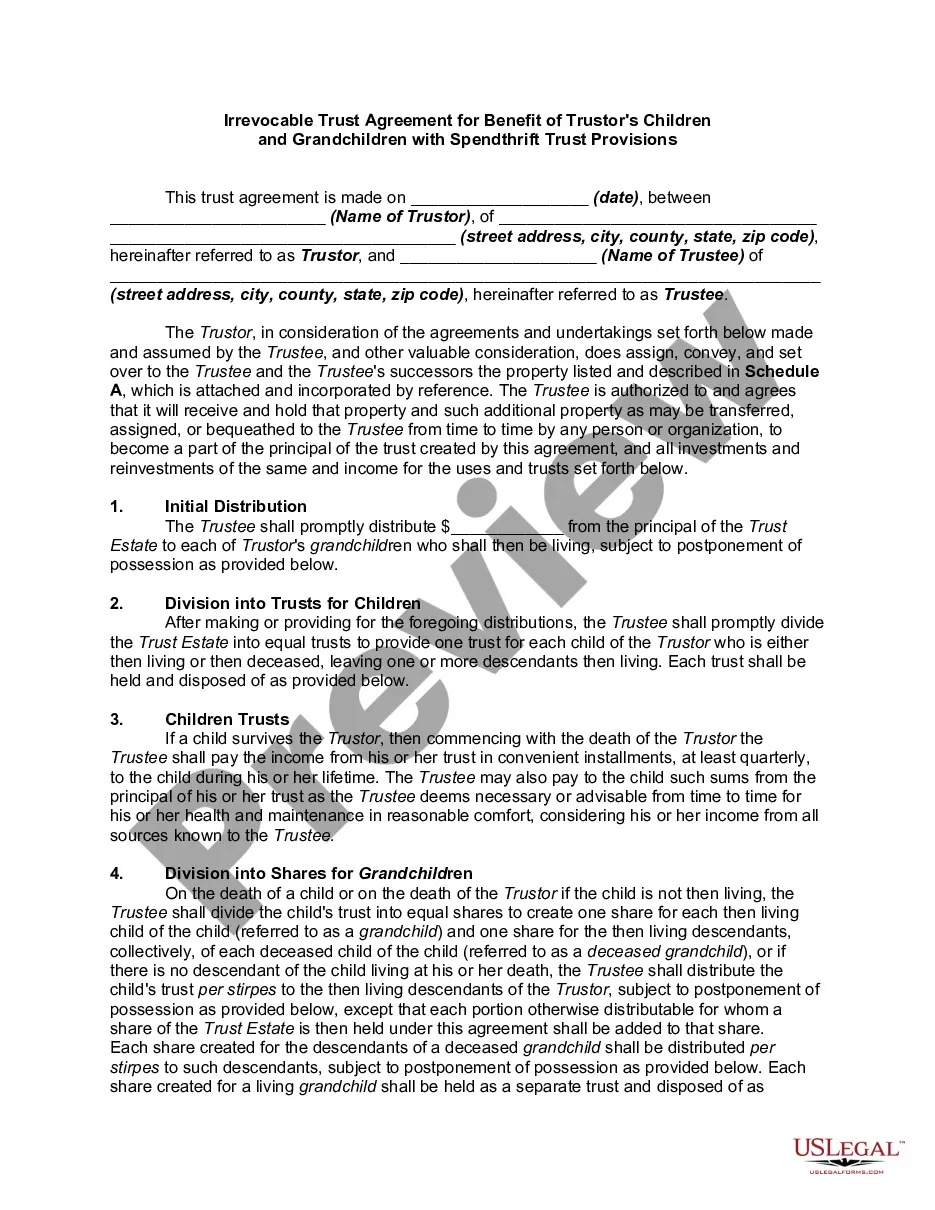
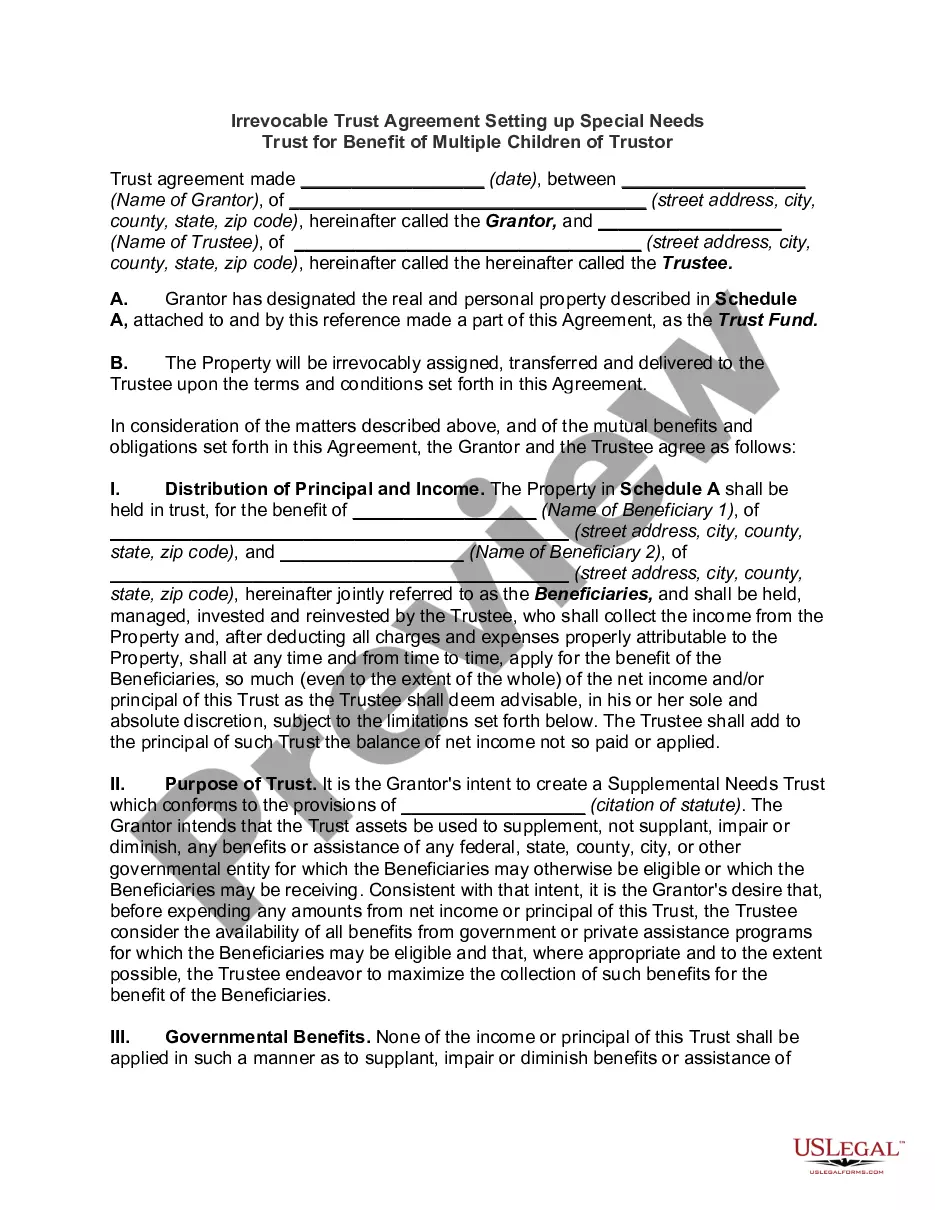
How to fill out Irrevocable Trust Agreement For Benefit Of Trustor's Children And Grandchildren?
Creating legal documents from the ground up can frequently feel daunting.
Certain situations may necessitate extensive investigation and substantial financial commitment.
If you’re looking for a simpler and more affordable method for preparing Form Trust Irrevocable With Life Estate or any other paperwork without having to navigate through obstacles, US Legal Forms is consistently available to you.
Our online collection of over 85,000 current legal documents covers nearly every aspect of your financial, legal, and personal needs.
However, before you rush into downloading Form Trust Irrevocable With Life Estate, consider these suggestions: Review the document preview and descriptions to confirm you are looking at the correct document. Ensure the template you select meets the requirements of your state and county. Opt for the appropriate subscription choice to acquire the Form Trust Irrevocable With Life Estate. Download the form and then fill it out, sign it, and print it. US Legal Forms holds a solid reputation and boasts over 25 years of experience. Join us now and simplify your document management!
- With just a few clicks, you can swiftly obtain state- and county-specific templates meticulously crafted for you by our legal experts.
- Utilize our website whenever you require a dependable service through which you can easily find and download the Form Trust Irrevocable With Life Estate.
- If you’re familiar with our services and have previously created an account, simply Log In, select the form, and download it or retrieve it at any later time from the My documents section.
- Not registered yet? No problem. It only takes a few minutes to sign up and explore the library.
Form popularity
FAQ
To create a living trust in New York, create your trust document and sign it in front of a notary public. The final step is to transfer ownership of assets to the trust and the trust is not effective until this occurs.
Assets that should not be used to fund your living trust include: Qualified retirement accounts ? 401ks, IRAs, 403(b)s, qualified annuities. Health saving accounts (HSAs) Medical saving accounts (MSAs) Uniform Transfers to Minors (UTMAs) Uniform Gifts to Minors (UGMAs) Life insurance. Motor vehicles.
Revocable living trusts are used to avoid probate and to protect the privacy of the trust owner and beneficiaries of the trust as well as minimize estate taxes. Revocable trusts, however, have several limitations including the expense to have them written up, and they lack features of an irrevocable trust.
Like a Will and a testamentary trust, a Living Trust lets you decide specifically what will happen to your property after you die. You can also use a trust to control how your beneficiaries will spend their inheritance (to reduce the risk they may "blow it" on expensive vacations, cars, gambling, etc.).
How to Get a Copy of a Trust Make a written demand for a copy of the Trust and its amendments, if any; Wait 60 days; and. If you do not receive a copy of the Trust within 60 days of making your written demand, file a petition with the probate court.
Limitations: Requires adherence to trust document's instructions on asset assignments. Joint assets, including certain IRAs and retirement plans, cannot be placed into a one-person trust. No complete tax avoidance: Total avoidance of taxes is rarely possible with living trusts, though there may be ways to reduce them.
The major disadvantages that are associated with trusts are their perceived irrevocability, the loss of control over assets that are put into trust and their costs. In fact trusts can be made revocable, but this generally has negative consequences in respect of tax, estate duty, asset protection and stamp duty.
No. It is a private document which is not recorded. However, if you own any interest in real estate, the new deeds showing trust ownership will be recorded by the law firm for you.