Form Irrevocable Trust With Life Estate
Description

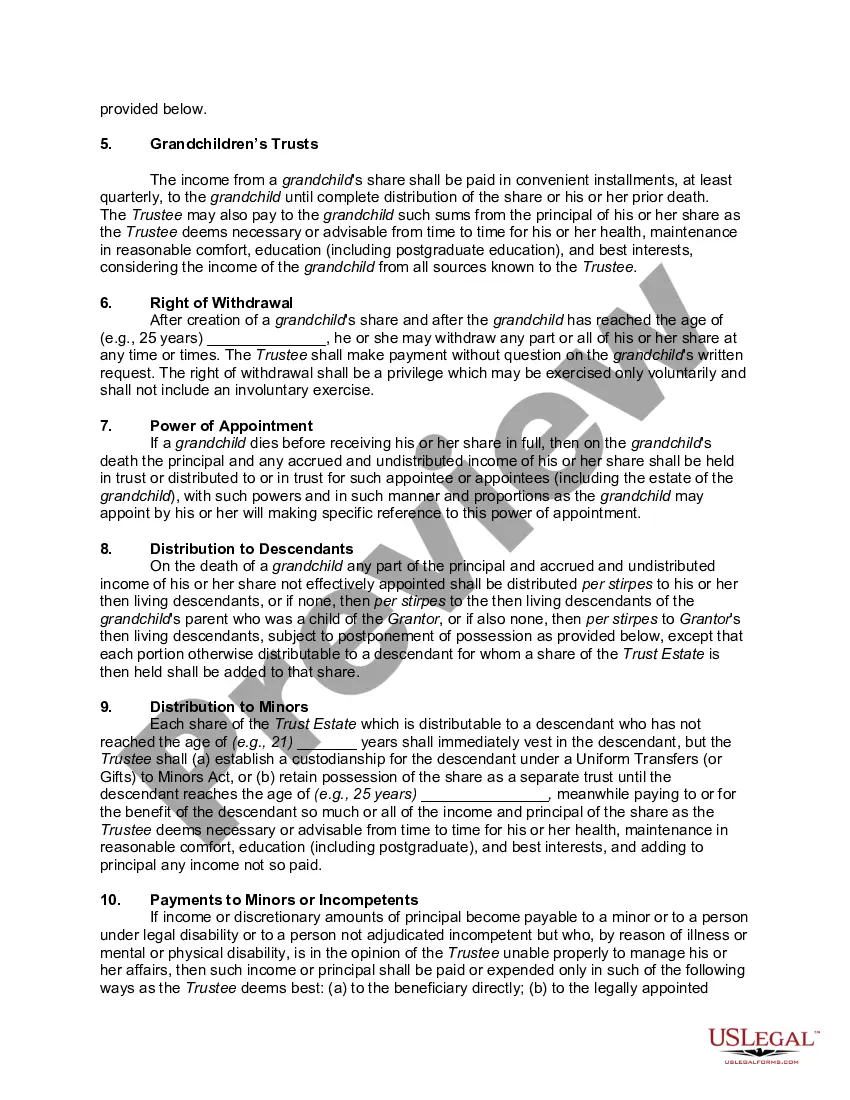
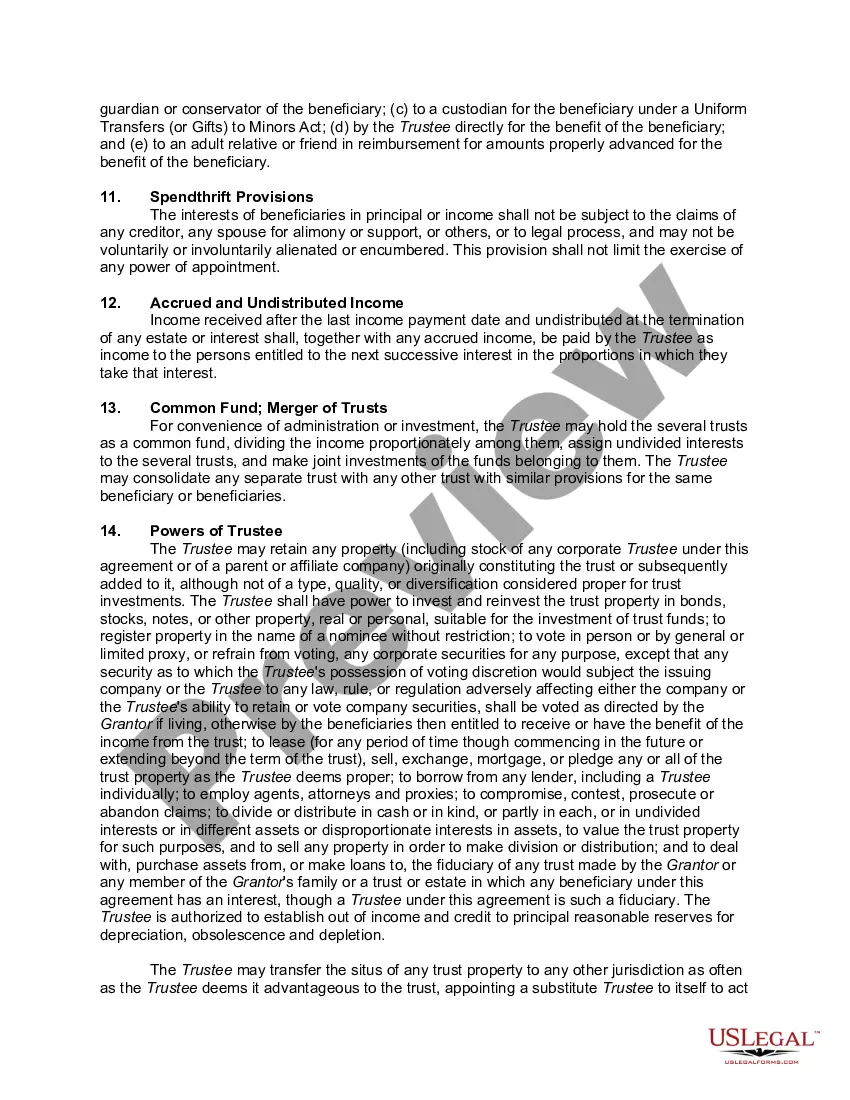
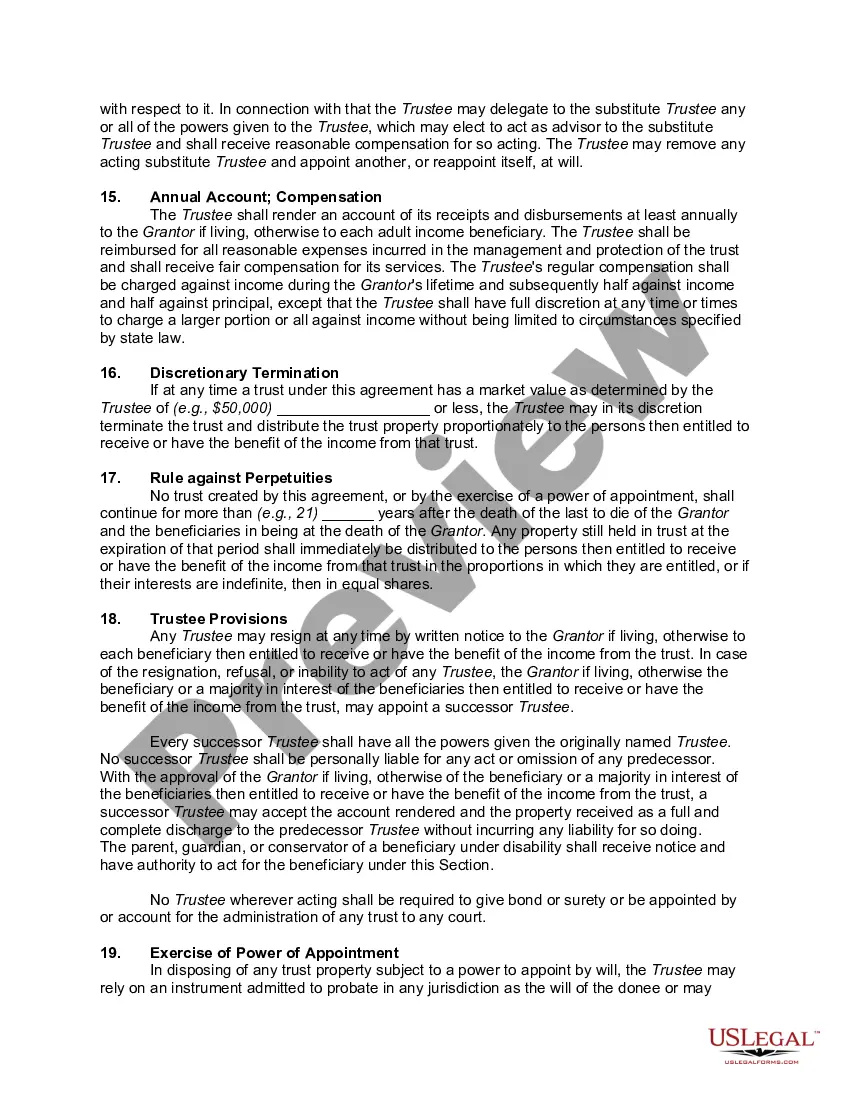
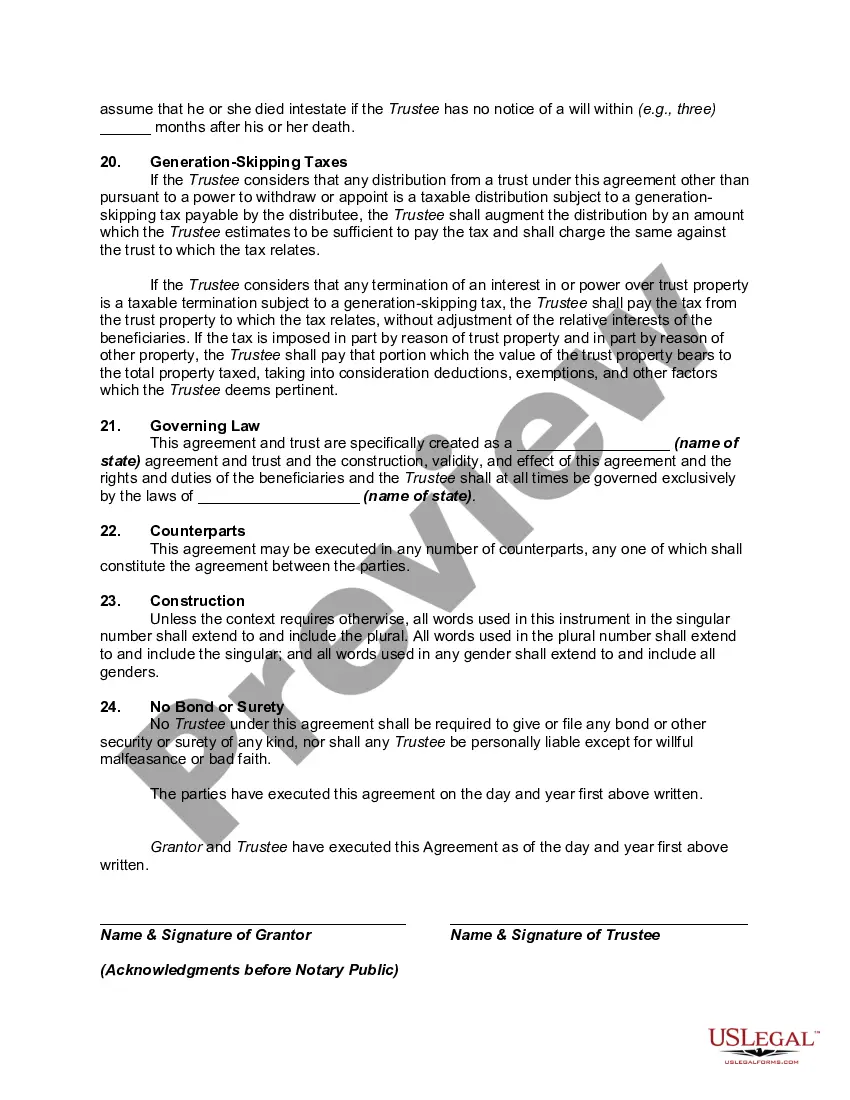



Get your form ready online
Our built-in tools help you complete, sign, share, and store your documents in one place.
Make edits, fill in missing information, and update formatting in US Legal Forms—just like you would in MS Word.
Download a copy, print it, send it by email, or mail it via USPS—whatever works best for your next step.
Sign and collect signatures with our SignNow integration. Send to multiple recipients, set reminders, and more. Go Premium to unlock E-Sign.
If this form requires notarization, complete it online through a secure video call—no need to meet a notary in person or wait for an appointment.
We protect your documents and personal data by following strict security and privacy standards.

Make edits, fill in missing information, and update formatting in US Legal Forms—just like you would in MS Word.

Download a copy, print it, send it by email, or mail it via USPS—whatever works best for your next step.

Sign and collect signatures with our SignNow integration. Send to multiple recipients, set reminders, and more. Go Premium to unlock E-Sign.

If this form requires notarization, complete it online through a secure video call—no need to meet a notary in person or wait for an appointment.

We protect your documents and personal data by following strict security and privacy standards.
Looking for another form?







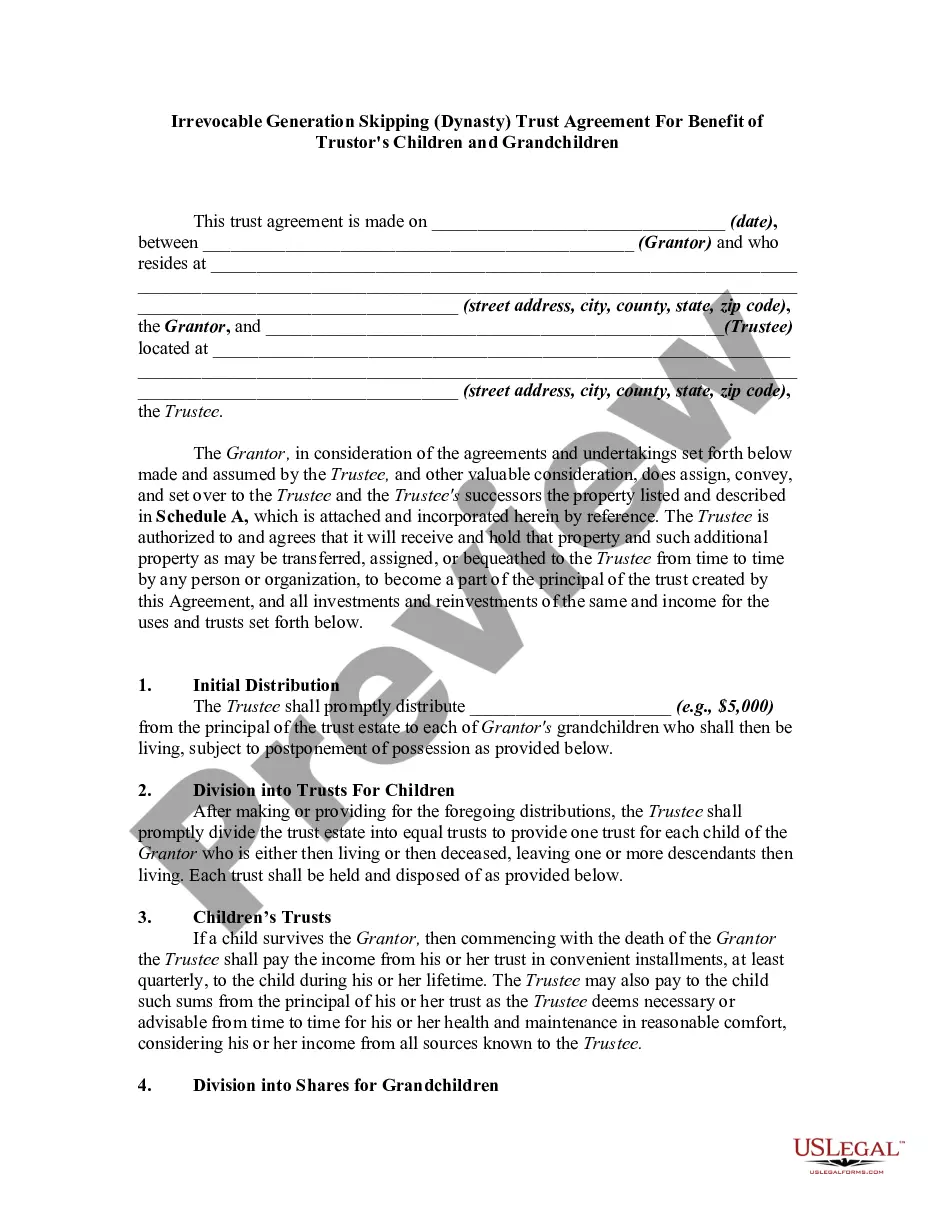
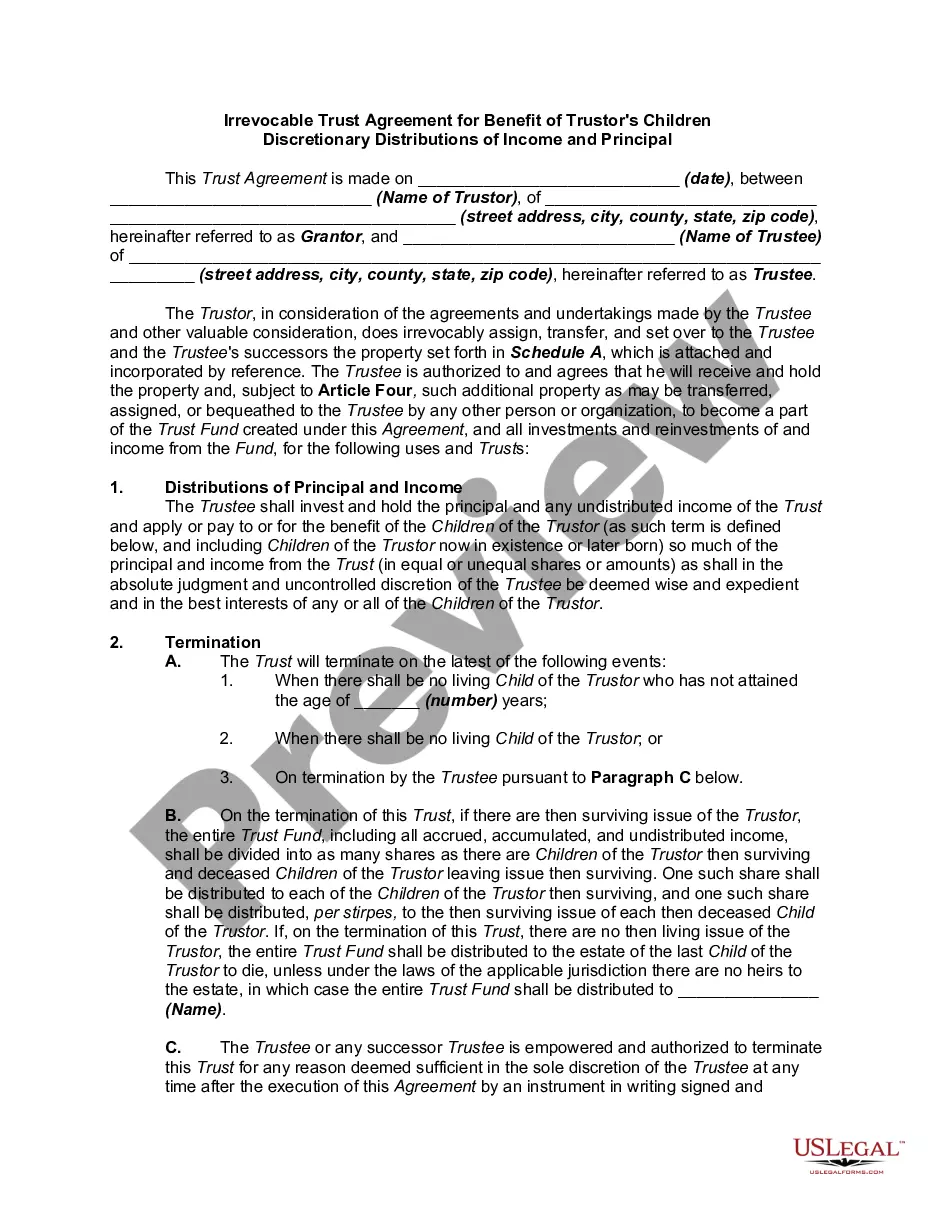
How to fill out Irrevocable Trust Agreement For Benefit Of Trustor's Children And Grandchildren?
Locating a reliable source for obtaining the latest and most pertinent legal samples is a significant part of dealing with bureaucracy.
Acquiring the appropriate legal documents necessitates accuracy and meticulousness, which highlights the importance of sourcing Form Irrevocable Trust With Life Estate exclusively from trustworthy providers, such as US Legal Forms. An incorrect template can consume your time and hinder your current situation. With US Legal Forms, you have minimal concerns.
Eliminate the hassle associated with your legal paperwork. Browse the comprehensive US Legal Forms catalog where you can locate legal samples, assess their relevance to your situation, and download them immediately.
- Utilize the library navigation or search bar to locate your sample.
- Examine the form’s description to confirm if it meets the requirements of your state and county.
- Check the form preview, if accessible, to ensure the template aligns with your needs.
- Return to your search and find the appropriate template if the Form Irrevocable Trust With Life Estate is unsuitable.
- If you are confident about the form’s applicability, download it.
- As an authorized user, click Log in to verify and access your chosen forms in My documents.
- If you do not possess an account yet, click Buy now to acquire the form.
- Select the payment plan that suits your needs.
- Proceed to the registration to complete your purchase.
- Complete your acquisition by selecting a payment method (credit card or PayPal).
- Choose the document format for downloading Form Irrevocable Trust With Life Estate.
- Once the form is on your device, you can edit it using the editor or print it out and fill it out by hand.
Form popularity
FAQ
Irrevocable trusts are generally set up to minimize estate taxes, access government benefits, and protect assets. This is in contrast to a revocable trust, which allows the grantor to modify the trust, but loses certain benefits such as creditor protection.
Upon the grantor's death, the trustee continues managing the irrevocable trust or distributes the assets ing to the trust's terms. Unlike a will, an irrevocable trust avoids probate, often expediting the asset distribution process and making it an appealing option for some families.
To transfer cash or securities, the trustee will open an account in the trust's name, and the grantor will instruct his or her bank or broker to move the funds from his or her account to the trust's account. For real estate, a deed is used to transfer legal title of the property from the grantor to the trust.
Disadvantages of Irrevocable Trusts Fairly Rigid terms: They are not very flexible. Once the terms are established, they can be difficult to change. The Three-Year Rule: If you include life insurance in an irrevocable trust and pass away within three years, the proceeds return to your estate and become taxable.
The single biggest reason to avoid using an irrevocable trust is if you want to maintain full control over the trust property. While exceptions exist, you should assume for estate planning purposes that whatever property you place into an irrevocable trust is no longer yours.