Agreement Irrevocable Trust With Life Insurance
Description
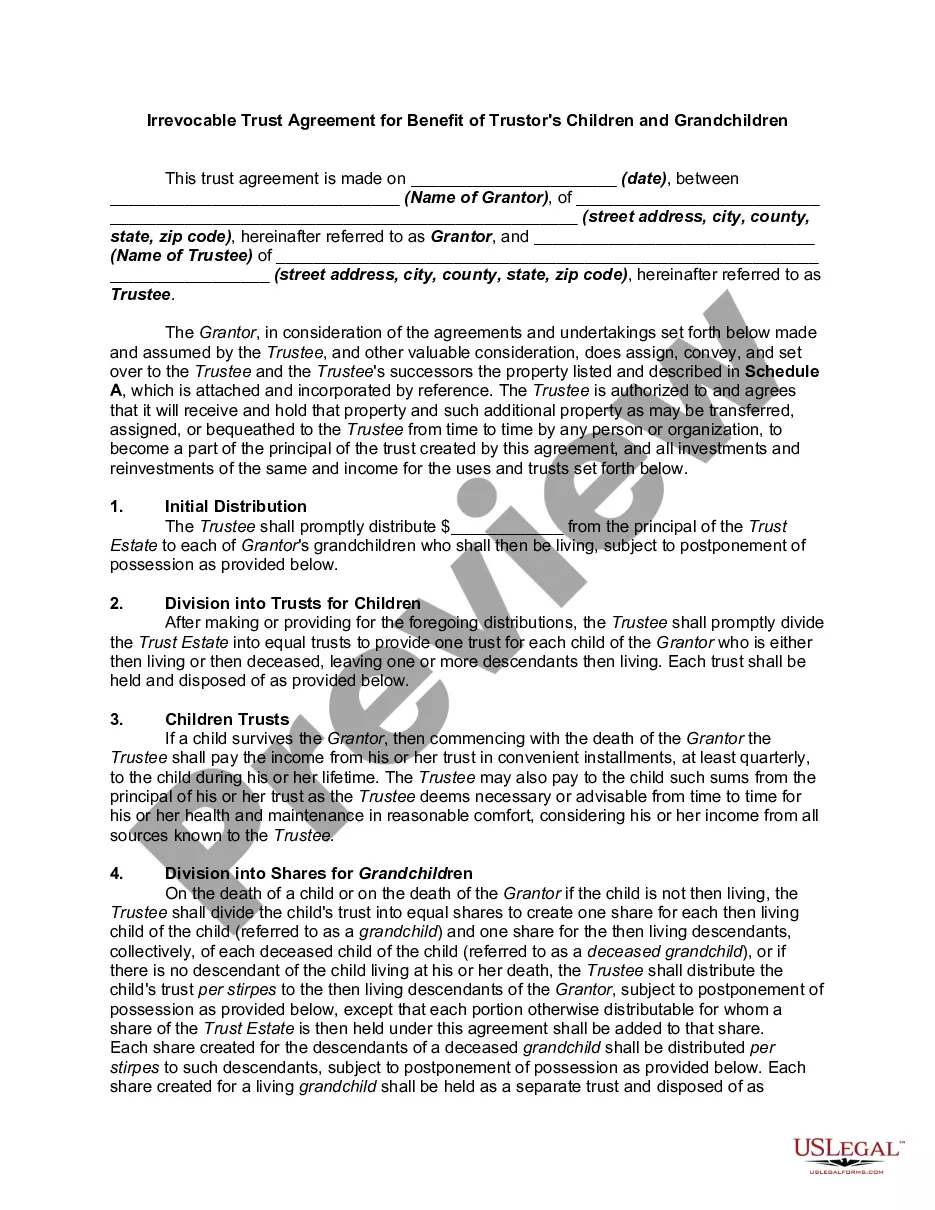
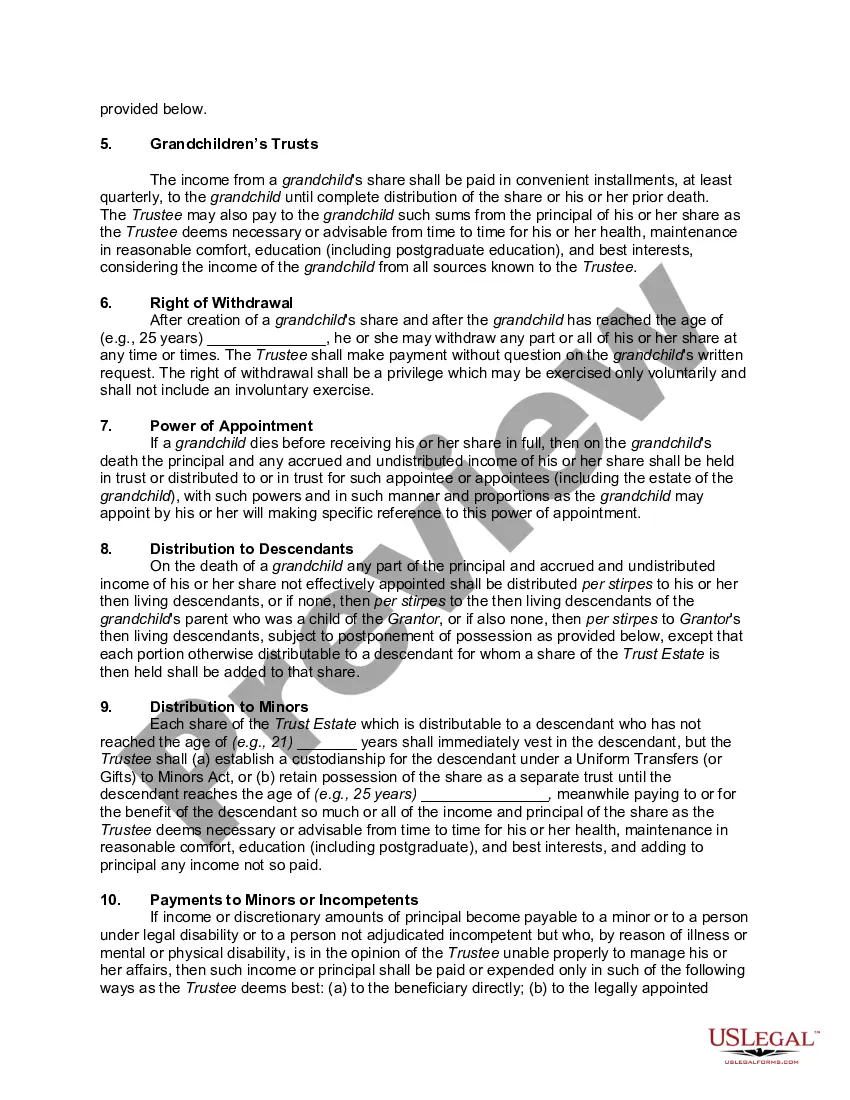
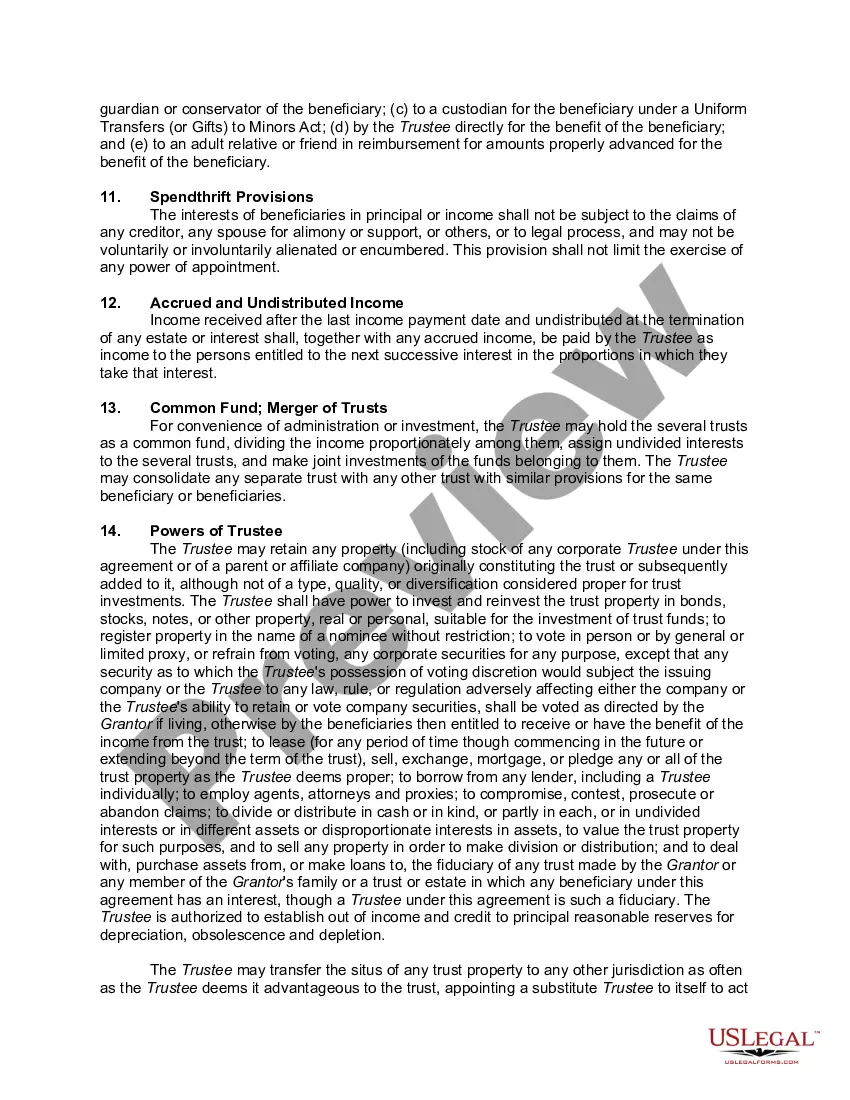
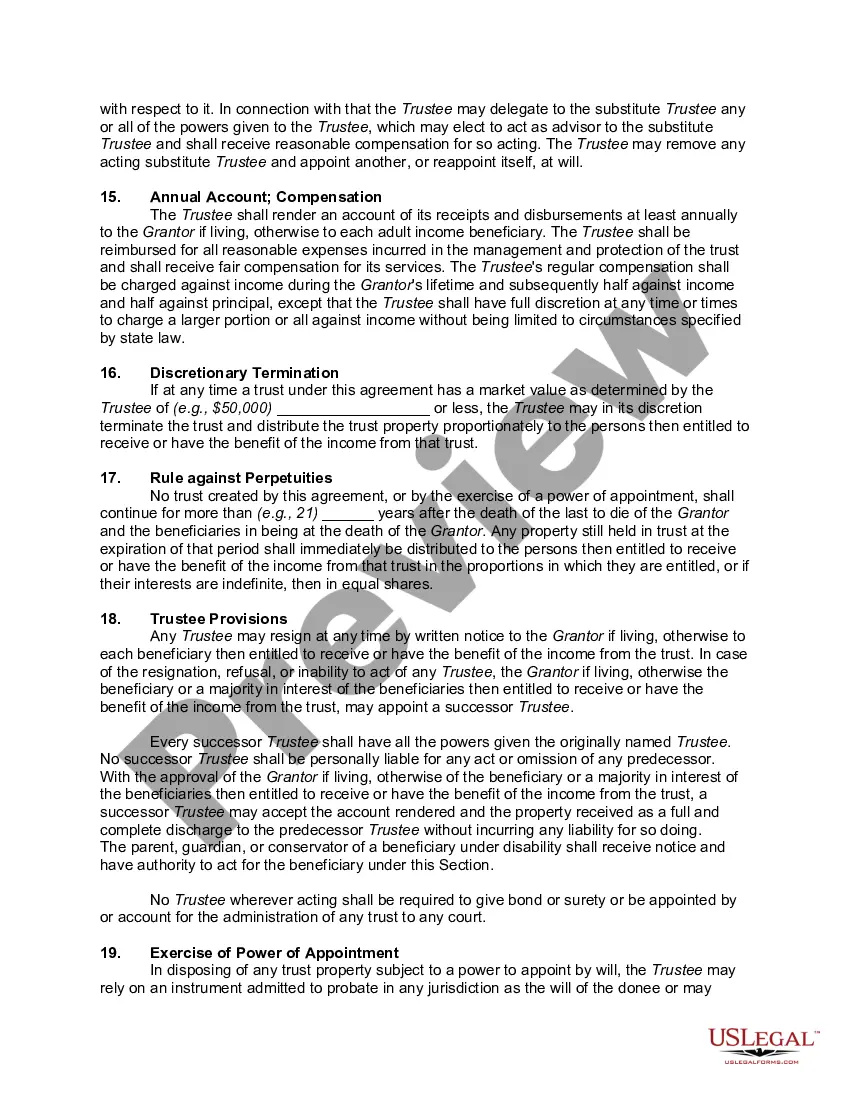
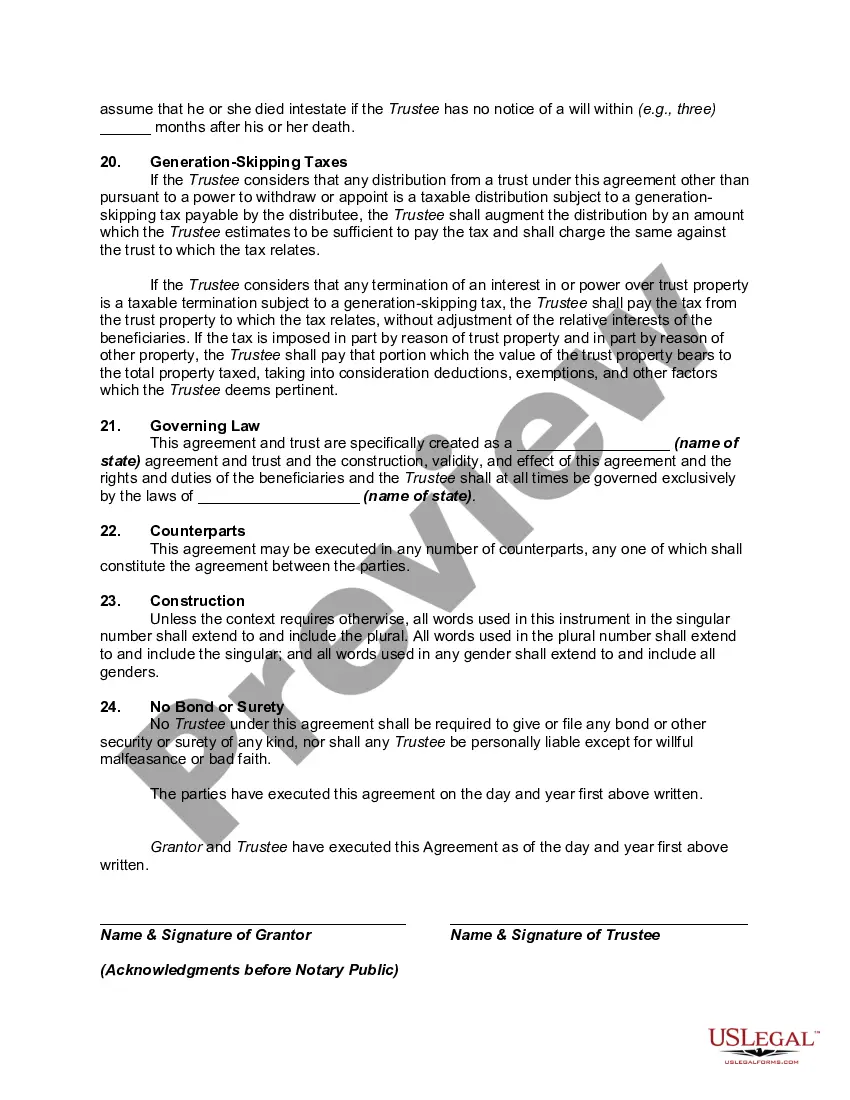

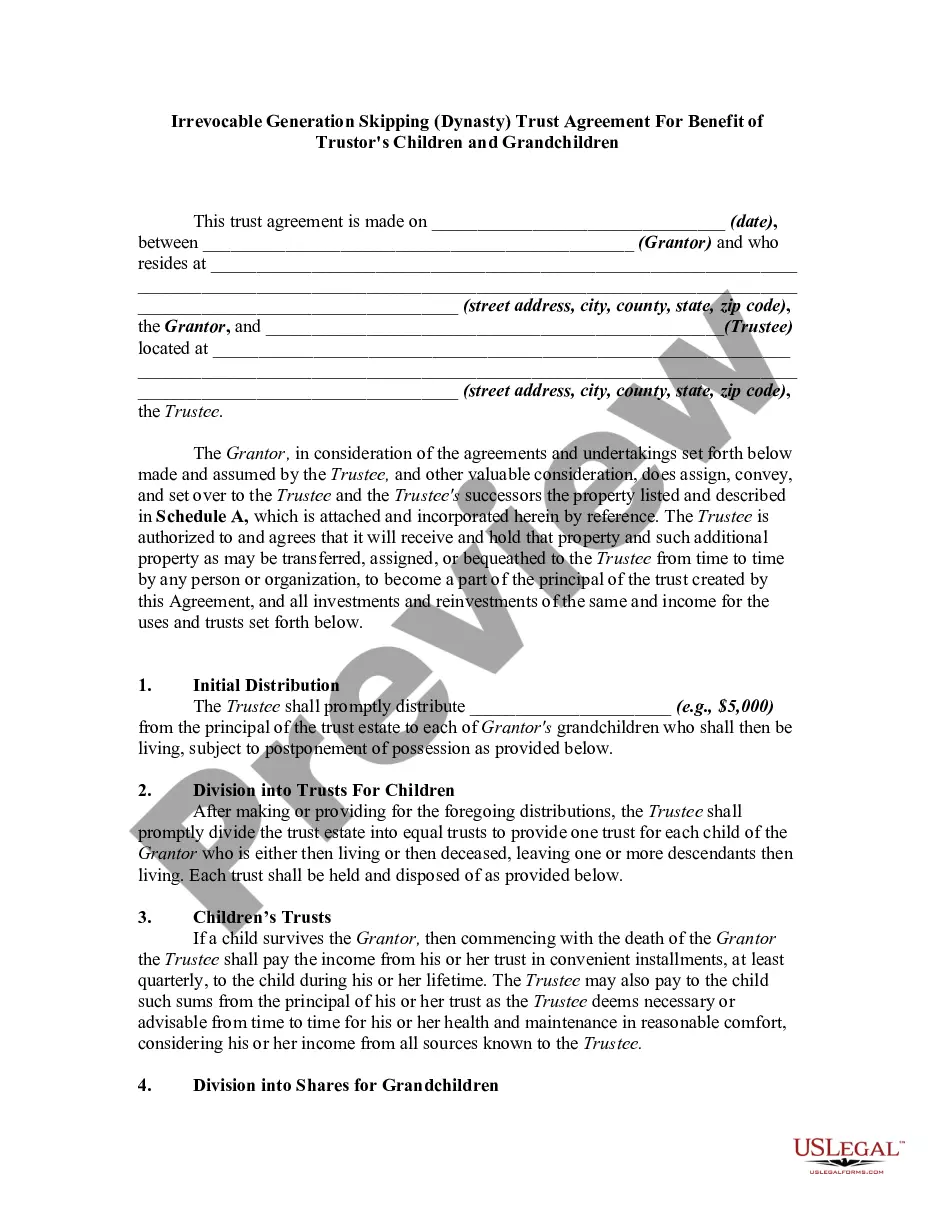
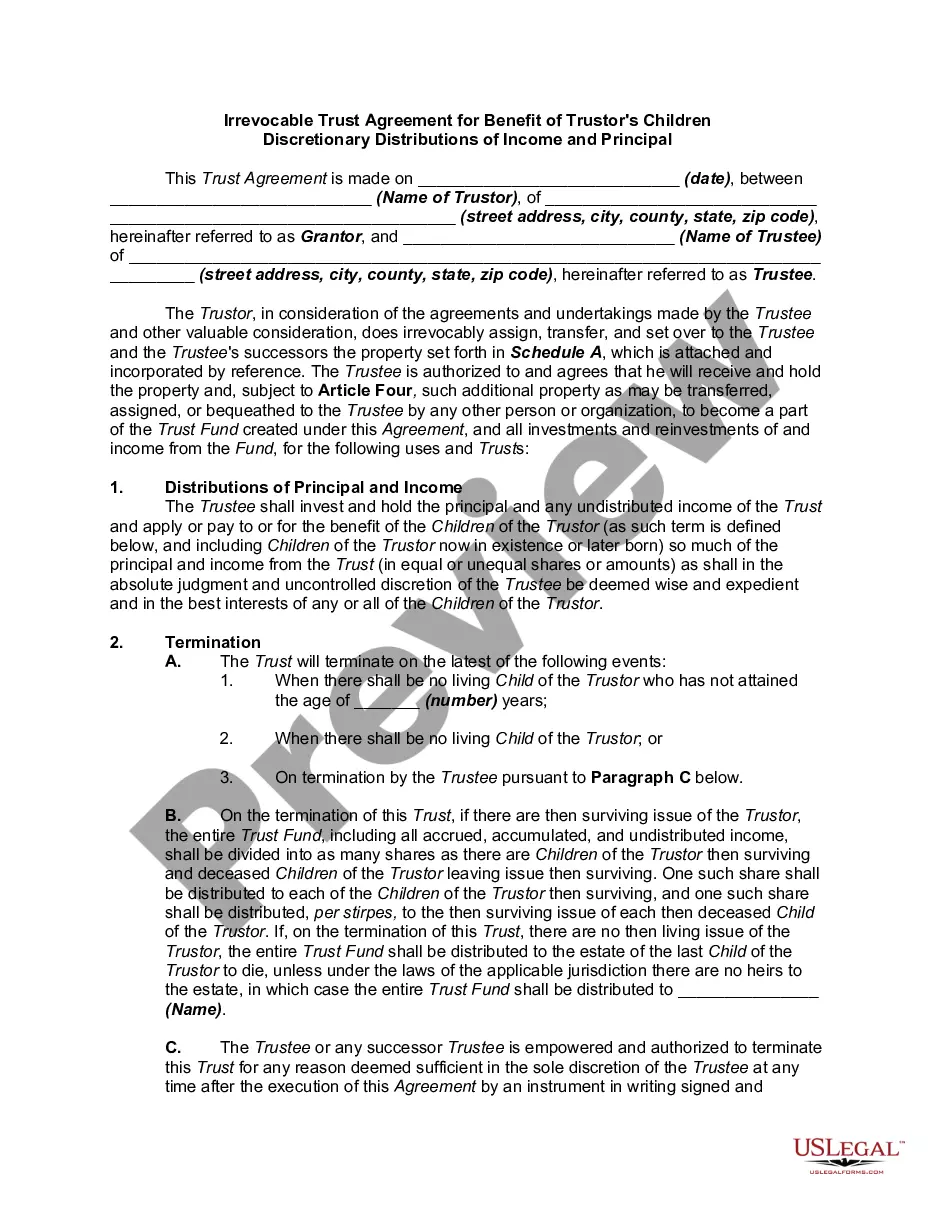
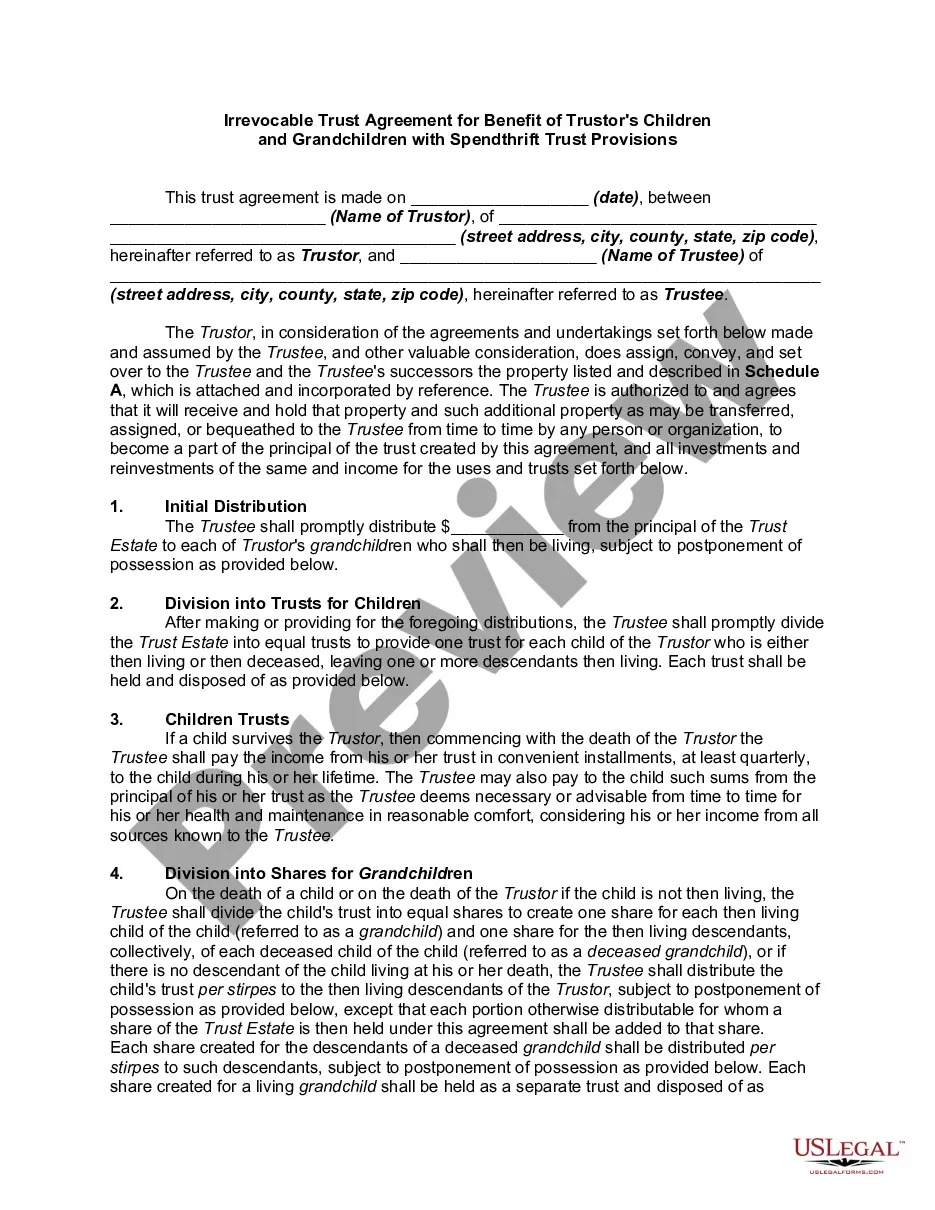
Get your form ready online
Our built-in tools help you complete, sign, share, and store your documents in one place.
Make edits, fill in missing information, and update formatting in US Legal Forms—just like you would in MS Word.
Download a copy, print it, send it by email, or mail it via USPS—whatever works best for your next step.
Sign and collect signatures with our SignNow integration. Send to multiple recipients, set reminders, and more. Go Premium to unlock E-Sign.
If this form requires notarization, complete it online through a secure video call—no need to meet a notary in person or wait for an appointment.
We protect your documents and personal data by following strict security and privacy standards.

Make edits, fill in missing information, and update formatting in US Legal Forms—just like you would in MS Word.

Download a copy, print it, send it by email, or mail it via USPS—whatever works best for your next step.

Sign and collect signatures with our SignNow integration. Send to multiple recipients, set reminders, and more. Go Premium to unlock E-Sign.

If this form requires notarization, complete it online through a secure video call—no need to meet a notary in person or wait for an appointment.

We protect your documents and personal data by following strict security and privacy standards.
Looking for another form?

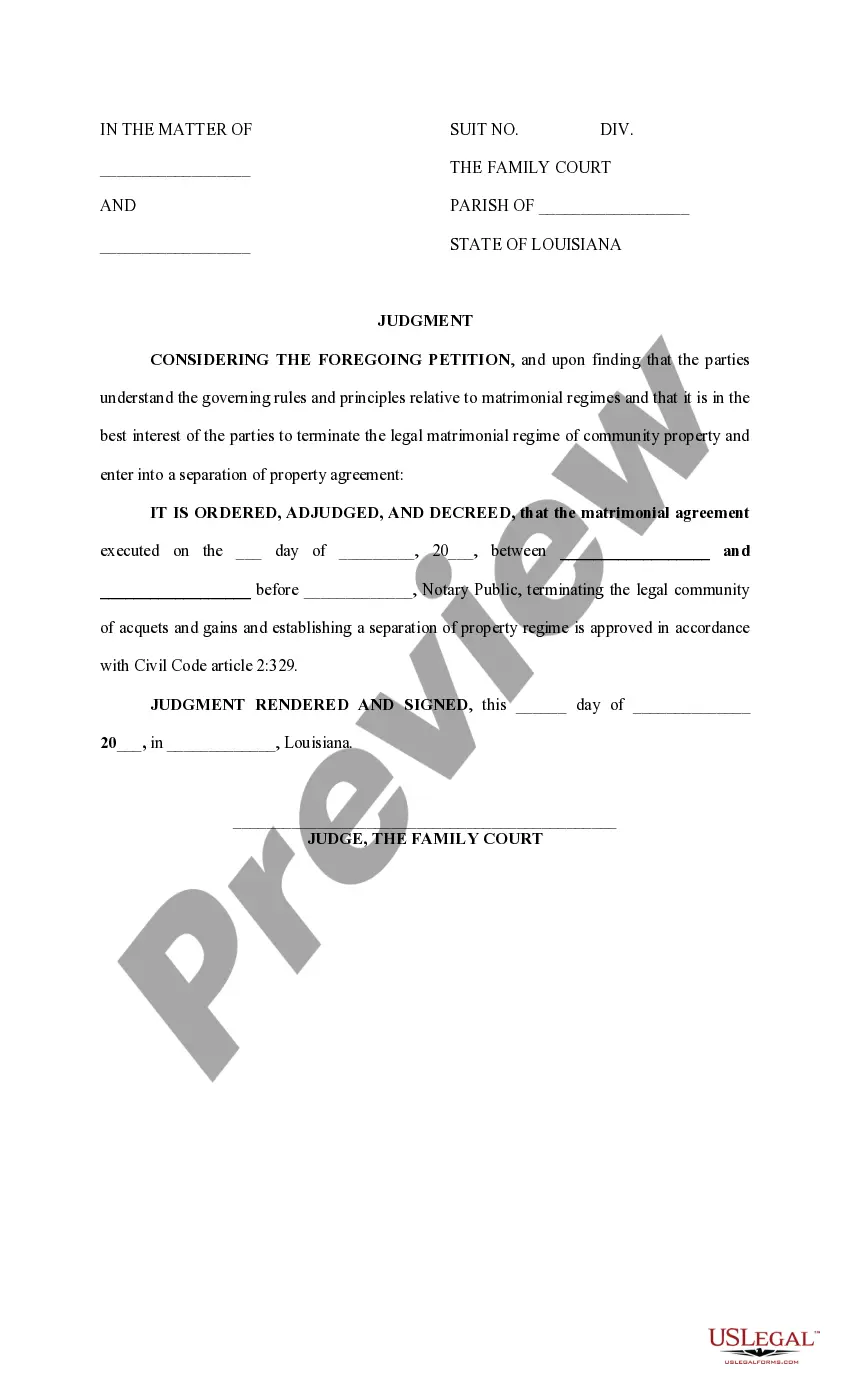

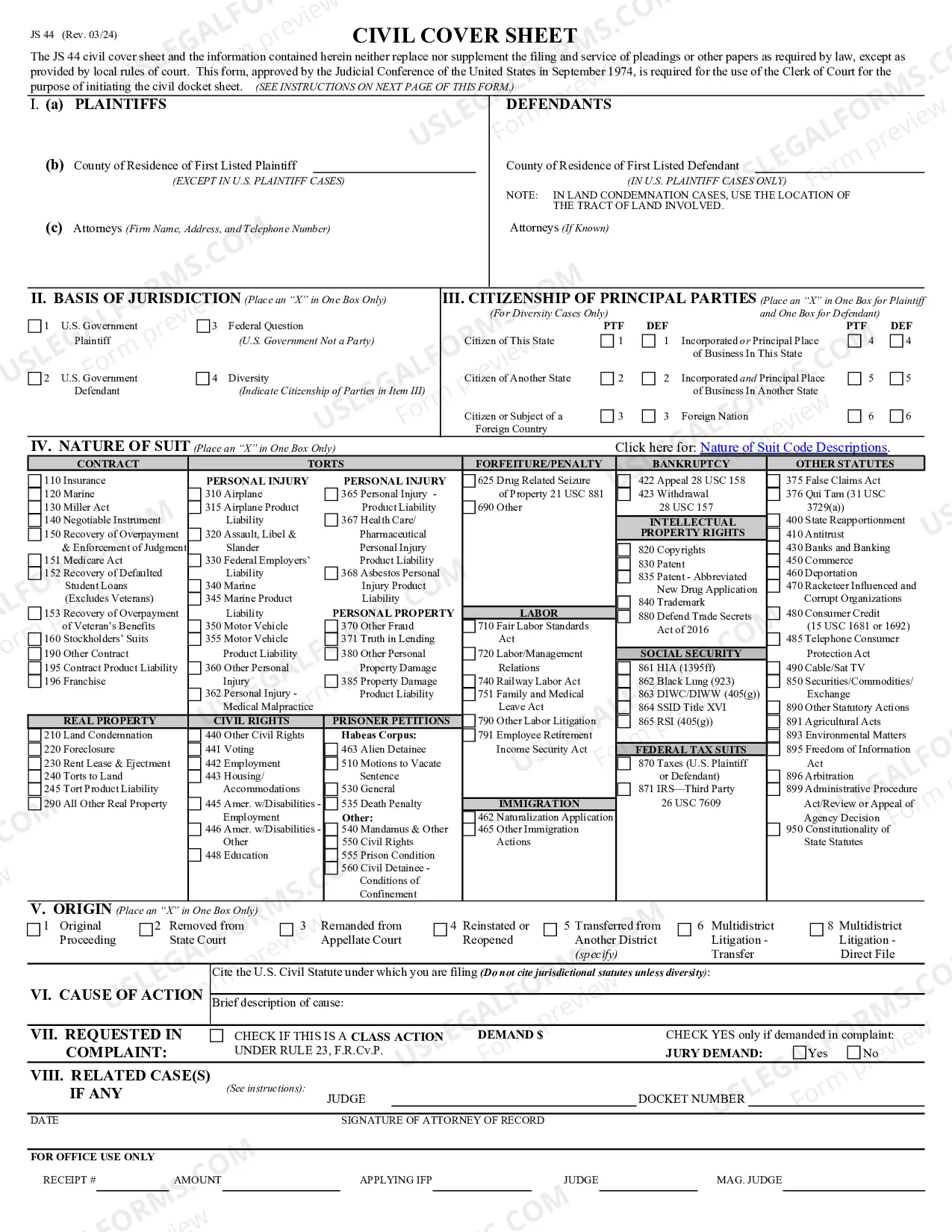
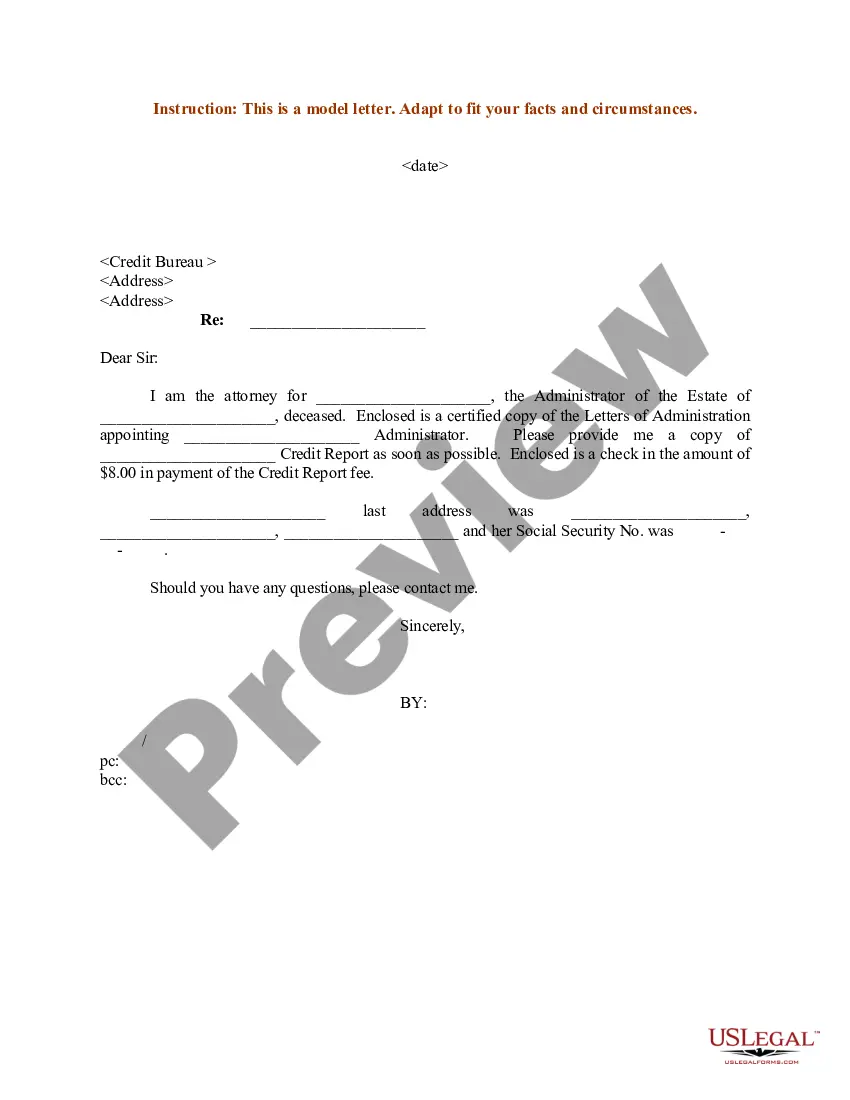
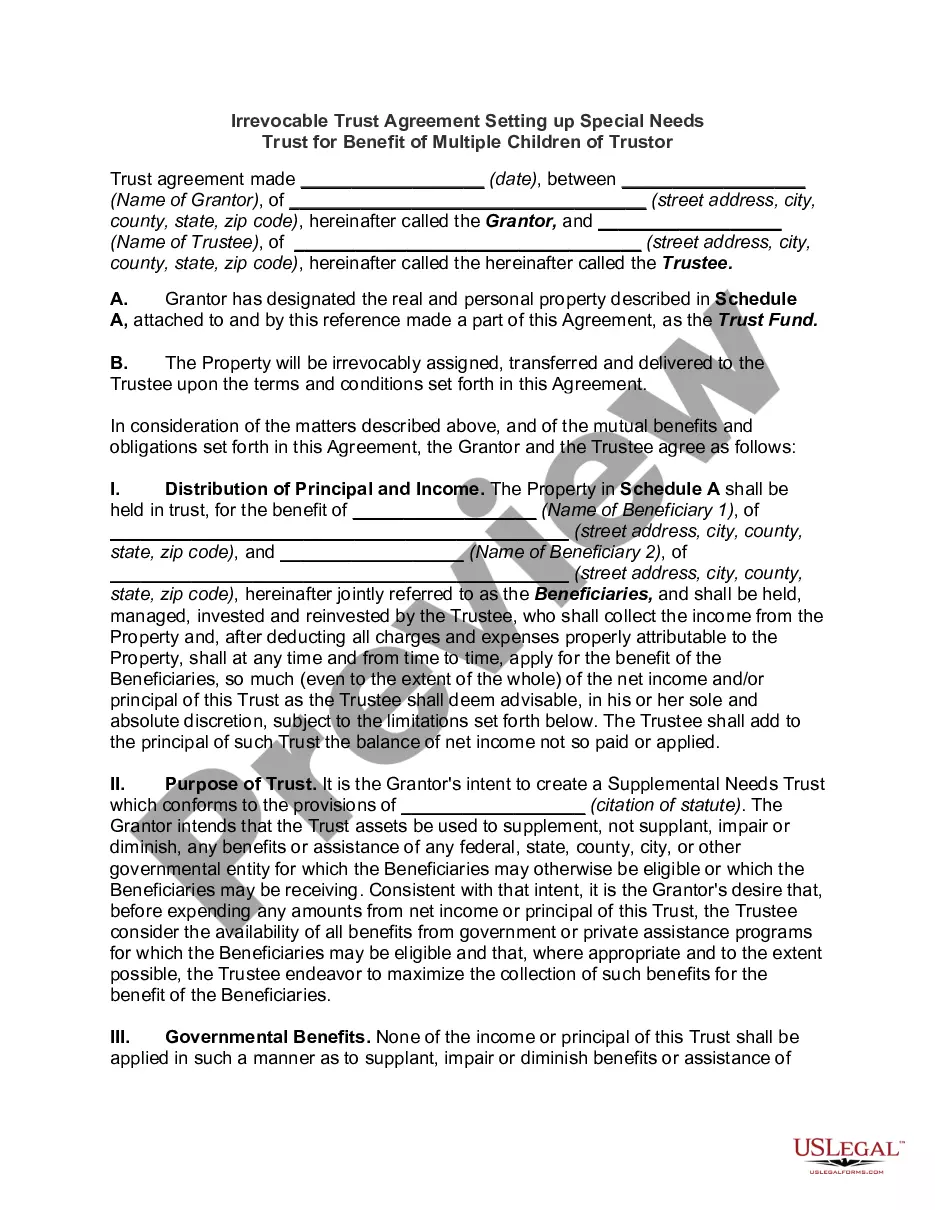
How to fill out Irrevocable Trust Agreement For Benefit Of Trustor's Children And Grandchildren?
It’s clear that you cannot transform into a legal expert instantly, nor can you swiftly acquire the ability to draft an Agreement Irrevocable Trust With Life Insurance without possessing a distinct range of competencies.
Drafting legal documents is a lengthy process that necessitates specific education and expertise. Therefore, why not entrust the drafting of the Agreement Irrevocable Trust With Life Insurance to the experts.
With US Legal Forms, one of the most extensive libraries of legal templates, you can discover everything from court documents to formats for corporate internal communication.
You can re-access your documents from the My documents section at any time. If you’re a current client, you can simply Log In and locate and download the template from the same section.
No matter the intent of your forms—whether financial, legal, or personal—our website has everything you need. Give US Legal Forms a try today!
- Begin by locating the form you require using the search feature at the top of the page.
- Review it (if this feature is available) and examine the accompanying description to determine if the Agreement Irrevocable Trust With Life Insurance is what you need.
- Start your search again if you require a different template.
- Create a complimentary account and select a subscription plan to purchase the template.
- Click Buy now. Once the transaction is completed, you can download the Agreement Irrevocable Trust With Life Insurance, fill it out, print it, and send or forward it via post to the relevant parties or organizations.
Form popularity
FAQ
Missouri is a state with strict child relocation laws. While other states give you a geographic allowance on how far you can freely move your child ? say, within 50 or 100 miles of your original home ? in Missouri, you cannot relocate the child anywhere at all without legal permission.
Missouri courts automatically presume that custody with natural parents is in a child's best interests, unless sufficient evidence warrants a different arrangement. Grandparents must pursue an adoption in order to request custody of their grandchildren.
How to file a Motion for Family Access. A Motion for Family Access Order (FA10) must be filed in the court that has continuing jurisdiction over custody and access of the child. This is usually the court that entered the order the motion is addressing.
This means that a court will not interfere with the decision of legally married parents to allow or deny grandparent visitation unless a grandparent can prove that the parents are not acting in their child's best interests.
Best Interests of the Child As with most matters involving child custody, relocation must be in a child's ?best interests.? Winning a relocation claim, therefore, requires convincing a judge that moving a child either would or would not serve the child's interests.
Under Missouri law, when one parent wishes to move with a child ? and he or she shares child custody of visitation with the other parent ? the parent must give notice of the proposed move by certified mail to the other parent at least 60 days beforehand.
Assuming the party seeking relocation does provide notice, the non-relocating parent then has the opportunity to file a motion with the court seeking to prevent the relocation. The non-relocating party has 30 days after receipt of the notice of relocation to file a motion with the court.
Missouri aims to consider what is best for the child's interests when deciding on child custody matters. In Missouri, a child cannot decide which parent they want to live with until they are 18 years of age.