Affidavit Lack Social With The Court
Description

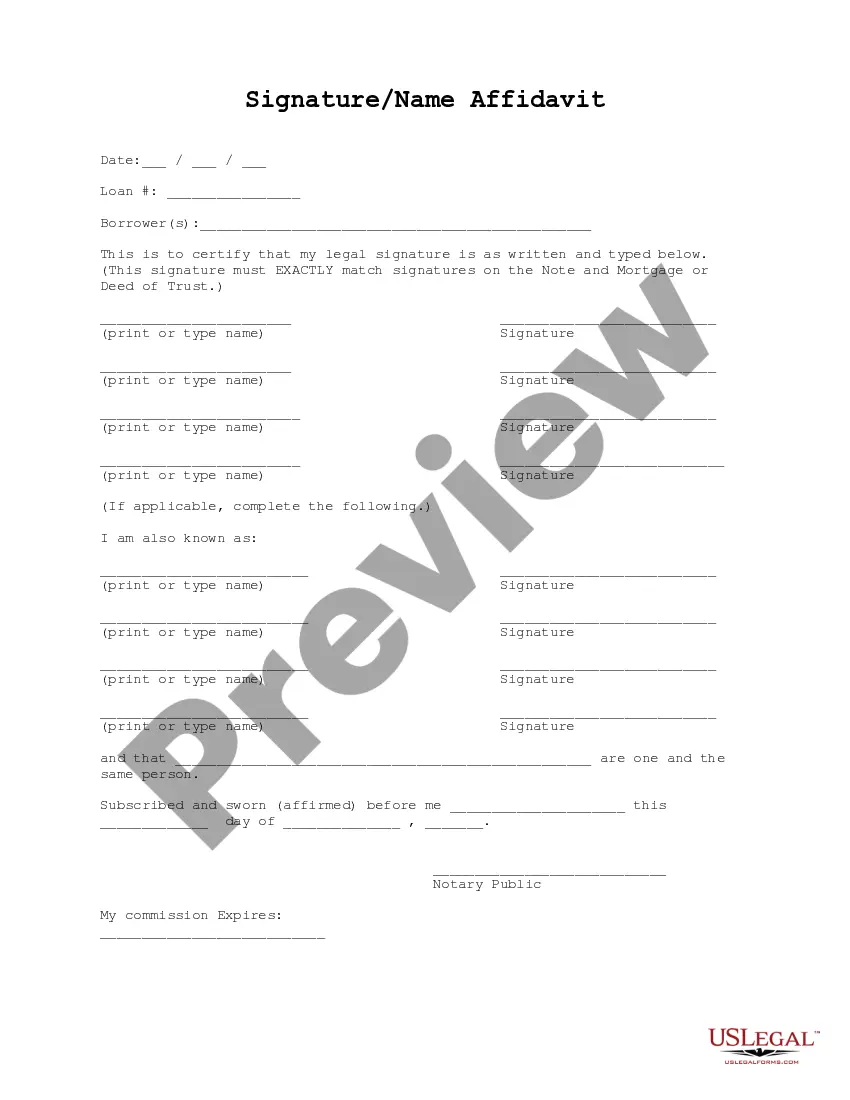
Get your form ready online
Our built-in tools help you complete, sign, share, and store your documents in one place.
Make edits, fill in missing information, and update formatting in US Legal Forms—just like you would in MS Word.
Download a copy, print it, send it by email, or mail it via USPS—whatever works best for your next step.
Sign and collect signatures with our SignNow integration. Send to multiple recipients, set reminders, and more. Go Premium to unlock E-Sign.
If this form requires notarization, complete it online through a secure video call—no need to meet a notary in person or wait for an appointment.
We protect your documents and personal data by following strict security and privacy standards.

Make edits, fill in missing information, and update formatting in US Legal Forms—just like you would in MS Word.

Download a copy, print it, send it by email, or mail it via USPS—whatever works best for your next step.

Sign and collect signatures with our SignNow integration. Send to multiple recipients, set reminders, and more. Go Premium to unlock E-Sign.

If this form requires notarization, complete it online through a secure video call—no need to meet a notary in person or wait for an appointment.

We protect your documents and personal data by following strict security and privacy standards.
Looking for another form?

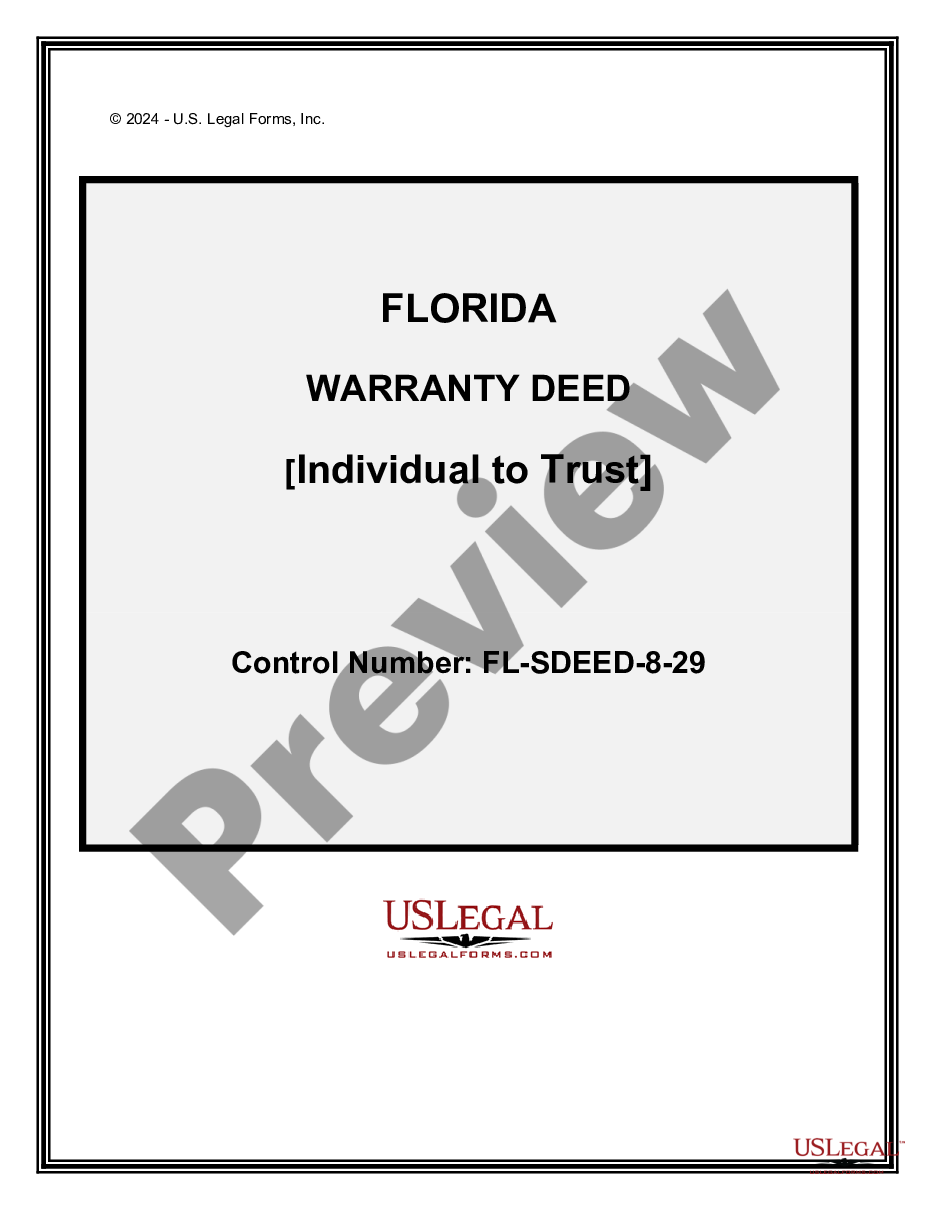



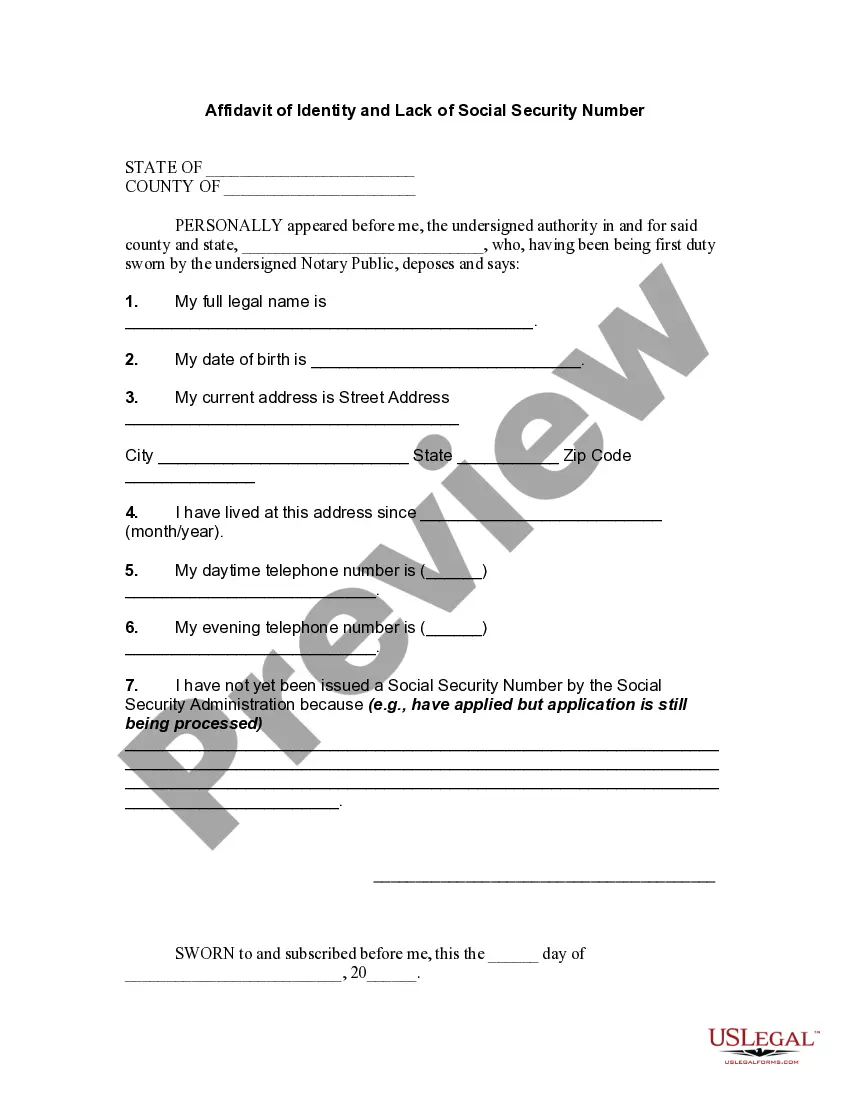
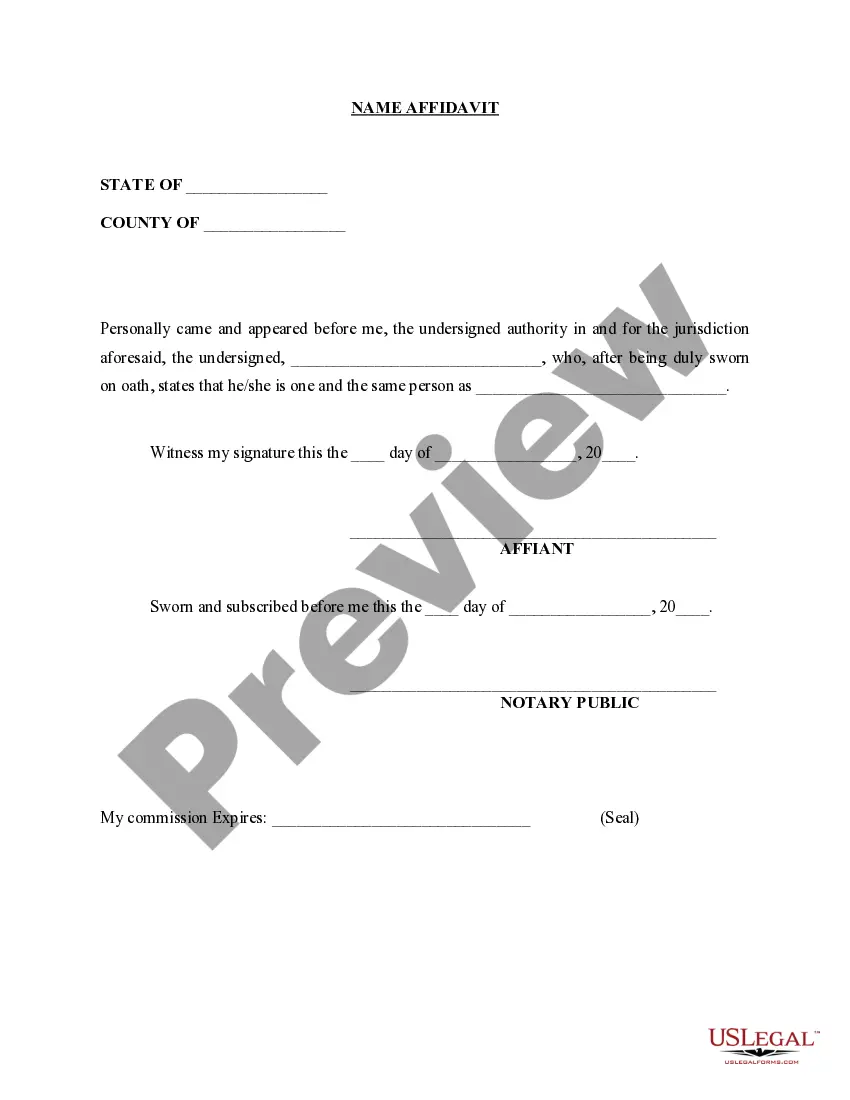
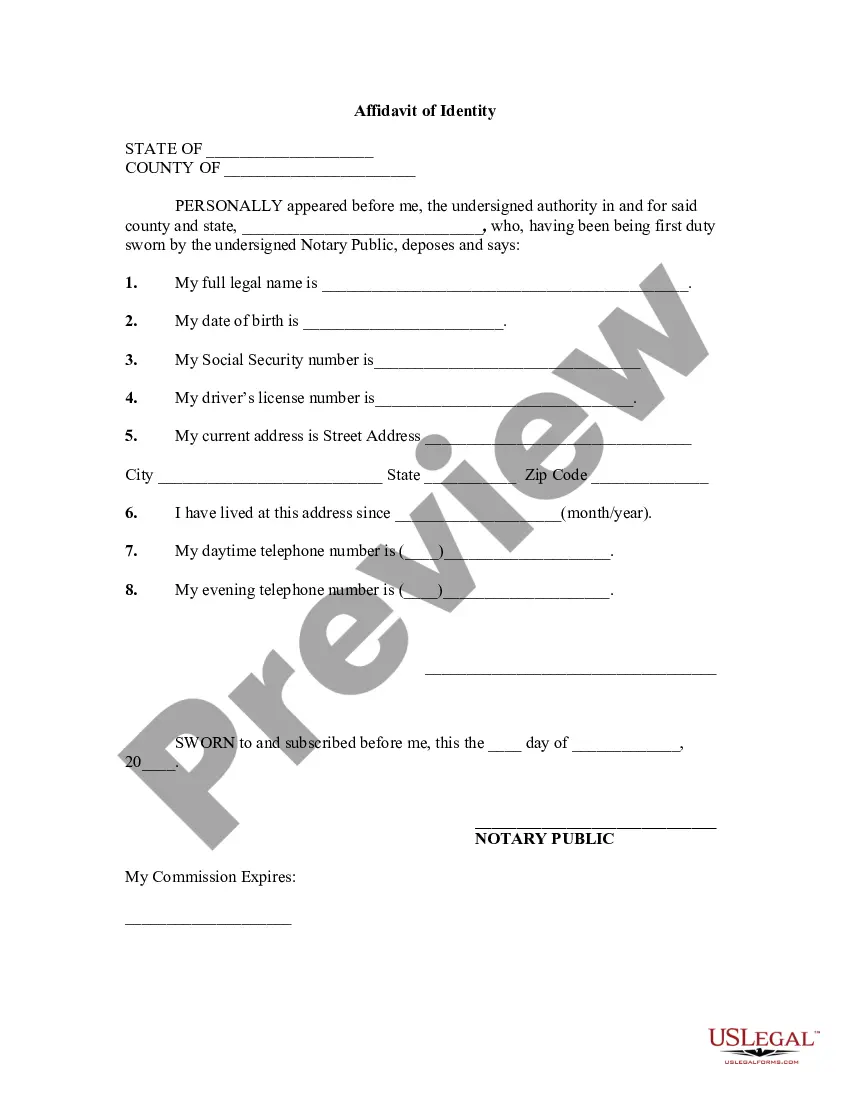
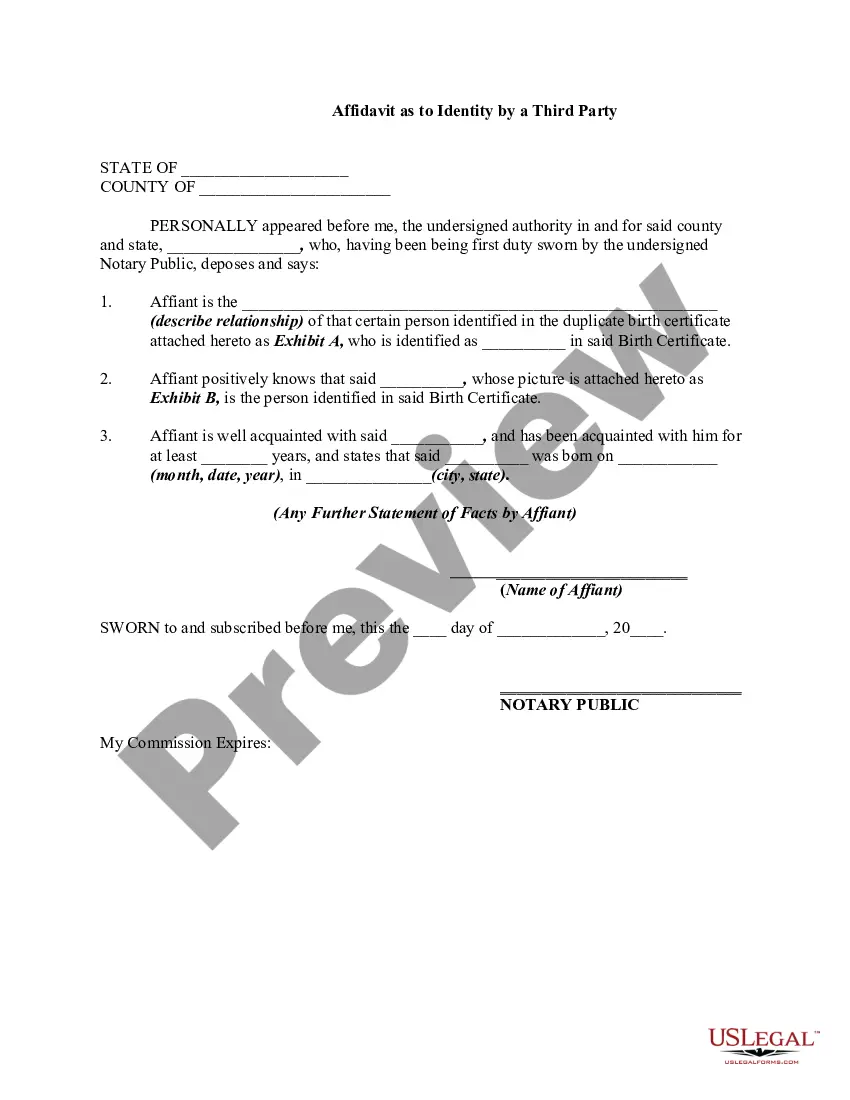
How to fill out Affidavit Of Identity And Lack Of Social Security Number?
- Access your US Legal Forms account if you're a returning user. Ensure your subscription is active before clicking the Download button for the required form.
- If you are new to the service, start by browsing the extensive library of legal forms. Use the Preview mode to confirm that the document suits your local jurisdiction needs.
- Search for any additional templates if necessary. If you identify discrepancies, utilize the Search feature to locate the appropriate document.
- Purchase the selected form by clicking the Buy Now button and choosing your preferred subscription plan. You will need to create an account for full access.
- Complete the payment process by entering your payment information using either a credit card or PayPal.
- Once the purchase is finalized, download the form to your device and access it anytime from the My Forms section of your profile.
In conclusion, US Legal Forms empowers users to swiftly navigate through legal paperwork, ensuring they can easily access an affidavit lack social with the court. With a robust library and expert support, your legal needs are efficiently met.
Get started today and join the thousands who have simplified their legal processes with US Legal Forms!
Form popularity
FAQ
When writing an affidavit for court, start with a header that includes the case title and court information. Follow with your name and a statement asserting the truth of the facts you will present. Include numbered paragraphs for each point, and utilize USLegalForms to create a polished affidavit lack social with the court that fulfills legal requirements while accurately expressing your position.
Writing a character affidavit for court involves detailing your relationship with the individual in question and providing specific examples of their behavior and integrity. Be honest, and include statements about their moral standing and community contributions. Using USLegalForms can help you structure your affidavit lack social with the court to highlight essential character traits effectively.
To write a simple affidavit, start with a clear title, followed by your name, address, and a statement of truth. Include concise factual statements that are relevant to your case, and conclude with your signature and date. USLegalForms provides templates that guide you through this process, ensuring your affidavit lack social with the court remains straightforward and comprehensive.
When preparing an affidavit, avoid including hearsay, non-factual statements, or personal opinions. It's also important not to use complex language or jargon that might confuse your audience. Keep your focus on clear, factual statements to ensure your affidavit lack social with the court serves its intended purpose effectively.
To fill in an affidavit form, start by carefully reading the instructions provided. Next, enter your personal details, specify the factual statements you wish to include, and sign the document in front of a notary public. Using resources like USLegalForms allows you to access templates that simplify this process and ensure your affidavit lack social with the court meets all legal criteria.
A strong sentence for an affidavit establishes clarity and authority, such as: 'I, John Doe, declare under penalty of perjury that the facts stated in this affidavit are true and correct to the best of my knowledge.' This format helps you present your information in a straightforward manner, which is essential when you are submitting an affidavit lack social with the court.
A good example of an affidavit for court is a statement that outlines the facts relevant to a case, made by a person who has personal knowledge of those facts. For instance, an affidavit can detail eyewitness accounts, document your involvement, or describe financial information. When using the template on USLegalForms, you can easily draft an affidavit that meets court requirements while ensuring it accurately represents your circumstances.
An affidavit can be written by any individual with relevant knowledge of the facts being stated. This can include the person who experienced the events or someone who possesses necessary information. It's crucial that the content is truthful and clear, as affidavits play a significant role in legal processes, particularly when an affidavit lack social with the court could impact your case. For ease, you can use platforms like US Legal Forms for template assistance.
No, you do not have to be a lawyer to write an affidavit. Anyone can create this type of document as long as they follow the legal requirements for their jurisdiction. Writing your own affidavit can often simplify things, especially when dealing with cases where an affidavit lack social with the court is necessary. Ensure you include factual information and appropriate formatting.
To get an affidavit from the court, you generally need to prepare the document and file it with the appropriate court. After submitting, the court clerk can assist in verifying that you have followed all necessary steps. Remember to include all required details, as an affidavit lack social with the court can lead to issues in processing. If you need guidance, consider using the resources available at US Legal Forms.