Release Of Liability Waiver For Work Performed
Description
Get your form ready online
Our built-in tools help you complete, sign, share, and store your documents in one place.
Make edits, fill in missing information, and update formatting in US Legal Forms—just like you would in MS Word.
Download a copy, print it, send it by email, or mail it via USPS—whatever works best for your next step.
Sign and collect signatures with our SignNow integration. Send to multiple recipients, set reminders, and more. Go Premium to unlock E-Sign.
If this form requires notarization, complete it online through a secure video call—no need to meet a notary in person or wait for an appointment.
We protect your documents and personal data by following strict security and privacy standards.

Make edits, fill in missing information, and update formatting in US Legal Forms—just like you would in MS Word.

Download a copy, print it, send it by email, or mail it via USPS—whatever works best for your next step.

Sign and collect signatures with our SignNow integration. Send to multiple recipients, set reminders, and more. Go Premium to unlock E-Sign.

If this form requires notarization, complete it online through a secure video call—no need to meet a notary in person or wait for an appointment.

We protect your documents and personal data by following strict security and privacy standards.
Looking for another form?
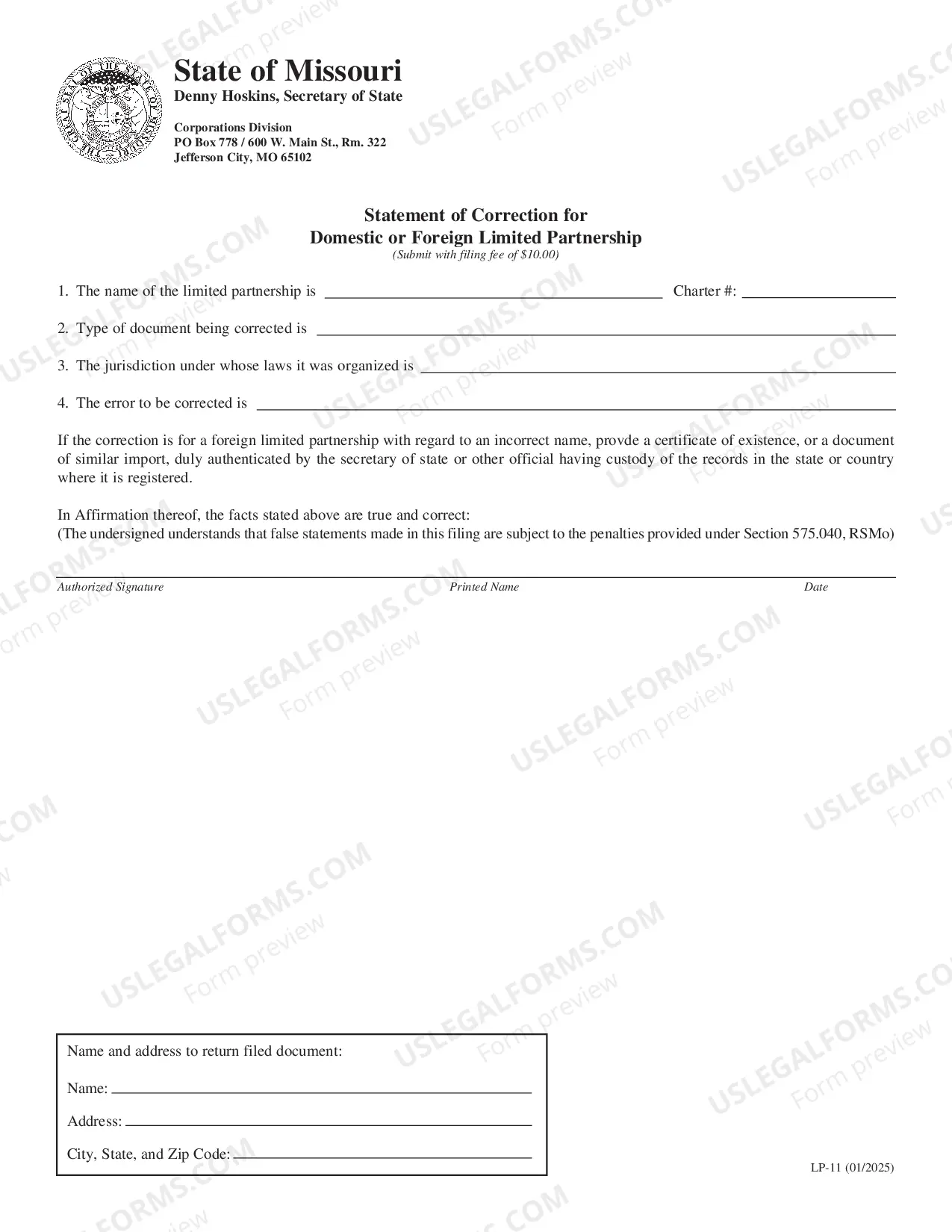
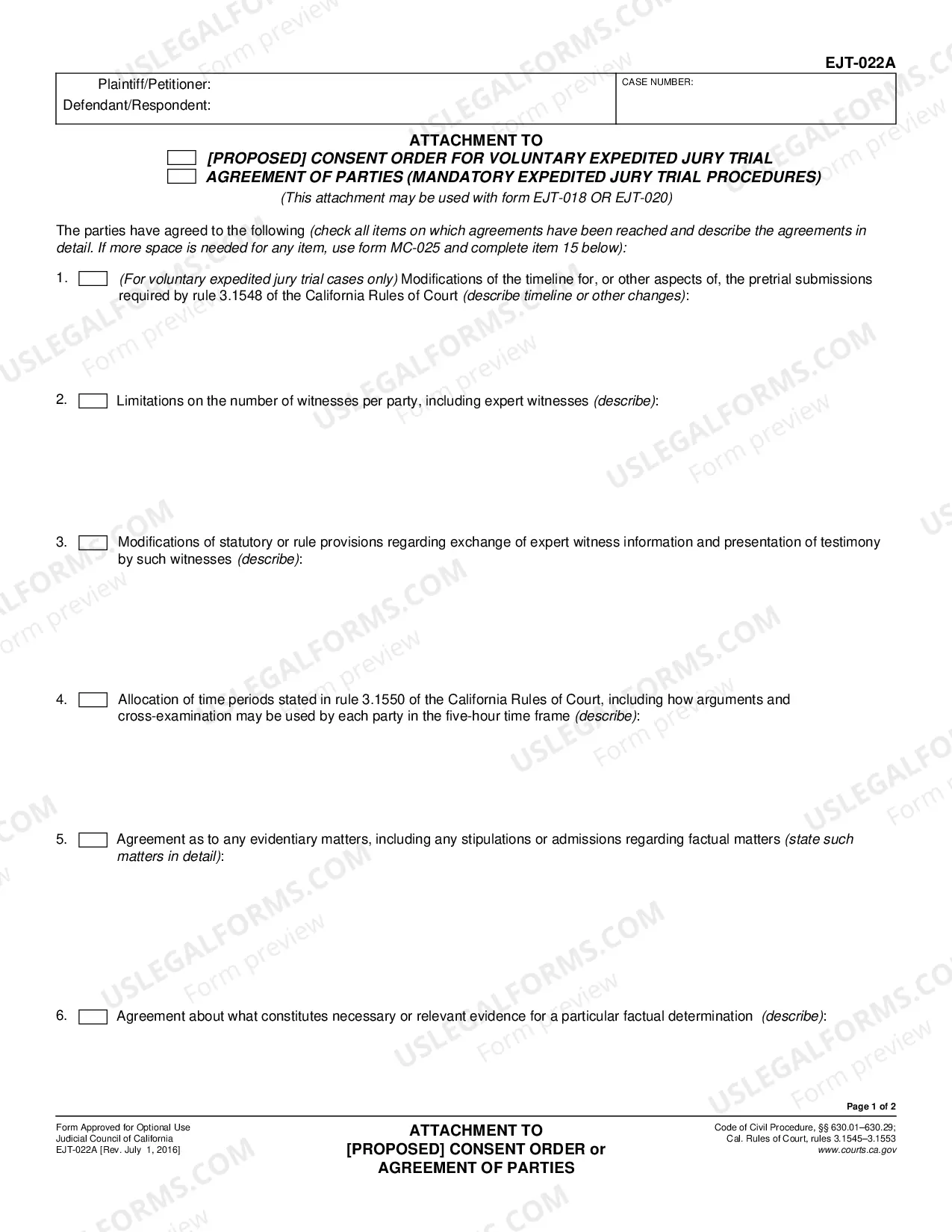
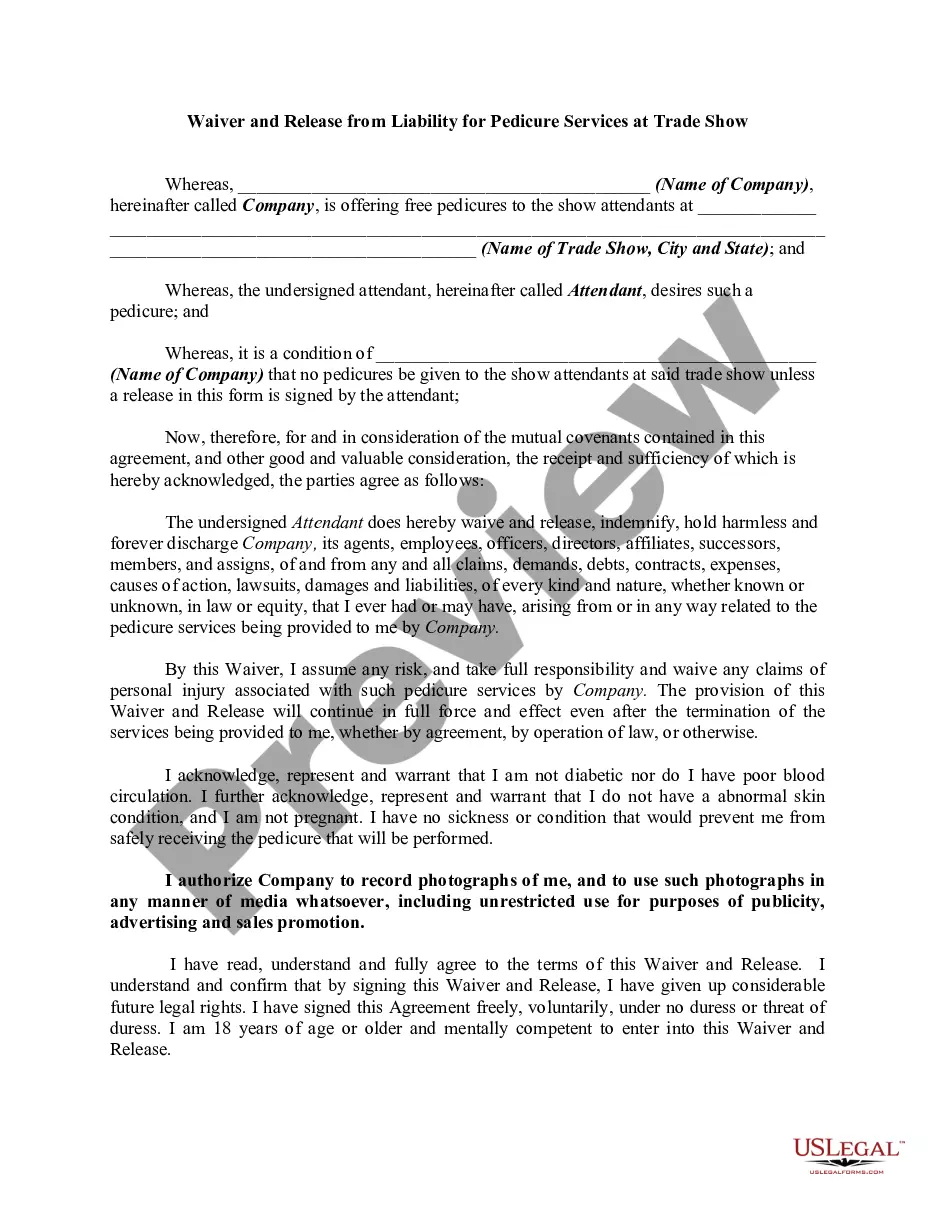
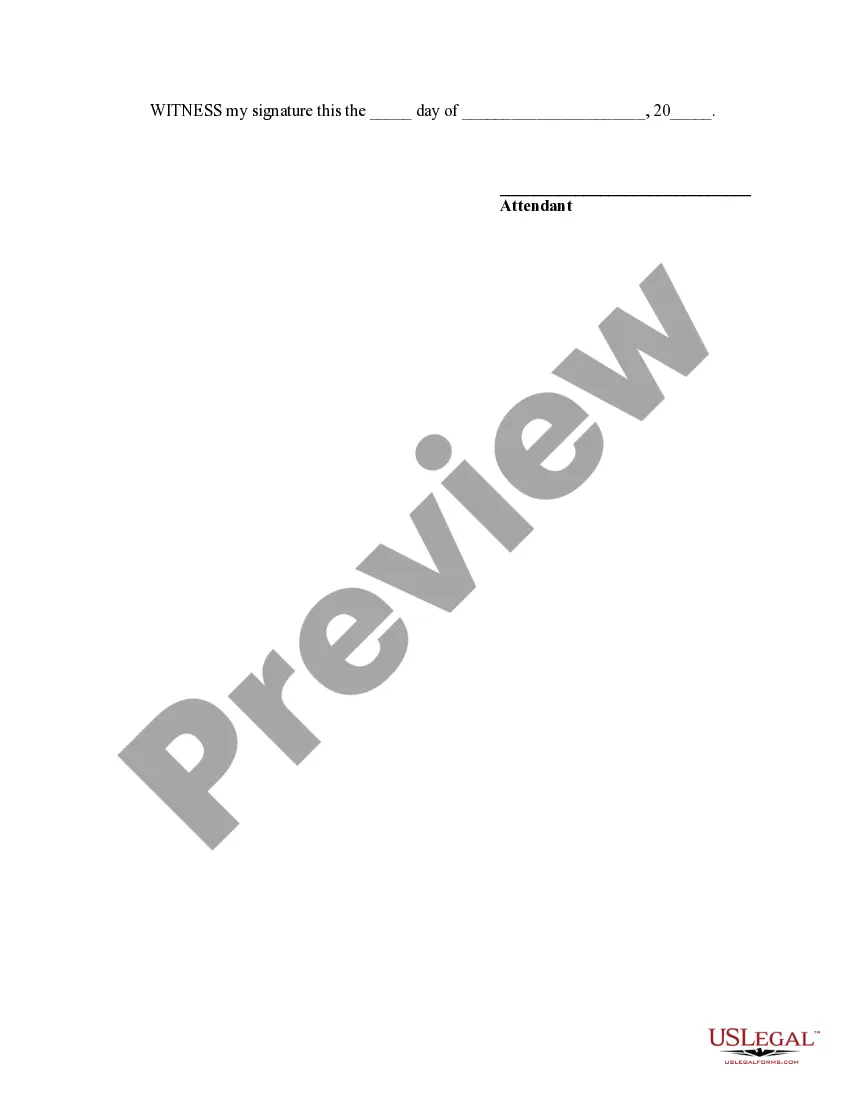
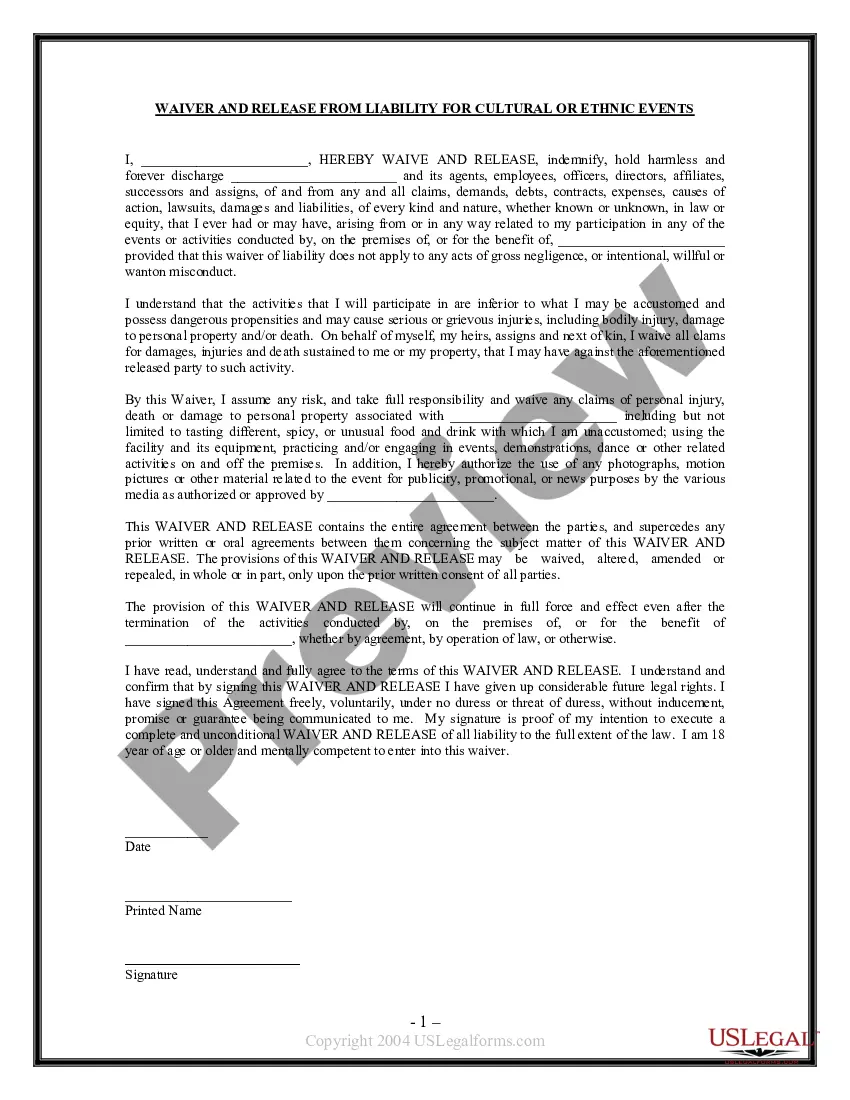
How to fill out Waiver And Release From Liability For Pedicure Services At Trade Show?
- If you've previously accessed US Legal Forms, simply log in to your account and find the release of liability waiver template you need. Ensure your subscription is active; if not, renew it to maintain access.
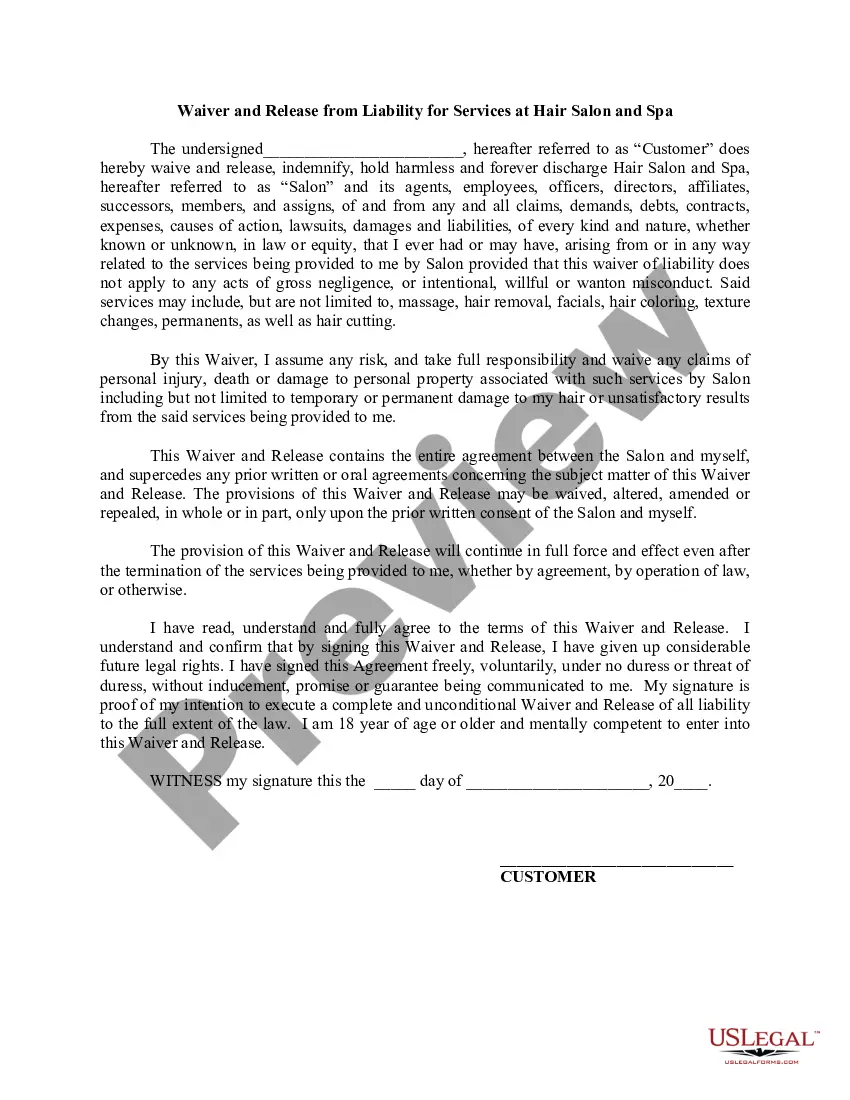
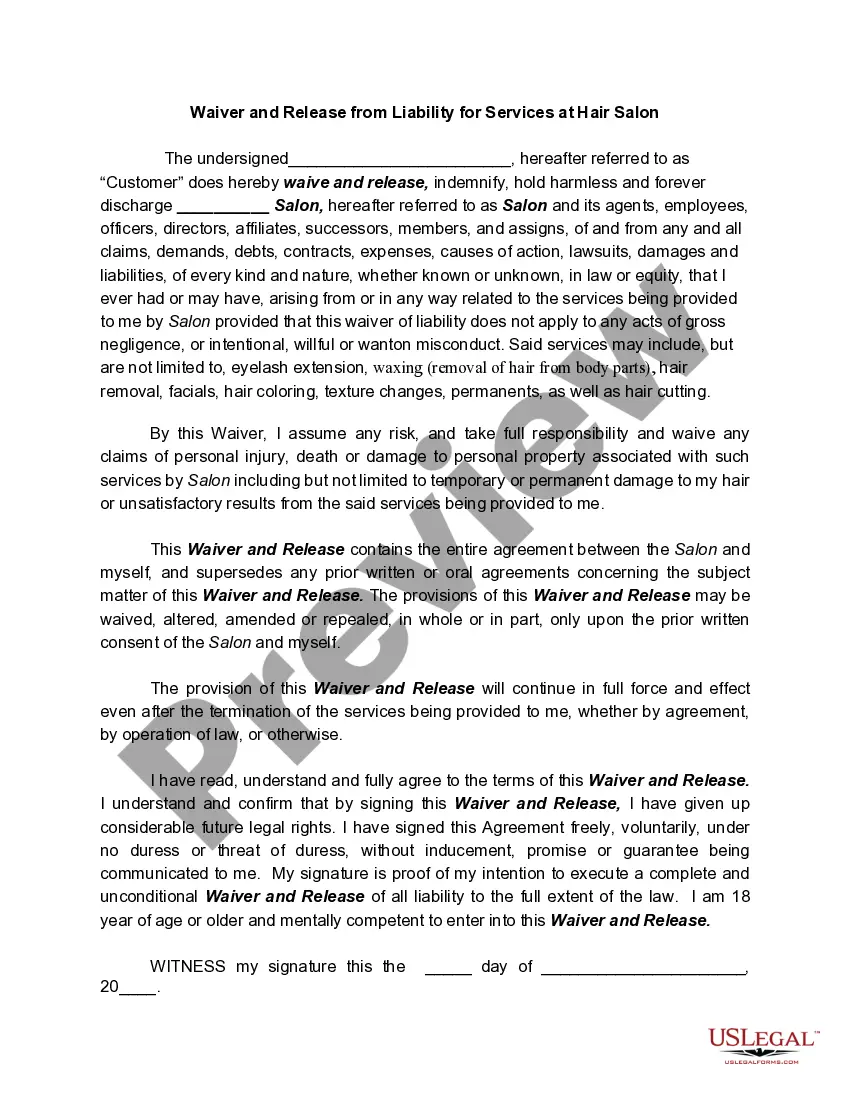
- For first-time users, begin by checking the Preview mode of suitable templates. Confirm that the document aligns with your specific needs and adheres to local jurisdiction requirements.
- Use the Search tab to explore additional templates if you don't find a perfect match initially. Once you've ensured consistency, proceed to the next step.
- Purchase the document by selecting the 'Buy Now' button and choosing a subscription plan that suits you. You'll need to create an account to access the comprehensive legal library.
- Finalize your purchase by entering your payment details, whether through a credit card or your PayPal account.
- After your payment is processed, download the completed form and store it on your device. You can also access it later through the My Forms section in your account.
Using US Legal Forms not only streamlines the process of obtaining legal documents but also ensures that they are comprehensive and compliant with legal standards. Their extensive library of over 85,000 forms guarantees that you find exactly what you need.
Don't leave your legal matters to chance; start your journey with US Legal Forms today and secure your release of liability waiver with confidence!
Form popularity
FAQ
A simple example of a release of liability waiver for work performed may include a form stating that an individual agrees not to hold a contractor liable for accidents during a renovation project. The waiver should detail the scope of work, outline risks such as trips or falls, and confirm that the individual acknowledges these risks. This succinct approach helps ensure that both parties are protected, and it can be easily customized through platforms like UsLegalForms.
When writing a waiver letter for work, begin with a clear and concise header that indicates it is a waiver. State your intention to release the other party from liability for any claims related to the work performed. Include specifics about the work, potential risks, and a clear statement of your understanding and acceptance of these risks. Lastly, sign the letter and include the date to validate it legally.
To fill out a release of liability waiver for work performed, start by providing your name and contact information at the top. Next, describe the specific work being done and outline the associated risks involved. Be sure to read through the waiver carefully before signing to ensure you understand your rights and any liabilities being waived. Finally, sign and date the document to make it legally binding.
A release of liability waiver for work performed should clearly state the intention to waive any claims against the provider for incidents related to the work. It should include details like the type of work, potential risks involved, and confirmation that the signer understands these risks. Additionally, it should require a signature and date to ensure validity. This clear articulation protects both parties while setting clear expectations.
The enforceability of waivers depends on their content and the circumstances in which they are signed. A release of liability waiver for work performed is more likely to be enforced if it clearly outlines the risks and was signed voluntarily. Overall, proper drafting and attention to legal standards greatly enhance the likelihood that your waiver will hold up in court.
Yes, waivers can be legally binding if they are properly written and executed. A well-crafted release of liability waiver for work performed can protect you from legal claims if it is clear, concise, and understandable. Remember to seek legal advice to confirm that your waiver meets all legal requirements and effectively communicates the necessary information.
Writing a waiver of responsibility requires clarity and precision. Start by clearly outlining the activities and risks involved, then state that individuals voluntarily assume these risks. By utilizing a release of liability waiver for work performed, include clear language that informs participants of their rights and obligations, ensuring they acknowledge the potential risks.
A waiver can be legally binding if it meets certain criteria, such as clarity, voluntariness, and mutual consent. When drafting a release of liability waiver for work performed, ensure it's explicit in detailing the risks involved. It's advisable to consult with a legal professional to ensure the waiver is enforceable under the laws of your state.
Waivers may fail in court for various reasons, including unclear language or if they are deemed unconscionable. Courts often scrutinize the context in which a release of liability waiver for work performed was signed, particularly if there was an imbalance of power or coercion. It's vital to create waivers with clear, concise terms to enhance their enforceability.
Release of liability waivers are commonly used in activities that involve risk, such as sports, recreational activities, and work-related tasks. They are also prevalent in scenarios like construction projects, workshops, or events where participants may face potential harm. By utilizing a release of liability waiver for work performed, you protect yourself and set clear expectations for all parties involved.