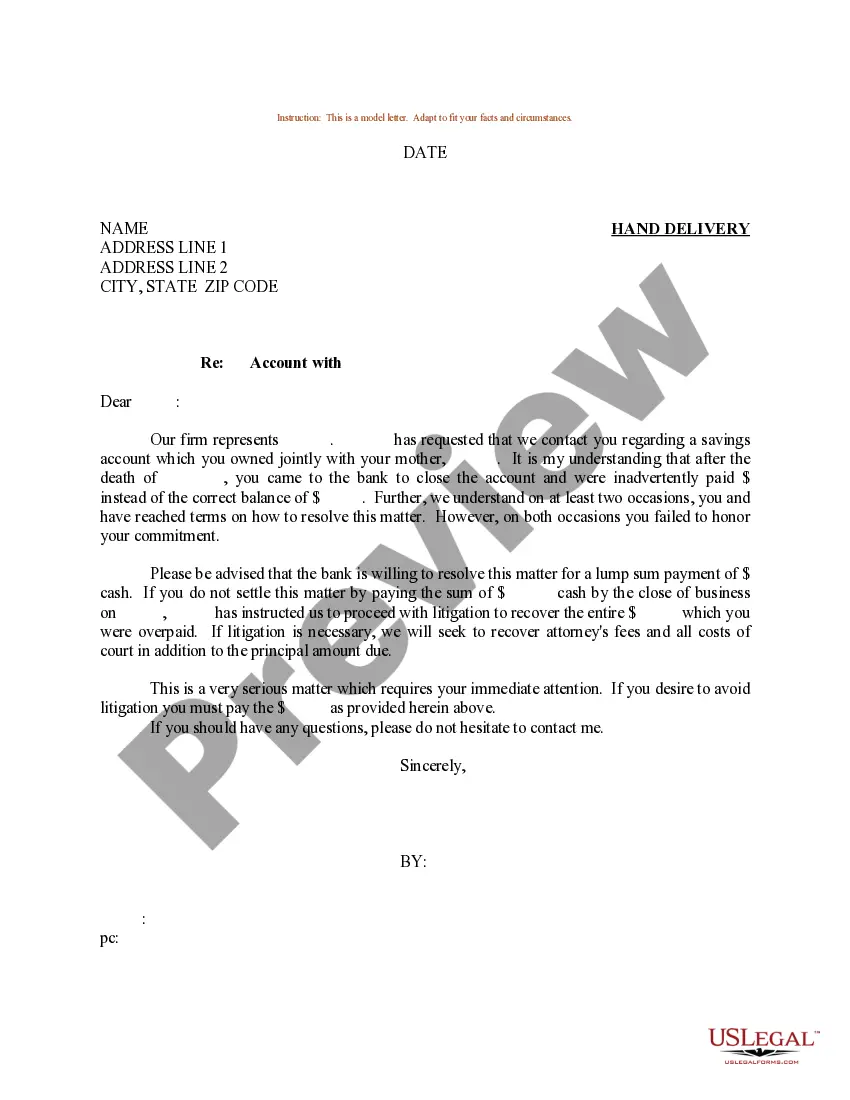
Open Bank Account For Estate
Description
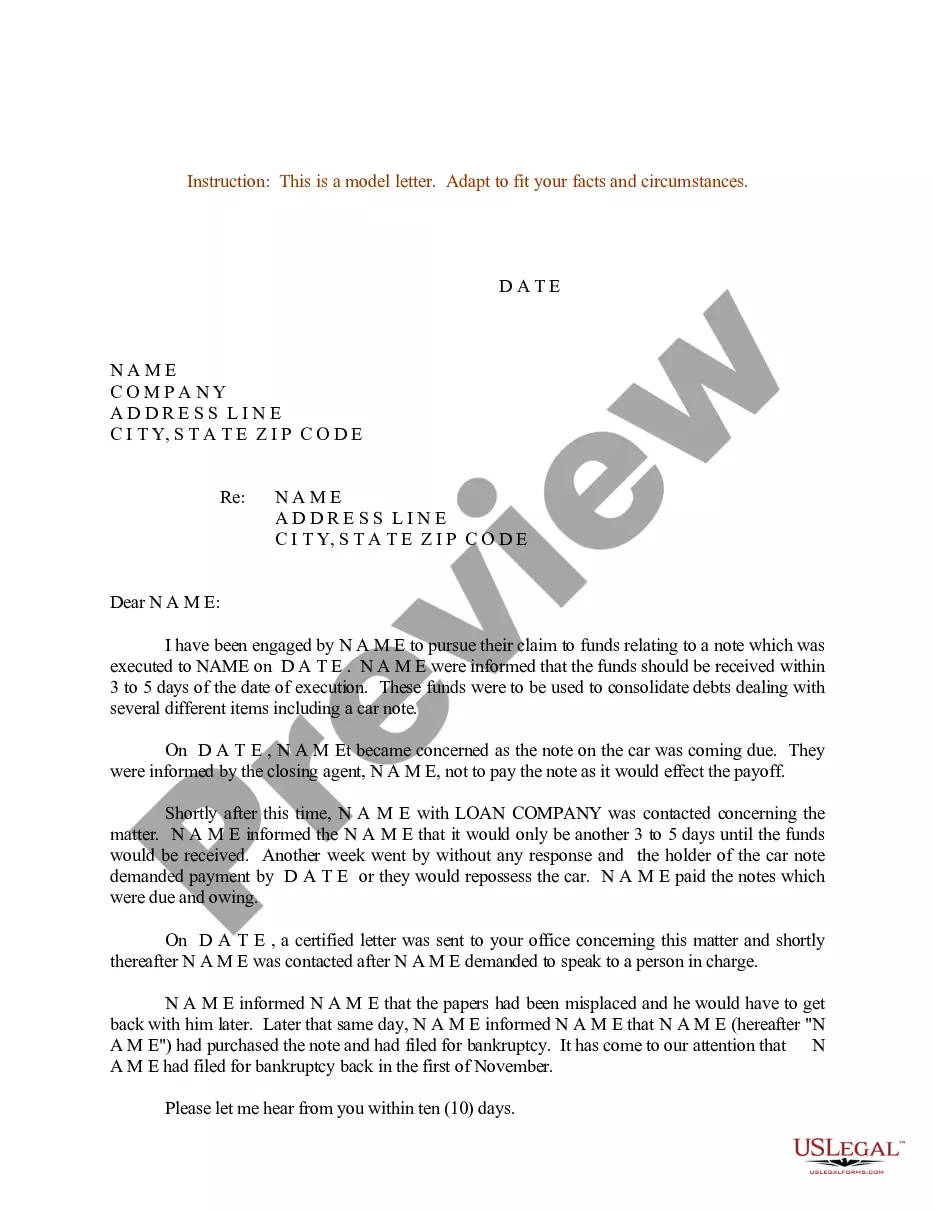
Get your form ready online
Our built-in tools help you complete, sign, share, and store your documents in one place.
Make edits, fill in missing information, and update formatting in US Legal Forms—just like you would in MS Word.
Download a copy, print it, send it by email, or mail it via USPS—whatever works best for your next step.
Sign and collect signatures with our SignNow integration. Send to multiple recipients, set reminders, and more. Go Premium to unlock E-Sign.
If this form requires notarization, complete it online through a secure video call—no need to meet a notary in person or wait for an appointment.
We protect your documents and personal data by following strict security and privacy standards.

Make edits, fill in missing information, and update formatting in US Legal Forms—just like you would in MS Word.

Download a copy, print it, send it by email, or mail it via USPS—whatever works best for your next step.

Sign and collect signatures with our SignNow integration. Send to multiple recipients, set reminders, and more. Go Premium to unlock E-Sign.

If this form requires notarization, complete it online through a secure video call—no need to meet a notary in person or wait for an appointment.

We protect your documents and personal data by following strict security and privacy standards.
Looking for another form?

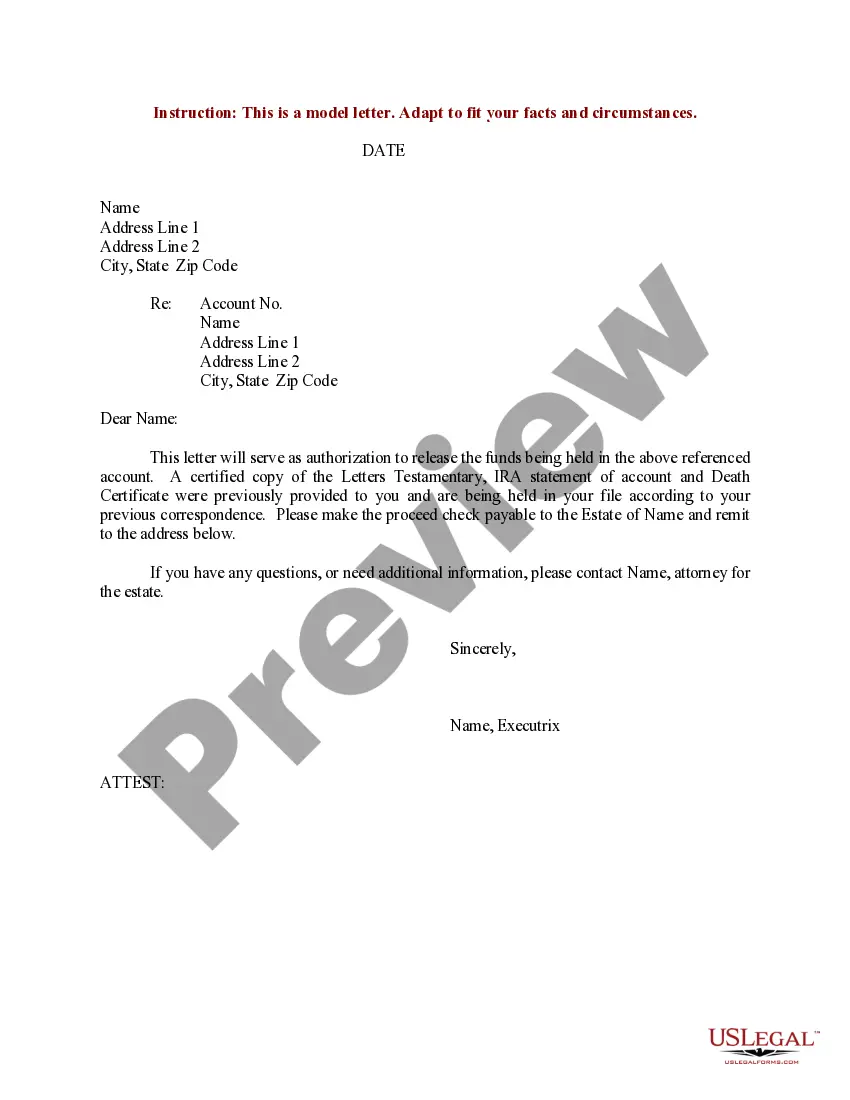
How to fill out Sample Letter For Bank Account Funds?
Managing legal documents can be exasperating, even for the most seasoned professionals.
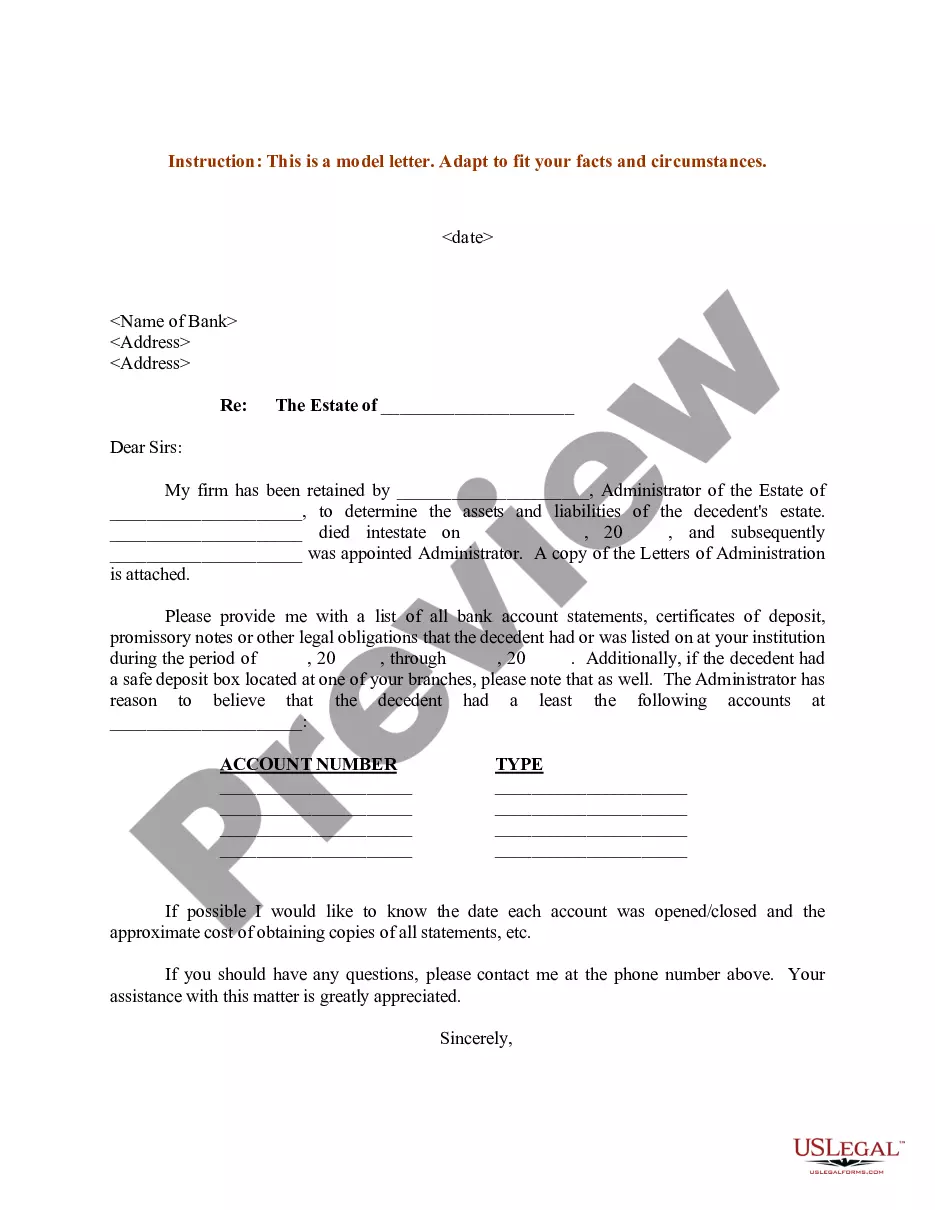
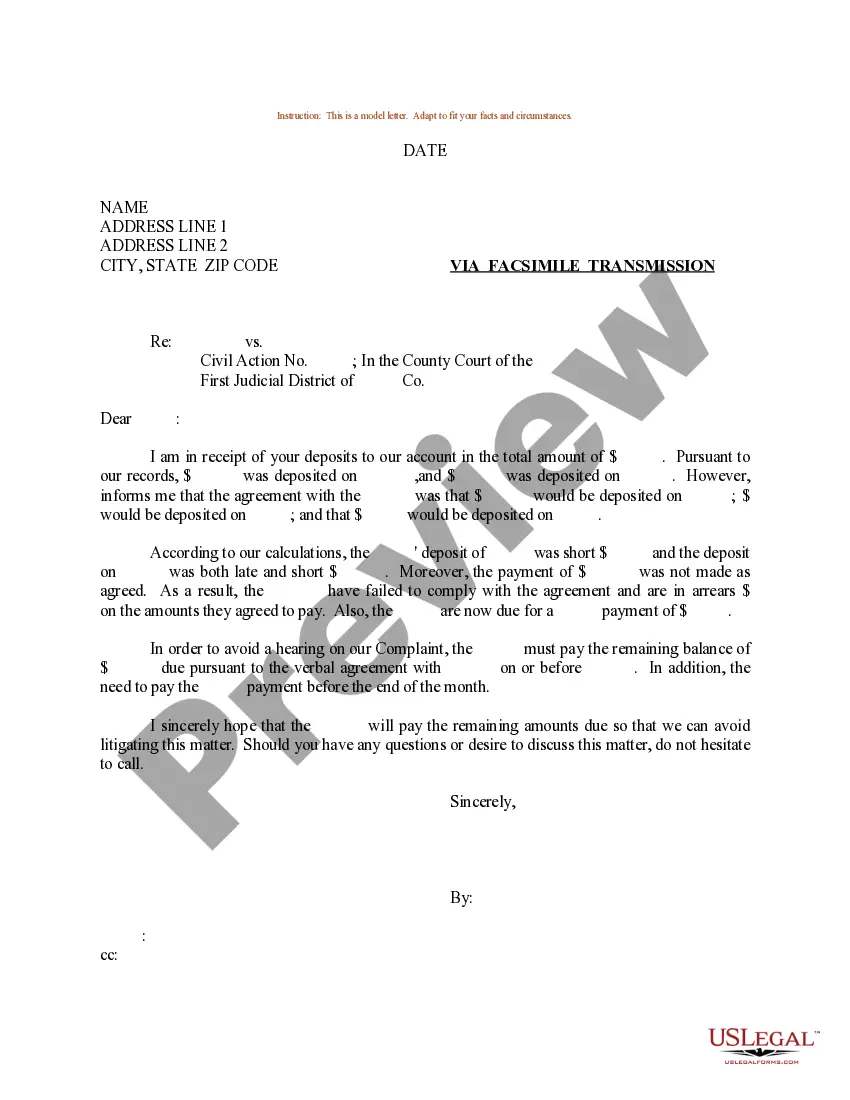
If you're looking to open a bank account for an estate and lack the time to search for the correct and updated version, the process can be stressful.
US Legal Forms caters to all your needs, whether they pertain to personal or business documents, all consolidated in one location.
Utilize advanced tools to complete and manage your Open Bank Account For Estate.
Here are the steps to follow after downloading the form you need: Confirm it is the correct form by previewing it and reviewing its description. Ensure that the sample is recognized in your state or county. Click Buy Now when you are prepared. Choose a subscription plan. Select the format you need, and Download, complete, sign, print, and send your document. Take advantage of the US Legal Forms online library, backed by 25 years of experience and reliability. Transform your daily document management into a simple and user-friendly process today.
- Access a valuable resource hub of articles, guidelines, and manuals related to your circumstances and requirements.
- Save time and effort searching for the documents you need, and leverage US Legal Forms' sophisticated search and Review feature to locate Open Bank Account For Estate and obtain it.
- If you hold a subscription, Log In to your US Legal Forms account, find the form, and acquire it.
- Check your My documents tab to review the documents you've previously downloaded and organize your folders as desired.
- If this is your first time with US Legal Forms, create an account and gain unlimited access to all platform benefits.
- An extensive online form repository could revolutionize the way anyone addresses these situations.
- US Legal Forms stands as a leader in online legal forms, offering over 85,000 state-specific legal documents available at your convenience.
- With US Legal Forms, you can access forms tailored to your state or county.
Form popularity
FAQ
"A beneficiary becomes a contract between you and the bank designating who you want to receive the money." When there's no joint bank account holder or beneficiary, the account becomes part of the deceased owner's estate.
If you received checks for someone who died, you'll need to go through the probate process in order to deposit them into an account or cash them. This may require being named as the executor or administrator of the estate, or getting the check signed by someone who is authorized to do so on behalf of the estate.
Once you've been appointed executor or personal representative by the probate court, you'll probably want to open a bank account in the name of the estate. Usually, an account for an estate is registered in this or a similar way: "Estate of Gerald S. Smith, Deceased, Pamela S. Smith, executor."
How to open an estate account Begin the probate process. The steps for beginning this process depend on the state in which the deceased person resided. ... Obtain a tax ID number for the estate account. ... Bring all required documents to the bank. ... Open the estate account.
'Estate of' accounts can be opened at any bank. All Executor(s)/Administrator(s)/next of kin must visit their chosen branch with the Death Certificate and Will (if applicable) and advise the staff that they wish to open an 'Estate of' account.