Lien Complaint With The Government
Description
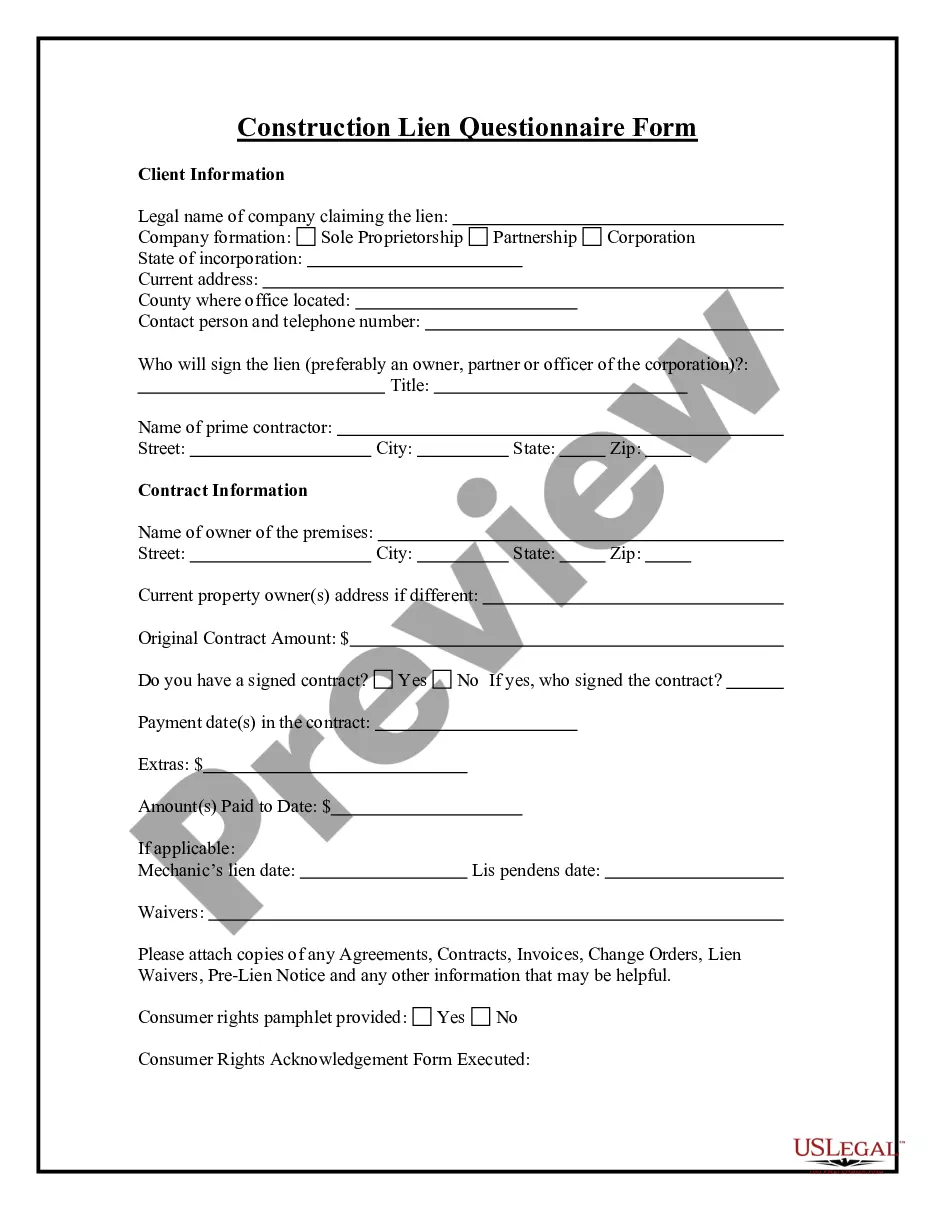
Get your form ready online
Our built-in tools help you complete, sign, share, and store your documents in one place.
Make edits, fill in missing information, and update formatting in US Legal Forms—just like you would in MS Word.
Download a copy, print it, send it by email, or mail it via USPS—whatever works best for your next step.
Sign and collect signatures with our SignNow integration. Send to multiple recipients, set reminders, and more. Go Premium to unlock E-Sign.
If this form requires notarization, complete it online through a secure video call—no need to meet a notary in person or wait for an appointment.
We protect your documents and personal data by following strict security and privacy standards.

Make edits, fill in missing information, and update formatting in US Legal Forms—just like you would in MS Word.

Download a copy, print it, send it by email, or mail it via USPS—whatever works best for your next step.

Sign and collect signatures with our SignNow integration. Send to multiple recipients, set reminders, and more. Go Premium to unlock E-Sign.

If this form requires notarization, complete it online through a secure video call—no need to meet a notary in person or wait for an appointment.

We protect your documents and personal data by following strict security and privacy standards.
Looking for another form?
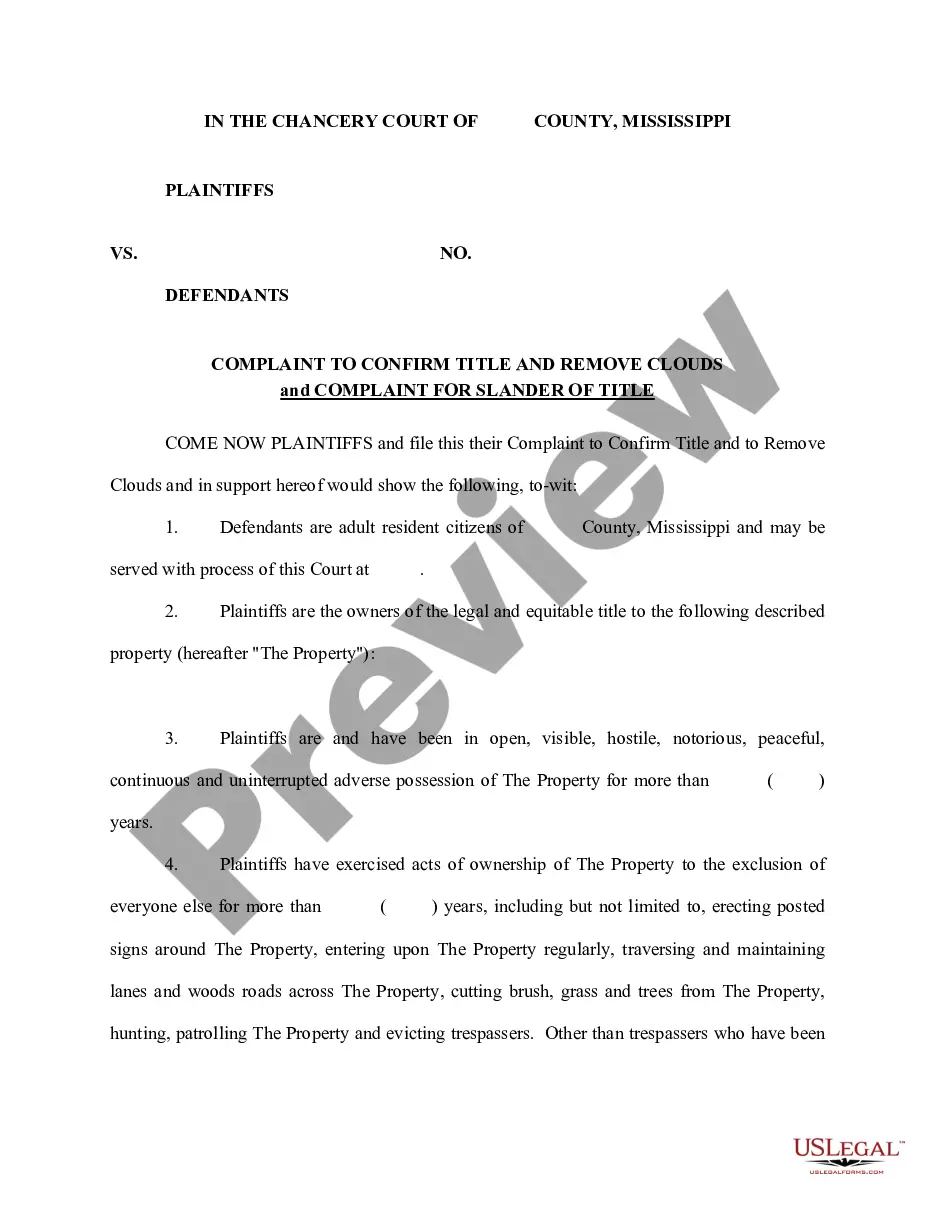
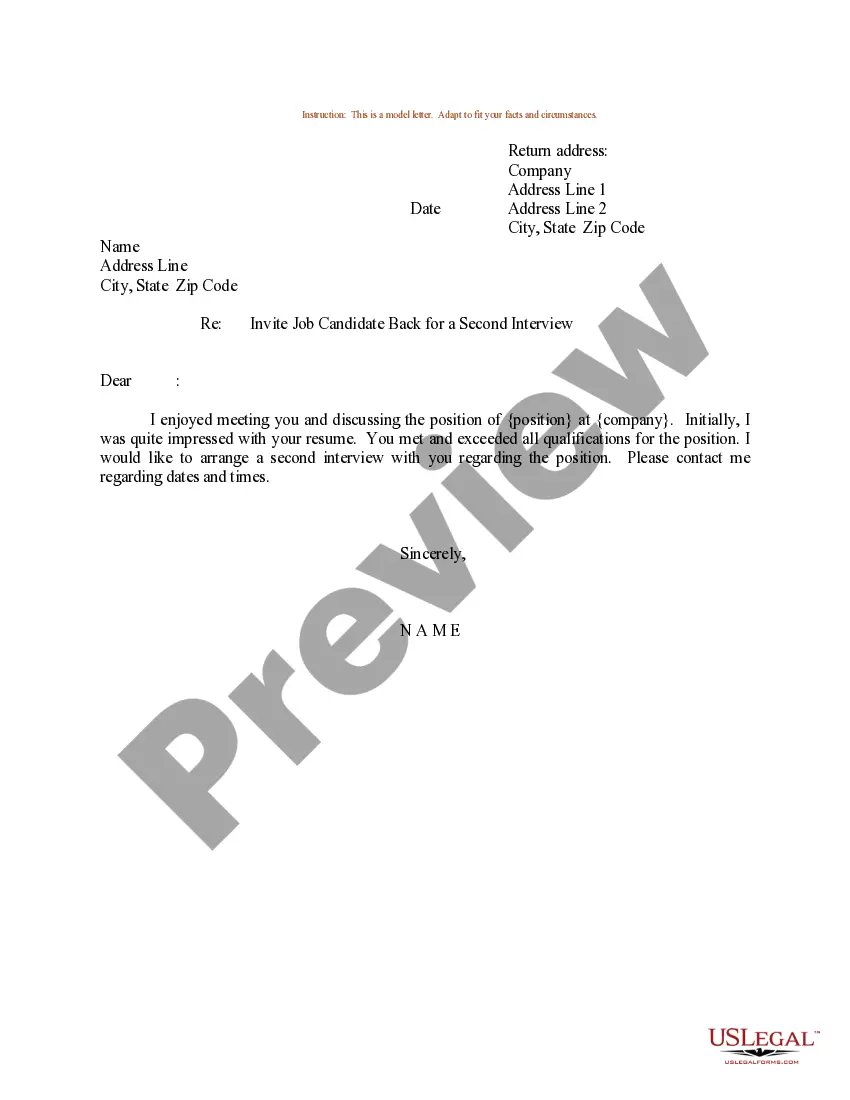




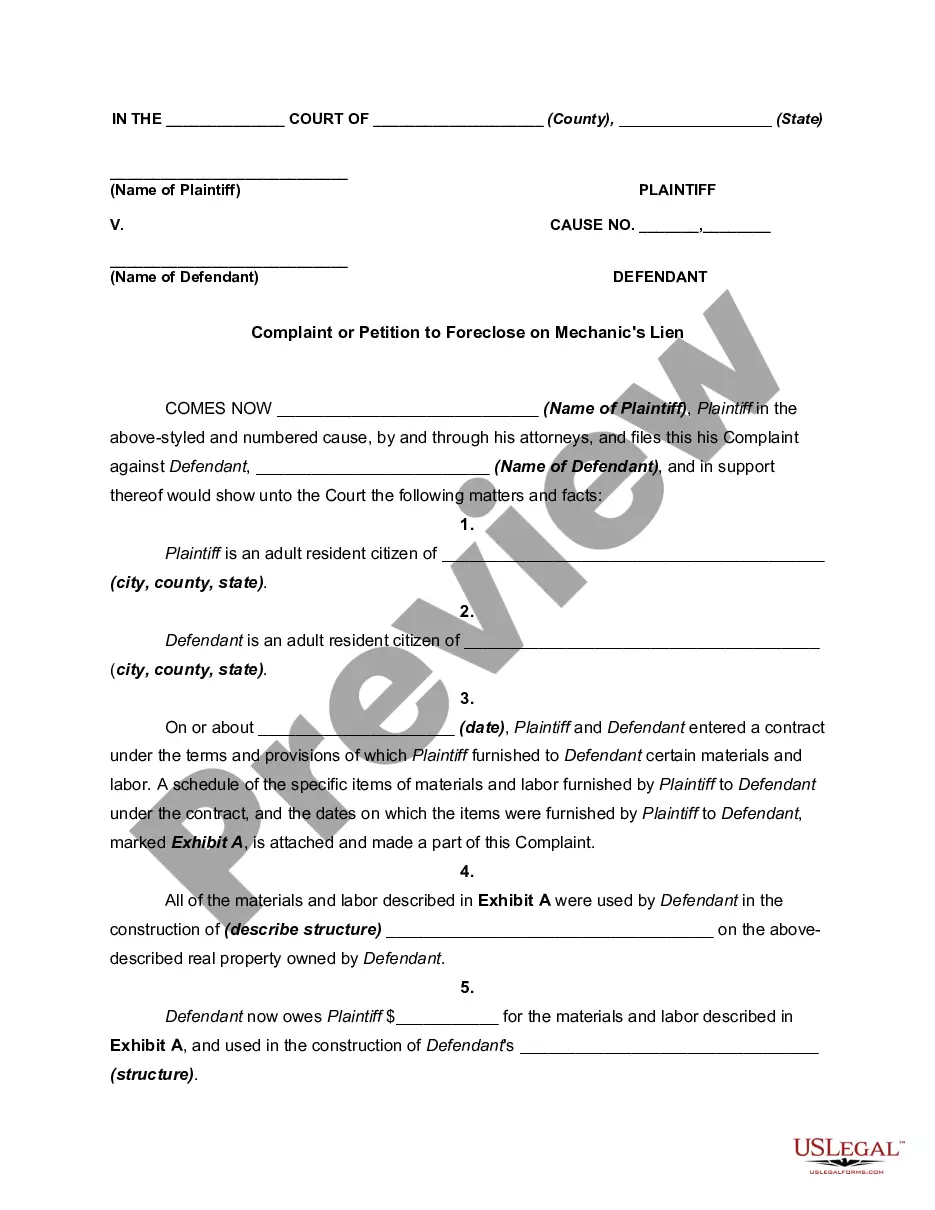
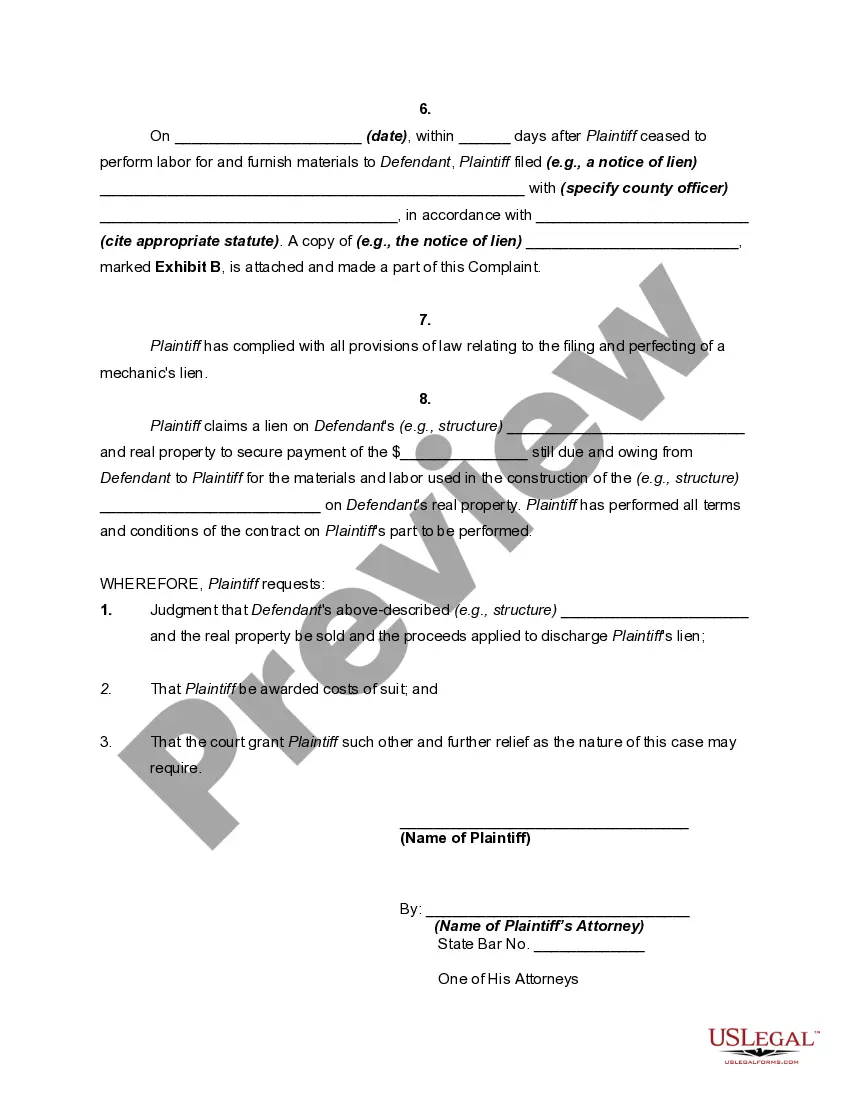
How to fill out Complaint Or Petition To Foreclose On Mechanic's Lien?
- Log in to your US Legal Forms account if you’re an existing user, or create a new account if this is your first time.
- Use the Preview mode to review the form descriptions and select the appropriate template that aligns with your specific jurisdiction needs.
- Should you need a different document, utilize the Search tab to locate the correct form. Verify its suitability before advancing to the next step.
- Purchase the chosen document by clicking the Buy Now button and selecting your preferred subscription plan. Registration is required to access full resources.
- Complete your purchase by entering your payment details using a credit card or PayPal.
- Download the completed form to your device, ensuring you save it for further completion and future reference in the My Forms section.
By following these steps, you will efficiently prepare your lien complaint with the government. US Legal Forms not only simplifies this process but also ensures that your documents are legally sound and properly formatted.
Ready to get started? Visit US Legal Forms today and take the first step towards securing your legal rights!
Form popularity
FAQ
When someone puts a lien on you, it signals that they have a legal right to claim part of your property to satisfy a debt you owe them. This action typically occurs when disputes over unpaid debts arise, such as unpaid taxes or loans. A lien can remain in effect until you resolve the underlying debt, impacting your financial options. Consulting uslegalforms can provide you with the necessary resources to manage these issues related to lien complaints with the government.
When a lien is placed on you, it can affect your credit score and limit your ability to obtain loans or credit. The lien serves as a warning to lenders that you have existing debts that could impact your financial situation. Additionally, the government may pursue actions to collect the owed amount if the debt remains unpaid. To navigate these challenges, using uslegalforms can help you understand your rights and address lien complaints with the government effectively.
The primary difference between a state lien and a federal lien lies in the authority responsible for imposing them. A state lien is enforced by state or local authorities, whereas a federal lien is enforced by the federal government, such as the IRS. Understanding these distinctions is important when addressing a lien complaint with the government, as it influences the resolution process. Consulting with uslegalforms can clarify your situation and guide you in effective action.
Generally, a lien cannot be placed on government property due to sovereign immunity. However, there are exceptions where government entities can face liens for specific obligations. If you have a lien complaint with the government involving a public entity, it’s essential to understand the relevant laws and procedures. Professional assistance may help navigate these complexities.
The most common types of liens include mortgage liens, tax liens, judgment liens, and mechanics' liens. Each serves a specific purpose and can affect property ownership significantly. If you’re facing a lien complaint with the government, recognizing these types can help you determine the best way to resolve it. Knowledge is power when dealing with these legal matters.
A government lien is often referred to as a tax lien or governmental claim. This occurs when the government has a legal right to a property due to unpaid taxes or other debts. When you file a lien complaint with the government, you are addressing these claims to secure your interests. Understanding this terminology can help clarify any legal discussions.
The conditions for a lien can depend on the nature of the debt and the specific type of lien. Typically, a lien arises when a debtor fails to fulfill their financial obligations. Therefore, if a lien complaint with the government is necessary, it may involve the government’s claim due to unpaid taxes or fees. Each situation requires careful attention to detail, especially in legal documentation.
In Florida, lien rules vary by type and are governed by state laws. Generally, a lien is a legal claim against property to secure payment of a debt. When dealing with a lien complaint with the government, understanding these rules is crucial. They ensure that creditors have a way to recover funds while giving property owners certain rights.
For a lien release, you need several key documents, including the original lien documentation, proof of payment or completion of obligation, and the signed lien release form. Additionally, reviewing the lien complaint with the government will help ensure that all necessary details are included. Utilizing resources like US Legal Forms can simplify this process and provide templates for your needs.
Filing a lien against the federal government is generally not allowed due to sovereign immunity. However, you can file a lien complaint with the government regarding some claims, but it requires special procedures. It's beneficial to consult with a legal expert or use platforms like US Legal Forms to navigate this complex process effectively.