Pay Child Support In Texas
Description

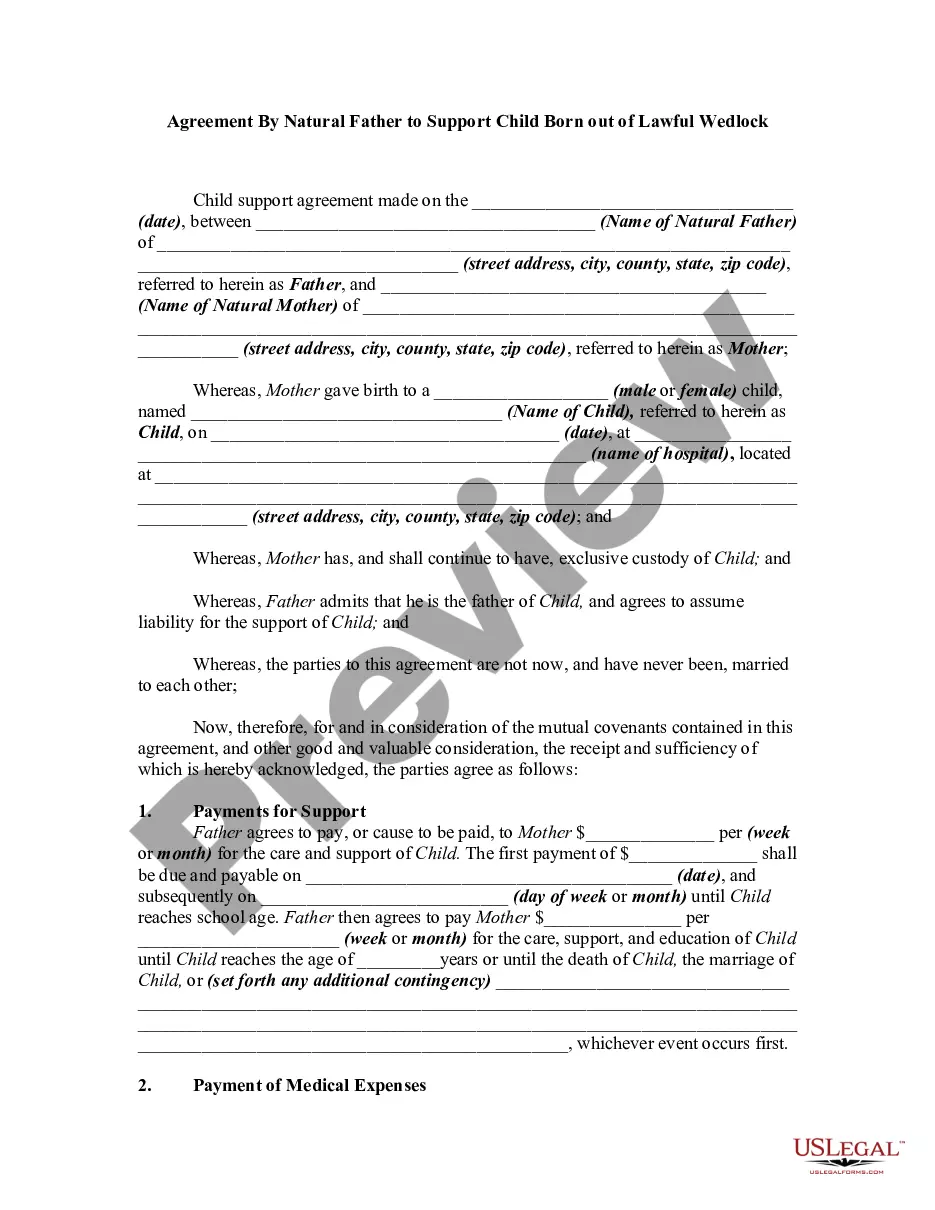
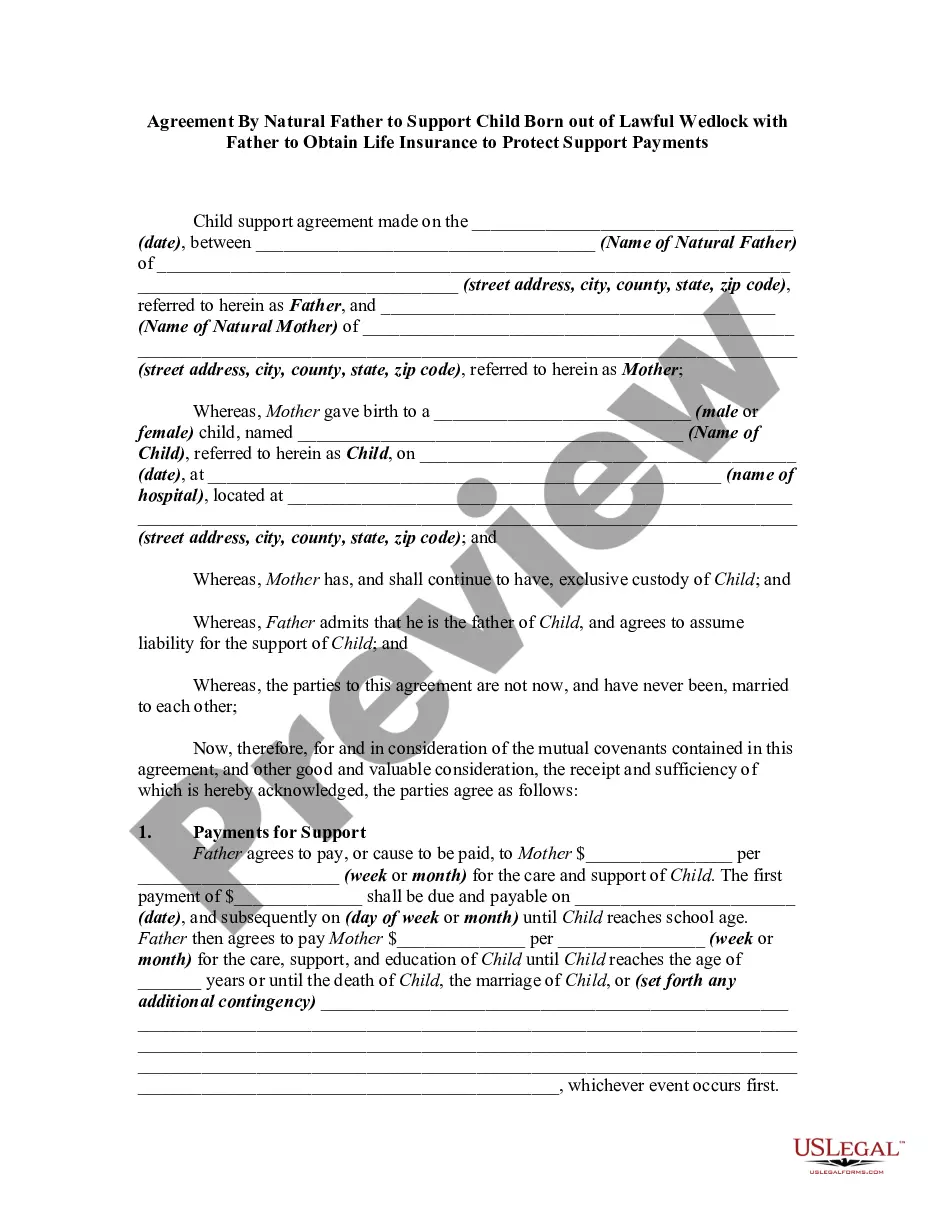
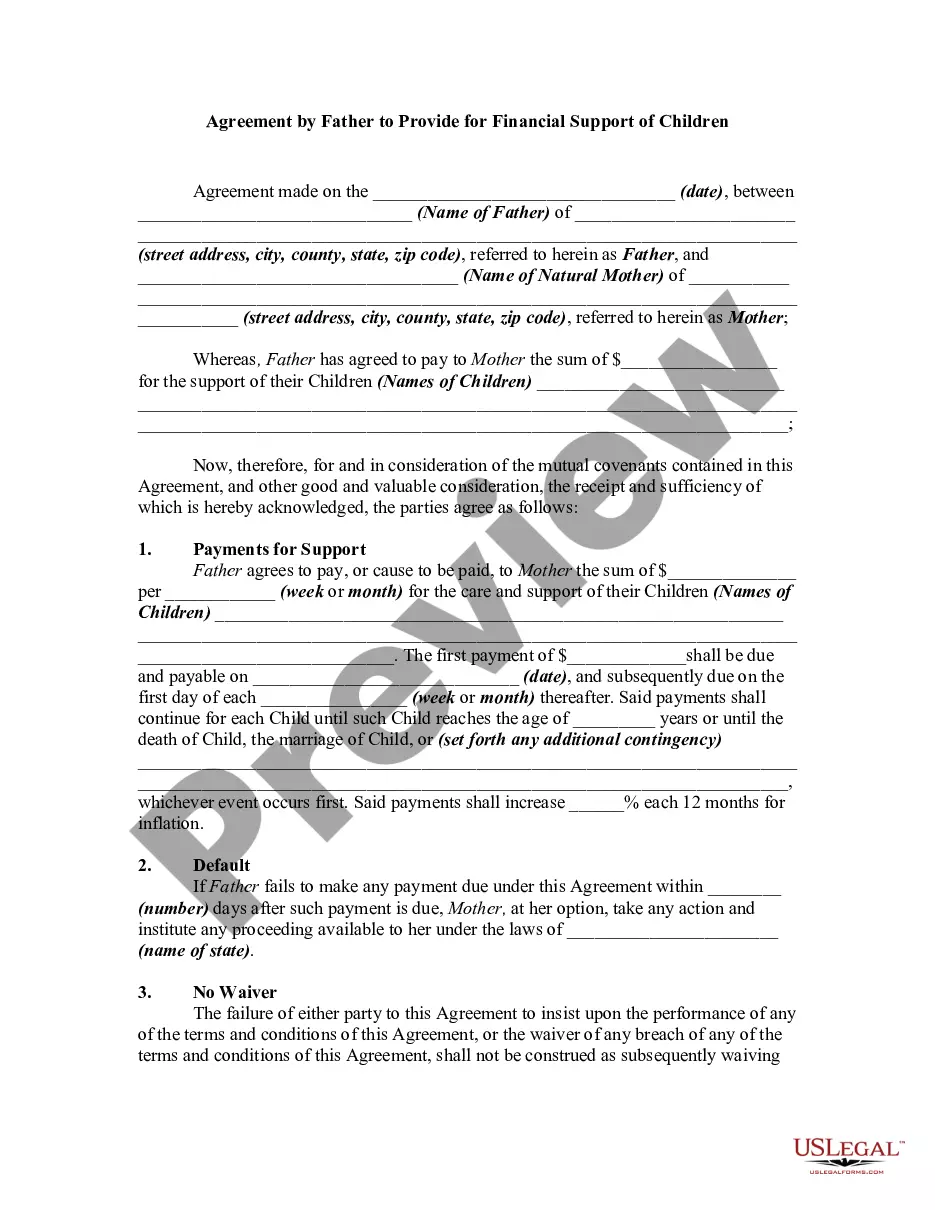
Get your form ready online
Our built-in tools help you complete, sign, share, and store your documents in one place.
Make edits, fill in missing information, and update formatting in US Legal Forms—just like you would in MS Word.
Download a copy, print it, send it by email, or mail it via USPS—whatever works best for your next step.
Sign and collect signatures with our SignNow integration. Send to multiple recipients, set reminders, and more. Go Premium to unlock E-Sign.
If this form requires notarization, complete it online through a secure video call—no need to meet a notary in person or wait for an appointment.
We protect your documents and personal data by following strict security and privacy standards.

Make edits, fill in missing information, and update formatting in US Legal Forms—just like you would in MS Word.

Download a copy, print it, send it by email, or mail it via USPS—whatever works best for your next step.

Sign and collect signatures with our SignNow integration. Send to multiple recipients, set reminders, and more. Go Premium to unlock E-Sign.

If this form requires notarization, complete it online through a secure video call—no need to meet a notary in person or wait for an appointment.

We protect your documents and personal data by following strict security and privacy standards.
Looking for another form?

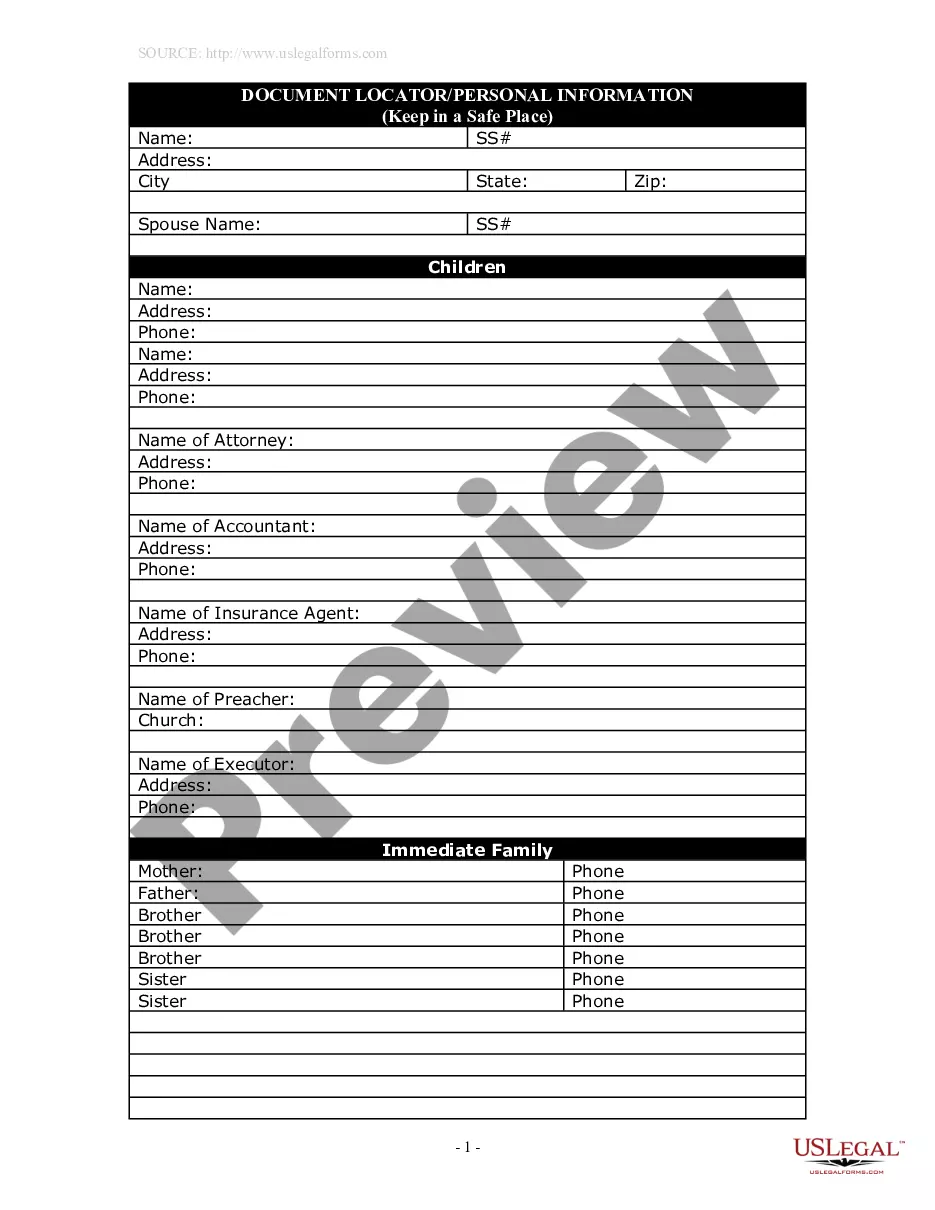



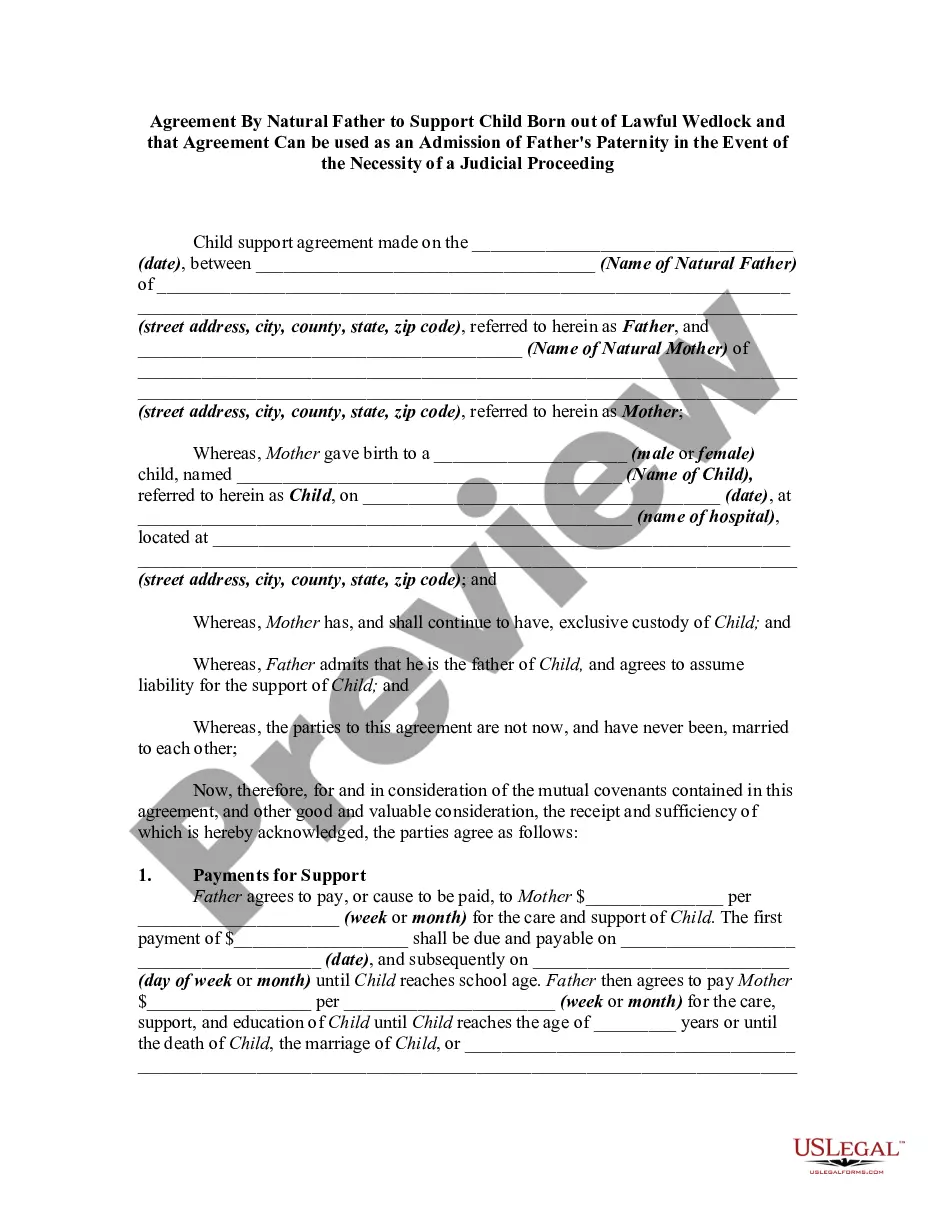
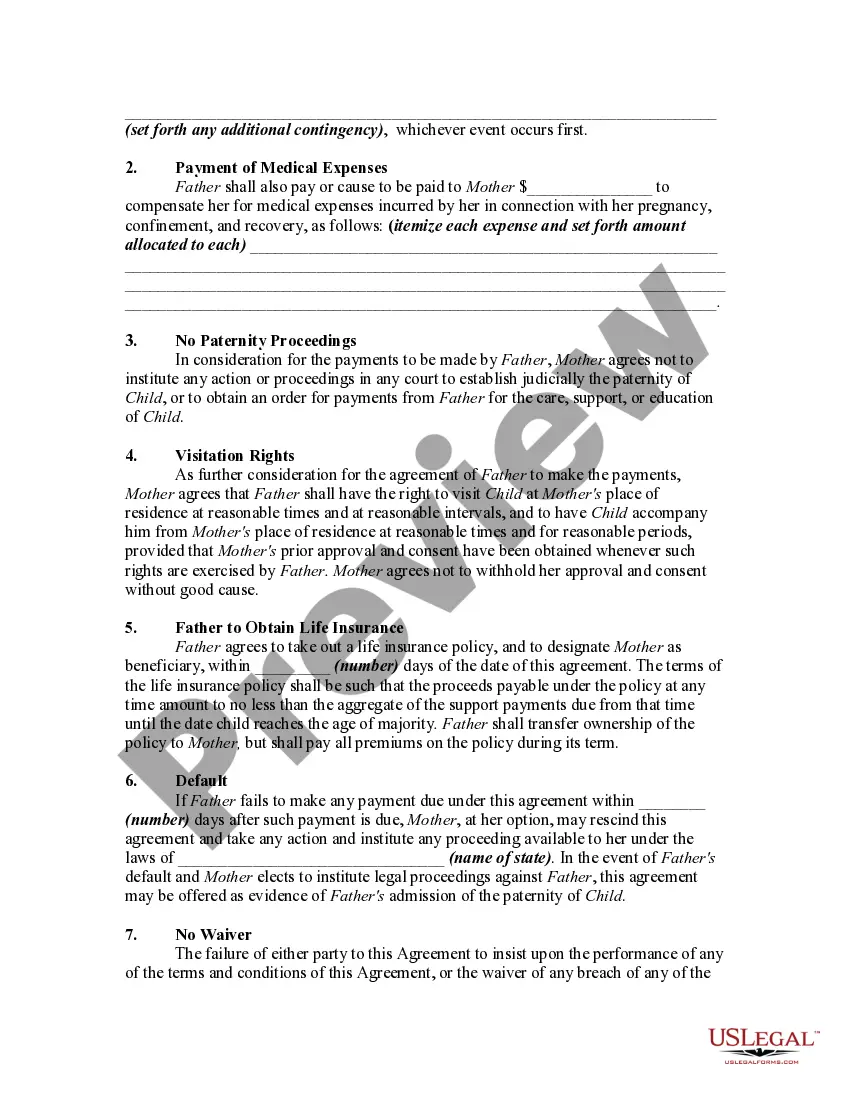
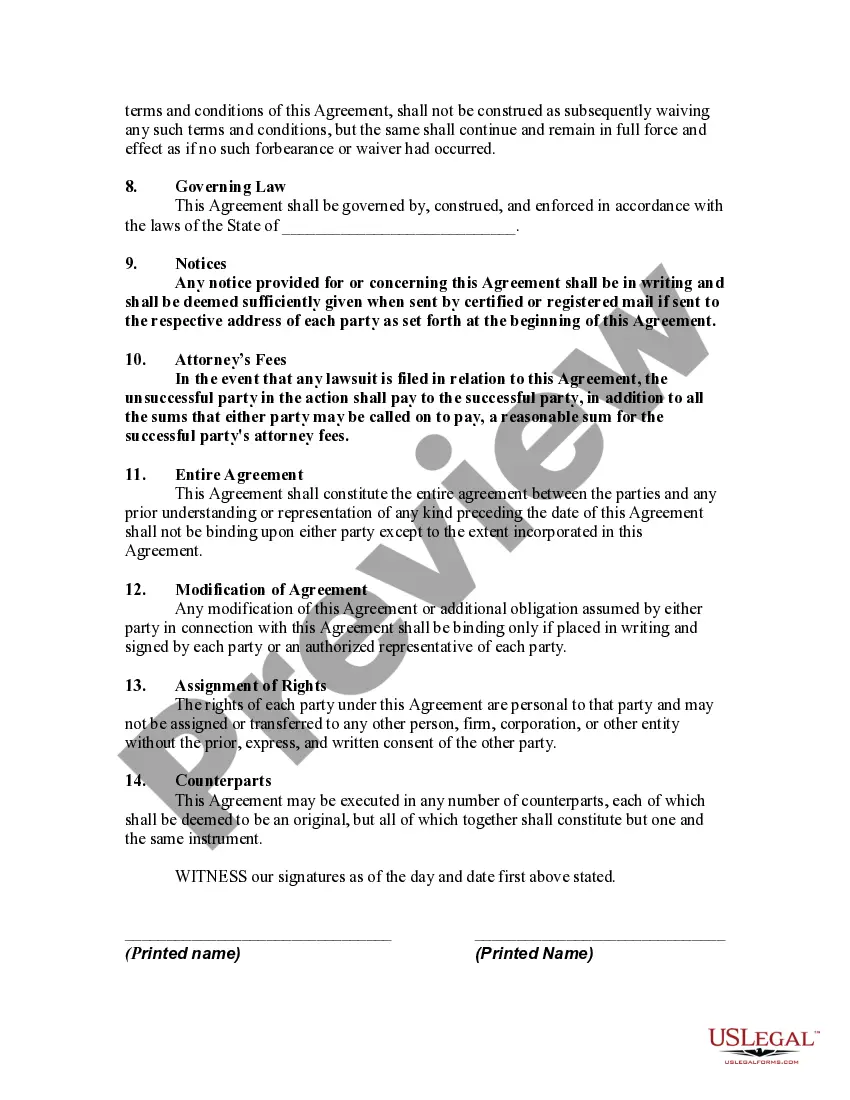
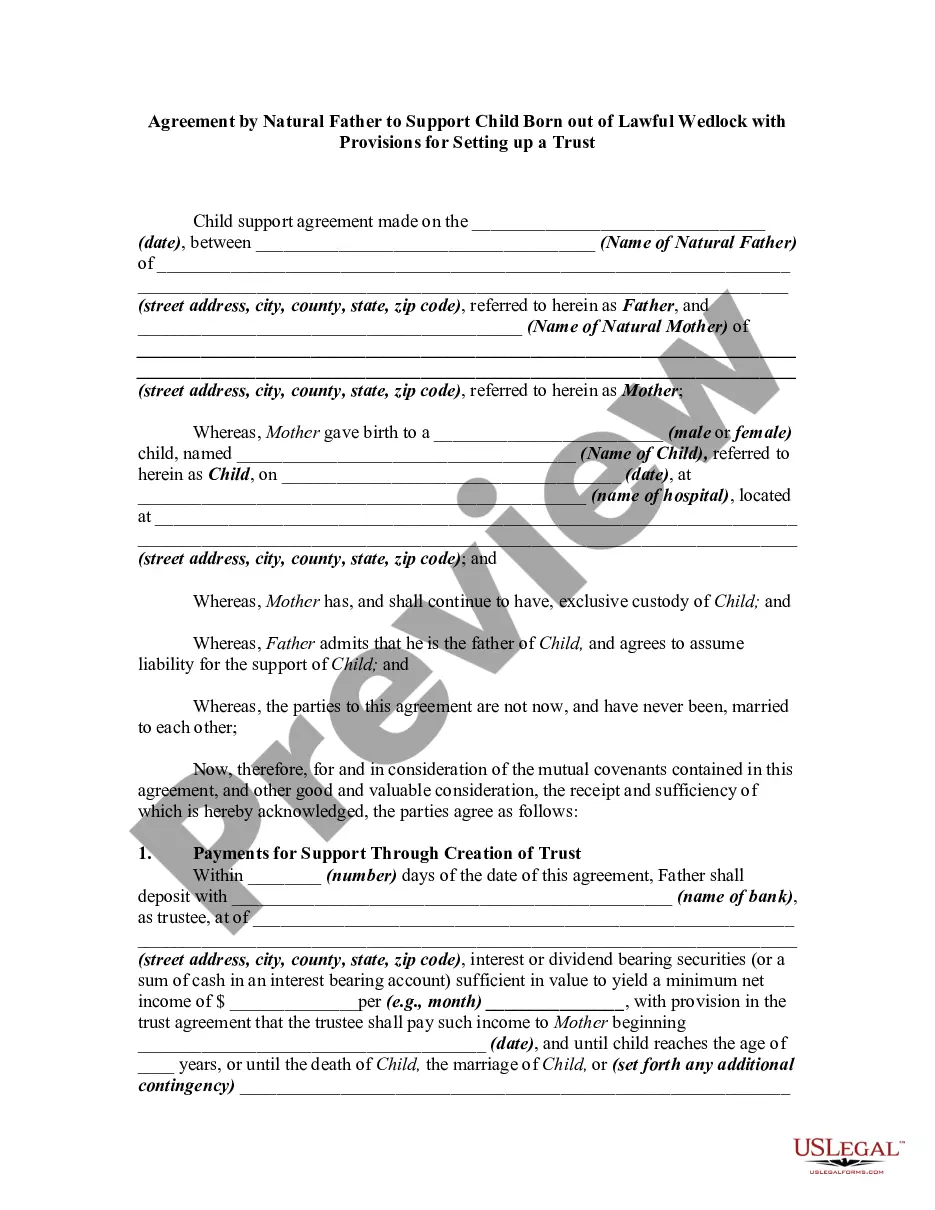
How to fill out Agreement By Natural Father To Support Child Born Out Of Lawful Wedlock And That Agreement Can Be Used As An Admission Of Father's Paternity In The Event Of The Necessity Of A Judicial Proceeding?
The Child Support Payment In Texas showcased on this page is a versatile formal template created by experienced attorneys in accordance with federal and local regulations.
For over 25 years, US Legal Forms has supplied individuals, businesses, and legal experts with more than 85,000 authenticated, state-specific documents for various personal and commercial needs. It is the quickest, simplest, and most reliable method to acquire the forms you require, as the service guarantees the utmost level of data security and anti-malware safeguards.
Select the format you prefer for your Child Support Payment In Texas (PDF, Word, RTF) and save the document on your device. Complete and sign the documentation. Print the template to fill it out by hand or use an online multifunctional PDF editor to quickly and accurately complete and sign your form with a valid signature. Re-download your documentation as necessary. Re-use the same document whenever required. Access the My documents tab in your account to retrieve any previously saved forms. Subscribe to US Legal Forms to have vetted legal templates for all of life’s scenarios available at your convenience.
- Search for the document you require and assess it.
- Examine the file you found and preview it or verify the form description to ensure it meets your needs. If it doesn’t, utilize the search tool to locate the correct one. Click Buy Now once you’ve discovered the template you need.
- Register and Log Into your account.
- Select the payment option that works for you and sign up for an account. Use PayPal or a credit card for a swift payment. If you already possess an account, Log In and verify your membership to proceed.
- Acquire the editable template.
Form popularity
FAQ
In Texas, even in 50/50 custody arrangements, one parent may still be required to pay child support. Generally, the parent with the higher income will pay support to the other parent to balance the expenses. This helps ensure that both parents contribute to the child's needs equally. If you're navigating this situation, our platform can assist you in understanding how to pay child support in Texas.
Filing for child support in Texas typically takes a few weeks, but the timeline can vary depending on several factors. After you file the paperwork, the court will need time to schedule a hearing. Once the hearing occurs, the judge will issue a child support order, which can take additional time to finalize. To streamline this process, you might want to use our services to pay child support in Texas efficiently.
Texas determines child support amount based on a percentage of the non-custodial parent's income. The state uses a formula that considers the number of children involved and the parent's earnings. This ensures that the support amount meets the needs of the child while being fair to the paying parent. For a clear understanding of this process, you can explore resources to pay child support in Texas on our platform.
In Texas, you cannot go without paying child support indefinitely. If you fall behind on payments, the court can take legal action against you. This may include wage garnishment or even jail time. It’s essential to stay current on your payments to avoid these consequences, so if you need assistance, consider options to pay child support in Texas through our platform.
The new law for child support in Texas aims to create a more equitable system for determining payment obligations. It factors in the non-custodial parent's income, adjusted for expenses, and offers clear guidelines for calculating payments. This legislation aims to reduce confusion and ensure that child support amounts are fair and consistent. To stay informed on how to pay child support in Texas and adapt to these changes, utilize tools from US Legal Forms.
Recently, Texas has introduced changes to its child support laws to ensure fairness and clarity. The new law focuses on how child support payments are calculated and addresses income changes, making adjustments more streamlined. It's important for parents to understand these changes and how they might affect their situations. For guidance on how to pay child support in Texas under the new regulations, consider using US Legal Forms.
In Texas, authorities calculate child support using a percentage of your net monthly income. Typically, the guidelines suggest that you pay 20% of your income for one child, with adjustments for additional children. Moreover, various factors like healthcare costs and other obligations can influence the total amount. To navigate this complex process, consider using US Legal Forms to get accurate insights and assistance.
Paying child support in Texas involves specific guidelines that determine how much you owe. Typically, child support cannot exceed 50% of your income, as this is designed to maintain a balance between your financial responsibilities and your ability to support yourself. However, unique circumstances may arise that could affect these calculations. It's essential to consult with a professional or use platforms like US Legal Forms to understand your situation better.