Subcontractor Labour Rates
Description




Get your form ready online
Our built-in tools help you complete, sign, share, and store your documents in one place.
Make edits, fill in missing information, and update formatting in US Legal Forms—just like you would in MS Word.
Download a copy, print it, send it by email, or mail it via USPS—whatever works best for your next step.
Sign and collect signatures with our SignNow integration. Send to multiple recipients, set reminders, and more. Go Premium to unlock E-Sign.
If this form requires notarization, complete it online through a secure video call—no need to meet a notary in person or wait for an appointment.
We protect your documents and personal data by following strict security and privacy standards.

Make edits, fill in missing information, and update formatting in US Legal Forms—just like you would in MS Word.

Download a copy, print it, send it by email, or mail it via USPS—whatever works best for your next step.

Sign and collect signatures with our SignNow integration. Send to multiple recipients, set reminders, and more. Go Premium to unlock E-Sign.

If this form requires notarization, complete it online through a secure video call—no need to meet a notary in person or wait for an appointment.

We protect your documents and personal data by following strict security and privacy standards.
Looking for another form?







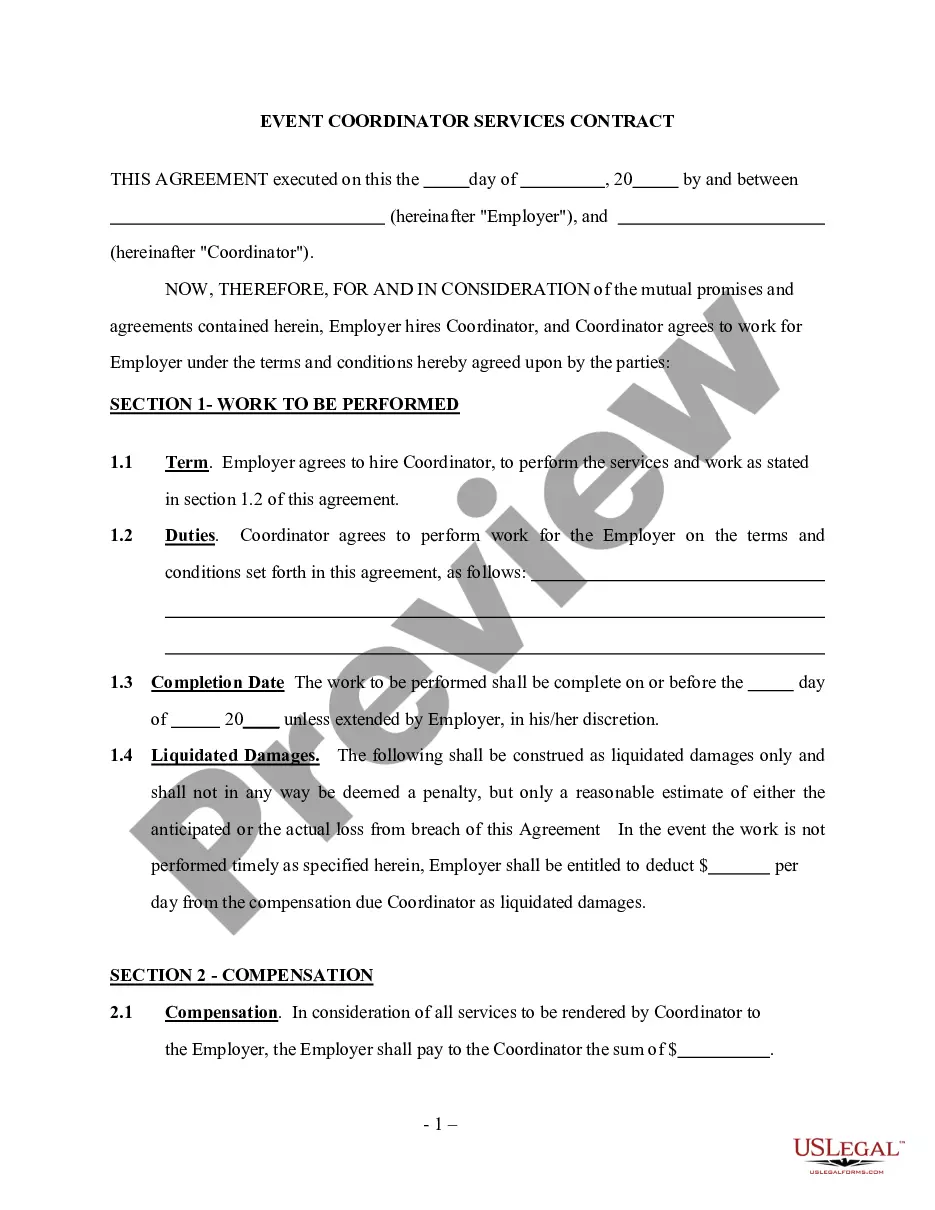


How to fill out Subcontract For Construction Of Portion Of Building, With Subcontractor To Perform Work And Furnish Materials, Equipment And Labor And To Assume Liability For And Hold Contractor And Owner Harmless From Any Damage To Persons Or Property?
Regardless of whether for commercial objectives or personal issues, everyone inevitably faces legal circumstances at some point in their life.
Completing legal paperwork calls for meticulous focus, starting from selecting the correct form example.
With an extensive US Legal Forms catalog available, you don't have to waste time searching for the suitable template online. Make use of the library's intuitive navigation to find the right form for any circumstance.
- Locate the template you require by utilizing the search bar or catalog browsing.
- Examine the description of the form to ensure it aligns with your situation, region, and county.
- Select the form's preview to review it.
- If it's the wrong template, return to the search option to find the Subcontractor Labour Rates example you need.
- Acquire the template if it aligns with your requirements.
- If you have a US Legal Forms account, simply click Log in to access previously saved documents in My documents.
- If you do not yet possess an account, you can obtain the form by clicking Buy now.
- Select the appropriate pricing option.
- Fill out the account registration form.
- Choose your payment method: use a credit card or PayPal account.
- Select the document format you prefer and download the Subcontractor Labour Rates.
- Once downloaded, you can complete the form using editing software or print it and finish it manually.
Form popularity
FAQ
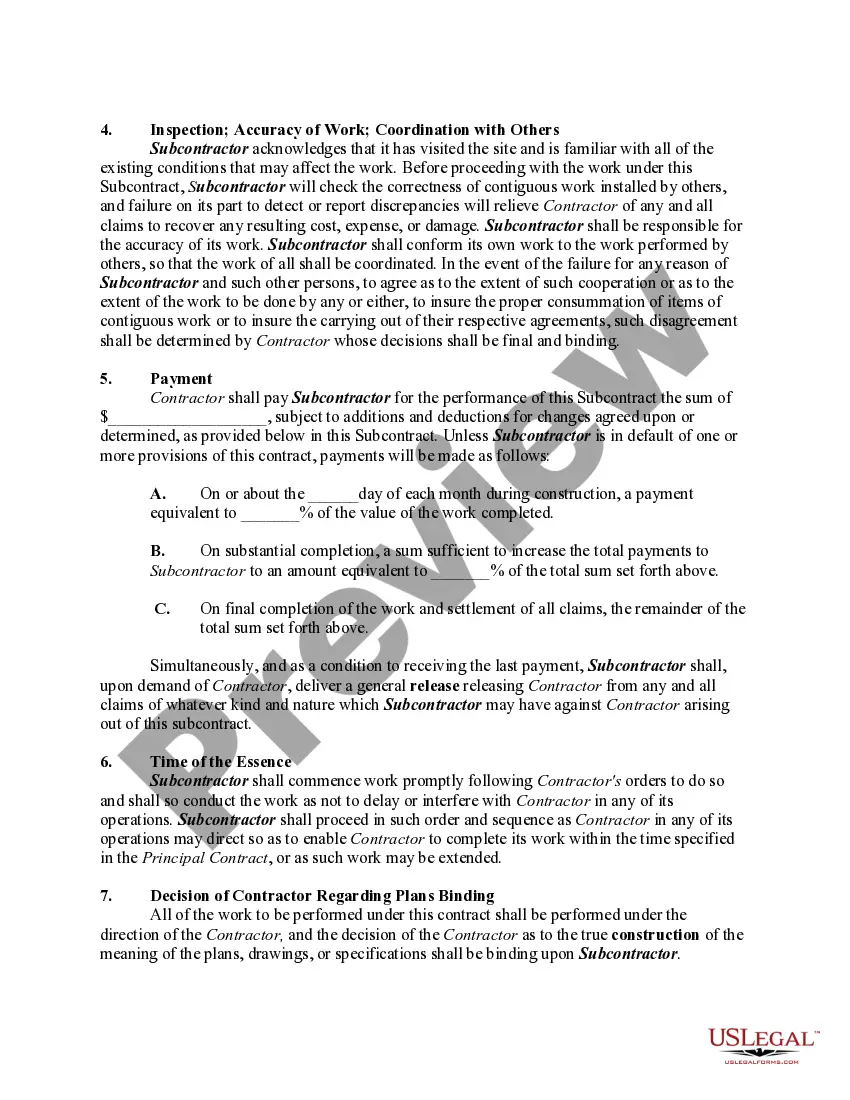
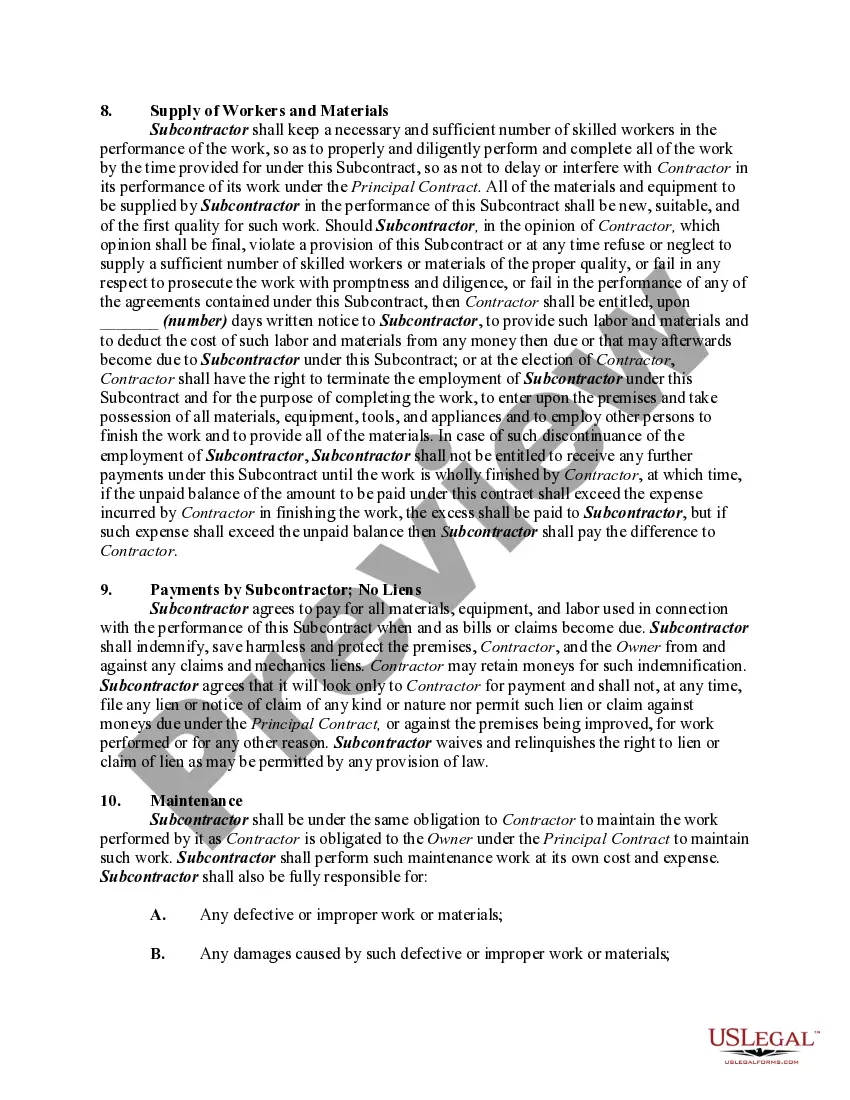
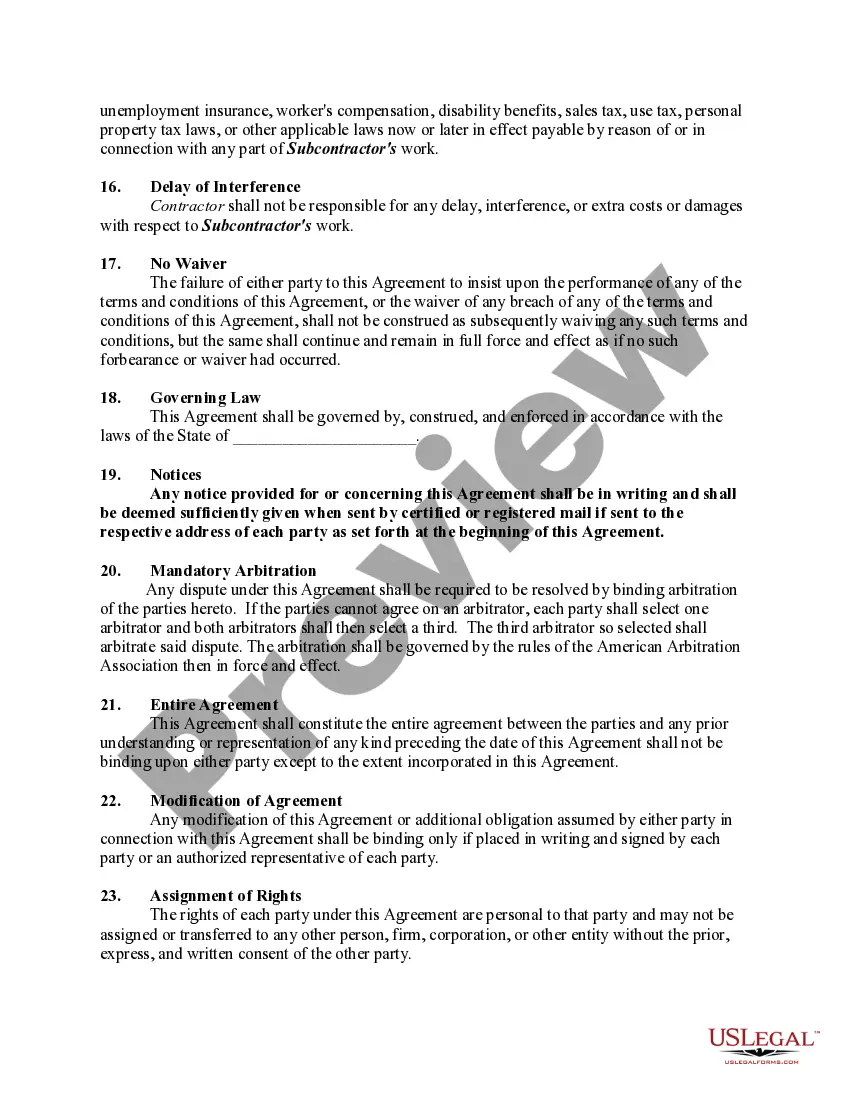
Subcontractor expenses include any costs incurred while performing contracted services. This often covers wages, materials, equipment rentals, and travel expenses directly related to the project. By understanding these expenses, both contractors and subcontractors can manage their budgets effectively.
A fair percentage for a subcontractor typically ranges from 10% to 30% above the subcontractor labour rates. This margin accounts for overhead and profit while remaining competitive within the industry. Establishing clear expectations at the beginning of a project helps maintain a positive working relationship.
Subcontractor costs usually encompass labour rates, materials, equipment, and any necessary permits. They may also cover administrative costs and overhead. It's imperative to clarify these costs upfront to ensure both parties agree on the budget and avoid misunderstandings later.
To calculate subcontracting costs, start by determining the subcontractor labour rates for various tasks. Include costs for materials, equipment, and overhead. Additionally, it’s wise to factor in any contingencies to cover unexpected expenses, ensuring your budget remains on track.
Contractors typically calculate labor by considering the subcontractor labour rates and the estimated number of hours required for a project. They assess the complexity of tasks and add any overtime rates if necessary. Using project management tools can help streamline this process and ensure accurate calculations.
Calculating labour costs requires understanding the subcontractor labour rates, including wages, taxes, and benefits. Begin by estimating the total hours needed for the project and multiply this by the hourly rate. Don’t forget to include any additional costs associated with the hiring process, such as training or tools. This comprehensive approach ensures you accurately budget for your project and maintain financial control.
Filling out a subcontractor agreement can seem daunting, but it’s essential for defining the scope of work, payment terms, and timelines. Start by clearly stating the subcontractor labour rates and specific tasks expected. Include clauses about deliverables, confidentiality, and termination conditions to protect both parties. Utilizing platforms like US Legal Forms simplifies this process, offering templates that guide you through the necessary components.