Maturity Date For Series Ee Bonds
Description
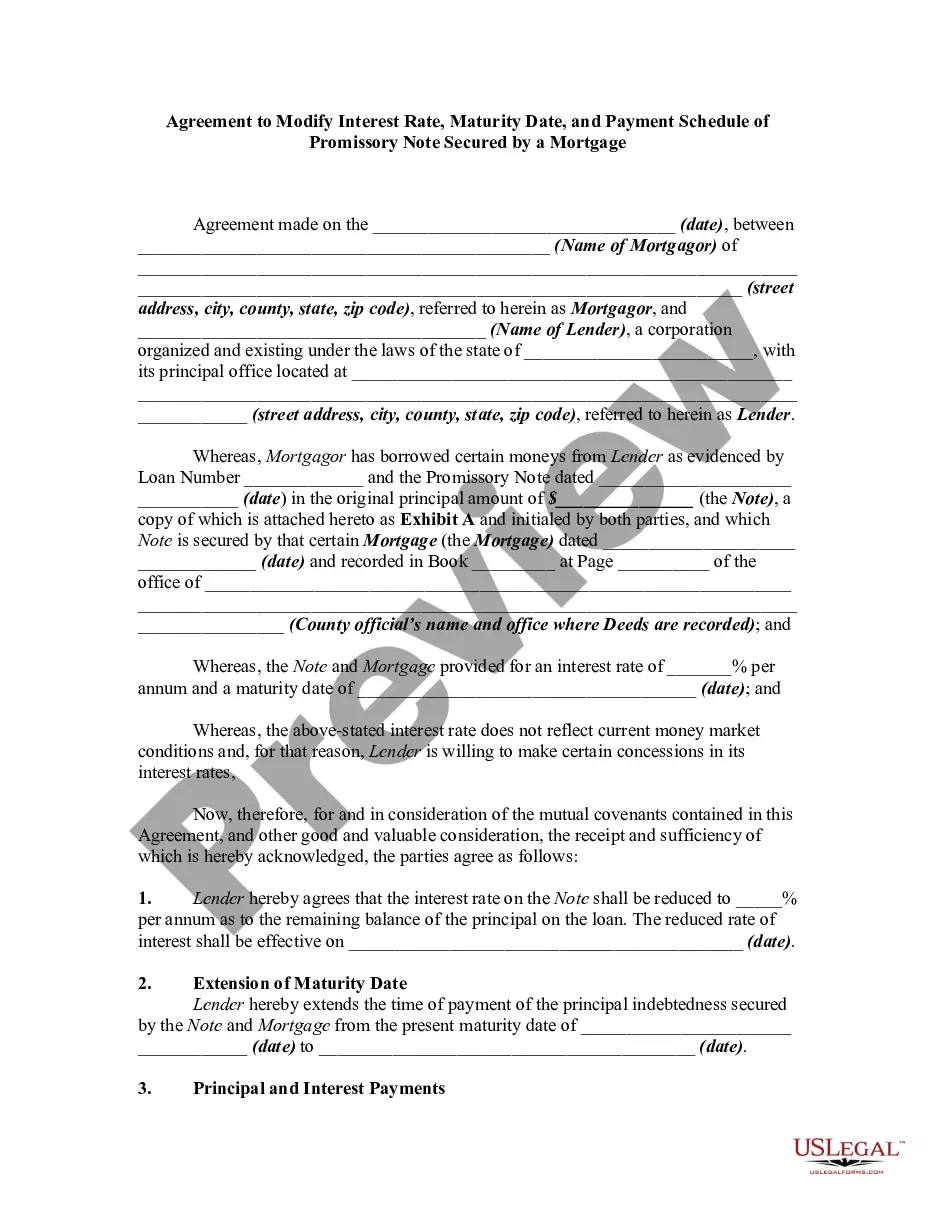
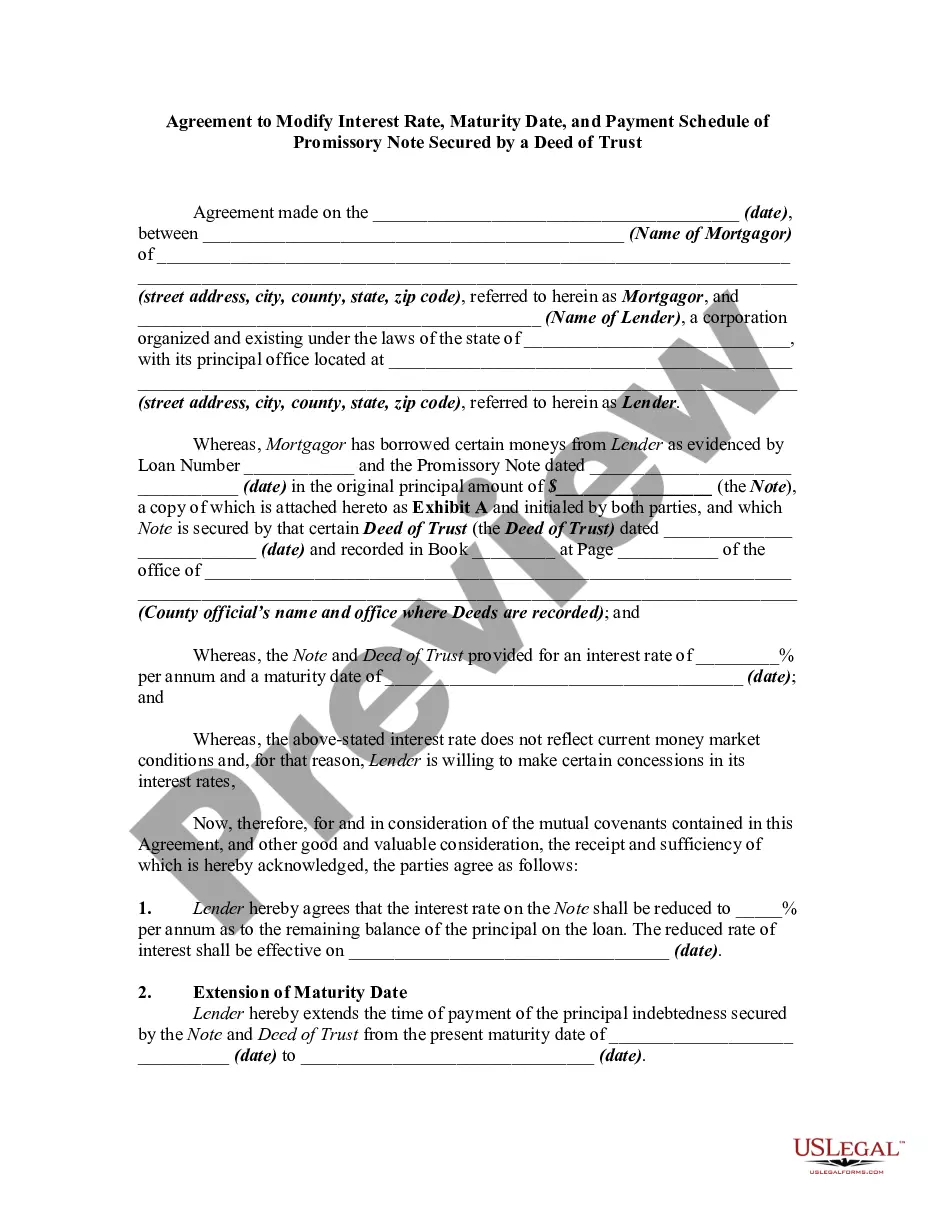
Get your form ready online
Our built-in tools help you complete, sign, share, and store your documents in one place.
Make edits, fill in missing information, and update formatting in US Legal Forms—just like you would in MS Word.
Download a copy, print it, send it by email, or mail it via USPS—whatever works best for your next step.
Sign and collect signatures with our SignNow integration. Send to multiple recipients, set reminders, and more. Go Premium to unlock E-Sign.
If this form requires notarization, complete it online through a secure video call—no need to meet a notary in person or wait for an appointment.
We protect your documents and personal data by following strict security and privacy standards.

Make edits, fill in missing information, and update formatting in US Legal Forms—just like you would in MS Word.

Download a copy, print it, send it by email, or mail it via USPS—whatever works best for your next step.

Sign and collect signatures with our SignNow integration. Send to multiple recipients, set reminders, and more. Go Premium to unlock E-Sign.

If this form requires notarization, complete it online through a secure video call—no need to meet a notary in person or wait for an appointment.

We protect your documents and personal data by following strict security and privacy standards.
Looking for another form?






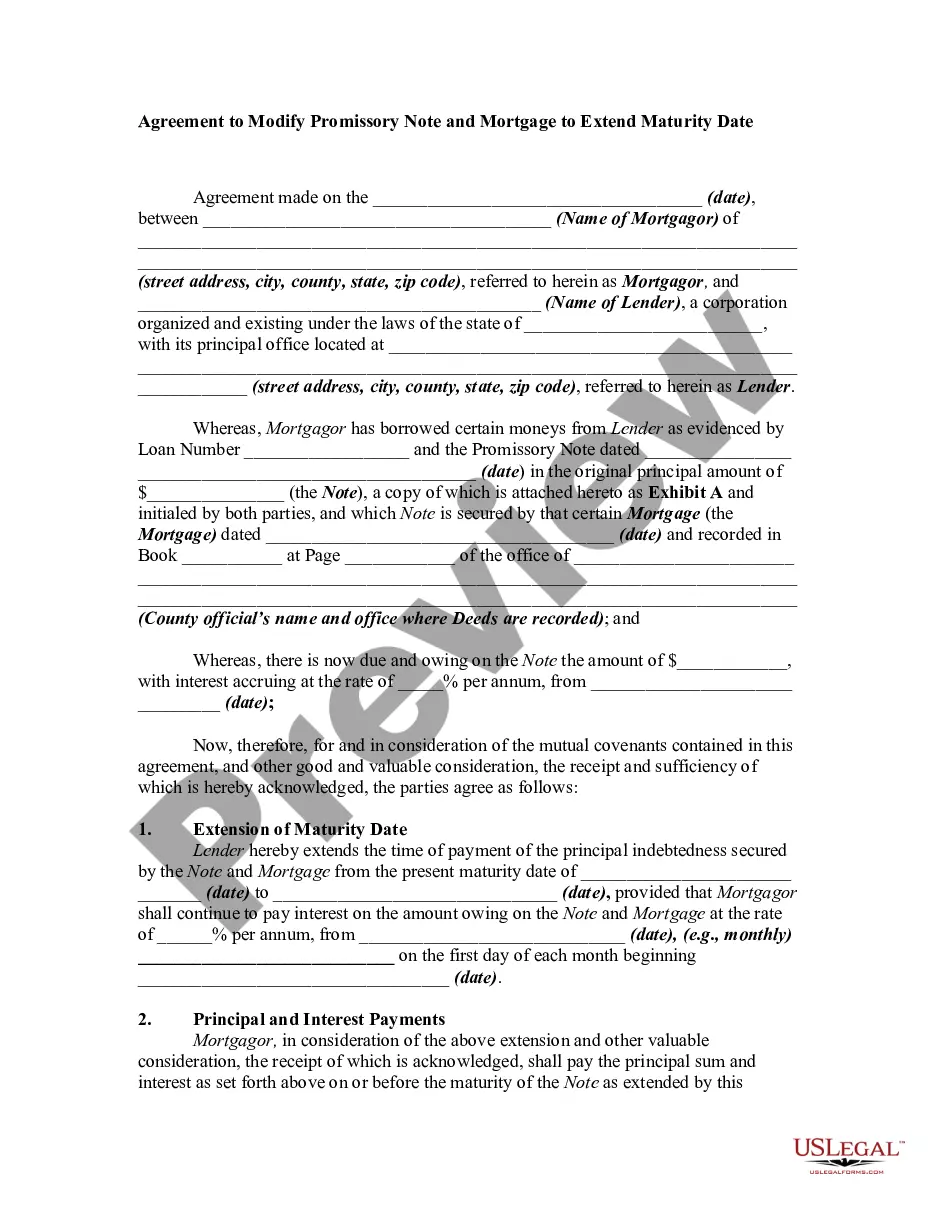
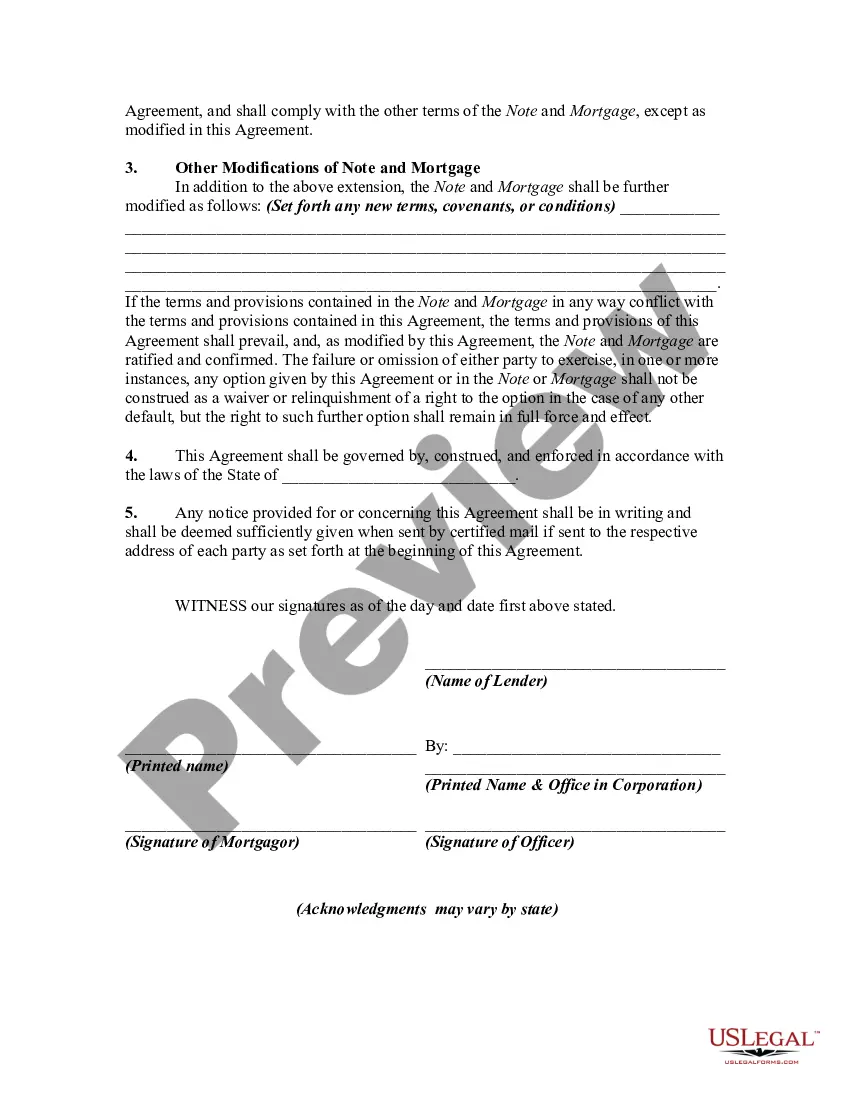
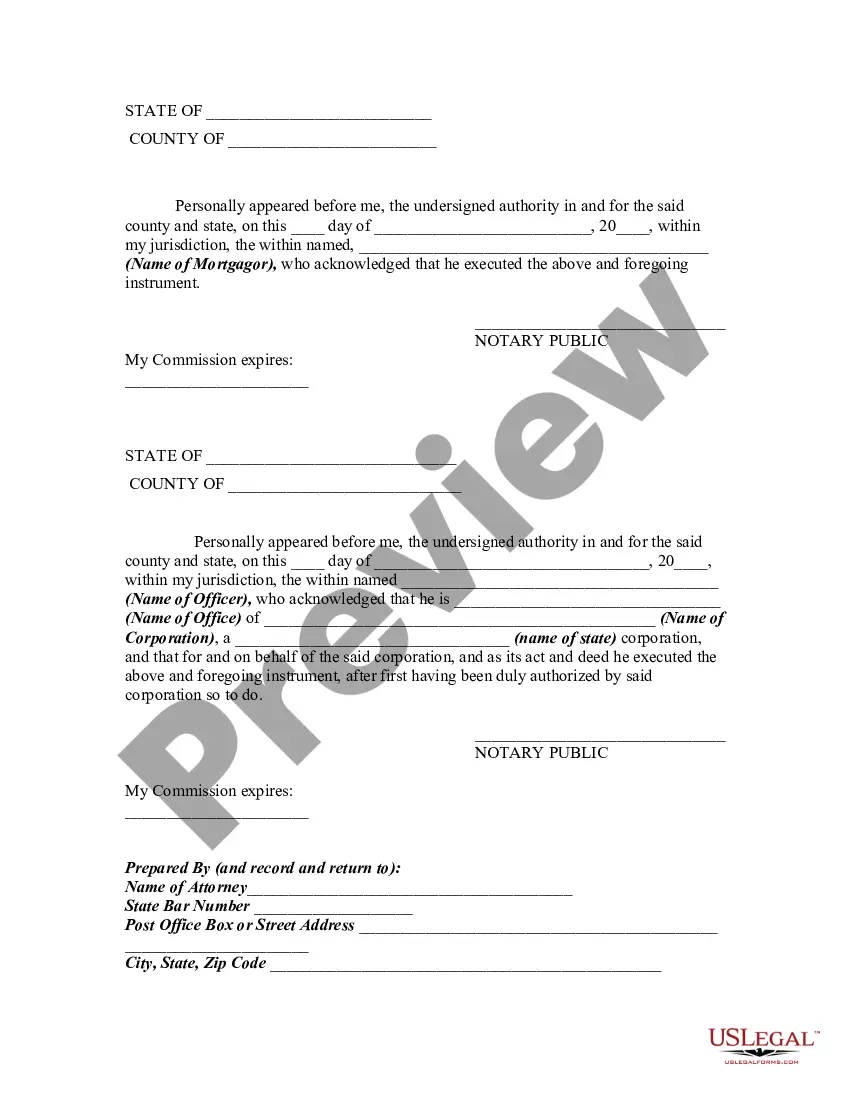
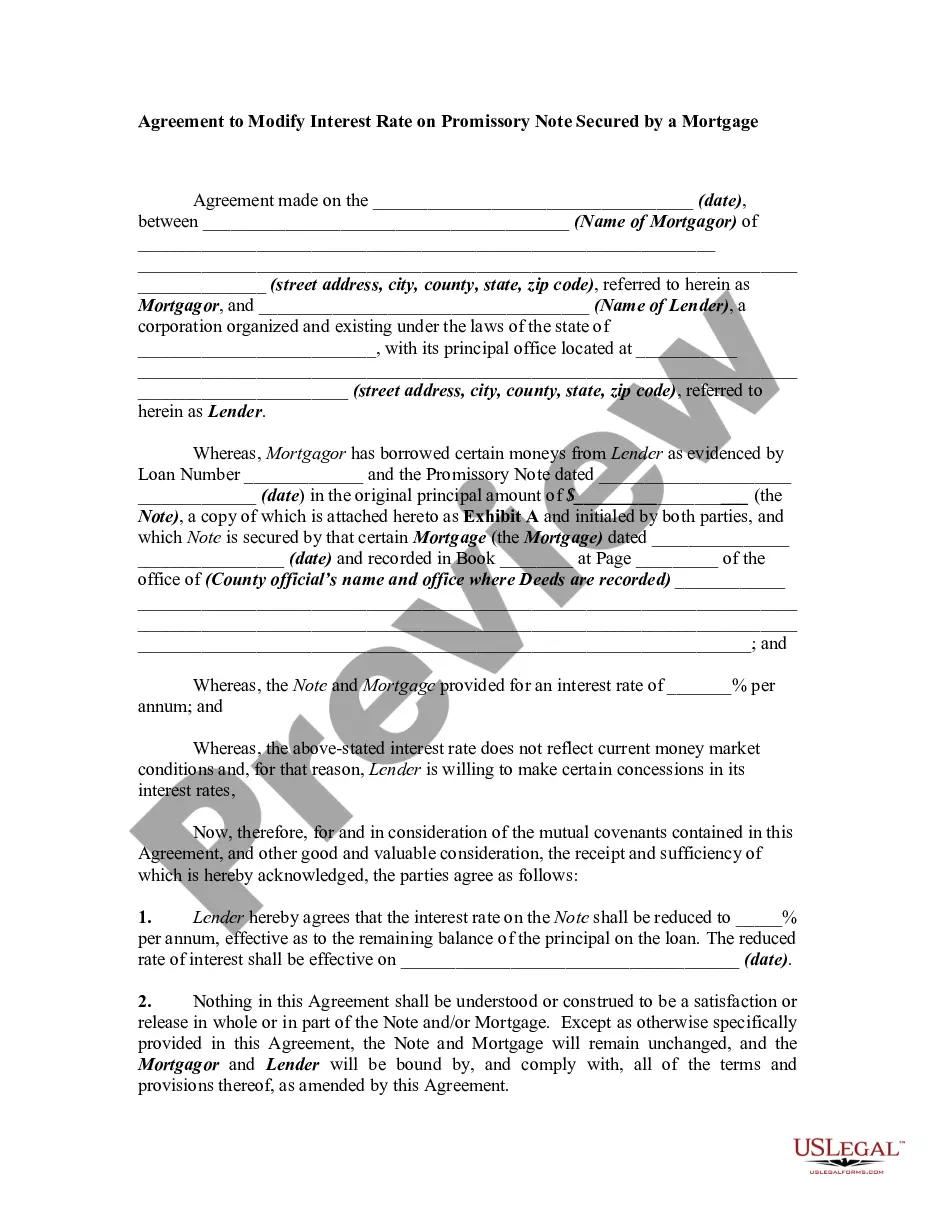
How to fill out Agreement To Modify Promissory Note And Mortgage To Extend Maturity Date?
Legal documents handling can be daunting, even for seasoned professionals.
If you are seeking a Maturity Date For Series Ee Bonds and lack the time to invest in locating the correct and updated version, the situation can be taxing.
Access a resource pool of articles, guides, and materials pertinent to your situation and requirements.
Save time and energy finding the documents you need, and take advantage of US Legal Forms’ advanced search and Review feature to locate Maturity Date For Series Ee Bonds and obtain it.
Enjoy the US Legal Forms online library, backed by 25 years of expertise and dependability. Streamline your document management process in an easy and user-friendly manner today.
- If you have a subscription, Log In to your US Legal Forms account, search for the form, and download it.
- Check your My documents tab to see the documents you have previously downloaded and manage your folders accordingly.
- If it's your first time using US Legal Forms, create an account and gain unlimited access to all the library's benefits.
- After downloading the necessary form, ensure it is the correct one by previewing it and reviewing its description.
- Confirm the form is accepted in your state or county.
- Click Buy Now when you are prepared.
- Choose a subscription plan.
- Select the format you require and Download, fill in, sign, print, and send your document.
- Access state- or county-specific legal and business documents.
- US Legal Forms addresses any needs you may have, from personal to business paperwork, all in one place.
- Utilize cutting-edge tools to complete and manage your Maturity Date For Series Ee Bonds.
Form popularity
FAQ
I bonds, unlike EE bonds, do not have a guaranteed doubling schedule. However, they do yield interest that grows over time, and while they may not double within 20 years, they can still provide a worthwhile return. When managing your bonds, the maturity date for series EE bonds is distinct, so be mindful of which type you own. If you need help understanding your bonds, consider reaching out to uslegalforms for tailored advice.
A $100 EE savings bond typically takes 20 years to reach its full maturity, at which point it should have doubled in value. It’s important to note that the bonds continue to earn interest for a total of 30 years, after which they stop earning altogether. Keeping track of the maturity date for series EE bonds is essential for maximizing your investment. For individuals looking to manage these investments, platforms like uslegalforms can provide guidance and help ensure you're informed about your bonds.
A $100 savings bond issued in 1994 has likely appreciated in value through accumulated interest, especially since it can reach full maturity. The precise worth depends on the interest rate assigned at the time of issuance and the passing years. To find the current value, you can consult the U.S. Treasury's bond calculator, which helps to calculate the maturity date for series EE bonds and gives you a clear idea of what your bond is worth today.
To record the redemption of bonds, keep a detailed record of the transaction, including the bond's face value and interest earned. You should also document the date of redemption and any relevant Forms 1099 you receive. This information helps you track the bonds for tax purposes. Using platforms like UsLegalForms can simplify the process of recording bond redemptions and maintaining accurate financial records.
To report the redemption of series EE bonds, you need to include the interest earned on your bonds in your income tax return. When you redeem the bonds, you receive a Form 1099-INT that shows the interest earned. Ensure you report this amount on your tax return accurately. Reporting the redemption of series EE bonds is simple when you have the necessary documentation.
The value of a $50 savings bond from 2009 varies based on interest rates and how long it has been held. As of recent calculations, it may likely be worth around $75 today, but this can fluctuate. Understanding the maturity date for series EE bonds can give you a clearer idea of when to determine its full value. Always check the U.S. Treasury website for the most accurate information.
To find the maturity date of a bond, you can check the bond's issue date and the terms outlined by the U.S. Treasury. Generally, you can easily locate this information online or via tools that display bond values. Accurately identifying the maturity date for series EE bonds will allow you to monitor your growth effectively. Using platforms like USLegalForms can help streamline this process for you.
When you redeem Series EE bonds, you must report the interest earned when filing your federal tax return. This is important because the interest is subject to federal income tax. You can use the form provided by the Treasury to document your redemption accurately. If you need help navigating this process, platforms like uslegalforms can offer valuable assistance and guidance.
EE bonds mature in 30 years, not 20 years. This extended maturity period allows your investment to grow significantly over time. The maturity date for series EE bonds is a critical aspect of their appeal, as they can double in value if held to maturity. Knowing this can help you make informed decisions about your savings strategy.
The maturity date for series EE bonds is typically 30 years from the issue date. This means that your investment will reach its full value at that time, and you will not earn more interest beyond that date. If you hold your bonds for a full 30 years, you will see the complete benefits of your investment. Understanding the maturity date is crucial for planning your financial future.