Co Ownership Dog Contract With A Friend
Description
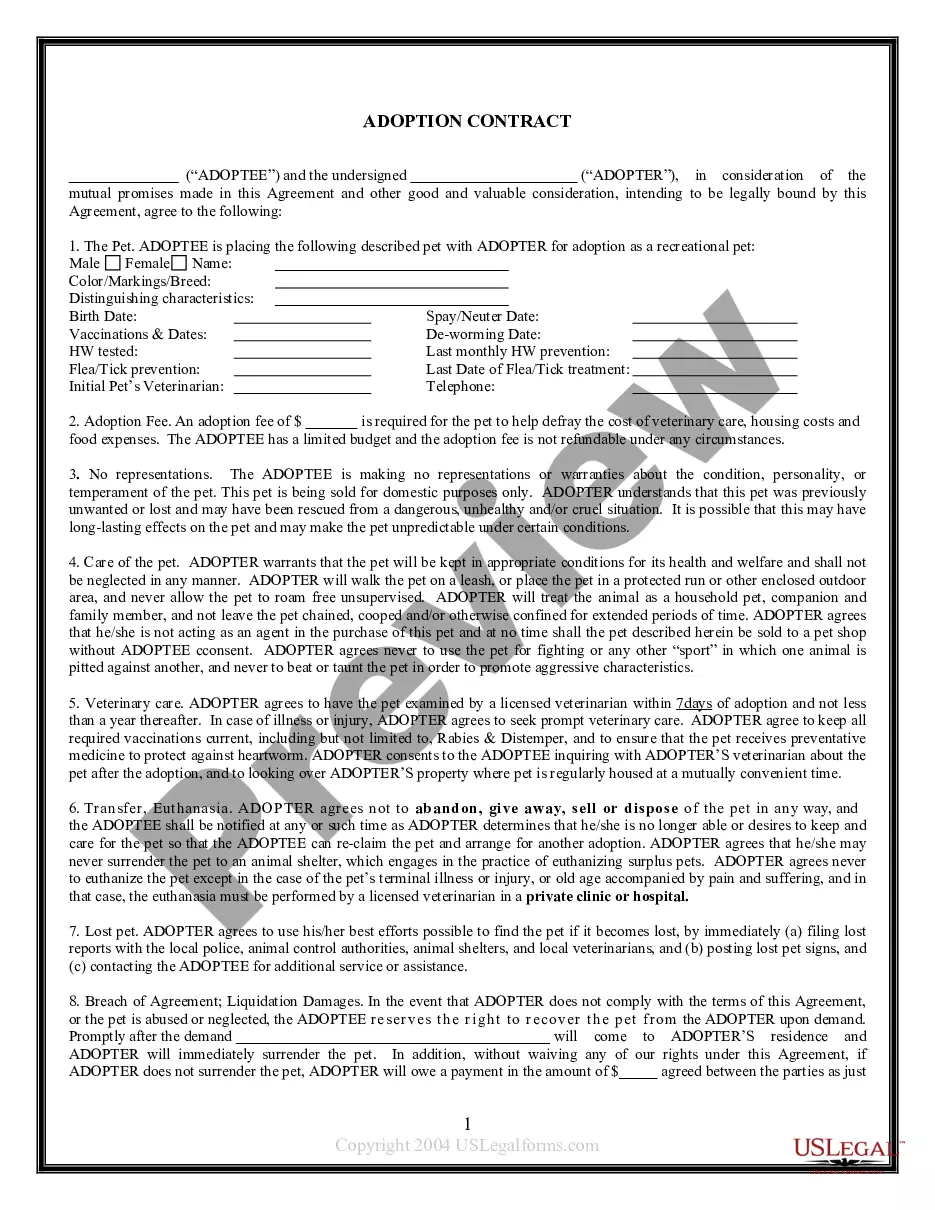
Get your form ready online
Our built-in tools help you complete, sign, share, and store your documents in one place.
Make edits, fill in missing information, and update formatting in US Legal Forms—just like you would in MS Word.
Download a copy, print it, send it by email, or mail it via USPS—whatever works best for your next step.
Sign and collect signatures with our SignNow integration. Send to multiple recipients, set reminders, and more. Go Premium to unlock E-Sign.
If this form requires notarization, complete it online through a secure video call—no need to meet a notary in person or wait for an appointment.
We protect your documents and personal data by following strict security and privacy standards.

Make edits, fill in missing information, and update formatting in US Legal Forms—just like you would in MS Word.

Download a copy, print it, send it by email, or mail it via USPS—whatever works best for your next step.

Sign and collect signatures with our SignNow integration. Send to multiple recipients, set reminders, and more. Go Premium to unlock E-Sign.

If this form requires notarization, complete it online through a secure video call—no need to meet a notary in person or wait for an appointment.

We protect your documents and personal data by following strict security and privacy standards.
Looking for another form?
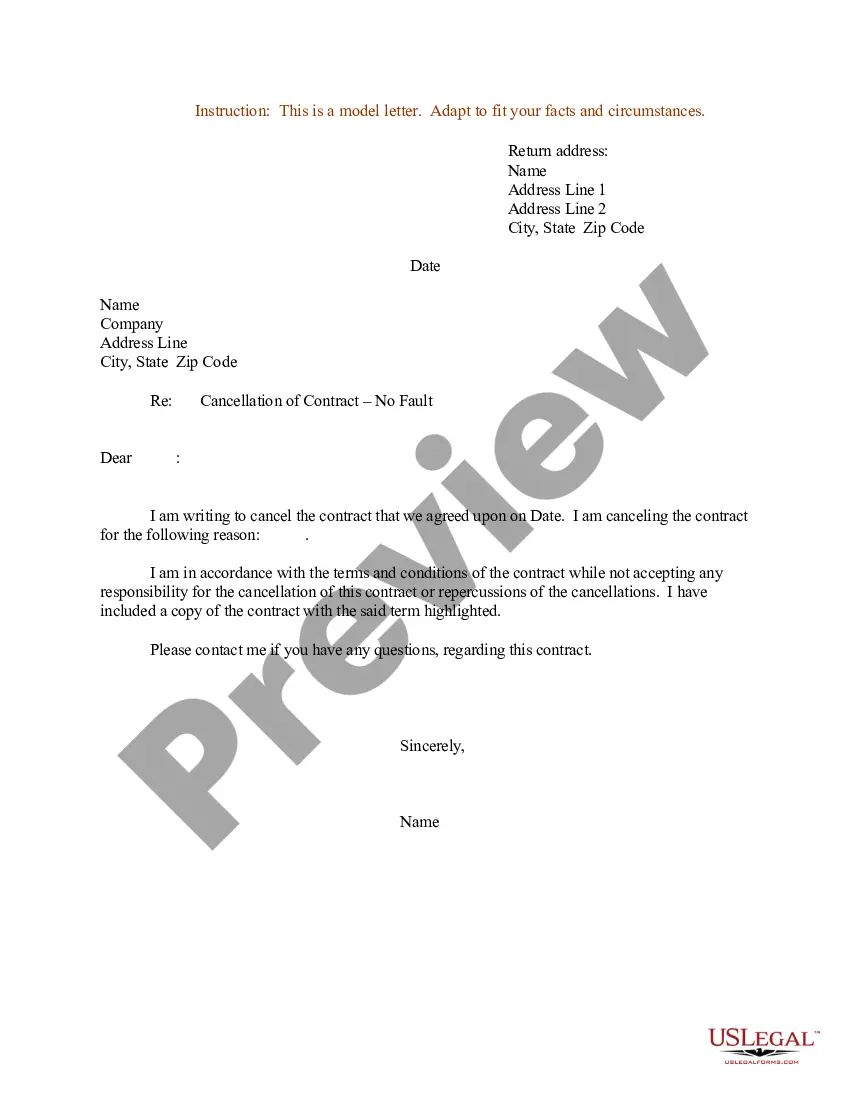



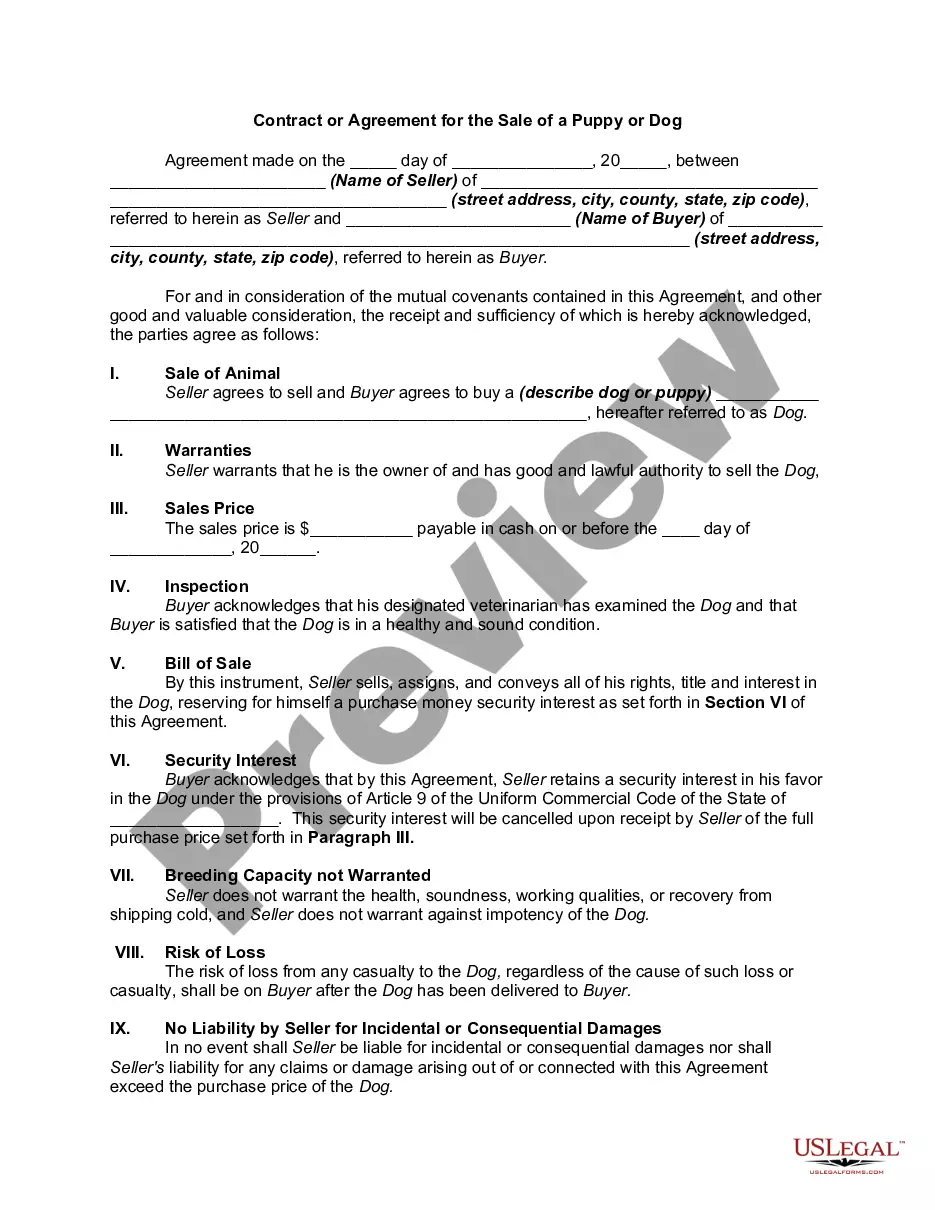
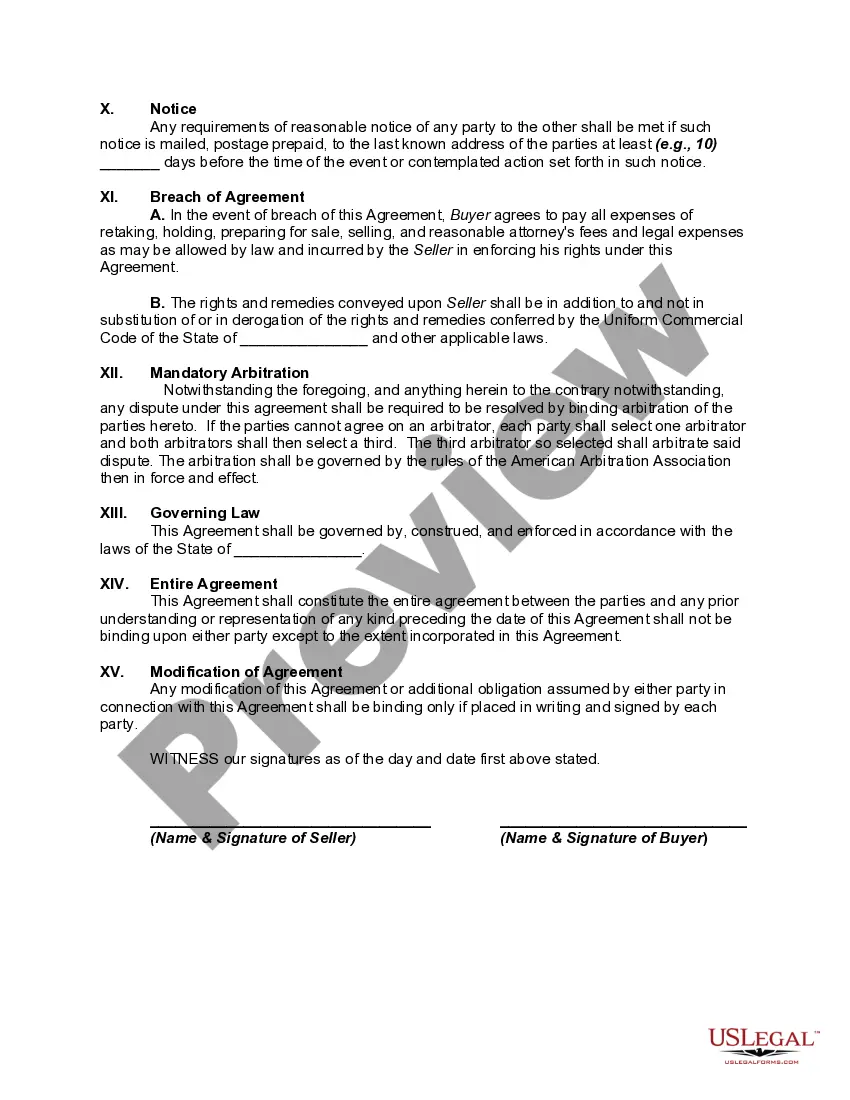
How to fill out Contract Or Agreement For The Sale Of A Puppy Or Dog?
Finding a reliable source for obtaining the latest and most pertinent legal templates constitutes a significant portion of navigating bureaucracy.
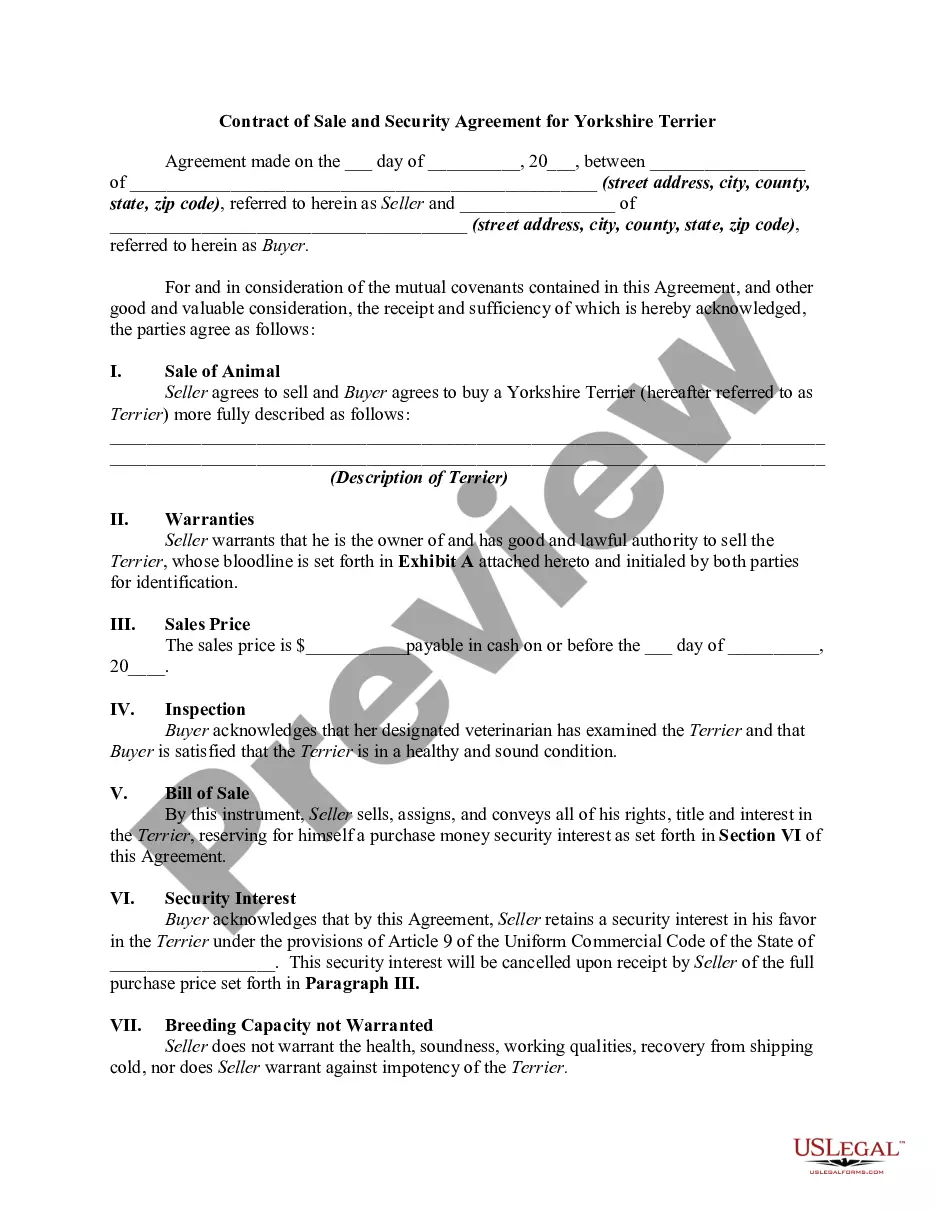
Identifying the appropriate legal documents requires precision and meticulousness, which is why it is essential to source the Co Ownership Dog Contract With A Friend samples solely from trustworthy providers, such as US Legal Forms.
Eliminate the stress associated with your legal paperwork. Explore the extensive selection at US Legal Forms where you can locate legal templates, verify their suitability for your situation, and download them instantly.
- Utilize the library navigation or search function to find your template.
- Examine the description of the form to ensure it corresponds with the regulations of your state and county.
- Preview the form, if available, to confirm it is the document you seek.
- Return to the search feature to find an alternative document if the Co Ownership Dog Contract With A Friend does not meet your needs.
- Once you are confident about the form’s applicability, proceed to download it.
- If you are an account holder, click Log in to verify your identity and access your chosen forms in My documents.
- If you haven't registered, click Buy now to obtain the document.
- Choose the pricing option that best accommodates your requirements.
- Complete the registration process to finalize your order.
- Conclude your transaction by selecting a payment method (credit card or PayPal).
- Pick the document format for downloading the Co Ownership Dog Contract With A Friend.
- Once you have saved the form on your device, you can edit it using the editor or print it out and complete it by hand.
Form popularity
FAQ
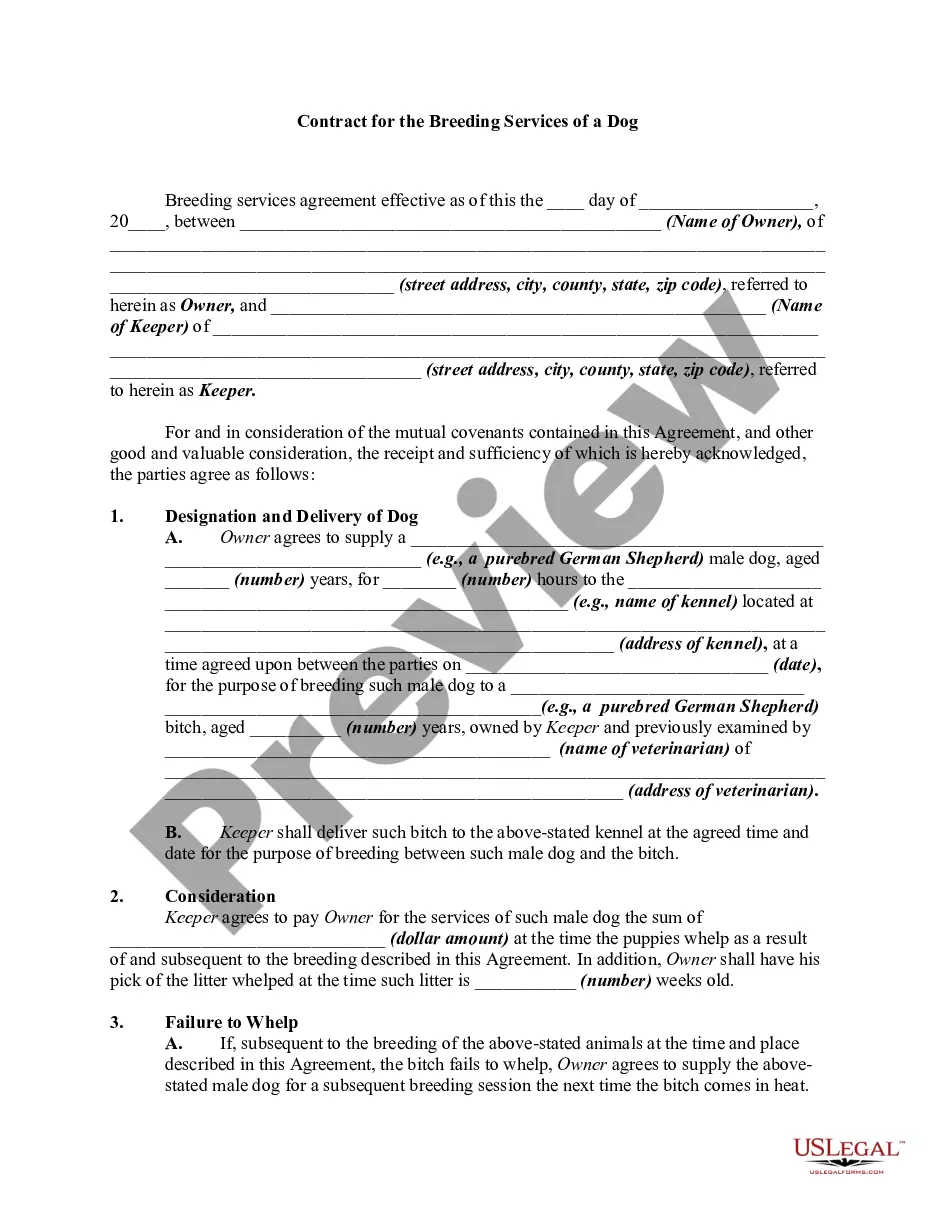
The duration of a dog contract can vary depending on the agreement between the parties. Typically, a Co-Ownership Dog Contract with a Friend should specify a timeframe or state that it remains in effect until one party wishes to alter the arrangement. It’s important to include terms for renewal or termination, so both parties know what to expect as time goes on.
Generally, a noncustodial parent can object to the other parent's move if it impacts visitation. For example, one parent's move to a new neighborhood 15 minutes away won't impact visitation, but a move 1500 miles away will. A nonmoving parent can seek to modify custody based on the other parent's move.
?Shared physical custody? means that all of the children will stay with each parent at least 30% (110) of the overnights during the year.
Though there is no strict age guideline under Alaska law, children are not generally mature enough to make reasoned decisions about which parent to live with until they are teenagers. Even then, a judge will look at the reason the teenager is expressing a preference for one parent over another.
The definition of "shared custody" is between 30 and 70 percent time with one parent. I.e., what a lot of other states would consider "primary" or "sole physical" custody is considered "shared" in Alaska.
In Alaska in situations where one parent has primary custody, child support is based upon the earnings of the noncustodial parent. If there is shared or divided custody, the child support is based on the income of both parties.
Best Interest of the Child in Alaska Alaska judges decide custody based on what is in the child's best interest. Alaska courts do not give preference to one parent over the other because of their sex.
Rule 90.3 says that the portion of an adjusted annual income over $126,000 will not be used in calculating the child support amount, unless the other parent presents evidence showing the higher income should be used in the calculation. If the cap is used, the AI will be $126,000 for the calculation.
The child, however, must be old enough and mature enough to provide a reasonable opinion. The qualifying age for this is not specifically set forth by Alaska law. Instead, the court is granted the discretion to evaluate whether the child is of sufficient age and capacity to articulate a meaningful preference.