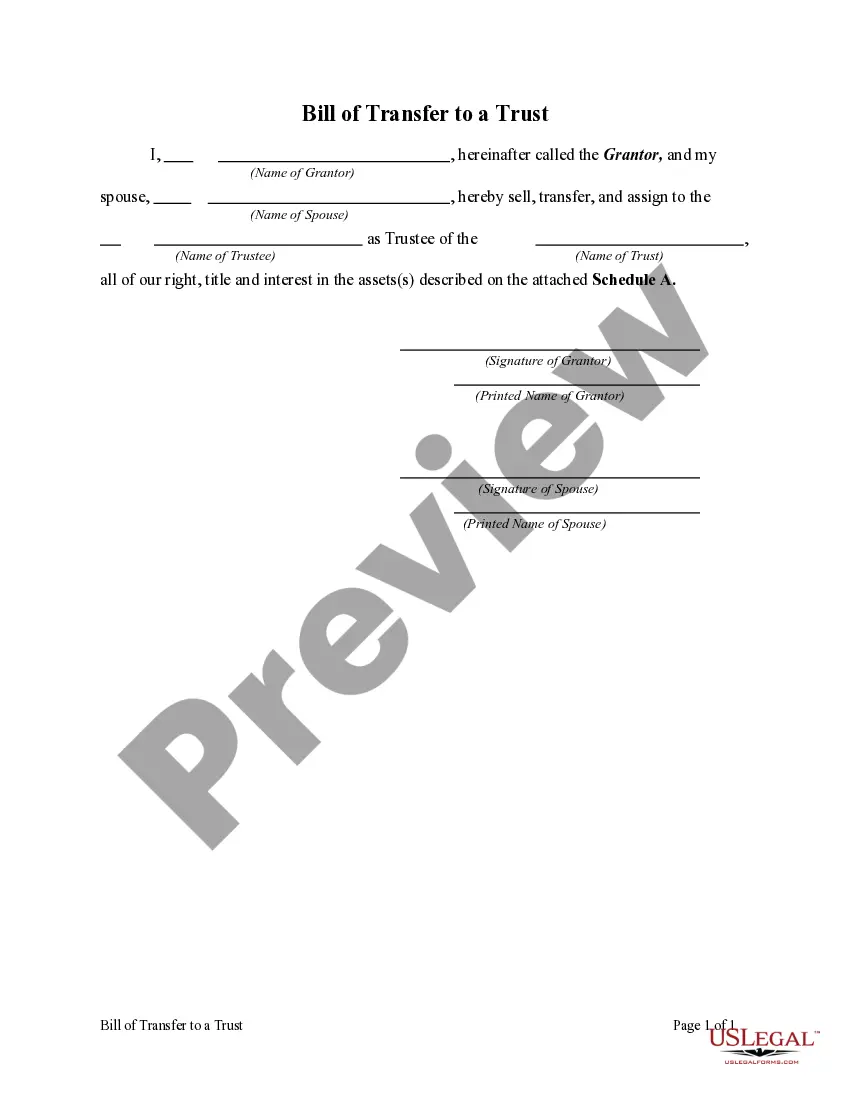
Transfer Trustee Trust With Beneficiaries
Description

Get your form ready online
Our built-in tools help you complete, sign, share, and store your documents in one place.
Make edits, fill in missing information, and update formatting in US Legal Forms—just like you would in MS Word.
Download a copy, print it, send it by email, or mail it via USPS—whatever works best for your next step.
Sign and collect signatures with our SignNow integration. Send to multiple recipients, set reminders, and more. Go Premium to unlock E-Sign.
If this form requires notarization, complete it online through a secure video call—no need to meet a notary in person or wait for an appointment.
We protect your documents and personal data by following strict security and privacy standards.

Make edits, fill in missing information, and update formatting in US Legal Forms—just like you would in MS Word.

Download a copy, print it, send it by email, or mail it via USPS—whatever works best for your next step.

Sign and collect signatures with our SignNow integration. Send to multiple recipients, set reminders, and more. Go Premium to unlock E-Sign.

If this form requires notarization, complete it online through a secure video call—no need to meet a notary in person or wait for an appointment.

We protect your documents and personal data by following strict security and privacy standards.
Looking for another form?







How to fill out Bill Of Transfer To A Trust?
Finding a reliable source to obtain the most up-to-date and suitable legal templates is a significant part of navigating bureaucracy.
Identifying the appropriate legal documents necessitates accuracy and meticulousness, which is why it is essential to obtain samples of Transfer Trustee Trust With Beneficiaries solely from trustworthy providers, such as US Legal Forms.
Once you have the form on your device, you can modify it using the editor or print it and fill it out by hand. Eliminate the hassle associated with your legal documentation. Explore the extensive US Legal Forms library where you can discover legal samples, verify their relevance to your situation, and download them immediately.
- Make use of the catalog navigation or search bar to find your template.
- Access the form’s description to determine if it aligns with the requirements of your state and locality.
- View the form preview, if available, to confirm that the form is indeed what you need.
- Return to the search to find the correct document if the Transfer Trustee Trust With Beneficiaries does not satisfy your criteria.
- Once you are certain about the form’s applicability, download it.
- If you are a registered customer, click Log in to verify and access your chosen templates in My documents.
- If you do not have an account yet, click Buy now to acquire the template.
- Select the pricing option that best fits your needs.
- Proceed with registration to complete your purchase.
- Finalize your purchase by selecting a payment method (credit card or PayPal).
- Choose the file format for downloading Transfer Trustee Trust With Beneficiaries.
Form popularity
FAQ
Transferring assets from a trust to a beneficiary requires you to first review the trust document to understand the specific terms governing the transfer. Next, you will need to prepare the necessary paperwork, which may include a transfer deed or assignment form. It’s essential to follow these steps carefully to ensure a proper transfer of trustee trust with beneficiaries, and platforms like uslegalforms can help guide you through the legal requirements.
Distributing trust income to beneficiaries involves determining the income generated by the trust and then allocating it according to the trust’s terms. You will need to calculate the total income, then apply the appropriate distribution percentages or amounts outlined in the trust document. By following these steps, you ensure a fair and legal transfer of trustee trust with beneficiaries, keeping everyone informed throughout the process.
To fill out a beneficiary form for a trust, start by gathering all necessary information about the beneficiaries, including their names, addresses, and relationship to the trustor. Next, clearly specify the percentage or specific assets each beneficiary will receive. Make sure to review the completed form for accuracy before submitting it, as this helps ensure a smooth process when you transfer trustee trust with beneficiaries.
The transferee must have been a beneficiary of the trust when the property was acquired and became an asset of the trust (i.e. the relevant time). There must be no consideration for the transfer and the transfer of property from trustee to beneficiary must not be part of a sale or other arrangement.
Distribute trust assets outright The grantor can opt to have the beneficiaries receive trust property directly without any restrictions. The trustee can write the beneficiary a check, give them cash, and transfer real estate by drawing up a new deed or selling the house and giving them the proceeds.
So can a trustee also be a beneficiary? The short answer is yes, but the trustee will have to be exceedingly careful to never engage in any actions that would constitute a breach of trust, including placing their personal interests above those of the other beneficiaries.
In most cases, a trust deed generally offers two processes for the removal of a beneficiary. Most commonly, the beneficiary can sign a document to renunciate all interests as a beneficiary. Otherwise, the trustee may have discretionary power to revoke the beneficiary.