Letter Of Justification For Occupational Therapy
Description
Get your form ready online
Our built-in tools help you complete, sign, share, and store your documents in one place.
Make edits, fill in missing information, and update formatting in US Legal Forms—just like you would in MS Word.
Download a copy, print it, send it by email, or mail it via USPS—whatever works best for your next step.
Sign and collect signatures with our SignNow integration. Send to multiple recipients, set reminders, and more. Go Premium to unlock E-Sign.
If this form requires notarization, complete it online through a secure video call—no need to meet a notary in person or wait for an appointment.
We protect your documents and personal data by following strict security and privacy standards.

Make edits, fill in missing information, and update formatting in US Legal Forms—just like you would in MS Word.

Download a copy, print it, send it by email, or mail it via USPS—whatever works best for your next step.

Sign and collect signatures with our SignNow integration. Send to multiple recipients, set reminders, and more. Go Premium to unlock E-Sign.

If this form requires notarization, complete it online through a secure video call—no need to meet a notary in person or wait for an appointment.

We protect your documents and personal data by following strict security and privacy standards.
Looking for another form?


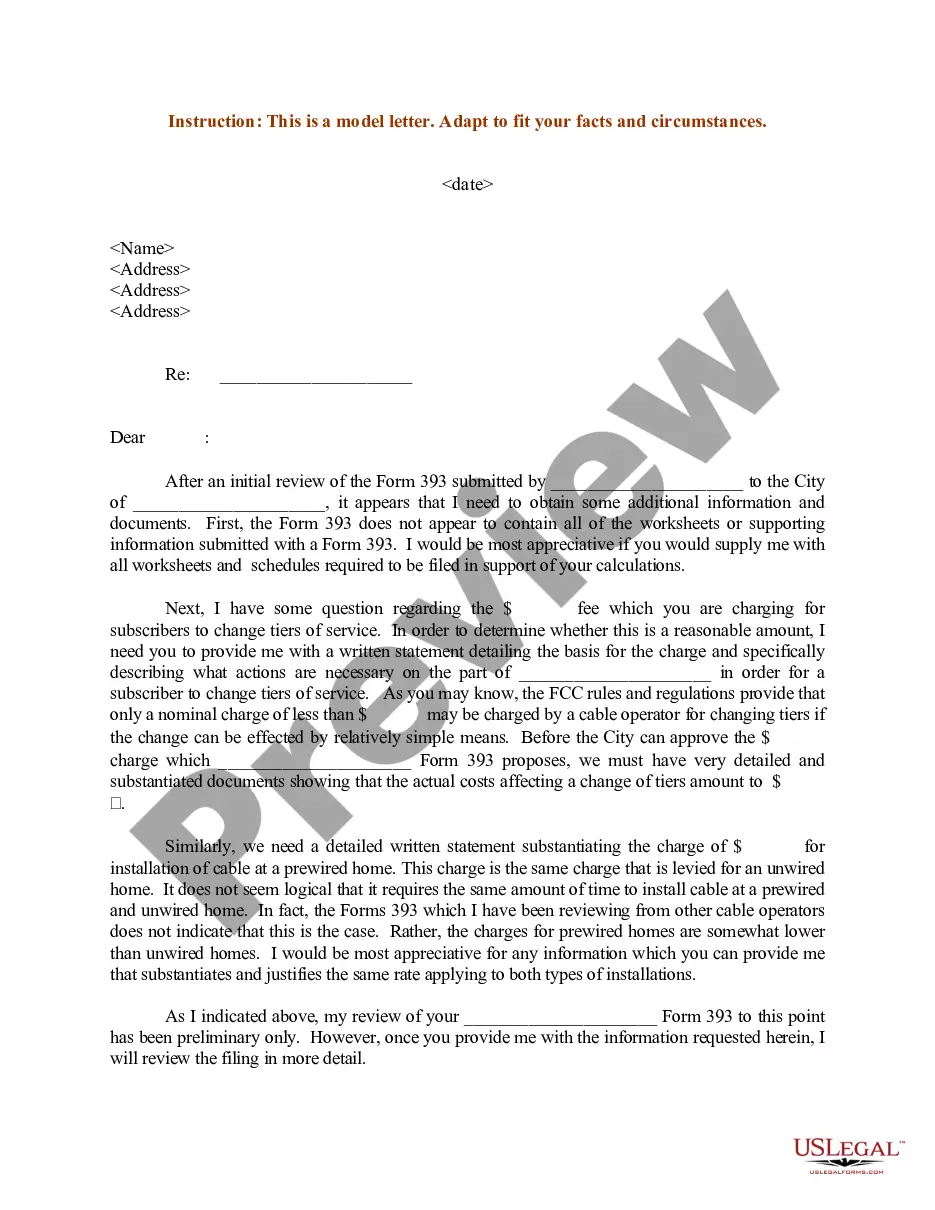
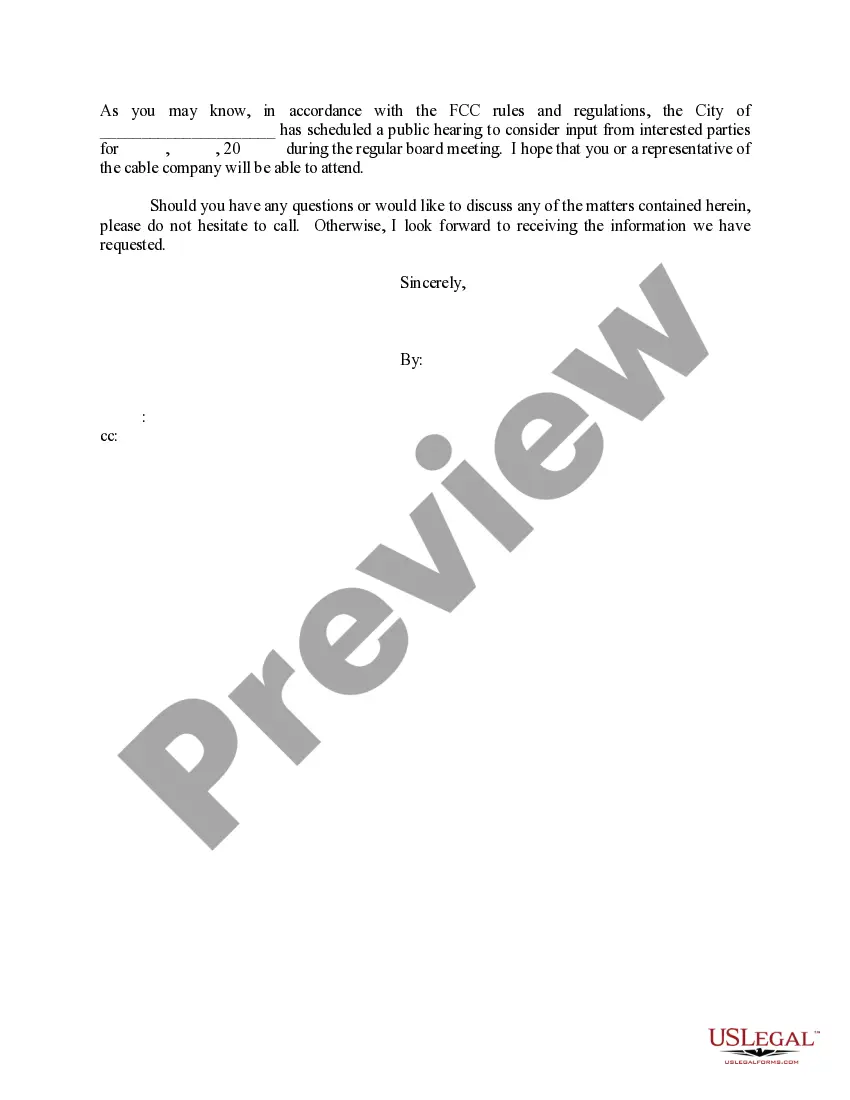
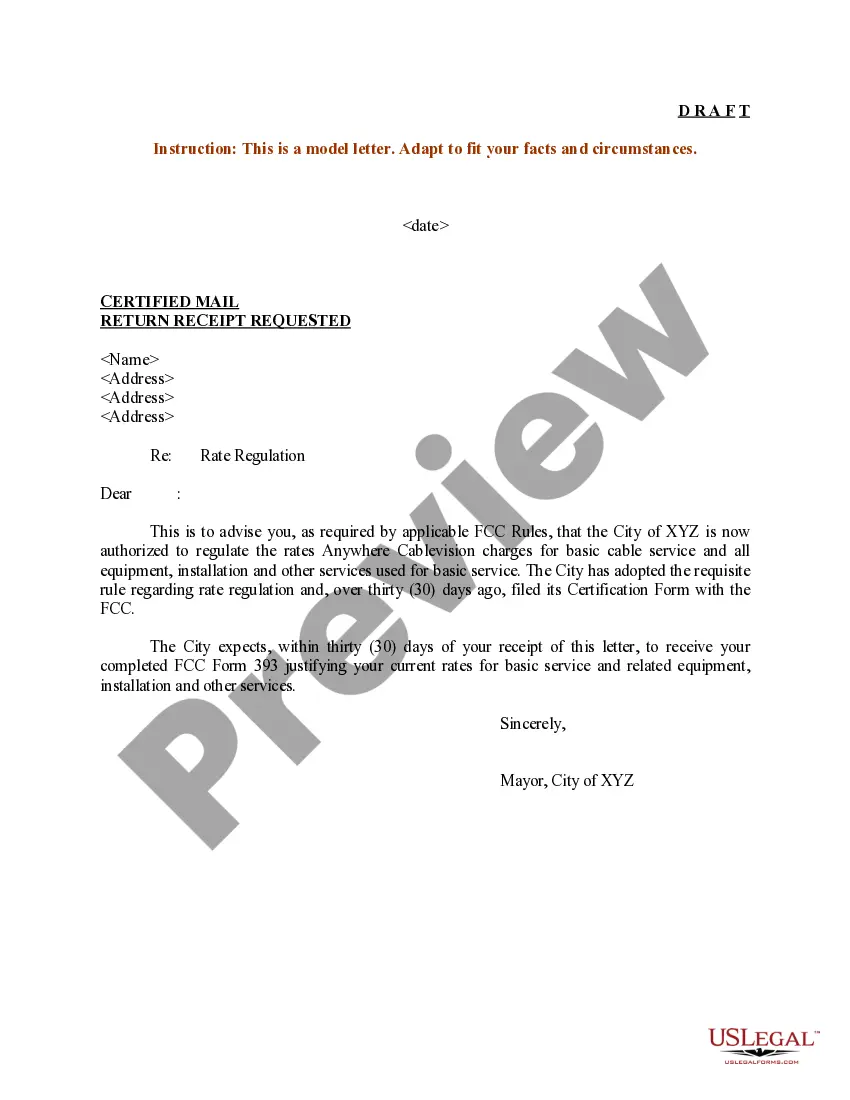
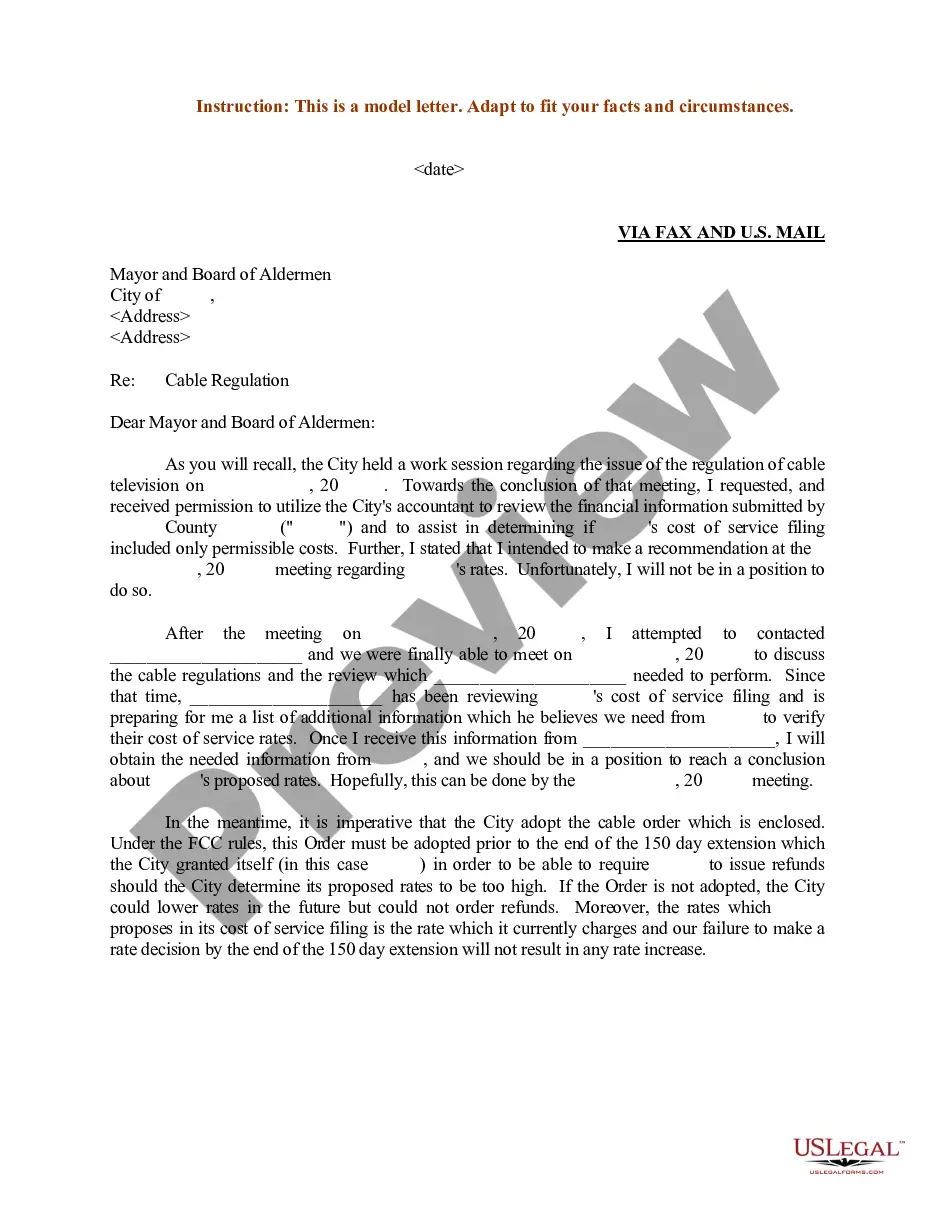
How to fill out Sample Letter To Cable Provider Regarding Justification Of Fees?
How to acquire professional legal documents in alignment with your state regulations and formulate the Letter Of Justification For Occupational Therapy without enlisting an attorney.
Numerous services online offer templates to address diverse legal situations and requirements.
However, it might require time to determine which of the accessible samples satisfy both your use case and legal stipulations.
Download the Letter Of Justification For Occupational Therapy using the corresponding button adjacent to the file name. If you are not an existing member of US Legal Forms, then follow the instructions below: Review the webpage you've accessed and determine if the form aligns with your requirements.
- US Legal Forms is a trustworthy platform that assists you in finding formal documents crafted in line with the latest state law updates and helps you save on legal fees.
- US Legal Forms is not a conventional web directory.
- It consists of more than 85,000 verified templates for various business and life scenarios.
- All documents are categorized by area and state to streamline your search process.
- It also integrates with advanced solutions for PDF editing and eSignature, permitting users with a Premium subscription to conveniently finalize their paperwork online.
- It requires minimal effort and time to obtain the necessary documentation.
- If you already possess an account, Log In and verify the validity of your subscription.
Form popularity
FAQ
To document medical necessity, maintain comprehensive records that include detailed patient evaluations, therapy goals, and progress notes. Ensure that all documentation supports the need for occupational therapy through measurable outcomes. This careful documentation serves as a robust foundation for your letter of justification for occupational therapy, helping to ensure approval from insurance companies.
The criteria for a letter of medical necessity include a clear diagnosis, specific treatment needed, and a statement on how the proposed therapy will benefit the patient's health. The letter must also demonstrate that the therapy is appropriate, reasonable, and necessary. By following these criteria, you will strengthen your letter of justification for occupational therapy, making it more likely to be approved by insurance.
An example of a medical necessity statement is a letter that outlines the patient's diagnosis, treatment goals, and the necessity of occupational therapy for achieving those goals. This statement should clearly articulate how therapy will improve the patient’s daily functioning and overall quality of life. Using a letter of justification for occupational therapy makes your case easier to understand for insurance providers.
To submit a letter of medical necessity to insurance, begin by creating a detailed letter of justification for occupational therapy. Make sure the letter includes specific clinical information and reasons why therapy is essential for the patient’s recovery or improvement. Then, refer to your insurance company’s submission process, which could involve digital uploads or traditional mailing. Always keep a copy for your records.
To submit a letter of medical necessity, first ensure that your document is well-prepared and clearly states the need for occupational therapy services. You should gather any supportive medical documentation that justifies your case. After compiling the letter and necessary documents, follow your insurance provider’s guidelines for submission, which may include uploading online or sending via mail.
A letter of medical necessity must include specific details about the patient's condition and the prescribed therapies or interventions. It should clearly state why these services are essential for effective treatment. In cases where you need a letter of justification for occupational therapy, including relevant medical history and treatment plans can strengthen your request.
Indeed, a therapist can write a letter of medical necessity to outline the treatments or services required for your well-being. This document validates your need for occupational therapy and can support insurance claims. It is essential that the letter is detailed and clearly explains the therapeutic benefits you require.
Yes, therapists can write letters to support your request for medical leave. They can document your condition and the necessary time off for recovery. If you need a letter of justification for occupational therapy to support your case, your therapist can provide comprehensive information that clarifies your situation.
To request a letter of recommendation for OT school, approach a qualified person, such as a supervisor or instructor familiar with your work. Clearly explain your goals and why you value their endorsement. Providing context about the letter of justification for occupational therapy can help them tailor the content to emphasize your dedication and skills in the field.
Yes, a therapist can write a letter on your behalf. This can include letters of justification for occupational therapy or other supportive documents needed for insurance purposes or school applications. It’s important to communicate your needs clearly to your therapist, so they can craft a letter that meets all requirements.
