Notice Hearing Property For Lease
Description
Get your form ready online
Our built-in tools help you complete, sign, share, and store your documents in one place.
Make edits, fill in missing information, and update formatting in US Legal Forms—just like you would in MS Word.
Download a copy, print it, send it by email, or mail it via USPS—whatever works best for your next step.
Sign and collect signatures with our SignNow integration. Send to multiple recipients, set reminders, and more. Go Premium to unlock E-Sign.
If this form requires notarization, complete it online through a secure video call—no need to meet a notary in person or wait for an appointment.
We protect your documents and personal data by following strict security and privacy standards.

Make edits, fill in missing information, and update formatting in US Legal Forms—just like you would in MS Word.

Download a copy, print it, send it by email, or mail it via USPS—whatever works best for your next step.

Sign and collect signatures with our SignNow integration. Send to multiple recipients, set reminders, and more. Go Premium to unlock E-Sign.

If this form requires notarization, complete it online through a secure video call—no need to meet a notary in person or wait for an appointment.

We protect your documents and personal data by following strict security and privacy standards.
Looking for another form?









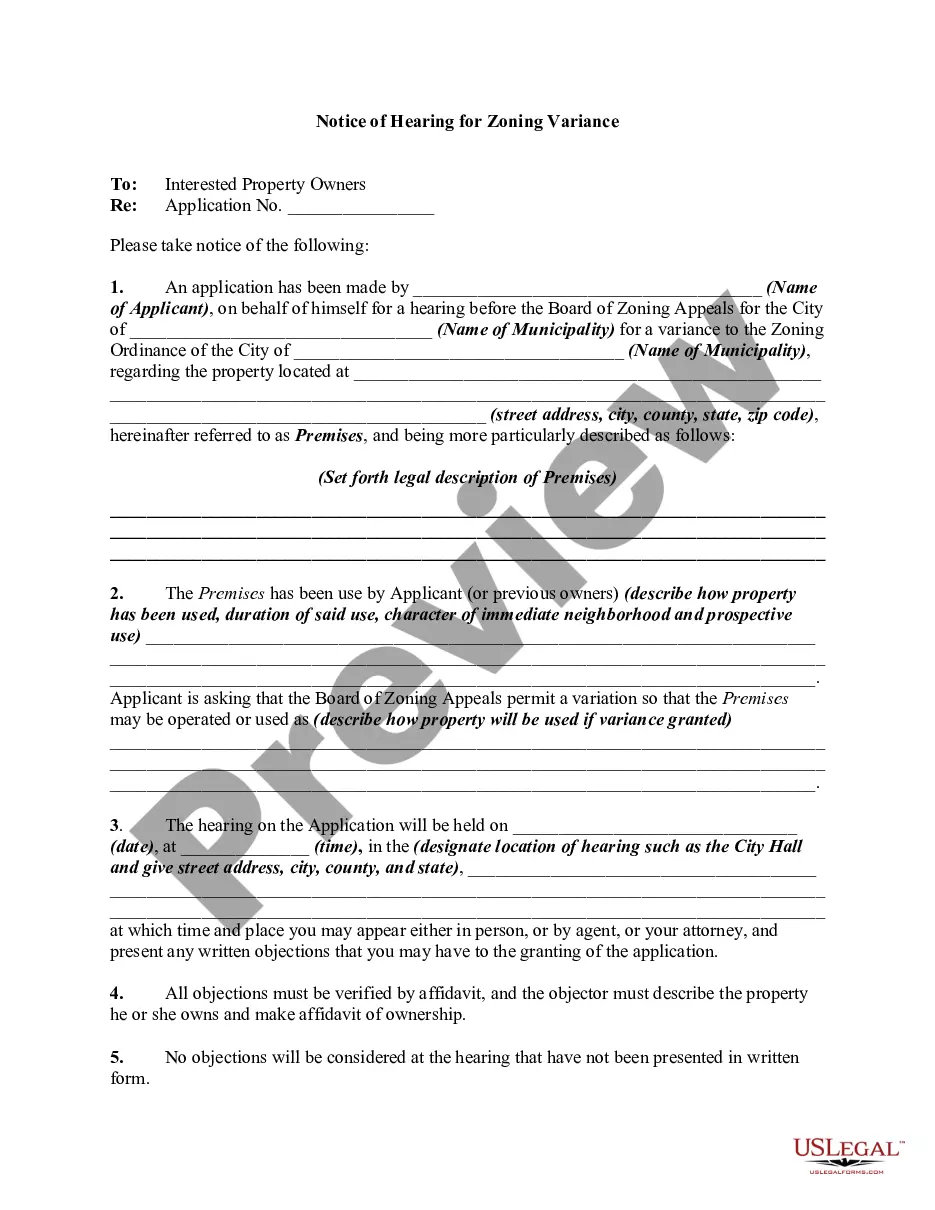
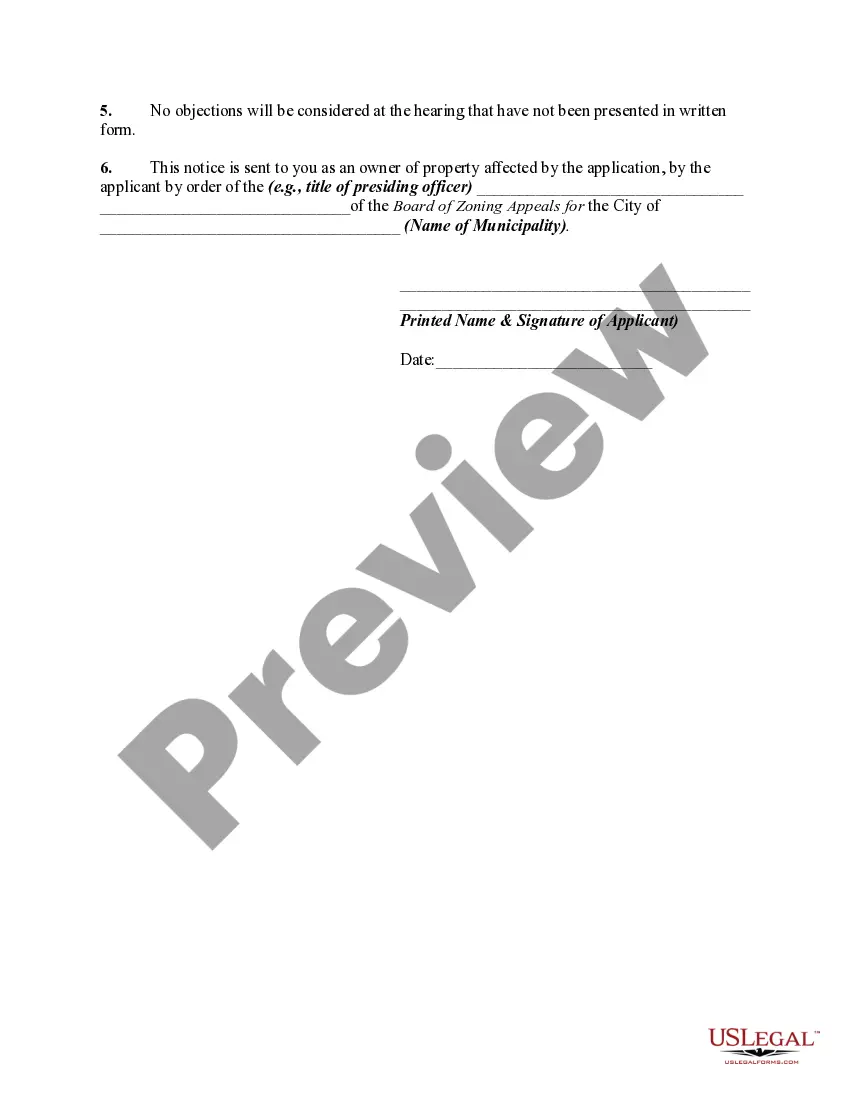
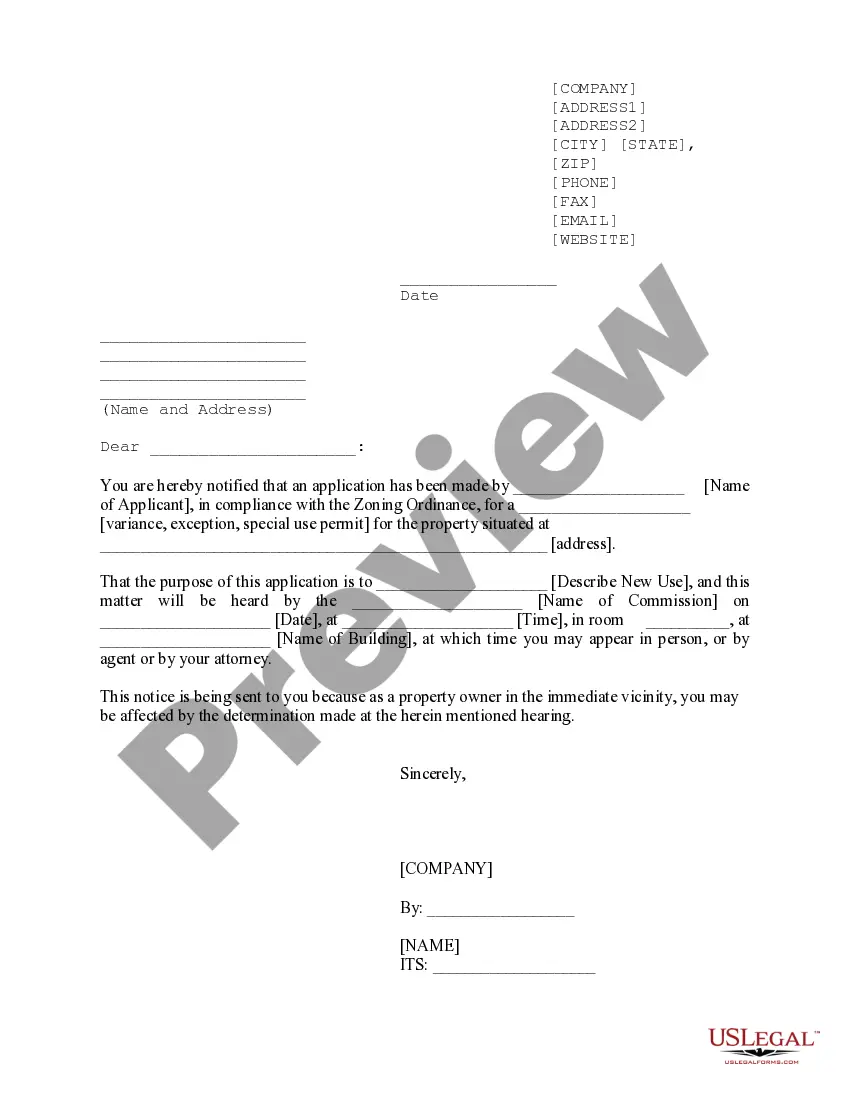
How to fill out Notice Of Hearing For Variance Before Board Of Zoning Appeals - Notice To Be Sent By Applicant To Interested Property Owners?
- If you already have an account, log in and download your form template. Ensure your subscription is active; renew if necessary.
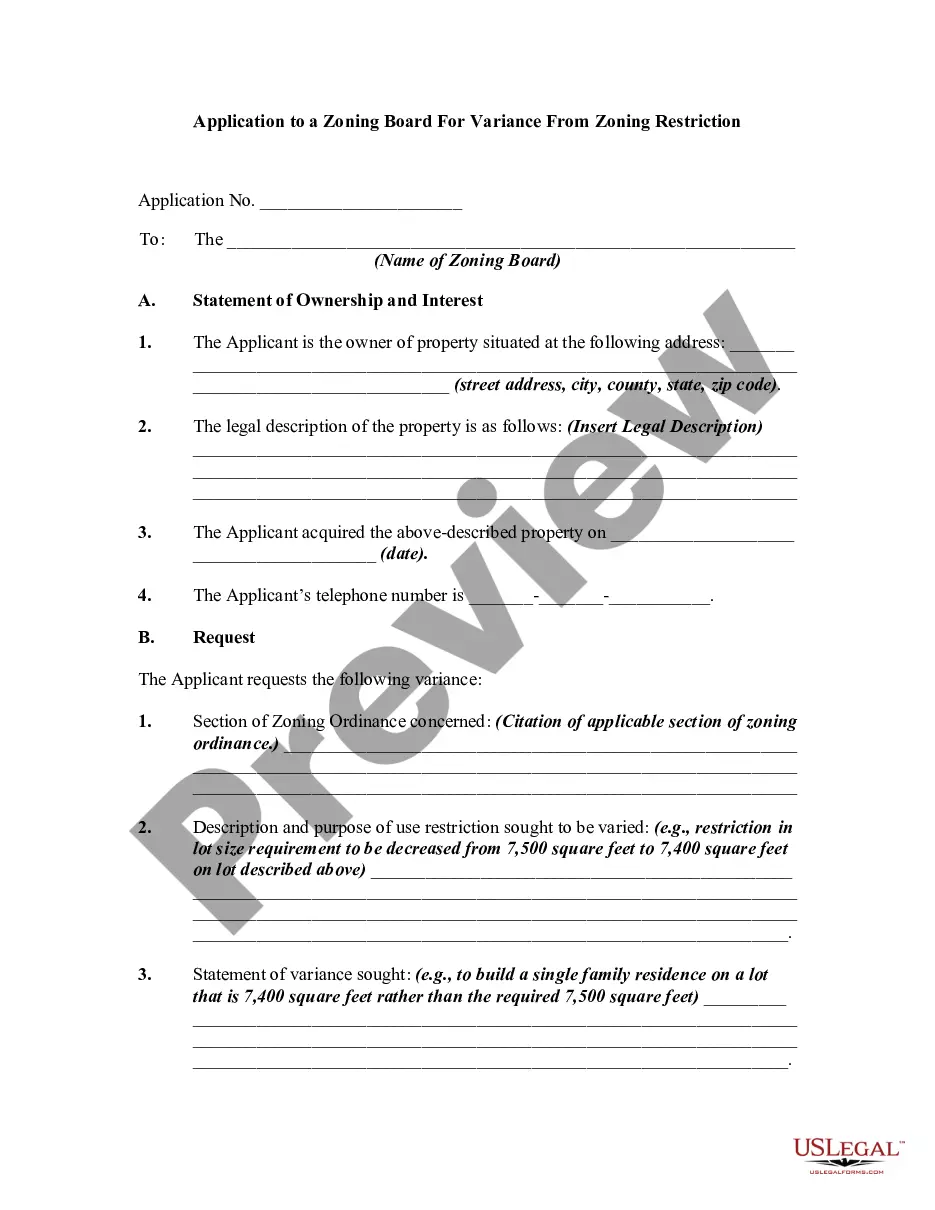
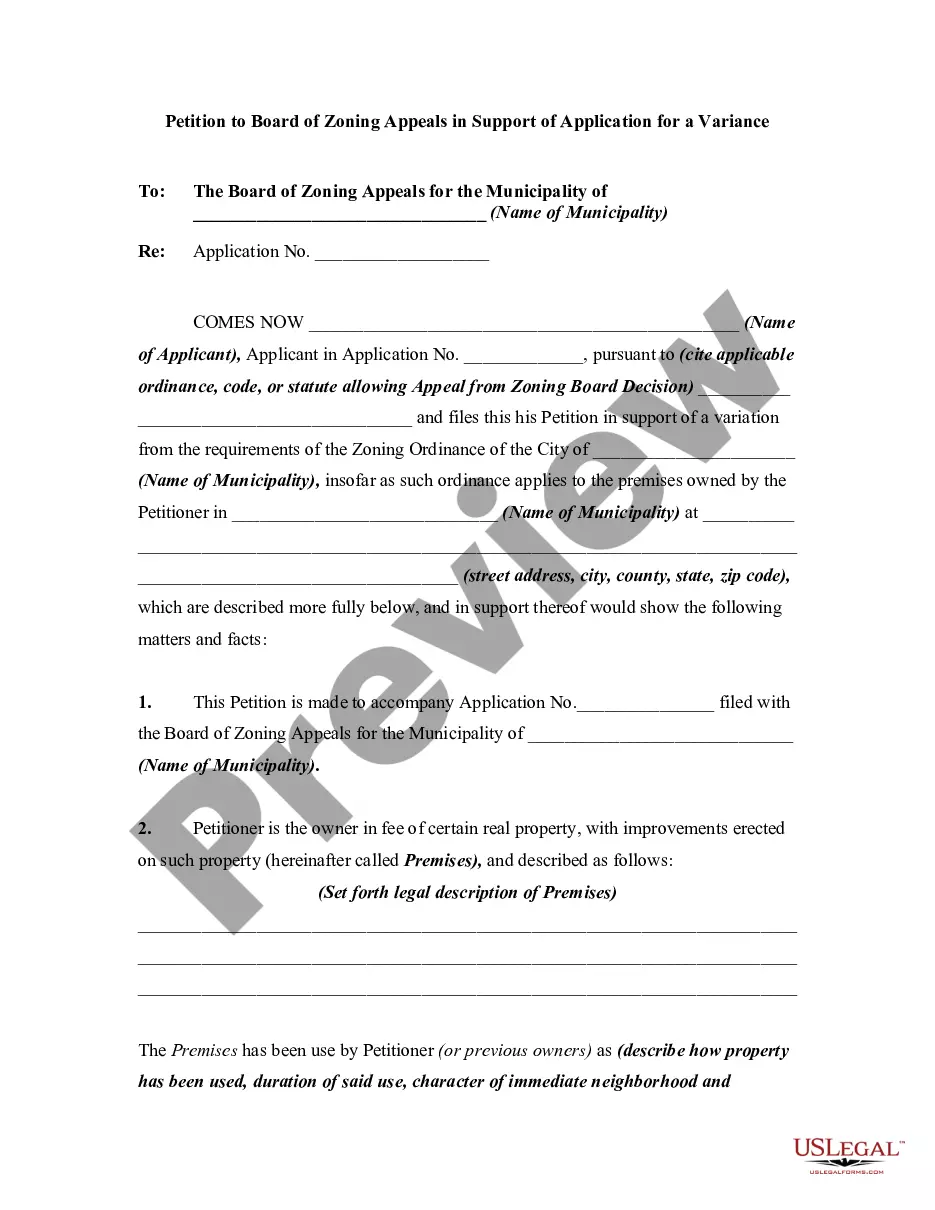
- For first-time users, begin by exploring the detailed Preview mode of your desired form to verify its suitability for your needs and local regulations.
- If the selected form does not meet your requirements, utilize the Search feature to find another template that does. Once you find the right one, proceed to the next step.
- Purchase the document by clicking on the Buy Now button. Select a subscription plan that fits your needs, and remember to create an account to access the full library.
- Complete your purchase by entering your payment details, either via credit card or PayPal, to finalize your subscription.
- Once your transaction is successful, download the necessary form to your device. You can also access it anytime later in the My Forms section of your profile.
With US Legal Forms, you gain access to an extensive library of over 85,000 fillable legal forms covering various needs. This platform ensures that you have everything required to complete your legal documentation accurately.
Start today and simplify your legal processes with US Legal Forms for a hassle-free experience!
Form popularity
FAQ
In North Carolina, tenants can refuse entry to their landlord if the landlord fails to give adequate notice or if the entry is not necessary. The law typically requires landlords to provide at least 24 hours of notice, except in emergencies. Knowing your rights is essential in situations involving notice hearing property for lease, and you can find helpful resources on US Legal Forms to assist you in enforcing these rights.
Generally, you can refuse entry to your landlord if they do not provide proper notice or a valid reason for entering your leased property. Most states require landlords to give reasonable notice, usually 24 hours, unless it's an emergency. Understanding your rights in notice hearing property for lease scenarios is critical for maintaining your privacy and security. If you're unsure about your state's regulations, consider exploring US Legal Forms for comprehensive guidance.
In most cases, the minimum notice a landlord can give before terminating a lease is often 30 days, but this can vary by state. It's essential to check your local laws regarding notice requirements for lease agreements. If you need further assistance understanding your rights or navigating notice hearing property for lease situations, you may benefit from using US Legal Forms, which provides templates and resources tailored to your needs.
Yes, you can find a new home even with an eviction on your record. It may take extra effort to demonstrate your reliability as a renter, such as securing a co-signer or showing proof of stable employment. Landlords may also be willing to negotiate terms if you are upfront about your situation. For more guidance, leverage resources from the US Legal Forms platform, which can help streamline your rental application process.
Renting with an eviction on your record can present challenges, but it is not impossible. Many landlords consider your overall rental history and your current financial situation. You can improve your chances by providing references or proof of steady income. For assistance in addressing your rental hurdles, check out the tools available at the US Legal Forms platform.
In Florida, landlords must usually give at least 12 hours' notice before entering a rental property. This notice must be communicated in a reasonable manner, ensuring that your privacy is upheld. Understanding your rights regarding entry notice can empower you as a tenant. For further clarification, visit the US Legal Forms platform for tailored resources.
The eviction process in Tennessee can take anywhere from a few weeks to several months, depending on the circumstances. After the landlord files for eviction, a notice of hearing is typically issued, allowing both parties to present their cases. If the court rules in favor of the landlord, you may have a limited time to vacate the property. To better understand this process, the US Legal Forms platform offers helpful guides and templates.
In most states, landlords must provide at least 24 hours' notice before entering a rental property. This notice is crucial to respect the tenant's privacy and rights. It allows you, as a tenant, to prepare for the visit, whether for repairs, inspections, or other purposes. To navigate your rights effectively, you can explore the resources available on the US Legal Forms platform.
To write a notice letter to your landlord, clearly present your intent. Include your contact information, the date, and a brief explanation of the reason for the notice. If it relates to lease agreements, maintenance issues, or notice hearing property for lease, make sure to provide all necessary details succinctly. This will help facilitate effective communication moving forward.
Writing a notice to vacate involves providing specific details. Start with your name and the rental property's address, then include the intended move-out date. Clearly reference the lease agreement, and if applicable, mention any notice hearing property for lease. Ensure you keep a copy of this letter for your records.