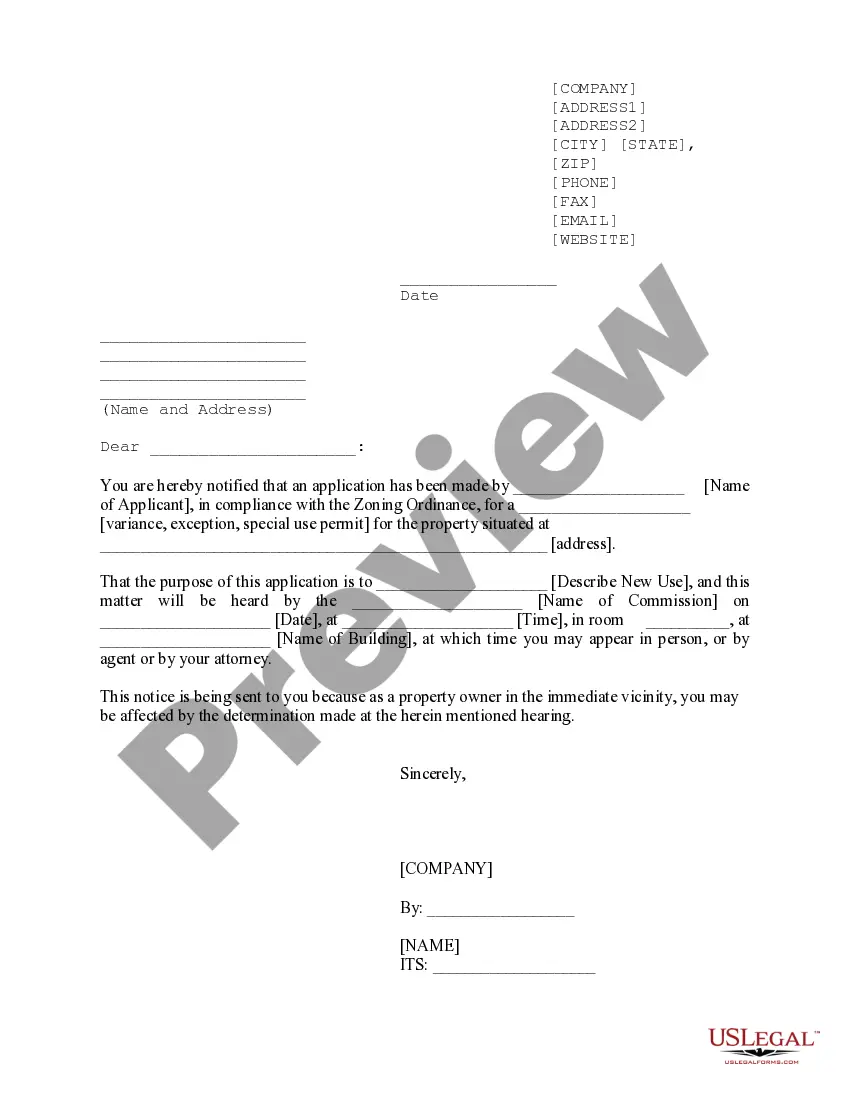
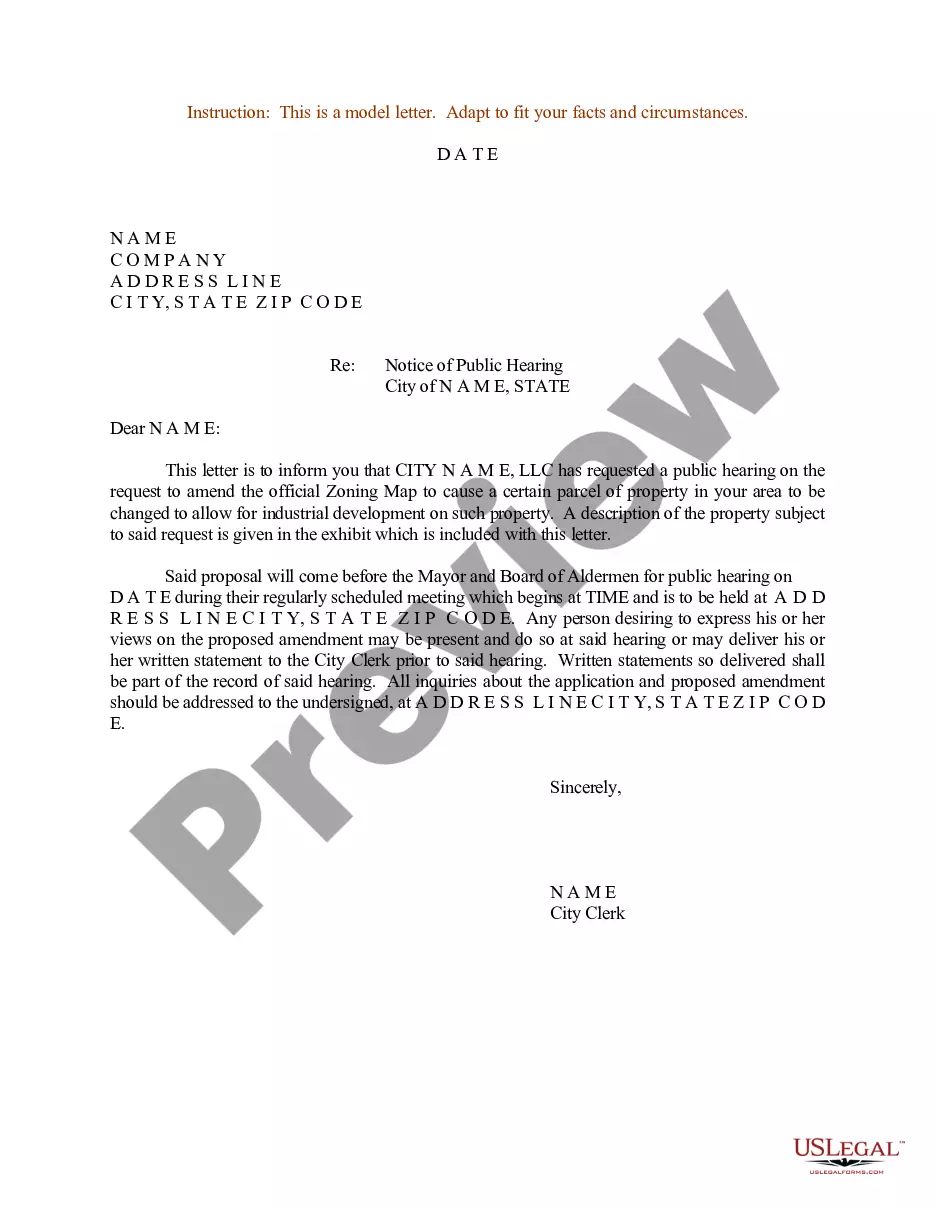
Notice Hearing Form With Guardianship
Description
Get your form ready online
Our built-in tools help you complete, sign, share, and store your documents in one place.
Make edits, fill in missing information, and update formatting in US Legal Forms—just like you would in MS Word.
Download a copy, print it, send it by email, or mail it via USPS—whatever works best for your next step.
Sign and collect signatures with our SignNow integration. Send to multiple recipients, set reminders, and more. Go Premium to unlock E-Sign.
If this form requires notarization, complete it online through a secure video call—no need to meet a notary in person or wait for an appointment.
We protect your documents and personal data by following strict security and privacy standards.

Make edits, fill in missing information, and update formatting in US Legal Forms—just like you would in MS Word.

Download a copy, print it, send it by email, or mail it via USPS—whatever works best for your next step.

Sign and collect signatures with our SignNow integration. Send to multiple recipients, set reminders, and more. Go Premium to unlock E-Sign.

If this form requires notarization, complete it online through a secure video call—no need to meet a notary in person or wait for an appointment.

We protect your documents and personal data by following strict security and privacy standards.
Looking for another form?








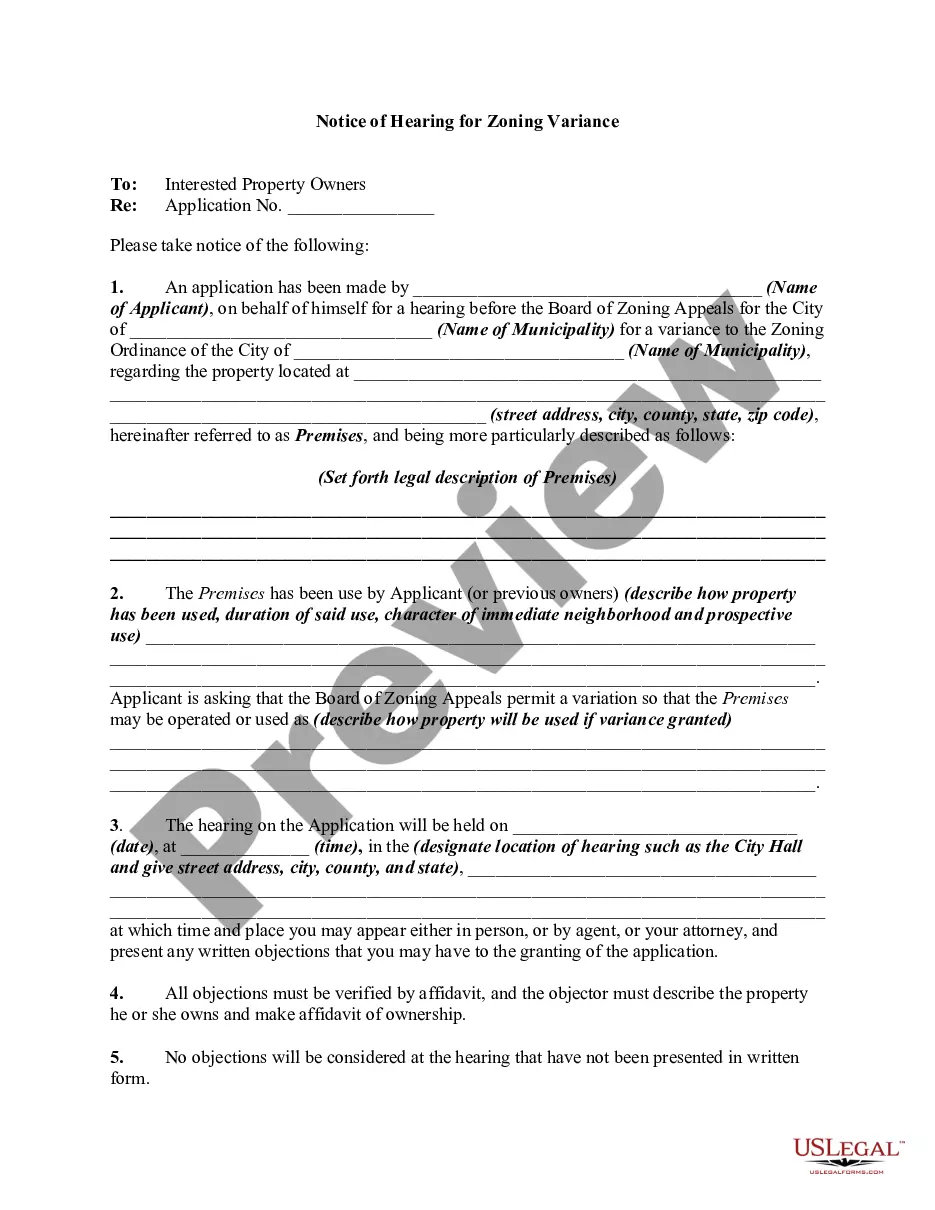
How to fill out Notice Of Hearing For Variance Before Board Of Zoning Appeals - Notice To Be Sent By Applicant To Interested Property Owners?
- If you are a returning user, log in to your account to access your form. Ensure your subscription is active; otherwise, renew as needed.
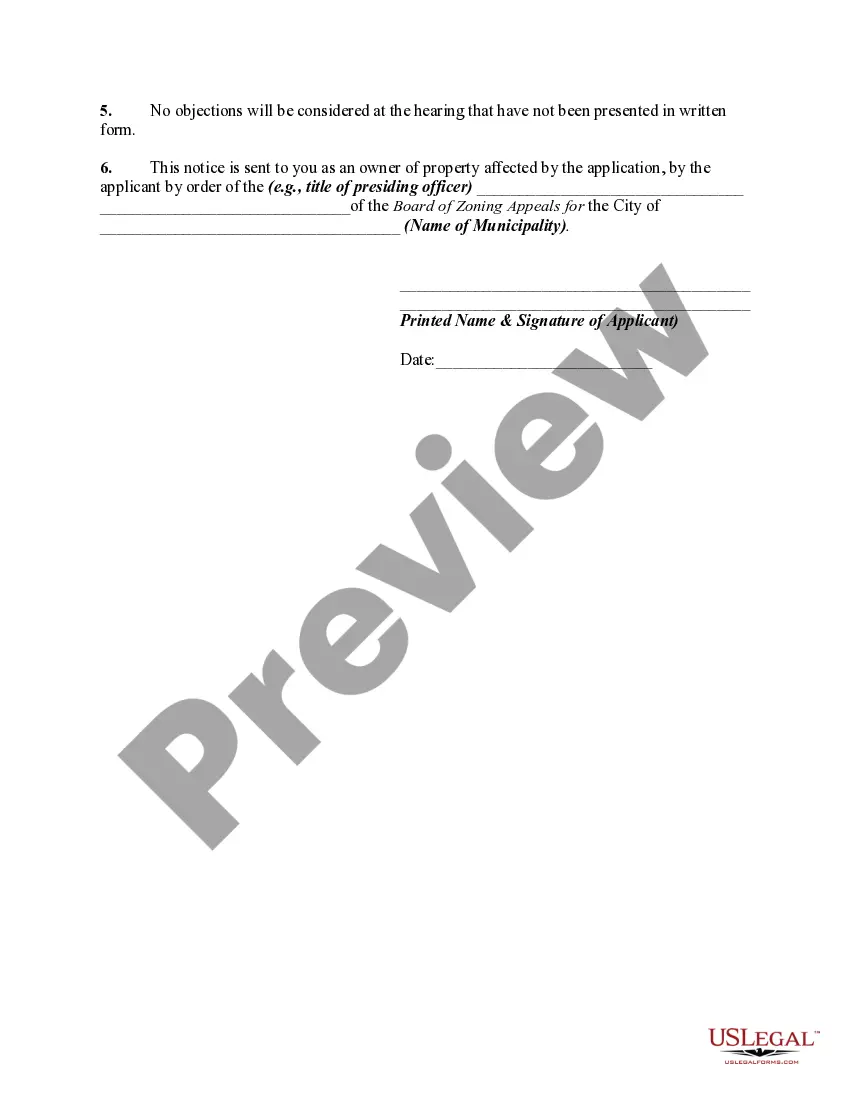
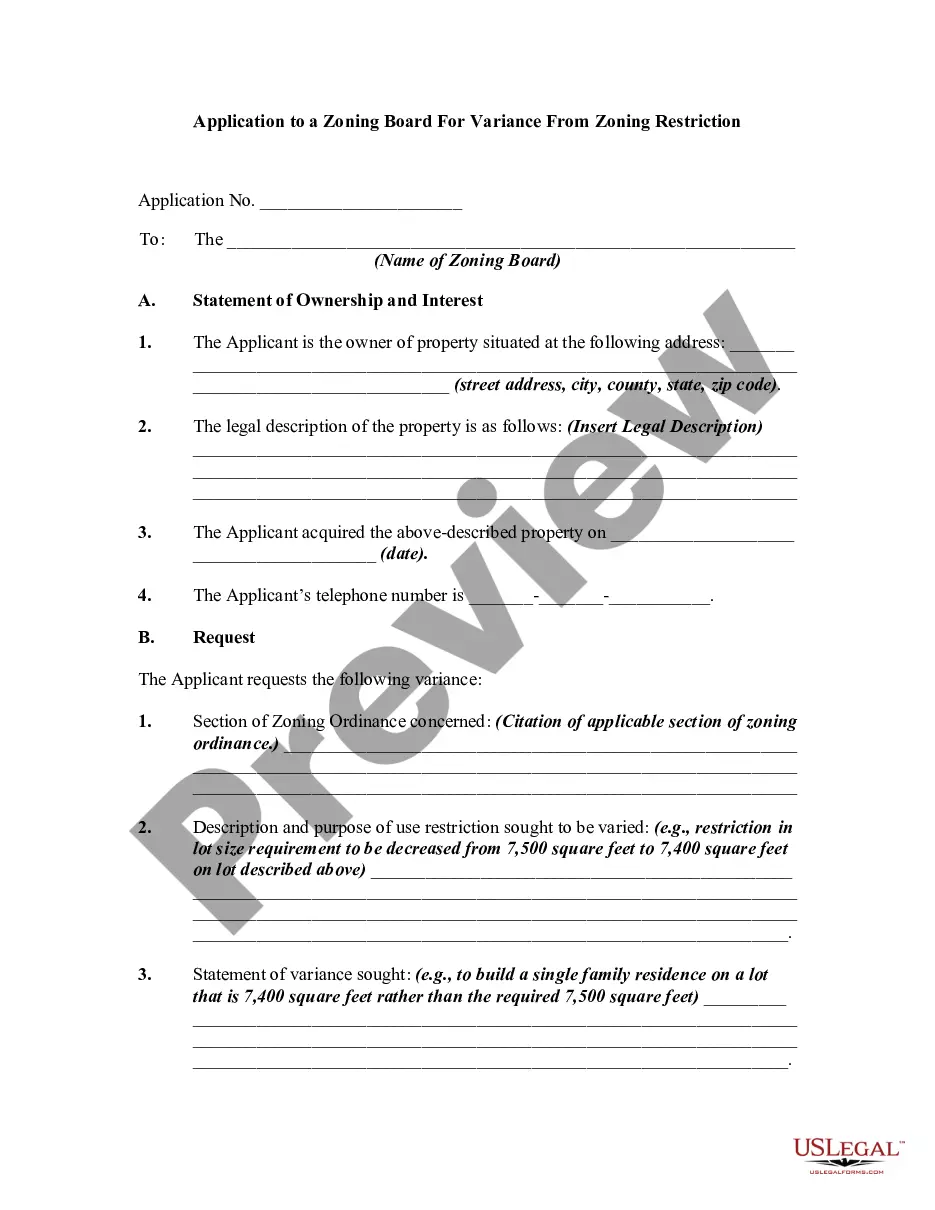
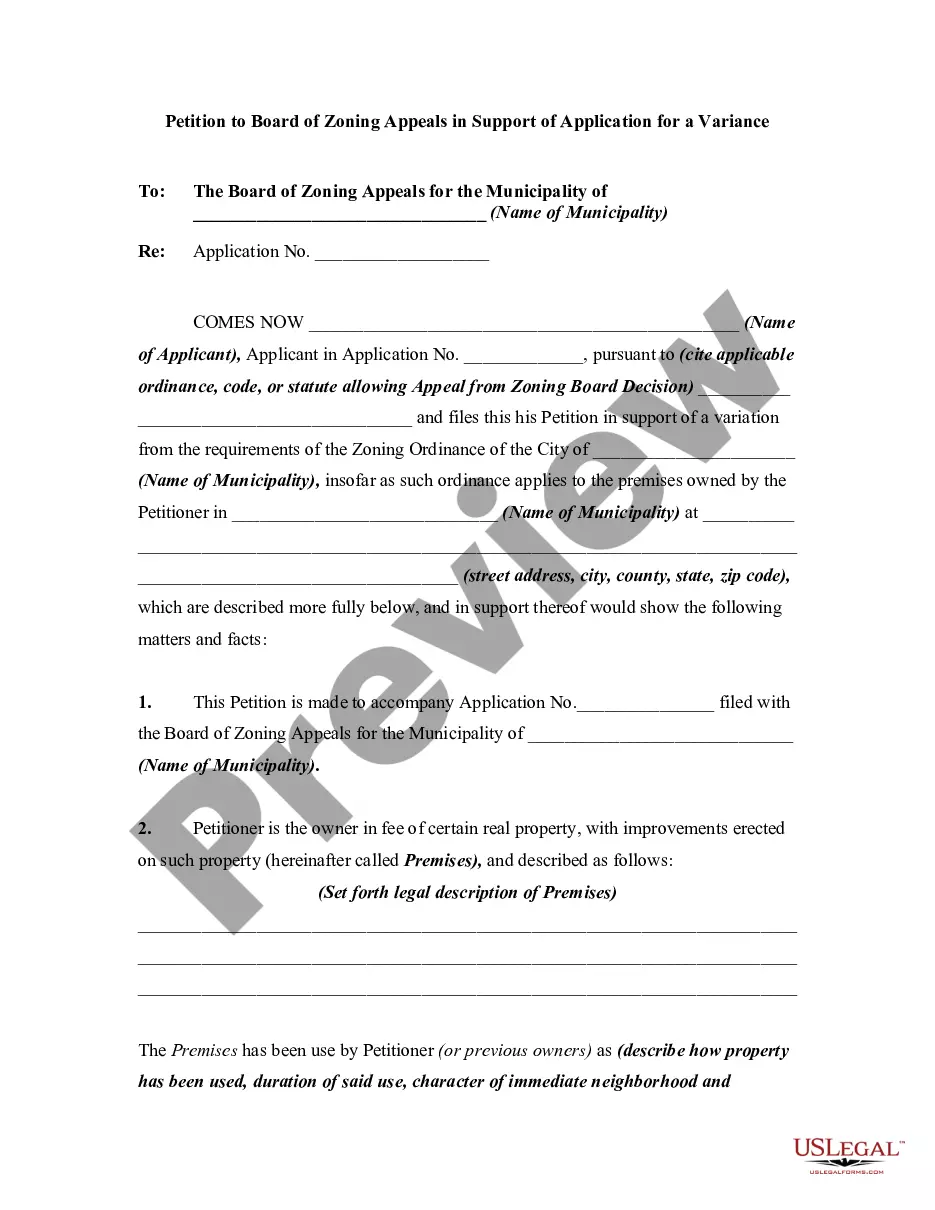
- In case this is your first visit, start by using the Preview mode to inspect the form's description. Confirm that it's the correct form for your specific requirements.
- If the form does not meet your needs, utilize the Search tab above to find an alternative template that fits local jurisdictional requirements.
- Once you've found the appropriate form, click the Buy Now button to select your desired subscription plan, ensuring to register an account for full access.
- Complete your purchase by entering your payment information via credit card or PayPal.
- Finally, download your form to your device, making it accessible in the My Forms section of your profile whenever necessary.
With US Legal Forms, the process of obtaining your legal documents is simplified. Our robust collection offers more forms than most competitors at a similar price.
Don’t hesitate! Start today and empower yourself with the right legal forms for any situation!
Form popularity
FAQ
To obtain guardianship in Arkansas, begin by filing a petition in the appropriate court, including all required documentation. You will also need to fill out the notice hearing form with guardianship, highlighting pertinent details for the proceedings. After filing, the court will schedule a hearing to evaluate your petition before granting guardianship.
While court is often the standard route for obtaining guardianship, there are some circumstances where a family agreement may suffice. Establishing clear roles, responsibilities, and ensuring all parties agree is essential. Always include documentation such as the notice hearing form with guardianship to safeguard your arrangement.
Conditions for guardianship typically include a demonstrated need for care and support, often based on age, mental health, or incapacity. Courts evaluate whether the appointed guardian can fulfill the responsibilities of care outlined in the notice hearing form with guardianship. It’s crucial for potential guardians to understand these conditions to ensure they meet the required standards.
Obtaining guardianship without court intervention is usually complex and may not be possible in all situations. However, in cases of informal agreements between family members, guardianship may be established without formal proceedings. If you are considering this route, ensure that you have all necessary documentation, including the notice hearing form with guardianship, to protect everyone’s interests.
To write a legal guardianship document, start by clearly stating the parties involved, including the guardian and the individual needing care. Provide detailed descriptions of the duties and rights of the guardian, and make sure to include the notice hearing form with guardianship requirements. Finally, have the document reviewed by a legal professional to ensure compliance with state laws.
In Arkansas, to establish guardianship, you must file a petition with the court, presenting evidence of the individual’s need for guardianship. Additionally, you must complete the notice hearing form with guardianship, detailing your relationship with the proposed ward. The court requires an investigation report and may also mandate a hearing to determine the best interests of the individual.
A guardian hearing is a legal process that determines whether an individual should be appointed as a guardian for another person. During this hearing, the court evaluates evidence and testimony to ensure that the proposed guardian can meet the needs of the person requiring care. Knowing how to manage the notice hearing form with guardianship is crucial for this process, as it outlines important details for the court.
Alternatives to legal guardianship include powers of attorney and advance health care directives. These options allow you to appoint someone to make decisions on your behalf without a formal guardianship proceeding. A Notice hearing form with guardianship can clarify your preferences when needed, but exploring these alternatives may offer more flexibility. It is wise to assess your situation carefully and seek tailored advice.
A notarized document can serve as part of the process, but using a Notice hearing form with guardianship is essential. This form provides the legal framework needed for court approval, ensuring your wishes are recognized. Notarization adds authenticity, but it does not replace the court’s requirement for a formal filing. Always consult legal resources to ensure you meet all necessary criteria.
You can avoid a court-appointed guardian by filing a Notice hearing form with guardianship in advance. This document allows you to indicate your preferences for guardianship and provide supporting evidence to the court. Additionally, consider having a designated person in mind, who can act as your guardian. This proactive approach ensures the court is aware of your wishes.