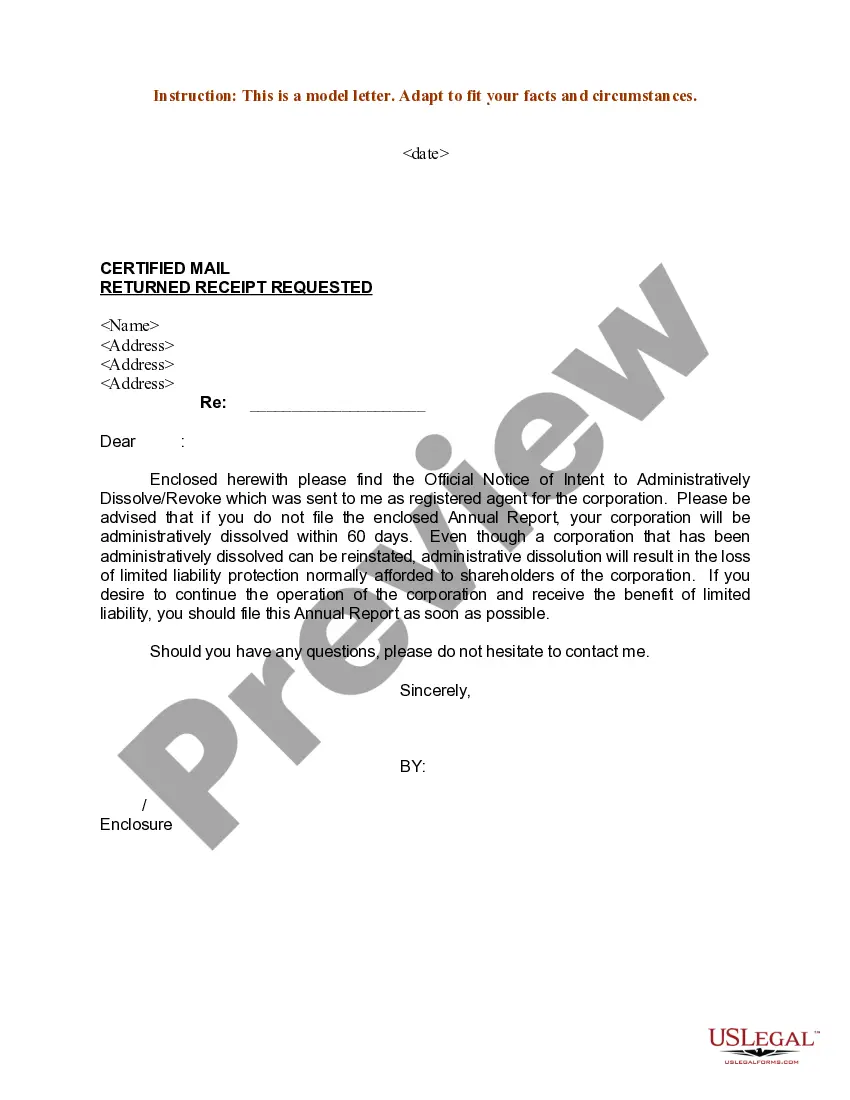
Administrative Dissolution Without Liquidation Luxembourg
Description
Get your form ready online
Our built-in tools help you complete, sign, share, and store your documents in one place.
Make edits, fill in missing information, and update formatting in US Legal Forms—just like you would in MS Word.
Download a copy, print it, send it by email, or mail it via USPS—whatever works best for your next step.
Sign and collect signatures with our SignNow integration. Send to multiple recipients, set reminders, and more. Go Premium to unlock E-Sign.
If this form requires notarization, complete it online through a secure video call—no need to meet a notary in person or wait for an appointment.
We protect your documents and personal data by following strict security and privacy standards.

Make edits, fill in missing information, and update formatting in US Legal Forms—just like you would in MS Word.

Download a copy, print it, send it by email, or mail it via USPS—whatever works best for your next step.

Sign and collect signatures with our SignNow integration. Send to multiple recipients, set reminders, and more. Go Premium to unlock E-Sign.

If this form requires notarization, complete it online through a secure video call—no need to meet a notary in person or wait for an appointment.

We protect your documents and personal data by following strict security and privacy standards.
Looking for another form?
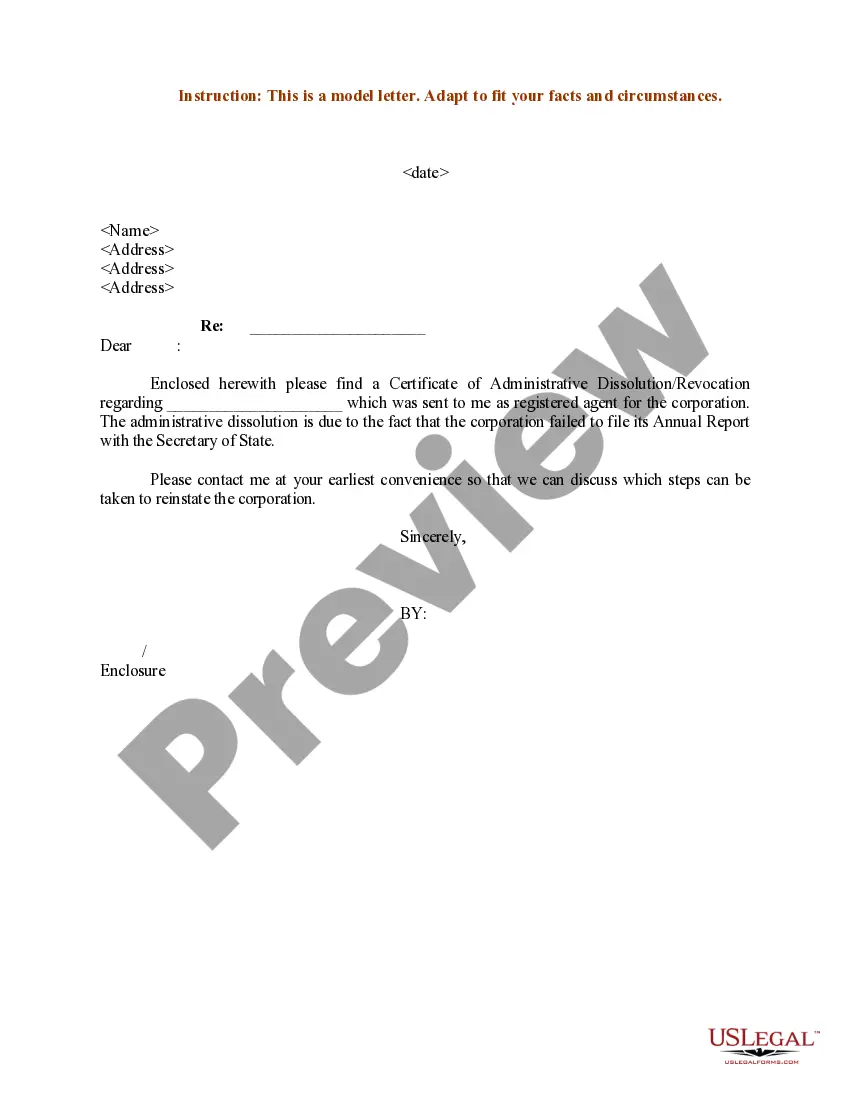
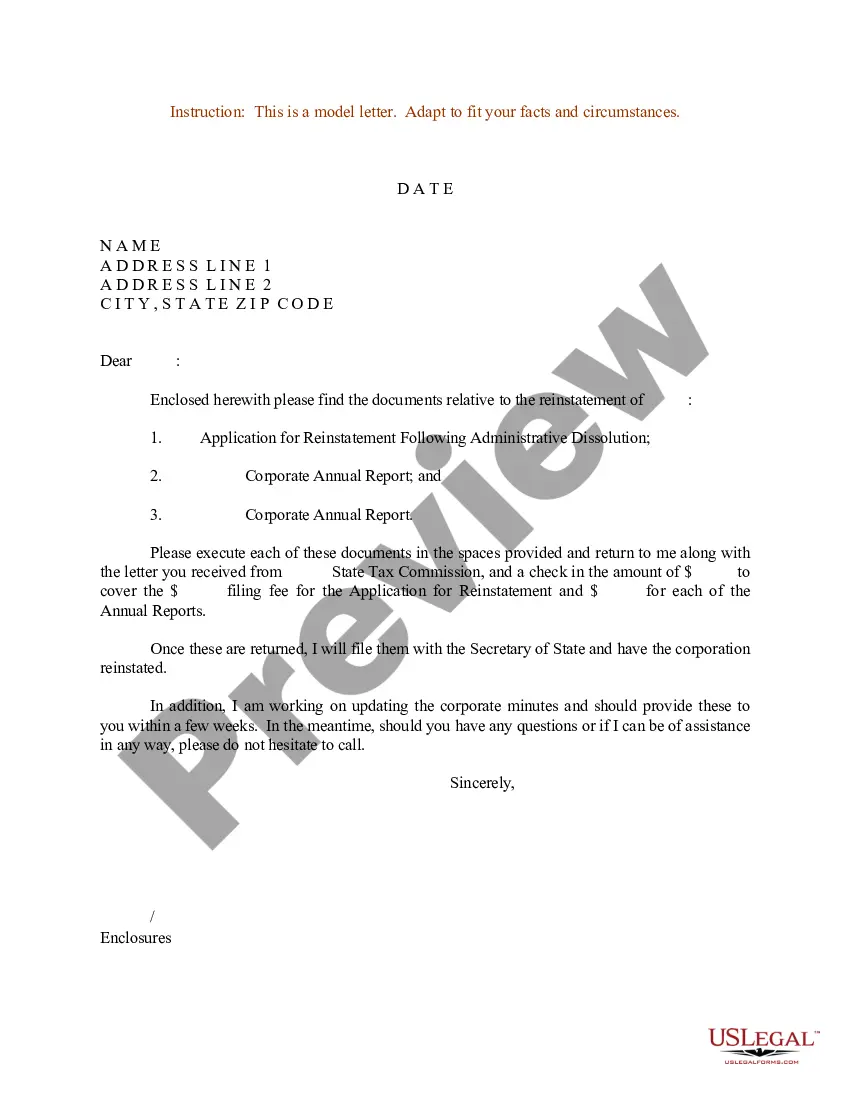
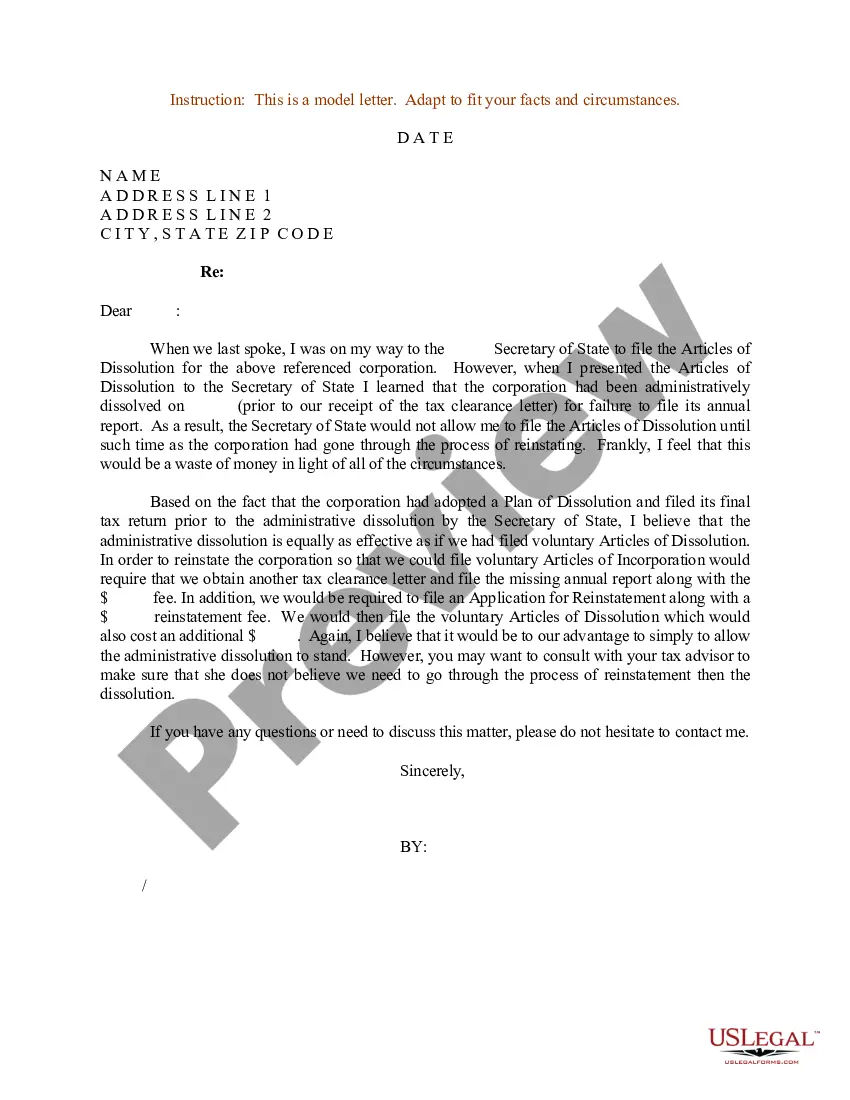
How to fill out Sample Letter Regarding Notification Of Official Notice Of Intent To Administratively Dissolve Or Revoke Corporation?
Finding a go-to place to access the most current and relevant legal samples is half the struggle of handling bureaucracy. Discovering the right legal papers needs accuracy and attention to detail, which explains why it is crucial to take samples of Administrative Dissolution Without Liquidation Luxembourg only from reputable sources, like US Legal Forms. A wrong template will waste your time and delay the situation you are in. With US Legal Forms, you have very little to be concerned about. You can access and check all the details regarding the document’s use and relevance for the circumstances and in your state or region.
Consider the listed steps to complete your Administrative Dissolution Without Liquidation Luxembourg:
- Utilize the library navigation or search field to locate your sample.
- Open the form’s description to check if it fits the requirements of your state and region.
- Open the form preview, if there is one, to ensure the form is the one you are looking for.
- Get back to the search and locate the appropriate template if the Administrative Dissolution Without Liquidation Luxembourg does not suit your needs.
- When you are positive regarding the form’s relevance, download it.
- If you are an authorized user, click Log in to authenticate and gain access to your picked forms in My Forms.
- If you do not have an account yet, click Buy now to obtain the form.
- Select the pricing plan that suits your requirements.
- Proceed to the registration to complete your purchase.
- Complete your purchase by choosing a payment method (bank card or PayPal).
- Select the file format for downloading Administrative Dissolution Without Liquidation Luxembourg.
- Once you have the form on your device, you may modify it using the editor or print it and finish it manually.
Remove the headache that comes with your legal documentation. Check out the comprehensive US Legal Forms collection to find legal samples, check their relevance to your circumstances, and download them on the spot.
Form popularity
FAQ
What are the differences between liquidation and dissolution? Dissolving a company through the process of dissolution often takes place when a company is solvent, but is no longer trading. Liquidation however, occurs due to a company having financial difficulties and therefore being unable to keep up with their debts.
Administrative dissolution is an action taken by the Secretary of State that results in the loss of a business entity's rights, powers and authority.
Whatever the complexity of the voluntary liquidation, the process should follow the same basic formula, usually in three clear steps: Opening the Liquidation & appointing a liquidator. ... Approving the liquidation report & appointing a liquidation auditor. ... Final shareholder meeting & closure of the liquidation.
Administrative dissolution is the taking away of the rights, powers, and authority of a domestic corporation, LLC, or other statutory business entity by the state administrator overseeing business entities, due to the entity's failure to comply with certain obligations of the business entity statute.
The liquidator ends agreements with third parties, pays the creditors and represents the company ing to the terms of its mandate during the liquidation period and potentially makes advances on liquidation proceeds.