Revocation Beneficiary Form For Ira
Description
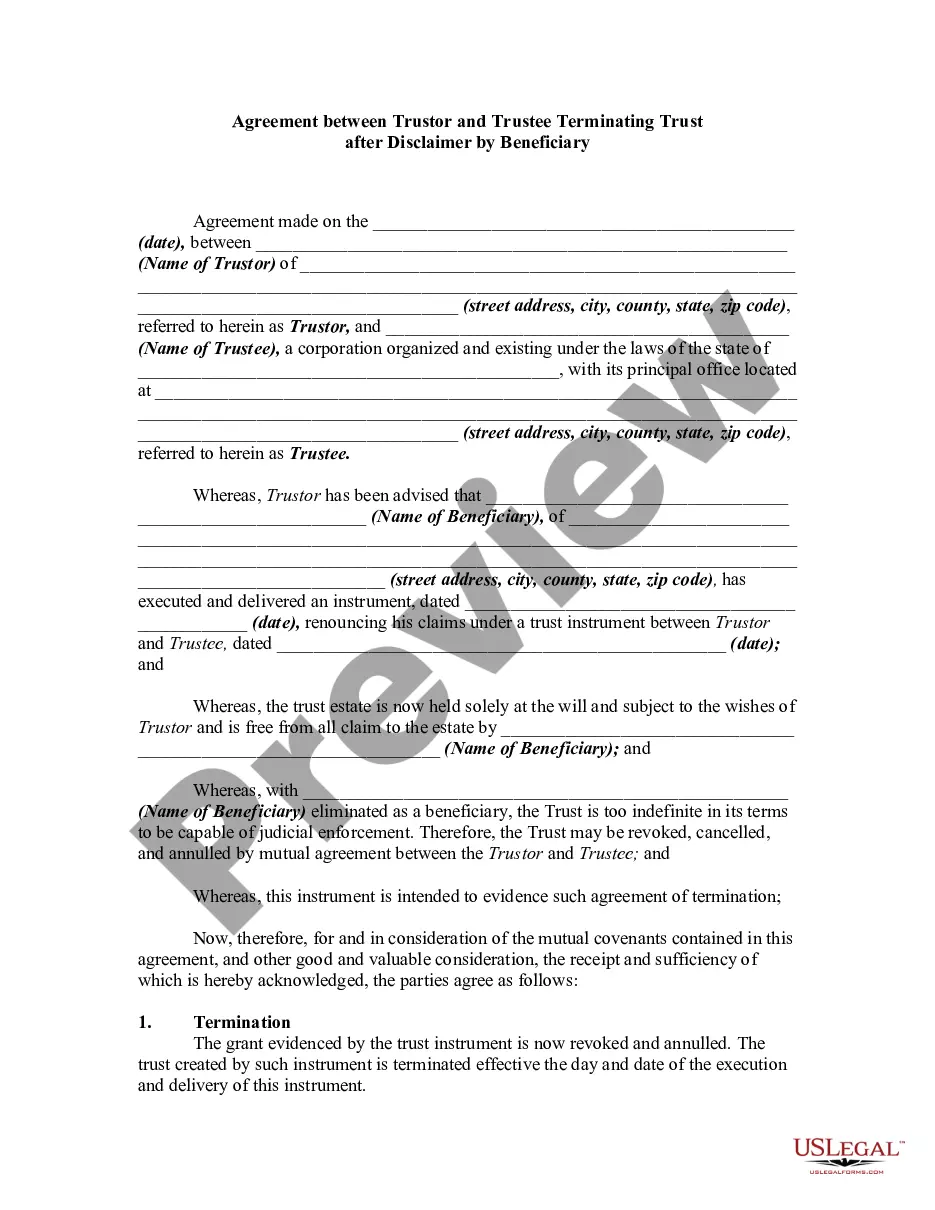
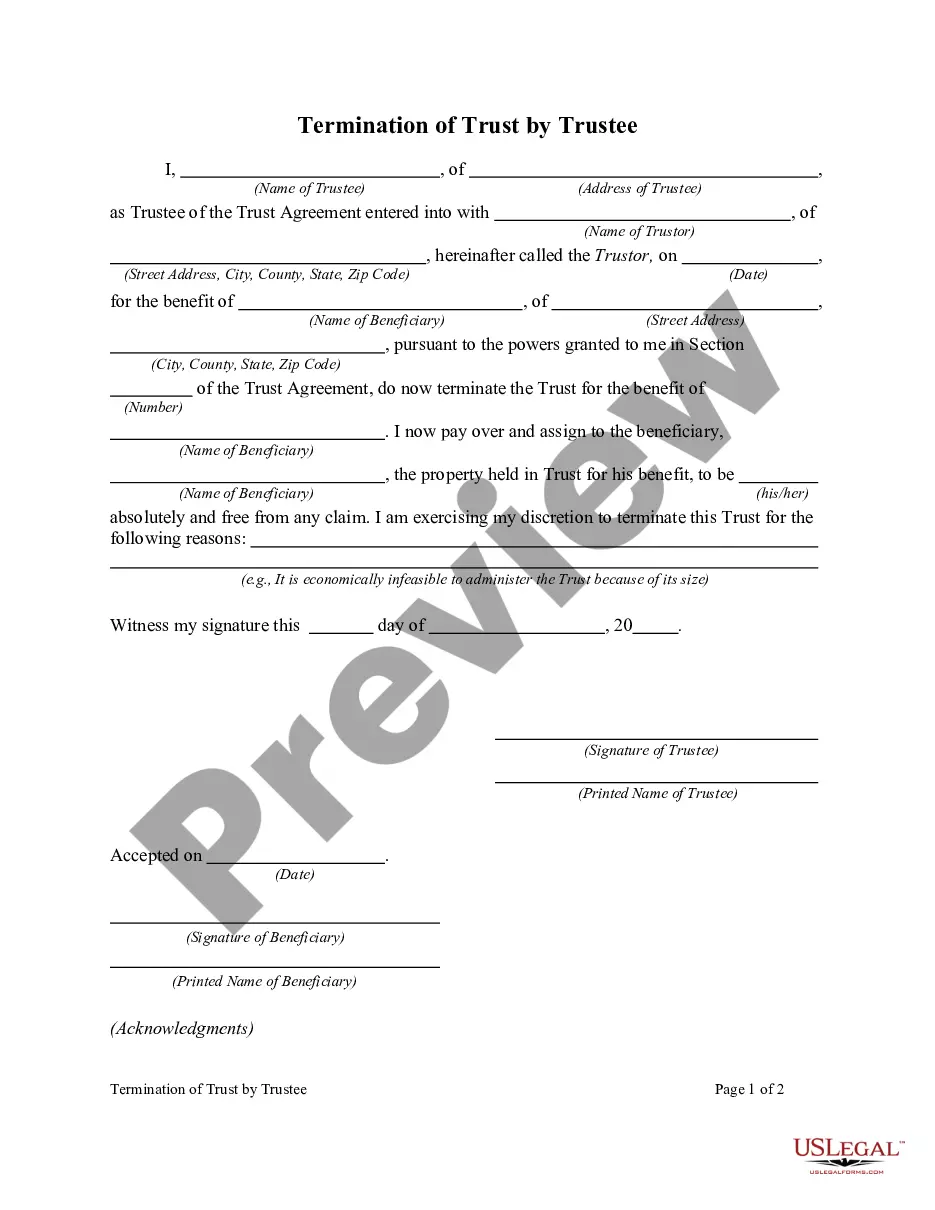
Get your form ready online
Our built-in tools help you complete, sign, share, and store your documents in one place.
Make edits, fill in missing information, and update formatting in US Legal Forms—just like you would in MS Word.
Download a copy, print it, send it by email, or mail it via USPS—whatever works best for your next step.
Sign and collect signatures with our SignNow integration. Send to multiple recipients, set reminders, and more. Go Premium to unlock E-Sign.
If this form requires notarization, complete it online through a secure video call—no need to meet a notary in person or wait for an appointment.
We protect your documents and personal data by following strict security and privacy standards.

Make edits, fill in missing information, and update formatting in US Legal Forms—just like you would in MS Word.

Download a copy, print it, send it by email, or mail it via USPS—whatever works best for your next step.

Sign and collect signatures with our SignNow integration. Send to multiple recipients, set reminders, and more. Go Premium to unlock E-Sign.

If this form requires notarization, complete it online through a secure video call—no need to meet a notary in person or wait for an appointment.

We protect your documents and personal data by following strict security and privacy standards.
Looking for another form?


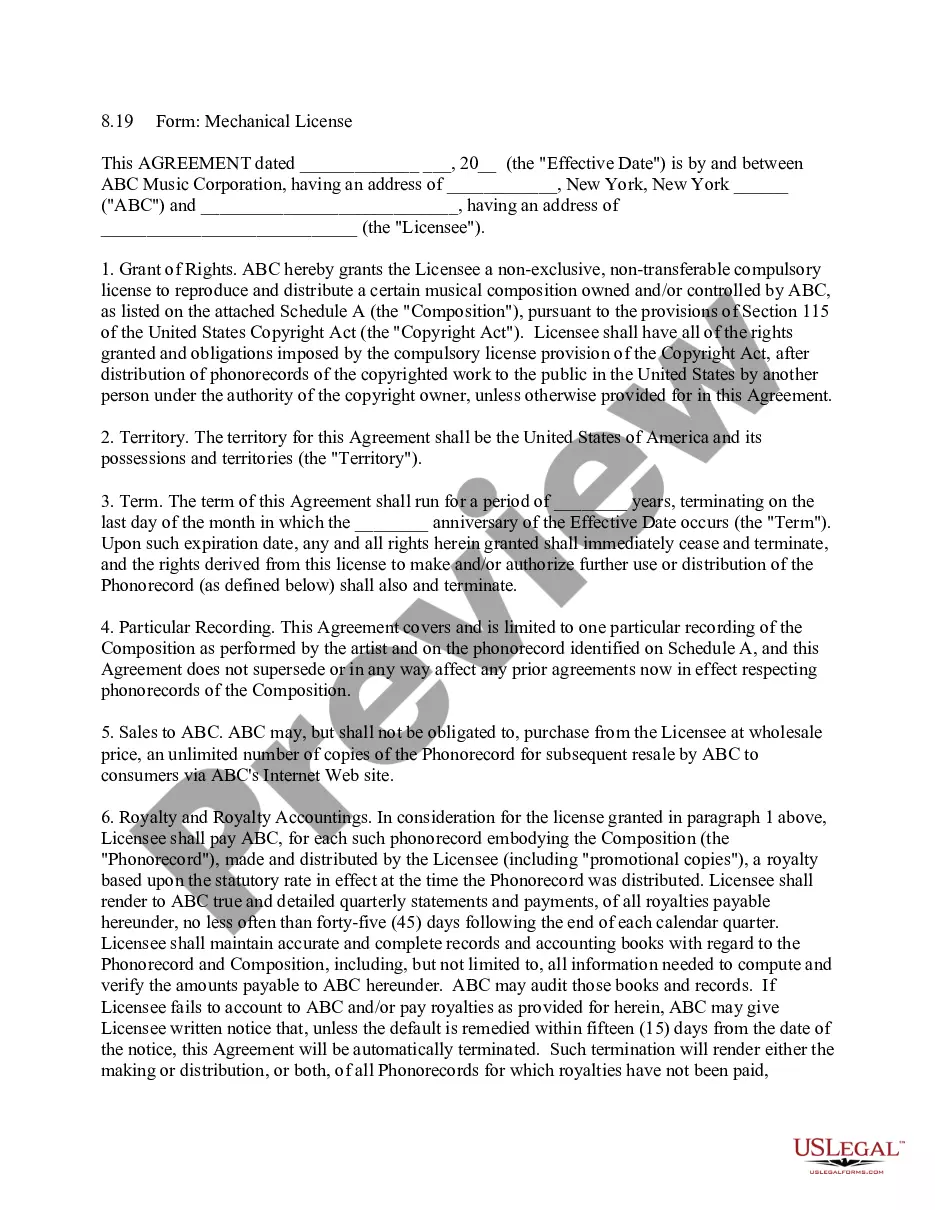
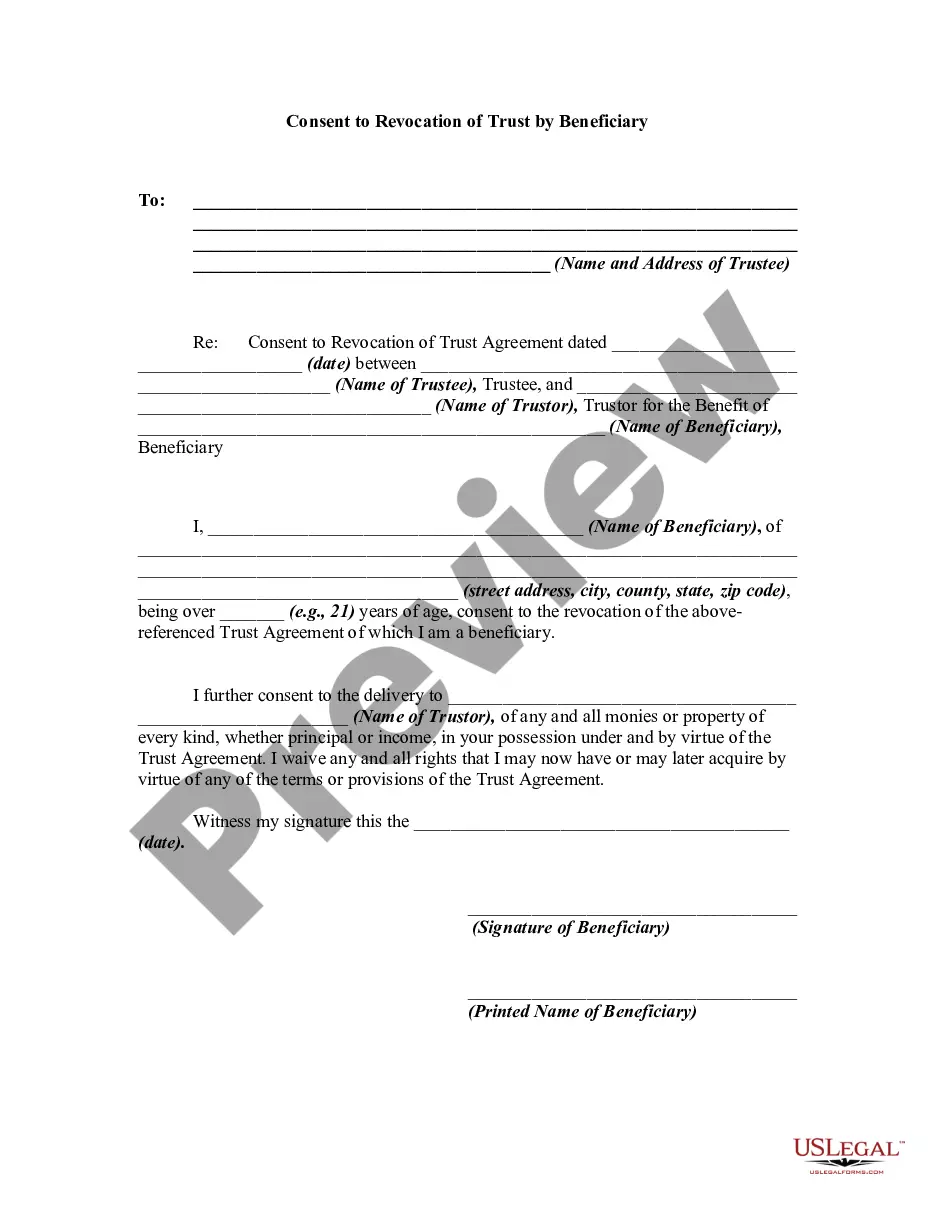
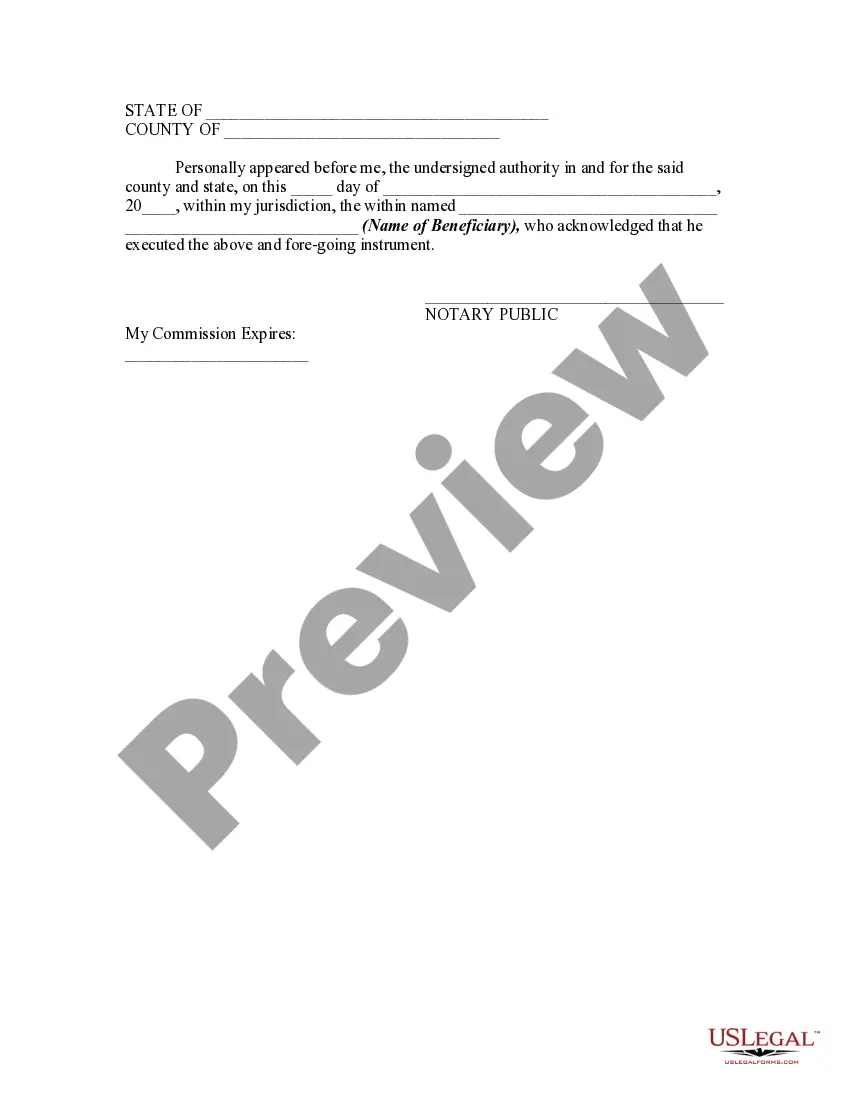
How to fill out Consent To Revocation Of Trust By Beneficiary?
Whether for commercial objectives or for private matters, everyone must confront legal circumstances at some stage in their lifetime.
Completing legal paperwork requires meticulous focus, starting from choosing the correct form template.
With an extensive US Legal Forms catalog available, you don’t have to waste time searching for the suitable sample online. Utilize the library’s user-friendly navigation to find the right form for any circumstance.
- For example, if you select an incorrect version of the Revocation Beneficiary Form For Ira, it will be rejected once you submit it.
- Thus, it is essential to have a reliable source of legal documents such as US Legal Forms.
- If you need to acquire a Revocation Beneficiary Form For Ira template, follow these straightforward steps.
- Obtain the sample you require by utilizing the search bar or catalog browsing.
- Review the form’s details to confirm it fits your needs, jurisdiction, and region.
- Click on the form’s preview to inspect it.
- If it is the incorrect document, return to the search feature to find the Revocation Beneficiary Form For Ira template you require.
- Download the template if it aligns with your specifications.
- If you possess a US Legal Forms account, simply click Log in to access previously saved documents in My documents.
- If you do not have an account yet, you can acquire the form by clicking Buy now.
- Select the appropriate payment option.
- Complete the account registration form.
- Choose your payment method: use a credit card or PayPal account.
- Select the file format you prefer and download the Revocation Beneficiary Form For Ira.
- Once it is downloaded, you can fill out the form using editing software or print it and complete it by hand.
Form popularity
FAQ
Primary Beneficiaries Write the names of the first beneficiary(ies) you would like to receive your benefit after you die. You may name an individual(s), entity (such as a charity, business, religious organization, funeral home, etc.), trust, or estate. You may name more than one.
Change of name only. If the policy has joint ownership, all owners must sign any form submitted. Complete the Request for Change of Beneficiary form by listing the full given name for each person being named. Indicate their address, social security number, date of birth, and relationship to the insured person.
If the person was under age 72 when they died, your withdrawal options are to: Open an inherited IRA using the life expectancy method. Open an inherited IRA using the 10-year method. Take a lump sum distribution.
The disclaimer must be valid under state law. Again, work with the lawyer to get the disclaimer done. The disclaimer must be in writing and delivered to the person or entity who is holding the property (in this case the IRA provider) within nine months after the death of the original transferor (Rose, in this example).
The disclaimer must be in writing: A signed letter by the person doing the disclaiming, identifying the decedent, describing the asset to be disclaimed, and the extent and amount, percentage or dollar amount, to be disclaimed, must be delivered to the person in control of the estate or asset, such as an executor, ...