Revocation Trust Notice For Work
Description
Get your form ready online
Our built-in tools help you complete, sign, share, and store your documents in one place.
Make edits, fill in missing information, and update formatting in US Legal Forms—just like you would in MS Word.
Download a copy, print it, send it by email, or mail it via USPS—whatever works best for your next step.
Sign and collect signatures with our SignNow integration. Send to multiple recipients, set reminders, and more. Go Premium to unlock E-Sign.
If this form requires notarization, complete it online through a secure video call—no need to meet a notary in person or wait for an appointment.
We protect your documents and personal data by following strict security and privacy standards.

Make edits, fill in missing information, and update formatting in US Legal Forms—just like you would in MS Word.

Download a copy, print it, send it by email, or mail it via USPS—whatever works best for your next step.

Sign and collect signatures with our SignNow integration. Send to multiple recipients, set reminders, and more. Go Premium to unlock E-Sign.

If this form requires notarization, complete it online through a secure video call—no need to meet a notary in person or wait for an appointment.

We protect your documents and personal data by following strict security and privacy standards.
Looking for another form?





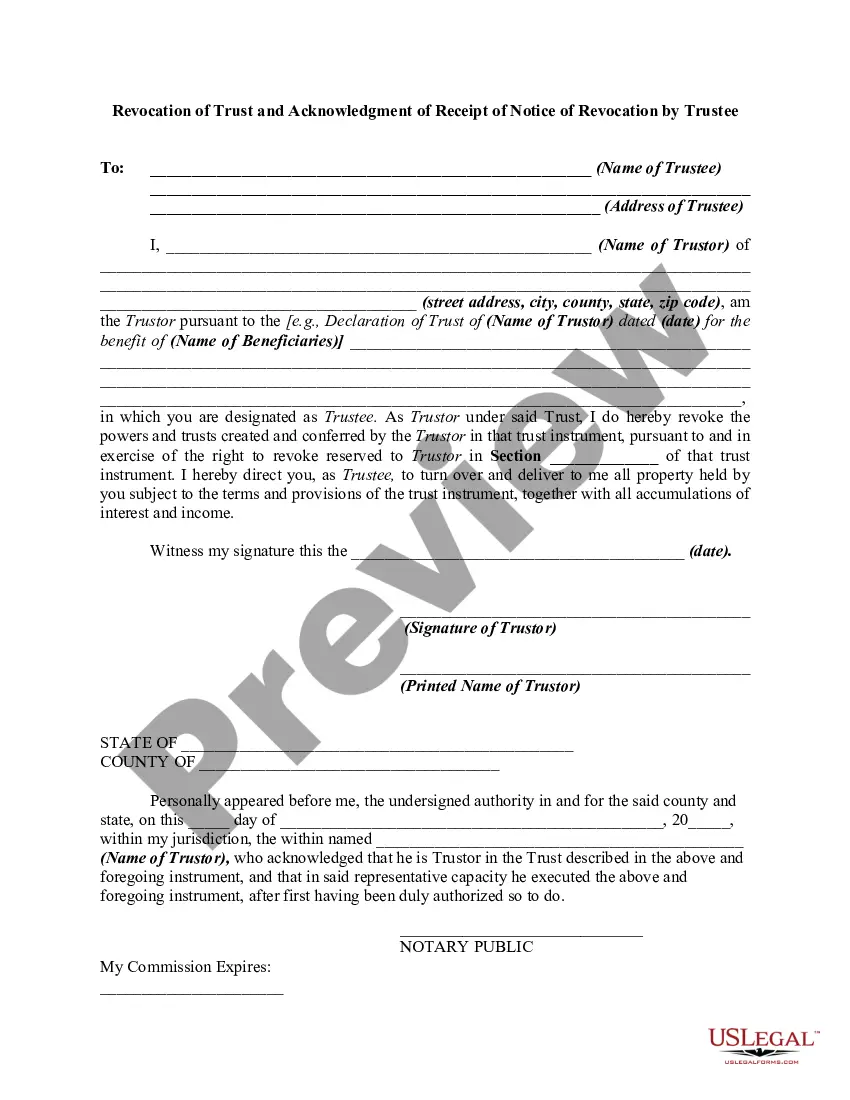
How to fill out Revocation Of Trust And Acknowledgment Of Receipt Of Notice Of Revocation By Trustee?
Accessing legal document examples that adhere to national and local laws is crucial, and the web provides numerous choices.
However, what’s the point in squandering time hunting for the correct Revocation Trust Notice For Work template online when the US Legal Forms digital library already has such formats consolidated in one location.
US Legal Forms is the largest online legal repository featuring more than 85,000 fillable formats created by attorneys for various professional and personal situations.
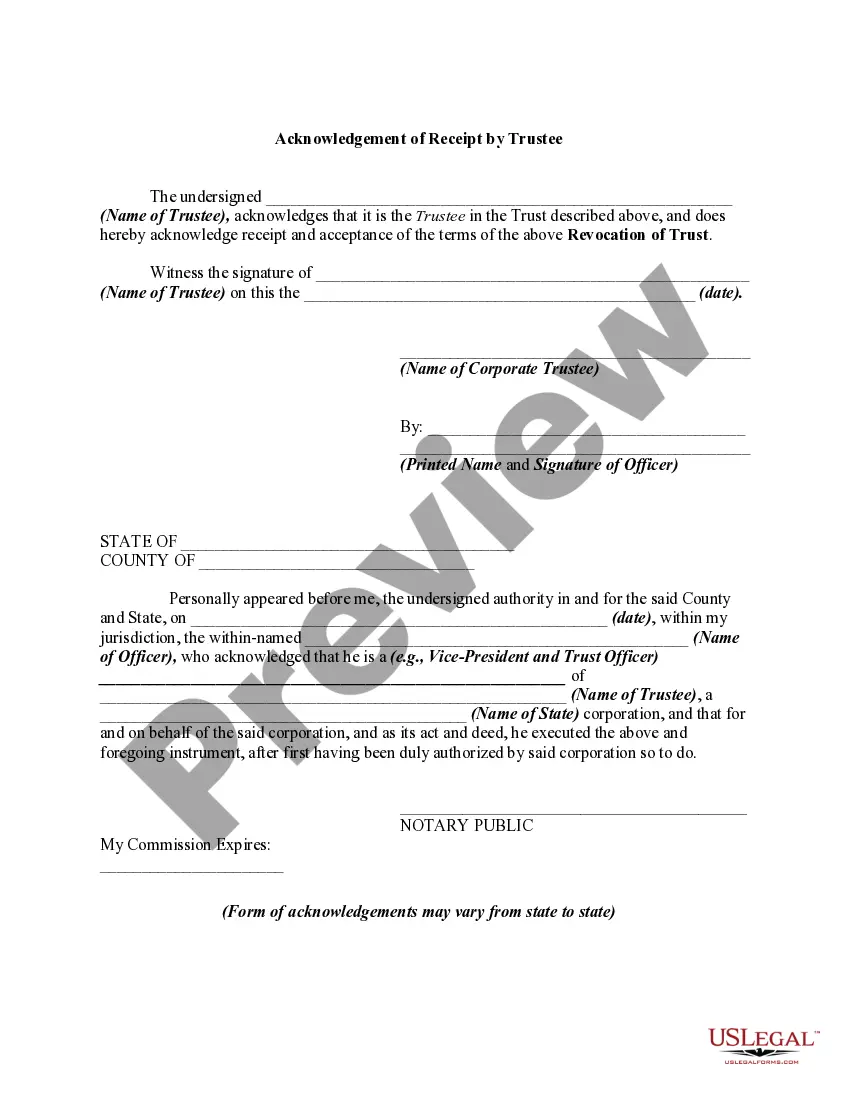
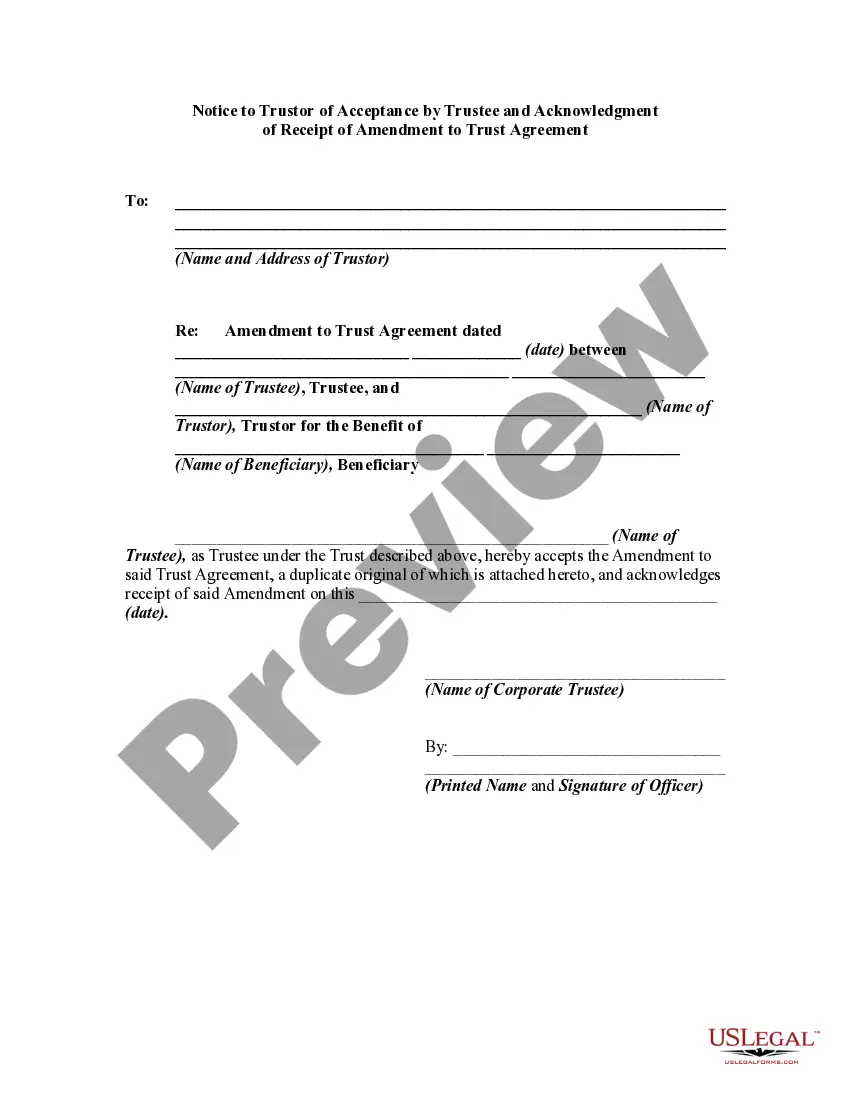
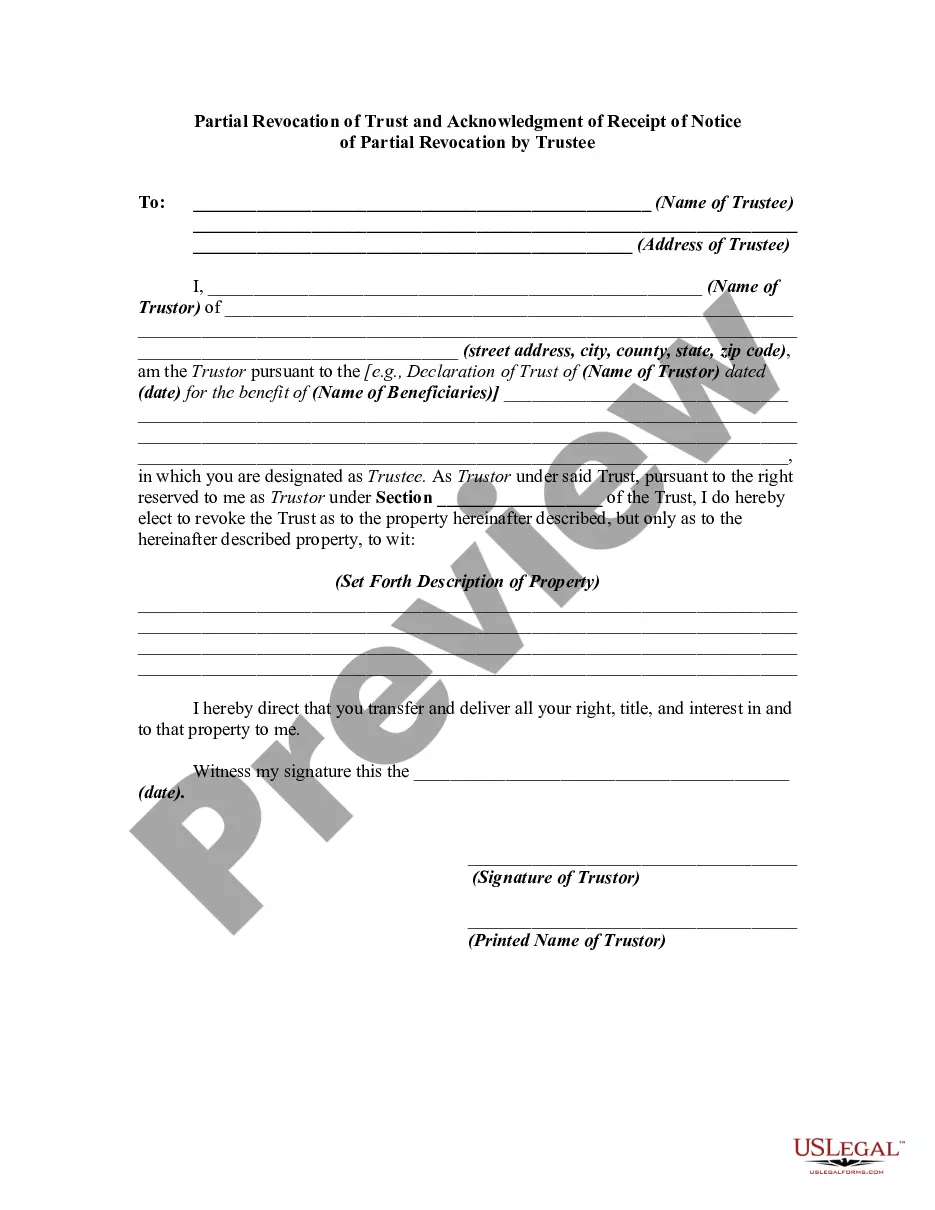
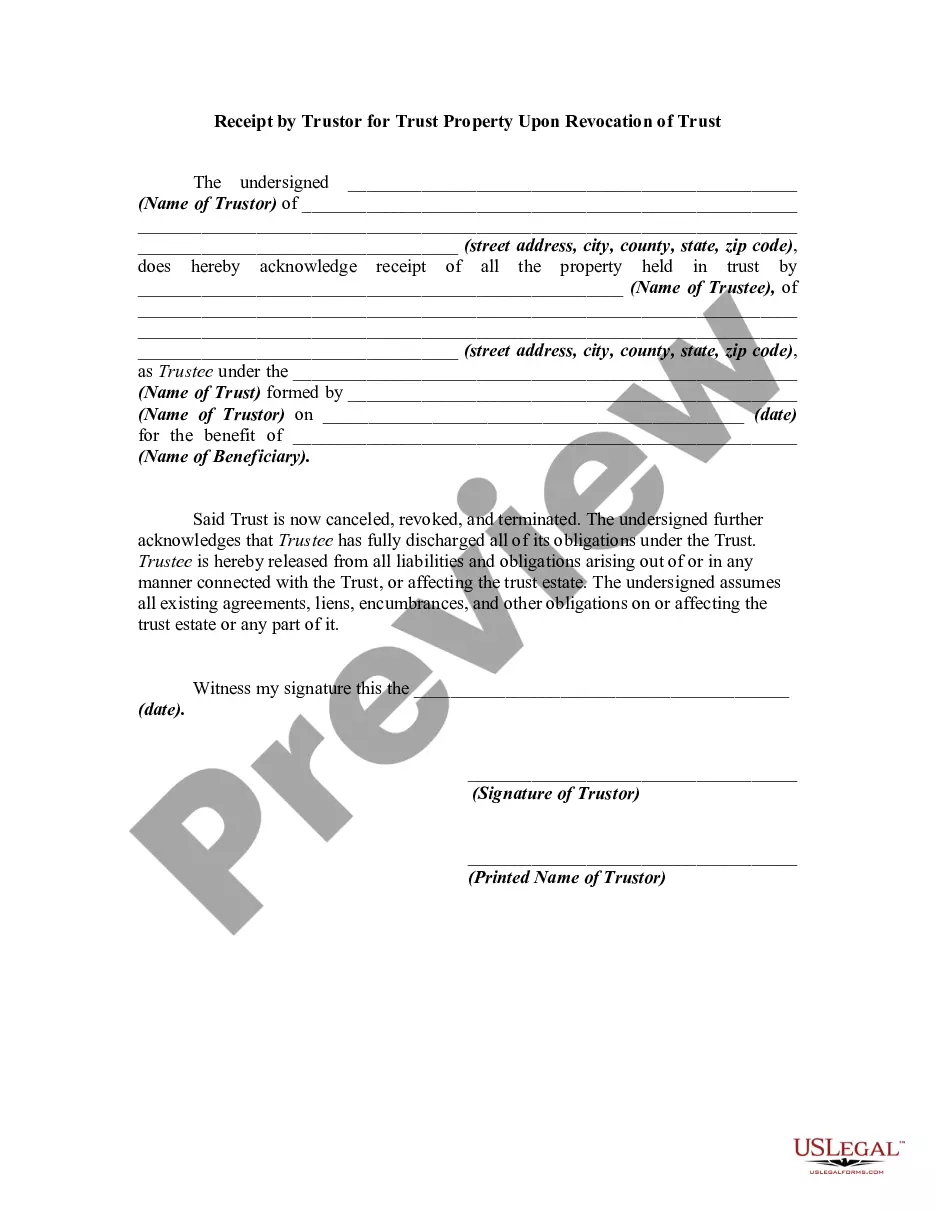
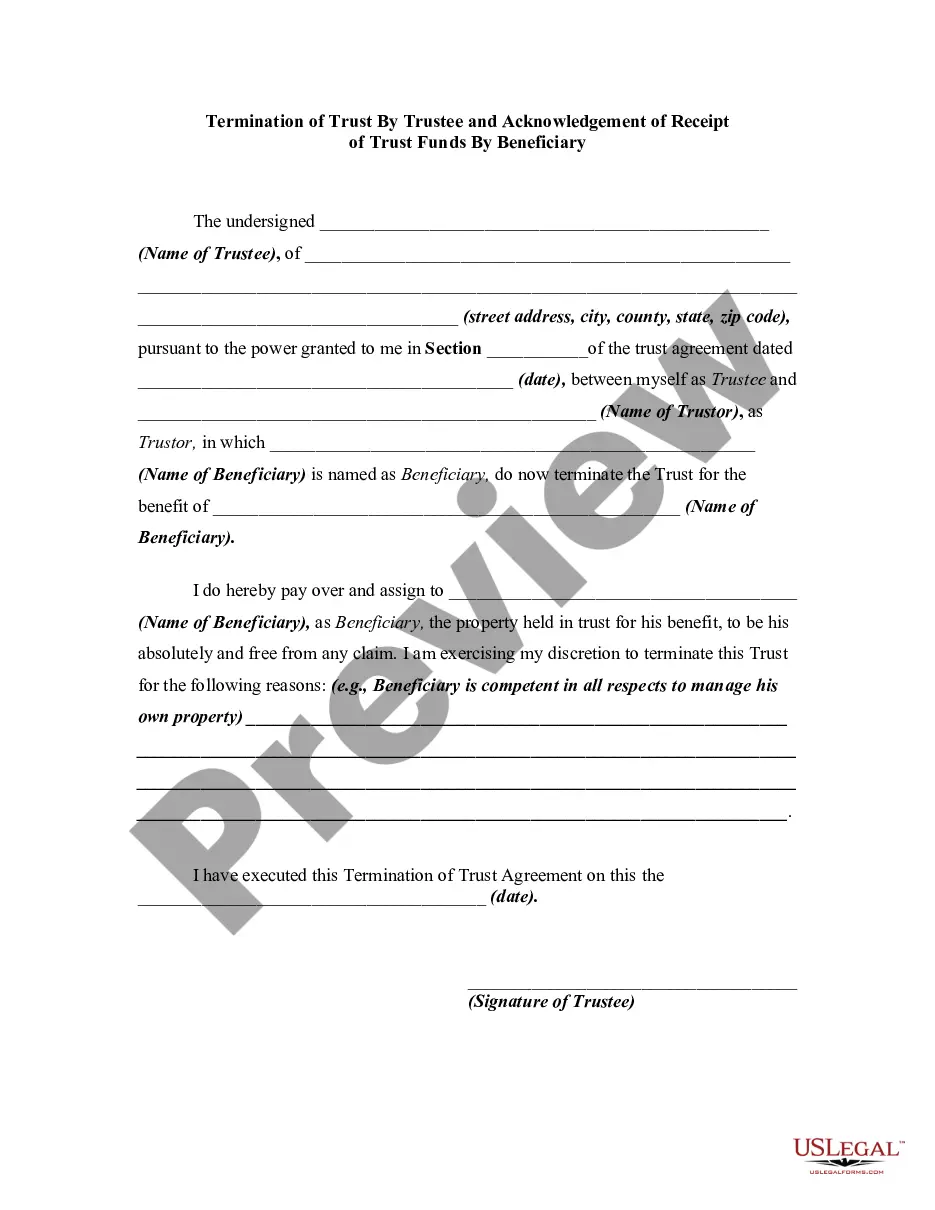
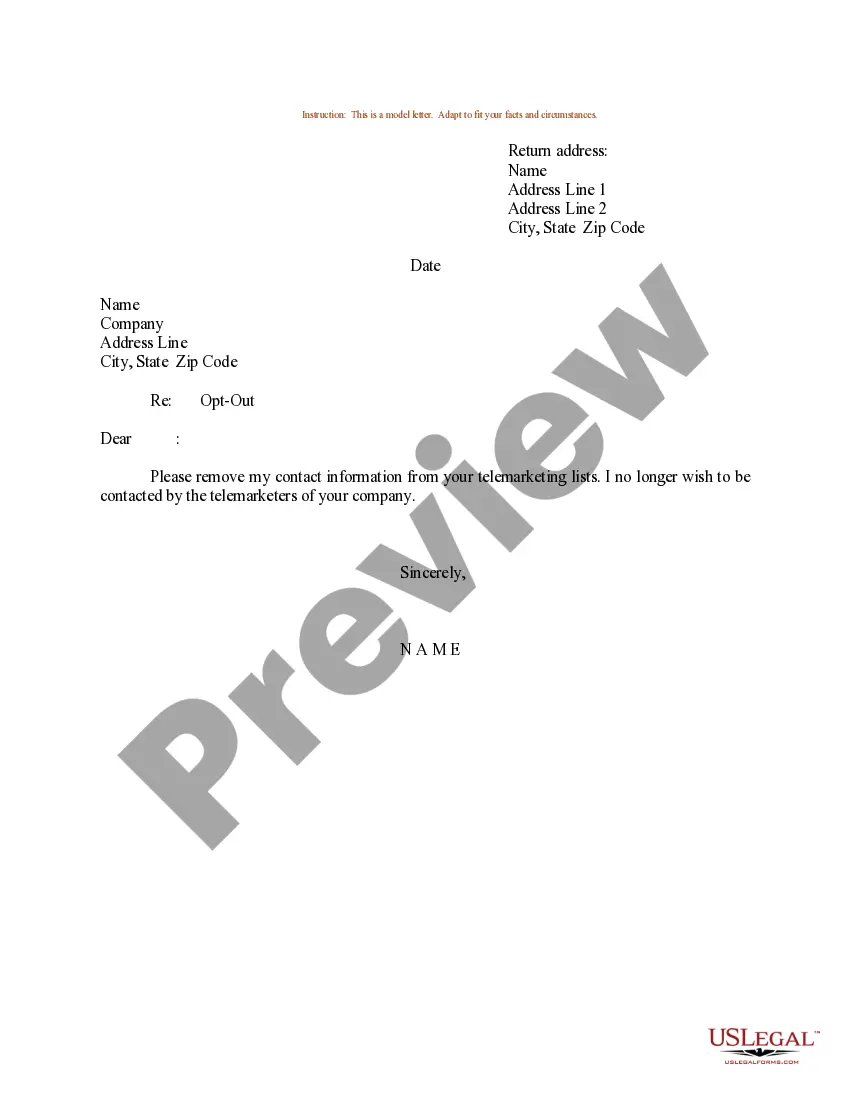
Evaluate the template using the Preview feature or via the text outline to ensure it fulfills your needs.
- They are simple to navigate with all documents categorized by state and intended use.
- Our experts stay updated with legal changes, ensuring that your form is current and compliant when obtaining a Revocation Trust Notice For Work from our site.
- Acquiring a Revocation Trust Notice For Work is straightforward and swift for both existing and new clients.
- If you already have an account with an active subscription, Log In and download the document example you require in the appropriate format.
- If you are new to our platform, follow the steps outlined below.
Form popularity
FAQ
When a trust fails, it typically means that the trust cannot fulfill its intended purpose. This situation may lead to the trust assets being distributed outright to beneficiaries or reverting to the grantor's estate. A revocation trust notice for work may be issued as part of this process. It's essential to identify the reasons for the trust's failure to avoid similar issues in future planning.
When an unlicensed contractor is discovered by an owner, they must then contend with a litigious opponent and a court system that won't look kindly on them, not to mention the CCB. The penalty for contracting without a license in Oregon jumps up to $5,000 per offense when an owner has filed a complaint for damages.
Make sure the contractor you hire for home repairs is legitimate. Search for the company online and read reviews. Find out if there are complaints against the contractor with the Better Business Bureau and your state attorney general's office. Ask for references.
Regulating the construction industry Oregon law requires anyone who works for compensation in any construction activity involving improvements to real property to be licensed with the Oregon Construction Contractors Board (CCB).
Get certificates of insurance for Liability Insurance and Workers Compensation Insurance. Also insist on a signed and notarized lien waiver each time you make a payment. A mechanics lien is easy to file and hard to get rid of. Therefore, get a signed and notarized lien waiver each time you make a payment.
Sometimes a contractor-subcontractor agreement will also include indemnity provisions, surety bonds, and insurance requirements. Indemnity provisions allocate risk because it is a way of securing or protecting against loss or financial burdens.
Get general/professional liability insurance. Some clients may even require proof of insurance prior to executing your contract.
You must give the contractor notice by certified mail that you intend to file a complaint with the CCB. You must mail this notice at least 30 days before you file the complaint. We have a pre-complaint notice?? that you can use to generate a notice.
To protect yourself, use a non-solicitation or non-compete clause sample or a contract template. If possible, have a legal professional review your contract to make sure it will hold up if an employee violates it. There will always be a risk that one of your contractors will directly solicit one of your own clients.