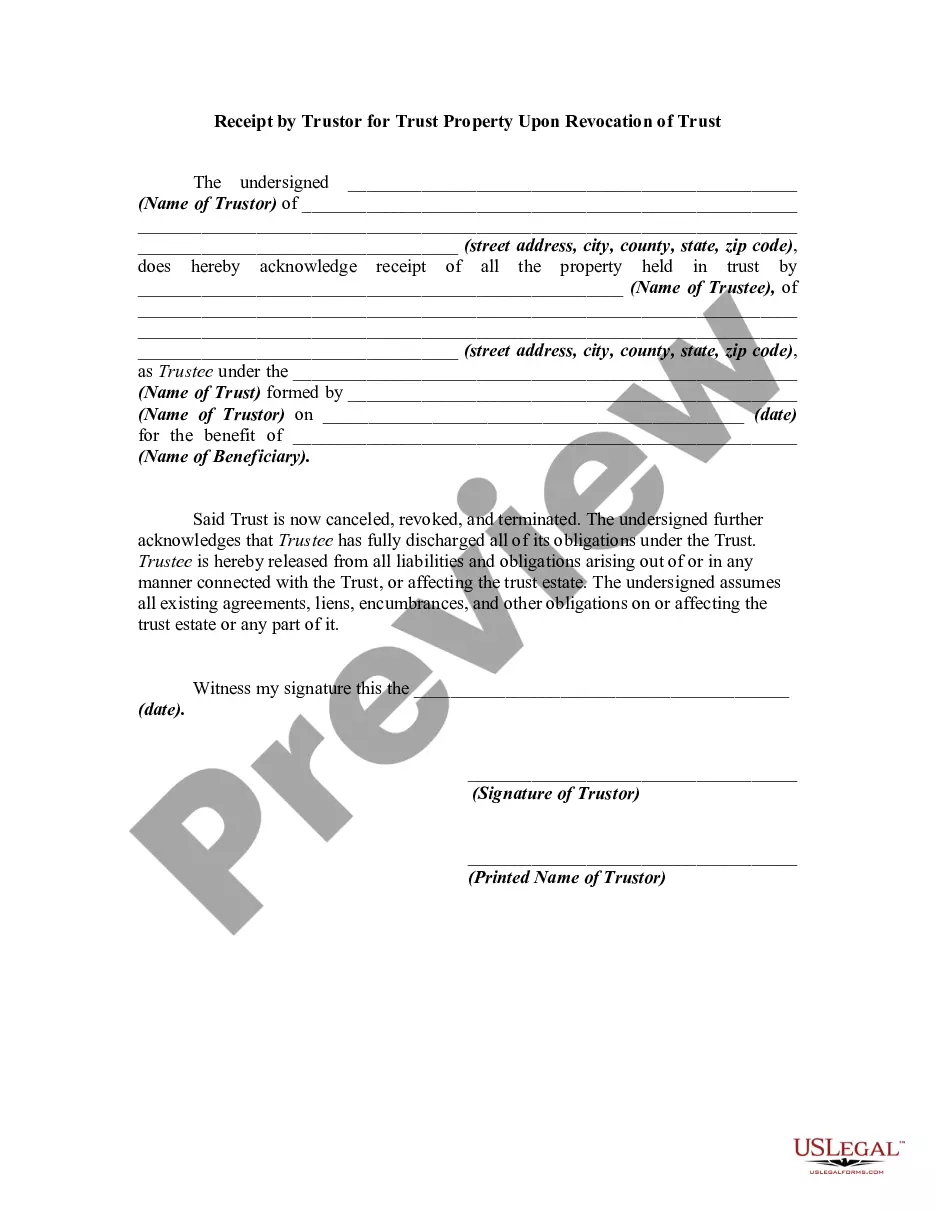
Revocation Of Trust Agreement
Description
Get your form ready online
Our built-in tools help you complete, sign, share, and store your documents in one place.
Make edits, fill in missing information, and update formatting in US Legal Forms—just like you would in MS Word.
Download a copy, print it, send it by email, or mail it via USPS—whatever works best for your next step.
Sign and collect signatures with our SignNow integration. Send to multiple recipients, set reminders, and more. Go Premium to unlock E-Sign.
If this form requires notarization, complete it online through a secure video call—no need to meet a notary in person or wait for an appointment.
We protect your documents and personal data by following strict security and privacy standards.

Make edits, fill in missing information, and update formatting in US Legal Forms—just like you would in MS Word.

Download a copy, print it, send it by email, or mail it via USPS—whatever works best for your next step.

Sign and collect signatures with our SignNow integration. Send to multiple recipients, set reminders, and more. Go Premium to unlock E-Sign.

If this form requires notarization, complete it online through a secure video call—no need to meet a notary in person or wait for an appointment.

We protect your documents and personal data by following strict security and privacy standards.
Looking for another form?


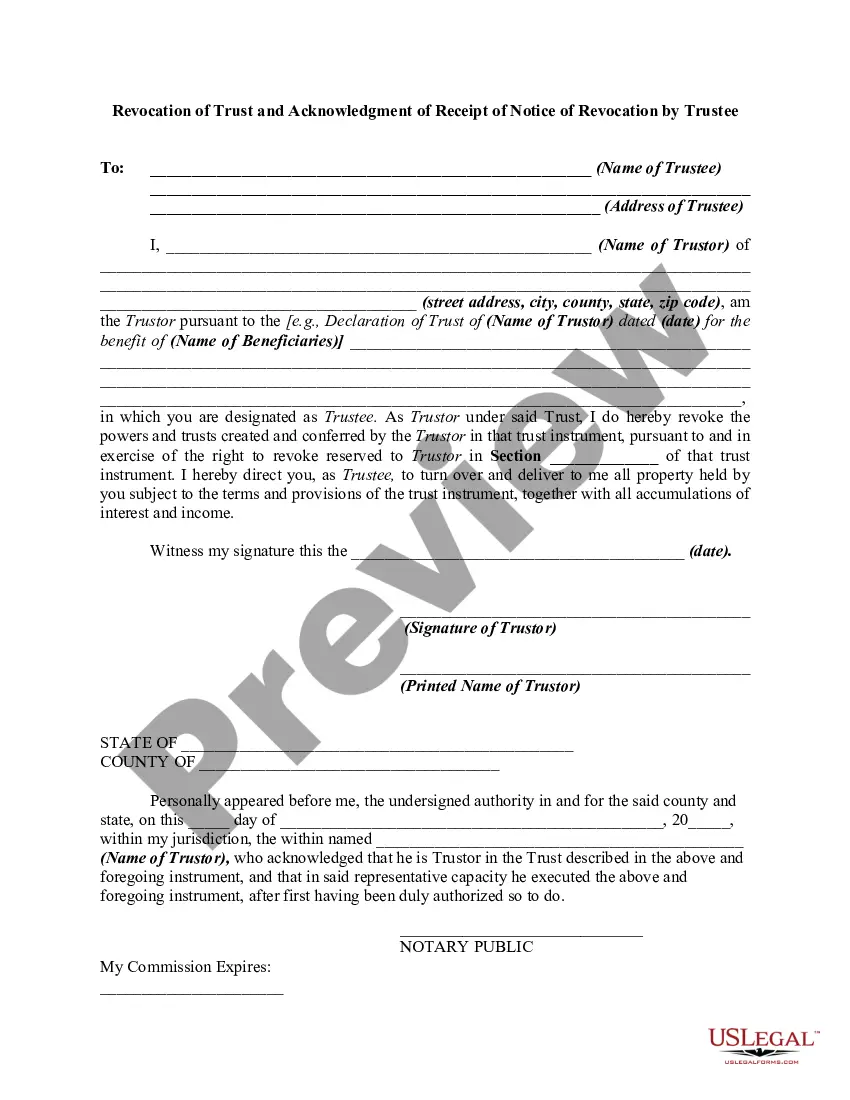
How to fill out Revocation Of Trust And Acknowledgment Of Receipt Of Notice Of Revocation By Trustee?
- Log in to your account if you are a returning user. Ensure your subscription is active; if it has lapsed, renew it according to your payment plan.
- For new users, start by browsing the document library. Use the Preview mode to read the description and confirm the form aligns with your jurisdiction’s requirements.
- If the current document isn't suitable, utilize the Search feature to find the correct template that fits your specific needs.
- Once you have the right form, click on the 'Buy Now' button and select your desired subscription plan to gain full access.
- Complete your purchase by entering your credit card information or choosing PayPal for payments.
- Download the form to your device for easy access. You can also retrieve it anytime from the 'My Forms' section in your profile.
In conclusion, US Legal Forms not only makes acquiring your revocation of trust agreement seamless but also ensures you have the right tools to manage your legal needs effectively. With a robust library containing over 85,000 forms, assistance from premium experts is just a step away for precise documentation.
Take control of your legal processes today with US Legal Forms—start your journey to efficient legal document management now!
Form popularity
FAQ
You don’t necessarily need a lawyer to dissolve a trust, particularly if it is straightforward; however, legal advice can ensure you comply with all regulations. The revocation of trust agreement requires careful consideration of documentation and asset management. With UsLegalForms, you can access all the necessary resources to handle this process efficiently, allowing you to make informed choices.
A revocable trust typically becomes irrevocable when the grantor passes away or when they decide to relinquish their control over it. This shift means that the assets within the trust cannot be altered or withdrawn without proper legal procedures. Understanding the nuances of the revocation of trust agreement is crucial for effective estate planning. UsLegalForms can offer you easy-to-use tools to navigate these important decisions.
In general, a nursing home cannot take assets held in a revocable trust as long as the trust is structured correctly. However, if you need to qualify for Medicaid, the assets may be considered countable. This situation highlights the importance of understanding the revocation of trust agreement properly. Use UsLegalForms to address your specific compliance needs.
To invalidate a trust, you must demonstrate that it was created under duress, coercion, or fraud. Additionally, if the trust lacks the required legal formalities, it may also be invalidated. If you are unsure about the revocation of trust agreement process, seeking guidance from UsLegalForms can provide helpful templates and expert advice.
You can revoke a revocable trust by following the terms outlined in your trust agreement. Typically, this involves creating a written document that explicitly states your intent to revoke the trust. Remember, the revocation of trust agreement means returning any assets back to your control. Consider using resources from UsLegalForms to simplify this process.
Several factors can void a trust, including fraud, lack of capacity, or improper creation. If a revocation of trust agreement is established, it can nullify the trust's validity. Additionally, if the terms of the trust violate state laws, it may also be rendered void. Turning to US Legal Forms provides you with the resources to navigate these complexities and ensure your trust is legally sound.
Breaking a trust can be straightforward or complex, depending on the trust's terms and local laws. Generally, a revocation of trust agreement is required to formally dissolve the trust. However, if there are disputes among beneficiaries, it may complicate the process. Consulting with legal services or platforms like US Legal Forms can clarify the steps and ease the burdens involved.
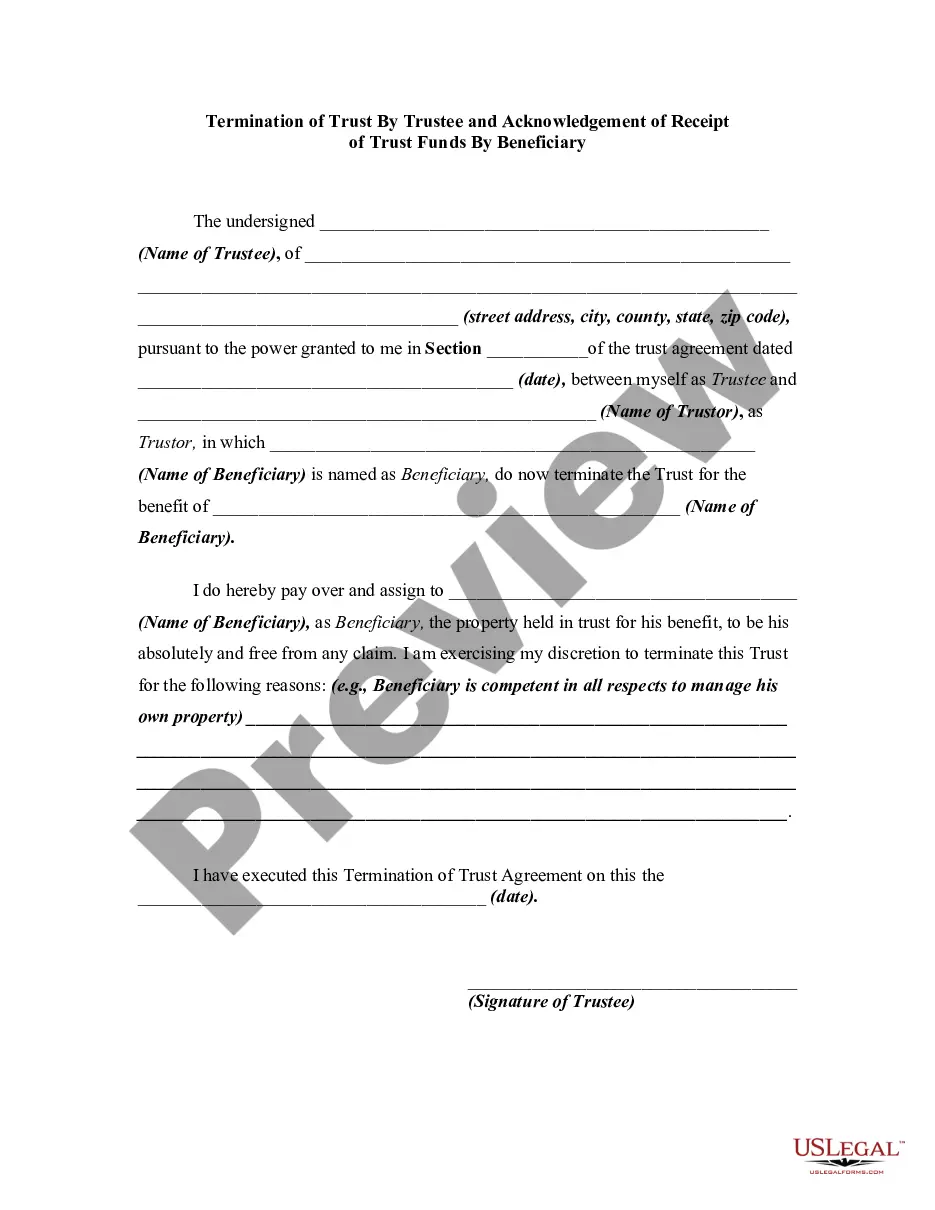
To terminate a trust relationship, you usually need to execute a revocation of trust agreement. This legal document formally ends the trust and dictates how to manage any remaining assets. It’s important to notify all beneficiaries and the trustee about this decision. Using a platform like US Legal Forms can simplify the process, providing templates and guidance to ensure everything is handled correctly.
A trust can be deemed invalid if it fails to comply with state laws, lacks clear intent, or if the grantor did not have the capacity to create the trust at the time of formation. Factors such as fraud or undue influence can also lead to questions about the trust's validity. Familiarizing oneself with the revocation of trust agreement process can help prevent invalid trusts and ensure your wishes are honored.
The revocation clause in a trust is a specific provision that allows the grantor to revoke or modify the trust at any time. This clause provides flexibility, enabling the grantor to respond to changes in circumstances, such as personal preferences or legal requirements. Mastering the use of a revocation of trust agreement is crucial for anyone looking to maintain control over their assets.