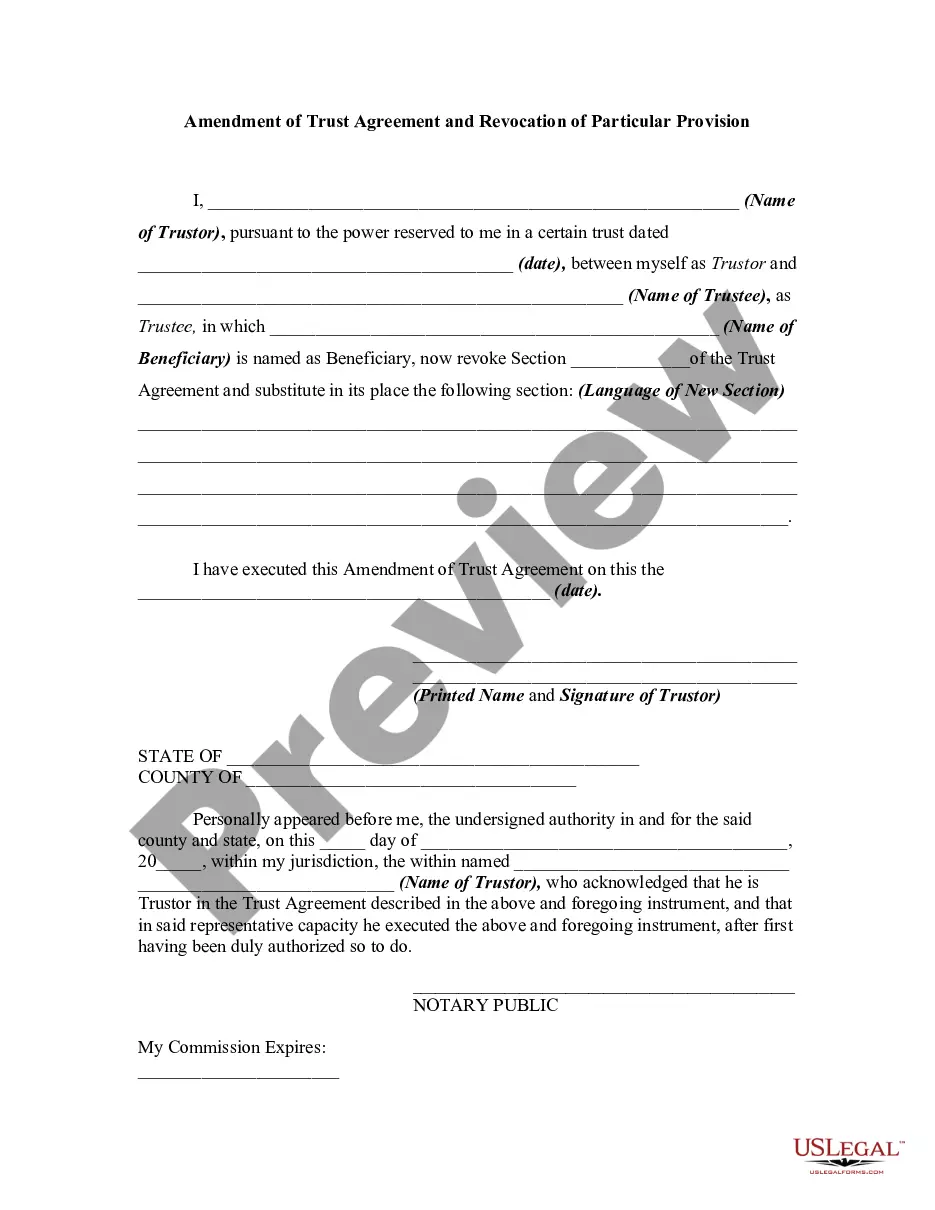
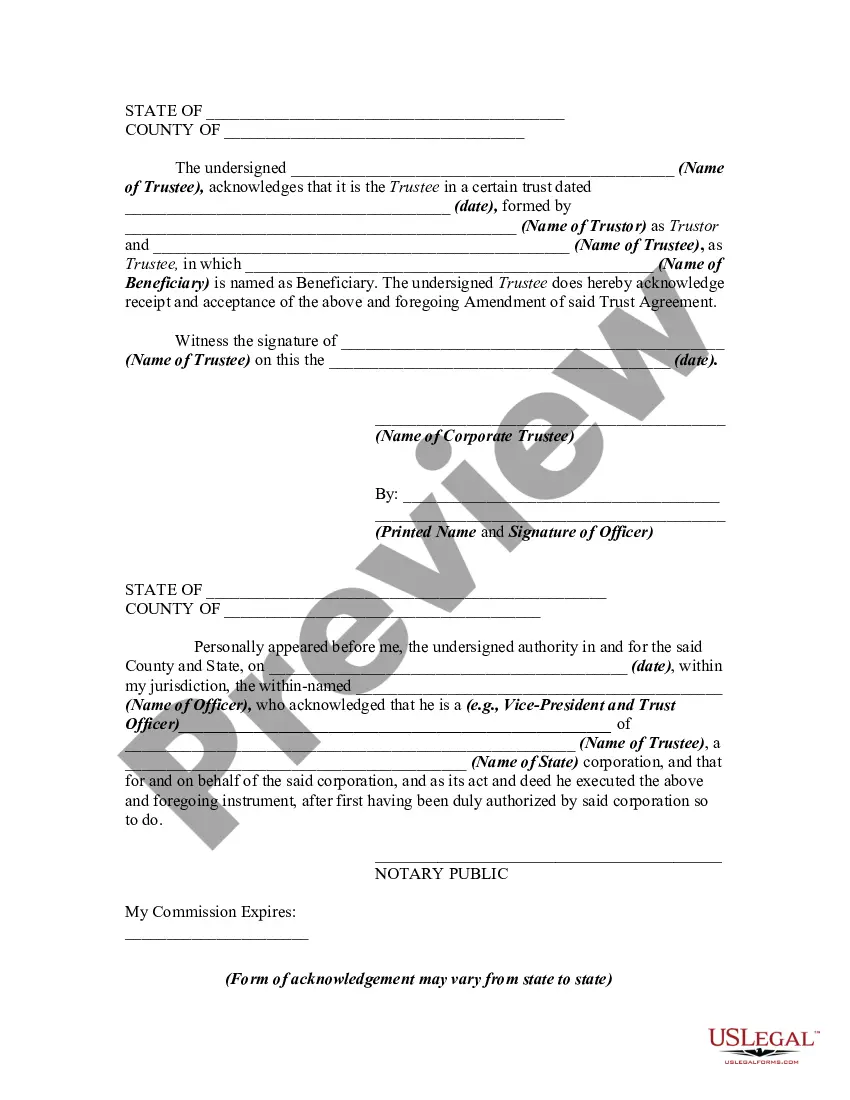
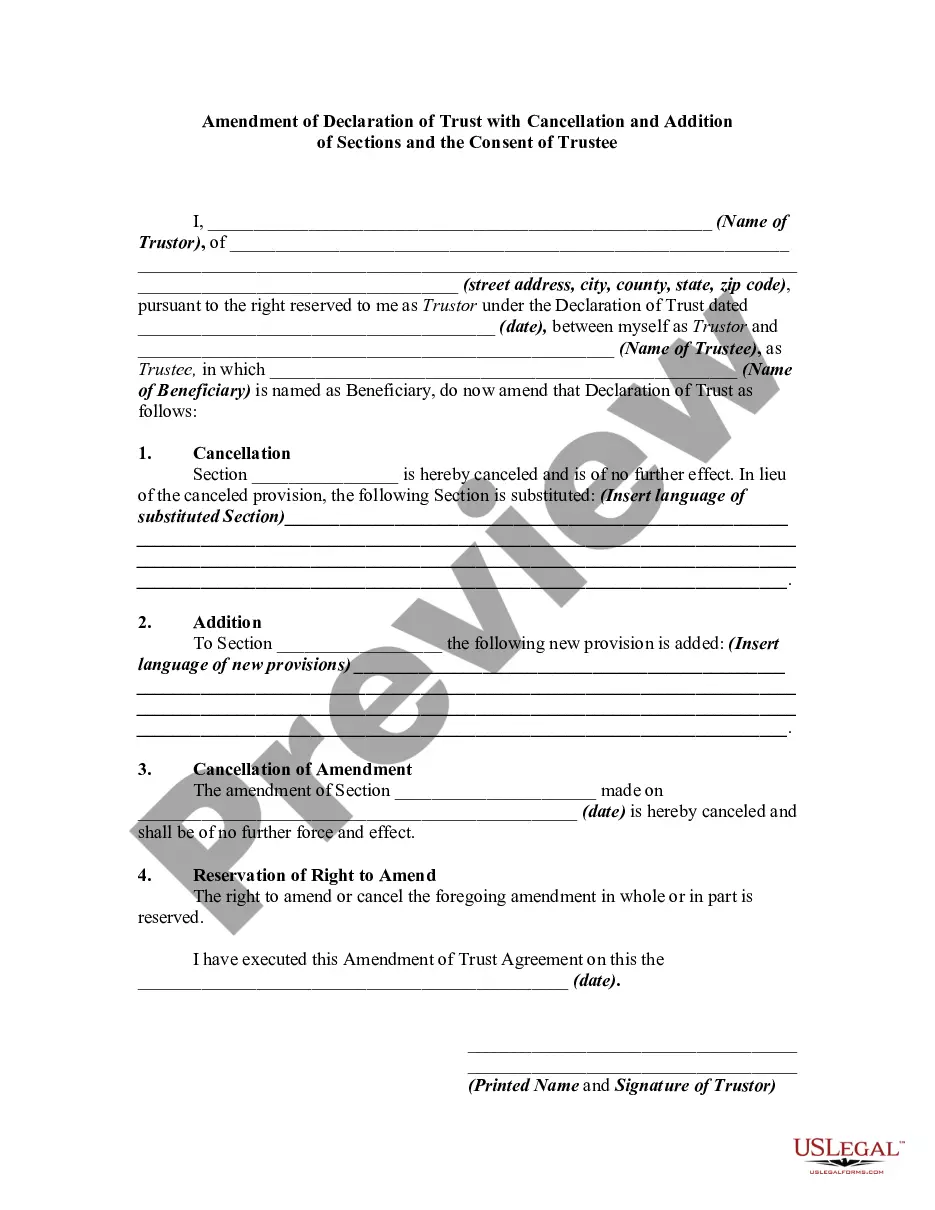
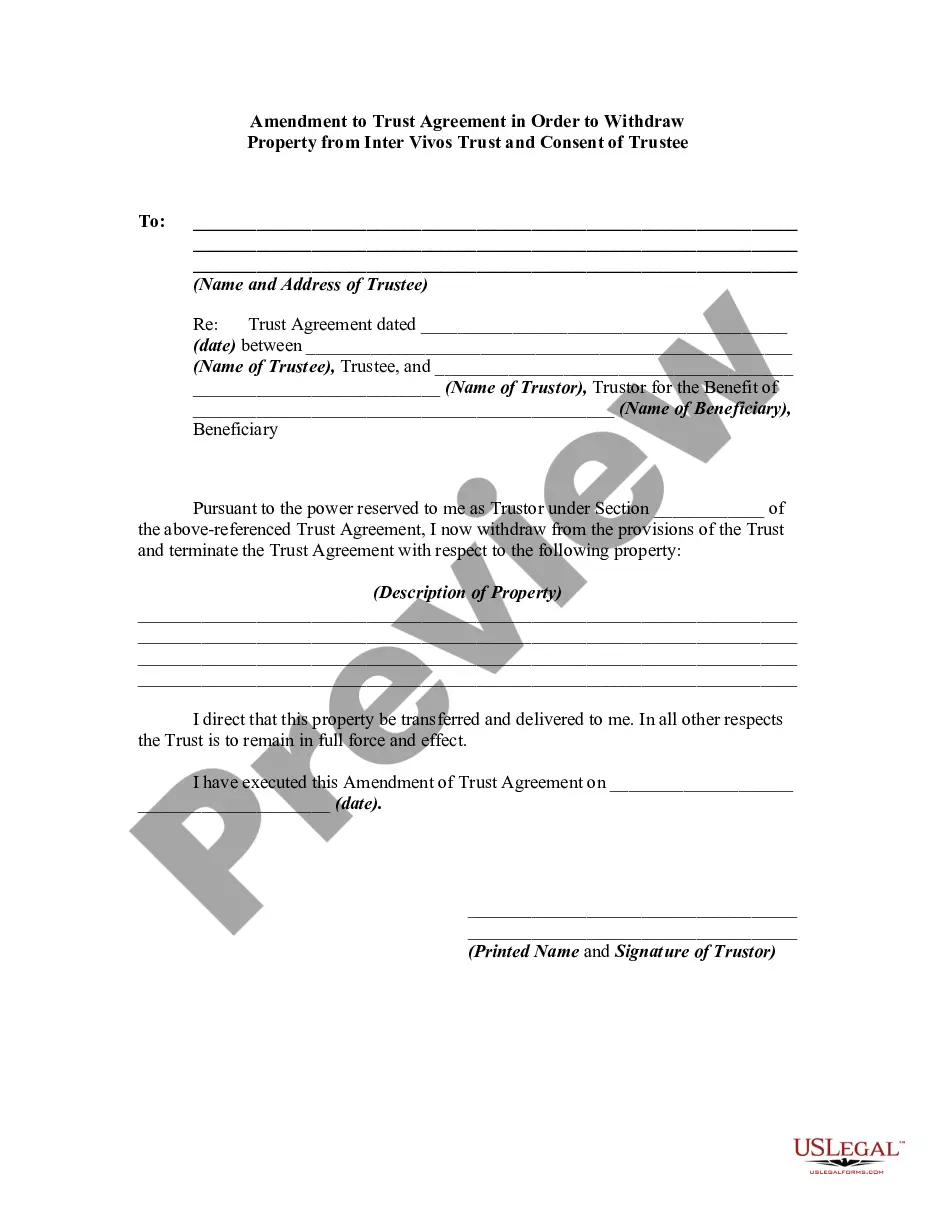
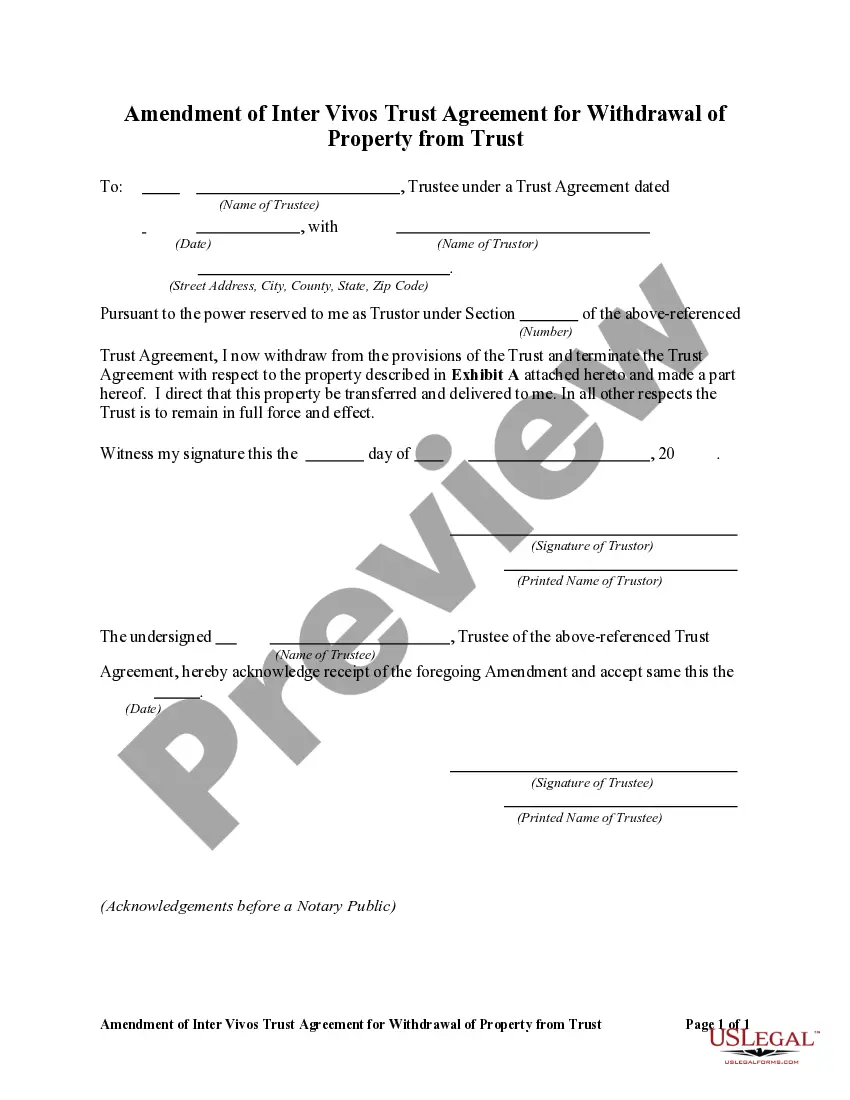
Template For Trust Amendment
Description
Get your form ready online
Our built-in tools help you complete, sign, share, and store your documents in one place.
Make edits, fill in missing information, and update formatting in US Legal Forms—just like you would in MS Word.
Download a copy, print it, send it by email, or mail it via USPS—whatever works best for your next step.
Sign and collect signatures with our SignNow integration. Send to multiple recipients, set reminders, and more. Go Premium to unlock E-Sign.
If this form requires notarization, complete it online through a secure video call—no need to meet a notary in person or wait for an appointment.
We protect your documents and personal data by following strict security and privacy standards.

Make edits, fill in missing information, and update formatting in US Legal Forms—just like you would in MS Word.

Download a copy, print it, send it by email, or mail it via USPS—whatever works best for your next step.

Sign and collect signatures with our SignNow integration. Send to multiple recipients, set reminders, and more. Go Premium to unlock E-Sign.

If this form requires notarization, complete it online through a secure video call—no need to meet a notary in person or wait for an appointment.

We protect your documents and personal data by following strict security and privacy standards.
Looking for another form?







How to fill out Amendment Of Trust Agreement And Revocation Of Particular Provision?
Managing legal documents can be perplexing, even for experienced professionals.
When you require a Template For Trust Amendment and lack the time to search for the right and up-to-date version, the process can be overwhelming.
Access legal and business forms specific to your state or county. US Legal Forms encompasses any needs you may have, from personal to business paperwork, all in one location.
Utilize cutting-edge tools to fill out and manage your Template For Trust Amendment.
Here are the steps to consider after finding the form you require: Confirm that it is the correct document by previewing it and reviewing its details. Ensure the template is accepted in your state or county. Select Buy Now once you are prepared. Choose a monthly subscription plan. Select the format you desire, and Download, complete, eSign, print, and send your document. Enjoy the online library offered by US Legal Forms, backed by 25 years of expertise and dependability. Transform your routine document management into a simple and user-friendly experience starting today.
- Access a valuable resource pool of articles, guidelines, handbooks, and materials pertinent to your situation and requirements.
- Save effort and time searching for the documents you need, using US Legal Forms’ advanced search and Preview feature to locate Template For Trust Amendment and download it.
- If you possess a monthly subscription, Log In to your US Legal Forms account, search for the form, and download it.
- Check your My documents section to view the documents you have previously downloaded and to manage your folders as you see fit.
- If this is your initial experience with US Legal Forms, create a free account to gain unlimited access to all platform features.
- A reliable online form repository can significantly improve the efficiency for anyone looking to handle these matters proficiently.
- US Legal Forms is a frontrunner in online legal forms, offering over 85,000 state-specific legal documents available to you at any time.
- With US Legal Forms, you can.
Form popularity
FAQ
So a Restatement would say ?I hereby take my entire trust named TRUST dated DATE and replace it with this whole new trust named TRUST dated TODAY'S DATE.? A restatement is generally cleaner, and a preferred way to amend trusts, as opposed to amendments.
Fill out the form with the name of your trust. If this is the first change you've made to the trust, state that. If you have made other changes to the trust, you will need to list them by date. Indicate if this amendment overrides those previous changes or if you want them to remain in effect.
A revocable trust can be modified while the Grantor is alive. Revising the terms of a trust is known as ?amending? the trust. An amendment is generally appropriate when there are only a few minor changes to make, like rewording a certain paragraph, changing the successor trustee, or modifying beneficiaries.
If you made a trust with your spouse or partner, then while both of you are alive, you both must agree to amend any provision of the trust document -- for example, to change a beneficiary, a successor trustee or the property management set up for a young beneficiary.
In most cases, a trust deed generally offers two processes for the removal of a beneficiary. Most commonly, the beneficiary can sign a document to renunciate all interests as a beneficiary. Otherwise, the trustee may have discretionary power to revoke the beneficiary.