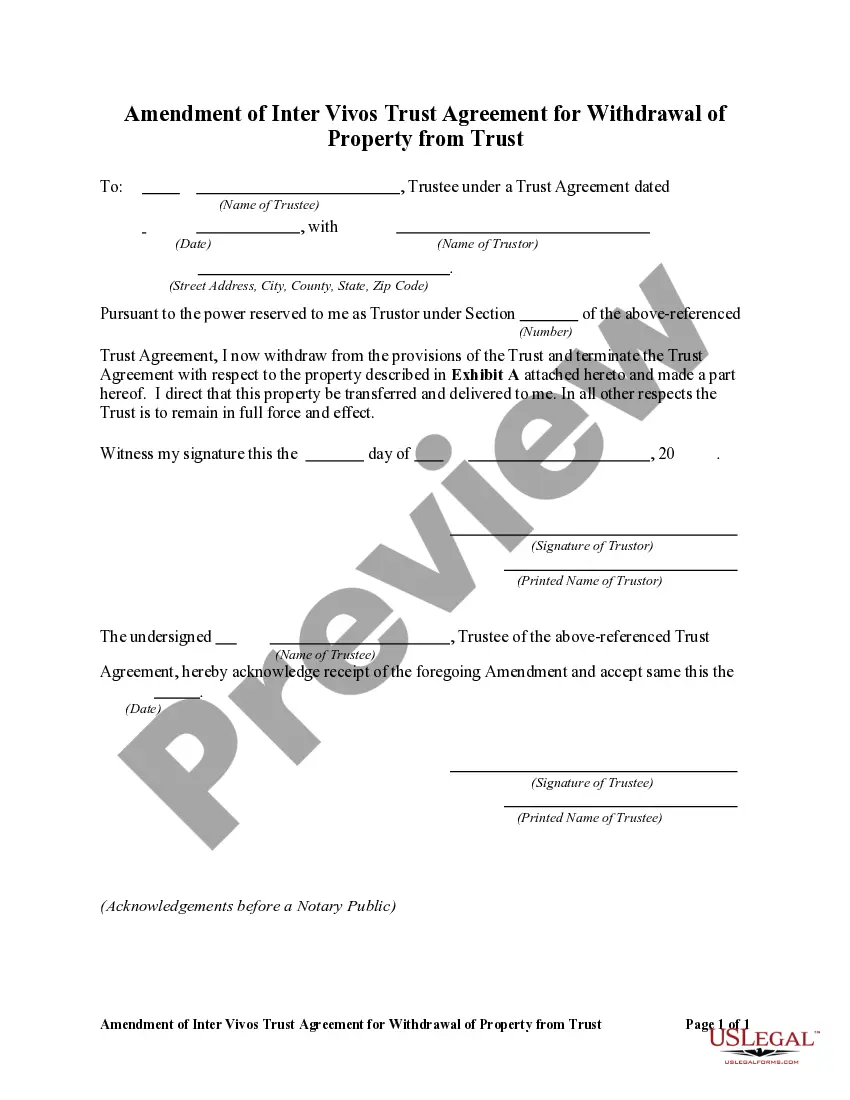
Form To Dissolve Trust Without A Lawyer
Description
Get your form ready online
Our built-in tools help you complete, sign, share, and store your documents in one place.
Make edits, fill in missing information, and update formatting in US Legal Forms—just like you would in MS Word.
Download a copy, print it, send it by email, or mail it via USPS—whatever works best for your next step.
Sign and collect signatures with our SignNow integration. Send to multiple recipients, set reminders, and more. Go Premium to unlock E-Sign.
If this form requires notarization, complete it online through a secure video call—no need to meet a notary in person or wait for an appointment.
We protect your documents and personal data by following strict security and privacy standards.

Make edits, fill in missing information, and update formatting in US Legal Forms—just like you would in MS Word.

Download a copy, print it, send it by email, or mail it via USPS—whatever works best for your next step.

Sign and collect signatures with our SignNow integration. Send to multiple recipients, set reminders, and more. Go Premium to unlock E-Sign.

If this form requires notarization, complete it online through a secure video call—no need to meet a notary in person or wait for an appointment.

We protect your documents and personal data by following strict security and privacy standards.
Looking for another form?







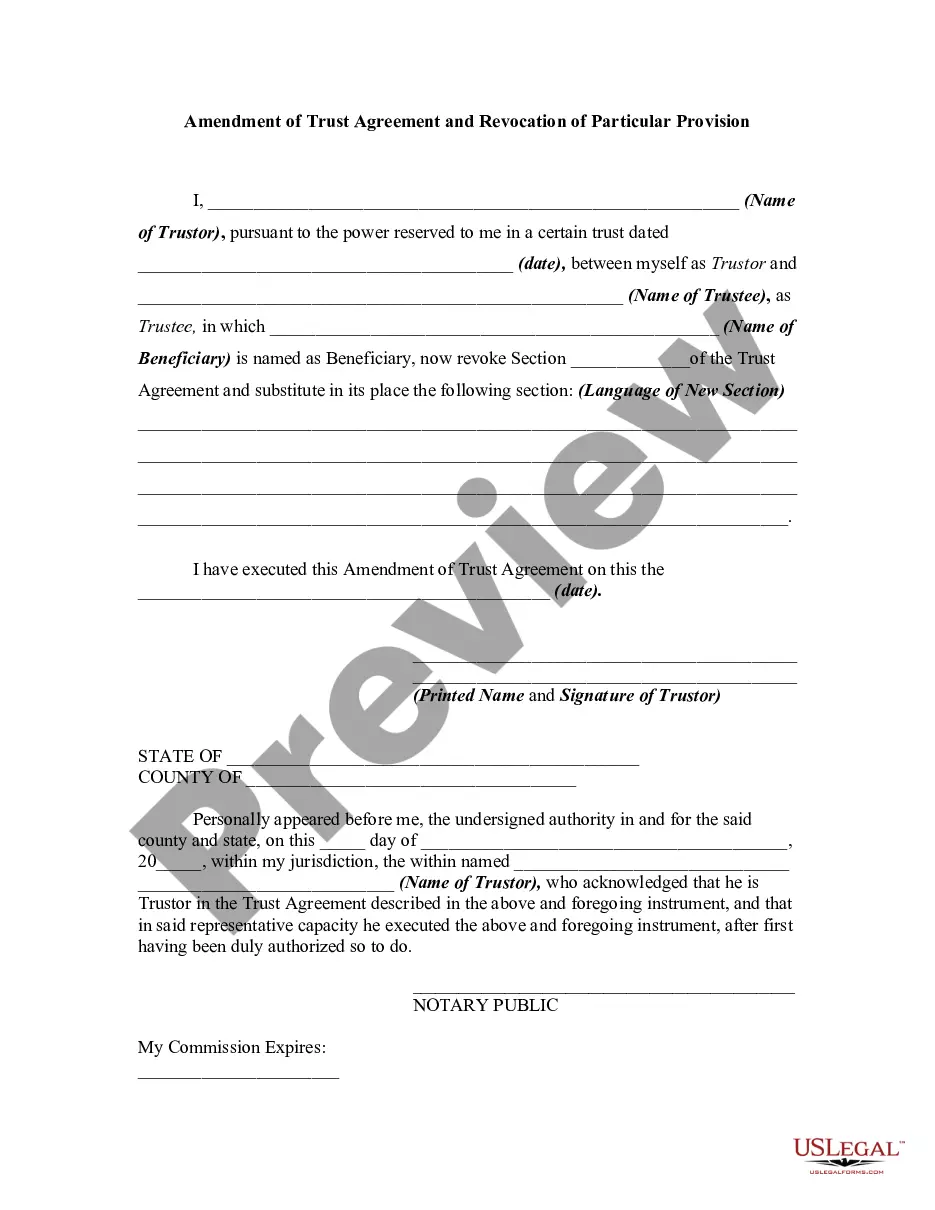
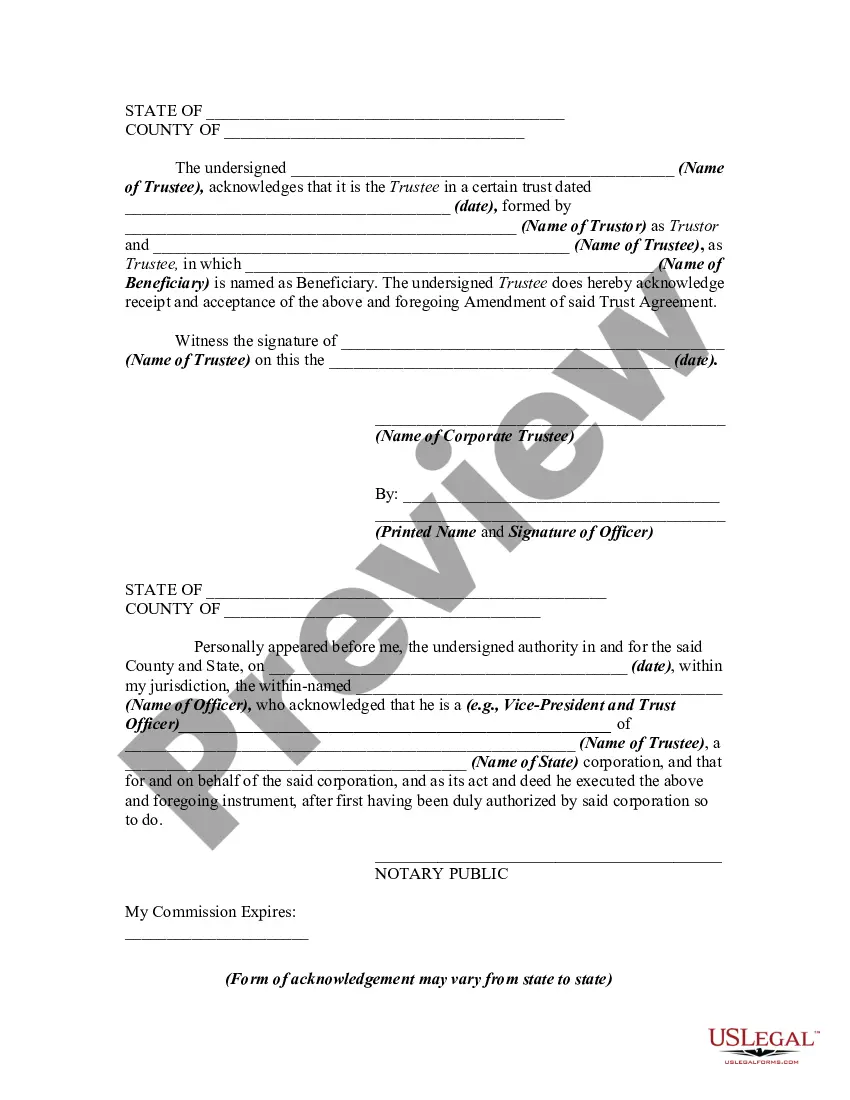
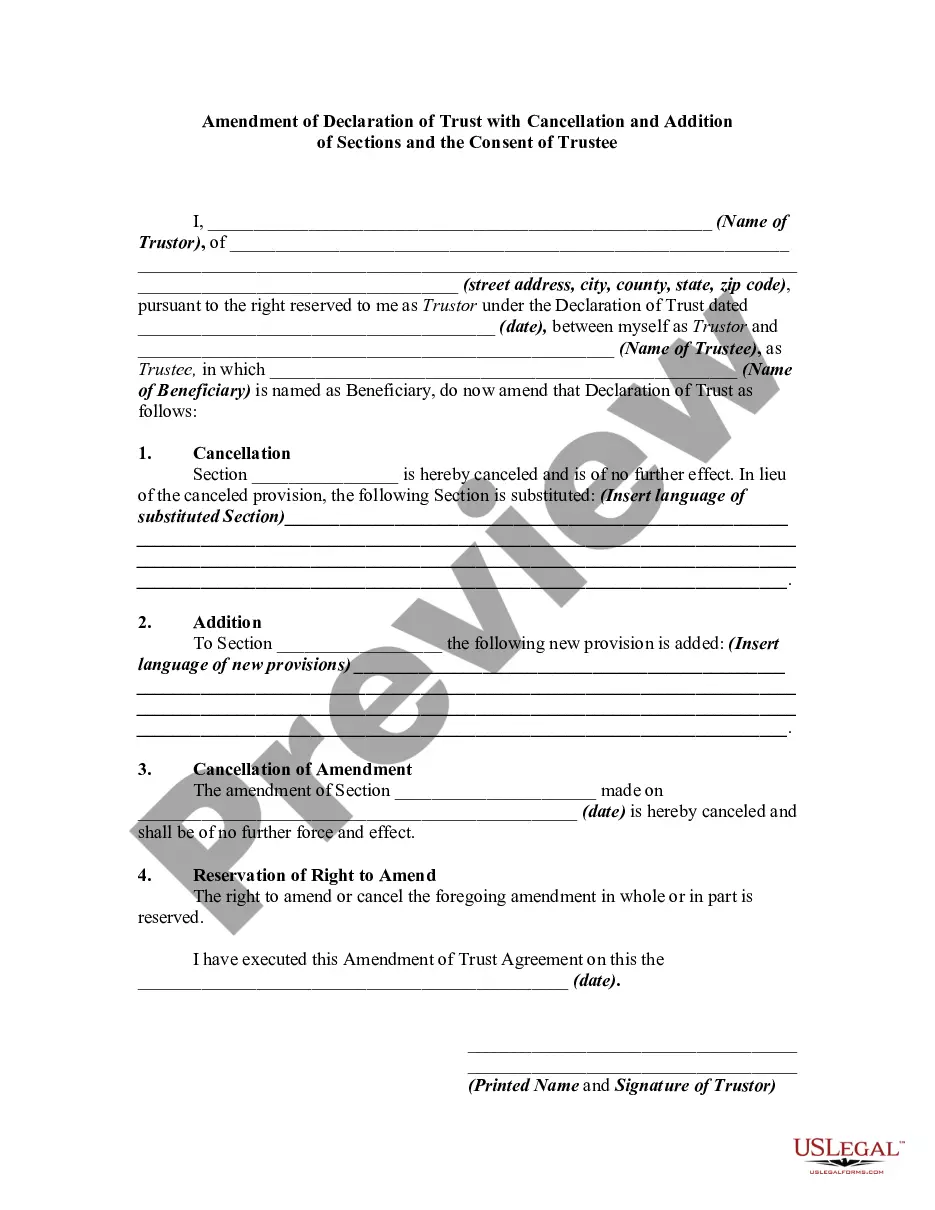
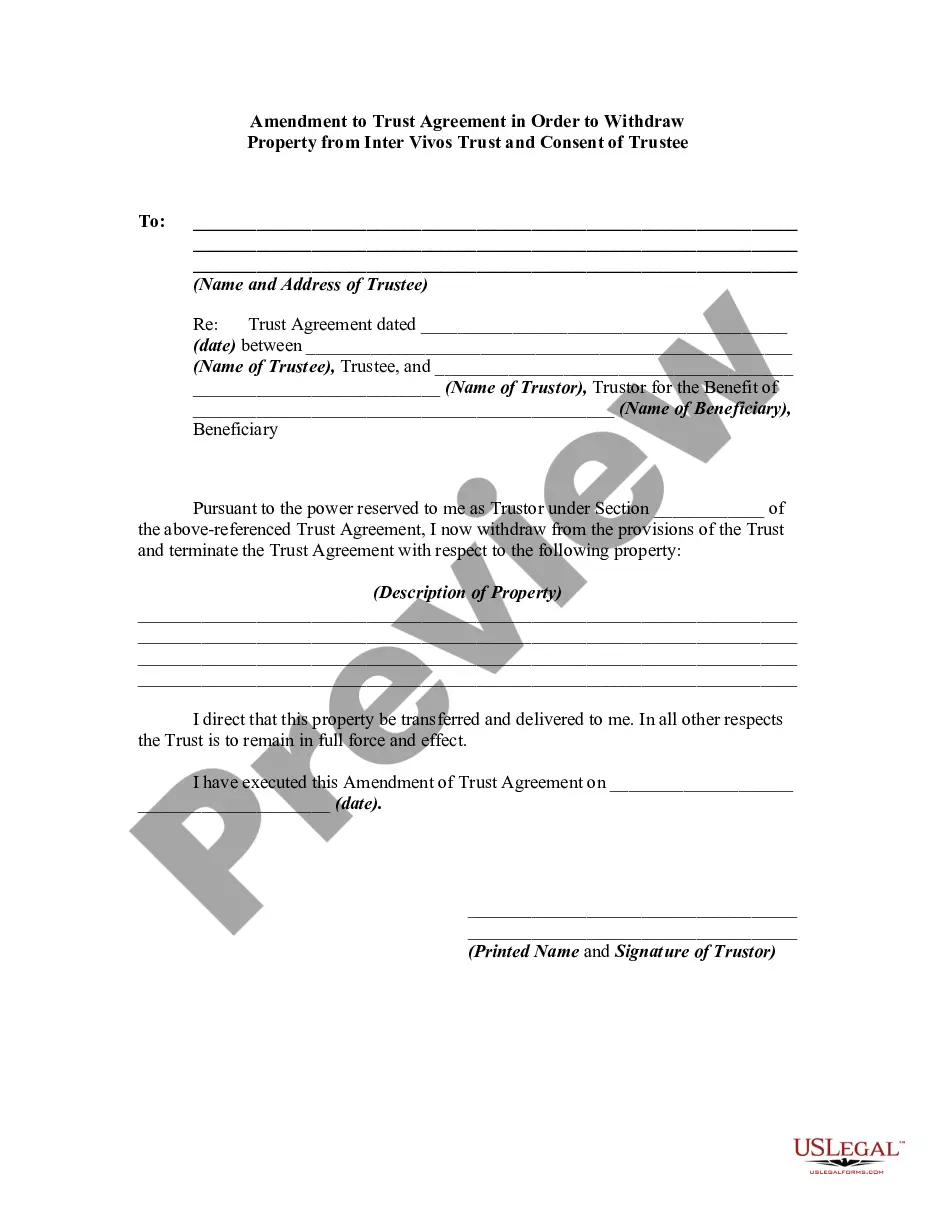
How to fill out Amendment Of Trust Agreement And Revocation Of Particular Provision?
It’s well-known that you cannot transform into a legal expert instantly, nor can you swiftly learn how to draft Form To Dissolve Trust Without A Lawyer without possessing a specialized background.
Creating legal documents is a lengthy endeavor that demands specific education and expertise. Therefore, why not entrust the preparation of the Form To Dissolve Trust Without A Lawyer to the professionals.
With US Legal Forms, one of the most extensive legal document repositories, you can access everything from court forms to templates for internal corporate communications.
If you require any additional forms, start your search again.
Create a free account and choose a subscription plan to buy the form. Click Buy now. Once the payment is processed, you can obtain the Form To Dissolve Trust Without A Lawyer, complete it, print it, and send or mail it to the intended recipients or organizations.
- We understand how crucial compliance and adherence to federal and local regulations are.
- That’s why, on our platform, all documents are location-specific and current.
- Here’s how you can begin using our website and acquire the document you need in just minutes.
- Find the document you require using the search bar at the top of the page.
- Preview it (if this option is available) and review the supporting description to see if Form To Dissolve Trust Without A Lawyer is what you need.
Form popularity
FAQ
The trust's founder and owner can typically dissolve a revocable trust at will. In most cases, this involves nothing more complicated than filling out some paperwork and distributing the trust's assets.
(If you are a beneficiary, you will likely need approval from the trust's founder if they still live, its trustees and all other beneficiaries.) If you have approval from all the relevant parties, you will then have to petition a court and state your reasons for dissolving the trust.
The two most common ways to terminate and/or modify an irrevocable trust is to 1) argue that there has been a change of circumstances not anticipated by the settlors at the time they created the trust (for example changes in tax law, and 2) argue that all beneficiaries consent to the proposed termination and or ...
A beneficiary can renounce their interest from the trust and, upon the consent of other beneficiaries, be allowed to exit. A trustee cannot remove a beneficiary from an irrevocable trust. A grantor can remove a beneficiary from a revocable trust by going back to the trust deed codes that allow for the same.
A trust might terminate because: The trust has accomplished its intended purposes. It is no longer economically feasible to have a trust. The trust has distributed all of its property and assets. The trust is revoked. The court dissolves the trust because of a dispute or illegality.