Homeowners Association Dues Lien Withholding
Description
Get your form ready online
Our built-in tools help you complete, sign, share, and store your documents in one place.
Make edits, fill in missing information, and update formatting in US Legal Forms—just like you would in MS Word.
Download a copy, print it, send it by email, or mail it via USPS—whatever works best for your next step.
Sign and collect signatures with our SignNow integration. Send to multiple recipients, set reminders, and more. Go Premium to unlock E-Sign.
If this form requires notarization, complete it online through a secure video call—no need to meet a notary in person or wait for an appointment.
We protect your documents and personal data by following strict security and privacy standards.

Make edits, fill in missing information, and update formatting in US Legal Forms—just like you would in MS Word.

Download a copy, print it, send it by email, or mail it via USPS—whatever works best for your next step.

Sign and collect signatures with our SignNow integration. Send to multiple recipients, set reminders, and more. Go Premium to unlock E-Sign.

If this form requires notarization, complete it online through a secure video call—no need to meet a notary in person or wait for an appointment.

We protect your documents and personal data by following strict security and privacy standards.
Looking for another form?

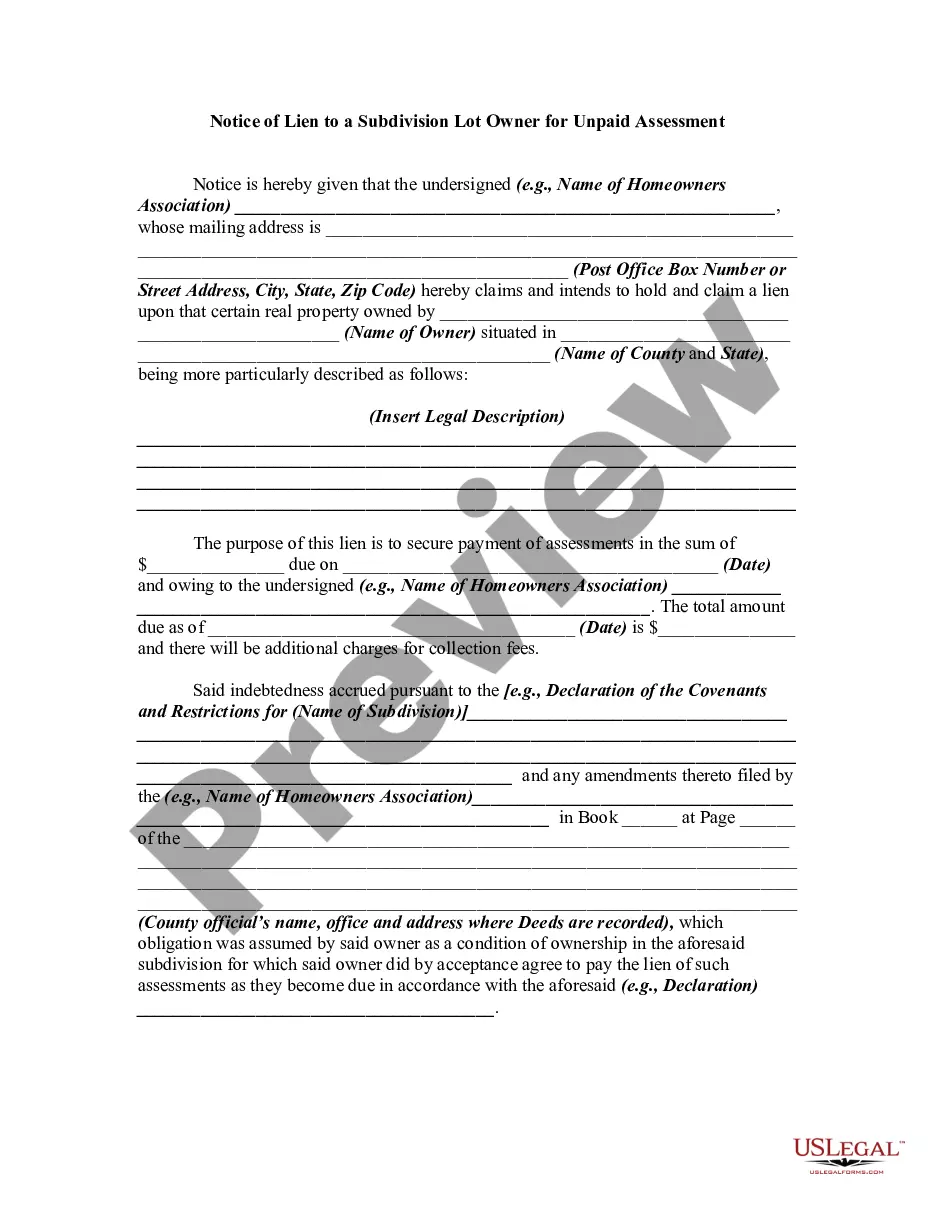
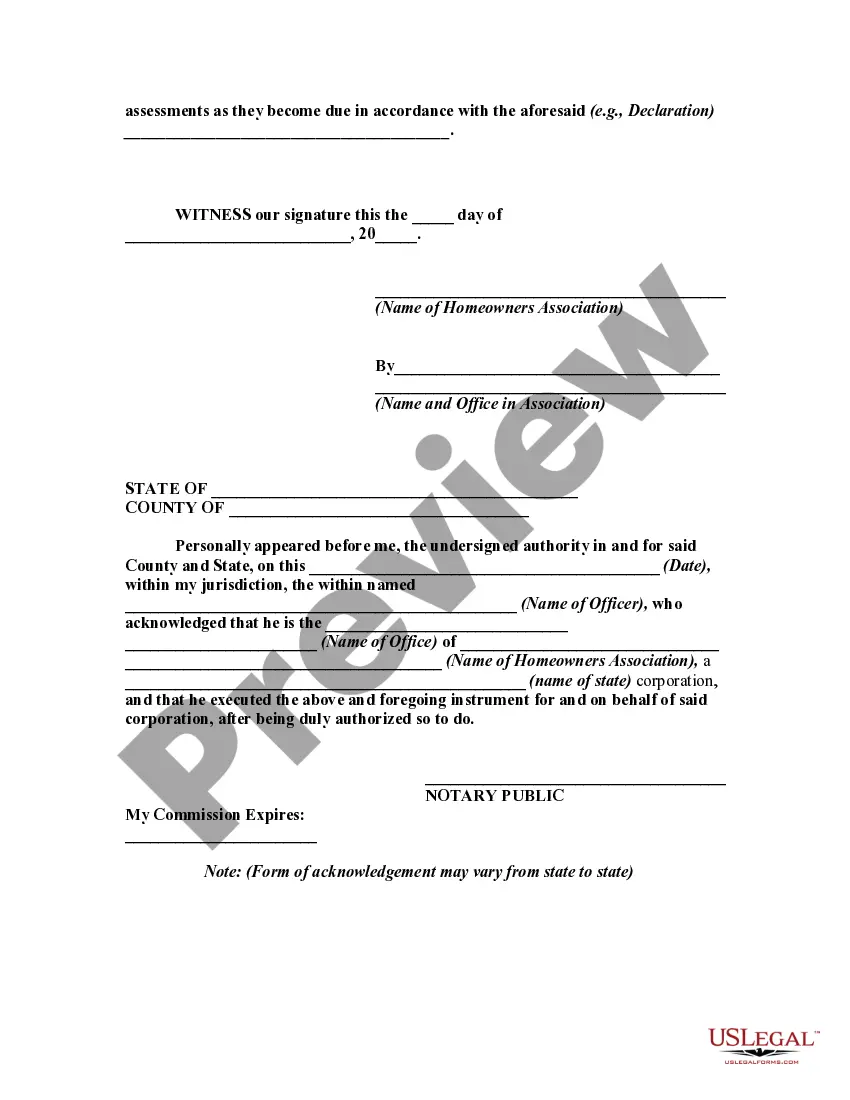
How to fill out Notice Of Lien To A Subdivision Lot Owner For Unpaid Assessment?
Creating legal documents from the ground up can occasionally be overwhelming.
Certain situations may require extensive research and significant financial investment.
If you are looking for a more straightforward and cost-effective method of generating Homeowners Association Dues Lien Withholding or any other documentation without unnecessary complications, US Legal Forms is readily available to assist you.
Our online repository of over 85,000 current legal forms encompasses nearly every aspect of your financial, legal, and personal matters. With just a few clicks, you can swiftly obtain state- and county-compliant templates meticulously crafted by our legal professionals.
Examine the document preview and descriptions to confirm that you have located the document you need. Ensure the form you choose complies with your state and county regulations. Select the appropriate subscription plan to acquire the Homeowners Association Dues Lien Withholding. Download the file, then complete, verify, and print it. US Legal Forms enjoys a strong reputation and over 25 years of expertise. Join us today and simplify the document execution process!
- Utilize our service whenever you require dependable assistance that allows you to easily find and retrieve the Homeowners Association Dues Lien Withholding.
- If you are a returning visitor and have previously created an account with us, simply Log In to your account, find the template, and download it or retrieve it again at any moment from the My documents section.
- Don’t have an account? No worries. It takes minimal time to create one and access the library.
- But before proceeding to download the Homeowners Association Dues Lien Withholding, consider these suggestions.
Form popularity
FAQ
If you want to check up on your neighbor, new babysitter or your own record, you can do so through a free court record database. MyCase is an online publicly available records database including information on civil and criminal cases within the Indiana court system.
The filing fees for legal separation are under $200, but you may have other legal fees associated.
The Act guarantees access to public records for anyone seeking to view and copy them. Its coverage is broad and includes the records of Indiana state, city, and county government agencies. Besides court records, the Indiana Court Records website also makes other public records easier to access.
Odyssey Public Access (the "MyCase" website) is a platform for online services provided by the Office of Judicial Administration (the "Office").
You can search court cases by case, name, or attorney at mycase.IN.gov. To see which courts post case information online, visit the Indiana Judicial Branch website.
Rule 4: General Access Rule. (A) A Court Record is accessible to the public except as provided in Rule 5. (B) This rule applies to all Court Records, regardless of the manner of creation, method of collection, form of storage, or the form in which the record is maintained.
Another way to access public records for free is through the federal government's website. USA.gov has a search bar where you can type in what kind of public record you're looking for and your state or county.