Suscessor Trustee
Description
Get your form ready online
Our built-in tools help you complete, sign, share, and store your documents in one place.
Make edits, fill in missing information, and update formatting in US Legal Forms—just like you would in MS Word.
Download a copy, print it, send it by email, or mail it via USPS—whatever works best for your next step.
Sign and collect signatures with our SignNow integration. Send to multiple recipients, set reminders, and more. Go Premium to unlock E-Sign.
If this form requires notarization, complete it online through a secure video call—no need to meet a notary in person or wait for an appointment.
We protect your documents and personal data by following strict security and privacy standards.

Make edits, fill in missing information, and update formatting in US Legal Forms—just like you would in MS Word.

Download a copy, print it, send it by email, or mail it via USPS—whatever works best for your next step.

Sign and collect signatures with our SignNow integration. Send to multiple recipients, set reminders, and more. Go Premium to unlock E-Sign.

If this form requires notarization, complete it online through a secure video call—no need to meet a notary in person or wait for an appointment.

We protect your documents and personal data by following strict security and privacy standards.
Looking for another form?





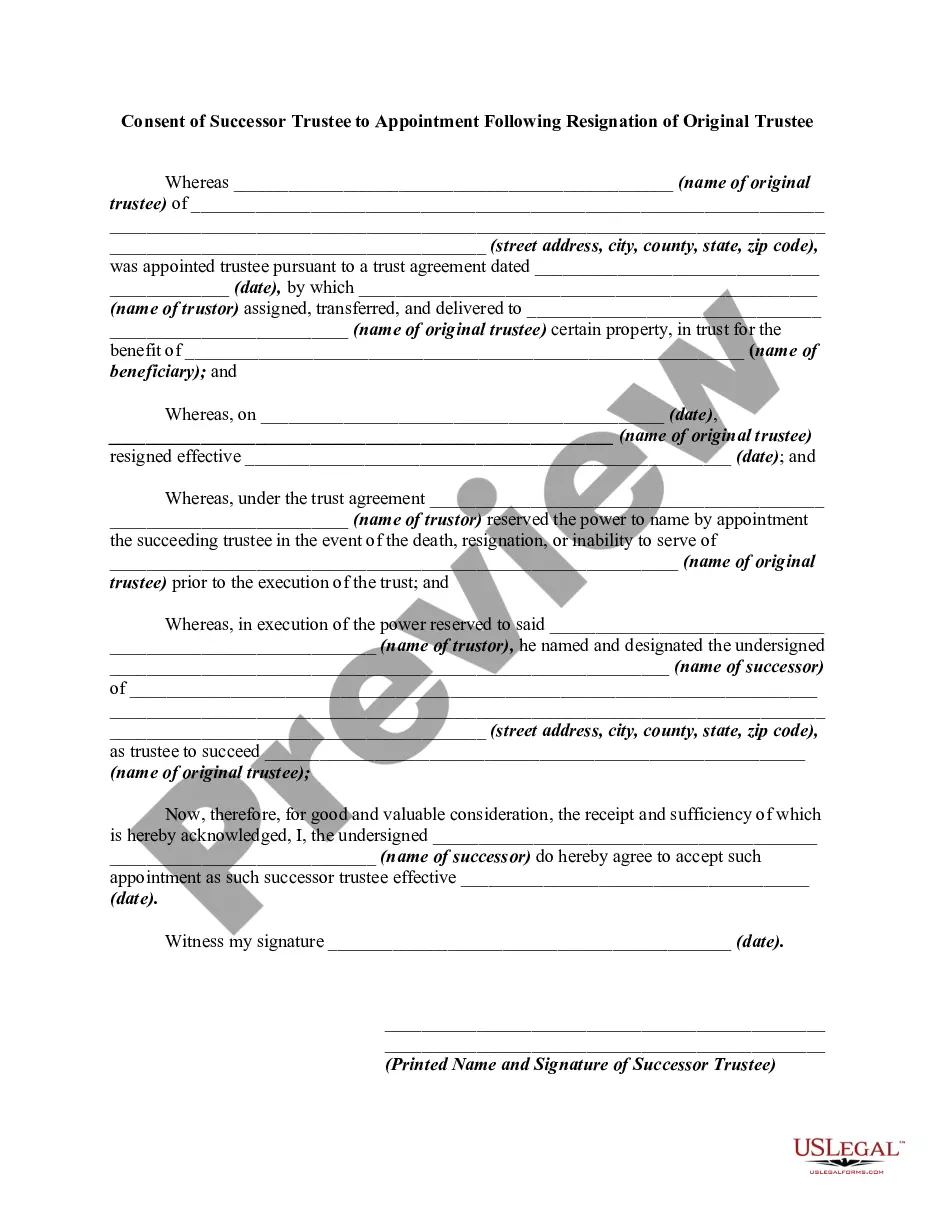
How to fill out Consent Of Successor Trustee To Appointment Following Resignation Of Original Trustee?
- Begin by accessing your account on the US Legal Forms website. If you are a returning user, simply log in and confirm that your subscription remains active.
- If you are a new user, start by browsing the form library, making sure to review the Preview mode and detailed descriptions. Focus on finding the form that aligns with your specific needs and local jurisdiction.
- Should you find any discrepancies, utilize the Search tab to locate an alternative template that better fits your requirements and legal standards.
- To proceed, select the Buy Now option for the desired document and opt for a suitable subscription plan. An account registration will be necessary to access the extensive form library.
- Complete your purchase by entering your payment details via credit card or through PayPal to activate your subscription.
- Finally, download your successor trustee form onto your device. You can revisit this form anytime through the My Forms section in your account.
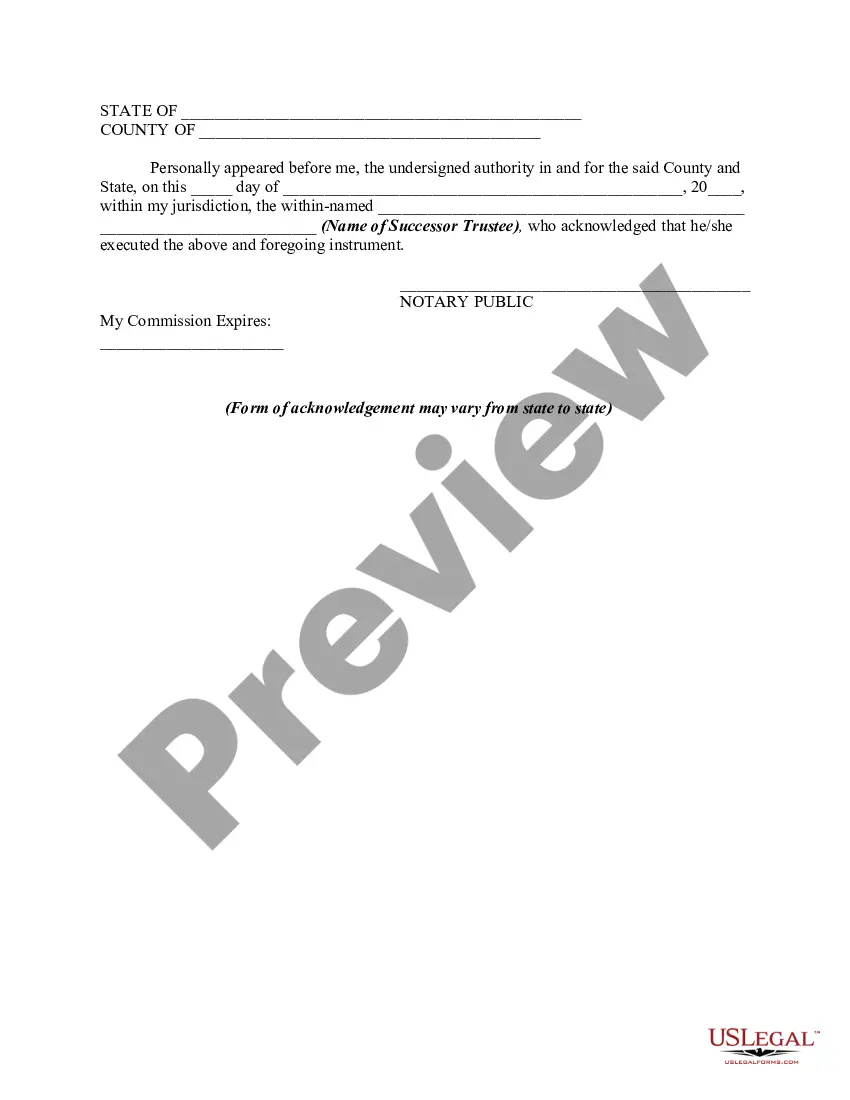
Once you've completed these steps, you'll have the legal resources needed to appoint a successor trustee confidently.
US Legal Forms empowers users with a robust collection of over 85,000 legal forms and packages. For any assistance or to ensure your documents are correctly filled, consult our premium experts. Get started today!
Form popularity
FAQ
Changing the trustee of a family trust often involves creating a trust amendment that clearly states the new successor trustee's name. Ensure you follow the rules outlined in your trust documents to make this transition smooth. This process may also require notifying the current trustee of their removal and formally documenting the change. Platforms like USLegalForms provide templates to facilitate this task seamlessly.
Finding a suitable successor trustee involves evaluating candidates who possess the necessary qualities, such as trustworthiness, financial acumen, and a willingness to serve. You can start by discussing with family members or close friends who understand your values and can manage your estate effectively. Additionally, professional services, such as those offered by US Legal Forms, can assist you in identifying and appointing a reliable successor trustee tailored to your needs.
If no successor trustee is named, the court may need to appoint one to manage the trust. This can lead to delays, possible additional costs, and unwanted complications. It’s prudent to specify a successor trustee in your trust documents to avoid this situation. US Legal Forms can help you create a clear and effective trust document that includes your chosen successor trustee.
Yes, a successor trustee may need to file IRS Form 56 if they are responsible for managing or distributing trust assets after your passing. This form notifies the IRS that your successor trustee is acting on behalf of the trust. It's essential to consult with a legal professional to ensure compliance with tax regulations and requirements. US Legal Forms can guide you through this process with useful resources.
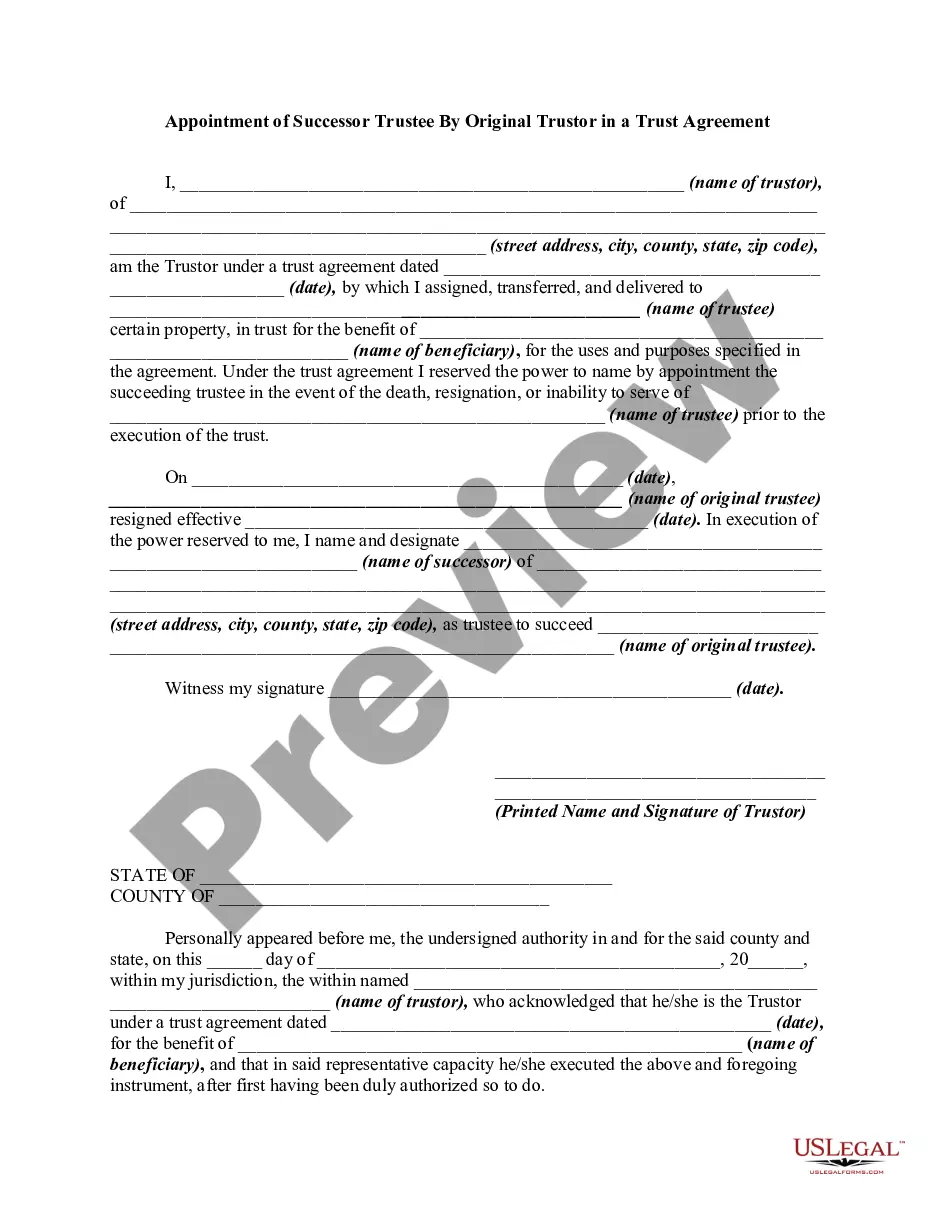
To add a successor trustee to your trust, you typically need to amend your existing trust agreement. This often involves drafting a formal amendment that outlines the details of the new successor trustee. Once completed, ensure that the updated documents are signed and properly notarized. Platforms like US Legal Forms can provide easy-to-follow templates for this process.
To appoint a successor trustee, you need to include specific instructions in your legal documents, such as a trust agreement. It's crucial to clearly identify the individual or entity you want to serve in this role as your successor trustee. Make sure to communicate your choice with them and ensure they understand their responsibilities. Using a reliable platform like US Legal Forms can help you create or modify your trust documents efficiently.
A successor trustee has several rights, including managing trust assets, making investment decisions, and distributing assets to beneficiaries. They also have the right to receive reasonable compensation for their services, as outlined in the trust document. It's important for beneficiaries to understand these rights to foster trust and effective communication among all parties involved.
A trustee is the individual or entity responsible for managing a trust's assets while it is active, whereas a successor trustee steps in when the original trustee can no longer perform their duties. Essentially, the successor trustee takes over the management of the trust, ensuring continuity. Understanding these roles can clarify the estate planning process and enhance trust administration.
A successor trustee has significant power, but it is limited to the authority granted by the trust document. They can manage, invest, and distribute assets according to the trust's instructions. However, they must act in the best interest of the beneficiaries and maintain transparency. It's important to understand these powers to avoid misuse and ensure smooth management.
The role of a successor trustee is to manage and oversee the trust after the original trustee can no longer fulfill their duties. This can occur due to death, incapacity, or resignation. The successor trustee ensures that the trust's terms are followed, assets are managed properly, and beneficiaries receive what they are entitled to. Understanding the responsibilities of a successor trustee is crucial for effective estate planning.