Sucessor Trust
Description
Get your form ready online
Our built-in tools help you complete, sign, share, and store your documents in one place.
Make edits, fill in missing information, and update formatting in US Legal Forms—just like you would in MS Word.
Download a copy, print it, send it by email, or mail it via USPS—whatever works best for your next step.
Sign and collect signatures with our SignNow integration. Send to multiple recipients, set reminders, and more. Go Premium to unlock E-Sign.
If this form requires notarization, complete it online through a secure video call—no need to meet a notary in person or wait for an appointment.
We protect your documents and personal data by following strict security and privacy standards.

Make edits, fill in missing information, and update formatting in US Legal Forms—just like you would in MS Word.

Download a copy, print it, send it by email, or mail it via USPS—whatever works best for your next step.

Sign and collect signatures with our SignNow integration. Send to multiple recipients, set reminders, and more. Go Premium to unlock E-Sign.

If this form requires notarization, complete it online through a secure video call—no need to meet a notary in person or wait for an appointment.

We protect your documents and personal data by following strict security and privacy standards.
Looking for another form?



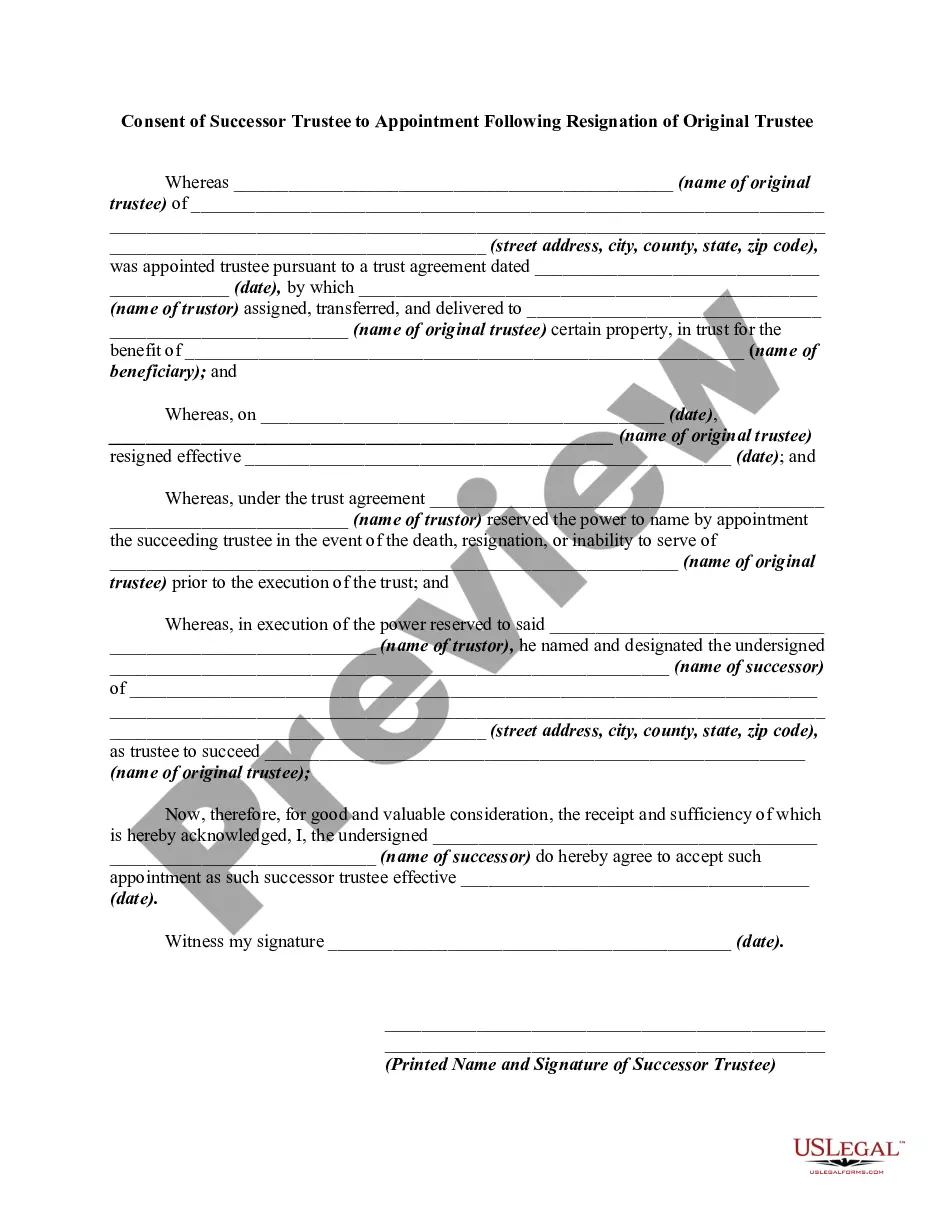
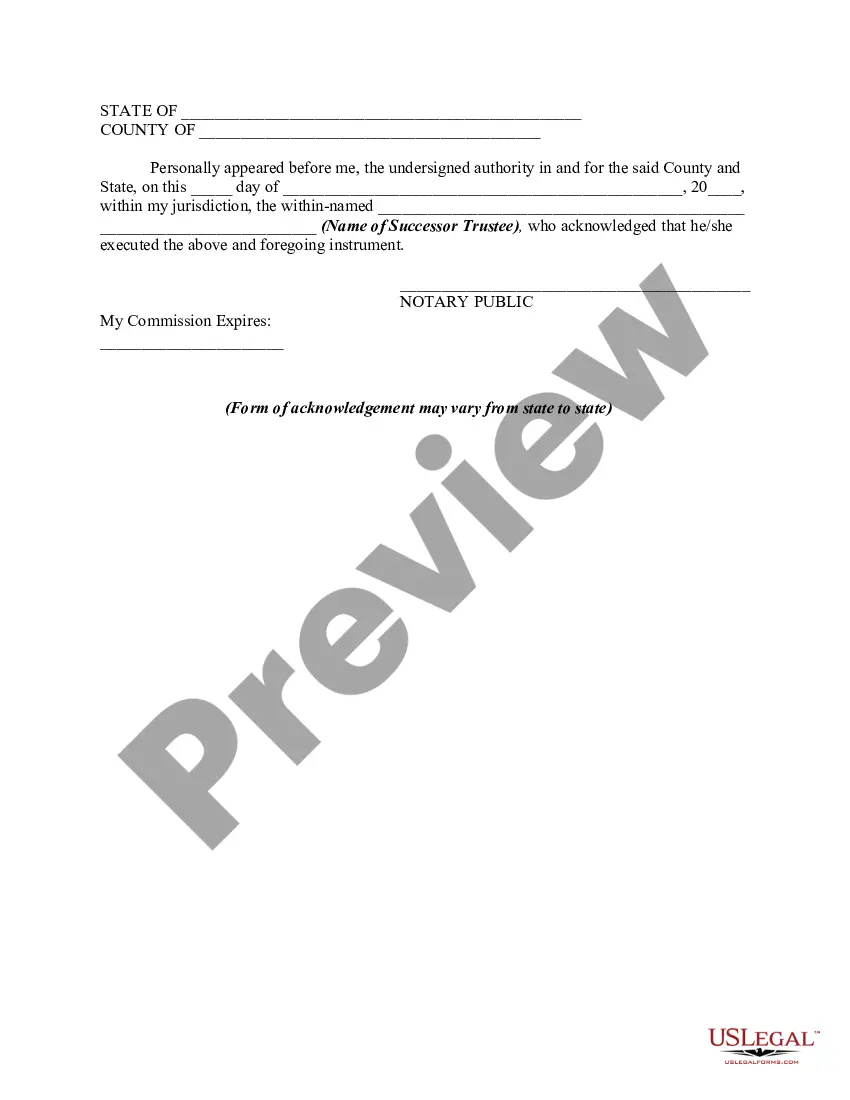
How to fill out Consent Of Successor Trustee To Appointment Following Resignation Of Original Trustee?
- Log in to your US Legal Forms account if you're a returning user. Ensure that your subscription is active and then locate the appropriate form template for a successor trust.
- If you're new to US Legal Forms, start by previewing the available templates. Check the form description thoroughly to select one that meets your specific requirements and complies with your local jurisdiction.
- If you don't find the right template at first, utilize the Search feature to explore other options that may better fit your needs.
- Once you've identified the suitable document, click on the Buy Now button. Choose a subscription plan that works best for you and create an account for full access to the library.
- Complete your payment using your credit card or PayPal account to finalize your purchase.
- After completing your transaction, download the form to your device and keep it accessible in the My Forms section of your profile for future use.
By following these steps, you can easily access the legal forms you need through US Legal Forms. Their extensive library and user-friendly services empower both individuals and attorneys to manage their legal documentation efficiently.
Start your legal journey today with US Legal Forms and ensure your successor trust is handled with care.
Form popularity
FAQ
Reimbursement of trustees refers to the process where trustees are repaid for expenses incurred while managing the trust. This can include costs for legal fees, accounting services, and other necessary expenses related to trust administration. Beneficiaries usually review these expenses, and they should be documented properly. If you need guidance on reimbursement terms, US Legal Forms offers templates to ensure clarity in your successor trust agreements.
To become a successor trustee, an individual must be named in the trust document by the trust creator, often referred to as the grantor. If the original trustee can no longer fulfill their duties, this individual steps in to manage the trust assets. It is vital for potential successor trustees to understand their responsibilities and the trust's terms. Using a resource like US Legal Forms can simplify the process of documenting and designating a successor trustee in the successor trust.
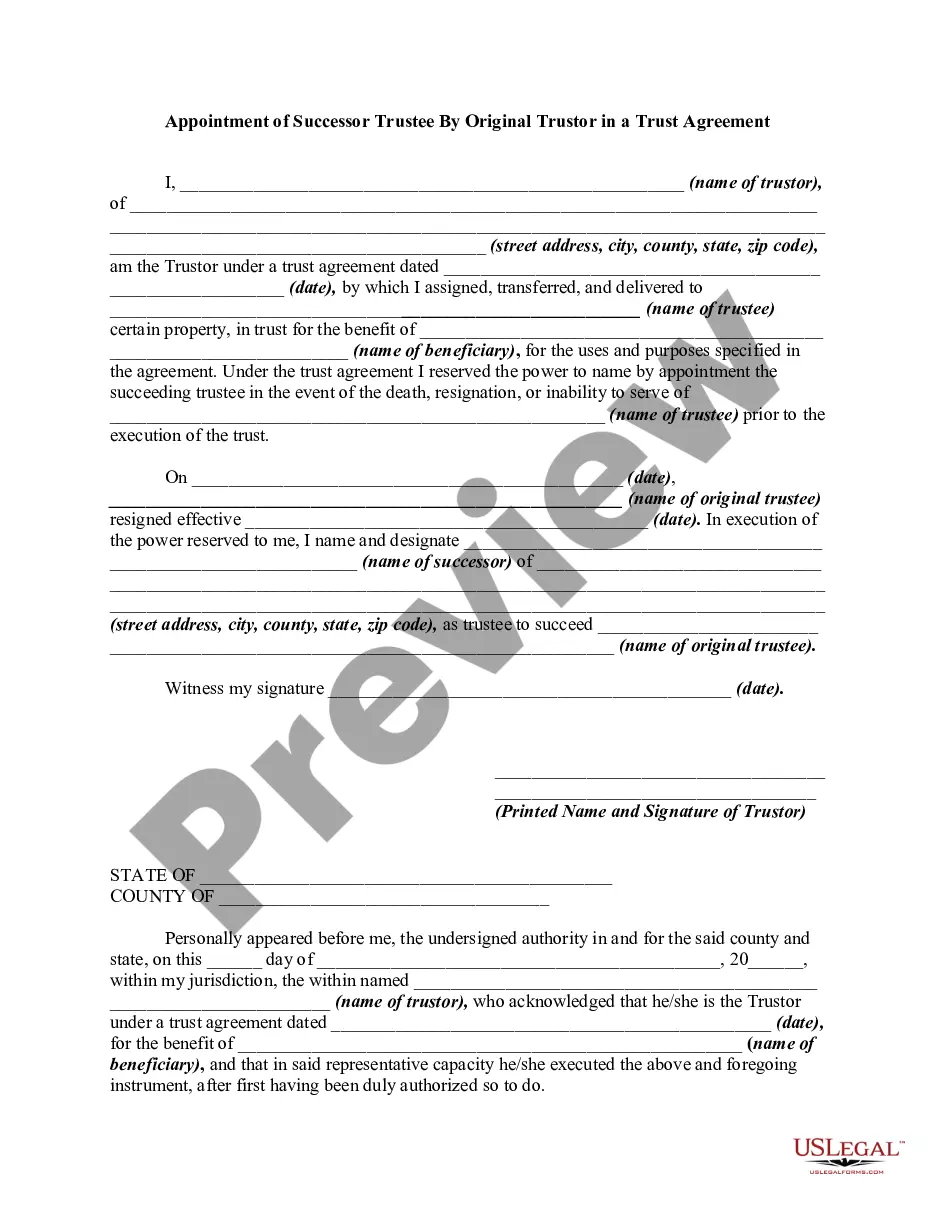
To add a successor trustee, you should update the trust document to reflect this change. This process may involve drafting an amendment or restating the trust altogether, clearly naming the new successor trustee. Platforms like US Legal Forms can assist you with templates and guidance to ensure a smooth transition within your successor trust.
The requirement for notarization of a successor trustee's appointment typically depends on state laws or specific provisions in the trust agreement. While notarization may not always be necessary, taking this step can provide an added layer of verification and security for the successor trust's management.
A successor trustee is appointed through the trust document created by the original trustee. This document usually specifies the individual or entity selected to take over. It’s advisable to ensure that the appointed successor trustee understands their responsibilities to manage the successor trust effectively.
When a trustee passes away, the successor trustee generally takes over immediately, assuming they have been properly appointed. They must follow the procedures outlined in the trust document, including notifying beneficiaries and managing the trust’s assets. This transition is vital in ensuring that the intentions behind the successor trust are honored.
In many cases, a trustee resignation letter does not need to be notarized. However, depending on the terms set in the trust document or state laws, notarization may be required. To ensure compliance, it's best to consult legal guidelines or documents related to your successor trust.
A succession trust is a legal arrangement designed to ensure a seamless transition of assets and responsibilities from one trustee to another, typically upon the original trustee’s incapacity or death. It outlines the terms under which the successor trustee will take over, thereby providing clarity and stability for beneficiaries. Utilizing a succession trust can protect your legacy, and resources like UsLegalForms can help you draft one accurately.
Generally, a beneficiary cannot override a trustee’s decisions unless specific provisions allow for it within the trust document. The trustee has a legal obligation to act in the best interest of the beneficiaries, but they retain control over the management of the trust. If you are concerned about this dynamic in a successor trust, consulting with professionals, such as those at UsLegalForms, can provide guidance tailored to your situation.
No, a successor is not the same as a trustee, although they can often be the same person. The trustee manages the trust and its assets, while a successor specifically refers to someone who steps in to assume those duties when the initial trustee becomes unable to act. Grasping this distinction is vital for anyone looking to set up a successor trust, as it impacts how the trust is managed over time.